


-
1

E235系トウ33編成「五等分の花嫁」ラッピング&車内広告貸切編成を撮る
JR東日本E235系電車トウ33編成「五等分の花嫁」ラッピング&車内広告貸切編成を撮影。これがこの日僕が一番撮りたかった車両である。「五等分の花嫁」は「週刊少年マガジン」(講談社)で2017(平成29)年から連載されている春場ねぎ先生が描く漫画。主人公の学業一辺倒で成績優秀だけれど貧乏な高校生、上杉風太郎君が全員揃って成績不振な五つ子の中野姉妹の家庭教師を任され、5人全員の成績向上・赤点回避と卒業を目指して奮闘する姿を、そして風太郎君と中野姉妹が次第に惹かれていく恋模様を描いている。そして、中野姉妹5人のうちの誰か1人が風太郎君の未来の花嫁に…。結婚式を目前に控えた風太郎青年が自らの高校生時代を振り返る形でストーリーが展開していく。単行本は2019(令和元)年8月時点で10巻まで刊行され、累計600万部を売り上げている。2019(平成31)年1月~3月にかけてテレビアニメも放送され、続編(第2期)の制作も発表された。8月3日~16日までの期間、山手線を走る東京総合車両センター(東トウ)所属のE235系のうち2編成に「五等分の花嫁」の車体ラッピングを施して運行された。トウ03編成は車体ラッピングをまとい、トウ33編成は車体ラッピングに加えて車内中吊り・戸袋・トレインチャンネル(側扉鴨居・荷棚横)の広告を「五等分の花嫁」のもので統一した。Next, I photographed E235 Series Tou 33 set having the livery of "The Quintessential Quintuplets", a comic work by Negi Haruba, which is the carriage that I would like to photograph best on that day."The Quintessential Quintuplets" has been serialised in Weekly Shōnen Magazine since 2017 and features a romance of an academically-gifted but poor high school student, Futaro Uesugi, and Nakano quintuples, all of whom are low-performing. His struggle to raise the achievement of the quintuplets and both he and the quintuplets become attracted to one another as his tutoring is pictured.The comic has been compiled in 10 volumes of the series of the books until August, 2019, and they have been printed totally over 6 million issues. The animated version is also created and had been broadcast between January and March, 2019 and the creation of the second series of that is announced.Between August 3rd and 16th, the two sets of E235 Series on Yamanote Line, Tou 03 set and Tou 33 set, had had the livery of the comic, and all of the interior advertisements, including LCDs above the doors and beside the luggage rack, of Tou 33 set were changed to that of the comic as well.有楽町駅に入線するトウ33編成 Tou 33 set coming to Yurakucho StationクハE234の側面ラッピング side of the first carriage (Kuha E234) in clockwise boundモハE234の側面ラッピング side of the second carriage (Muha E234) in clockwise bound車いすスペース wheelchair space荷棚横のトレインチャンネル LCDs beside the luggage rackドア鴨居のトレインチャンネル LCDs above the passenger doors中づり広告 hanging advertisements中づり広告 hanging advertisements
Aug 12, 2019
閲覧総数 533
-
2

「全国百線鉄道の旅」で「鉄道車両列伝」のテーマ曲が!!
今年7月にBSデジタル放送が見られるようになってから、BS各局で多くの鉄道番組が放送されているのを知り、これらに夢中になっている僕。中でも気に入っているのがBSフジで放送中の「全国百線鉄道の旅」。21日の放送では、大阪上本町から賢島まで近鉄「伊勢志摩ライナー」の旅を放送。当然前面展望や緑の中を走る電車の風景にうっとりしたが、それ以上に驚いたのが音楽。東青山駅前にある「東青山四季のさと」が映っている時のBGMが「鉄道車両列伝」のテーマ音楽だった。2008年6月に同番組がテレ玉で放送終了してから久しく聞いていない曲で、こんなところで聞けるなんて思ってもいなかった。Since this July, introducing BS Digital TV, I've really appreciated the variety of programs about railways on BS Digital stations and enjoy watching them. My most favorite one, "Zenkoku Hyakusen Tetsudo no Tabi", on BS FUJI on 21st featured Kintetsu's Ise Shima Liner from Osaka-uehonmachi to Kashikojima in Mie Prefecture. NaturallyI enjoyed watching the view from the front and the running trains, but I was surprised at a piece of music in the scene of "Higashi-aoyama Shiki no Sato", the big park in front of Higashi-aoyama Station Kintetsu owns, was the theme song of "Tetsudo Sharyo Retsuden". Since June in 2008, I haven't heard this song and was really happy to hear again.
Nov 21, 2009
閲覧総数 687
-
3
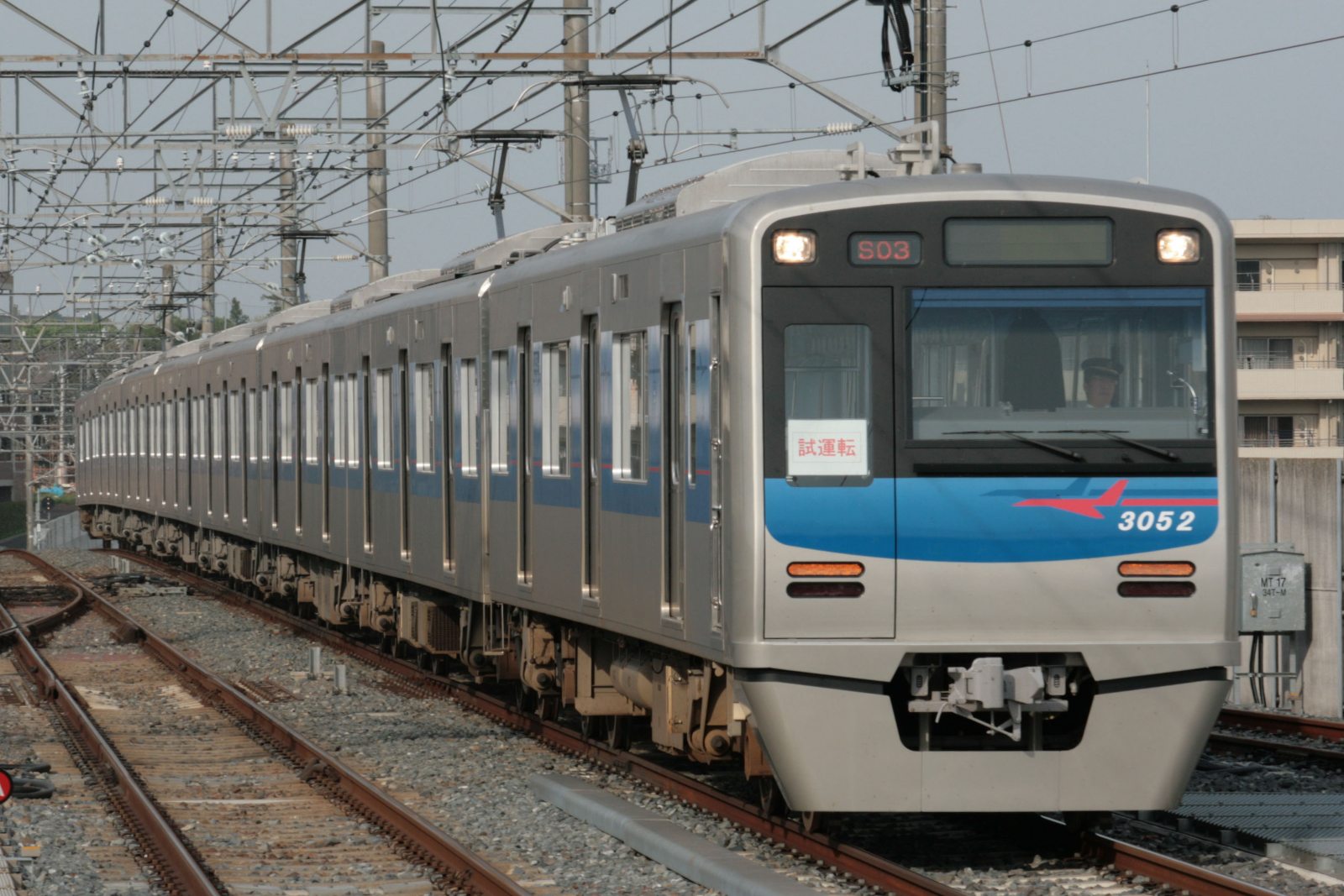
京成新ダイヤ発表 新型スカイライナーとアクセス特急
京成電鉄が7月17日の成田空港線(愛称:「成田スカイアクセス線」)の開業に伴う新ダイヤを発表した。新ダイヤの目玉となる新型車両AE形電車による成田スカイアクセス線経由の「スカイライナー」は、最速160km/h、日暮里駅~空港第2ビル駅間を最短36分(上野駅~成田空港駅間は44分)で結ぶ。運行本数は上り(上野行き)28本、下り(成田空港行き)26本。上野行きに比べて成田空港行きの方が運転本数が少ないのが少し疑問だが、日中時間帯、上野駅毎時0分と40分の2本体制でそれを後述の「シティライナー」と「特急」が補う形になるダイヤなら、問題ないだろう。一方通勤型車両による成田スカイアクセス線経由の成田空港行き列車は、新種別「アクセス特急」が担う。日中は京急空港線羽田空港駅、朝夕は上野駅または都営浅草線西馬込駅から成田空港駅を結ぶ。停車駅は上野駅・日暮里駅・青砥駅・京成高砂駅・東松戸駅・新鎌ヶ谷駅・千葉ニュータウン中央駅・印旛日本医大駅・成田湯川駅・空港第2ビル駅・成田空港駅、都営地下鉄浅草線・京急本線・空港線直通列車の押上線内は押上駅~青砥駅間ノンストップ、浅草線・京急本線・空港線内は「エアポート快特」として運転。羽田空港駅~成田空港駅間を103分で結ぶ予定。これにより羽田・成田両空港間を結ぶというエアポート快特の本来の姿を取り戻すことになる。両空港を結んでこそ「エアポート快特」を名乗れるのであり、京成佐倉駅止まりの、京成押上線・本線内「快速」の列車を「エアポート快特」と呼ぶのに少し違和感を覚えていたが、やっと成田空港行きの、成田スカイアクセス線内も特急クラスの列車となる「エアポート快特」が復活する。一方これまでどおり京成本線経由の成田空港行き列車も継続して運転される。「特急」は大きな変化はなく、これまで通りの停車駅である。現在京成本線経由の「スカイライナー」として運行されているAE100形は、京成本線経由の上野上野駅~成田空港駅間を結ぶ「シティライナー」として運用される。「シティライナー」の停車駅は、上野駅・日暮里駅・青砥駅・京成船橋駅・京成成田駅・空港第2ビル駅・成田空港駅。日中時間帯上野駅を毎時50分に発車するダイヤが組まれ、本線の主要駅を結ぶと同時に、ちょうど「スカイライナー」を補完する列車という存在ではないだろうか?僕の個人的意見だが、空港輸送から都市間輸送に性格が変わったから、京成津田沼駅に停めても問題ないのではないだろうか?今改正で、都営地下鉄浅草線直通の「急行」が廃止される。Keisei Electric Railway announced new timetable from July 17th for the opening of Narita Sky Access Line.The biggest attractive point of this timetable is new "Skyliner", which is being in service by New AE Series between Ueno Station and Narita Airport Terminal 1 Station at a maximum speed of 160-kilometre/100-mile per hour via Narita Skyaccess Line and it takes 44 minutes (From Nippori to Airport Terminal 2 takes 36 minutes). Skyliner trains make 28 trip from Ueno and 26 from Narita Airport.The timetable that Skyliner will depart from Keisei-ueno 2 times an hour, on the hour and 40 minutes after the hour every hour in the daytime, is not bad for me if "City Liner" and limited express help Skyliner, both run via present route, to carry the passengers for Narita Airport.The fast commuter train to Narita Airport via Sky Access Line is named "Access Limited Express". Access Limited Express trains often go through Toei Asakusa Line, Keikyu Main Line, and Keikyu Airport Line as "Airport Limited Express" services to Haneda Airport Station and stop at Oshiage Station, Aoto Station, Keisei-Takasago Station, Higashi-matsudo Station, Shin-kamagaya Station, Chiba Newtown-chuo Station, Imba-nihon-idai [Nippon Medical School, Chiba Hokusoh Hospital] Station, Narita-yukawa Station, Airport Terminal 2 Station, and Narita Airport Terminal 1 Stations. In morning and evening, the Access Limited Express trains from Keisei-ueno Station, stopping at Nippori Station between Keisei-ueno Station and Aoto Station, or Nishi-magome Station on Toei Asakusa Line. The travel between both airports takes 1 hour and 43 minutes.After Narita Sky Access Line open, Airport Limited Express will regain its original aim to access both big airports in Kanto Area. At present most of Airport Limited Express trains go through just Sakura, 7 stations before Narita Airport Terminal 1. For the trains don't go to Narita Airport, I don't want to call this type of train Airport Limited Express.On the other hand, the trains via present route continue to operate. Limited express trains don't change the stops and travel time.After the arrangement, AE100 Series runs as the new service "City Liner". City Liners stop at Ueno, Nippori, Aoto, Funabashi, Narita, Airport Terminal 2, and Narita Airport, and depart from Ueno at every hour 10 minutes to the hour, between 2 Skyliners. They may change to interurban trains, so I want them to also stop at Keisei-tsudanuma StationThe express trains going through Asakusa and Keikyu Lines discontinue operating.京成電鉄ニュースリリース 「成田スカイアクセス開業!!」 7月17日京成線ダイヤ改正
May 28, 2010
閲覧総数 406
-
4
尼崎事故から5年
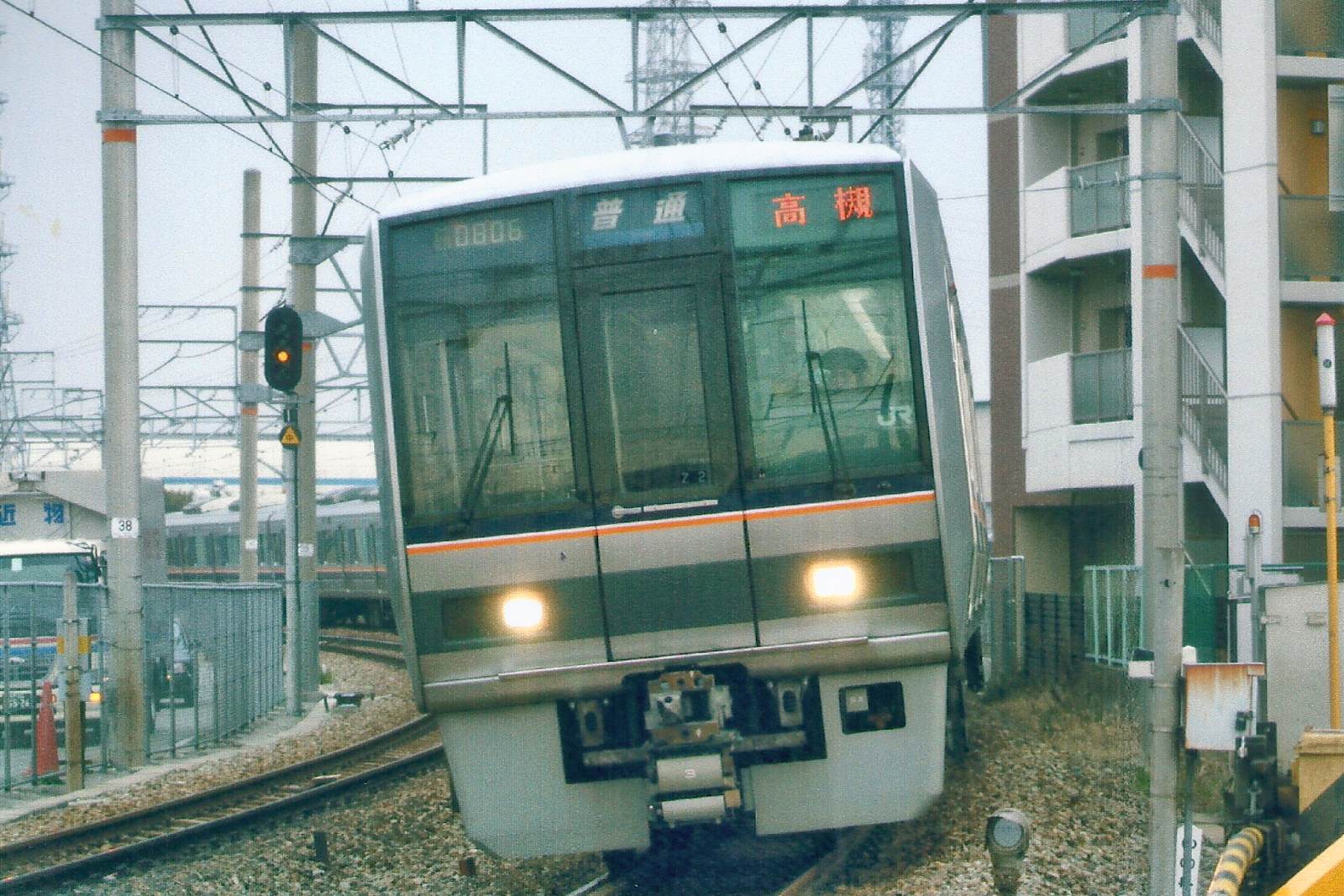
現場カーブを行く207系普通高槻行き Fukuchiyama Line 207 Series running at the curve Amagasaki Rail Crash happenedその悲劇は2005(平成17)年の4月25日に起こった。福知山線(JR宝塚線)の快速列車として運行中だった207系電車が塚口~尼崎間の制限速度70km/hのカーブを115km/h近いスピードで入り横転・脱線、沿線のマンションに突っ込んだ。20mあった先頭車両は後続の車両に押されて7mにまでつぶされ、2両目もマンションの外壁に巻きつくようにぺしゃんこになり、3・4両目もそれに折り重なるようにして停止、5両目も前部台車が脱線した。この事故で電車を運転していた高見隆二郎(たかみ・りゅうじろう 享年23)運転士と106人の乗客が死去、562人が怪我を負った。この107人という死者数は国鉄・JRの脱線事故では1963(昭和38)年に東海道本線鶴見駅付近で発生した鶴見事故に次ぐ2番目に悪いものとなった。僕は2008(平成18)年の3月、広島駅から山陽新幹線で新大阪駅に来た時、尼崎駅まで足を伸ばし、1人の鉄道を愛する男として現場に祈りを捧げて来た。祈りの目的は2つ。1つは事故で亡くなった方々を思いやる祈り、もう1つは鉄道事故がこれ以上起こらないようにという祈り。献花台ではJR西日本の方々が僕を温かく迎えてくれた。上の写真はその時に現場カーブで撮ったもの。電車は奇しくも207系だった。ご遺族の方・事故で怪我をされた方々、写真を載せることをお許しいただきたい。A big accident happened on April 25th, 2005.A 7-carriage 207 Series in service as a rapid train on Fukuchiyama Line (JR Takarazuka Line) running at nearly 115km/h on the curve having to run at under 70km/h between Tsukaguchi and Amagasaki. Then the train overturned and lay on the left side and crashed into the apartment building along the railway. The first car was crushed by the other derailed cars and shortened itself by 7m-long, the second car winded around the apartment and became flattened, the third car and fourth car stopped in front of the second car like an accordion, the front truck of car no.5 also derailed. The driver Ryujiro Takami and 106 passengers were killed and 562 passengers injured. The number of victims is the second-worst railway accident in Japan.In 2008 I went to Amagasaki to pray for victims on the way from Hiroshima to Kyoto as a railfan. I did also that no more railway accidents would happen. The staffs of JR West welcomed me at the apartment.This photograph is shot by me at that time. The train is also 207 Series. Please allow me to upload this photograph, bereaved families and victims.
Apr 25, 2010
閲覧総数 268
-
5
立山・黒部アルペンルートと富山県の鉄道を巡る旅 万葉線デ7070形電車7073号車を撮る
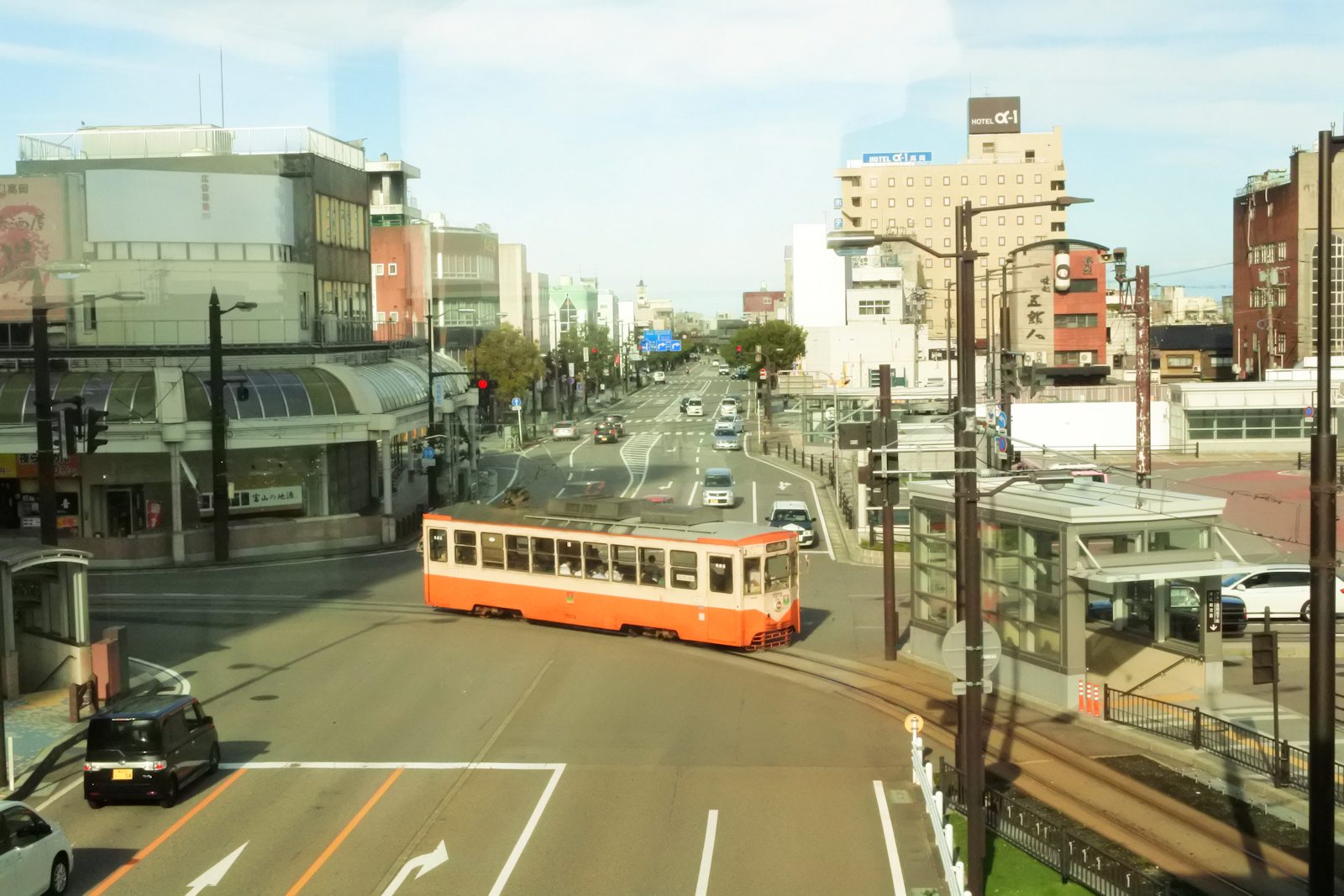
高岡駅前で、万葉線デ7070形電車7073号車を撮影。前回2009(平成21)年にも万葉線を撮影したのだが、その時はMLRV1000形電車しか撮ることができなかった。デ7070形電車は今回が初撮影であった。なかでも7073号車は、2016(平成28)年より万葉線の前身である加越能鉄道(現在の加越能バス)時代の塗装を復元させた車両として運行している。末広町商店街を抜けて高岡駅電停へ向かうデ7070形7073号車まずは高岡駅と複合施設「ウイングウイング高岡」とをつなぐペデストリアンデッキから撮影。7073号車の運行時刻は万葉線のWebサイトで公開されているため、事前に調べてから撮影に臨むことができる。先ほど乗ったあいの風とやま鉄道線の列車が高岡駅に到着する時刻が、ちょうど7073号車が高岡駅電停に来る時刻に近かったことから、撮影に成功した。末広町商店街を走るデ7070形電車7073号車 高岡駅電停~末広町電停間にて続いては高岡駅前交差点から撮影。7073号車は、9月2日に劇場公開されたアニメ「君の膵臓をたべたい」の作中にも描かれている車両であり、3枚目の写真はロケ地マップにも載せられたワンシーンを参考に越ノ潟方を臨む構図で撮影した。同作とタイアップして、越ノ潟行きが高杉真宙さん、高岡駅行きがLynnさんの声による車内アナウンスを流している。残念ながらこの日は万葉線に乗っている時間がなかったことから、7073号車に乗ってアナウンスを聞くことができなかったが、期間中にもう一度7073号車が稼働している日を狙ってまた来たいと思っている。At Takaoka Station, I photographed De 7070 Series no.7073 on Manyosen tramway, whose body is painted in the old orange-and-beige-coloured livery in the Kaetsuno Railway (Present Kaetsuno Bus) period since 2016. Last time I had photographed Manyosen tram, I could have done only MLRV1000 Series, so it was first time for me to do De 7070 Series.The first photograph was shot from the pedestrian deck connecting between the station building and complex building "Wing Wing Takaoka", coming from Koshinokata Tram Stop. The timetable of 7073 is shown on the website of Manyosen and I had found that it came there in a few minutes later than the time of Ainokaze Toyama Railway Line train which I travelled arrived.The second and third photographs were shot near Takaoka Station road crossing. The third one is based on a scene from an animated film "I Want to Eat Your Pancreas". Manyosen ties up with this anime; 7073 is pictured in the work and the announcement of 7073 is performed by two voice actors, Mahiro Takasugi (Koshinokata-bound) and Lynn (Takaoka-bound) until March 31st, 2019. Because I didn't have time to travel with Manyosen, I couldn't hear the announcement. However, I want to go there again to travel with 7073 and to listen to the announcement.劇場アニメ「君の膵臓をたべたい」公式ガイドブック [ 君の膵臓をたべたい アニメフィルムパートナーズ ]楽天で購入
Sep 19, 2018
閲覧総数 167
-
6
1000系以外の秩父鉄道の車両
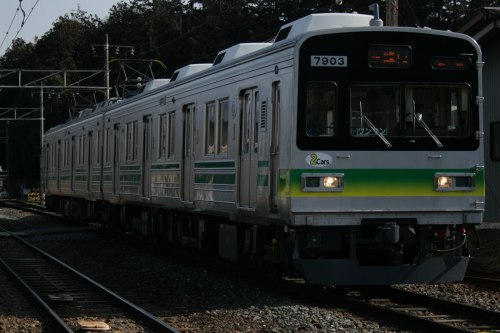
1000系以外にも秩父鉄道の車両が撮れたため、今回公開する。I would like to upload some photographs of trains on Chichibu Railway Line besides 1000 Series.7800系 7800 Series東急8090系の中間デハ車を先頭車化改造した2両編成。2013(平成25)年3月16日に営業運転を開始した、秩父鉄道では最新型。利用客が少ない時間帯の普通列車で主に使用されている。東急時代とは大きく異なるデザインの前面が特徴。2両編成であることを示す「2cars」のステッカーが付く。The latest model converted from intermediate carriages of Tokyu 8090 Series debuted on March 16th, 2013. This unit mainly runs as off-hour local trains.This unit has different front from that of the cab carriage of 8090 Series, and a "2cars" sticker is put on the front.6000系 6000 Series西武101系の改造車で、2006(平成18)年に登場した。急行「秩父路」号用車両として、3ドア→2ドア化、クロスシート化などの改造が施された。クロスシートは西武10000系で使用されていたもの(伊豆急行8000系のものと同じ)を再利用。西武101系は、1969(昭和44)年に西武秩父線の開業に合わせて登場した、山岳区間での高加減速性能を持たせた車両。6000系に改造された編成は、1979(昭和54)年以降に造られた「新101系」と呼ばれるタイプ。西武鉄道在籍時代にも、秩父鉄道への直通列車としての使用実績がある。The unit for "Chichibuji" express converted from Seibu 101 Series debuted in 2006. The main content of the conversion is reducing doors and changing seats from longitudinal to transverse, which used to be laid out in Seibu 10000 Series "New Red Arrow" (the same one as that of Izu Kyuko 8000 Series).Seibu 101 Series debuted in 1969 as the unit with high performance to be adaptable to Seibu-chichibu Line in the mountain area. The set converted to 6000 Series is the late model from 1979, which used to have run on Chichibu Railway Line before the transfer.7500系 7500 Series元東急8090系で、秩父鉄道入りは2010(平成22)年。1000系の置き換えを目的に譲り受けた。東急8090系は、1980(昭和55)年に東横線に登場した。コンピューターによる設計と軽量ステンレス車体の採用により、8000系と比べて1両あたり約2tの軽量化に成功した。1988(昭和63)年より大井町線に活躍の場を移し、2013(平成25)年まで活躍した。Former Tokyu 8090 Series coming in 2010 to replace 1000 Series.Tokyu 8090 Series debuted in 1980 on Toyoko Line. By computer design and adopting light stainless steel, this unit could lighten 2 tons than the former ones such as 8000 Series. It transferred to Oimachi Line in 1988 and had been in service until 2013.5000系 5000 Series元東京都交通局6000形で、秩父鉄道入りは2000(平成12)年。非冷房車であった2000系(元東急7000系)の置き換えを目的に登場した。東京都交通局6000形は1968(昭和43)年に都営三田線に登場した。日本の鉄道車両で初めて補助電源に静止型インバーターを採用した。三田線が当初、東武東上線との直通運転を想定していたため、東武8000系に合わせた高運転台構造とした。1999(平成11)年まで三田線で活躍し、秩父鉄道のほか、熊本電気鉄道やインドネシア・KRLジャポデタベックに譲渡された。Former Bureau of Tokyo Metropolitan Transportation 6000 Series coming in 2000 to replace 2000 Series which didn't have cooler.Bureau of Tokyo Metropolitan Transportation 6000 Series debuted in 1968 on Toei Mita Line. This unit first introduced inverter as auxiliary power unit. Because Mita Line planned to go through Tobu Tojo Line, the cab was elevated like Tobu 8000 Series. Some of the carriages also transferred to Kumamoto Electric Railway and PT. KAI Commuter Jabodetabek besides Chichibu Railway.デキ300形電気機関車 Class 300 electric locomotive秩父市の工場で生産されたセメントを輸送する貨物列車が走っていたことで知られていた秩父鉄道であったが、2006(平成18)年に廃止されてしまった。現在秩父鉄道の貨物列車の主力輸送品は、武甲山で産出された石灰石となっている。Chichibu Railway used to be known that freight trains transporting cement from Chichibu City was in service. However they completely ended in 2006. In the present, the freight train mainly transports limestone from Mt. Buko.7000系元東急8500系で、秩父鉄道入りは2009(平成21)年。東急8500系は1975(昭和50)年に田園都市線に登場した。翌1976(昭和51)年に東急電鉄の車両で初めてローレル賞を受賞した(秩父鉄道移籍後もローレル賞受賞のプレートが車内に見られる)。東急時代は10両編成時で8M2Tという強力な編成を組んでいた。Former Tokyu 8500 Series coming in 2009.Tokyu 8500 Series debuted in 1975 on Den-en-toshi Line. The next year it got Laurel Prize (after moving to Chichibu Railway the plate showing awarded the prize is put in its interior). When it was in service on Den-en-toshi Line in a set has 8 motored carriages a 10-carriage set.
Mar 9, 2014
閲覧総数 163
-
7
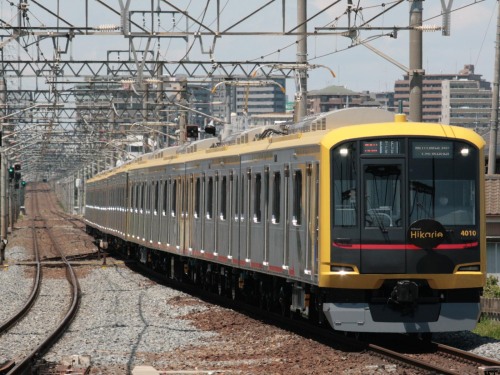
「Fライナー」東上線での運行概要が明らかに
2月9日、東武鉄道が、すでに発表済みの、東上線内を急行列車として運行する東京メトロ副都心線・東急東横線・横浜高速鉄道みなとみらい線直通列車「Fライナー」のより詳細な運行形態を含む、3月26日に実施する予定の東上線のダイヤ改正の詳細を発表した。「Fライナー」の運行区間は元町・中華街駅~森林公園駅間とし、平日・土休日共に日中時間帯を中心に運行される。東上線内各駅に停まる現行列車と比較して、Fライナーは元町・中華街駅~川越駅間を元町・中華街駅方面行きで11分、森林公園駅方面行きで10分で短縮され、同駅間を元町・中華街行きで84分、森林公園行きで82分で結ばれる。和光市駅では、「Fライナー」と東上線池袋駅発の準急列車と接続するダイヤが組まれる。この列車は、毎時25分・55分東上線池袋駅発で、現行ダイヤで森林公園行きの急行列車となっているのを、川越市行きの準急列車に変更するものである。同列車は和光市駅で東京メトロ副都心線からの川越市行き列車に接続するダイヤが組まれていることから、両列車の和光市駅以西のダイヤを交換する形になる。また土休日の朝・夕方には、元町・中華街駅~森林公園駅の快速急行列車も森林公園行き3本、元町・中華街行き2本が新設される。この快速急行列車は夕方の元町・中華街行き2本は完全な新設だが、朝の森林公園行き3本は、和光市駅の発時刻が現行の東上線池袋駅発の快速急行列車のものとほぼ同一であることから、和光市駅~森林公園駅のダイヤは同列車とほぼ同じと見られる。「Fライナー」とは違い、これらの列車に新しい愛称は付けられない。僕の主張が届いたというような大袈裟なことは言わないが、「Fライナー」の東上線内のダイヤについて、以前の僕の予想が大方的中した。今回のプレスリリースでは元町・中華街駅~川越駅間の時間で掲載しているが、横浜駅~川越駅間の所要時間も、現行の副都心線からの川越市行き各停列車が和光市駅で接続する東上線池袋駅発の森林公園行き急行列車のダイヤとを交換することで急行運転を実現させることも、そしてこれによって実態に合っていなかった東京メトロの路線図に載せられた副都心線の「森林公園駅まで直通運転」という文言がようやく実態に合ったものに変わるということもである。また、Fライナーよりも早い、東上線を快速急行列車として運行する列車の登場は予想していなかったが、東上線坂戸駅~寄居駅間および越生線全線が乗り降り自由となる「東急東武東上線ハイキングきっぷ」の需要を高めることにつながると言える。いずれにしても、今回のダイヤ改正で利便性がさらに向上する東横線・副都心線・東上線の直通列車に注目したい。On February 9th, Tobu Railway announced that the timetable on Tojo Line is being revised on March 26th including the detail of the F-Liner service going through Tokyo Metro Fukutoshin Line, Tokyu Toyoko Line, and Yokohama Minatomirai Railway Line.F-Liner going toward Tojo Line operates between Motomachi-chukagai Station on Yokohama Minatomirai Railway Line and Shinrin-koen on Tojo Line on daytime and it takes 84 minutes (toward Yokohama Minatomirai Railway Line) and 82 minutes (toward Tojo Line) between Motomachi-chukagai and Kawagoe, which is up to 11 minutes faster than the present ones which stops all stations between Wakoshi and Kawagoe.At Wakoshi Station, F-Liner connects the semi express train from Ikebukuro Station on Tojo Line, which departs at every 25 past the hour and 5 to the hour and changes from the present express train for Shinrin-koen connecting to the one from Fukutoshin Line at Wakoshi. It is like a exchange of the timetable of the two farther from Wakoshi.In addition, on the weekend and holiday morning and evening, rapid express trains from Fukutoshin Line newly starts to run. Among those, the timetable of the 3 on the morning resembles the ones from Tojo Line Ikebukuro in the present. Different from F-Liner, those trains doesn't have names.Not makeing a grandiose claim that my opinion reaches the railway operator, my expectation about the timetable of F-Liner is almost right; the travel time between Yokohama and Kawagoe, extension to Shinrin-koen using the way to exchange the timetable, and becoming reality of "going through Shinrin-koen Station" on Tokyo Metro's railroad map. I can't expect the appearance of the faster train than F-Liner and it may make more demand for "Tokyu Tobu Tojo Line Hiking ticket" which allows passengers an unlimited travel on Tojo Line between Sakado and Yorii and Ogose Line between Sakado and Ogose.At all events, I keep paying attention to the trains on those lines. 東武鉄道プレスリリース 2016年2月9日 「3月26日(土)東武東上線でダイヤ改正を実施!」
Feb 14, 2016
閲覧総数 1247
-
8
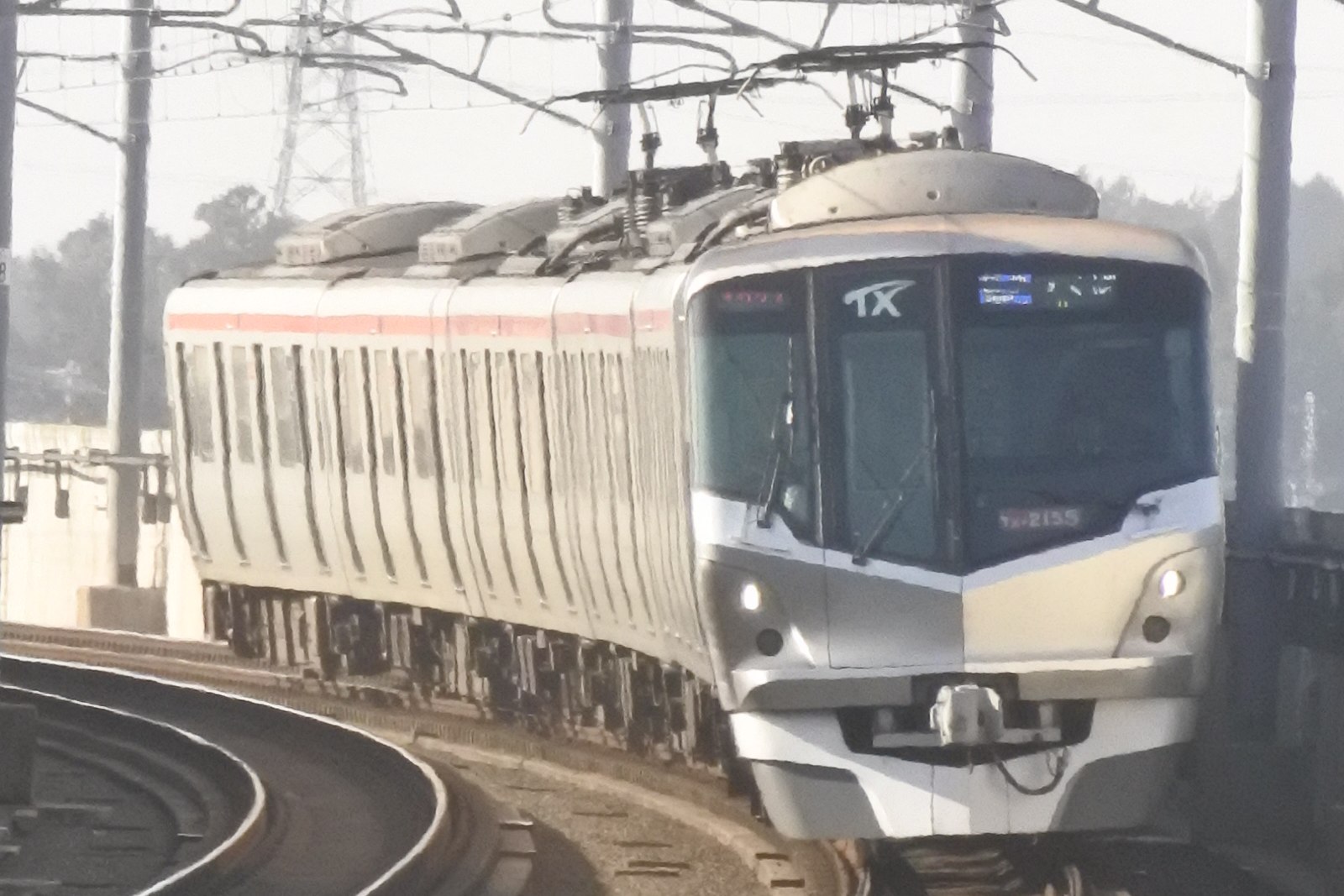
つくばエクスプレス線で撮り納め
2019(令和元)年最後の撮影は首都圏新都市鉄道つくばエクスプレス線。年末年始限定販売の「TX!1日乗り放題きっぷ」を使って、開業直後の2005(平成17)年以来14年ぶりに撮影に臨んだ。みらい平駅付近を走るTX-2000系電車2161F TX-2000 Series 2161F set near Miraidaira Station高架・地下区間が多いつくばエクスプレス線で、みらい平駅の近くにあるみらい平さくら公園は沿線から列車の姿を見ることができる数少ないポイントの1つ。研究学園駅付近を走るTX-2000系電車2155F TX-2000 Series 2155F set near Kenkyu-gakuen Station研究学園駅を通過するTX-2000系電車2158Fの秋葉原行き快速列車 TX-2000 Series 2158F set near Kenkyu-gakuen Station研究学園駅で筑波研究学園都市を背景に約130km/hという高速で駆け抜ける列車を撮影。手前の研究学園駅のホームドアと乗降確認モニター(ITV)はワンマン運転と万全の安全対策というつくばエクスプレス線の個性を出す要素としてあえて入れた。128km/hを指し示す速度計 八潮駅~三郷中央駅間にて speed mater at 128-kilometre/79.5-mile per hour列車全体を収めた写真以外にも、つくばエクスプレス線の特徴を捉えた瞬間を撮った。同線の快速列車は、最高130km/hで走る日本一速い通勤電車である。120km/h以上での走行が見られるのは八潮駅~つくば駅間であるが北千住駅~八潮駅間の地下トンネル内でも最高100km/hで走行する。最高速度に針が近づこうとしている速度計をガラス越しに捉えた。直流電化区間を走っていることを示す運転台の表示 electric supply indicator on the driver's cab in DC-electrified section直流電化区間を走っていることを示す運転台の表示 electric supply indicator on the driver's cab in AC-electrified sectionデッドセクション通過中の路線図式停車駅案内 A route map above the doors on a dead (non-voltage) sectionもう1つのつくばエクスプレス線の特徴と言えば、守谷駅~みらい平駅間には架線に流れる電気が直流から交流へと切り替わるデッドセクションがある。このデッドセクションを境に、秋葉原寄りが直流電化、つくば寄りが交流電化(50Hz)である。編成の直流から交流への架線電源切り替えは自動的に行われる。デッドセクション通過中は、車内の蛍光灯は点いているが、停車駅を表すライトが消灯されることで、デッドセクションを通過していることが判る。On December 31st, I went photographing trains on Metropolitan Intercity Railway Tsukuba Express Line with an unlimited travel one-day ticket.Shooting Tsukuba Express Line train from the railway side is difficult because most of the line consists of elevated or underground sections. Miraidaira Sakura Park near Miraidaira Station is one of the photo spots where the photographers can shoot the trains from the railway side (in the first photograph).From the platform of Kenkyu-gakuen Station, I shot a train against Tsukuba Science City (in the third one). The gates and monitors on the platform are in the photograph as the symbols of the cutting-edge solutions, safety and conductorless operation.I also captured not only the train running, but also the symbolic moments on the travelling; speed mater almost approaching 130-kilometre/80.78-mile per hour and electric supply indicators and route map above the doors on a dead (non-voltage) section between Moriya Station and Miraidaira Station.
Dec 31, 2019
閲覧総数 2051
-
9
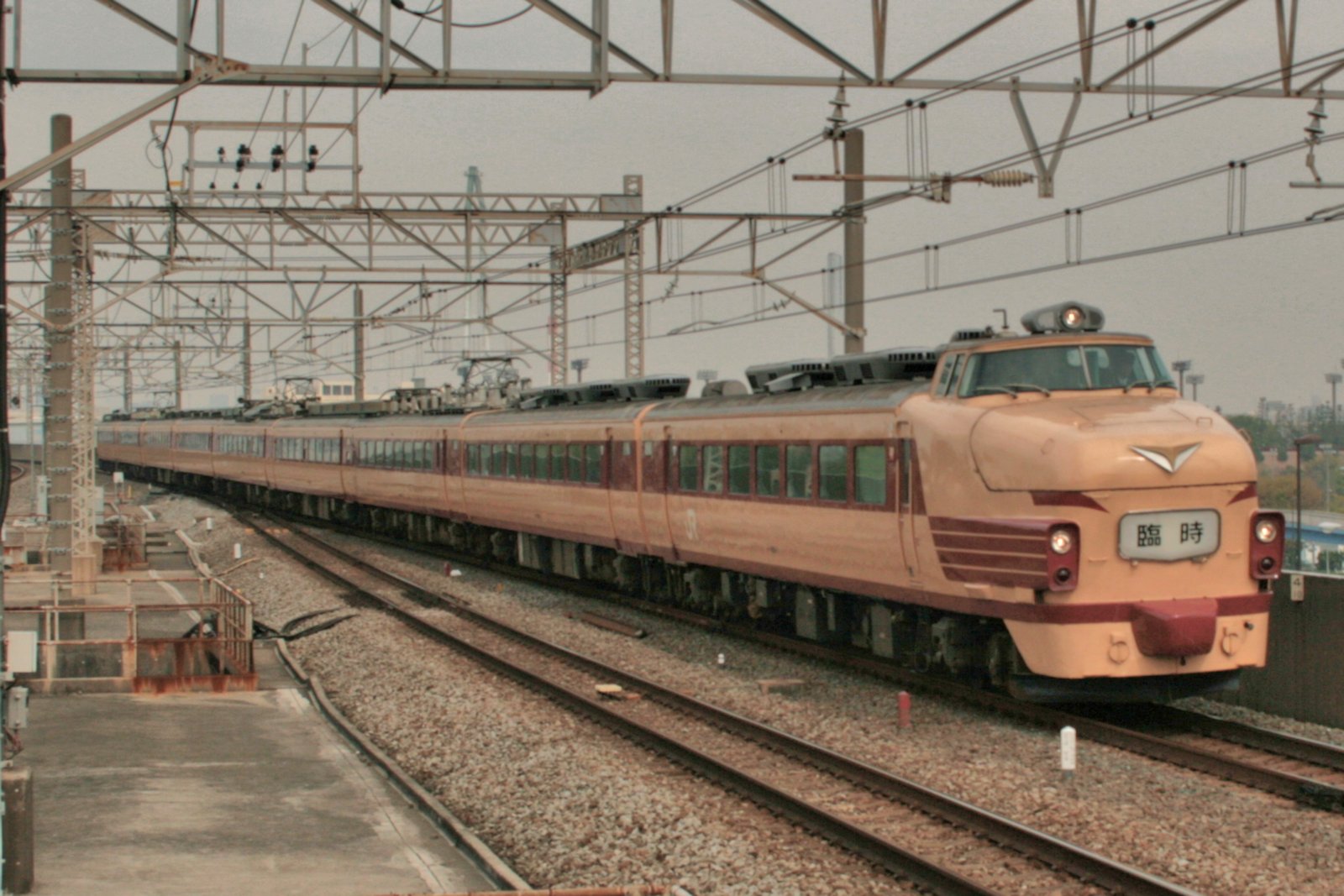
五島慶太社長が唱えた国鉄民営化
日本での「国鉄民営化」といえば、1987(昭和62)年4月1日に、日本国有鉄道(国鉄)が、北海道・東日本・東海・西日本・四国・九州のJR旅客6社と日本貨物鉄道(JR貨物)、鉄道総合技術研究所などに解体され、民営化したことを指す。1987(昭和62)年3月、国鉄は1964(昭和39)年度に初めての単年度赤字を経常して以来、累積債務を積み重ね37兆1000億円という巨額の借金を抱えて経営破綻した。しかしこれより遥か昔の1958(昭和33)年、東京急行電鉄の創業者である五島慶太さんは、国鉄の民営化論を唱えていた。猪瀬直樹さんの著書「土地の神話」は、五島社長の国鉄民営化論をこう書き表している。『国鉄は民間会社のように株主総会で経営を批判される機会がない。大きすぎるから幹部の意志が末端まで行き届かない。株式会社として十社ほどに分割したら各地区ごとに競争も生まれ、地域に応じた創意工夫も出る。沿線に全国で何百というバス会社の経営を許可しているが、それが乗客を奪っている。民間にすればすすんでバス会社を買収するだろうから、赤字も減る。中央政治を反映して僻地に路線が伸びてはいるが、採算を無視している。民間なら不採算線はバスに変える。それぞれの地域格差から、ストライキに対する考え方も変わってくるし、組合員も企業内容を理解しやすくなるので、無茶なストをしなくなる。企業が小さければ労使間の相互理解も出てくる……』公共企業体(国営企業)としての日本国有鉄道が1949(昭和24)年6月1日であるため、五島社長はそこからわずか9年後に、永田町の政治家達や霞ヶ関の官僚達よりも先に、早くも民営化の必要性を説いたのである。のちに国鉄の経営破綻へと導く要因の一つである政治の影響力の完全な排除、および職員のストライキ・順法闘争に端を発する列車の運休・ダイヤの大幅な乱れによる利用客の不満の爆発の軽減の必要性に気づいていたのであると言える。また「土地の神話」によると、五島社長は独占禁止法の施行を前に「大東急」を現在の東京急行電鉄・小田急電鉄・京浜急行電鉄・京王電鉄に分離することに反対の姿勢をとっていたが、分離推進派の小田急・京急・京王系の労働組合と、五島社長の邸宅に陳情しに押しかけられるほど激しく対立したため、五島社長も次第に分離やむなしに姿勢を変えていったという。五島社長の国鉄民営化論の背景には、自らが買収・合併を繰り返して造り上げた「大東急」の解体をめぐる買収・合併した各社の労働組合との対立が背景にあったと言える。「大東急」と同様に、肥大化した国鉄も事業規模を独占禁止法に触れない程度に、そして労使対立が激しくならない程度に適正化し、地域の実情にあった鉄道経営を成り立たせることができるという思いがあったのだろう。そもそも国鉄の公共企業体化は、GHQが当時の運輸通信省の海運総局と鉄道総局(旧鉄道省)との業務の違いを指摘したことが発端である。海運総局は監督業務のみであったが、鉄道総局は監督業務に加えて現業(直営の鉄道事業)があることが不公平であるとして、直営から分離することが望ましいとした。この時点でも民営化されることも検討されたが、全国津々浦々まで行き届く鉄道ネットワークの維持は利潤を追求しようとすることが難しいという考え方から、国営の道を選んだ。しかし蓋を開けてみると、各年度の予算は国会の承認を必要としたり、国鉄を運輸大臣の監督下に置き、トップである総裁を内閣が任命するなど、過度に政治や法律による制限を受け、さらには「公共性」の名のもとに採算性を無視した地方への新路線建設を次々と推し進めたことから、独立採算による経営の政府からの独立とはかけ離れたものとなった。これらに加えて公共企業体等労働関係法(現在の行政執行法人の労働関係に関する法律)で、国鉄職員によるストライキが禁止されていたことや生産性向上運動、いわゆるマル生運動による労使関係の悪化が、列車のノロノロ運転に代表される順法闘争へとつながり、上尾事件や首都圏国電暴動などの利用客による列車襲撃事件を引き起こした。運輸通信省からの経営分離を実現させたのは見かけだけであり、結果として37兆1000億円という巨額の借金を抱えて経営破綻した。背景には自主的な経営の未確立、労使対立の悪化、採算を無視した地方路線の過大な建設があったことは二度言うまでもない(鉄道ファンの常識である)。もしも国鉄が、元鉄道省官僚であった五島社長の独り言を助言を聞き入れ、民営化が実現していたら、JRは一体どうなっていたことだろうと、僕は物思いにふける。Privatization of Japan National Railway (JNR) happened on April 1st, 1987; being broken up into 6 JR passenger railway companies, Hokkaido, East Japan, Central Japan, West Japan, Shikoku, and Kyushu, Japan Freight Railway, and Railway Technical Research Institute, etc.. JNR went bankrupt under the burden of 37-trillion-100-billion-yen debts.However, in 1958, Keita Goto, founder of Tokyu Corporation and a former Railway Ministry bureaucrat, advocate the privatization of JNR."Tochi no Shinwa (the Myth of the Residential Area in the Soil)", authored by Naoki Inose, partly features his own opinion. He criticized its unprofitable management, the large size of its business, which made a lack of communication between the bosses and the employees and shift of passengers to buses. To remove the political intervention completely, to review the size of the business, to compete between bus companies, and to keep good relation between capital and labour not to go on crazy strike, which made the delay of trains and made some passengers angry, he presented that JNR needs the privatization and separation into about 10 companies.This book also said that his opinion was inspired by his experience; Goto has required the separation of his company into Tokyu, Odakyu, Keikyu, and Keio, the last three of which were merged into, by some his employees from these acquired companies, but he first objected to it. As the men came to his house to make the petition, he gradually changed his attitude. To adopt the same method, Goto dreamed of a new railway business which was reflected by each region's character.JNR state enterprise was established to independent from Transportation Ministry under GHQ's advice about the difference of the work of the Marine Transportation Department and Railway Department of the Ministry. The former one was the only supervising ship, but the latter one was both supervising and direct operation of the railway. At that time the privatization was also considered, but it was very difficult for the private company to maintain the railway network all over Japan. However, some acts of the enterprise were limited by the governmental system and the law. the budget had to pass the Diet's agreement, kept being supervised by Transportation Ministry and the president was appointed by the Cabinet. Also, unprofitable lines were continuously constructed under Government's "public benefit".The strike by JNR staffs was prohibited by Public Corporations and Government Enterprises Labor Relations Act and training of staffs to comply with the management made the relation between them bad, which leads the train attack by passengers or persons at stations caused by the train's delay by driver's purpose to require the right of the strike.If JNR should have adopted his opinion on that time, those privatized companies would move through a different history from the present JR?
Jul 14, 2015
閲覧総数 266
-
10
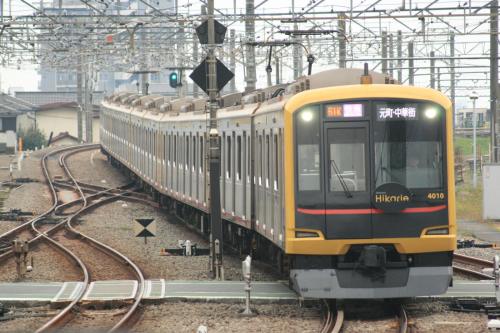
「東横特急」から「Fライナー」へ
18日、2016(平成28)年3月26日より、横浜高速鉄道みなとみらい線・東急東横線・東京メトロ副都心線・西武池袋線・東武東上線直通の最速達列車に「Fライナー」の愛称を付けて運行することが各社から発表された。今回登場する「Fライナー」の運行間隔は、現行の「東横特急」と同じ15分間隔で、西武池袋線方面への列車と東武東上線方面への列車がそれぞれ30分間隔で運行される。「Fライナー」の愛称は、速さを意味する「Fast」、相互直通運転の5社を示す「Five」、副都心線のローマ字表記「Fukutoshin」の頭文字「F」から名づけられた。現在東横線・みなとみらい線を特急(「東横特急」)、副都心線を急行、池袋線を快速急行、東上線を急行の種別で走る列車が「Fライナー」の統一された愛称で呼ばれることとなる。東上線を急行運転する東京メトロ直通列車は今回が初登場となる。以前にもこのブログで書き表した通り(2013(平成25)年6月9日「もしも東急東横線の「特急」を正式に「東横特急」に改称したら」)、僕も直通運転先で別々の種別を名乗る列車に対して、少々ややこしい感を抱き、例えば西武池袋線や東武東上線から副都心線・東横線直通列車に乗車する際に「この電車は東横線では『東横特急』に変わるのだろうか」と不安になる乗客も少なからずいるのではないかと疑問に思う乗客が少なくないと見ていたことから、阪神と山陽電鉄の「直通特急」のような統一された種別への改称を提案した。さらに言えば、2015(平成27)年時点のダイヤでは、東京メトロ副都心線・有楽町線から来た列車は東武東上線ではすべて「各停」に格下げされてしまい、さらにはふじみ野駅で後続の快速列車に抜かれるため、持ち前の速達性を損ねていたことも問題視していた。東横線・副都心線では、直通運転開始当初より、JR東日本湘南新宿ラインと横浜駅~渋谷駅・池袋駅間で競合しており、運賃では東横線・副都心線が優位に立っていたが、所要時間ではわずかに湘南新宿ラインが勝り、東横線・副都心線は横浜駅、渋谷駅、池袋駅のホームがいずれも地下深くにあるため、地上出口までの移動距離でも不利だった。しかしさらに視野を広げて、横浜駅~川越駅間で見てみると、JR東日本では湘南新宿ラインまたは東海道線・上野東京ラインと埼京線を乗り継ぐ必要があるが、「Fライナー」では乗り換えなしであることに加えて、所要時間でも東横線・副都心線・東上線経由が「Fライナー」で74分(推定 現行の東横特急・副都心線急行列車の横浜駅~和光市駅の所要時間と和光市駅での停車時間、東上線急行列車の和光市駅~川越駅の所要時間とを合算 和光市駅の停車時間は1分で計算)であるのに対して、JR東日本では湘南新宿ライン・埼京線経由が90分(横浜駅~大崎駅は湘南新宿ライン特別快速列車利用、大崎駅~川越駅は埼京線快速列車利用 大崎駅での乗り換え時間は5分で計算)、東海道線・上野東京ライン経由が87分(横浜駅~赤羽駅は東海道線・上野東京ライン各停列車利用、赤羽駅~川越駅は埼京線快速列車利用 赤羽駅での乗り換え時間は4分で計算)、運賃でも東横線・副都心線・東上線経由が860円(IC乗車券利用の場合は853円)、JR東日本湘南新宿ライン・埼京線経由および東海道線・上野東京ライン・埼京線経由が1,320円(IC乗車券利用の場合は1,317円 最短経路で運賃計算するためいずれの経路でも運賃は同額)となる。さらには川越駅の東上線ホームは、埼京線と同じ地上にあるため、横浜駅・渋谷駅・池袋駅とは違い、列車を降りてから出口までの移動距離も短い。横浜駅~川越駅間では「Fライナー」が、乗り換え回数、所要時間、運賃、川越駅での出口までの移動距離、いずれでも優勢となる。現行でも東横線・副都心線・東上線直通列車の横浜駅~川越駅の所要時間は83分だが、前述のとおり「Fライナー」では停車駅が少ないことと、ふじみ野駅での待避がなくなることから74分に短縮されることが見込まれるため、さらに優勢となる。僕として気になる点は、東上線でも急行列車となる「Fライナー」が、現行ダイヤで東横線・副都心線からの列車が和光市駅で接続する東上線池袋駅発の急行列車と和光市駅以西のダイヤを交換する形で、森林公園駅まで運行するようになるのかどうかということである。路線図の上では、「森林公園駅まで直通運転」となっているが、森林公園駅まで直通する列車は朝と夜にしか運行されず、しかも東武車による入出庫列車に限られ、東京メトロ車、東急車、横高車による運用がないため、これも実態に合っていないと考えていた。2013(平成25)年3月のダイヤ改正まで、同じ東京メトロの日比谷線では、東武伊勢崎線(東武スカイツリーライン)への直通区間は北千住駅~東武動物公園駅間であったが一部に南栗橋駅発着の列車が運行されていた。しかし南栗橋駅まで運行される列車は、こちらも東武車による入出庫列車のみであり、運行本数も少なかったため、東京メトロの路線図では、日比谷線は「東武動物公園駅まで直通運転」とし、南栗橋駅までは日常的に運行されていないこと、東京メトロ車が南栗橋駅まで乗り入れないことが判りやすかった。「Fライナー」が日常的に森林公園駅まで運行され、名実共に「森林公園駅まで直通運転」となることも、合わせて願いたい。On 18th, Tokyu Corporation, Tokyo Metro, Tobu Railway, Seibu Railway, and Yokohama Minatomirai Railway announced that they would renamed the fastest trains between Motomachi-chukagai Station on Yokohama Minatomirai Railway Line and Kotesashi Station or Hanno Station on Seibu Ikebukuro Line or Kawagoeshi Station or Shinrin-koen Station on Tobu Tojo Line via Tokyu Toyoko Line and Tokyo Metro Fukutoshin Line, which operates as limited express on Yokohama Minatomirai Railway and Toyoko Line, express as Fukutoshin Line and Tojo Line, and as rapid express on Ikebukuro Line, "F Liner", after the initial of "Fast", "Five", and "Fukutoshin Line" on March 26th, 2016. It is also first time that the express train train going through Fukutoshin, Toyoko, and Yokohama Minatomirai Railway Line appears on Tojo Line. "F Liner" runs every 15 minutes, the same as limited express trains on Toyoko Line in the present, and the trains going toward Ikebukuro Line and the other toward Tojo Line does on an every-30-minute basis. As I wrote on June 9th, 2013, I have felt that the trains running over two or more lines and changing its kind at the border of the lines sometimes gives us a sense of incongruity and that makes some passengers confused about whether it changes limited express on Toyoko Line like that of express train on Tobu Isesaki and Nikko Line train changing to local on Tokyu Den-en-toshi Line. To resolve this problem, I suggest that the new unified name of the fastest train on those Lines like "going-through limited express" on Hanshin Electric Railway and Sanyo Electric Railway. In addition, I see that all of the trains going through Tojo Line changes to local and are passed following rapid train at Fujimino Station makes those trains slow down as a problem.Toyoko Line and Fukutoshin Line competes JR Shonan-shinjuku Line between Yokohama Station and Ikebukuro Station since the going-through service started. Though the fare of Toyoko Line and Fukutoshin Line is inexpensive, Shonan-shinjuku Line train is little faster than those and the platform for Toyoko Line and Fukutoshin Line at Yokohama, Shibuya, and Ikebukuro are located at deep under the ground, which makes passengers walk little long distance from the entrance of the station. However, seeing a larger area, "F Liner" can serve the travel between Yokohama Station and Kawagoe Station with no transfer, more inexpensive fare, and faster. It takes 74 minutes (estimated from the present timetable of limited express on Toyoko Line, express on Fukutoshin Line, and express on Tojo Line and one-minute stopping time) and 860 yen (IC card fare 853 yen). On the other hand, the travel by JR Lines needs a transfer at Osaki, in case of via Shonan-shinjuku Line, or AKabane, in case of via Tokaido and Ueno-tokyo Line, to Saikyo Line, it takes about 1 hour and an half and costs 1,320 yen (IC card fare 1,317 yen) in both routes. Furthermore, different from Yokohama, Shibuya, and Ikebukuro, Tojo Line platform at Kawagoe Station is located on the ground, the same level as JR East's, which makes people's walking from the train to the station exit shorter."F Liner" can shorten its travel time than the present to decrease the stopping stations and stop waiting for the following train passing.One more what I wonder is "F Liner" operation is being extended to Shinrin-koen Station using the way to exchange the timetable of the train from Toyoko and Fukutoshin Line and the express train from Ikebukuro on Tojo Line connecting to the former at Wakoshi. Though the railroad map says Fukutoshin Line trains go through Tojo Line to Shinrin-koen Station, the train for Shinrin-koen from Fukutoshin Line operates in the morning and evening only and all of them does by Tobu carriages, which doesn't match the reality.In case of Hibiya Line before March 16th, 2013, some Hibiya Line trains went through Tobu SKYTREE Line to Tobu-dobutsu-koen(Tobu Zoo and Amusement Park) Station, but some trains by Tobu carriage operated from Minami-kurihashi. The map of Tokyo Metro said Hibiya Line train did to Tobu-dobutsu-koen, which made passengers easy to understand the trains by Tokyo Metro carriage didn't go through and the daytime operations didn't to Minami-kurihashi.I also wish "F Liner" regularly operates from/to Shinrin-koen Station to solve the problem on map. 東急電鉄 プレスリリース 2015年12月18日「東武東上線・西武池袋線 ~ 横浜高速みなとみらい線間を運転する速達性の高い直通列車の愛称名を『Fライナー』といたします。」
Dec 27, 2015
閲覧総数 8417
-
11
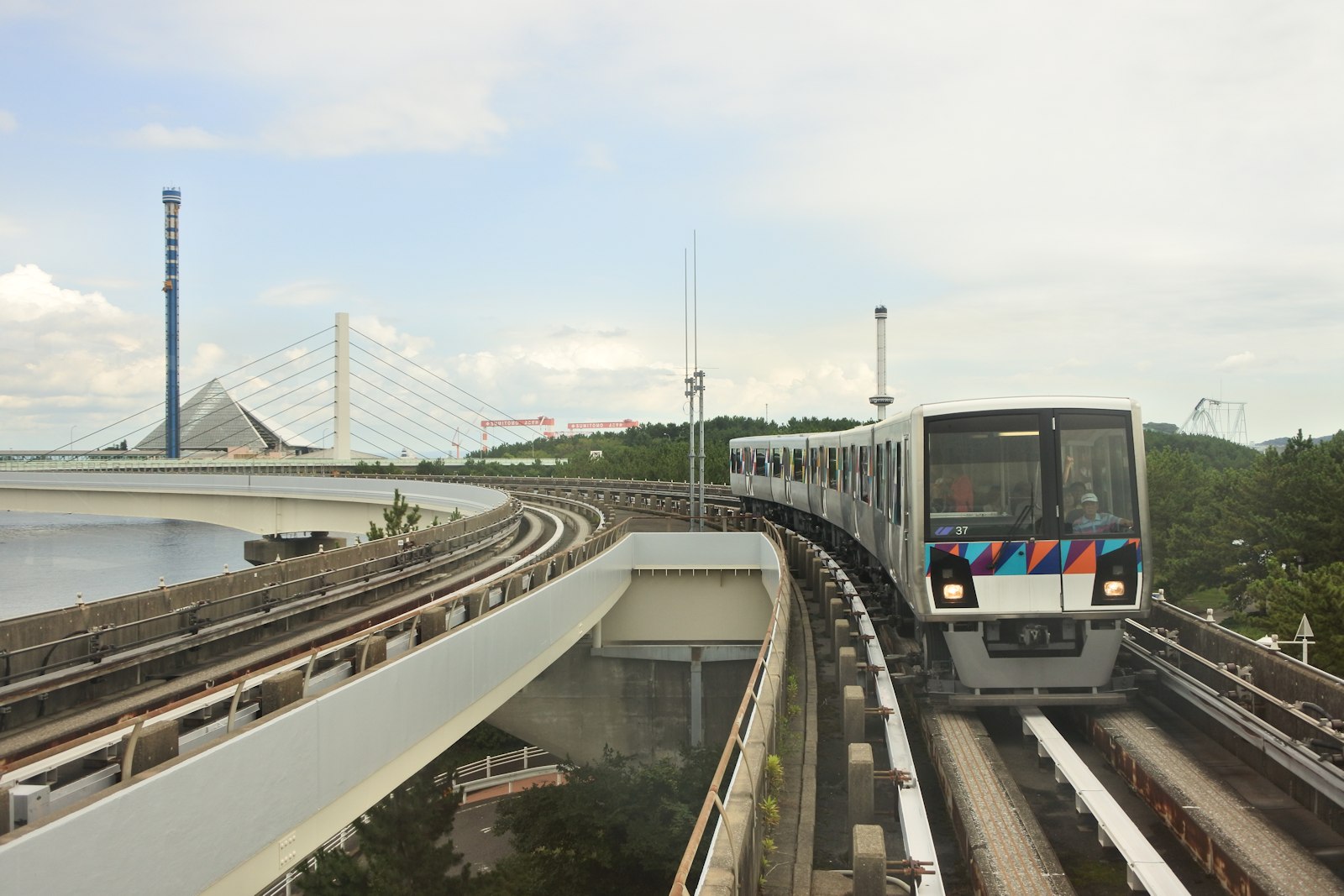
横浜・八景島シーパラダイスを背景に走る横浜シーサイドライン2000形
相鉄本線に続いては、横浜シーサイドライン金沢シーサイドラインへ。金沢シーサイドラインでの撮影は横浜新都市交通時代の2009(平成21)年以来で、2000形は初めての撮影となる。金沢シーサイドライン沿線の最大の観光地といえば、横浜・八景島シーパラダイス。ということで、同パークを背景に八景島駅へと入線する金沢八景行き列車を撮影。「ブルーフォール」「サーフコースター リヴァイアサン」「シーパラダイスタワー」といったアトラクションや、三角屋根の水族館の建物もしっかりと入れた構図で、これらのアトラクションや建造物がなるべく列車で隠れないようにして狙った。列車が来たときにちょうど、パークのアトラクションの1つ、「ブルーフォール」も上昇中だった。Following Sotetsu Main Line, I also photographed Yokohama Seaside Line Kanazawa Seaside Line. It was first time for me to go photographing the train on Kanazawa Seaside Line since 2009, in Yokohama New Transit period, and to do 2000 Series.I shot 2000 Series at Hakkeijima Station against Yokohama Hakkeijima Sea Paradise, an aquarium and amusement park and the most famous tourist attraction along Kanazawa Seaside Line. In the photograph, the rides, such as a free-fall ride "BLUE FALL", a roller coaster "Surf Coaster LEVIATHAN", and a revolving gyro tower "Sea Paradise Tower", and aquarium building are laid out not hidden by the train.When the train coming, "BLUE FALL", was going up.
Aug 13, 2017
閲覧総数 466
-
12

青春18きっぷで北陸・小浜・舞鶴線&北近畿タンゴ鉄道
2日目は青春18きっぷでのんびり北陸本線・小浜線・舞鶴線と北近畿タンゴ鉄道の旅。久しぶりの北陸本線と初乗車の小浜線・舞鶴線・北近畿タンゴ鉄道各線を楽しみに朝の福井駅へ。エキナカのコンビニでお弁当を買ってホームに出ると、金沢方面行きのホームに681系電車の「おはようエクスプレス」が入ってきた。「おはようエクスプレス」は朝に1本しかない福井駅~富山駅間を結ぶ特急。貴重な列車であるためすかさず撮影。撮影後、空が暗くなり雨が降り出した。前日から天気が悪い。雨が降る外にカメラを向けていると、7:06発の敦賀行きの各停列車が入ってきた。419系電車であった。419系は元々は国鉄583系電車で、寝台特急の需要減によって余剰となったものを近郊型に改造した電車である。上に419系電車と583系電車の写真を載せておく。その発車前に7:01の「雷鳥」が来た。「雷鳥」は大阪駅~金沢駅間を結ぶ特急列車で、クリーム色(クリーム4号)の車体に窓周りが赤(赤2号)の、いわゆる「国鉄色」の485系電車で運行されている数少ない列車。先頭車両はパノラマグリーン車のクロ481形であった。「雷鳥」を撮ってから419系の車内へ。「鉄道車両列伝」で見た583系の面影が残る。ボックスシートの上には網棚と大きな蓋があり、蓋の中に2段目、3段目のベッドがしまわれている。網棚にはつり革が吊り下げられていて近郊電車に生まれ変わったと言えなくもなかったが、ほとんど583系だった。折りたたみ式のドアが閉まり、電車は雨の中敦賀へと向かう。雨は電車に乗っているうちに止んでしまった。さて、お楽しみは敦賀に着く手前。架線の電気が交流から直流に切り替わる場所がある。そこでは交流の電気と直流の電気が混ざらないように、架線に電気が流れていない。そこで車内の照明が数秒間消える。この電気が流れていない区間は「デッドセクション」という。デッドセクションを越えて敦賀に着くと、小浜線に乗り換える。小浜線の発車までは15分あった。僕は後続の683系電車の米原行き「しらさぎ」を撮ってから小浜線乗り場へ行った。今回、小浜線には初めて乗る。ホームには125系電車が2両で停まっているかと思いきや、車止め寄りの車両は回送で、前1両だけが営業運転に就いていた。これに乗って小浜駅へ向かう。小浜線は2003(平成15)年までは電化されておらず、キハ58系気動車などが走っていたが、今では最新のVVVF制御の125系電車がほぼすべての運用を担っている。125系はアーバンネットワークで活躍する207系電車や223系電車と同じ警笛(ミュージックホーン)を鳴らす。電化でイメージががらりと変わってしまったように思えた。小浜駅での後続の電車までは2時間あった。僕は駅前の観光案内所で近場に観光スポットがないか聞いてみた。すると、海の前にある「若狭おばま食文化館」を勧めてくれた。駅前の商店街を抜けて海沿いの道へ、若狭おばま食文化館は正に日本海のまん前だった。そこではたくさんの鳶が羽ばたいていた。僕は小浜の特産品である「若狭塗り箸」を鑢で磨いで模様を出す体験をした。最初は隣のお食事処でランチタイムにしようかと思ったが、塗り箸磨ぎに意外に時間がかかり、駅との間にあった弁当屋でお弁当を買って、電車の中で食べることにした。駅に戻り電車に乗ろうとした時、また雨が強く降り出した。だがこれも小浜線で東舞鶴駅まで揺られている間に弱くなった。東舞鶴駅ではすぐ隣のホームに舞鶴線の115系電車が停まっていた。切妻前面の改造車だった。写真は福知山駅で撮影西舞鶴駅までの1区間だけ舞鶴線に乗る。西舞鶴駅の回送線には183系電車が、綾部方には「まいづる」の、東舞鶴方には「回送」のヘッドマークを出して停まっていた。京都駅・新大阪駅から城崎温泉駅・天橋立駅・東舞鶴駅方面に向かう特急列車として運行される183系電車はもともと485系で、写真の編成は、改造前は大阪~富山の特急「スーパー雷鳥」の増結編成として、福井で見たパノラマグリーン車付きの編成と共に北陸本線などで走っていた。僕は15年前にも福井で「スーパー雷鳥」として見ており、485系なのに運転席が高くない車両としてよく覚えている。今はパノラマグリーン車編成は白と青の「スーパー雷鳥」色から国鉄色になって「雷鳥」に、増結編成は交直両用から直流専用に改造され、JR西日本色になって「まいづる」になった。綾部方はJR西日本でしか見られないクモハ183形の200番台。ここから北近畿タンゴ鉄道宮津線に乗り換える。宮津線はJRの路線でないため青春18きっぷは使えないが、青春18きっぷ利用者のために1人500円で普通・快速列車専用のフリーきっぷを発売している。ホームで待っていたのはKTR700形気動車701号車の網野行き各停列車。車内にはクロスシートが並び、背もたれには地元企業の広告が入っていた。発車まで座って待っていたが、ここでまた雨が強くなり、しかも接続の舞鶴線電車が遅れていたため、接続を待ってから発車となった。雨が強く振る中3分ほど遅れて発車した。そして、この雨が僕の鉄道旅史上最悪の事態を起こしてしまうとは、僕は思ってもいなかった。事態は天橋立の1つ手前の栗田で起こった。なんと宮津線が運転見合わせになってしまったのである。列車無線の情報によると運休区間は栗田駅~但馬三江駅間。僕は大雨の中車両の中に居続けた。そして、運転士さんが僕達乗客に目的地を聞いてきた。僕は「丹後大宮まで」と答え、しばらくするとなんとタクシーを手配してくれた。鉄道の代行であったため、タクシー代を払う必要はなかった。丹後大宮駅に着くと、僕が乗った網野行きの1本前を行くKTR8000形気動車「タンゴディスカバリー」が停まっていた。ここで運休になってしまったのだろう。タクシーで移動中にまた雨は弱くなったため、僕はホームに行ってKTR8000形気動車を撮影。撮影後、僕は宿に電話をかけ丹後大宮駅着いたことを伝え、迎えの車を出してもらった。後にテレビのニュースで知ったのだが、宮津線は夜になっても丹後大宮駅~網野駅間が運転見合わせになっていた。On the 2nd day, I traveled by local trains on Hokuriku, Obama, Maizuru, and Kitakinki Tang Railway Lines with Seishun 18 Ticket. I got up early and went to Fukui Station.I bought my breakfast at the convenience store in the station and went upstairs, to the platform. Then I met "Ohayo Express". "Ohayo Express" from Fukui has just one operation in the weekday morning.After I took a photo of "Ohayo Express", it rained again. I set my camera at the end of the platform, when the train bound for Tsuruga came to me. It was 419 Series, converted into a commuter train from 583 Series. I also show you 583 Series. At 7:01, "Raicho", a limited express between Osaka and Kanazawa and 485 Series with cream and red colors, commonly called "JNR color", used, also came. The front car was the green car with front view, Kuro481.I got on 419 Series after I took some photos of "Raicho". The interior of 419 Series is the same as 583 Series which I saw on "The Legend of Trains". There were some covers above the seats and beds are in them. It has some straps hang down from its baggage racks, but it has little change. On the way to Tsuruga, it stopped raining. Then, Hokuriku Line changes its electricity from AC to DC near Tsuruga. There it has no electricity not to mix AC and DC and the lights in the train turned off in a few seconds. At Tsuruga, I transferred to Obama Line. But I had 15 minutes until Obama Line left. I took a photo of "Shirasagi" before I got on Obama Line.It was first time for me to get on Obama Line. At the platform, it seemed like two cars of 125 Series were stopping as I came there. But one of them was out of service. I got on it to Obama. Until 2003, Obama Line wasn't electrified and old diesel train ran. But now, 125 Series with high-technology runs. 125 Series also equips the same horn as 207 Series and 223 Series.Until the next train came, I have 2 hours. I wanted to go somewhere around Obama Station, and asked at the information desk. Then the information desk recommended me "Mermaid Plaza", the museum of foods in Obama. I walked through the shopping street and the seaside way. Marmaid Plaza places in front of the Sea of Japan, and many kites flew at the coast.I made my original decorated chopsticks. Decorated chopsticks are a famous product in Obama. And I wanted to eat local foods in Obama at the neighbor restaurant, but I spent time to make the chopsticks. So I bought a boxed lunch and ate it on the train. As I went through the gate, it started to rain hard again, but it turned to a light drizzle while I was in the Obama Line train. At the last stop, Higashi-maizuru, Maizuru Line 115 Series was waiting for passengers. I got on Maizuru Line to the neighbor station, Nishi-maizuru. 183 Series "Maizuru" was stopping at the side track of Nishi-maizuru.Some 485 Series converted to 183 Series for the limited express trains from Kyoto or Shin-osaka to Kinosaki-onsen, Amano-hashidate, or Higashi-maizuru. 183 Series in this photo was former 485 Series for "Super Raicho", from Osaka to Toyama. 15 years ago, I saw this type coupled with another set with Kuro481 at Fukui Station. I knew this type was known as 485 Series with low floor cab. The front coach to Ayabe is Kumoha183 which we can see only in JR West area.There, I transferred to Kitakinki Tango Railway (KTR). KTR Line isn't JR, so we can't use it with Seishun 18 ticket. But KTR sells one-day pass for local and rapid trains for Seishun 18 Ticket users. The train I got on was KTR701 for Amino. Its seats face foward and advertisements of local companies were on their back. I waited for time to depart in the train, but it started to rain hard again and the departure was postponed until the Maizuru Line train came because Maizuru Line was delayed. KTR train I got on was 3 minutes behind time. Then I didn't know the rain caused the awful event in my travel. The event happened while the train stopping at Kunda Station, one station before Amano-hashidate. KTR line stopped because of heavy rain. By the information from radiotelegraphy, KTR stopped between Kunda and Tajima-mie. I thought what should I do on the train. Then the driver arranged for a taxi to pick the passengers up. I went out of Kunda Station and took the taxi. I told the taxi driver that I wanted to go to Tango-omiya. I didn't have to pay the fare because I used it as the substitute for the train. When I came to Tango-omiya Station, "Tango Discovery" was stopping at a platform. I thought it also stopped operating from Tango-omiya. Then I called the hotel up to come there and pick me up.I knew that KTR between Tango-omiya and Amino still stopped in that night on the TV news.
Jul 28, 2008
閲覧総数 552
-
13
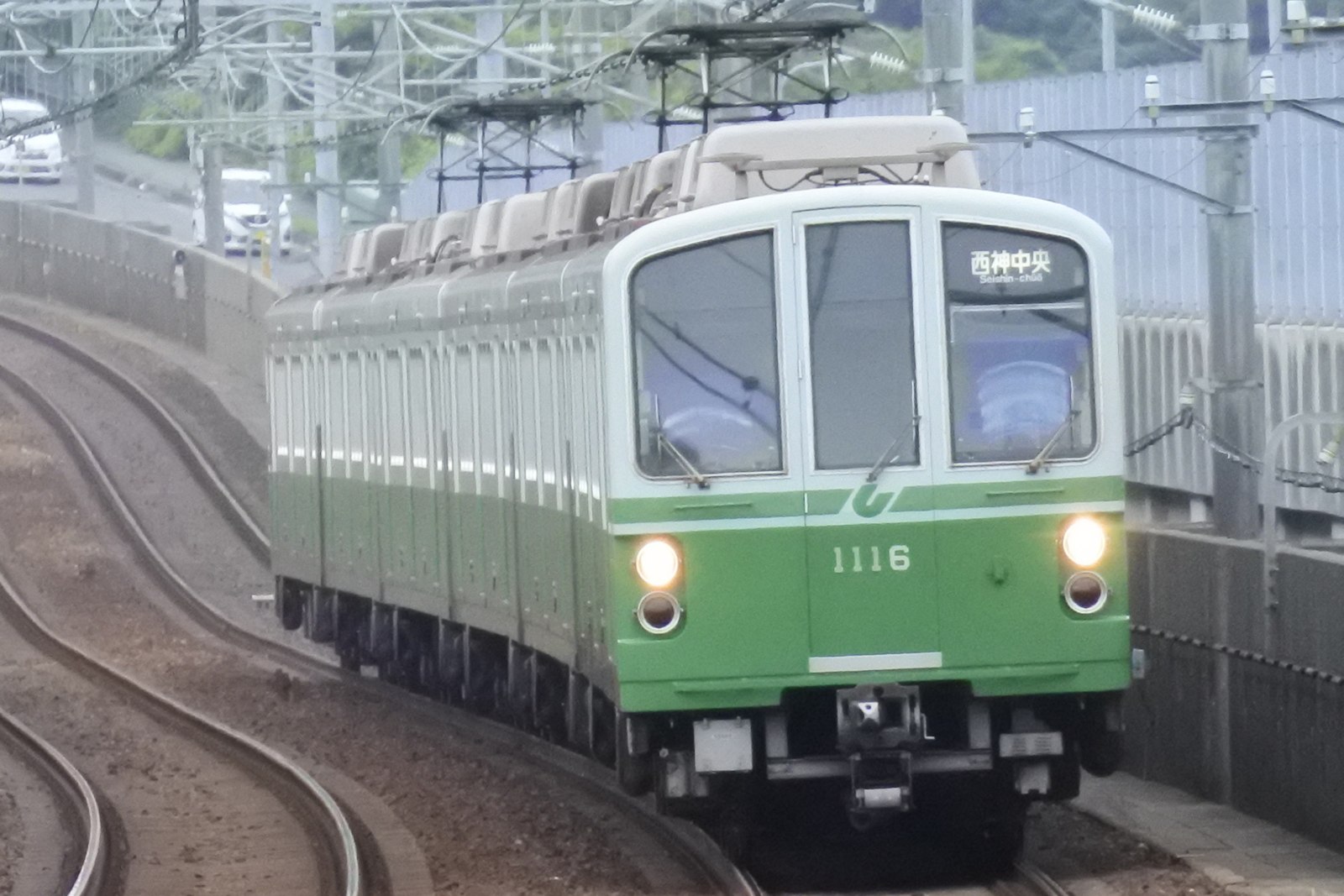
関西撮影旅行2022 神戸市営地下鉄西神・山手線を撮る
神戸市営地下鉄海岸線に続いては、同じ神戸市営地下鉄の西神・山手線へ。僕が撮影場所に選んだのは伊川谷駅。西神・山手線では1000形電車・6000形電車・元北神急行電鉄の7000系電車(2020(令和2)年の北神線の交通局移管により神戸市交通局へ移籍)の3車種が運行されているが、このうち7000系は日中運用がないため、1000形と6000形の2車種に限られる。1977(昭和52)年の西神・山手線新長田駅~名谷駅間開業以来45年に渡って活躍し続けてきた1000形電車。1000形も6000形に置き換えられる形で廃車が進行しており、2022(令和4)年8月時点では6両編成4本が在籍している。1000形は2023(令和5)年3月までの引退が発表されている。6000形は2022(令和4)年8月時点で6両編成24本が投入され、2019(平成31)年のデビューから3年で一気に主力車両へと成長した。2022(令和4)年までに2000形電車・3000形電車の置き換えが完了し、西神・山手線のほとんどの列車が6000形で運行されるようになった。もうすぐ見られなくなる1000形と6000形のツーショットも撮影。Transferring to Kobe Municipal Subway Seishin-yamate Line at Shin-nagata Station, I went to Ikawadani Station to photograph Seishin-yamate Line trains.In 2022, 1000 Series, 6000 Series, and 7000 Series are in service on Seishin-yamate Line. However, 7000 Series is only in the morning and evening only.1000 Series has been in service since the opening of Seishin-yamate Line in 1977. Because of the replacement by 6000 Series, the existence of 1000 Series has been decreasing. In August, 2022, four 6-carriage sets are in service. On that day, 1116F was (first photograph).6000 Series has been in service since 2019 to replace all 1000 Series, 2000 Series, 3000 Series, and 7000 Series. The replacement of 2000 Series and 3000 Series had finished in 2022, and that of 1000 Series and 7000 Series plans to finish in 2024 (second photograph).I could shoot a two-shot of 1000 Series and 6000 Series (third photograph).
Aug 25, 2022
閲覧総数 826
-
14
駿豆線にもIC乗車券は必要か
8月5日・6日に伊豆箱根鉄道駿豆線に乗車して不便に感じたことが1つある。それは、Suica・TOICAなどのIC乗車券が使えないという点だ。伊豆長岡駅・修善寺駅の構内にある売店・コンビニエンスストアではSuica・TOICAなどの電子マネー決済に対応しているものの、駿豆線列車の乗車券としてこれらのカードを使うことができないのである。伊豆箱根鉄道の営業エリアは、神奈川県の小田原・箱根エリアと静岡県の伊豆半島(熱海エリアと中伊豆・三島・沼津エリア)に広がる。このうち大雄山線、小田原・箱根エリアおよび熱海エリアの路線バスではIC乗車券が使用できる一方で、駿豆線や中伊豆・三島・沼津エリアの路線バスでは使用できない。今日では、Suica・PASMO・Kitaca・TOICA・manaca・ICOCA・PiTaPa・SUGOCA・nimoca・はやかけんのIC乗車券10種は、複数のエリアに跨いでの利用はできないものの、券種に関係なくこれらの利用可能エリアの鉄道・路線バスの運賃として、またPiTaPaを除く8種は対応店舗の電子マネーとして使えるが、元来は基本的にそれぞれのエリア内のみの利用、もしくはエリアが近接もしくは重複する乗車券との相互利用でしか使えないものだった。このうち、Suica、PASMO、TOICAのエリアを見ていこう。SuicaはJR東日本が発行、同社および東京モノレール・東京臨海高速鉄道の各社が販売するIC乗車券。静岡県内は東海道本線のJR東日本管内と伊東線、伊豆急行の伊豆急行線がSuica首都圏エリアに入る。PASMOは株式会社パスモが発行、関東地方の民鉄・地下鉄・路線バス各社が販売するIC乗車券で、販売を担う各社の路線と、発行当初より相互利用可能なJR東日本のSuica首都圏エリア(東京モノレール・東京臨海高速鉄道・伊豆急行・富士急行各社の路線を含む)での使用を想定して登場した。伊豆箱根鉄道の大雄山線と小田原・箱根エリア、熱海エリアの路線バスもこのPASMOエリアに入る。熱海エリアは静岡県であるものの、東海道本線のJR東日本管内と伊東線がSuica首都圏エリアに入り、それと接続する路線バスであるという理由から、熱海エリアの路線バスにもPASMOが導入されたものとみられる。TOICAはJR東海が発行・販売するIC乗車券。静岡県内では東海道本線のJR東海管内のうち函南駅以西と御殿場線の御殿場駅~沼津駅間、身延線の富士駅~西富士宮駅間がTOICAエリアに入る。一部の民鉄でも導入されているSuicaに対して、TOICAはJR東海の自社路線のみが当初の利用可能エリアとなっており、これらの路線と接続する民鉄各線での使用ができなかった(TOICAエリアと重複する名古屋近郊の民鉄各社はmanacaを導入)。ちなみに伊豆箱根鉄道と同じ静岡県内を営業エリアとする民鉄では、伊豆急行はSuicaを、静岡鉄道はPiTaPaと独自発行のLuLuCaを、遠州鉄道は独自発行のナイスパスを導入している。以上のような経緯から、伊豆箱根鉄道では大雄山線と小田原・箱根エリアおよび熱海エリアの路線バスのみでPASMOを導入し、駿豆線は、PASMOエリアからも、TOICAエリアからも外れてしまい、IC乗車券が使用できない状況が長く続いていると読み取れる。伊豆箱根鉄道はPASMO導入事業者となっていることから、駿豆線と中伊豆・三島・沼津エリアの路線バスに独自発行のIC乗車券を導入することも難しいだろう。2017(平成29)年時点で自動改札機が設置されている駿豆線の駅は三島・三島広小路・三島田町・大場・韮山・伊豆長岡・大仁・修善寺の各駅。それ以外の駅には自動改札機が設置されていないが、簡易改札機を設置することで対応できる。駿豆線のPASMOエリアへの組み込み(IC乗車券導入)も実現させてみてはと提案する。As I wrote before, I went travelling and photographing Izu Hakone Railway Sunzu Line on August 5th and 6th. While travelling, I felt it is inconvenient that passengers can't use rechargeable smart cards, such as Suica, PASMO, TOICA, etc. as the train fare, only available for e-money at convenience stores or kiosks in the stations.Railway and bus network of Izu Hakone Railway spreads in Kanagawa Prefecture and Shizuoka Prefecture; two railway lines, Daiyuzan Line between Odawara Station and Daiyuzan Station in Kanagawa and Sunzu Line between Mishima Station and Shuzenji Station in Shizuoka, and buses in Odawara and Hakone area in Kanagawa and Atami, Mishima, Numazu, and Shuzenji area in Shizuoka. Among those, Daiyuzan Line and buses in Odawara, Hakone, and Atami areas introduce smart cards. However, the cards are still unacceptable on the others in 2017.All of ten major smart cards for train and bus fare in Japan, Suica, PASMO, Kitaca, TOICA, manaca, ICOCA, PiTaPa, SUGOCA, nimoca, and Hayakaken are available in Tokyo, Osaka, Nagoya, Fukuoka, Sendai, Sapporo, Niigata, Toyama, Shizuoka, Okayama, Hiroshima, and cities around those. However, they originally used to be sold for use only in their specified area and neighbouring or overlapping area.Among these, Suica, sold by JR East, and PASMO, sold by PASMO corporation and private railway companies, were for Kanto Area (around Tokyo) and TOICA, sold by JR Central, were for Tokai Area (around Nagoya and Shizuoka). In Shizuoka Prefecture, JR East Tokaido Line (from Tokyo), Ito Line, and Izu Kyuko Line, not a JR East railway line but because of going-through service to/from JR East Tokaido Line and Ito Line, consists of Suica area, Buses in Atami area does of PASMO area, and Tokaido Line further than Kannami, Gotemba Line between Gotemba Station and Numazu Station, and Minobu Line between Fuji Station and Nishi-fujinomiya Station does of TOICA area.Private railway companies in Shizuoka Prefecture haven't had introduced TOICA but consists of the other cards' network, such as Shizuoka Railway does of PiTaPa, and Enshu Railway sells its own card, Nice Pass.In case of Izu Hakone Railway, Sunzu Line and buses in Mishima, Numazu, and central Izu Peninsula area are isolated from PASMO area because it may be unconnected to JR East Lines in Suica area. It also seems to be hard to introduce the companies' own smart card to Sunzu Line because the network of the company consists of a part of PASMO area.In 2017, the stations equipping automatic station gates are Mishima, Mishima-hirokoji, Mishima-tamachi, Daiba, Nirayama, Izu-nagaoka, Ohito, and Shuzenji. However, it must be easy to equip smart card readers to the others. I would like to suggest that smart cards service on Sunzu Line would start.
Sep 17, 2017
閲覧総数 2527
-
15
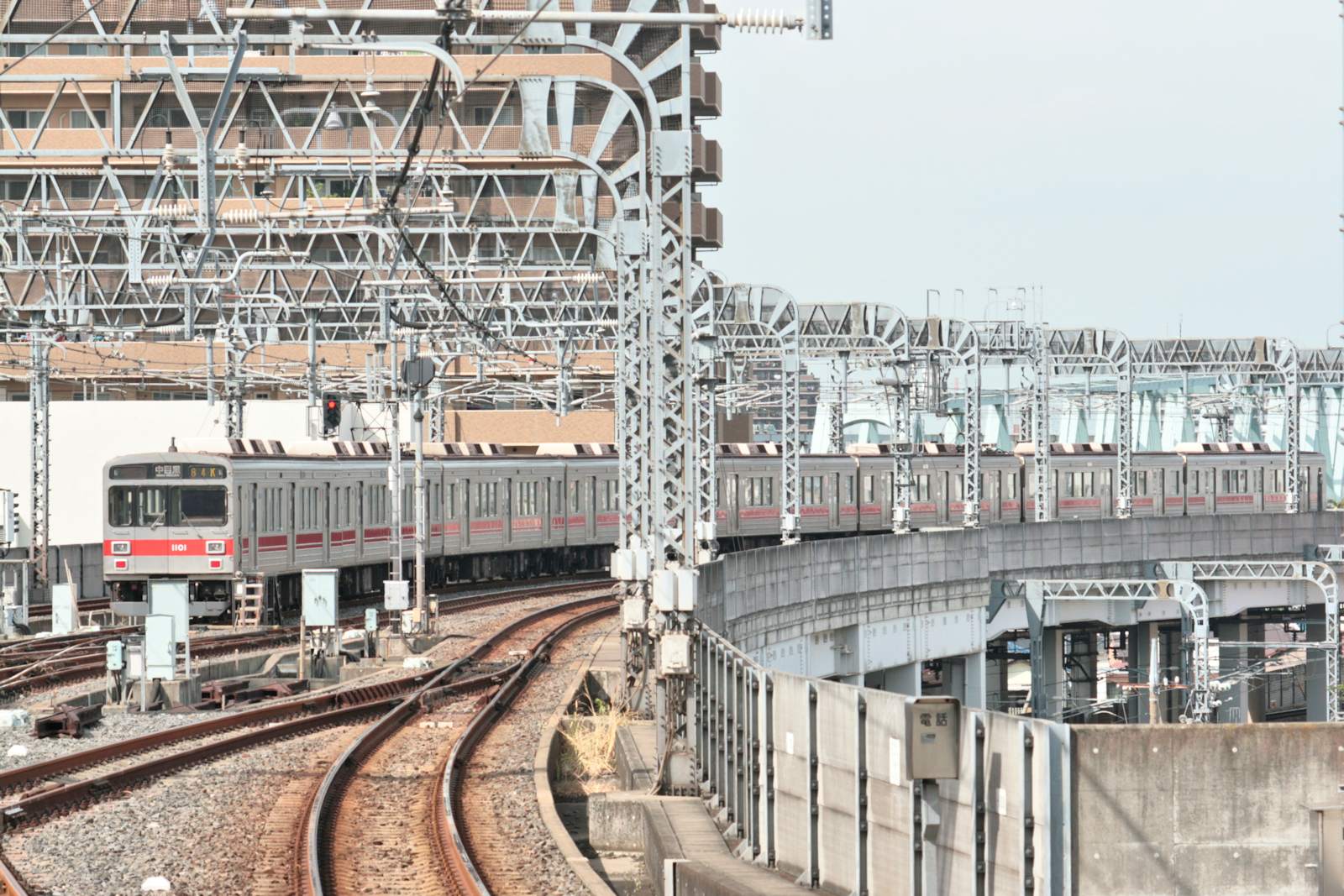
2013年3月で終了 東急東横線~東京メトロ日比谷線直通運転
松原団地駅での撮影を終えて北千住駅へ。3階の東京メトロ日比谷線ホームで東急1000系電車を撮った。2013(平成25)年3月15日をもって東急東横線菊名駅~日比谷線北千住駅間を直通運転する列車が廃止されることが決定していることから、1000系も両線から引退する。After photographing at Matsubara-danchi Station, I went to Kita-senju to take photographs of Tokyu 1000 Series, which would be going to retire from Toyoko Line and Tokyo Metro Hibiya Line at 15th of March, 2013.引上線で出番を待つ1001F 1001F waiting for its service at a side track6番線に入線 dropping into track 6最後に北千住駅を発車する東急1000系のビデオを撮影 YouTube video of 1001F departing at Kita-senju
Aug 29, 2012
閲覧総数 309
-
16
「ソ・ラ・ノ・ヲ・ト」の彼方ちゃんと「けいおん!」の唯ちゃんは似てる!?
2010年新春スタートのアニメ「ソ・ラ・ノ・ヲ・ト」を見た。放送開始前番宣を見たとたん、絵の雰囲気が「けいおん!」に似ていて、特に主人公の空深彼方ちゃんが平沢唯ちゃんに作風だけでなく髪型も似ていた。キャラデザさんは違う人で、製作もA-1Picturesと京都アニメーションで違うが、ものすごく似ていた。何度見ても似ている。実際見てみたところ、作風や髪型といった外見だけでなく、キャラクターとしての位置づけも似ていた。新人さんであるところ、音楽を通して成長していくところ、絶対音感を持っているところ、この3点が彼方ちゃんと唯ちゃんの共通点だ。そして、「天地人」の大島ミチルさんが奏でる作中音楽、「歴史秘話ヒストリア」のKalafinaが歌う主題歌も魅力的。彼方ちゃんのラッパの曲も大島さんが作ったのかな?僕は「歴史秘話ヒストリア」を見たことがないため、Kalafinaの存在を初めて知り、曲もじっくり聴いたのは初めてだった。I watched a new anime show "Sora no oto". When I first watched the preview, the style of the picture was superficially like the one of "K-ON!"; especially the heroine Kanata Sorami resembled Yui Hirasawa, the main character of "K-ON!", in appearance and hairstyle. However, the character designers of these works are different, but the way of drawing is too similar.As I watched the first episode, I noticed that Kanata and Yui didn't only look alike but also they were similar in many ways: both were the main characters, perfect-pitch, learned to play musical instruments, and the new member(Kanata was of the army, Yui was of the musical band club).Besides, Music by Michiru Oshima, who also composed the music from "Tenchijin", and the theme song sung by Kalafina, who was also famous for the one of "Rekishi Hiwa Historia (the secret of the history)" on NHK, was nice. It was the first time to listen to Kalafina's music.
Jan 5, 2010
閲覧総数 71
-
17
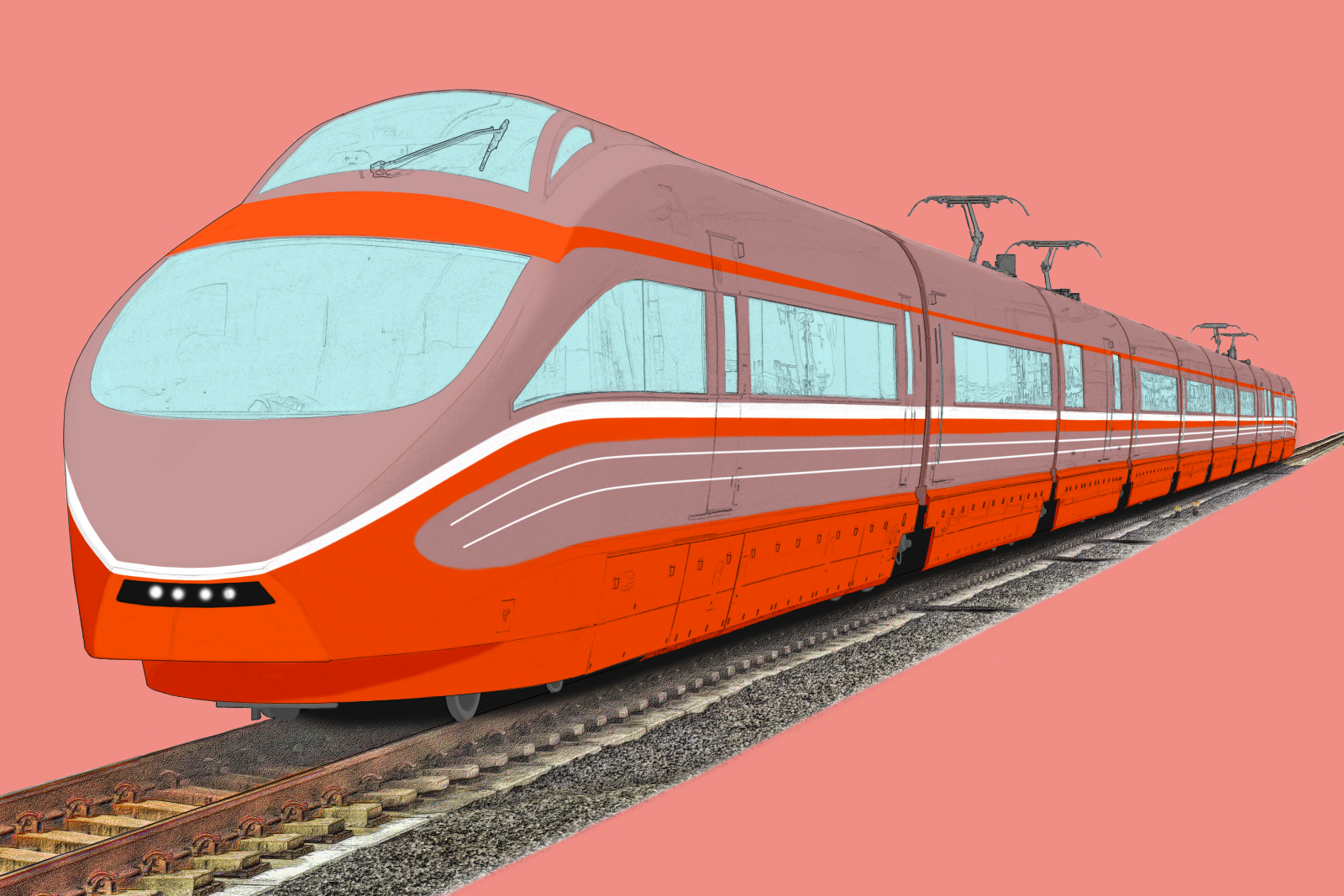
もしも小田急50000形がロマンスカー伝統色をまとったら…
久々に鉄道車両のイラストを描いた。今回は小田急50000形電車。ただし、実車と同じ塗装ではなく、「小田急ロマンスカー伝統色」を復活させたらという、僕の想像上の塗装で描いた。実車は白色(シルキーホワイト)地にオレンジ色(バーミリオンオレンジ)の帯の塗装をまとっているが、3100形電車や7000形電車がまとっていた、「小田急ロマンスカー伝統色」と言えるバーミリオンオレンジ・グレー色・白色の塗装をまとったらどんな雰囲気になるのかと、以前に想像したことがあった。この想像を基に、7000形の塗装を参考にして、50000形の車体にフィットするようにアレンジして描いた。展望席・連接車という3100形電車から10000形電車まで続いた小田急ロマンスカーの伝統を受け継いだことに加えて、小田急電鉄が長年研究を進めてきた空気バネによる車体傾斜(強制振り子)装置と自操舵台車といった、小田急電鉄のこだわりが数多く採り入れられた50000形だからこそ、僕は50000形が小田急ロマンスカー伝統色をまとった姿をぜひとも見てみたいと思っている。小田急ロマンスカー伝統色は2018(平成30)年の7000形の引退で見られなくなったことから、実現したら大きな話題を呼ぶのではないだろうか。I represent a picture of Odakyu 50000 Series in my imagination that if it has the traditional livery of 3100 Series and 7000 Series, coloured in orange, grey, and white.From my point of view, the livery looks suitable for 50000 Series because it equips many accommodations and technologies which the retired Odakyu Romancecar carriages did or Odakyu Electric Railway had experimented, such as observation seatings, Jacobs bogie with steering, pneumatic tilting. Based on that of 7000 Series, I arranged that to fit the body of 50000 Series.If the real carriages had the livery, many railfans would get excited and go travelling or photographing.
Sep 11, 2020
閲覧総数 1464
-
18
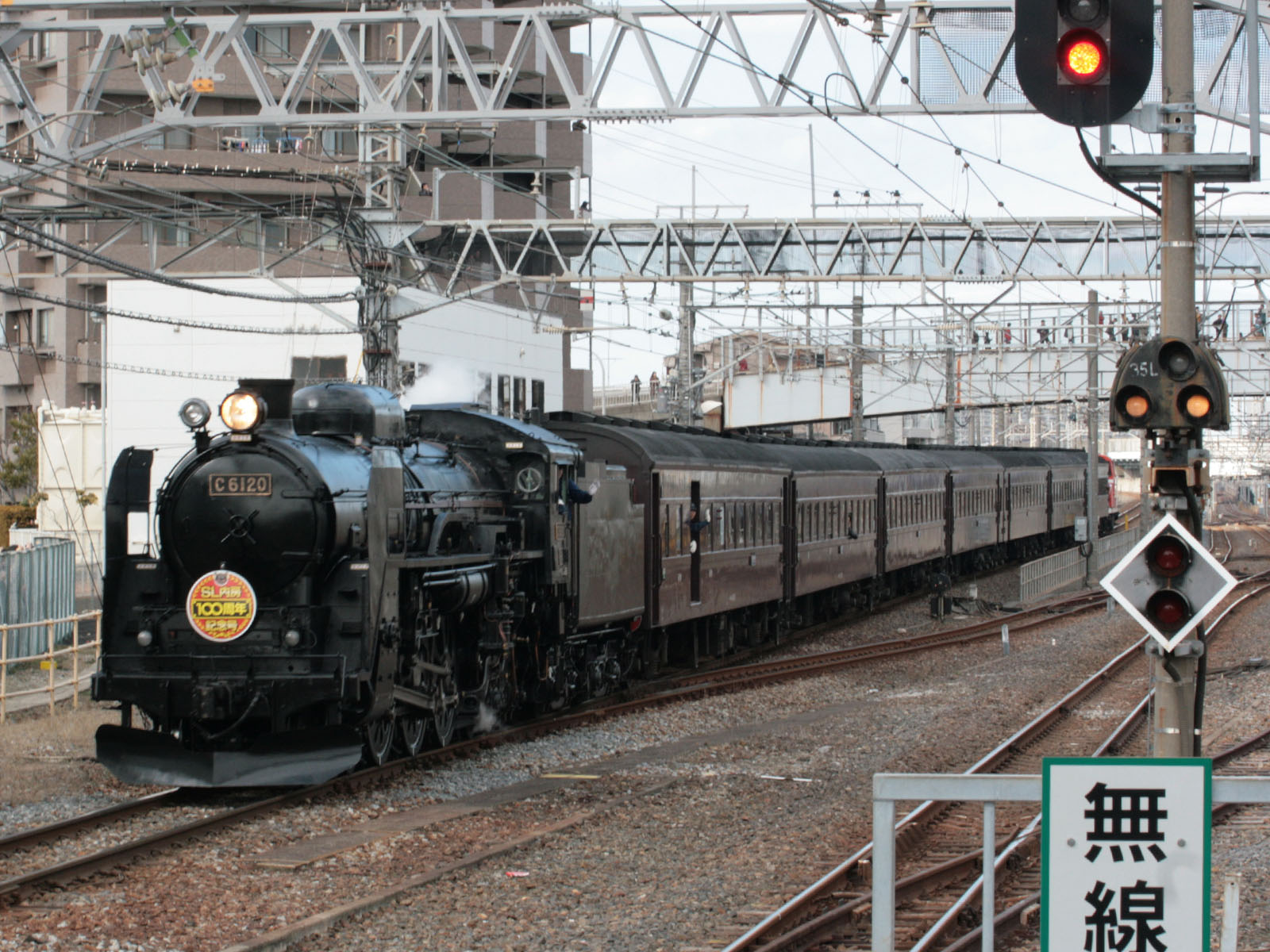
大回りで列車撮影 「SL内房100周年記念号」
次は武蔵野線・京葉線を乗り継いで蘇我駅へ。この日一番の目的が、C61形蒸気機関車「SL内房100周年記念号」。SL列車の始発駅、千葉みなと駅ではセレモニーが催されたため、非常に混雑していた。京葉線の車掌さんも「千葉みなと駅は大変混みあっています。ご注意ください。」とアナウンスしていた。僕が乗っていた列車が千葉みなと駅に着いた時は、SL列車が向かいのホームに停車中だった。僕もこの混雑を予想していたため、蘇我駅で撮影しようと計画を立てた。しかし、蘇我駅にも数多くの撮り鉄の姿が見られた。SLが走る線路に一番近い1・2番線にはロープが張られるほどだった。到着時刻になり、SLが旧型客車7両を牽引して側線にやってきた。SLはここで15分間の運転停車があった。しかし、SLはホーム先端よりも先にいたために、停車中のSL撮影は不可能だった。初めてSLの撮影はまずまずの出来だったと思うが、またの機会に、ここでなくてもSLを撮りに行きたいと思う。Next I went to Soga for "SL Uchibo 100the anniversary".At the start station of the Class C61 Steam Locomotive, Chiba-minato Station, the ceremony was held and the platform was very, very crowded. As a train I travelled on came to the station, the steam locomotive was stopping at the other track. I chose Soga Station because of the crowdedness.However, Soga Station was also crowded. At the end and edge of the platform, a rope has stretched the photographers not to go outside of the yellow line.The steam locomotive hauling seven classical passenger carriages came to the sidetrack on time and stopped on the track for 15 minutes. I tried to photograph while the train stopping, but couldn't do because the locomotive stopped over the end of the platform.My first steam locomotive photographing wasn't good, but I want to photograph steam locomotives again.
Feb 11, 2012
閲覧総数 86
-
19
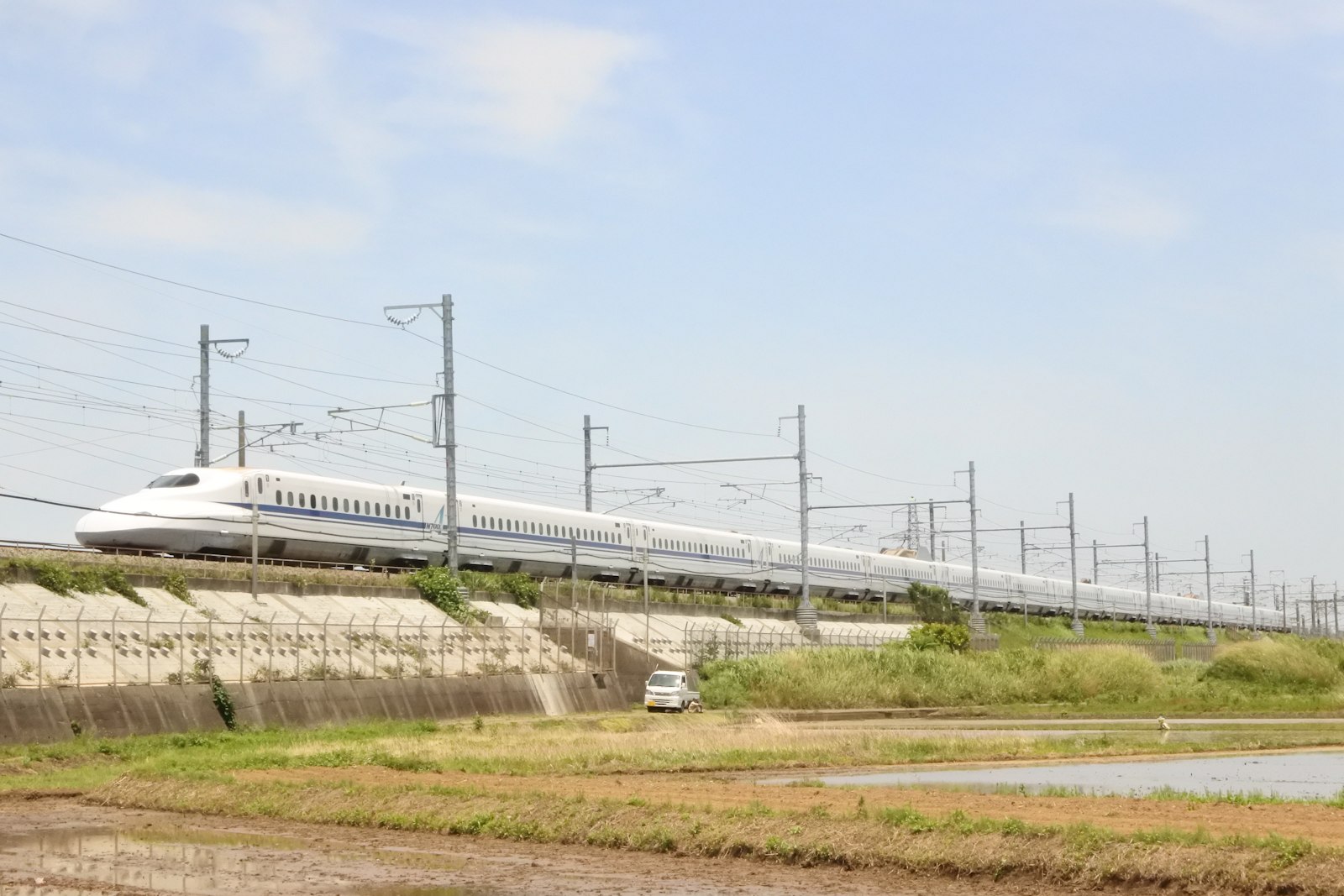
200km/h超で駆け抜けるN700系新幹線を撮る
3日、東海道新幹線のN700系を撮影してきた。東海道新幹線の車両は以前にも何度か撮影していたが、今回は200km/hを超えて走る新幹線らしい姿を撮りたいと、新横浜駅以西で狙いを定めた。今回の撮影地は神奈川県平塚市、東海道本線平塚駅より6km北上した水田が広がる場所。ここは。盛り土の上に線路が敷かれ、線路とのり面との境界近くに設けられたケーブルが少々邪魔になるが、防音壁がなく台車や床下まで奇麗に入り、16両編成の列車を端から端まで収めることができる。高速で走る新幹線の列車のスピード感を出す1枚を撮ろうと、流し撮りにも挑戦した。200km/h超のスピードで走る列車に合わせてカメラを動かすことが意外にも難しく、写真に収める対象を先頭車両1両に絞って、高速で駆け抜ける姿を捉えた。3枚目は「エアロ・ダブルウィング」と呼ばれる先頭形状を協調させた流し撮りで、N700系らしさを最大限に引き出した。On 3rd, I photographed N700 Series Shinkansen in Hiratsuka City, Kanagawa Prefecture, where the train runs at over 200km/124.3mi per hour.About 6km/3.7mi north from Hiratsuka Station on Tokaido Main Line, I found a Shinkansen track without noise barrier and 16-car sets could be photographed from the front to the end.I also tried to photograph by the method called "Nagashi Dori" that camera follows a moving subject while holding down the shutter.I felt it was little difficult to follow the high-speed Shinkansen and continued to try only the first car in the finder.The third picture, I shot the long and characteristic nose called "Aero Double-wing" to fully feature the character of N700 Series Shinkansen while running at high speed.
Jun 3, 2017
閲覧総数 1606
-
20
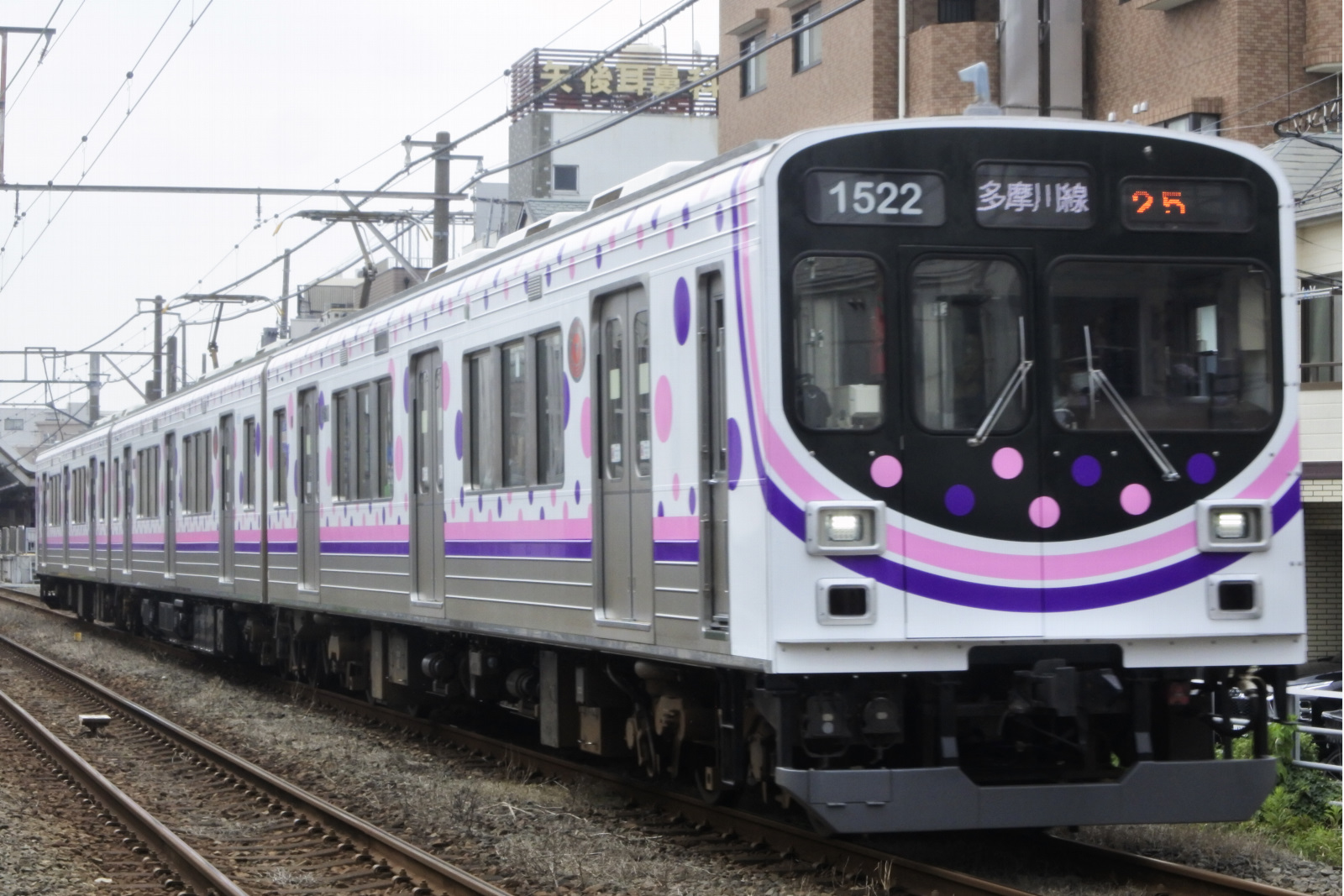
「いけたまハッピートレイン」を撮る
6月26日、東急1000系電車1522F「いけたまハッピートレイン」を撮影しに行った。「いけたまハッピートレイン」は2024(令和6)年6月23日にリニューアル・ラッピングが開始された車両。池上線のラインカラーであるピンク色と東急多摩川線のラインカラーである紫色の帯を巻き、これら2色の水玉模様をちりばめたラッピングを纏う。鵜の木駅~沼部駅間にて Photographed between Unoki Station and Numabe Station沼部駅~鵜の木駅間にて Photographed between Numabe Station and Unoki Stationこの日は東急多摩川線を6時台~10時台と15時台~19時台に運行する25運用だった。水玉模様をちりばめたラッピングは、かつて東横線で運行されていた9000系電車9013Fや、田園都市線で運行されていた8500系電車8637Fが纏っていたシャボン玉ラッピングを思い起こさせる。多摩川駅にて Photographed at Tamagawa Stationデハ1622号車の海側・山側各側面には1箇所ずつ、東急電鉄のマスコットキャラクター、のるるんのシルエットがそれぞれの色で描かれている。写真は海側(多摩川・五反田方面に向かって進行方向右側)の紫色ののるるんシルエット。On June 26th, I photographed Tokyu 1000 Series 1522F set "Iketama Happy Train" refurbished recently.It has a new body livery with pink-and-purple-coloured lines and dots, the symbol colours of Ikegami Line and Tokyu Tamagawa Line.On that day, it operated during the morning (around 6:00 AM - 10:15 AM) and the evening (around 3:30 PM - 8:00 PM).The body livery reminds me of 9000 Series 9013F set and 8500 Series 8637F set with colourful bubbles.On each side, the livery has a Norurun-shaped pattern dyed with the same colour as the dots.
Jun 26, 2024
閲覧総数 443
-
21

205系が水戸岡流に大変身!! 富士急行6000系2月29日デビュー!!
2月29日、富士急行で205系電車が走り出す!!JR東日本で廃車となった205系電車が、富士急行6000系電車に生まれ変わっていよいよ2月29日の「富士急の日」にデビューする。今回富士急行へ譲渡された車両は京葉線で活躍していた車両で、その中には1985(昭和60)年生まれで山手線から転属してきた、「田」の字窓の1次車も3両ある。外観・内装は、同じ富士急行の「富士登山電車」や新幹線「みずほ」「さくら」のデザインも手がけた水戸岡鋭治さんの手によりリニューアルされる。水戸岡さんデザインの4ドア通勤型電車は、JR九州303系、同103系に次いで3例目と思われる。僕としては、205系で一番古いグループの車両が地方私鉄に拾われて活躍を続けてくれるとは嬉しい限り。しかも水戸岡さんのデザインが採用されるとは、逆に「205系らしくない」という意見もありそうだが、「水戸岡列車」ファンとしても驚いている。最近の「水戸岡列車」は、富士急行の「富士登山電車」(京王5000系)、富山地方鉄道の「ALPS EXPRESS」(西武5000系)など、名車のリニューアルにも手を付けているように見える。水戸岡さんの手によって、今なお現役で走り続ける名車が生まれ変わることに、新しい時代の流れを感じる。205 Series moved to Fujikyu Line starting to run on 29th of February. JR East's 205 Series retired from Keiyo Line, including the first model built in 1985 having windows looking like the kanji "田" moved from Yamanote Line, moved to Fujikyu Line in Yamanashi Prefecture and would be starting to run as 6000 Series on 29th.The new interior and exterior design are produced by Eiji Mitooka, famous for the designer of "Fuji Tozan Densha" and N700 Series Shinkansen for "Mizuho" and "Sakura" service. Mitooka designs 4-door commuter train probably the third time, followed by 303 and 103 Series on JR Kyushu Chikuhi Line.From my point of view, as a Mitooka train fan, it's a piece of good news for the oldest 205 Series keeps being in service. Though some people may say the interior doesn't go with 205 Series, I'm also surprised. Recently, Mitooka design train refurbishment of a very famous secondhand train, such as "Fuji Tozan Densha" on Fujikyu Line (Keio 5000 Series) and "ALPS EXPRESS" on Toyama Regional Railway (Seibu 5000 Series "Red Arrow"). I feel the new trend that the very famous old trains still running are refurbished by him.富士急行「富士の麓のニューフェイス!「6000系」がデビューします。」「鉄道ファン」 鉄道ニュース 「富士急行6000系,2月29日に営業運転を開始」
Feb 17, 2012
閲覧総数 165
-
22
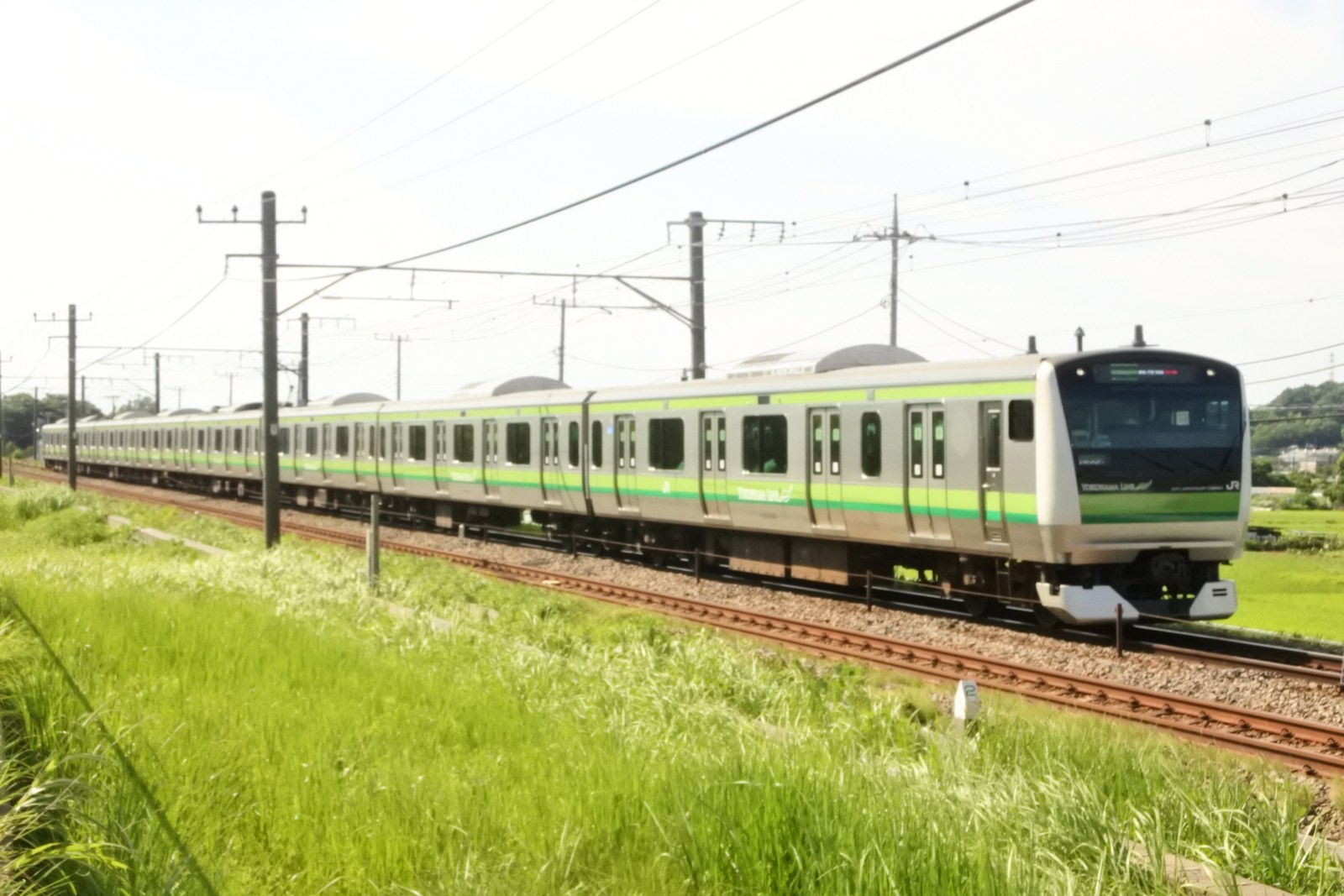
横浜線・南武線のE233系を撮る
E001系「TRAIN SUITE 四季島」に続いて、横浜線と南武線のE233系を撮影。E233系は数多くの車両基地に在籍し、僕も何度も撮影してきたが、鎌倉車両センター(横クラ)に所属する横浜線の6000番台車両と中原電車区(横ナハ)に所属する南武線の8000番台・8500番台車両はこれまで一度も写真撮影をしたことがなかった(南武線の8000番台車両についてはビデオは一度撮影している)。今回、6000番台車両と8000番台車両を初めて撮影した。6000番台車両(横浜線)十日市場駅~中山駅間ラインカラーの2色、黄緑色(黄緑6号 山手線のラインカラーと同じ)と深緑色(緑15号 埼京線のラインカラーと同じ)と調和する、沿線の農地と丘、法面に草が生い茂る盛り土の緑に囲まれた区間で撮影。8000番台車両(南武線)府中本町駅~南多摩駅間多摩川橋梁を渡る列車を、先ほどのE001系「TRAIN SUITE 四季島」と同様、川の流れと川原の草木とともに撮影。武蔵溝ノ口駅~武蔵新城駅間車両主体の構図で、左カーブに入る姿を捕らえる。これで、僕が撮影できていないE233系は南武線の8500番台車両を残すのみとなった。After photographing E001 Series "TRAIN SUITE Shikishima", I went photographing E233 Series on Yokohama Line (E233-6000) and Nambu Line (E233-8000).Though I had been photographed E233 Series many times, It was first time to photograph those on the two lines (I had recorded videos of Nambu Line's one once).The first one is Yokohama Line's one photographed between Tokaichiba Station and Nakayama Station, and when the train running on the embankment whose bushes on its foreslope harmonised with the car's line colour, light green, the same as that of Yamanote Line, and dark green, the same as that of Saikyo Line.The second is Nambu Line's one between Fuchuhommachi Station and Minami-tama Station, crossing Tamagawa River with the stream and greenery on riverbank like a photograph of E001 Series "TRAIN SUITE Shikishima".The third one is also Nambu Line's one between Musashi-mizonokuchi Station and Musashi-shinjo Station, the train is laid out on the right when it going onto a left curve.As a result, E233 Series I haven't photographed is only E233-8500 on Nambu Line.
Jul 22, 2017
閲覧総数 655
-
23
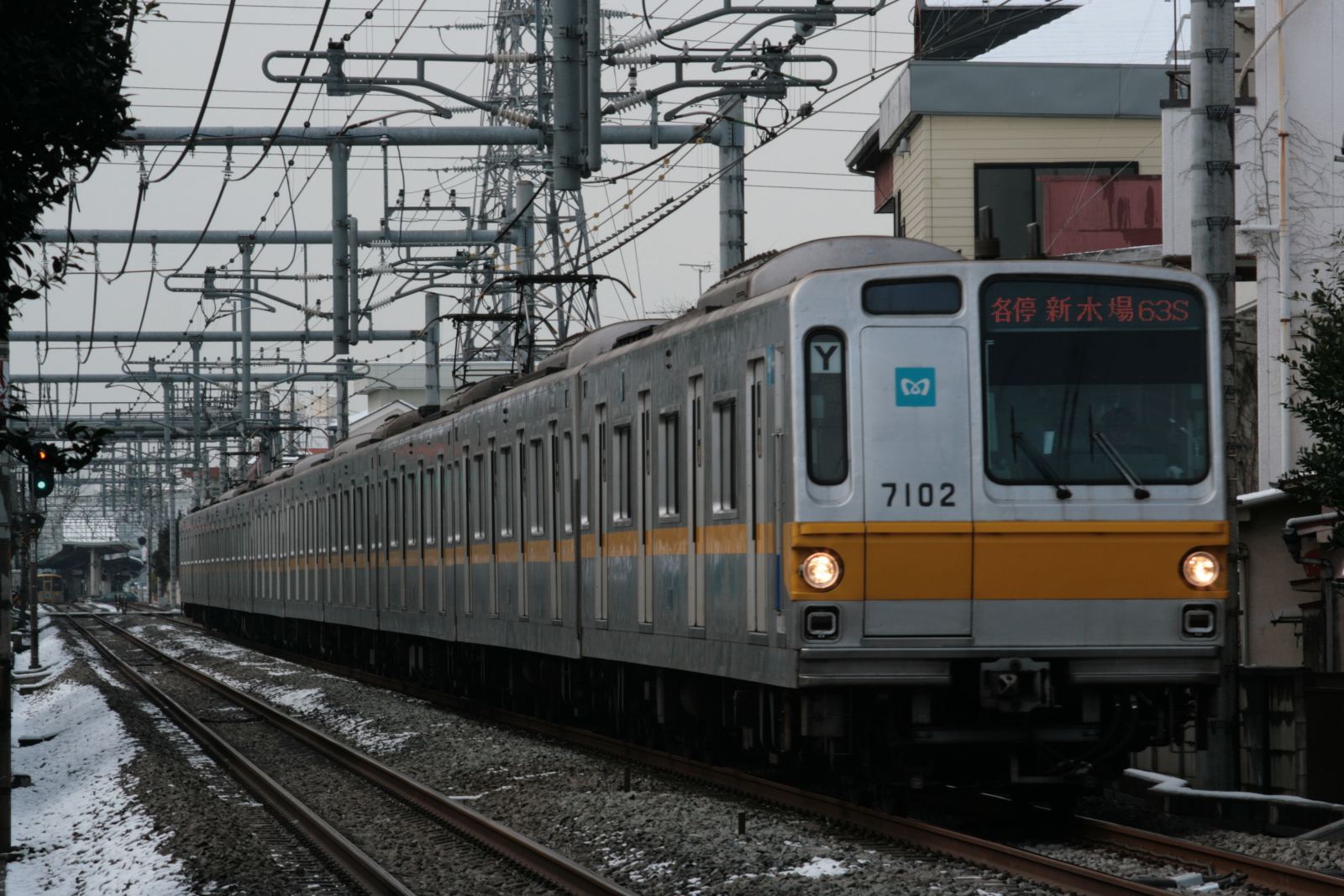
最後の有楽町線7000系非リニューアル車と西武30000系の各停
この冬東京で初めて雪が降った翌日の2月2日、西武池袋線保谷駅間~大泉学園駅の踏切へ、雪が残る線路を走る列車を撮りに行った。東京メトロ7000系電車で最後までリニューアルされずに残っている7002Fと、2010(平成22)年になってデビューした西武30000系電車の最新編成である38107Fが撮れた。7000系7002F。これが最後の非リニューアル車と思われる。10000系の最終編成10036Fがデビューしたため、この7000系非リニューアル車もまもなく見納めになるだろう。いや、もう見られないかもしれない。30000系38107F。2両編成の登場以降準急・急行・快速急行列車として運行されることが主体になった30000系だったが、この38107Fの登場で各停運用が復活した。On this February 2nd, the next day of the first snowy day in Tokyo, I go to a railroad crossing between Oizumi-gakuen and Hoya to take photos of trains with snow. I could take photos of the last original model of Tokyo Metro 7000 Series, 7002F set, and the latest model of Seibu 30000 Series, 38107F.7002F. It may be the last original 7000 Series and the original version will completely be gone because of the debut of the last production of 10000 Series. Maybe its interior is being refurbished now.Since 2-car 30000 Series debuted, 30000 Series on Ikebukuro Line is always in service as 10-car and as semi express, express, or rapid express. However 38107F doesn't connect with 2-car; always in service as 8-car, so the local train by 30000 Series reappears.
Feb 2, 2010
閲覧総数 459
-
24
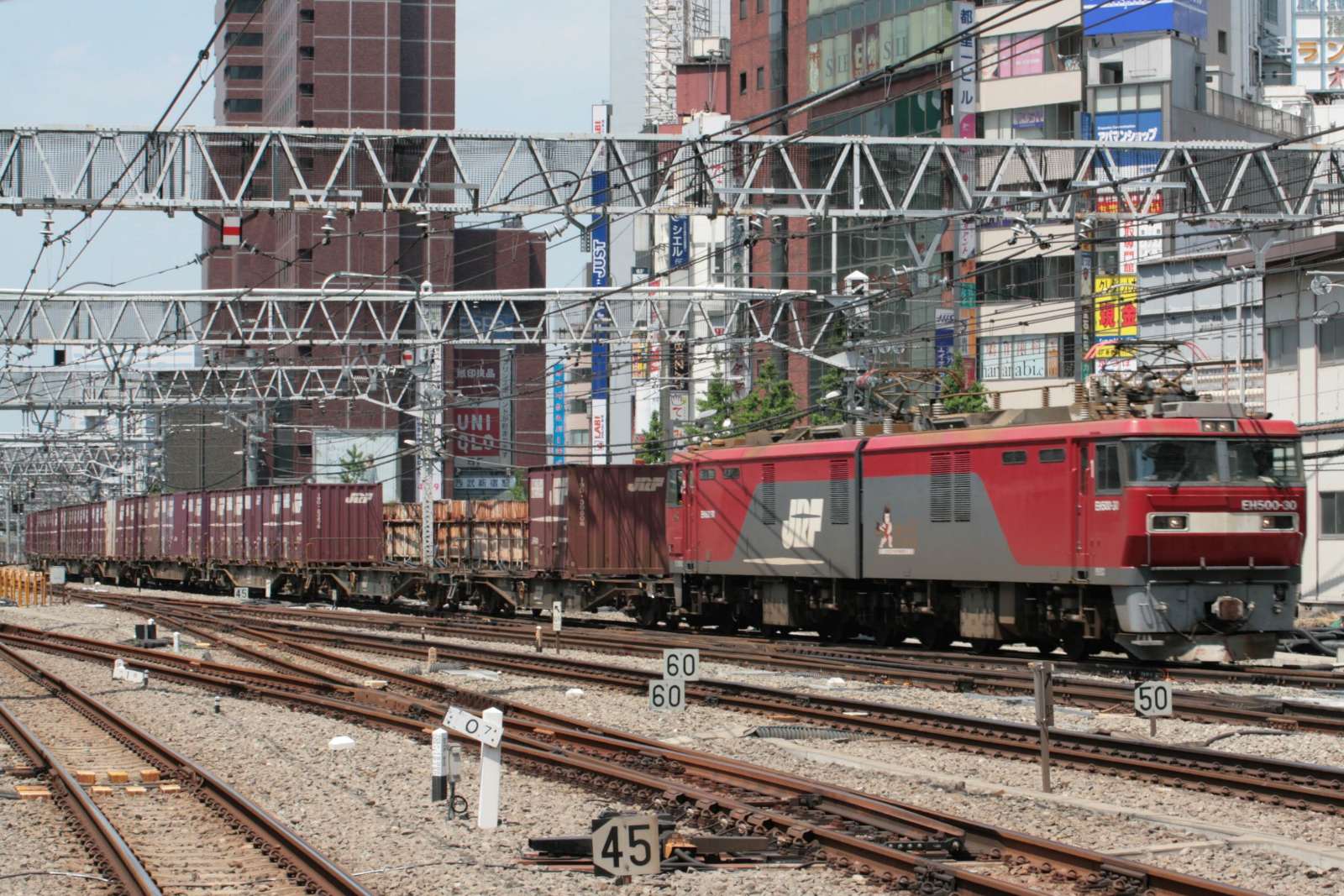
山手貨物線を走るEH500形電気機関車
新宿駅で山手貨物線(埼京線)を走るEH500形電気機関車が貨物列車を牽引してやってきた。現在埼京線・湘南新宿ライン列車が走る線路はもともと山手線の貨物線で、かつては貨物列車が多数運行されていた。しかし武蔵野線の開通後は、貨物列車がそちらにシフトし、山手貨物線から貨物列車が激減した。At Shinjuku Station, I met a Class EH500 electric locomotive hauling freight trains on Saikyo Line.Originally, the track Saikyo Line and Shonan-shinjuku Line trains running, in parallel with Yamanote Line between Osaki and Tabata, was for the freight trains and many freight trains used to run. After Musashino Line opened, almost all freight trains shifted and the operation of freight trains on this line decreased.
May 8, 2011
閲覧総数 1032
-
25
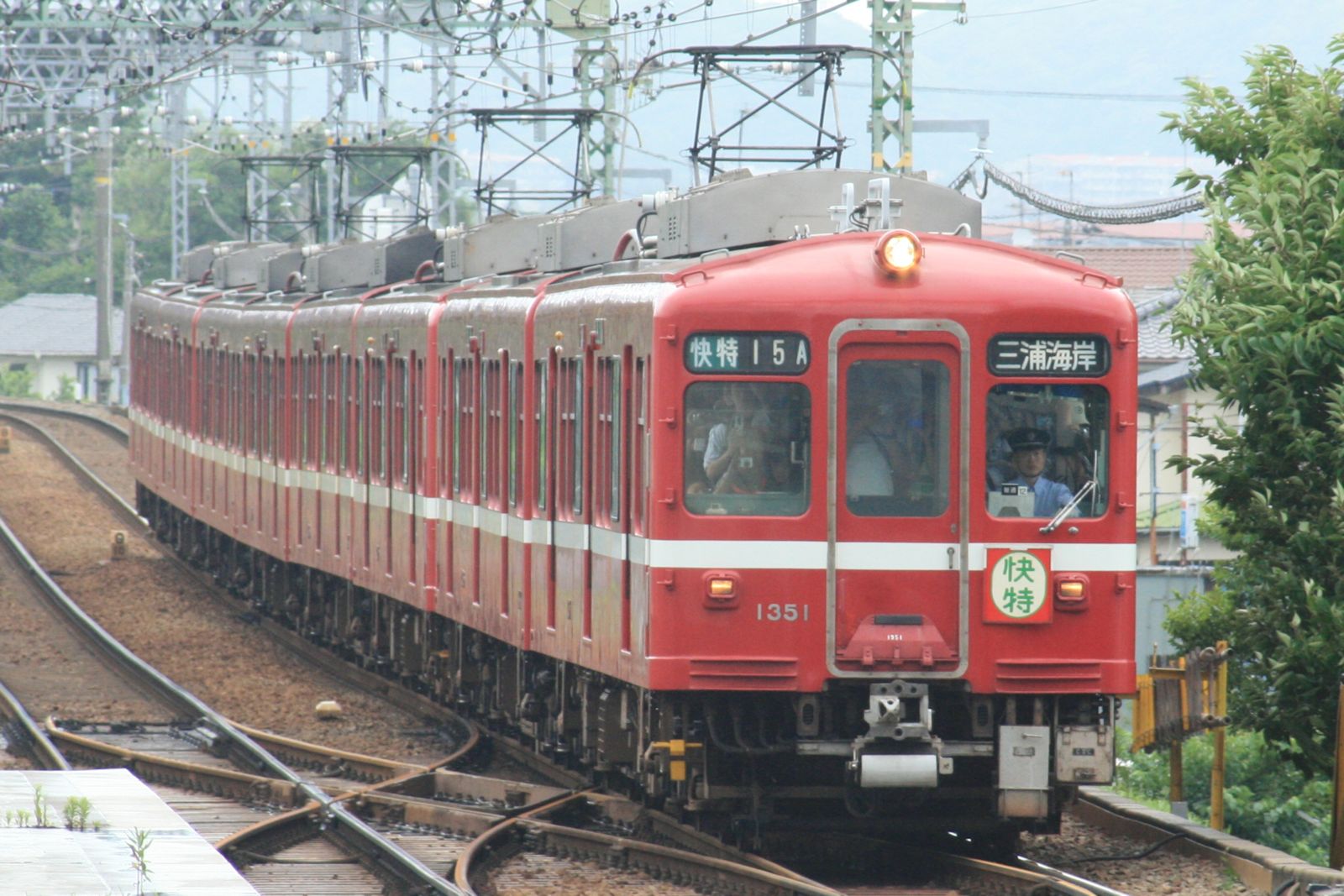
50年間ありがとう 京急1000形
6月27日、京急1000形電車のありがとう運転の撮影へ行ってきた。これらの列車は往路金沢文庫駅~三浦海岸駅間(快特として)、復路三浦海岸駅~京急久里浜駅間(特急として)で運行された。編成は三浦海岸方から2+6の8両編成だった。2両編成は2008(平成20)年の編成組み換えの時に姿を消していたが、4両編成の中間2両を抜き取る形で再現された。三浦海岸駅に到着後、列車は三崎口方の引上線に入り、両ホームからカメラをズームさせる撮り鉄たちが大勢いた。混乱を避けるために、駅員さんが黄色い線の上に立ってロープを張り、それに沿って撮り鉄たちが並び、順番にホームの先端から1000形を撮った。僕はやはり撮りやすい三崎口行きホームから撮影。1000形は1959(昭和34)年に最初の編成が造られ、翌1960(昭和35)年デビュー。1978(昭和53)年までの長きに渡って356両が造られ、京急電鉄でもっとも多い車両数を誇った。しかし1985(昭和60)年以降、1500形電車、3代目600形電車、新1000形電車などの新型車両の登場に伴って徐々に数を減らしていった。今年2010(平成22)年6月14日時点で6両・4両編成がそれぞれ最後の1本にまで姿を消し(「鉄道ファン」Webサイトより)、京成成田スカイアクセス線開業を前に引退すると僕も思ったが、そのとおりになってしまった。京急電鉄からは姿を消すものの、一部は香川県の高松琴平電気鉄道(ことでん)で第二の人生を送っていてこれからも見ることができる。僕は1995(平成7)年に東京に来てから、横浜へ行く時、横浜駅~井土ヶ谷駅で京急本線に乗っていた。その時一番よく当たったのが1000形だったと思う。あの「べびプリ」の麗ちゃんも以前「家族にしたい電車」として日記に取り上げたことがある。(2008年6月27日)。真ん中に貫通扉がついたシンプルなものだが、丸みを帯びている愛嬌のある顔が印象的だった、50年という長きに渡って京浜急行を支えた名車、1000形。本当に、ありがとう。「快特 三浦海岸」の行先表示 The destination indicator showing Green limited express for Miura-kaigan.今回特別に製作されたサボ 初期の1000形は非貫通型だった The special side board for this time. The left photo shows that first 1000 Series didn't have a emergency door on its front.車体下部には「京浜急行」の略称の「KHK」の文字が At the bottom of its body "KHK", the abbreviation of KeiHin Kyuko, sign existed正面にはかつて使われていた「快特」のサボが取り付けられた The front sign in the old time came backOn June 27th, I went photographing Keikyu 1000 Series, which served as its last regular operations between Kanazawa-bunko Station and Miura-kaigan Station, as Green limited express, and between Miura-kaigan and Keikyu-kurihama, as Red limited express. The set was consisted of 8 carriages by a 6-carriage set and a 2-carriage set, arrangement from a 4-carriage set , two middle carriages were uncoupled (original 2-car sets completely disappeared in 2008).After the first operation, the train went to the side track located toward Misakiguchi. Many photographers in both platforms including me made a line to shoot photos from the end of the platforms. I tried from the track to Misakiguchi, easier to do it.The manufacturing of 1000 Series started in 1959 and the carriages debuted in 1960. It had made for 19 years and totally been 356 carriages, the largest number of Keikyu trains in maximum, were in service. But since 1985, new carriages, such as 1500 Series, third 600 Series, and N1000 Series, started to be manufactured to replace 1000 Series and, according to the website of Japan Railfan Magazine, the last 4-carriage set and 6-carriage set remained on June, 2010.Because of this, I felt that 1000 Series would be retiring before Narita Sky Access Line open. But it became true.Though 1000 Series retired from Keikyu Lines, but some carriages moved to Takamatsu-kotohira Electric Railroad (Kotoden) Lines in Kagawa Prefecture.From my point of view, when I was little, I sometimes used Keikyu Main Line from Yokohama Station to Idogaya Station. Usually, The train I travelled with was 1000 Series.Urara from "BabyPrincess" also picked it up it and want to welcome as her new family member on the diary on the same day in 2008.It had the simple front with the central emergency door, but its roundish front was little cute and impressive. Anyway, 1000 Series had run for 50 years and made the new generation in the post-war era.Thanks a lot for 50 years of 1000 Series マイクロエース A0079 京急1000形 冷房改造車 2両セット(Nゲージ 動力車入り)価格:7,812円(税込、送料別)↑1000形の思い出をいつまでも鉄道模型で↑
Jun 27, 2010
閲覧総数 1162
-
26
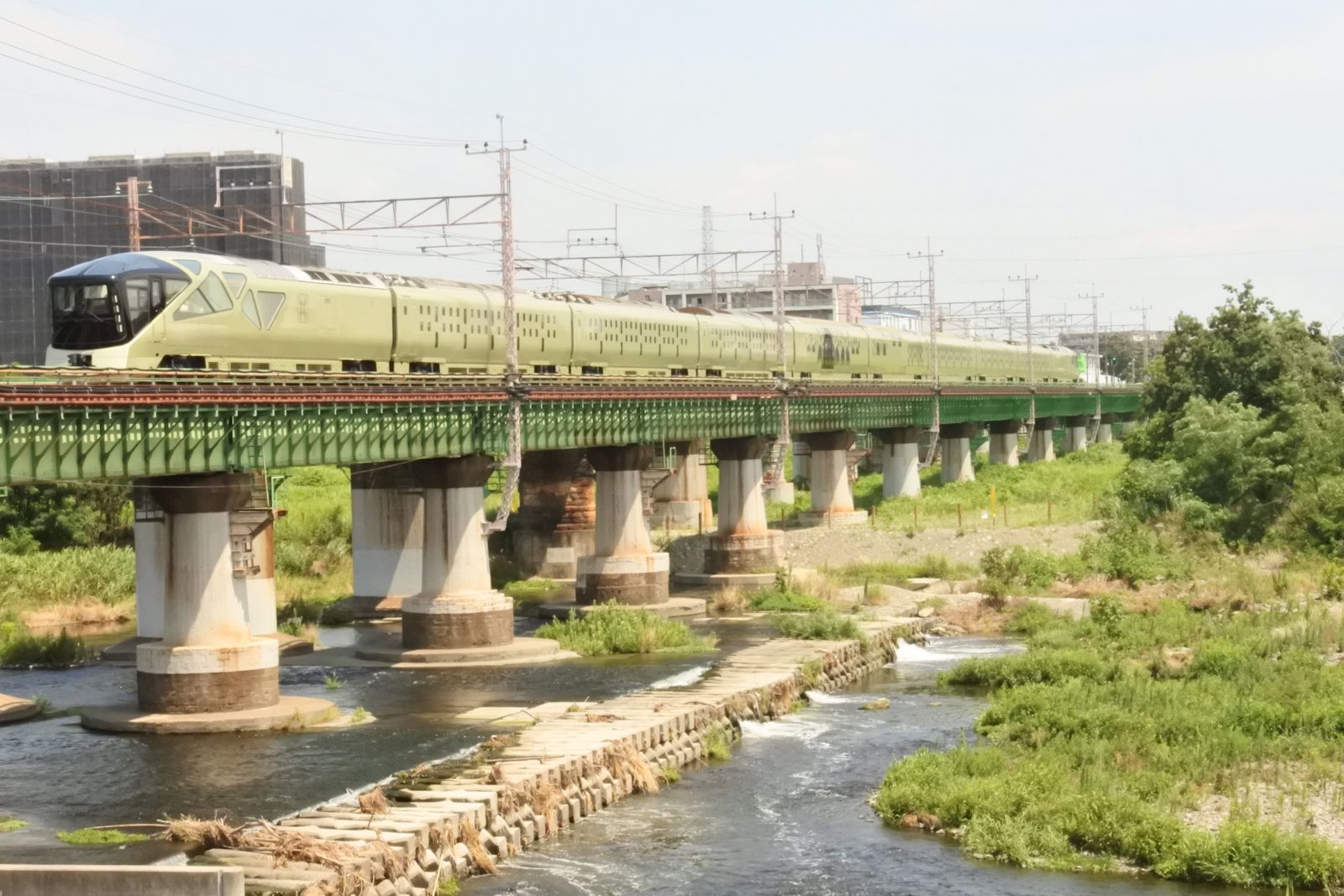
多摩川橋梁を渡るE001系「TRAIN SUITE 四季島」
5月4日に続いて、E001系EDC「TRAIN SUITE 四季島」を撮影。今回は中央本線(中央東線)立川駅~日野駅間の多摩川橋梁を渡る姿を撮影。「TRAIN SUITE 四季島」の春から秋のツアーには、3泊4日コース(上野駅→(東北本線・日光線経由)→日光駅→(日光線・東北本線・IGRいわて銀河鉄道いわて銀河鉄道線・青い森鉄道線・津軽線・JR北海道海峡線・道南いさりび鉄道線・JR北海道函館本線)→函館駅→(JR北海道函館本線・JR北海道室蘭本線)→登別駅→(JR北海道室蘭本線・JR北海道函館本線)→新函館北斗駅→(JR北海道函館本線・道南いさりび鉄道線・JR北海道海峡線・津軽線)→青森駅→(奥羽本線)→弘前駅→(奥羽本線・羽越本線)→鶴岡駅→(羽越本線)→あつみ温泉駅→(羽越本線)→新津駅→(信越本線)→東三条駅→(信越本線・上越線・高崎線・東北本線)→上野駅)と1泊2日コース(上野駅→(東北本線・東北貨物線・武蔵野線・中央本線)→塩山駅→(中央本線・篠ノ井線)→姨捨駅→(篠ノ井線・信越本線・しなの鉄道北しなの線・えちごトキめき鉄道妙高はねうまライン・信越本線・磐越西線)→喜多方駅→(磐越西線)→会津若松駅→(磐越西線・東北本線)→上野駅)があり、この日は1泊2日プランの1日目であった。この1枚は、大都会・東京を発車し、マンションと川の流れと川原・中州の緑が調和した郊外の住宅地を通り抜けて、これから各地を巡る旅へ向かう「TRAIN SUITE 四季島」を表現していると共に、暑い夏に東京近郊の川と緑と列車を入れた涼しげな写真として撮影した。写真の涼しげな雰囲気とは裏腹に、僕は暑い中、1時間以上土手でカメラを構えてE001系が来るのを待っていた。走行経路の違いから、同じ車両、同じ列車愛称でありながら、3泊4日コースと1泊2日コースとで違う背景で写真を撮ることができ、違った表情を見せてくれる点が、撮り鉄の目から見た「TRAIN SUITE 四季島」の特徴ではないだろうか。Following my blog on May 4th, I photographed E001 Series EDC (electric and diesel bi-mode car) "TRAIN SUITE Shikishima". This time where I did was a bridge crossing Tamagawa River between Tachikawa Station and Hino Station on Chuo Main Line.Two different types of tour travelling with "TRAIN SUITE Shikishima" are prepared; four-day trip toward Tohoku and Hokkaido and two-day trip toward Yamanashi, Nagano, and Fukushima, and on that day it was the first day of the two-day tour.This photograph features E001 Series running in suburb of Tokyo in which flats harmonises with river and riverside green grass when the train starting to travel toward Yamanashi Prefecture, and coolness in summer.However, in contradiction to the image of photograph, I had waited for the train for over one hour on riverbank in hot weather.From the photographer's view, two different schedules of "TRAIN SUITE Shikishima" may bring the photographers the chances to shoot pictures of the train with different scenery between them.
Jul 22, 2017
閲覧総数 632
-
27

大井町線に転属した9101F
旗の台駅で大井町線に転属した9000系9101Fに出会った。9101Fは副都心線直通開始前日の2013(平成25)年3月15日まで東横線に残っていた3編成のうちの1編成で、東横線引退直前にはさよならヘッドマークが付けられていた。東横線での営業運転終了後に長津田車両工場に回送され、大井町線向けに5両編成へ短縮、正面の帯色の変更が実施された。そして同年5月に大井町線で営業運転を始めた。9101F・9105F・9110Fの3本の転属で9000系は15本全てが大井町線の所属となった。9107Fが新造当初から大井町線所属であるため、東横線では15本全てが顔を揃えることはなかった。At Hatanodai on Tokyu Oimachi Line, I saw Tokyu 9000 Series 9101F set.The set had been one of the last three sets keeping in service on Toyoko Line until one day before the start of going-through service to Tokyo Metro Fukutoshin Line. In the last days on Toyoko Line, this unit had run with front signs to cerebrate its retirement. After the end of its regular run on Toyoko Line, it had moved to Nagatsuta factory to shorten to 5 carriages and change the line on its front. Then it had started the regular service in May, 2013.As a result of the transfer of 9101F, 9105F, and 9110F sets, all of 9000 Series belong to Oimachi Line. On Toyoko Line, all sets didn't run regularly because 9107F set has done to Oimachi Line since it debuted.
Aug 24, 2013
閲覧総数 333
-
28
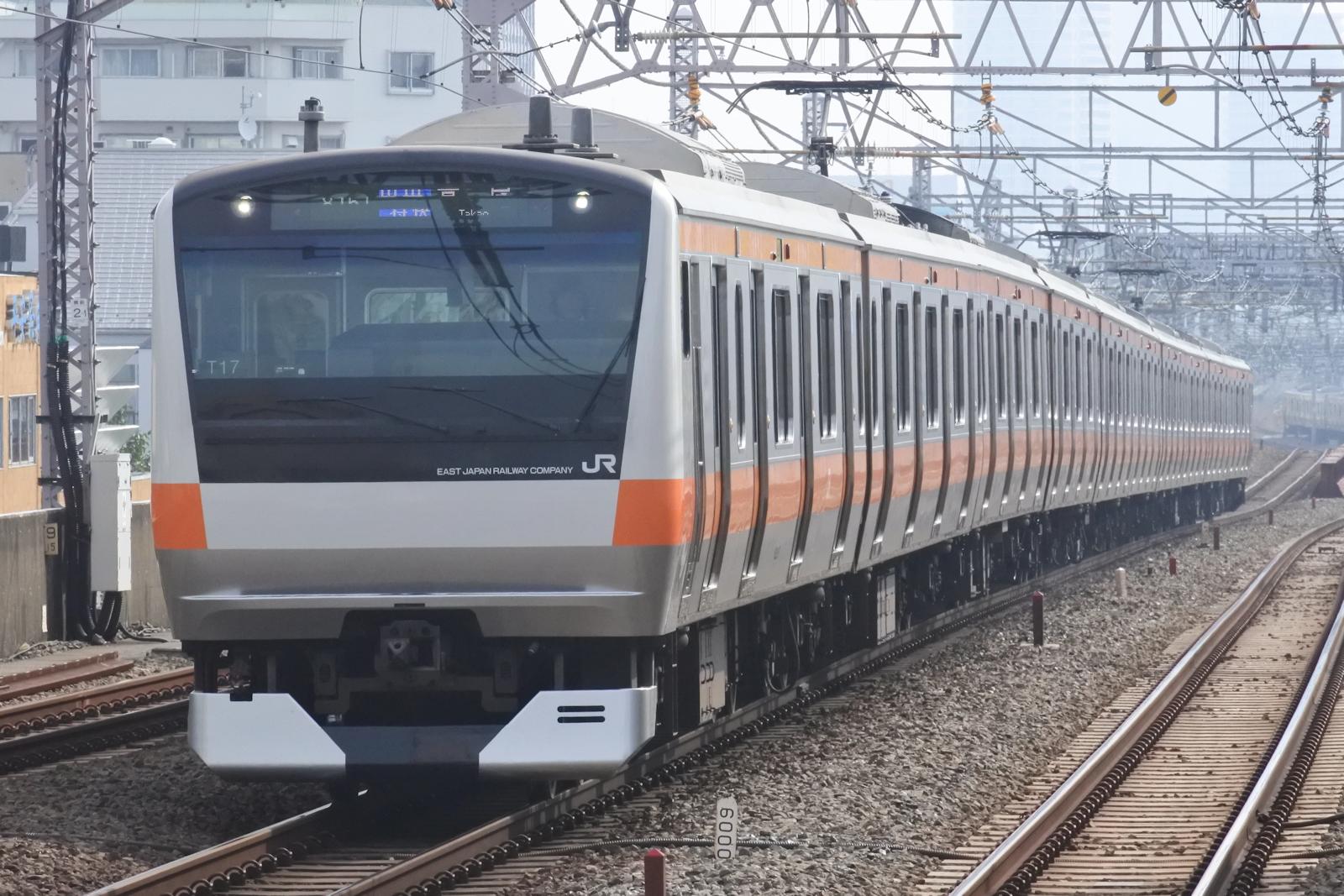
「花咲くいろは」に武蔵野線カラーのE233系!?
「花咲くいろは」第12話に、JR東日本E233系電車の豊田車両センター(八トタ)所属車両が登場。オレンジ色基調の片持ちバケットシート、黒いつり革でE233系を思わせる配色、ドアチャイムもJR東日本型の3点チャイムだが、外観はラインカラーが武蔵野線のラインカラーと同じバーミリオンオレンジ(朱色1号)と茶色(ぶどう色2号)で、車体は幅広であったが、ビートプレス加工が施されていた。ドアの閉まり方もE233系とは違い、起動加速音もE233系というよりは、東急5000系電車に近いものだった。そして、中野駅に停車中のシーンでは、JR東日本の駅で実際に使われている発車メロディが流れ(実際の中野駅で使われている楽曲とは違う)、その後でこれまた本物の津田英治さんの声によるATOS(東京圏輸送管理システム)アナウンスが流れた。さらには駅名標や駅ポスターも登場した。駅名標には東京23区内の駅であることを表す「区」の文字も入り、ほぼ完璧に描かれていた。ただ一点だけ惜しかったのは、隣の駅が「しんじゅく」ではなく「ひがしなかの」となっており、中央線(中央快速線)ではなく総武線(中央・総武緩行線)のものだったことだ。一方駅ポスターには「JR東日本」の名前が実名で登場し、JRマークや「東日本」の文字も本物と見まごうばかりのリアルさだった。しかし、「JR東日本」と書く場合はJRマークは使用せず、「JR東日本」すべての文字がJRフォントで書かれる(参照:JR東日本ウェブサイト トップページ左上のロゴ)。いくつか惜しい点が見られたが、のと鉄道NT200形や北越急行681系・683系「はくたか」だけに留まらない本物へのこだわりというものを感じた。最近のアニメの背景描写は本物志向にあることを、改めて感じさせられた。On episode 12 of "Hanasaku Iroha", Chuo Line E233 Series appeared.The carriages had orange-coloured seat, black-coloured strap, and JR East-style door chime. However, its line colour on the body, orange and brown looking like that of Musashino Line's, beat-press-coating body, the speed of doors closing, and the sound of machinery when departing from the station, which is similar to that of Tokyu 5000 Series, were different. On the scene when the train was stopping at Nakano Station, a station jingle on JR East stations performed. However, it wasn't that performed at Nakano Station. The announcement is that for the stations under Autonomous decentralized Transport Operation control System(ATOS) in Kanto Area. The station signboard and an advertisement poster with the logo of JR East were also pictured. The signboard was written in JR East original font and the icon "区" for the station in Tokyo Metropolitan Area was on it. The neighbour station on the signboard was wrong. It said Higashi-nakano, but the real one is Shinjuku. The logo and the letter on the poster are similar to the real one. However, the company name isn't used with the logo, "JR" is also written in the company's original font (see also JR East's website).Though they had something wrong, I felt the way the anime creators picture were really good and faithful.以下、発車メロディ・アナウンス・走行音のYouTube動画を掲載。 Then, please see the YouTube videos about departure sign music, announcement, and train mechanical sound while running.中野駅8番線発車メロディ&アナウンス Departure sign music and announcement at Nakano StationJR東日本E233系電車ドアチャイム Door chime of Chuo Line E233 SeriesJR東日本E233系電車 走行音 Mechanical sound of E233 Series while running東急5000系電車 走行音 Mechanical sound of Tokyu 5000 Series
Jun 20, 2011
閲覧総数 663
-
29
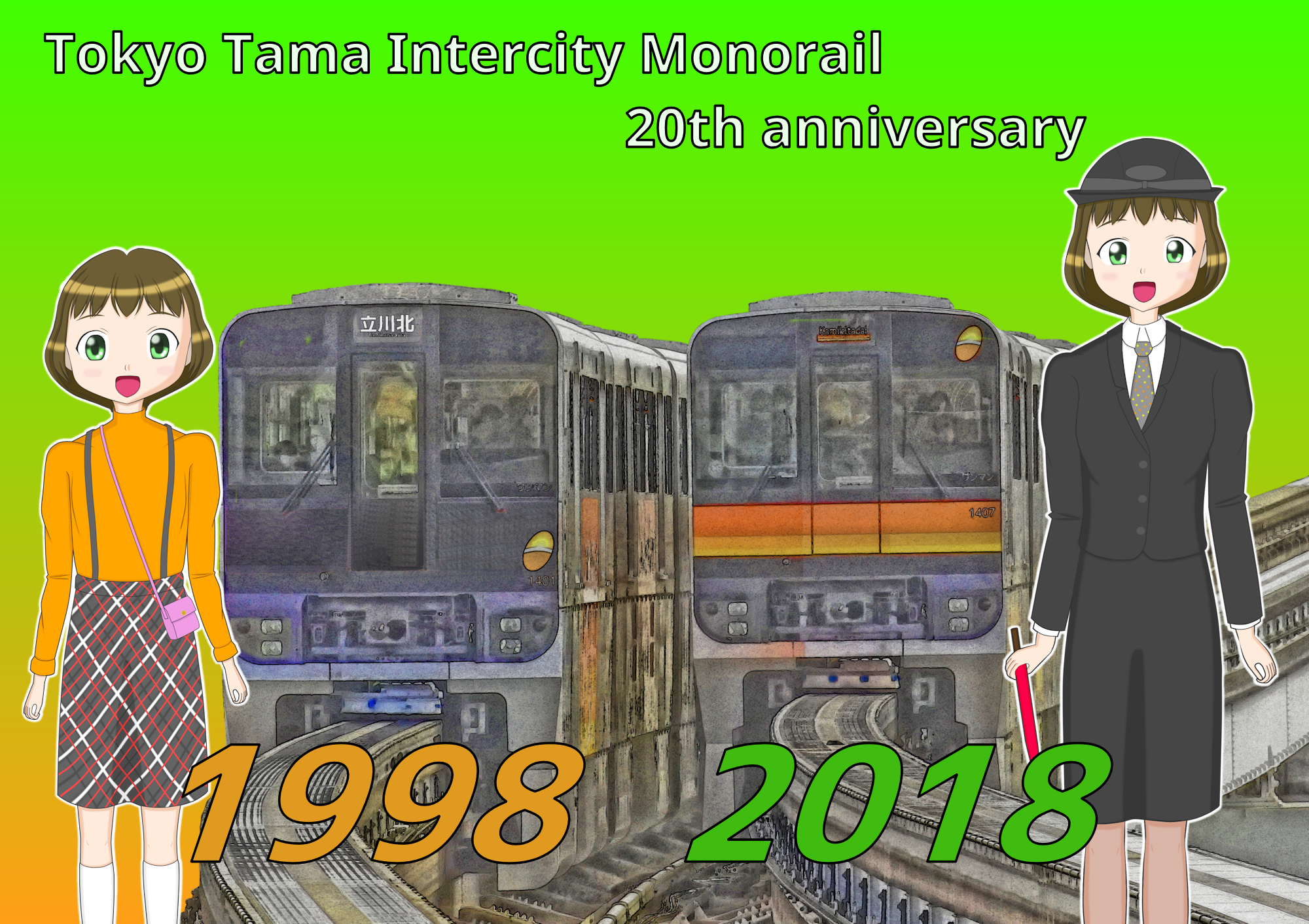
多摩都市モノレール線開業20周年&立川いずみちゃん誕生日記念 「1998年と2018年の1000系といずみちゃん」
1998年と2018年の1000系と立川いずみちゃん | 花見 友紀 [pixiv] 2018(平成30)年11月27日、多摩都市モノレール線が開業20周年を迎えた。多摩都市モノレール線は、東京都多摩地区を南北につなぐ路線として1998(平成10)年11月27日に立川北駅~上北台駅間が開業した。開業から約1年2カ月後の2000(平成12)年1月10日に多摩センター駅~立川北駅間が延伸開業し、現在の形となった。2018(平成30)年11月27日から2020(令和2)年1月10日の“2つの20周年”の間を「開業20周年記念特別期間」としてラッピング車両の運行や記念グッズの販売などが予定されている。そして11月27日は、多摩都市モノレールの「鉄道むすめ」立川いずみちゃんの誕生日でもある。1987(昭和62)年生まれという設定から、今年2018(平成30)年で31歳になる。そこで僕は、多摩都市モノレール線の開業記念日といずみちゃんの誕生日を祝うために、久しぶりに記念イラストを描いた。テーマは「1998(平成10)年と2018(平成30)年の多摩都市モノレール1000系電車といずみちゃん」。デビュー当時、1000系の前面にはオレンジ色・山吹色・黄色の帯がない黒1色だった。またシンボルマークの張り付け位置も現在と異なっていた。内装も現在のものとは異なり、ロングシートとボックスシートを組み合わせたセミクロスシートだった。2005(平成17)年に増備された1116Fで初めて3色の帯が前面に巻かれ、他の編成も内装をセミクロスシートからロングシートへの変更と同時に前面の帯が追加された。一方、いずみちゃんは1998(平成10)年当時11歳の小学校5年生だった。いずみちゃんは子供の頃からかわいかったのだろうと想像している。茶色やオレンジ色、灰色といった色が似合いそうなイメージから、これにぴったりな子供服を探した。するとこれまた1998(平成10)年に生まれた「ポンポネットジュニア」がいずみちゃんのイメージに合い、これをヒントに描いた。生まれも育ちも立川市といういずみちゃんは、物心付いた頃にはもう多摩都市モノレール線の建設工事が始まっており(1990(平成2)年開始)、建設中の段階から多摩都市モノレール線を見て育ったことだろう。そして、自身の誕生日に多摩都市モノレール線が開業したことに、大喜びしたことだろう。いずみちゃんは、デビューした2010(平成22)年時点で23歳。これは一般的な大卒の1987(昭和62)年生まれの人の、就職浪人しなかった場合の社会人1年目の歳と一致する。この2010(平成22)年を入社1年目とすると、いずみちゃんはもう入社9年目の中堅駅員ということである。デビューしたての頃は、駅ポスターや一日乗車券に描かれたりするなど、多摩都市モノレールのマスコットキャラクター的存在として活躍していたが、2012(平成24)年頃からキャラクターグッズの制作やポスターへの登場が少なくなり、目立たなくなり、存在感が薄れてしまった。僕もいずみちゃんのイラストを、デビューの頃から描いていたが、2012(平成24)年の誕生日記念イラストを最後に描いていなかった。近年、過去に登場した「鉄道むすめ」キャラクターの数年ぶりの新作イラストが発表されるなど、新しいキャラクターが続々とデビューする中での、存在感が薄れる彼女たちの巻き返しが始まろうとしている。いずみちゃんも新しい公式イラストの発表が待たれるが、新しいイラストが描かれるのはモチーフとなった鉄道事業者の制服の変更が大きな理由になることが多いため、制服の変更でもない限り実現しないだろう。現行の制服は2009(平成21)年10月から着用しているもので、まもなく誕生から10年を迎えようとしている。鉄道事業者の制服は、ばらつきがあるものの、おおむね10~20年程度で新しいデザインのものへと変更されることが多い。20周年を迎えたことをきっかけに、制服の変更といずみちゃんの新作イラストの発表に期待したい。僕にとっていずみちゃんは、同じ1987(昭和62)年生まれ、かつ同じいて座という点から、最も親近感を持てる「鉄道むすめ」キャラクターだったはずなのに、近年はイラストを描くことをおろそかにしてしまったことを反省したい。キャラクターの産みの親である作家や企業がグッズを制作し続けるだけでなく、ファンが愛情を示すための活動し続けていないと、キャラクターの存在感を薄れさせてしまうのだということを痛感した。多摩都市モノレール線20周年期間の突入をきっかけに、改めて自身のいずみちゃんが好きだという気持ちと向き合っていきたい。On November 27th, Tokyo Tama Intercity Monorail Line marks its 20th anniversary.In 1998, the first-open section of Tokyo Tama Intercity Monorail Line between Tachikawa-kita Station and Kamikitadai Station started its regular service. In January 10th, 2000, it was extended to Tama Center Station; forming the present line. From November 27th, 2018, to January 10th, 2020, Tokyo Tama Intercity Monorail is holding the events, such as the service of trains having special livery and sale of goods.In addition to that, November 27th is set as the birthday of "Tetsudou-musume" character, Izumi Tachikawa, who is created in collaboration with Tokyo Tama Intercity Monorail. Because she was pictured as who was born in 1987, she becomes 31 year old.To celebrate the two, I represent a picture under the theme of "Tokyo Tama Intercity Monorail 1000 Series and Izumi in 1998 and in 2018".When 1000 Series debuted, its front and interior design used to be different from the present one. It didn't have the orange-, bright-yellow-, and yellow-coloured lines on its front and the symbol of the company printed on the different place. In its interior, the transverse seatings used to be laid out between the passengers' doors of each carriage, as well as before the driver's cab. 1116F set, which was manufactured in 2005, first introduce the front and interior in the present design and the other sets were also refurbished and added the lines as those of 1116F set.Izumi was 11 year old in 1998. When I drawing, I imagined that brown-, orange-, or gray-coloured clothes can become her and googled the children's wear in these colours. In the picture, her clothes was drown based on those of "pom ponette junior". Because she has grown in Tachikawa City, she seemed to watch the construction of the monorail which was started in 1990. She also could get excited at the open of the monorail on her birthday. She debuted in 2010 at the age of 23, which is the first year of employment of ordinary persons born in 1987 graduated from the university. If it was in the first year of her employment, she has been worked for nine years.Soon after her debut, she was printed on a one-day ticket or posters, but the opportunities of the goods production decreased and she gradually became less prominent around 2012.I had represented pictures featuring her since her debut. However, the last one was for her birthday in 2012.Recently, many "Tetsudou-musume" characters continuously debut, whereas new official pictures of already-existing characters has been shown. I have been waited for her new pictures, but It can be hard to realise because mainly the change of railway companies' uniform design leads showing the new pictures of them. Depending on the company, the life of railway staff uniform is around from 10 to 20 years. The present uniform of Tokyo Tama Intercity Monorail has been worn since 2009. I also waited for the new uniform design.Though she is one of my most favourite "Tetsudou-musume" characters because of the same age and zodiac sign, Sagittarius, I couldn't have represent pictures for a long time. I have to understand that not only the promotion by the author or production, but also the affection showing by fans, such as picture representation, the characters gradually fade away.I also have to deal with my feeling to love her again.
Nov 27, 2018
閲覧総数 588
-
30

東京メトロ18000系初撮影
11月14日、東急田園都市線で、東京メトロ18000系電車も初めて撮影できた。東京メトロ18000系は2021(令和3)年8月7日にデビューした半蔵門線の新型車両。デザインコンセプトは「伝統と新しさが交じり合う街にさらなる活力を与える車両」。旧来の8000系電車や08系電車の車体帯の紫色よりも淡い色合いのすみれ色を帯を巻く。有楽町線・副都心線で活躍する17000系電車に似た外観デザインだが、前照灯・尾灯の形や、乗務員室後ろの側扉部分の帯に半蔵門線の駅ナンバリングでの路線記号「Z」の意匠を採り入れたデザインが見られるなどの違いがある。今後、2025(令和7)年度までに合計で10両編成19本を製造予定。On November 14th, I also photographed Tokyo Metro 18000 Series. It debuted on August 7th, 2021, as the latest carriage on Hanzomon Line.It has a concept that the carriage gives vitality to the towns having both tradition and new culture. The colours of the line are lighter than those of 8000 Series and 08 Series. The design of "Z", the symbol alphabet of Hanzomon Line, is on the line. It looks similar to 17000 Series on Yurakucho Line and Fukutoshin Line. Some of the details, such as the shape of the lights on its front, are different.Until March, 2026, nineteen 10-carriage sets plan to be manufactured.
Nov 14, 2021
閲覧総数 825
-
31
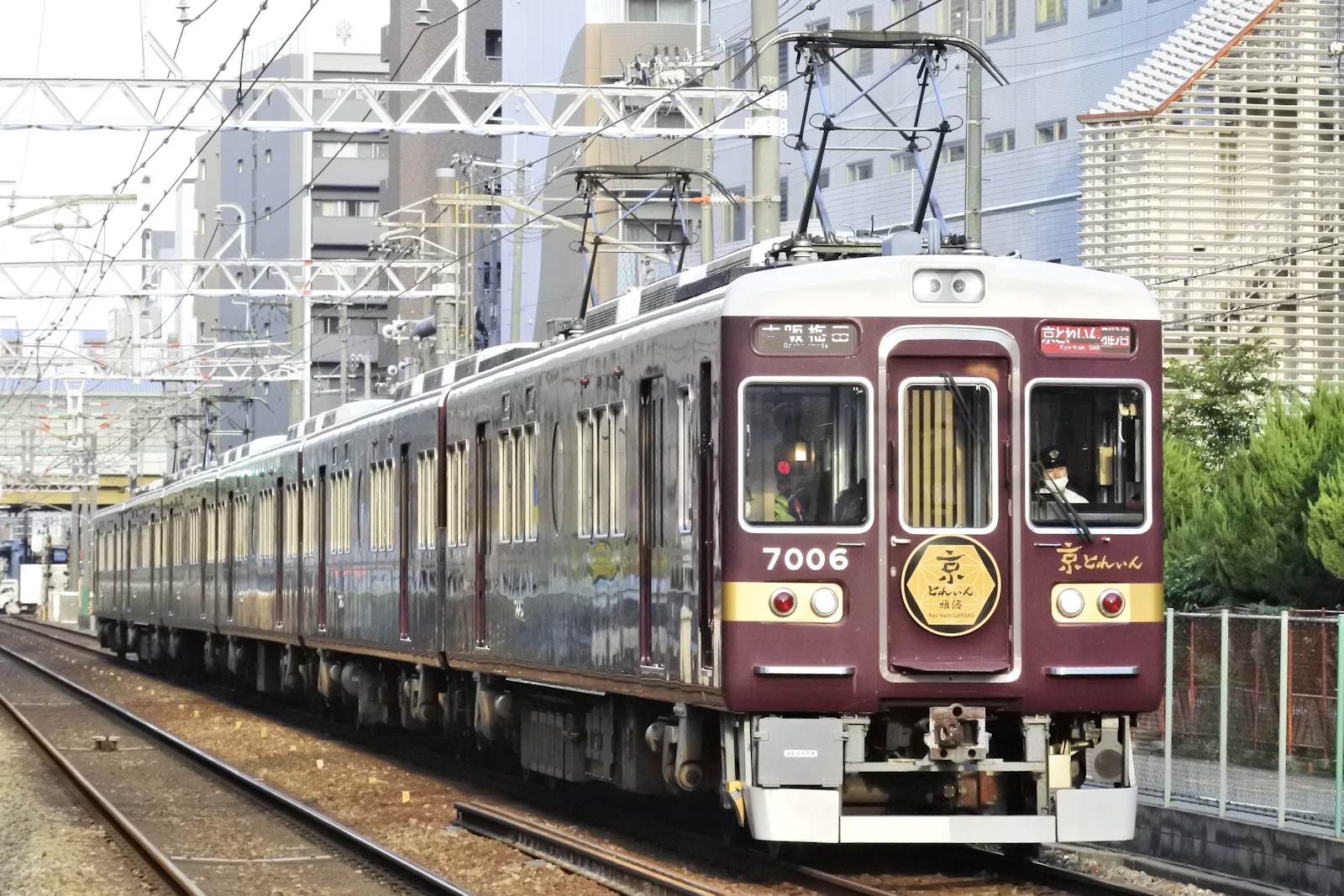
関西撮影旅行2022 阪急7000系「京とれいん雅洛」に乗る
写真は8月27日撮影、南方駅~十三駅間にて photographed on August 27th between Minamikata Station and Juso Station2022年の関西鉄道旅行もいよいよ最後の列車となった。今回の旅の最後のお楽しみは、阪急京都本線の「京とれいん雅洛」。「京とれいん雅洛」は2018(平成30)年にデビューした京都本線の観光列車「京とれいん」の2編成目で、7000系電車7006×6R編成を改造したもの。「乗ったときから京都気分」をコンセプトにデザインされた和モダンな内装を持つ。内装デザインは各車両で異なり、大阪梅田方から数えて1両目の1号車(7006号車)と6号車(7106号車)は「京町家のゆったりとした空間」をイメージした2+1配列のボックスシートが並ぶ家族・グループ客向け車両。2号車(7506号車)と5号車(7606号車)は「風流な時間を楽しむ」車両で、通路向きのロングシートで、2号車には枯山水の庭、5号車には京町家の坪庭が中央部に配置されている。枯山水の庭もしくは京町家の坪庭の向かい側の座席には畳が敷かれている。3号車(7566号車)と4号車(7576号車)は「大人の時間を楽しむ」車両で、大阪梅田方に向かって右側にはの窓向きの座席が、同左側には1人掛けの集団見合い型クロスシートがそれぞれ配列されている。窓向きの座席からは緑が美しい山々を眺められる。1人客にもお薦めな静かな時間を過ごせる車両とされている。各車両それぞれ6種類の京都の季節と花のモチーフがある。1号車は秋のカエデ、2号車は冬の竹、3号車は春のサクラ、4号車は夏の葵、5号車は初秋のススキ、6号車は早春のウメをそれぞれデザインされている。2号車にある枯山水の庭 a dry landscape garden in the second carriage5号車にある坪庭 a stone-flagged spot garden with a stone lantern in the fifth carriage僕は複数ある内装デザインの中から3号車のサクラの車両の車端部寄りのロングシートを選んだ。乗車中はスマートフォンから専用Wi-Fiアクセスポイントへアクセスして乗務員室のすぐ後ろの席に座らずとも、前面展望を見ることができる。京都河原町駅を発車すると、すぐ隣の烏丸駅に停車した。京都市営地下鉄烏丸線との乗換駅でもあるため、ここから乗ってきたお客様も多かった。西院駅までの地下区間を走り抜け、地上に上ると、遠くに嵐山が見えた。桂川橋梁を渡り、嵐山線との乗換駅である桂駅に到着。桂駅を発車すると、淡路駅までノンストップで走り抜ける。僕の目はスマートフォンの画面と窓からの景色の間を行ったり来たり。洛西口駅~東向日駅間の車窓から見える西山山系の山並み Mountain view between Rakusaiguchi Station and Higashi-muko Station列車は桂駅から進路を南に変え、進行方向右側には西山山系の山々が連なる。山々と淀川に挟まれた大山崎駅付近で再び進路を西寄りに向ける。大山崎駅を通過してすぐに、列車は大阪府へと入る。上牧駅~高槻市駅間は、京都本線で駅間が最も長く、風景の中で最も自然豊かと言える区間。山の手前にはJR西日本東海道本線(JR京都線)の線路があり、貨物列車を牽引するEF210形電気機関車が見えた。高槻市駅を過ぎると大阪・北摂の郊外住宅地となる。このあたりから車窓に見えた山も次第に遠くなっていった。住宅地を走り抜けた列車は大阪市内へと入り、千里線との乗換駅である淡路駅に到着した。淡路駅とその周辺は複雑な線形を改善し、京都本線と千里線の平面交差を解消することを目的に高架化工事が行われている。淡路駅の次の崇禅寺駅の手前まで、工事中の高架橋が進行方向右側に見えた。次の停車駅である十三駅から大阪梅田駅までの区間は京都本線・宝塚本線・神戸本線が並走する鉄道ファンにはたまらない区間。淀川橋梁を渡り、京都本線の列車は各停も含めてすべて通過する中津駅を過ぎるとまもなく、終着駅である大阪梅田駅へ到着。大阪梅田駅といえば、京都本線・宝塚本線・神戸本線が一堂に会する大阪随一のターミナル駅。くし型ホームに3線の列車が並ぶ光景は圧巻である。45分程度の乗車時間で、僕は京都感溢れる車内と車窓から見える山々やすれ違う列車、そしてスマートフォンの画面に映し出された前面展望の3つそれぞれに惹かれ、楽しい時間を過ごせた。From Kyoto-kawaramachi Station, I travelled by "Kyo Train Garaku" on Hankyu Kyoto Main Line, which was my last attraction on this travel."Kyo Train Garaku" started its regular service in 2018 as the second sightseeing train on Kyoto Main Line, and the carriage was refurbished from a 7000 Series set, 7006×8R. Its accommodation introduces a modernised Japanese-style design as the train "making passengers feel Kyoto as the train departs".The interior of each carriage looks different. The first and sixth (from Osaka-umeda) equip transverse seats in a 2+1 layout. The second and fifth do longitudinal seats with a dry landscape garden (second) or a stone-flagged spot garden with a stone lantern (fifth). The third and fourth do window-facing longitudinal and transverse seats for one on the opposite side.Each carriage also has a season and flower motif. The first is maples in autumn, the second is bamboos in winter, the third is cherry blossoms in spring, the fourth is malvaceae in summer, the fifth is Japanese silver grass in early autumn, and the sixth is plum blossoms in early spring.I chose a longitudinal seat in the third carriage near its end.While travelling, passengers could watch the front view on their smartphones through the dedicated Wi-Fi service.The train departed from Kyoto-kawaramachi Station on time and stopped at the Karasuma Station, next to Kyoto-kawaramachi. At Karasuma Station, many passengers started to travel because of the junction from Kyoto Municipal Subway Karasuma Line. Going out of an underground tunnel at Saiin Station, Mt. Arashiyama appeared. Crossing Katsura River, the train arrived at Katsura Station, which functions as the junction to Arashiyama Line.Departing from Katsura Station, Nishiyama Mountains appeared over the window (fifth photograph).Soon after passing Oyamazaki Station, the train went into Osaka Prefecture.Between Kammaki Station and Takatsukishi Station, the longest section of Kyoto Main Line, I saw a freight train on JR West Tokaido Line hauled by a Class EF210 electric locomotive (sixth photograph).From Takatsukishi Station, the suburb residentials spread, and the mountains gradually disappeared from the windows.The train went into Osaka City and arrived at Awaji Station. Around Awaji Station, the elevation construction to improve a complex railway layout was undergoing. Before passing Sozenji Station, I saw the under-construction bridge beams.Between Juso Station and Osaka-umeda terminal, Kyoto Main Line parallels Takarazuka Main Line and Kobe Main Line. Crossing Yodogawa River, the train arrived at Osaka-umeda Terminal.At Osaka-umeda Station, people can see nine trains (three toward Kyoto-kawaramachi, three toward Takarazuka, and three toward Kobe-sannomiya) at a maximum.During about 45-minute travel, I enjoyed all of the carriage interior, mountainous scenery, and front view on my smartphone.
Aug 28, 2022
閲覧総数 139
-
32
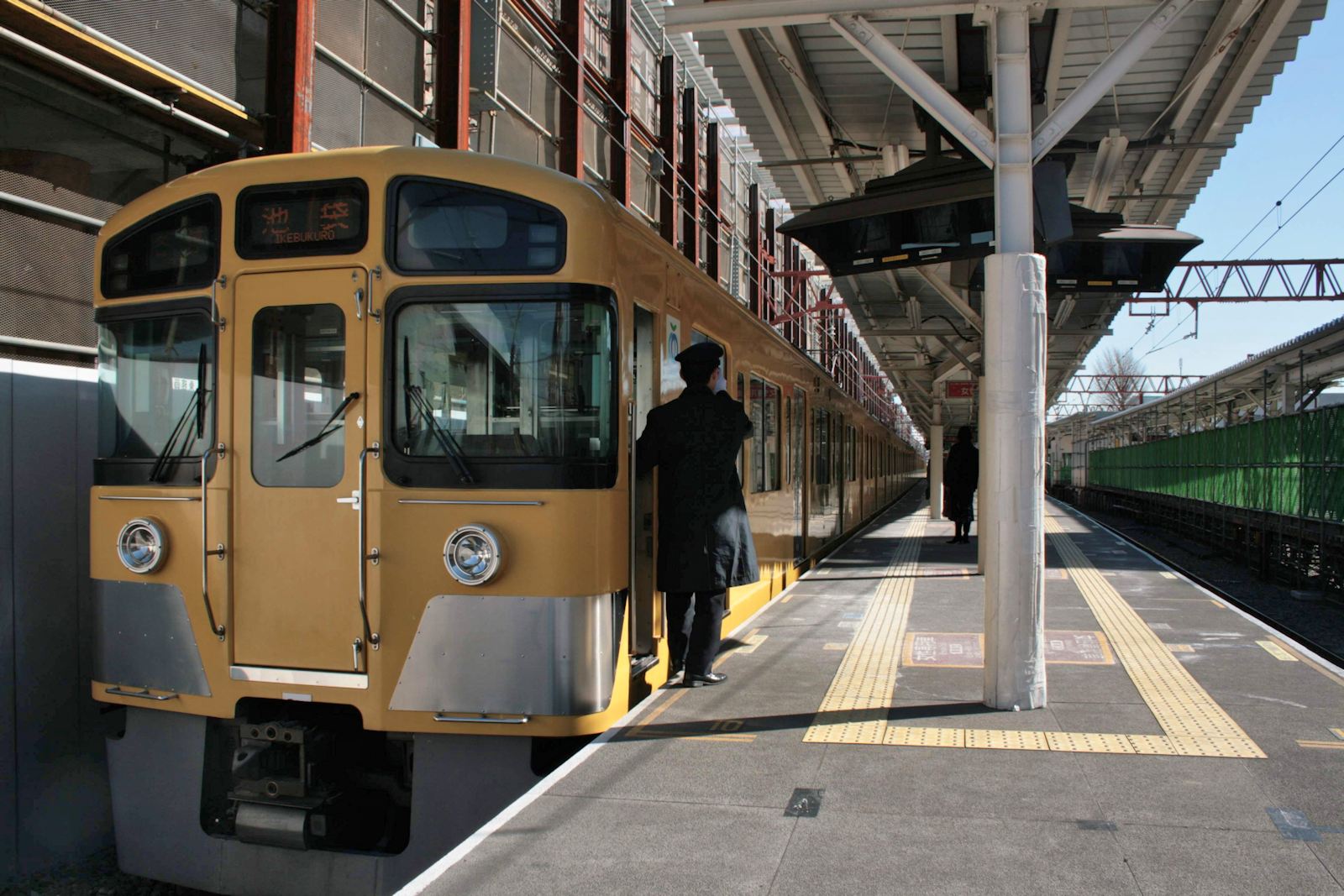
石神井公園駅ビフォーアフター 2010年2月5日 高架化前
西武池袋線石神井公園駅は来る2月7日早朝から上り線が高架化される。そこで高架化で見納めとなる地上ホームの最後の姿を見てきた。From the early morning of this coming Sunday, 7th, February, the upper track of Seibu Ikebukuro Line around Shakujii-koen Station is going to be elevated. So I went to the station to capture the last of the old track.上り4番線を発車する2000系電車。2000 Series leaving from track 4.旧4番線から新3・4番線を見る。The view from old and new platforms.南口駅前から地平ホーム・高架ホーム・北口の高層マンション・クイーンズ伊勢丹を見る。Old and new platforms and Isetan building in front of the opposite sideway in from the south gate.練馬高野台駅にて。地平区間から高架区間に上がってきた10000系電車の特急列車。高架化によりここでの地平区間から上がってくる姿も見納めとなる。10000 Series NRA going up to the elevated section at Nerima-takanodai. This situation is also becoming an old days memory.
Feb 5, 2010
閲覧総数 583


-
-
- ゲーム日記
- アイドルイベント「騒乱!英仏アイド…
- (2026-05-13 21:00:04)
-
-
-
- 動物園&水族館大好き!
- 神戸どうぶつ王国 アウトサイダーパ…
- (2026-05-13 18:30:04)
-
-
-

- GUNの世界
- 平成回想】2000年4月号のGUN広告
- (2026-05-13 13:32:44)
-


