



PR

令和維新
2004年4月から企業を離れ、コンサルタントや情報起業を試行しなが ら、失われた20年を取り戻し、日本再生をめざす私の歩みをみて一人でも多くの後継者が出てくれることを祈りつつ友達から紹 介されたこのホームページの更新を続け、これまでの活動の記録と今やビッグデータ、AI,、IOT,ブロックチェーン、仮想通貨の時代になってしまいましたが、私の現状認識と関連技術を紹介していきたい。
先端技術情報20260727
デフレーションの強制継続
イーサリアムの長期戦:なぜ2026年がすべてを変える年になり得るのか(Ethereum's Long Game: Why 2026 Could Be the Year That Changes Everything)
テクニカル・ドキュメンテーションのためのコンテンツ・デザイン実践の構築(Building a Content Design Practice for Technical Documentation
(1)トークン化は注目の話題である。しかし、それを現実世界で機能させることが最も難しい部分だ(Tokenization Is a Hot Topic. Making It Work in the Real World Is the Hard Part.)
先端技術情報20260726
「マジ面倒くさいなあ」日本を衰退させた愚者たち
市場フェーズの解説:蓄積、拡大、分配、リセット(Market Phases Explained: Accumulation, Expansion, Distribution, Reset)
(2)テクニカルドキュメンテーションのためのコンテンツデザイン実践の構築(Building a Content Design Practice for Technical Documentation)
先端技術情報20260725
デフレーションの強制継続
イーサリアムの長期戦:なぜ2026年がすべてを変える年になり得るのか(Ethereum's Long Game: Why 2026 Could Be the Year That Changes Everything)
テクニカル・ドキュメンテーションのためのコンテンツ・デザイン実践の構築(Building a Content Design Practice for Technical Documentation
(1)トークン化は注目の話題である。しかし、それを現実世界で機能させることが最も難しい部分だ(Tokenization Is a Hot Topic. Making It Work in the Real World Is the Hard Part.)
先端技術情報20260726
「マジ面倒くさいなあ」日本を衰退させた愚者たち
市場フェーズの解説:蓄積、拡大、分配、リセット(Market Phases Explained: Accumulation, Expansion, Distribution, Reset)
(2)テクニカルドキュメンテーションのためのコンテンツデザイン実践の構築(Building a Content Design Practice for Technical Documentation)
先端技術情報20260725
Comments
FreshP
@ Re:(2)最高のETHボット:狙撃手、コピートレード、ウォレット追跡(テレグラム&ウエブ) Best ETH Bots: Sniper, Copy Trading, Wallet Trackers - Telegram & Web(04/02)
正直、私はずっとGunbotを好んでいました…
Rajshekhar
@ Re:(1)2024年2月に50~100倍の可能性がある上位8つの仮想通貨プロジェクトは何か?(What are the top 8 crypto projects with50–100x potential in February 2024?)(02/27)
It is based on the decentralized concep…
やすじ2004
@ Re:2024年に仮想通貨ネオバンキングに切り替える8つの説得力のある理由とは?(op 8 Compelling Reasons to Make the Switch to Crypto Neo Banking in 2024?)(01/17)
寒い日が続くので、週末はしっかり食べて…
aki@ Re:ビットコインアナリストのプランBは10ヶ月間の「顔が溶けるFOMO」を予測Bitcoin analyst PlanB predicts 10 months of ‘face melting FOMO’(03/12)
この様な書込大変失礼致します。日本も当…
Adobe@ Re:(2)CIDM Sponsor Profile – Adobe Technical Communications CIDM スポンサー紹介- アドービ テクニカル・コミュニケーションズ(01/04)
XML Documentation for Adobe <small> <a…
2026年7月27日の…
 New!
藻緯羅さん
New!
藻緯羅さん
源氏物語〔35帖 柏木…
New!
USM1さん
🌸 新作「二人の宇宙… New! 神風スズキさん
礼文華、大沼附近 D…
New!
GKenさん
ハープコンサート in… 47弦の詩人さん
New!
藻緯羅さん源氏物語〔35帖 柏木…
New!
USM1さん🌸 新作「二人の宇宙… New! 神風スズキさん
礼文華、大沼附近 D…
New!
GKenさんハープコンサート in… 47弦の詩人さん
Category
カテゴリ未分類
(112)連絡
(24)交流会
(27)セミナー
(29)参考情報
(138)オフ会
(36)on-line報告会
(13)翻訳ビジネス
(8)情報開発
(270)ビッグデータ
(88)ブロックチェーン
(248)人工知能
(534)IOT
(307)仮想通貨
(866)コンテンツ
(127)政治経済
(1944)先端技術
(962)DITA
(52)テレワーク
(28)UX
(0)文書管理
(8)テクニカルライテイング
(23)学習
(9)訓練
(1)XMLソリューション
(3)メタバース
(101)Web3
(68)投資
(191)IoT
(34)投資信託
(1)ビットコイン
(786)イーサリアム
(163)NFT
(41)オンライン
(0)受動収入
(14)ソーシャルメデイア
(0)DAO
(2)DeFi
(79)暗号通貨
(168)トークノミクス
(22)アルトコイン
(229)空中投下
(16)スマート契約
(4)ステーブルコイン
(42)金
(5)生成AI
(5)SCM
(4)ウオレット
(9)不労所得
(58)セキュリテイ
(4)ミームコイン
(50)CBDC
(5)PoS
(3)PoW
(1)ETF
(15)仮想通貨ETF
(1)予言
(7)裁定取引
(1)GameFi
(5)マイニング
(9)RWA
(23)DePIN
(22)SWFT
(1)WLFI
(1)アービトラージ
(7)XRP
(67)大統領選
(4)BCH
(1)取引ボット
(17)トレーデイング
(52)不動産
(1)詐欺
(4)貿易戦争
(1)医療
(1)金融
(2)TEZOS
(1)CARDANO
(2)カルダーノ
(3)ステーキング
(5)チェーンリンク
(1)開発
(0)HEDERA
(3)スマートマネー
(0)流動性
(0)AIエージェント
(19)401k
(1)国際送金
(1)solano
(1)AI
(1)暗号資産
(74)機関投資家
(5)量子コンピューター
(4)AIエージェント
(1)ドキュメンテーション
(2)AIトレーデイング
(1)Keyword Search
▼キーワード検索
Freepage List


Shopping List
お買いものレビューがまだ書かれていません。
2026.07.13

テーマ: 仮想通貨(3214)
カテゴリ: トレーデイング
Decentralized Finance: The Infrastructure Layer
分散型金融(DeFi):インフラストラクチャレイヤー
Decentralized finance represents one of the most profound shifts in how financial services may operate. Unlike traditional finance, where banks and institutions serve as intermediaries, decentralized finance uses smart contracts—self-executing code—to provide financial services without centralized control.
分散型金融(DeFi)は、金融サービスがどのように機能し得るかにおける、最も深遠な交代の一つを表している。銀行や金融機関が仲介者として機能する伝統的金融とは異なり、分散型金融はスマートコントラクト(自己実行型のコード)を使用して、中央集権的な管理なしに金融サービスを提供する。
The applications span lending and borrowing, trading, insurance, asset management, and more—all without traditional gatekeepers. While the technology remains early, the potential implications are substantial.
そのアプリケーションは、貸付や借入、取引、保険、資産管理などに及び、これらすべてが伝統的な門番なしで行われる。この技術はまだ初期段階にあるものの、もたらし得る潜在的な影響は甚大である。
What caught my attention wasn't just the technology, but the adoption trajectory. Currently, approximately 24% of institutional investors engage with decentralized finance in some capacity. That percentage is projected to triple to 75% within two years.
This acceleration reflects several factors. Regulatory clarity is improving in key jurisdictions, reducing uncertainty. The underlying technology has matured significantly, with transaction costs and speeds becoming more practical. Real-world use cases have emerged beyond pure speculation, demonstrating genuine utility.
この加速はいくつかの要因を反映している。主要な法管轄区域において規制の明確性が向上しており、不確実性が減少していること。基礎となるテクノロジーが大幅に成熟し、取引コストと処理速度がより実用的なレベルになっていること。そして、単なる投機を超えた現実世界のユースケースが登場し、本物の効用が証明されていることである。
Yield farming—providing liquidity to decentralized protocols in exchange for rewards—has evolved from experimental to established practice. While early implementations suffered from unsustainable incentive structures, newer approaches focus on protocol sustainability and risk-adjusted returns.
イールドファーミング(報酬と引き換えに分散型プロトコルに流動性を提供すること)は、実験的な試みから確立された慣行へと進化した。初期の実装は持続不可能なインセンティブ構造に苦しんだが、新しいアプローチはプロトコルの持続可能性とリスク調整後リターンに焦点を当てている。
The most sophisticated participants don't chase the highest advertised yields. They construct layered strategies: staking base-layer assets for foundational returns, then deploying those receipt tokens in liquidity pools for additional yield, then potentially boosting those positions through other protocols.
最も洗練された参加者は、最も高く宣伝されている利回りを追いかけたりはしない。彼らは、基盤となるリターンを得るためにベースレイヤーの資産をステーキングし、その後、それらの預り証トークン(リキッド・ステーキング・トークン)を流動性プールに投入して追加の利回りを得て、さらに他のプロトコルを通じてそれらのポジションを強化するという、「階層型戦略」を構築している。
The key insight I've developed? Decentralized finance isn't about replacing traditional finance overnight. It's about creating parallel infrastructure that offers different tradeoffs—greater transparency and accessibility in exchange for assuming more personal responsibility for security and risk management.
私が導き出した鍵となる洞察は何か。それは、分散型金融の本質は、伝統的金融を一夜にして置き換えることではないということだ。それは、セキュリティやリスク管理に対してより多くの自己責任を引き受けることと引き換えに、より高い透明性とアクセシビリティを提供する、もう一つの「並行するインフラストラクチャ」を構築することなのである。
Building a Portfolio That Actually Makes Sense
実際に理にかなったポートフォリオの構築
The Allocation Framework Institutions Use
機関投資家が使用する資産配分の枠組み
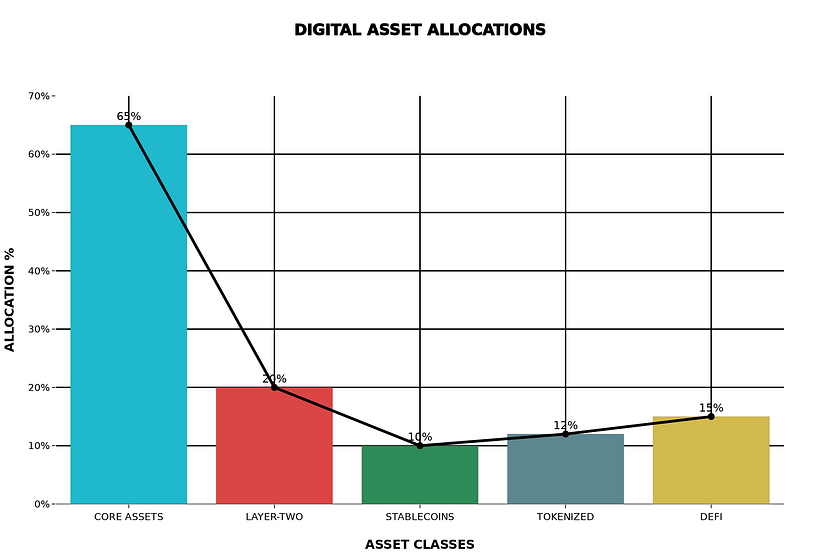
After studying how successful institutional investor’s structure digital asset portfolios, a clear pattern emerges. They don't simply buy a collection of assets and hope for the best. They construct allocation frameworks based on specific criteria: asset maturity, liquidity, volatility, and correlation with other holdings.
The most common institutional framework allocates approximately 60-70% to core assets, 20-30% to diversified alternatives, and 5-10% to stablecoins for liquidity and yield generation. This structure provides exposure to potential upside while maintaining stability and liquidity.
最も一般的な機関投資家の枠組みでは、約60〜70%を中核資産に、20〜30%を分散された代替資産に、そして5〜10%を流動性と利回り生成のためのステーブルコインに配分する。この構造は、安定性と流動性を維持しながら、潜在的な上昇余地(投資機会)への露出を提供する。
Core assets serve as the foundation—typically the two most established networks by market capitalization and adoption. These have weathered multiple market cycles, demonstrated resilience, and maintained sufficient liquidity for institutional-scale positions.
中核資産は基盤として機能する。これらは通常、時価総額と採用実績において最も確立された2つのネットワークである。これらは複数の市場サイクルを乗り越え、回復力を示し、機関投資家規模のポジションに対応できる十分な流動性を維持してきた。
The alternative allocation provides exposure to emerging technologies without overconcentrating risk. This bucket may include layer-two infrastructure, decentralized finance protocols, real-world asset platforms, and selective exposure to newer smart contract platforms with genuine utility.
Stablecoins serve multiple functions: maintaining dry powder for opportunistic purchases, generating yield through lending, and facilitating rapid rebalancing without converting to traditional currency.
ステーブルコインは複数の機能を果たす。好機を捉えた購入のための火薬(待機資金)の維持、貸付を通じた利回りの生成、そして伝統的な通貨に変換することのない迅速なリバランスの促進である。
What matters most isn't the specific percentages—those should reflect your personal risk tolerance, time horizon, and conviction level. What matters is having a framework at all.
最も重要なのは、具体的な配分比率ではない。それらは個人のリスク許容度、投資期間、そして確信の度合いを反映すべきものである。最も重要なのは、何らかの枠組みをそもそも持っているということなのである。
Diversification That Actually Reduces Risk
本当にリスクを軽減する分散投資
One of the biggest mistakes I made early on was confusing activity with strategy. I held dozens of different assets, believing this represented diversification. It didn't. I had simply accumulated correlation disguised as variety.
私が初期の頃に犯した最大の過ちの一つは、「活動」と「戦略」を混同していたことである。私は何十もの異なる資産を保有し、これが分散投資であると信じ込んでいた。しかし、それは違った。私は単に、多様性という名の仮面をかぶった「相関関係」を蓄積していただけに過ぎなかったのである。
True diversification in digital assets requires understanding correlation patterns. Many assets move together during significant market events, providing less diversification benefit than traditional portfolio theory would suggest.
デジタル資産における真の分散投資には、相関パターンの理解が必要不可欠である。重大な市場イベントの発生時、多くの資産は連動して動くため、伝統的なポートフォリオ理論が示唆するほどの分散効果は得られないことが多い。
The most effective diversification combines several approaches simultaneously. First, diversify across market capitalization tiers—large, established assets for stability; mid-sized projects for growth potential; selective small-cap exposure for asymmetric opportunities.
最も効果的な分散投資は、いくつかのアプローチを同時に組み合わせるものである。第1に、時価総額の階層間で分散することである。安定性のための大規模で確立された資産、成長の潜在力を持つ中規模のプロジェクト、そして非対称な(爆発的な)機会を得るための選択的な小規模時価総額資産投資機会への露出である。
Second, diversify across use cases and sectors. Don't overweight similar technologies. A portfolio concentrated entirely in layer-one smart contract platforms, for example, carries concentrated risk if that particular thesis doesn't pan out.
第2に、利用事例やセクター間で分散することである。類似したテクノロジーに過剰なウェイトを置いてはならない。例えば、ポートフォリオのすべてをレイヤー1のスマートコントラクトプラットフォームに集中させてしまうと、その特定の仮説が的外れに終わった場合にリスクが集中することになる。
Third, include non-correlated assets. This is where stablecoins, yield-generating positions, and potentially tokenized real-world assets provide genuine diversification benefit.
第3に、相関関係のない資産を組み入れることである。ここでステーブルコインや、利回りを生成するポジション、そして潜在的にはトークン化された現実世界資産(RWA)が、本物の分散効果をもたらすことになる。
Fourth, maintain geographic consideration. Some projects originate and operate primarily within specific jurisdictions, creating regulatory concentration risk. While difficult to fully diversify given the global nature of most protocols, awareness helps.
第4に、地理的な考慮を維持することである。一部のプロジェクトは特定の法管轄区域内で発祥し、主にそこで運営されているため、規制の集中リスクを生み出す。ほとんどのプロトコルが持つグローバルな性質上、完全に分散することは困難であるが、それを意識しておくことは有益である。
Research suggests that combining established assets with a modest allocation to alternatives and some stablecoins can substantially enhance risk-adjusted returns compared to concentrated positions. The optimal ratio appears to be approximately 70% in the two primary assets and 30% in a diversified basket of alternatives.
研究によれば、確立された資産に、代替資産へのささやかな配分といくつかのステーブルコインを組み合わせることで、集中したポジションと比較してリスク調整後リターンを大幅に向上させることができる。最適な比率は、2つの主要な資産に約70%、分散された代替資産のバケツに30%を配分することであるとみられる。
Rebalancing: The Practice That Separates Winners
リバランス:勝者を分かつ実践
Portfolio rebalancing may be the least exciting but most valuable practice in digital asset investing. It's the systematic approach of periodically adjusting asset weights back to target allocations.
ポートフォリオのリバランスは、デジタル資産投資において最もワクワクするとは言えないが、最も価値のある実践かもしれない。それは、定期的に資産のウェイトをターゲットとする配分へと調整し戻す、体系的なアプローチである。
Why does this matter? Because digital assets experience dramatic price movements. Without rebalancing, an initially balanced portfolio quickly becomes dominated by whichever assets performed best recently—concentrating risk precisely when you should be reducing it.
なぜこれが重要なのだろうか。それは、デジタル資産が劇的な価格変動を経験するからである。リバランスを行わないと、当初バランスの取れていたポートフォリオは、またたく間に最近最も成績の良かった資産によって支配されてしまう。つまり、まさにリスクを軽減すべき瞬間に、リスクを集中させてしまうことになるのである。
Consider a simple example. You allocate equally across five different assets, each representing 20% of your portfolio. Over several months, one asset quadruples while others remain flat or decline. That asset now represents 50-60% of your portfolio. You've inadvertently concentrated your position at peak valuation.
シンプルな例を考えてみよう。あなたは5つの異なる資産にそれぞれ20%ずつ均等に配分したとする。数ヶ月の間に、ある1つの資産が4倍になる一方で、他の資産は横ばいか下落した。その結果、その資産は現在ポートフォリオの50〜60%を占めるようになった。あなたは意図せず、評価額のピークにおいてポジションを集中させてしまったことになる。
Rebalancing forces a valuable discipline: selling assets that have run up and buying those that have underperformed. This "buy low, sell high" mechanic happens automatically through systematic rebalancing.
リバランスは価値のある規律を強制する。それは、価格が急騰した資産を売り、成績が低かった資産を買うということである。この「安く買い、高く売る」メカニズムが、体系的なリバランスを通じて自動的に行われる。
Two primary approaches exist: time-based and threshold-based rebalancing. Time-based involves rebalancing at regular intervals—monthly, quarterly, or annually. Threshold-based triggers rebalancing when any asset drifts beyond a predetermined percentage from its target allocation.
主に2つのアプローチが存在する。期間ベースのリバランスと、閾値ベースのリバランスである。期間ベースは、毎月、四半期、あるいは毎年といった定期的な間隔でリバランスを行う。閾値ベースは、いずれかの資産がターゲットとする配分から事前に設定したパーセンテージを超えて隔たりができるときにリバランスを発動する。
Each approach has merits. Time-based rebalancing is simpler and requires less monitoring. Threshold-based may be more tax-efficient and responsive to market conditions.
それぞれのアプローチに利点がある。期間ベースのリバランスはよりシンプルで、監視の負担が少ない。閾値ベースは、より税効率が高く、市場の状況に即応できるかもしれない。
For digital assets specifically, given their higher volatility compared to traditional assets, quarterly or monthly rebalancing often makes sense. Some sophisticated investors rebalance even more frequently, particularly when significant price movements occur.
デジタル資産特有の性質として、伝統的な資産と比較して価格変動が高いため、四半期または月次のリバランスが理にかなっていることが多い。洗練された投資家の中には、特に重大な価格変動が発生したときなど、さらに頻繁にリバランスを行う者もいる。
One critical consideration: transaction costs and potential tax implications. Each rebalancing event potentially generates taxable events in many jurisdictions. Balancing the benefits of rebalancing against these costs requires thoughtful analysis.
1つの重要な考慮事項は、取引コストと潜在的な税金への影響である。多くの法管轄区域において、リバランスの各イベントは潜在的に課税対象となるイベントを生成する。リバランスのメリットとこれらのコストとのバランスを取るには、思慮深い分析が必要である。
The Long-Term Holding Mindset
長期保有の心構え
Perhaps the most powerful practice I've adopted involves extending my time horizon. Short-term price movements, which once dominated my attention, have become largely irrelevant to my decision-making process.
私が採用したおそらく最も強力な実践は、投資期間を延長することである。かつては私の注意を支配していた短期的な価格変動は、私の意思決定プロセスにおいて今やほとんど無関係なものとなった。
The data supporting long-term holding is compelling. Approximately 72% of the primary store-of-value asset's circulating supply has remained unmoved for over six months. Wallets holding assets for three or more years account for 38% of supply. These holders have experienced dramatic volatility yet maintained their positions through multiple market cycles.
長期保有を支持するデータは説得力がある。主要な価値保存資産の流通供給量の約72%が、6ヶ月以上にわたって移動していない。3年以上資産を保有しているウォレットは、供給量の38%を占めている。これらの保有者は、劇的な乱高下を経験しながらも、複数の市場サイクルを通じてポジションを維持してきたのである。
Why do long-term holders outperform short-term traders? Several factors contribute.
なぜ長期保有者は短期トレーダーを凌駕するのだろうか。いくつかの要因が寄与している。
First, they avoid the psychological trap of reacting to volatility. Markets move both up and down with dramatic swings. Attempting to time entries and exits consistently proves difficult even for professionals.
第1に、彼らは乱高下に反応するという心理的罠を回避している。市場は劇的なスイングを伴って上下双方に動く。参入と退出のタイミングを継続的に完璧に捉えようとすることは、プロフェッショナルにとっても困難であることが証明されている。
Second, they benefit from the compounding effect of market cycles. Digital assets historically have moved through distinct phases—accumulation, growth, peak, and correction—roughly every four years. Long-term holders capture the full cycle rather than trying to perfectly time individual phases.
第2に、彼らは市場サイクルの複利効果を享受している。デジタル資産は歴史的に、約4年ごとに蓄積、成長、ピーク、そして修正という明確なフェーズを経て動いてきた。長期保有者は、個々のフェーズのタイミングを完璧に測ろうとするのではなく、サイクル全体の価値を捉えるのである。
Third, they minimize transaction costs and tax implications. Every trade potentially generates taxable events and definitely incurs transaction costs. These seemingly small drags on performance compound significantly over time.
第3に、彼らは取引コストと税金への影響を最小限に抑えている。すべての取引は潜在的に課税イベントを生み出し、確実に取引コストを発生させる。パフォーマンスに対するこれらの見かけ上、小さな足枷は、時間の経過とともに大きく複利で膨らんでいく。
The most effective approach I've found combines long-term holding with strategic accumulation. Rather than attempting to time a perfect entry, systematically acquiring positions over time—often called dollar-cost averaging—reduces the impact of volatility and removes the pressure of timing decisions.
私が実効的であると見出した最も効果的なアプローチは、長期保有と戦略的な買い増しを組み合わせることである。完璧な参入のタイミングを測ろうとするのではなく、時間をかけて体系的にポジションを獲得していく手法(一般にドルコスト平均法と呼ばれる)は、乱高下の影響を軽減し、タイミングを計る決断のプレッシャーを取り除いてくれる。
Recent data shows approximately 73% of asset holders plan to maintain or increase their positions throughout the current year, preferring long-term perspective over short-term speculation. Among institutional investors, 86% now have exposure or plan allocations specifically for portfolio diversification, not short-term trading.
最近のデータによると、資産保有者の約73%が今年を通じてポジションを維持または増加させる計画であり、短期的な投機よりも長期的な視点を好んでいる。機関投資家の間では、現在86%が短期的なトレーディング目的ではなく、具体的にはポートフォリオの分散投資のために投資機会への露出を保有しているか、あるいは配分を計画している。
Risk Management: What They Don’t Tell You
リスク管理:彼らが語らないこと
Understanding What Can Actually Go Wrong
実際に何が問題になり得るかを理解する
The most dangerous assumption in digital assets is that volatility represents the primary risk. It doesn't. Volatility is merely price fluctuation—uncomfortable but not inherently destructive if you maintain proper time horizon and position sizing.
デジタル資産における最も危険な仮定は、乱高下が最大のリスクであるという考え方だ。それは違う。乱高下は単なる価格の変動に過ぎず、適切な投資期間とポジションサイジングを維持していれば、本質的に破滅的なものではない。
The risks that actually matter are structural: security breaches, protocol failures, regulatory changes, and permanent loss of capital.
本当に重要なリスクは構造的なものである。すなわち、セキュリティ侵害、プロトコルの欠陥、規制の変更、そして資本の永久的な損失である。
Security represents perhaps the most immediate concern. Unlike traditional financial accounts with insurance and recovery mechanisms, digital assets held in self-custody become irrecoverable if private keys are lost or stolen. The responsibility shifts entirely to the holder.
セキュリティは、おそらく最も差し迫った懸念である。保険や回復メカニズムが存在する伝統的な金融口座とは異なり、自己保管管理しているデジタル資産は、秘密鍵を紛失または盗難されると、二度と取り戻せなくなる。責任は完全に保有者へと移行する。
I learned this lesson through a near-miss early in my journey. A phishing attempt nearly compromised my access credentials. Only because I had enabled multiple authentication factors and maintained healthy skepticism did I avoid loss. That experience fundamentally changed how I approach security.
私は旅の初期に、危うく難を逃れた経験からこの教訓を学んだ。フィッシング詐欺の試みにより、アクセス資格情報が危うく侵害されそうになったのである。二要素認証を有効にし、健全な懐疑心を維持していたからこそ、損失を免れることができた。その経験が、私のセキュリティへのアプローチを根本から変えた。
Best practices for security include: using hardware wallets for significant holdings, enabling multi-factor authentication on all accounts, maintaining separate devices for financial transactions, regularly updating software, and maintaining backups of recovery phrases in physically secure locations.
セキュリティの最善事例には以下のものが含まれる。高額な保有資産にはハードウェアウォレットを使用すること、すべてのアカウントで多要素認証(MFA)を有効にすること、金融取引には専用の別デバイスを維持すること、ソフトウェアを定期的に更新すること、そして復元フレーズ(シードフレーズ)のバックアップを物理的に安全な場所に保管することである。
Protocol risk involves the possibility that the underlying technology contains vulnerabilities or fails to achieve its intended purpose. Smart contracts, while powerful, are only as secure as the code implementing them. Numerous high-profile exploits have resulted from coding errors or unanticipated attack vectors.
プロトコルリスクとは、基盤となる技術に脆弱性が含まれているか、あるいは意図した目的を達成できない可能性を指す。スマートコントラクトは強力であるが、それを実装しているコードと同程度にしか安全ではない。数々の大規模なハッキング事件が、コーディングの誤りや予期せぬ攻撃ベクトルから生じている。
This is why smart contract audits matter. Reputable projects undergo multiple independent security reviews before launching. When evaluating any protocol-based investment, checking whether it has been audited—and by whom—provides valuable risk assessment.
これこそが、スマートコントラクトの監査が重要である理由である。評判の良いプロジェクトは、立ち上げ前に複数の独立したセキュリティレビュー(監査)を受ける。プロトコルベースの投資を評価する際、それが監査されているか、そして誰によって監査されているかを確認することは、貴重なリスク評価となる。
Regulatory risk remains substantial and often underestimated. Governments worldwide are developing frameworks for digital assets, and these rules significantly impact value and utility. What is permitted today may become restricted tomorrow. Geographic diversification and awareness of regulatory developments in key jurisdictions helps manage this exposure.
規制リスクは依然として甚大であり、しばしば過小評価されている。世界中の政府がデジタル資産の枠組みを開発中であり、これらの規則は価値と実用性に重大な影響を与える。今日許可されていることが、明日には制限されるかもしれない。地理的な分散投資や、主要な法管轄区域における規制動向の把握は、この投資機会への露出を管理するのに役立つ。
Position Sizing: The Only Free Lunch
ポジションサイジング:唯一のフリーランチ
The most important risk management decision you'll make has nothing to do with which assets you buy. It's how much you allocate to digital assets overall within your broader wealth.
あなたが下す最も重要なリスク管理の決定は、どの資産を買うかとは一切関係がない。それは、あなたの総資産の中でデジタル資産全体にどれだけ配分するかということである。
Financial advisors typically recommend limiting digital asset exposure to less than 5% of your total investment portfolio, with beginners starting at 1-2%. This isn't arbitrary caution—it reflects the volatility characteristics and maturity level of the asset class.
財務アドバイザーは通常、デジタル資産投資機会への露出を投資ポートフォリオ全体の5%未満に制限することを推奨しており、初心者は1〜2%から始めるべきだとしている。これは恣意的な警戒ではなく、この資産クラスの価格変動特性と成熟度を反映したものである。
The mathematical reality is straightforward. Even a small allocation to high-performing assets can meaningfully impact total portfolio returns. A 5% allocation that doubles contributes a 5% gain to your entire portfolio. A 5% allocation that goes to zero loses only 5% of your total wealth.
数学的な現実は明快である。パフォーマンスの高い資産へのわずかな配分であっても、ポートフォリオ全体のリターンに意味のある影響を与えることができる。2倍に値上がりした5%の配分は、ポートフォリオ全体に5%の利益をもたらす。逆に、ゼロになった5%の配分は、総資産の5%を失うだけで済む。
Contrast this with a 50% allocation. If it doubles, your total wealth increases 50%—compelling. But if it goes to zero, you've lost half your net worth. Few people can psychologically withstand such drawdowns, leading to exactly the wrong behavior: panic selling at the worst possible moment.
これを50%の配分と比較してみよう。それが2倍になれば、総資産は50%増加し、魅力的である。しかし、それがゼロになれば、純資産の半分を失うことになる。これほどの大幅な下落に心理的に耐えられる人はほとんどおらず、最悪の瞬間にパニック売りを誘発するという、まさに間違った行動へとつながる。
The key insight I've internalized: position size should reflect conviction and risk tolerance, not fear of missing out. If you cannot emotionally handle your position going to zero without materially affecting your financial security or mental wellbeing, your position is too large.
私が内面化した鍵となる洞察は、ポジションサイズは「乗り遅れることへの恐怖(FOMO)」ではなく、確信とリスク許容度を反映すべきであるということだ。もし、そのポジションがゼロになったときに、自身の経済的安定や精神的健康に重大な影響を与えずには感情的に処理できないのであれば、そのポジションは大きすぎるのである。
The Volatility Management Techniques That Work
効果のある価格変動管理テクニック
Volatility in digital assets is not a bug—it's a feature of early-stage, price-discovery markets. Rather than attempting to eliminate volatility, successful investors develop techniques to manage their response to it.
デジタル資産における価格変動はバグではなく、価格発見の初期段階にある市場の特性である。成功する投資家は、価格変動を排除しようとするのではなく、それに対する自身の反応を管理するテクニックを開発している。
The most effective technique I've implemented is predetermined strategy. Before entering any position, I establish clear criteria for both adding to and reducing exposure. This removes emotion from decision-making during volatile periods.
私が導入した最も効果的なテクニックは、あらかじめ決定された戦略を持つことである。ポジションを構築する前に、投資機会への露出を追加する基準と削減する基準の両方を明確に設定しておく。これにより、価格変動の激しい時期の意思決定から情動を排除することができる。
For example: "I will accumulate this asset monthly regardless of price" or "I will take partial profits if my position appreciates by 100%" or "I will reduce exposure if it falls below specific technical levels." The specific rules matter less than having rules at all.
例えば、「価格に関係なく毎月この資産を積み立てる」「ポジションが100%値上がりしたら部分的に利益確定する」「特定のテクニカル水準を下回ったら投資機会への露出を削減する」といった具合である。具体的なルールの中身よりも、そもそもルールを持っていること自体が重要なのである。
Dollar-cost averaging proves particularly valuable in volatile markets. By systematically acquiring positions at regular intervals, you automatically buy more when prices are lower and less when prices are higher—without requiring any market timing skill.
ドルコスト平均法は、乱高下の激しい市場において特に価値があることが証明されている。定期的な間隔で体系的に資産を獲得していくことで、市場のタイミングを計るスキルを必要とせず、価格が低いときには自動的により多く買い、価格が高いときにはより少なく買うことになる。
Stop-loss orders—automatically selling if price falls below a predetermined level—provide another risk management tool, though they come with tradeoffs. In highly volatile markets, temporary price spikes may trigger stops unnecessarily, selling at local bottoms before recovery.
逆指値注文(価格が事前に設定した水準を下回った場合に自動的に売却すること)は、もう一つのリスク管理ツールであるが、トレードオフを伴う。乱高下の非常に激しい市場では、一時的な価格の急落によって不必要に逆指値が発動し、回復前の局所的な大底で売却してしまう可能性がある。
A more nuanced approach involves layered stop-losses at different levels, protecting against catastrophic decline while allowing room for normal volatility. Alternatively, some investors prefer mental stops—predetermined levels at which they will evaluate their position—rather than automatic triggers.
より洗練されたアプローチとしては、異なる水準で段階的に逆指値を設定し、壊滅的な下落から保護しつつ、通常のボラティリティのための余白を残す方法がある。あるいは、自動的な発動ではなく、ポジションを再評価する基準を事前に決めておく「精神的な損切りライン」を好む投資家もいる。
The most sophisticated volatility management involves position sizing across correlation bands. When all your holdings move together, you effectively have concentrated exposure. True volatility reduction comes from holding assets with low or negative correlation to each other and to traditional markets.
最も洗練された価格変動管理は、相関バンドにまたがるポジションサイジングを伴う。保有資産のすべてが連動して動く場合、実質的にポジションを集中させていることになる。真の価格変動低減は、互いに、そして伝統的な市場との相関が低い、あるいは負の相関を持つ資産を保有することからもたらされる。
==============================
インターネット・コンピュータランキング
ネットサービスランキング
==============================
![[商品価格に関しましては、リンクが作成された時点と現時点で情報が変更されている場合がございます。]](https://hbb.afl.rakuten.co.jp/hgb/55273e45.b00732d0.55273e4d.aafa5f24/?me_id=1411705&item_id=10000004&pc=https%3A%2F%2Fthumbnail.image.rakuten.co.jp%2F%400_mall%2Fzenbofficial%2Fcabinet%2Fthumb%2F15offcp%2Fmar08_260615.jpg%3F_ex%3D240x240&s=240x240&t=picttext "[商品価格に関しましては、リンクが作成された時点と現時点で情報が変更されている場合がございます。]")
【15%OFFクーポン】【糖質オフの豆100%麺】ZENB ゼンブ ヌードル 丸麺 8食~ 送料無料 パスタ そば ラーメン | 糖質オフ グルテンフリー 糖質制限 糖質コントロール 小麦粉不使用 たんぱく質 食物繊維 低GI 置き換え ダイエット時の栄養補給に
価格:2,620円~(税込、送料無料) (2026/6/23時点)

![[商品価格に関しましては、リンクが作成された時点と現時点で情報が変更されている場合がございます。]](https://hbb.afl.rakuten.co.jp/hgb/552743c6.f8e9b45b.552743c7.83e3936e/?me_id=1405737&item_id=10000348&pc=https%3A%2F%2Fthumbnail.image.rakuten.co.jp%2F%400_mall%2Fdogenka-miyazaki%2Fcabinet%2Fimgrc0083985721.jpg%3F_ex%3D240x240&s=240x240&t=picttext "[商品価格に関しましては、リンクが作成された時点と現時点で情報が変更されている場合がございます。]")
\5/28販売開始/【超高確率みくじ 第3弾】2本セット【150口限定】山崎18年 白州18年 響17年 宮城峡10年 竹鶴 イチローズ 津貫 など 福袋 酒くじ おみくじ ウイスキー くじ 最新
価格:12,999円(税込、送料無料) (2026/6/23時点)
お気に入りの記事を「いいね!」で応援しよう

[トレーデイング] カテゴリの最新記事
-
市場フェーズの解説:蓄積、拡大、分配、… 2026.07.26
-
(2)オーラム・トレーディング・ボット(… 2026.07.24
-
AIトレーディングボットの戦い!(Battle … 2026.07.23


【毎日開催】
15記事にいいね!で1ポイント


© Rakuten Group, Inc.
