


PR
キーワードサーチ
▼キーワード検索
カレンダー
サイド自由欄
鉄道模型・鉄道グッズリンク
鉄道関連書籍リンク
時刻表最新号
JTB時刻表

JR時刻表

鉄道雑誌最新号
鉄道ファン

鉄道ジャーナル

鉄道ピクトリアル

鉄道ダイヤ情報

Rail Magazine
RM MODELS

j train

とれいん

鉄道模型趣味

N

旅と鉄道

楽天トラベルで旅に出よう

鉄道関連書籍リンク
時刻表最新号
JTB時刻表
JR時刻表
鉄道雑誌最新号
鉄道ファン
鉄道ジャーナル
鉄道ピクトリアル
鉄道ダイヤ情報
Rail Magazine
RM MODELS
j train
とれいん
鉄道模型趣味
N
旅と鉄道
楽天トラベルで旅に出よう
コメント新着
Sep 18, 2018

カテゴリ: 鉄道旅の記録

立山・黒部アルペンルートと富山県の鉄道を巡る旅、2日目の9月18日。前日に降った雨はその日の夕方には止み、この日は朝から空が青くきれいな晴天に恵まれた。
この日の朝は立山・黒部アルペンルートで最も標高が高く、なおかつ立山連峰を間近に見ることができる室堂高原を散歩した。コースは室堂駅から「みくりが池周回コース」に加えて地獄谷展望台・雷鳥荘方面を巡るもの。
室堂高原(室堂平)へは、室堂駅の屋上に直結している。階段を降りてすぐ、やや右方向に「立山」と書かれた大きな石が置かれている。その正面には立山三山を見ることができる(上の写真)。写真左から、富士の折立山、大汝山、主峰である雄山の順に並ぶ。
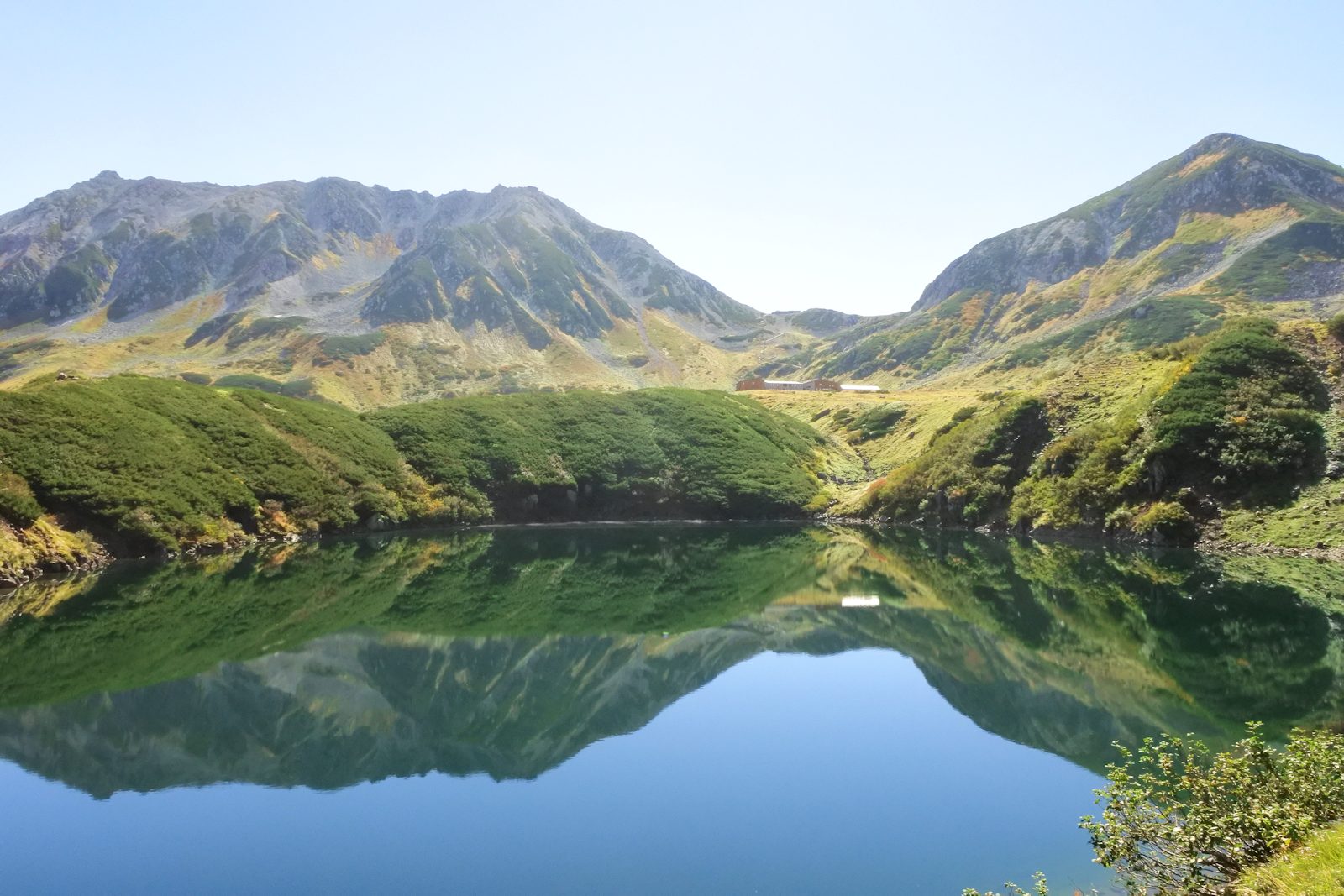
みくりが池を手前に立山三山を臨む Mikurigaike Pond and Mt. Tate
みくりが池へは、石碑とは反対の左へ進む。池の水面に室堂高原(室堂平)の緑と立山三山、浄土山(写真右)がくっきりと写っていた。
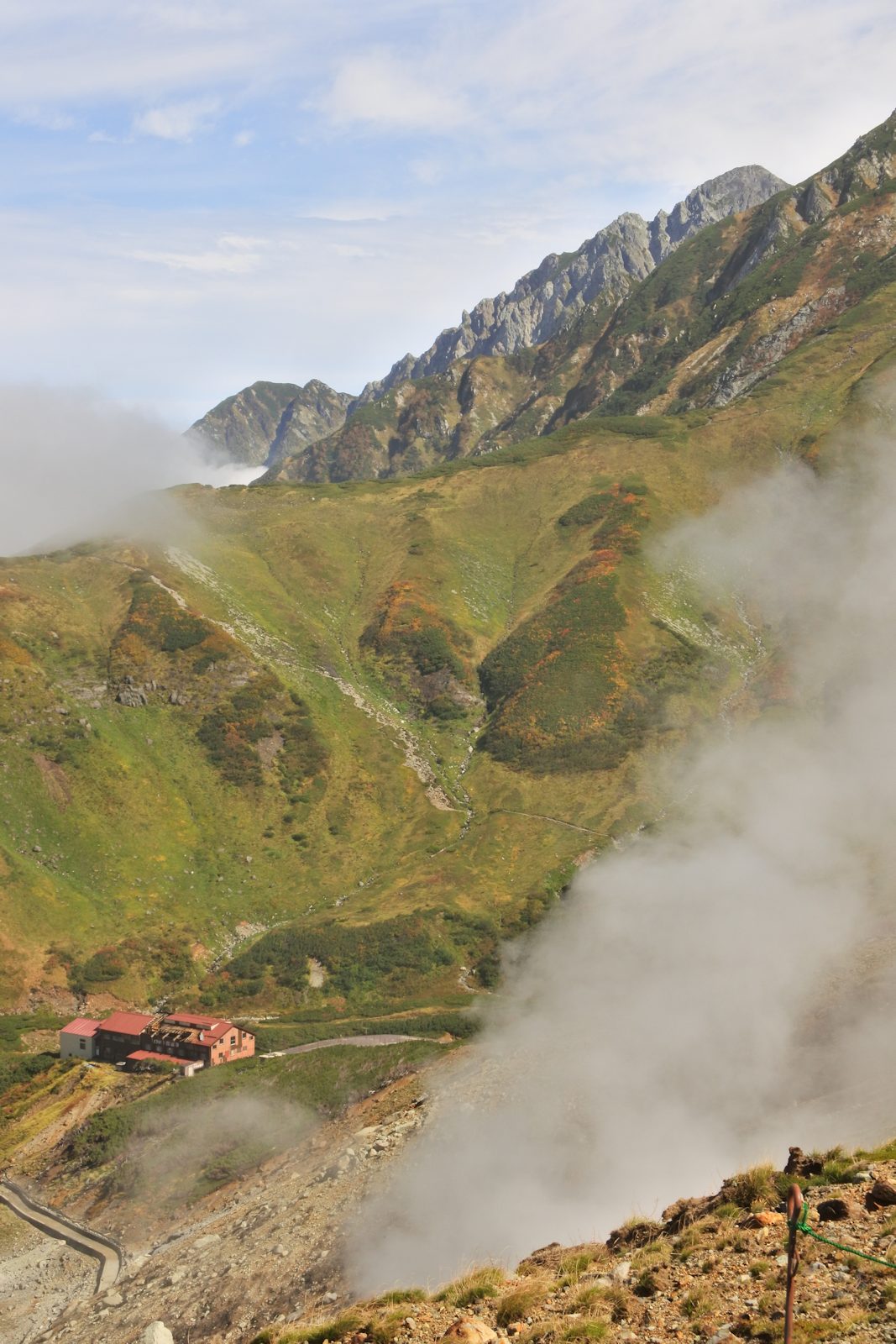
噴煙と水蒸気を吐き出す噴火口の左に雷鳥荘が見える 写真奥にはかつて大阪駅~新潟駅間を結んだ寝台特急「つるぎ」や北陸新幹線「つるぎ」の列車名の由来となったことでも知られる剱岳がそびえる Mt. Tsurugi,
after which "Tsurugi" overnight express used to be in service between Osaka Station and Niigata Station and Hokuriku Shinkansen "Tsurugi" is named
日本一標高が高い温泉、みくりが池温泉が湧く地獄谷からみくりが池とはいったん別れて、地獄谷展望台から雷鳥荘方面へ向かう。地獄谷展望台から雷鳥荘までは、噴火口を取り囲む地形から、硫黄臭が道幅が狭く高低差も激しい難易度の高いコースである。
噴火口の反対側には鉄分(酸化鉄)で赤く染まった水溜りが点在する血の池がある。地獄谷とともに立山地獄の1つに数えられる。
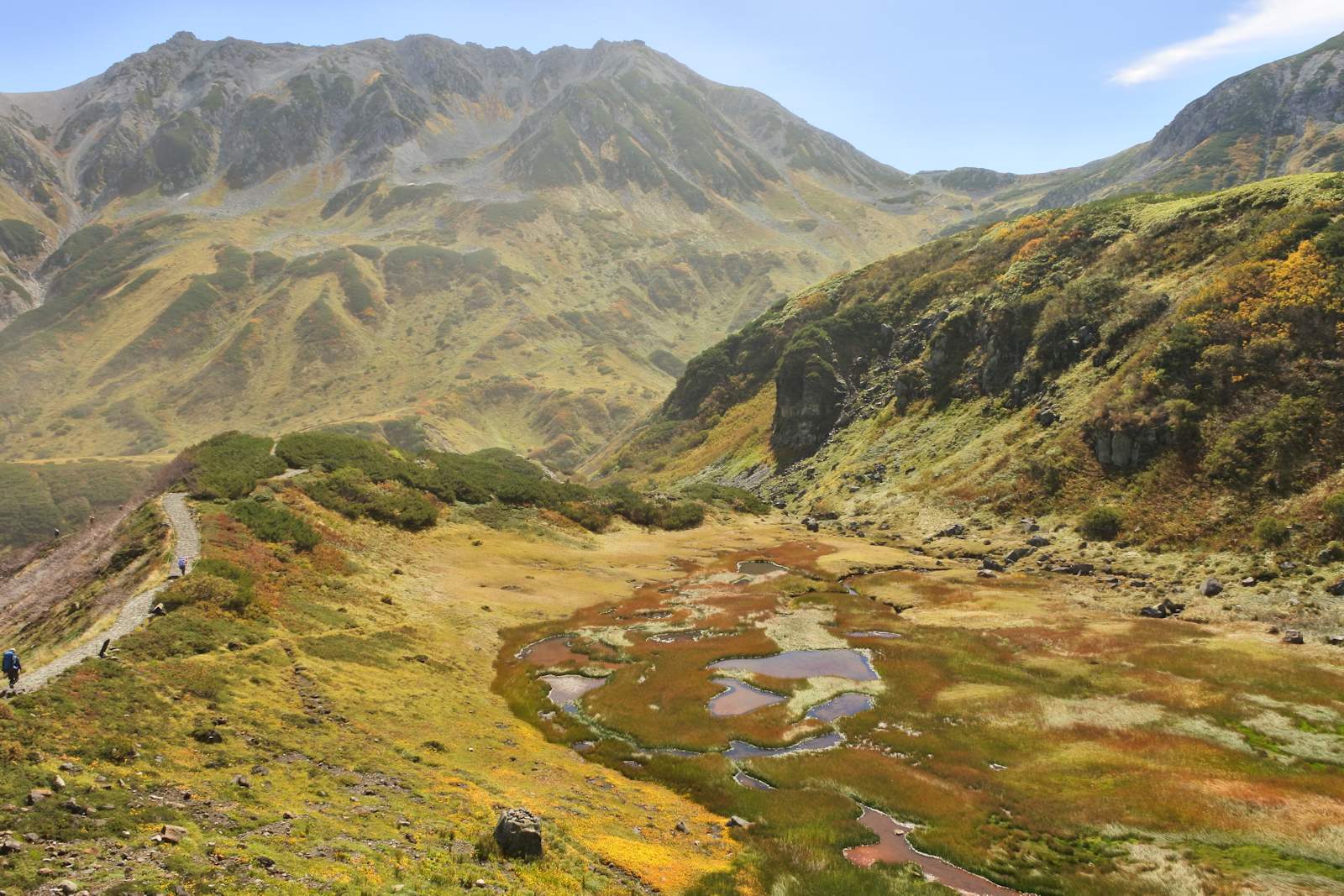
雷鳥荘で折り返し、地獄谷展望台へと戻ってきた。地獄谷とは反対の立山三山側を見ると、「立山の山崎圏谷」の石碑が置かれていた。「立山の山崎圏谷」とは、立山三山の雄山と大汝山の中間に見られる大昔の氷河時代にここ立山連峰にあった氷河によって削られたU字状の丸みを帯びた谷のこと。立山三山は日本国内で唯一氷河を見ることができる場所である。1904(明治37)年に山崎直方博士によって発見され、立山連峰の氷河の存在を示すものとして国の天然記念物に指定されている。
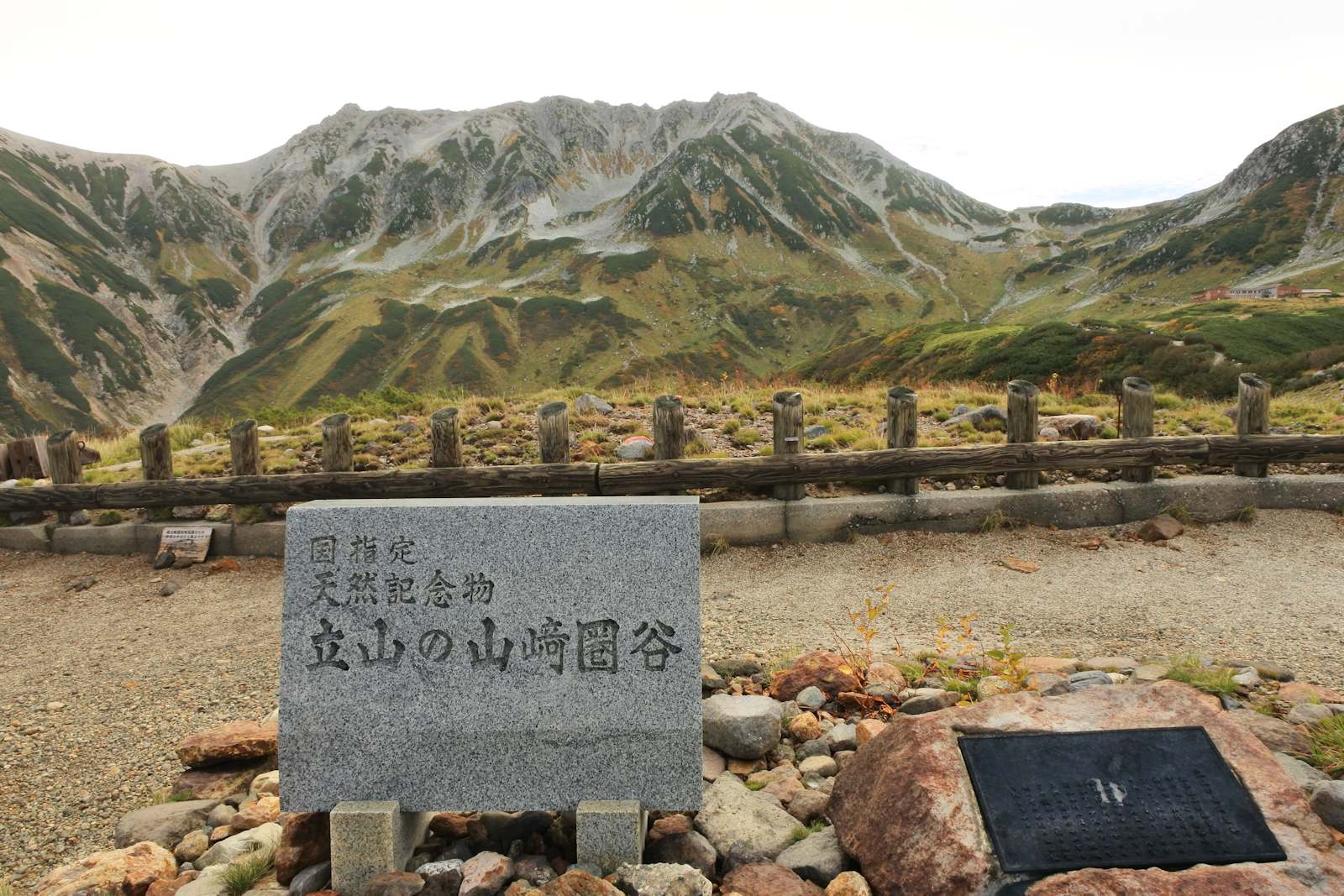
再びみくりが池周回コースへ。立山三山に近づいていくと、山側にもうひとつ別の池が見える。こちらはミドリガ池である。こちらも立山三山との組み合わせが美しい。立山三山に最接近する室堂山荘を経由して、大草原を見ながら室堂駅へと戻った。
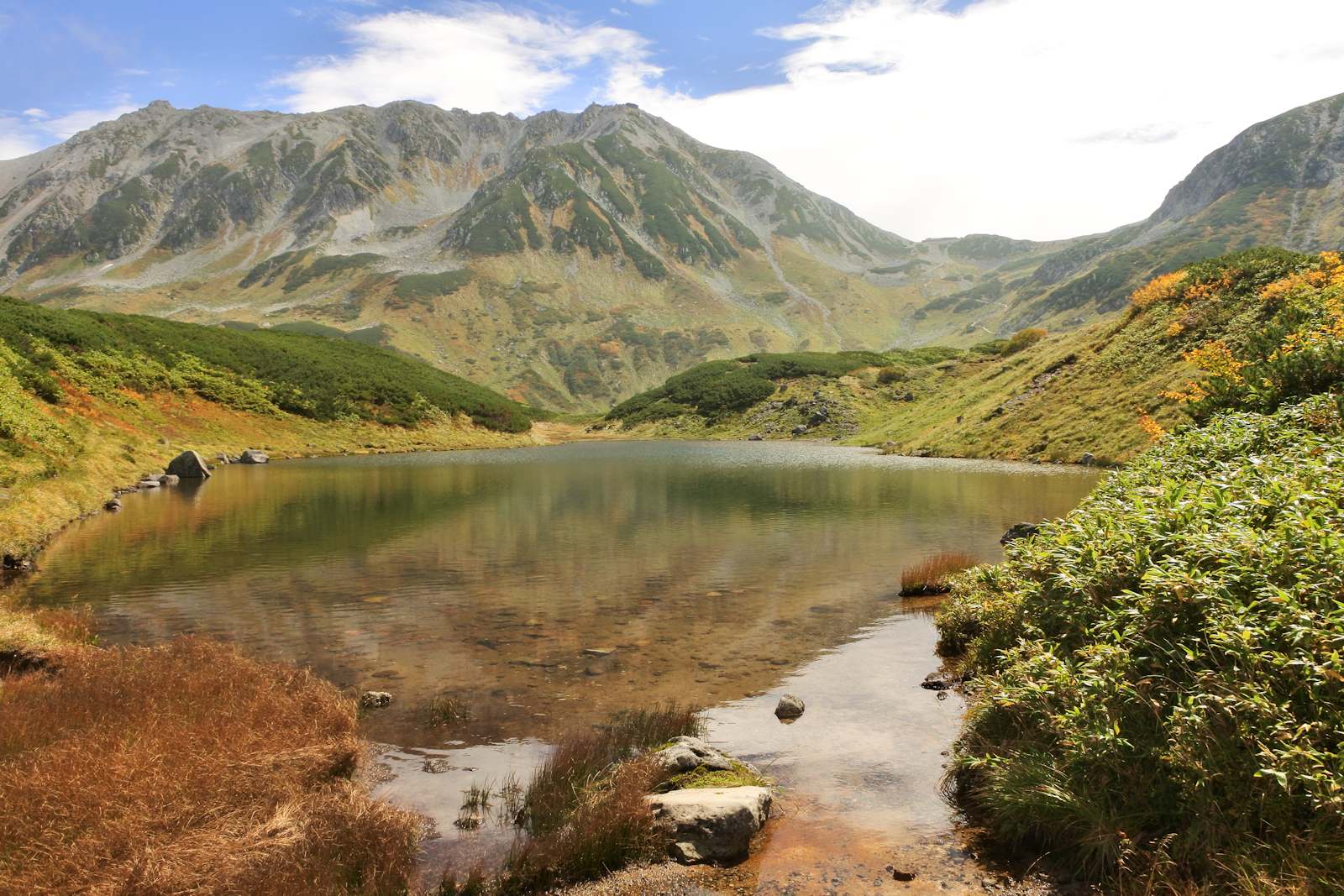
ミドリガ池と立山三山 Midorigaike Pond and Mt. Tate
およそ3時間をかけてじっくりと室堂高原(室堂平)と立山連峰の雄大な自然を体感した。緑に覆われた立山連峰の山々や草原だけでなく、標高2450メートルの高原の涼しさ、今なお活発な火山活動を続ける地獄谷と、ずっと前から見たかった景色・感じてみたかった空気だっただけに、ものすごく感動した。季節が夏から秋へと移り変わろうとしている時期だっただけに、緑から紅葉しかけている葉もちらほらと見られた。
天然記念物でもあるライチョウが目的であれば、繁殖期でたくさん姿を見せる5月~6月が、美しい緑の高原とみくりが池・立山三山が目的であれば、7月~9月中頃に出かけるのがお勧めであろう。
次に行くとしたら、ぜひとも5月~6月にライチョウを見に室堂平へ行きたい。
On the morning of the second day, September 18th, I walked on hiking course around Murodo Plateau, mainly around Mikurigaike Pond and toward Jigokudani eruptive crater and Raicho-so lodge.
Going down the stairway on the roof of Murodo Station, you can come the Plateau directly. On the right hand of the stairway, the stone monument saying "Mt.Tate" stands in front of the Mountain. I photographed the three Mountains consisting of Mt. Tate (from left Mt. Fuji-no-oritate, Mt. Onanji, and Mt. Oyama) with the monument (the first image).
The pond is located toward the opposite direction from the monument. Coming in front of the pond, the pond water reflected Mt. Tate and Mt. Jodo (on the right in the second image).
I went another hiking course branching off from near Mikurigake hot spring lodge toward Raicho-so lodge, which is narrow path on the steep slope beside one of the other active craters and ponds. The water of the ponds, Chinoike [Blood Pond], contains iron oxide, which looks red like blood.
Coming back to the Jigokudani Crater and watching Mt. Tate, a stone monument saying "Yamazaki Curl" and the explanation of the curl; the curl had been formed by glacier, which exists in Mt. Tate only in Japan, and found by a Japanese geographer, Naomasa Yamazaki.
I had about three hours to walk around and to enjoy watching the nature of Mt. Tate.
Because of the fine weather, It was enjoyable to walk and see the Moutains so much, not only the greenish Mountains and plants, beautiful and cool atmosphere in 2,450 metre/8038 feet in height,
active volcano crater venting plume. I saw that some leaves and plants turned their colour to red or yellow.
If I have a chance to go there, I would like to see ptarmigans in May or June.
お気に入りの記事を「いいね!」で応援しよう

[鉄道旅の記録] カテゴリの最新記事
-
天浜線の旅 終点・掛川駅を目指す May 24, 2025
-
天浜線初乗車&転車台見学 May 23, 2025
-
豊橋鉄道渥美線で東急7200系に乗る May 22, 2025 コメント(2)


【毎日開催】
15記事にいいね!で1ポイント


© Rakuten Group, Inc.
