


PR
キーワードサーチ
▼キーワード検索
カレンダー
サイド自由欄
鉄道模型・鉄道グッズリンク
鉄道関連書籍リンク
時刻表最新号
JTB時刻表

JR時刻表

鉄道雑誌最新号
鉄道ファン

鉄道ジャーナル

鉄道ピクトリアル

鉄道ダイヤ情報

Rail Magazine
RM MODELS

j train

とれいん

鉄道模型趣味

N

旅と鉄道

楽天トラベルで旅に出よう

鉄道関連書籍リンク
時刻表最新号
JTB時刻表
JR時刻表
鉄道雑誌最新号
鉄道ファン
鉄道ジャーナル
鉄道ピクトリアル
鉄道ダイヤ情報
Rail Magazine
RM MODELS
j train
とれいん
鉄道模型趣味
N
旅と鉄道
楽天トラベルで旅に出よう
コメント新着
May 23, 2025

テーマ: 鉄道(27719)
カテゴリ: 鉄道旅の記録
この日の乗車路線は、これまた今回が初乗車となる天竜浜名湖鉄道天竜浜名湖線。
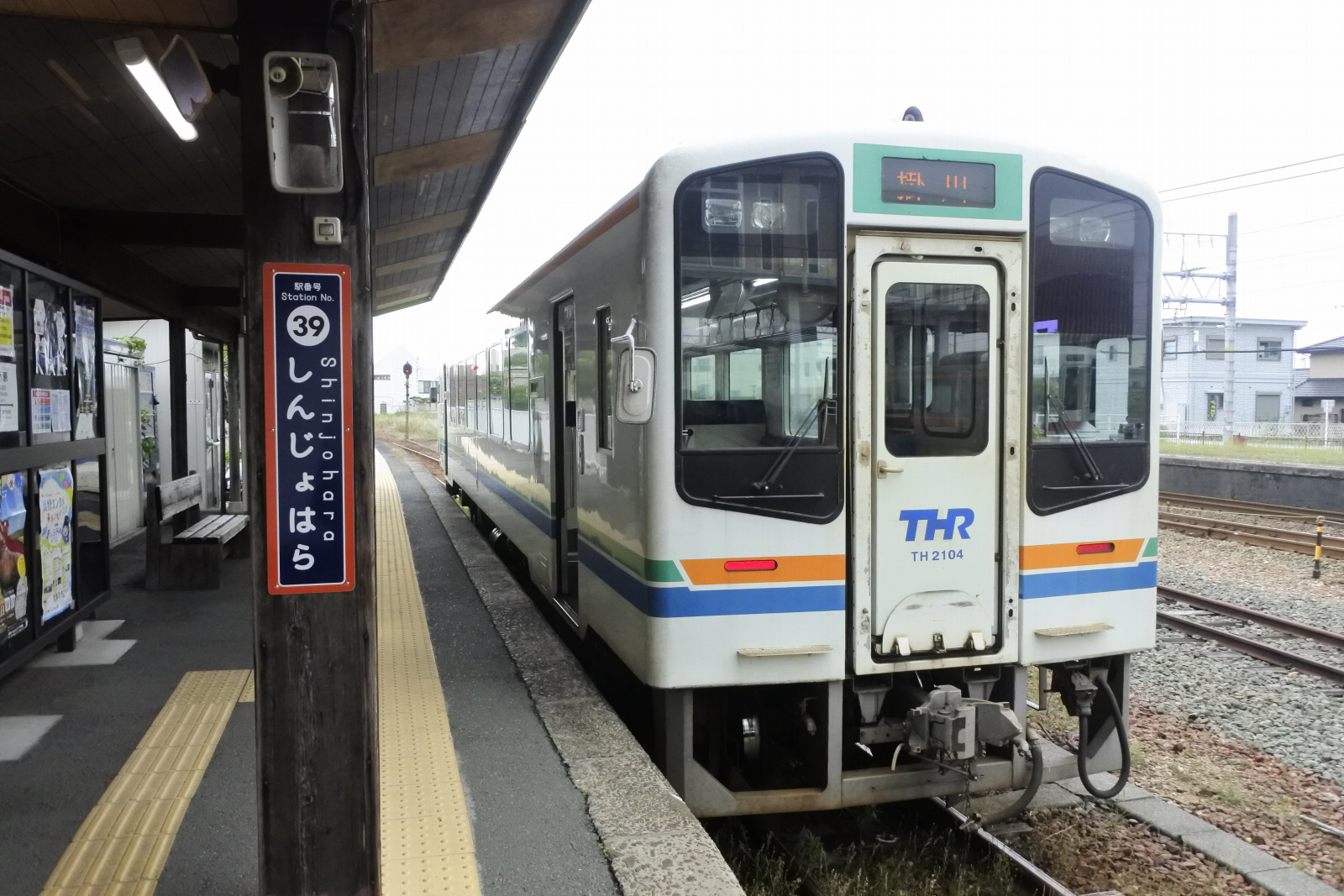
新所原駅に停車中のTH2100形 TH2100 Series stopping at Shinjohara Station
実は僕は1度、2019(令和元)年に天浜線へ乗りに行く予定だったが、諸事情により立ち消えとなってしまった。あれから6年。ようやく初めて乗ることが実現した。
新所原駅から浜名湖西側の湖畔を通って三方原台地へ、さらに天竜川を渡って東海道新幹線との乗換駅である掛川駅へと走る天浜線は、東海道本線のバイパス路線として計画され、1940(昭和15)年に全線開通した。1987(昭和62)年に、当時の国鉄から天竜浜名湖鉄道へ移管。路線名も二俣線から天竜浜名湖線に変わった。
天竜二俣駅や遠州森駅などの昭和年間に建設された駅舎や、二俣本町駅~西鹿島駅間に掛かる天竜川橋梁、天竜二俣駅に近接する車両基地にある転車台や扇形機関庫などが国の登録有形文化財に指定されている。また、浜名湖佐久米駅は浜名湖が目の前に見える駅として知られ、冬には同駅周辺にユリカモメが飛来してくる。列車とユリカモメを写真に収めようとする撮り鉄もいる。
新所原駅から乗った列車は、TH2100形気動車で運転の普通列車。TH2100形は、天浜線で2001(平成13)年より運行されている車両。デビューから20年以上天浜線の主力車両として活躍し続けてきたが、2025(令和7)年より順次新型車両に置き換えられていく予定である。
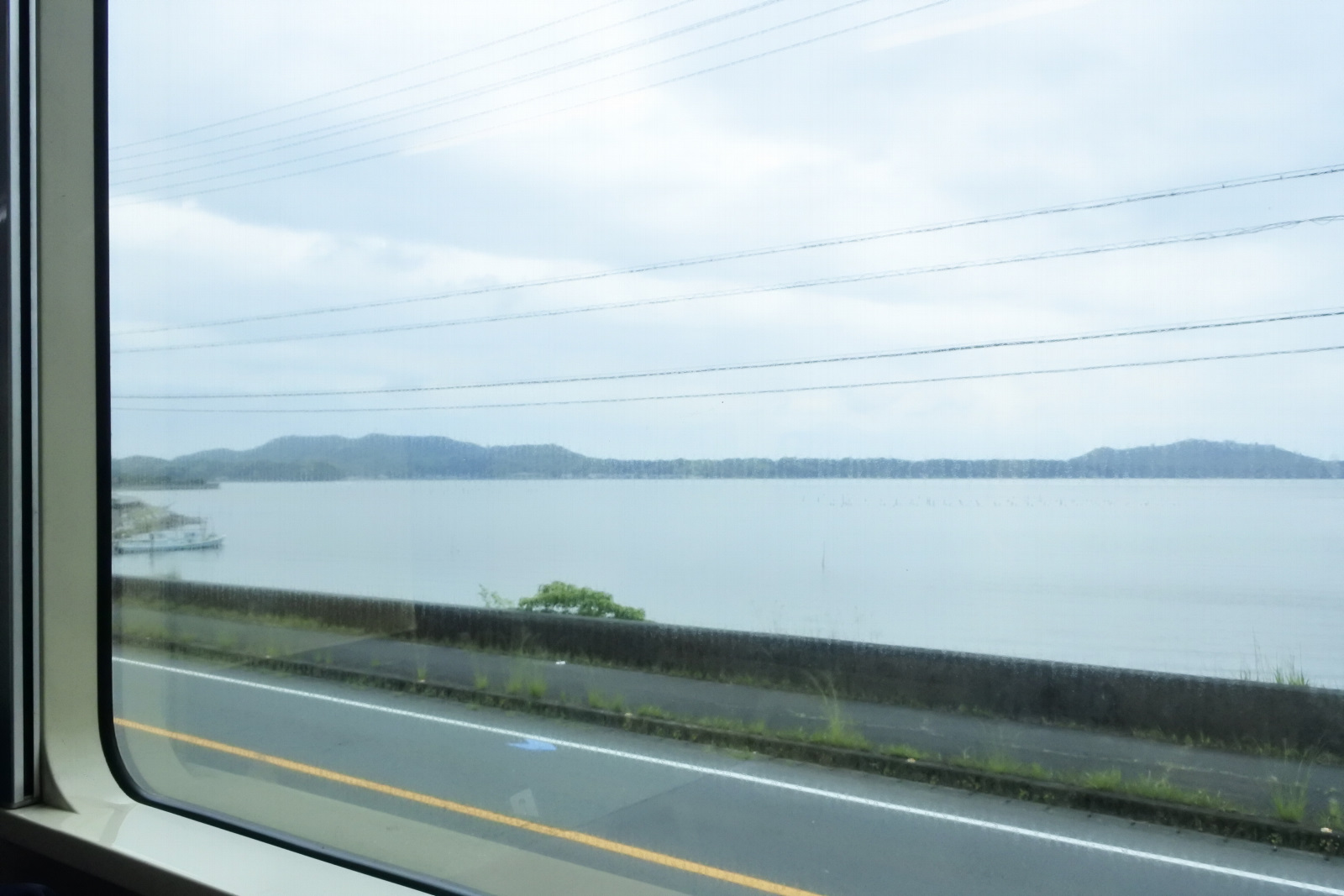
車窓から見える浜名湖 Lake Hamana over the train window
僕は列車に乗って、天竜二俣駅を目指す。今回の天浜線での楽しみの1つは、登録有形文化財の転車台や扇形機関庫がある車両基地の見学ツアーである。
僕がこの時間に列車を撮りたかったのは、天竜二俣駅始発の新所原行き列車、掛川駅発の天竜二俣行き列車、新所原駅からの掛川行き列車の3本が並ぶ時刻だったから。
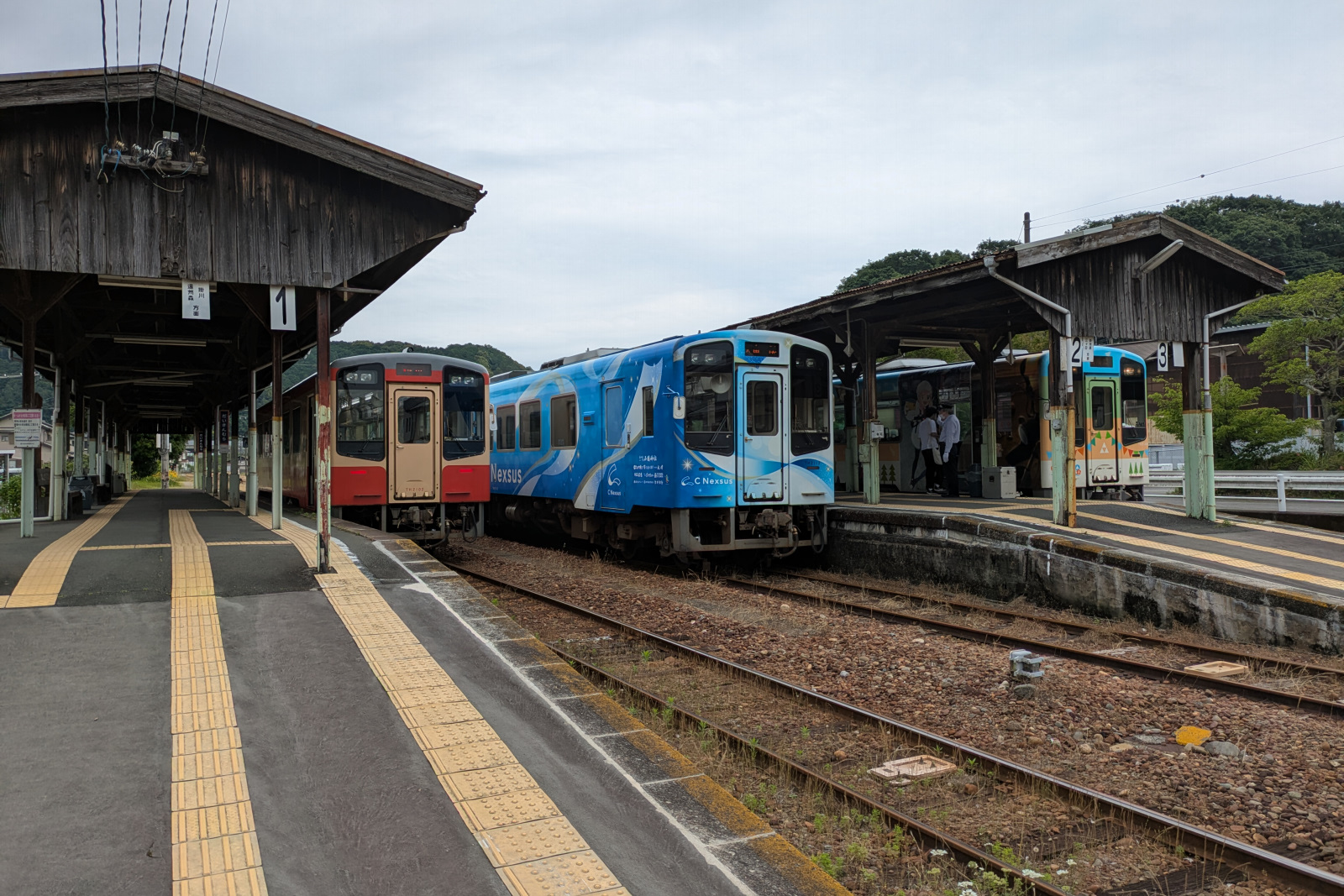
天竜二俣駅に停車中の天浜線の列車 Three trains stopping at Tenryu-futamata Station
撮影後、ツアーの集合時刻が近くなり、集合場所である駅舎内に戻る。
13:50、同時刻に発車する新所原行き列車を見送ってからツアーがスタート。構内踏切をホームよりもさらに奥に進んで、線路沿いの遊歩道を歩いて車両基地へ。
車両基地の入口では巨大な貯水槽がお出迎え。この貯水槽は、地上からの全体の高さ11.6m、貯水槽の高さ4.7m、外径6m、容積70LのRC造で、国鉄二俣線時代に運行されていたSLに給水していた。貯水槽の明確な制作時期は不明だが、1940(昭和15)年、当時の二俣線の遠江森駅(現在の遠州森駅)~金指駅開業に併せてつくられたものとみられる。この貯水槽も登録有形文化財に指定されている。
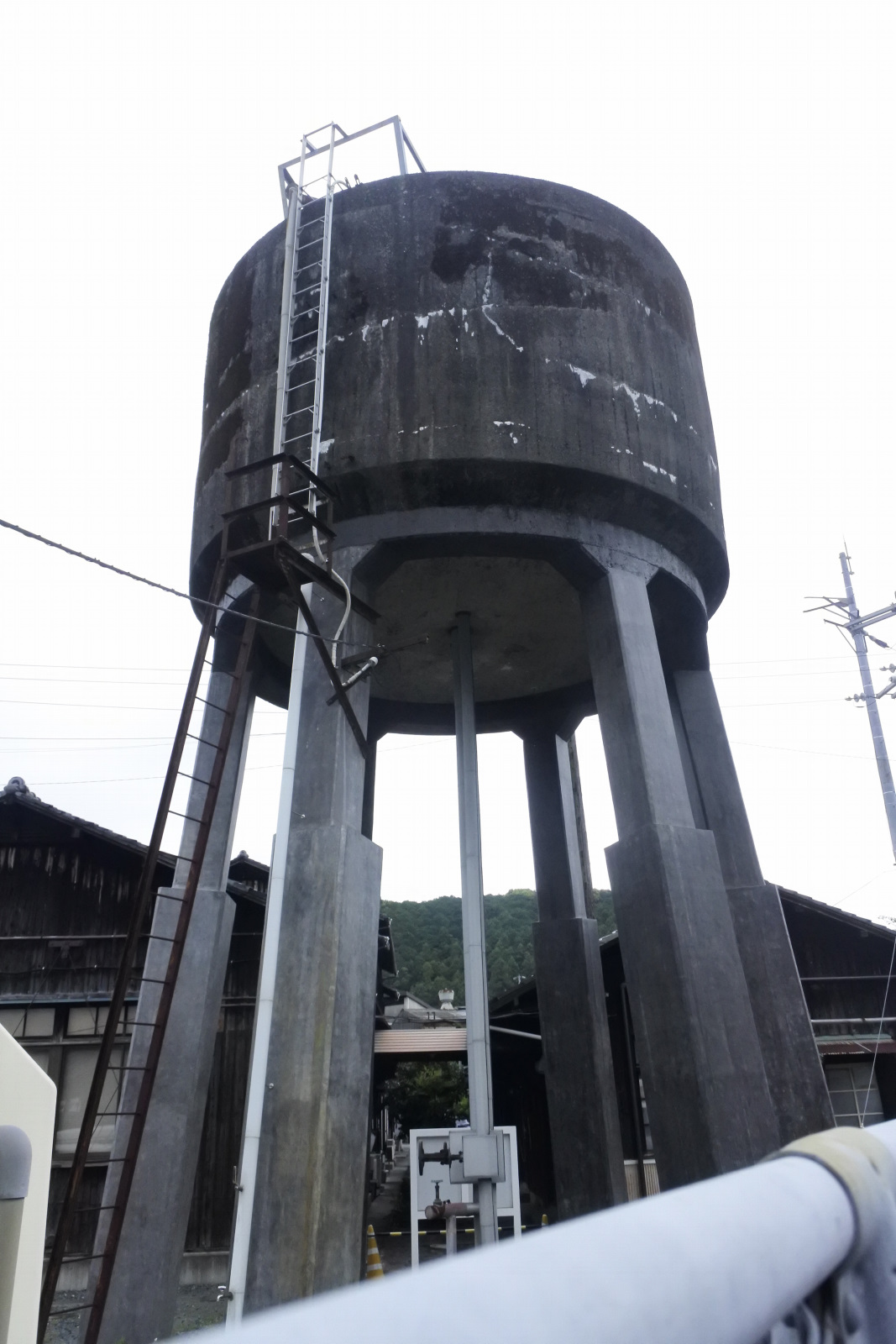
車両基地内の給水塔 Water tower in the railyard
車両基地内の建物も1940(昭和15)年当時の姿がそのまま残る。向かって左側に運輸区事務室、右側に休憩所と浴場を見る。浴場は国鉄時代にSLを運転していた機関士さんが体に着いたすすを洗い流すのに重宝されたという。現在は風呂としては使われておらず、天浜線の車両に取り付けられた歴代のヘッドマークが飾られている。
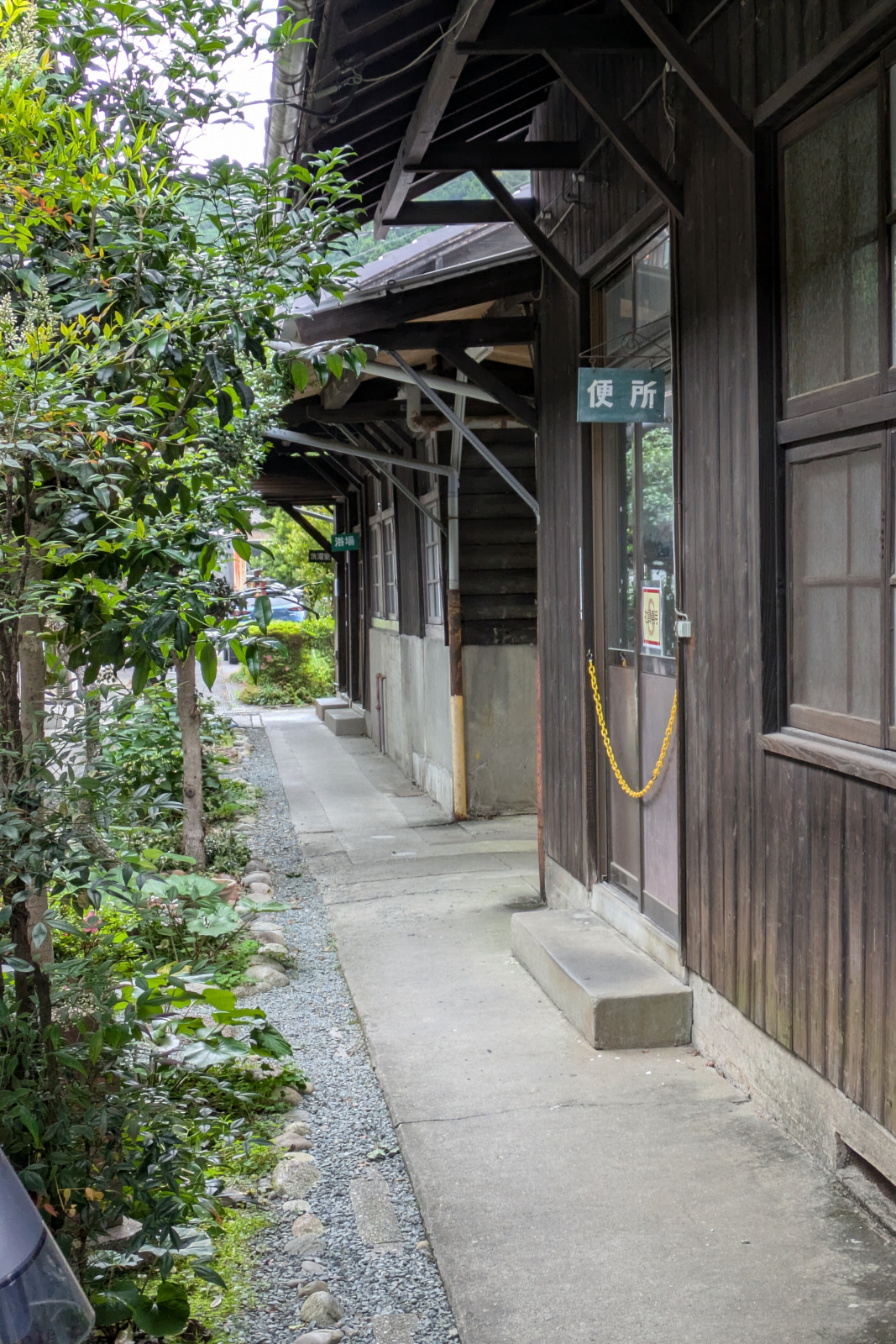
休憩所と浴場 Break room and bathroom
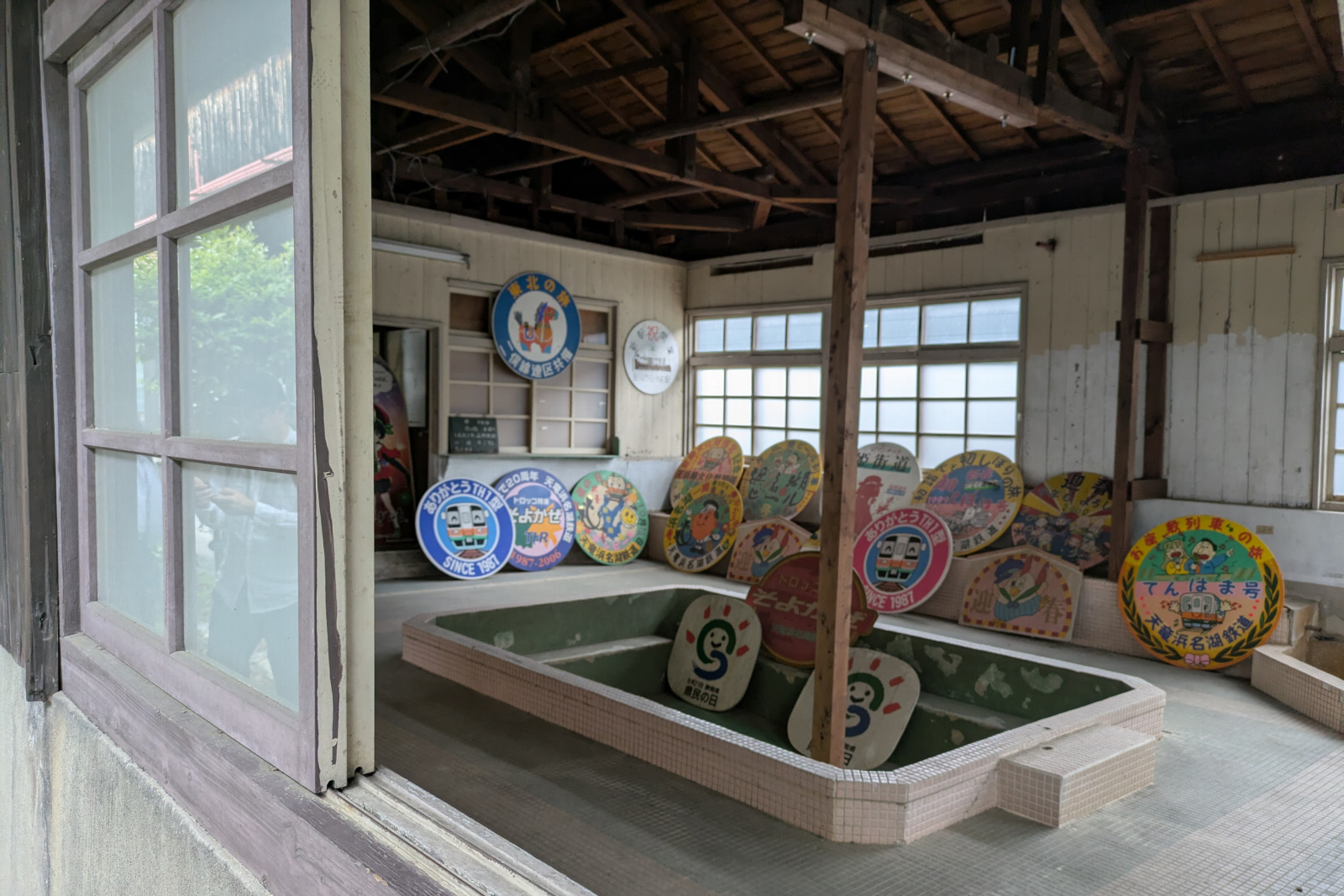
浴場に展示されたヘッドマーク Front signs displayed in the bathroom
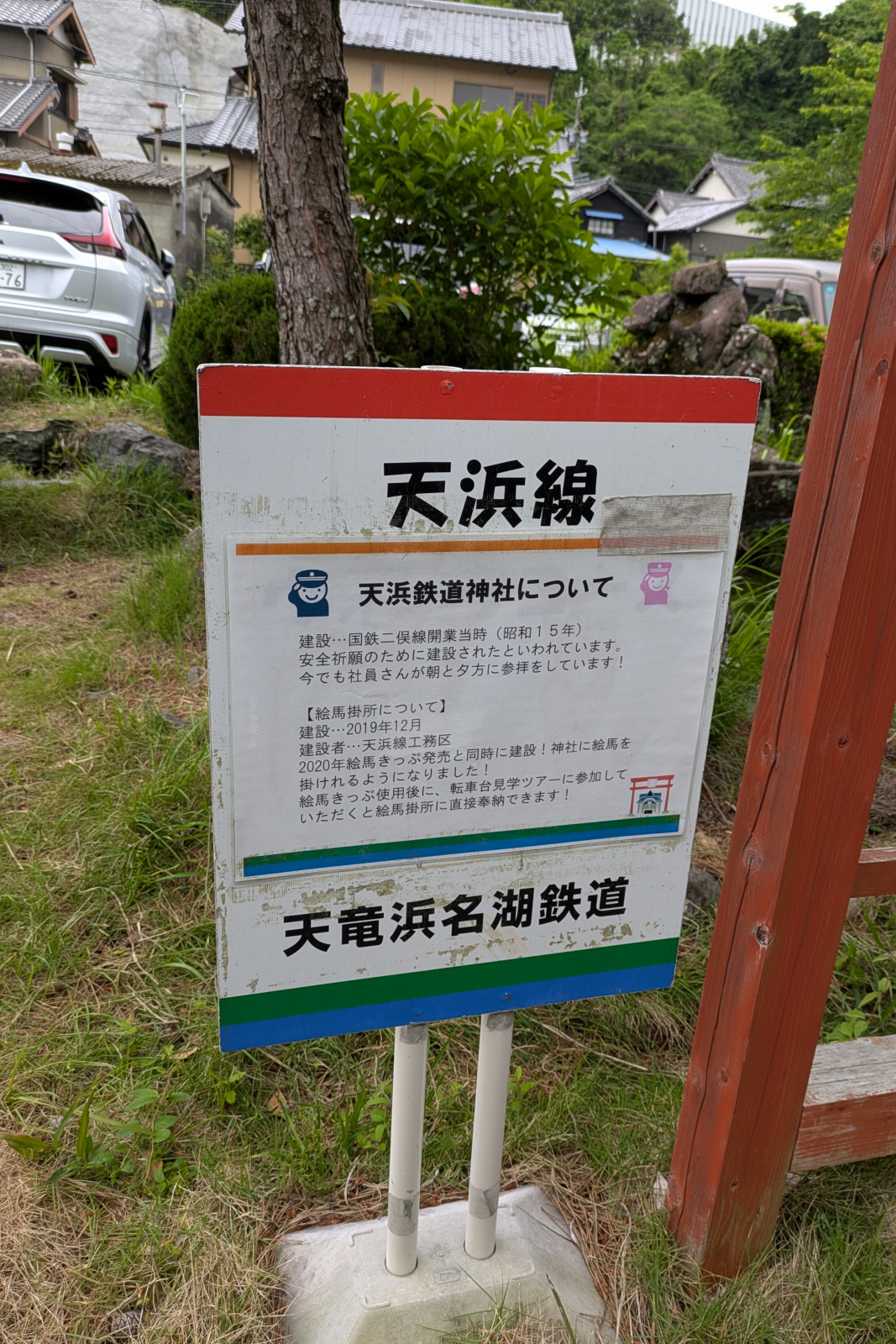
浴場の隣には、「天浜鉄道神社」という小さな祠があり、国鉄時代から天浜線の乗務員さんが安全祈願をするために建立されたという。令和の今でも、天浜線の乗務員さんらが朝と夕方に参拝に来るという。
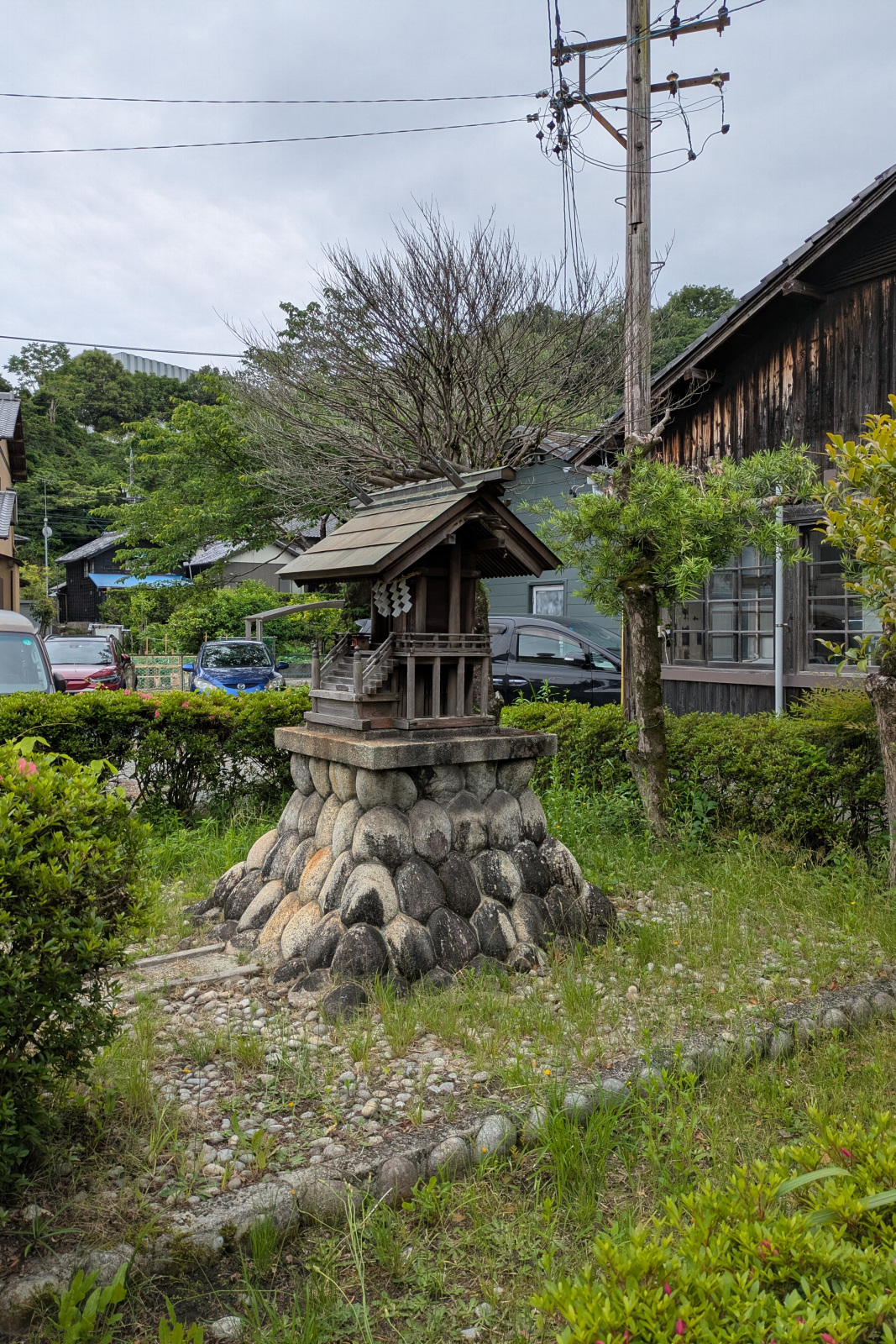
天浜鉄道神社 Tenhama Railway Small Shrine
天浜鉄道神社の先に進むと、ツアーの主役とも言える転車台と扇形機関庫が見えた。するとまもなくして、扇形機関庫から出庫する車両(TH2114号車)が転車台にやってきた。転車台の回転が始まった。
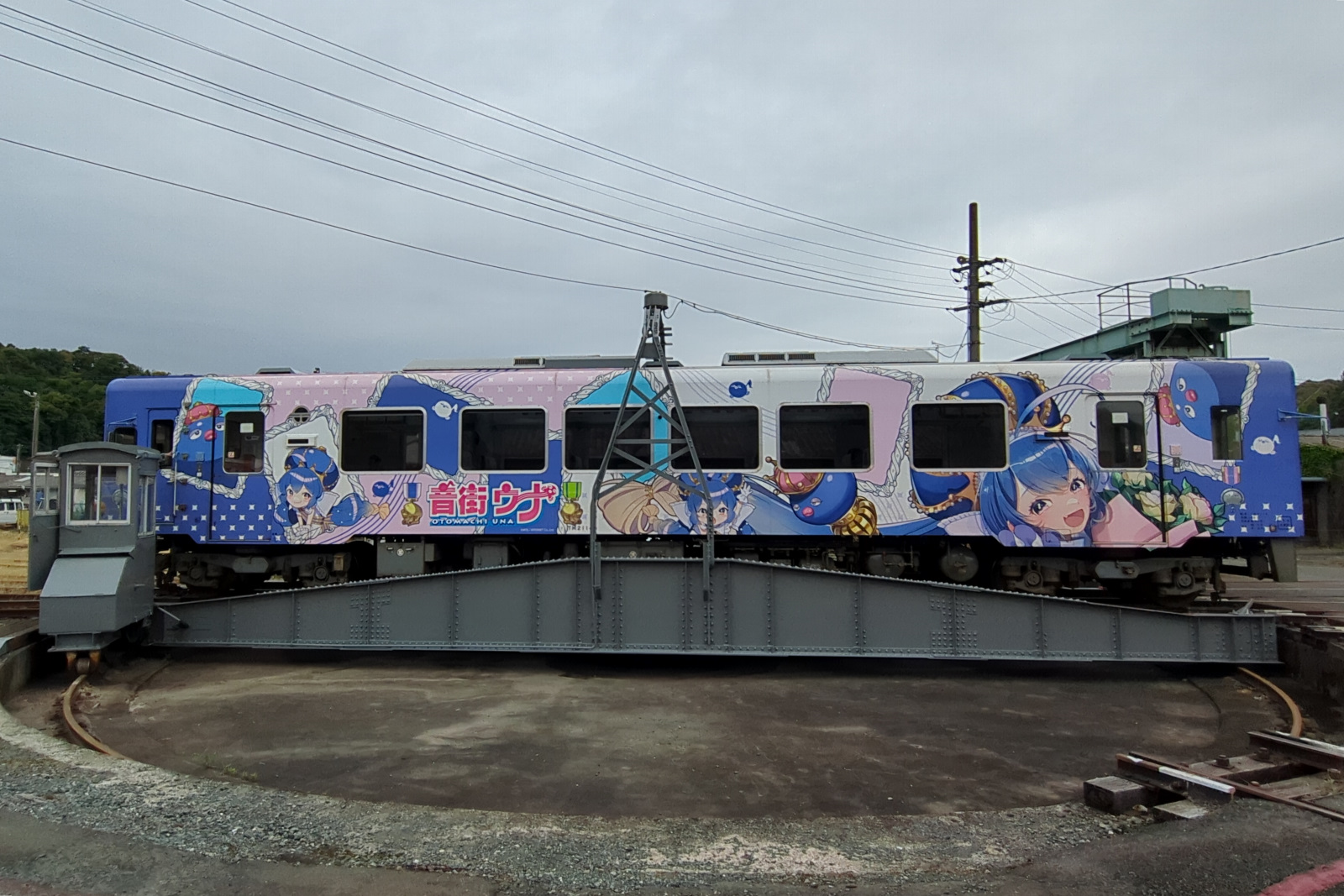
転車台で方向転換するTH2114号車 Rotating TH2114 on the turntable
現在は電動だが、完成当時は人力で、しかも4人がかりで転車台を回していたという。
転車台の回転を見終わった後は、扇形機関庫の一角にある天浜線資料館へ。
資料館では二俣線時代から現在まで、駅名標やタブレット閉塞器、模型などを通して天浜線の歴史を学べる。
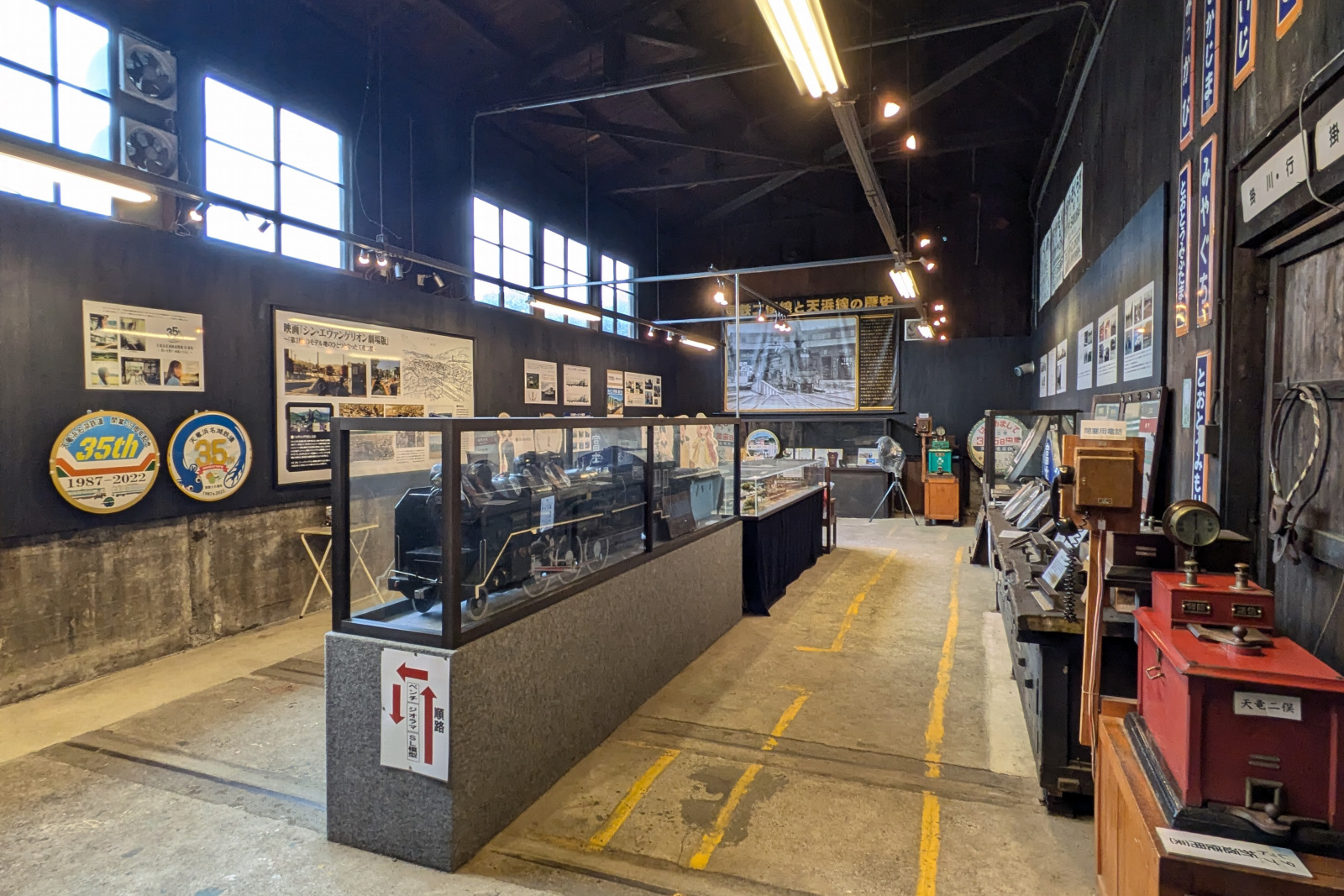
再び転車台を眺めた後、駅舎に戻ってツアーは終わり。
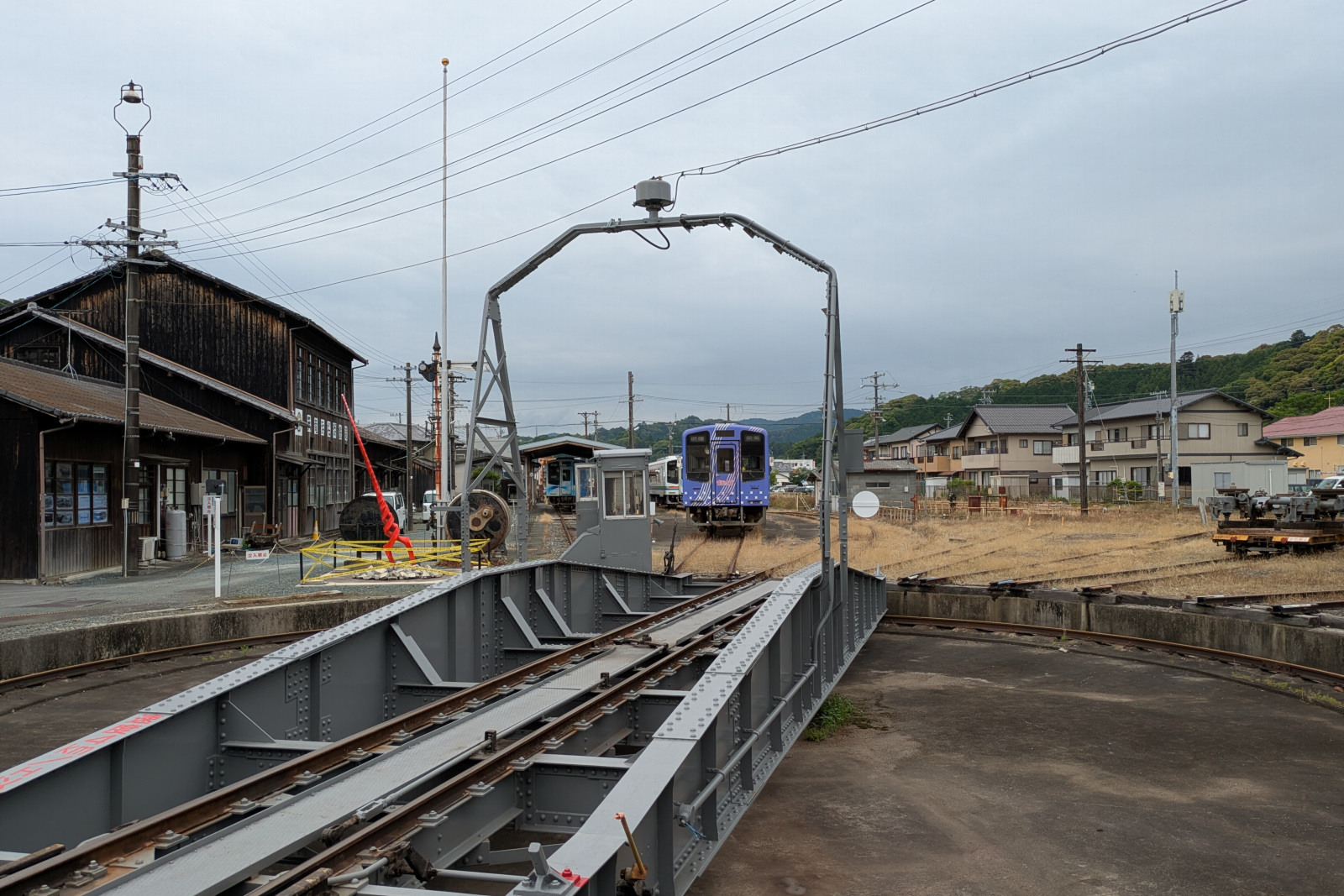
転車台から車両基地を見る View of the railyard over the turntable
天浜線に乗りに行く時には、ぜひとも車両基地見学ツアーに参加したかった。古めかしい昭和レトロなたたずまいの駅舎や事務室、機関庫、転車台が、天浜線の歴史を今に伝えている遺産であると感じた。財務状況があまり芳しくなく、これらの設備を使い続けなければならない状況だったのかもしれないが、これを逆手に取って、これらの施設を観光の目玉にしようとしたことに、改めて素晴らしいアイデアだと感じた。
On the second day, May 23rd, I travelled by Tenryu Hamanako Railway Tenryu Hamanako Line.
Before I planned to travel on Tenryu Hamanako Line once, I couldn't go because of a rescheduling. Six years later, I was able to realise.
Tenryu Hamanako Line runs between Shinjohara Station and Kakegawa Station in the west of Shizuoka Prefecture.
The railway spreads along the west side of Lake Hamana (from Chibata Station to Nishi-kiga Station), and on an alluvial fan around Tenryu River. Tenryu Hamanako Line was originally planned as a bypass of Tokaido Main Line. On that time, the line was called Futamata Line, and the entire line was opened in 1940. The operation of Futamata Line was taken over by Tenryu Hamanako Railway, and the line's name was changed to Tenryu Hamanako Line in 1987.
Some structures keep being used and are listed on tangible cultural properties of Japan, such as the station buildings built in the 1930s or 1940s (such as Tenryu-futamata Station and Enshu-mori Station), the bridge crossing over Tenryu River between Nishi-kajima Station and Futamata-hommachi Station, and a roundhouse and a turntable in the railyard near Tenryu-futamata Station. In addition, Hamanako-sakume Station is well-known for its location facing Lake Hamana and as a stopover for black-headed gulls in winter.
From Shinjohara, I boarded a train operated by TH2100 Series, which has been in service since 2001 and is the flagship model carriage on Tenryu Hamanako Line. However, the newer model to replace TH2100 Series will be manufactured and start its regular service in 2025.
I got off the train at Tenryu-futamata Station to join a walking guided tour in the railyard. I bought a ticket for the tour and waited for the start time, 1:50 PM. While waiting for the tour to start, I shot some photographs of the trains. Telling the station staff that I wanted to take photos at the platform, I didn't have to buy another entrance ticket because I had already purchased a walking tour ticket. I could photograph three trains stopping.
The time for the tour came. Crossing over the railway, I followed a tour guide to the railyard. First, I saw a water tower near the entrance of the railyard. The water tower is 11.6 metres (38.06 feet) high with a capacity of 70 litres (15.4 imp gallons/18.5 US gallons).
The buildings in the railyard, including the office, the separate break room, and the bathroom, were also built in 1940. The bathroom was used for steam locomotive drivers to wash their sooty bodies in the JNR period. Nowadays, the successive front signs of Tenryu Hamanako Railway trains are displayed in the bathroom.
Next to the bathroom, a small shrine called "Tenhama Railway Shrine" stands. The station staff and train drivers pray for their safety before their work.
Going along the walkway ahead of the shrine, I saw the turntable and the roundhouse. A carriage (TH2114) came out of the roundhouse and onto the turntable while I watched it.
The turntable started to rotate to change the direction of TH2114. Though the turntable is electric-powered nowadays, it was human-powered by four people.
After watching the turntable's rotation, I went to the museum beside the roundhouse. I could learn the history of Tenryu Hamanako Line through the exhibition, for example, old station boards and a pair of Tyer tablet instruments.
Coming back to the station building, the tour was over.
I have longed to join the tour to see the historical constructions on Tenryu Hamanako Line. It could be a financial difficulty for their renewal, but it was a nice idea to make them tourist attractions.
お気に入りの記事を「いいね!」で応援しよう

[鉄道旅の記録] カテゴリの最新記事
-
天浜線の旅 終点・掛川駅を目指す May 24, 2025
-
豊橋鉄道渥美線で東急7200系に乗る May 22, 2025 コメント(2)
-
今だけの「e METRO MOBILITY TOWN」へ Mar 22, 2025


【毎日開催】
15記事にいいね!で1ポイント


© Rakuten Group, Inc.
