


PR
jinsan0716
『JINさんの陽蜂農遠日記』にアクセスありがとう ございます。 このブログは、 陽:太陽光発電、 蜂:趣味の養蜂、 農:菜園、花、スロー&アクティブシニアライフ、 遠:旅行、 を中心とした備忘録を兼ねた18年間にわたる毎日のブログ(雑記帳)です。 書き込んでいただける方は、写真下の『コメントを書く』から 気楽に、ご感想、ご意見ご質問等を書き込んでいただきたく。
Keyword Search
▼キーワード検索
卓球 nojima T リー…
New!
オジン0523さん
南モンゴル・ゴビ砂漠… 隠居人はせじぃさん
【桜蓼 ・ 日曜はリ…
Gママさん
停電時に自動点灯す…
noahnoahnoahさん
エコハウスにようこそ ecologicianさん
南モンゴル・ゴビ砂漠…
隠居人はせじぃさん【桜蓼 ・ 日曜はリ…
Gママさん停電時に自動点灯す…
noahnoahnoahさんエコハウスにようこそ ecologicianさん
Comments
Calendar
2026.09.05

カテゴリ: JINさんの農園
「 T2 開化の背景
」。
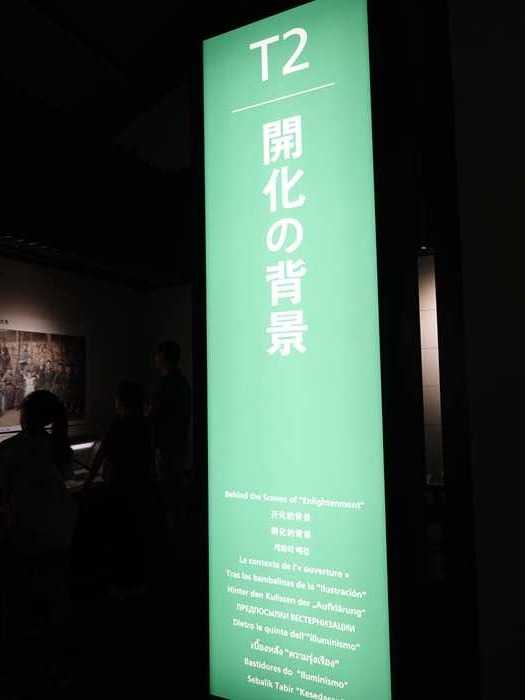
「 T2-1 庶民の日常
文明開化期の東京における、人々の暮らしや社会の変化に焦点を当てています。
西洋化が進む中で、一般の庶民がどのような生活を送り、新しい文化や道具を取り入れて
いったのかを資料や模型で紹介していた。」
正面に「 人力車 」。
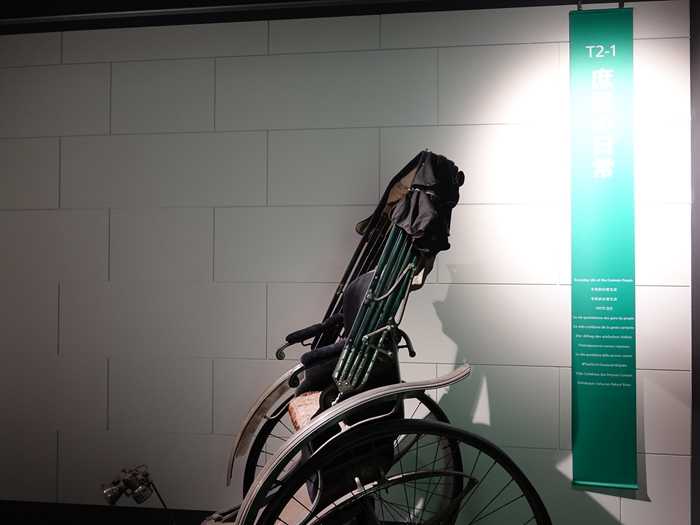
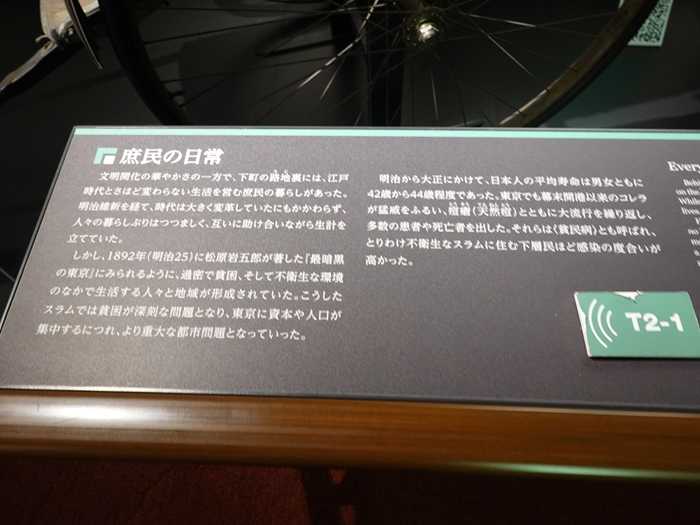
庶民の日常
「 人力車
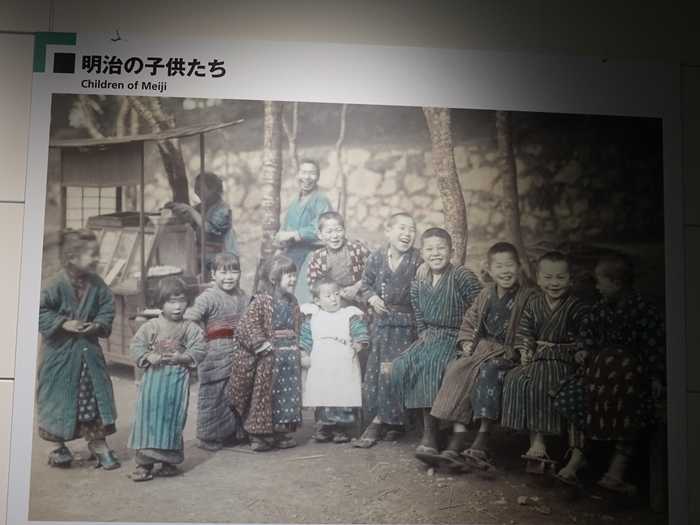
「 明治の子供たち(Children of Meiji)
明治時代の子どもたちの素顔をよく伝える、とても貴重な歴史写真。
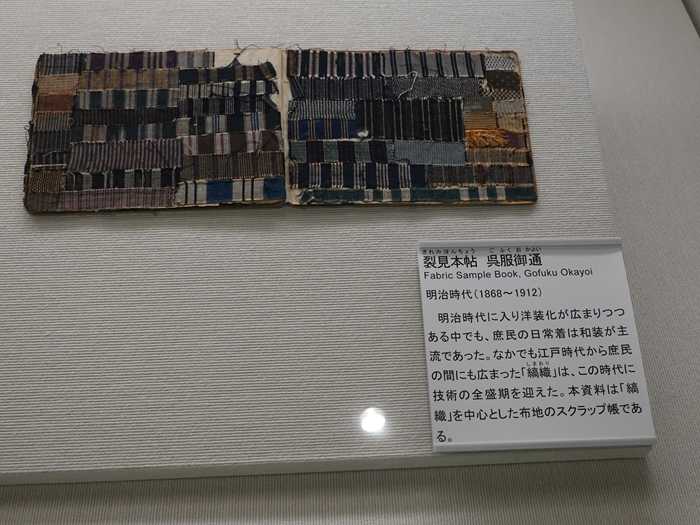
「 裂見本帖 呉服御通(きれみほんちょう ごふく おかよい)
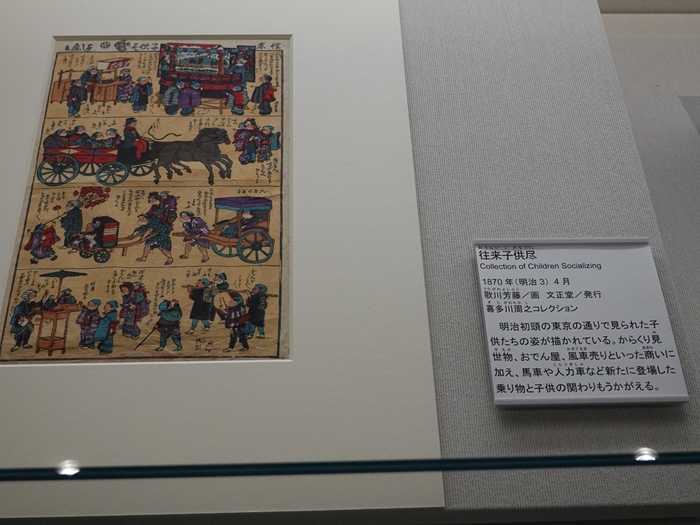
「 往来子供尽(おうらい こどもづくし)
「 職業にみる幕末から明治初期の庶民の暮らし
「 公立・私立小学校の成立と展開
education, the Tokyo Prefectural Government established primary education by
utilizing terakoya (private home schools) that had existed since the Edo period
as municipal elementary schools.」
明治の教育
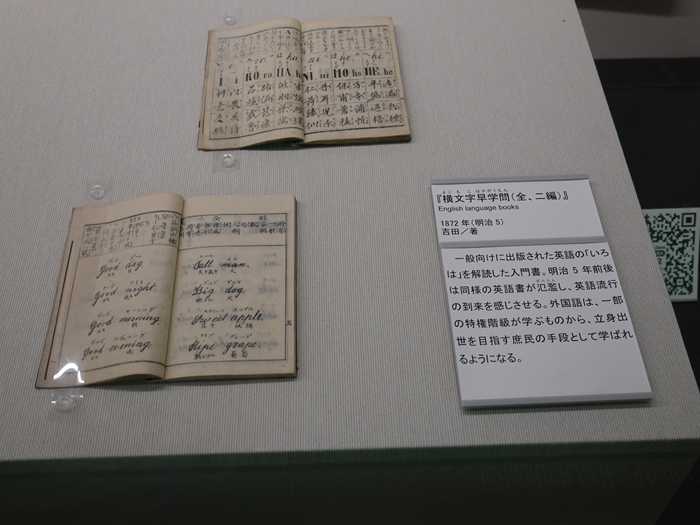
「 『横文字早学問(全、二編)』
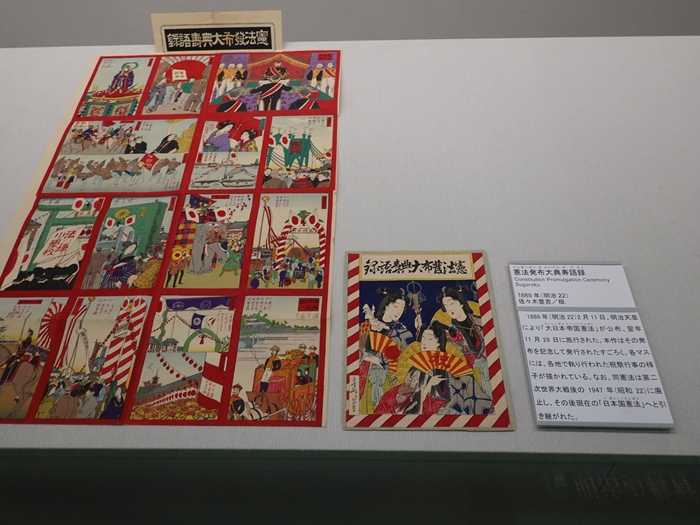
「 憲法発布大典寿語録
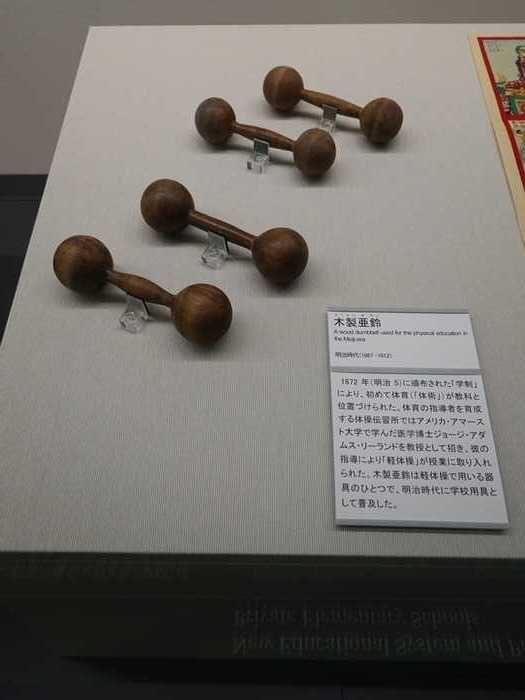
「 木製亜鈴(もくせい あれい)
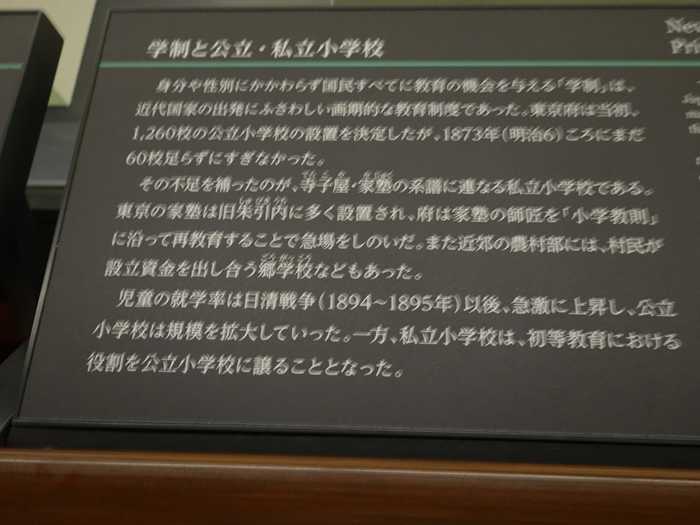
「 学制と公立・私立小学校
「 中・高等教育機関の分布
五日市憲法草案(複製)
「 学生の街
「 多摩と自由民権運動
Kanagawa Prefecture until 1893, the Freedom and People's Rights Movement was
popular in the 1870s and 80s, especially among wealthy farmers.」
「 National Industrial Exhibition
「 T3-1 商工業の都市 」
「 商工業の都市
「 明治10年代の東京
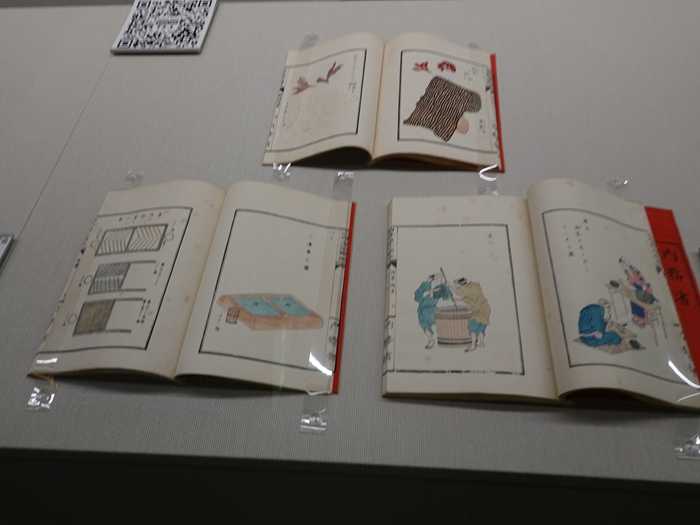
『日本製品図説』1~3。
「 『日本製品図説』1~3
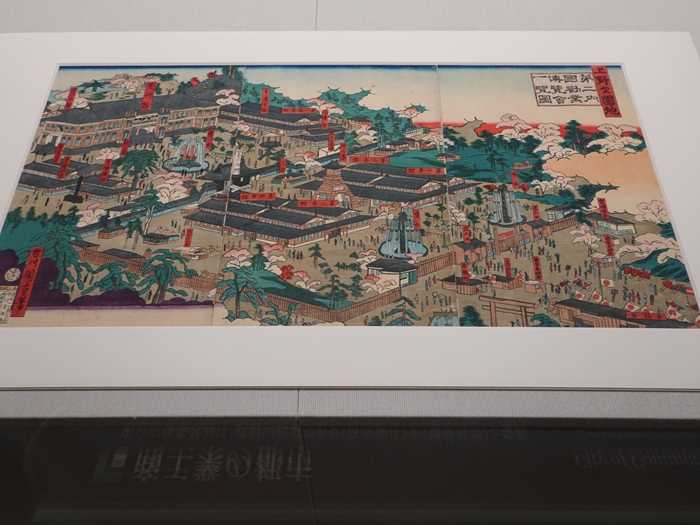
「 上野公園地 第二内国勧業博覧会一覧図 」
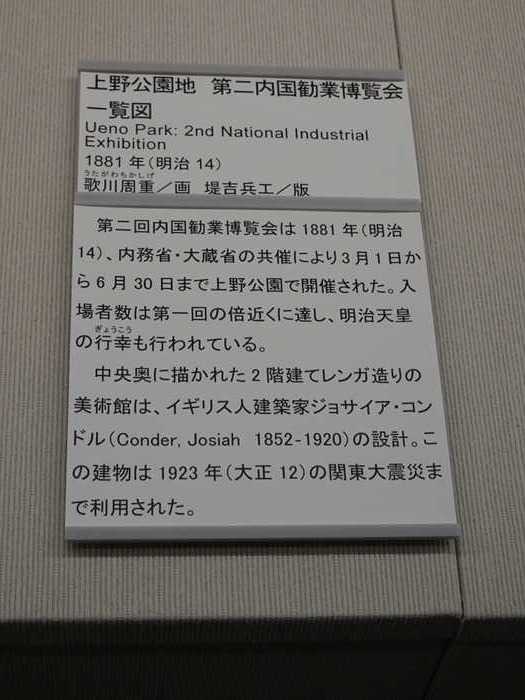
「 上野公園地 第二内国勧業博覧会一覧図
(Conder, Josiah 1852–1920)の設計。この建物は1923年(大正12)の関東大震災まで
利用された。」
「 諸工職業競(しょこうしょくぎょうくらべ) テエフル椅子製造 」

「 諸工職業競(しょこうしょくぎょうくらべ) テエフル椅子製造
鋸(のこぎり)、鉋(かんな)などの在来の道具を使う。服装は和装のようだが、職人の中には
散切り頭の者も混在し、新旧の風俗が入り混じる。」
「 殖産興業と官営事業
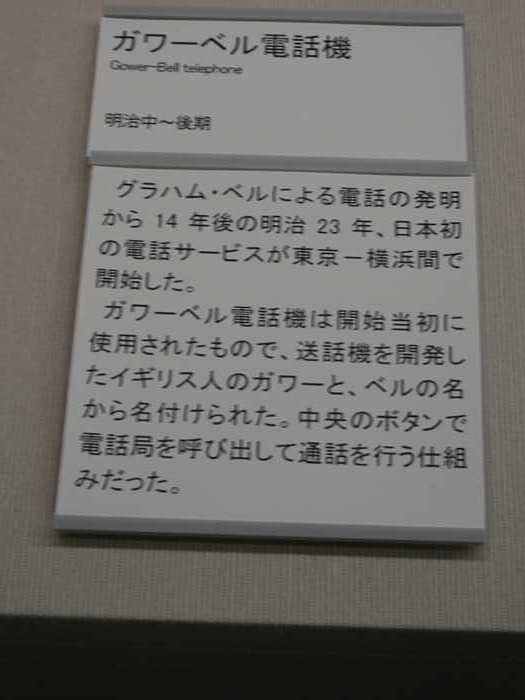
「 ガワーベル電話機 」 。
展示品の向きが反対では?
ネットから。
「 ガワーベル電話機
「 東京の民間工場にみる産業構造の変化
「 産業の発展と労働者の生活
東京の産業は日清・日露戦争の二つの戦争を契機に発展した。いわゆる「産業革命」である。
1894~1895年(明治27~28)の日清戦争後には、綿紡績や織布生産などの繊維業をが伸びをみせ
中心とした軽工業が伸びをみせ、東京・・・・の主要な位置を占めるようになった。
1889年(明治22)の東京における民間産業の労働者数は・・を中心に約1万人であったが、20年後の
1909年には繊維業・金属業を中心に約8万5千人を超え、さらに急増していた。
男性の労働者数は〈職工〉、女性の労働者数は〈女工〉と呼ばれ、・・は金属業や陸・海軍の
工廠などの重工業に、女工は繊維業などに多く雇用されていた。当時の労働者の生活調査では、
長時間労働や低賃金などの問題が取り上げられている。さらに女工の場合は、寄宿舎で生活する
ことが多かった。工場での衛生問題や待遇の改善、賃金の値上げを要求する声のもとで、
1897年(明治30)に労働組合期成会がつくられた。」
「 交通・通信の発達
other means of communication developed rapidly. The movement of people and goods,
as well as the transmission of information, became faster, and their volume increased
as well.」
「 石版印刷機」。
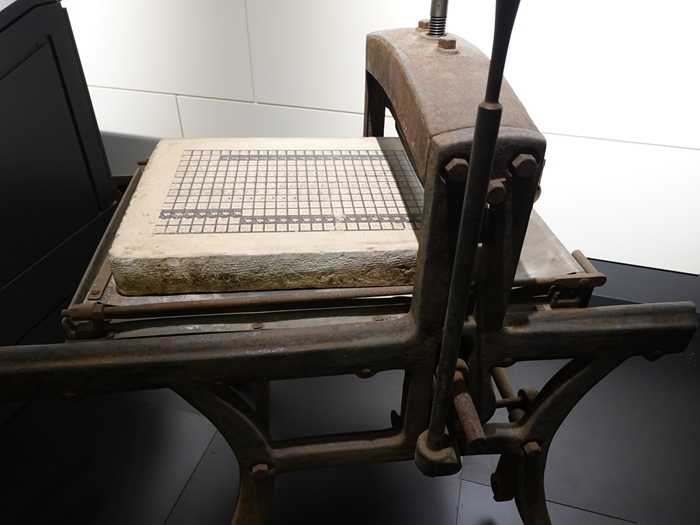
「 石版印刷機
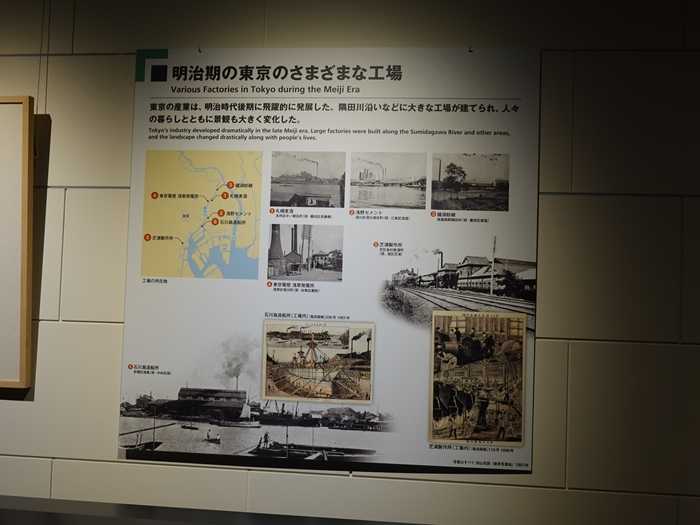
「 明治時代の東京の工場
「 『風俗画報 第116号』より
東芝となった。描かれているのは金属加工・機械製造を行っていた同社の工場群である。」
上段資料
「全国水平社十四囬大会
全国の被圧迫部落大衆団結せよ!
改善費年額一千万円獲得!
ファッショ反対!大衆課税反対!
封建的身分制度廃止!
時 ・一九三七年 三月三日
所 ・東京芝協調会館」
1937年(昭和12年)に開催された全国水平社第14回大会の宣伝ポスター。
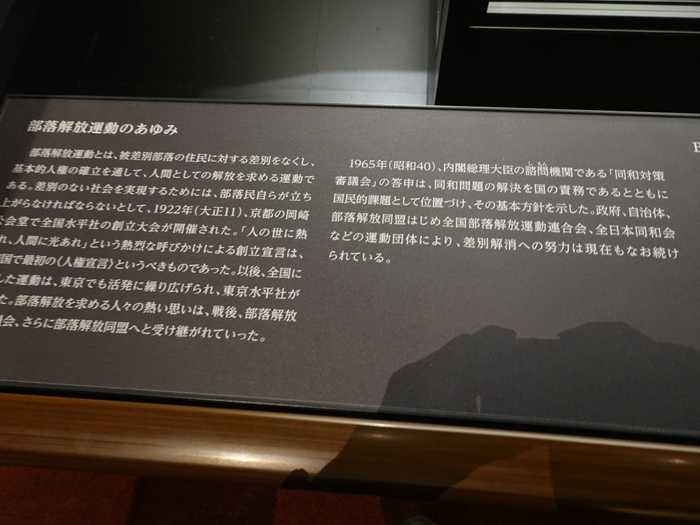
「 部落解放運動のあゆみ
・・・もどる・・・
・・・つづく・・・
「 T2-1 庶民の日常
文明開化期の東京における、人々の暮らしや社会の変化に焦点を当てています。
西洋化が進む中で、一般の庶民がどのような生活を送り、新しい文化や道具を取り入れて
いったのかを資料や模型で紹介していた。」
正面に「 人力車 」。
庶民の日常
文明開化の華やかさの一方で、下町の路地裏には、江戸時代とさほど変わらない生活を営む
庶民の暮らしがあった。明治維新を経て、時代は大きく変革していたにもかかわらず、
人々の暮らしぶりはつつましく、互いに助け合いながら生計を立てていた。
庶民の暮らしがあった。明治維新を経て、時代は大きく変革していたにもかかわらず、
人々の暮らしぶりはつつましく、互いに助け合いながら生計を立てていた。
しかし、1892年(明治25)に松原岩五郎が著した『最暗黒の東京』にみられるように、
過密で貧困、そして不衛生な環境のなかで生活する人々と地域が形成されていた。
こうしたスラムでは貧困が深刻な問題となり、東京に資本や人口が集中するにつれ、より重大な
都市問題となっていった。
過密で貧困、そして不衛生な環境のなかで生活する人々と地域が形成されていた。
こうしたスラムでは貧困が深刻な問題となり、東京に資本や人口が集中するにつれ、より重大な
都市問題となっていった。
明治から大正にかけて、日本人の平均寿命は男女ともに42歳から44歳程度であった。
東京でも幕末開港以来のコレラが猛威をふるい、痘瘡(天然痘)とともに大流行を繰り返し、
多数の患者や死亡者を出した。それらは「貧民病」とも呼ばれ、とりわけ不衛生なスラムに住む
下層民ほど感染の度合いが高かった。」
東京でも幕末開港以来のコレラが猛威をふるい、痘瘡(天然痘)とともに大流行を繰り返し、
多数の患者や死亡者を出した。それらは「貧民病」とも呼ばれ、とりわけ不衛生なスラムに住む
下層民ほど感染の度合いが高かった。」
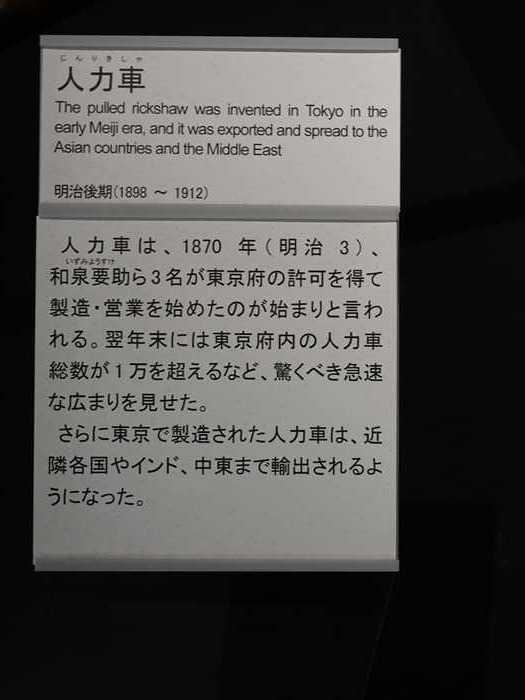
「 人力車
The pulled rickshaw was invented in Tokyo in the early Meiji era, and it was exported
and spread to the Asian countries and the Middle East.
and spread to the Asian countries and the Middle East.
明治後期(1898~1912)
人力車は、1870年(明治3)、和泉要助(いずみ ようすけ)ら3名が東京府の許可を得て
製造・営業を始めたのが始まりと言われる。
製造・営業を始めたのが始まりと言われる。
翌年末には東京府内の人力車総数が1万を超えるなど、驚くべき急速な広まりを見せた。
さらに東京で製造された人力車は、近隣各国やインド、中東まで輸出されるようになった。」
「 明治の子供たち(Children of Meiji)
明治時代の子どもたちの素顔をよく伝える、とても貴重な歴史写真。
明治の町に響く子どもたちの笑い声。文明開化の華やかな時代の陰で、着物姿の子どもたちは
今日と変わらぬ無邪気な笑顔を見せていた。手彩色が添えられた一枚の写真は、時代を超えて
庶民の温かな暮らしを今に伝えている。
今日と変わらぬ無邪気な笑顔を見せていた。手彩色が添えられた一枚の写真は、時代を超えて
庶民の温かな暮らしを今に伝えている。
自然な笑顔
・前列右側の男の子たちは満面の笑みを浮かべ、笑い声が聞こえてきそう。
・当時の写真は長時間露光のため真面目な表情が多いのですが、この写真は自然な瞬間を
捉えた珍しい一枚。
捉えた珍しい一枚。
さまざまな年齢の子どもたち
・よちよち歩きの幼児から10歳前後の子どもまで集まっている。
・兄弟姉妹や近所の子どもたちが一緒に遊んでいた様子がうかがえる。
普段着の着物
・男の子は縞模様や絣(かすり)の着物。
・女の子は小花模様などの着物を着ている。
・晴れ着ではなく日常着であり、庶民の暮らしをそのまま写した写真。
手彩色写真
・着物の青や赤などに淡い色が付けられている。
・当時は白黒写真に職人が一枚ずつ彩色を施す「手彩色」が盛んであった。
後方の様子
左奥には小さな屋台があり、駄菓子屋や物売りの店のように見える。
その前にいる女性が子どもたちを優しく見守り、町の穏やかな日常風景を演出している。
その前にいる女性が子どもたちを優しく見守り、町の穏やかな日常風景を演出している。
「 裂見本帖 呉服御通(きれみほんちょう ごふく おかよい)
Fabric Sample Book, Gofuku Okayoi
明治時代(1868~1912)
明治時代に入り洋装化が広まりつつある中でも、庶民の日常着は和装が主流であった。
なかでも江戸時代から庶民の間にも広まった「縞織」は、この時代に技術の全盛期を迎えた。
本資料は「縞織」を中心とした布地のスクラップ帳である。」
なかでも江戸時代から庶民の間にも広まった「縞織」は、この時代に技術の全盛期を迎えた。
本資料は「縞織」を中心とした布地のスクラップ帳である。」
「 往来子供尽(おうらい こどもづくし)
Collection of Children Socializing
1870年(明治3)4月
歌川芳藤/画 文正堂/発行
喜多川周之コレクション
明治初頭の東京の通りで見られた子供たちの姿が描かれている。からくり見世物、おでん屋、
風車売りといった商いに加え、馬車や人力車など新たに登場した乗り物と子供の関わりも
うかがえます。」
風車売りといった商いに加え、馬車や人力車など新たに登場した乗り物と子供の関わりも
うかがえます。」
「往来子供尽」は、明治3年(1870)に浮世絵師 歌川芳藤(うたがわ よしふじ) が描いた錦絵。
画面は四段に分かれ、明治初期の東京の町を行き交う子どもたちが生き生きと描かれています。
・からくり見世物に夢中になる子どもたち
・馬車に乗る人々を見送る子どもたち
・新しく登場した人力車に興味津々な様子
・おでん屋や風車売りなど、町の商人とのふれあい
など、文明開化が始まったばかりの東京の町の活気が伝わって来る。
江戸時代から続く暮らしと、馬車・人力車など西洋文明を取り入れた新しい文化が同時に
描かれており、「江戸から明治への移り変わり」を子どもたちの視点から伝える貴重な
風俗資料となっているのだ。
描かれており、「江戸から明治への移り変わり」を子どもたちの視点から伝える貴重な
風俗資料となっているのだ。
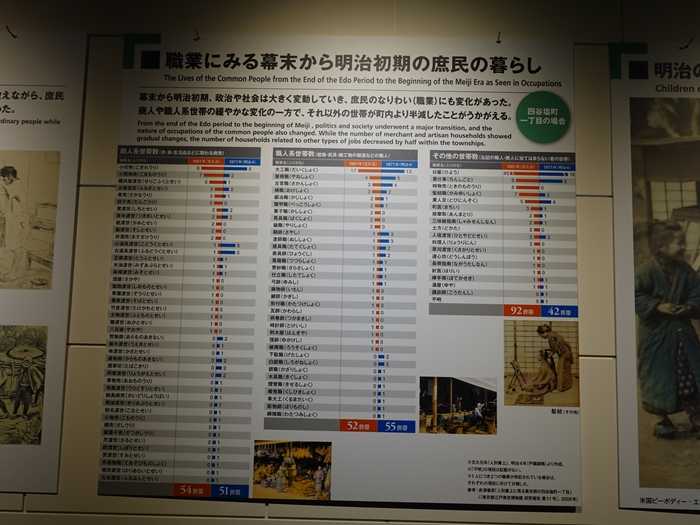
「 職業にみる幕末から明治初期の庶民の暮らし
The Lives of the Common People from the End of the Edo Period to the Beginning of
the Meiji Era as Seen in Occupations
the Meiji Era as Seen in Occupations
幕末から明治初期、政治や社会は大きく変動していき、庶民のなりわい(職業)にも変化があった。
商人や職人系世帯の緩やかな変化の一方で、それ以外の世帯が町内より半減したことがうかがえる。
From the end of the Edo period to the beginning of Meiji, politics and society underwent
a major transition, and the nature of occupations of the common people also changed.
While the number of merchant and artisan households showed gradual changes,
the number of households related to other types of jobs decreased by half within the townships.」
a major transition, and the nature of occupations of the common people also changed.
While the number of merchant and artisan households showed gradual changes,
the number of households related to other types of jobs decreased by half within the townships.」
四谷塩町一丁目の場合(緑色の表示)
グラフの分類
・商人系世帯数
・職人系世帯数
・その他の世帯数
各グラフは
・1861年(文久元)
・1871年(明治4)
を比較している。
合計世帯数
・商人系 54世帯 → 51世帯
・職人系 52世帯 → 55世帯
・その他 92世帯 → 42世帯
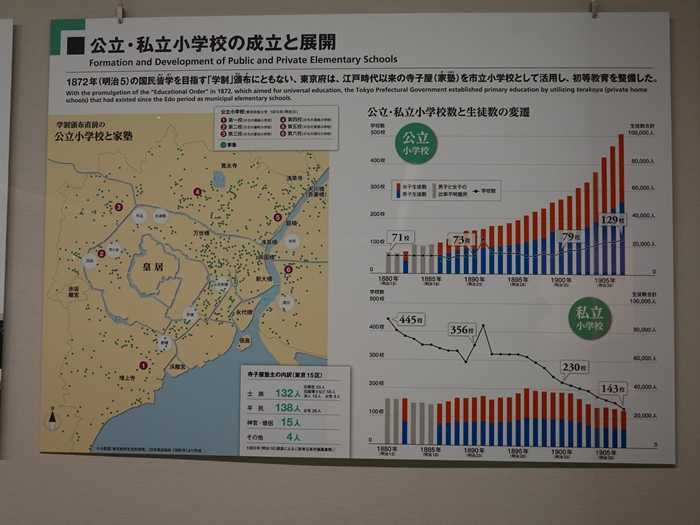
「 公立・私立小学校の成立と展開
Formation and Development of Public and Private Elementary Schools
1872年(明治5)の国民皆学を目指す「学制」頒布にともない、東京府は、江戸時代以来の
寺子屋(家塾)を市立小学校として活用し、初等教育を整備した。
With the promulgation of the "Educational Order" in 1872, which aimed for universal寺子屋(家塾)を市立小学校として活用し、初等教育を整備した。
education, the Tokyo Prefectural Government established primary education by
utilizing terakoya (private home schools) that had existed since the Edo period
as municipal elementary schools.」
左図
学制頒布直前の公立小学校と家塾
(凡例)
公立小学校(東京府仮小学・1870年(明治3))
①第一大区
②第二大区
③第三大区
④第四大区
⑤第五大区
⑥第六大区
●
家塾
寺子屋塾主の内訳(東京15区)
士族 132人
平民 138人
神官・僧侶 15人
その他 4人
(1883年〈明治16〉調査)
(1883年〈明治16〉調査)
右図
公立・私立小学校数と生徒数の変遷
公立小学校
学校数の推移
・1880年(明治13) 71校
・1888年頃 73校
・1900年(明治33) 79校
・1905年(明治38) 129校
(棒グラフ)
赤:女子生徒数
青:男子生徒数
折れ線:学校数
公立小学校では、学校数・生徒数ともに増加。
私立小学校
学校数の推移
1880年(明治13) 445校
1888年頃 356校
1900年(明治33) 230校
1905年(明治38) 143校
私立小学校は、学制施行当初は寺子屋を母体として数が非常に多かったものの、公立小学校の
整備が進むにつれて減少していったことが分かる。
整備が進むにつれて減少していったことが分かる。
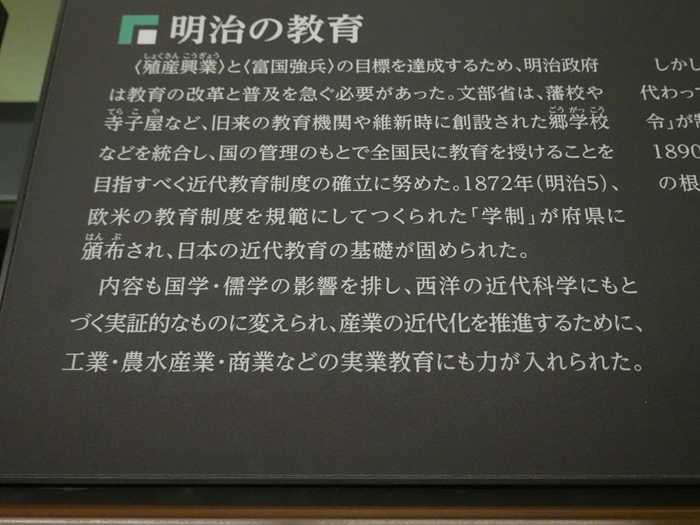
明治の教育
〈殖産興業〉と〈富国強兵〉の目標を達成するため、明治政府は教育の改革と普及を急ぐ
必要があった。文部省は、藩校や寺子屋など、旧来の教育機関や維新時に創設された
郷学校などを統合し、国の管理のもとで全国民に教育を授けることを目指すべく近代教育制度の
確立に努めた。 1872年(明治5)、欧米の教育制度を規範にしてつくられた「学制」が
府県に頒布され、日本の近代教育の基礎が固められた。
必要があった。文部省は、藩校や寺子屋など、旧来の教育機関や維新時に創設された
郷学校などを統合し、国の管理のもとで全国民に教育を授けることを目指すべく近代教育制度の
確立に努めた。 1872年(明治5)、欧米の教育制度を規範にしてつくられた「学制」が
府県に頒布され、日本の近代教育の基礎が固められた。
内容も国学・儒学の影響を排し、西洋の近代科学にもとづく実証的なものに変えられ、産業の
近代化を推進するために、工業・農水産業・商業などの実業教育にも力が入れられた。」
近代化を推進するために、工業・農水産業・商業などの実業教育にも力が入れられた。」
この展示は、明治政府が近代国家を築くために教育制度を大きく改革したことを説明している。
1872年(明治5)の「学制」によって、日本で初めて全国民を対象とした近代的な学校制度が
整えられた。
整えられた。
江戸時代の寺子屋や藩校に代わり、国が教育を管理する仕組みがつくられた。
教育内容も、漢学や儒学中心から、西洋の科学や実学を重視するものへと転換。
また、近代産業を支える人材を育成するため、工業・農業・水産業・商業などの実業教育にも
力が注がれた。
力が注がれた。
このような教育改革は、「殖産興業(産業を発展させること)」と「富国強兵(国を豊かにし
軍事力を強くすること)」という明治政府の国家目標を実現するための重要な政策であった。
新しい学校制度の確立は、日本が近代国家へ歩み始める大きな転換点となった と。
軍事力を強くすること)」という明治政府の国家目標を実現するための重要な政策であった。
新しい学校制度の確立は、日本が近代国家へ歩み始める大きな転換点となった と。
「 『横文字早学問(全、二編)』
English language books
1872年(明治5)
吉田/著
一般向けに出版された英語の「いろは」を解説した入門書。明治5年前後は同様の英語書が氾濫し、
英語流行の到来を感じさせる。外国語は、一部の特権階級が学ぶものから、立身出世を目指す
庶民の手段として学ばれるようになる。」
英語流行の到来を感じさせる。外国語は、一部の特権階級が学ぶものから、立身出世を目指す
庶民の手段として学ばれるようになる。」
明治初期の英語ブームを象徴する資料。
1872年(明治5)は「学制」が公布された年で、西洋文化や外国語への関心が急速に高まった。
『横文字早学問』は、現代で言えば「はじめての英会話」「英語入門」のような一般向けの教本。
展示されているページには、
・Good day.
・Good night.
・Good morning.
・Good evening.
・Tall man.
・Big dog.
・Sweet apple.
・Ripe grape.
といった、日常的な英単語・英会話が日本語訳とともに掲載されている。
当時、英語は外交官や通訳だけの学問ではなく、商売・就職・昇進・海外との取引に役立つ
知識として、庶民にも広く学ばれるようになった。
知識として、庶民にも広く学ばれるようになった。
「 憲法発布大典寿語録
Constitution Promulgation Ceremony Sugoroku
1889年(明治22)
佐々木豊吉/版
1889年(明治22)2月11日、明治天皇により「大日本帝国憲法」が公布され、翌年
11月29日に施行された。本作はその公布を記念して発行されたすごろく。
各マスには、各地で執り行われた祝祭行事の様子が描かれている。
なお、「憲法は第 ニ 次世界大戦後の1947年(昭和22)に廃止し、その後現在の
『日本国憲法』へと引き継がれた。」
11月29日に施行された。本作はその公布を記念して発行されたすごろく。
各マスには、各地で執り行われた祝祭行事の様子が描かれている。
なお、「憲法は第 ニ 次世界大戦後の1947年(昭和22)に廃止し、その後現在の
『日本国憲法』へと引き継がれた。」
大日本帝国憲法の公布(1889年2月11日)を祝って制作された「すごろく」。
当時は憲法公布が国家的な慶事であり、日本各地で提灯行列、祝賀式典、旗行列などが盛大に
催された。
催された。
すごろくの各マスには、そのような祝賀の様子や、明治国家の近代化を象徴する出来事が
色鮮やかな錦絵風に描かれている。
色鮮やかな錦絵風に描かれている。
娯楽として遊びながら、新しい憲法や国家制度を庶民へ広める役割も果たした と。
「 木製亜鈴(もくせい あれい)
A wooden dumbbell used for the physical education in the Meiji era
明治時代(1867–1912)
1872年(明治5)に頒布された「学制」により、初めて体育(「体術」)が教科に
位置づけられた。
医学博士ジョージ・アダムス・リーランドを教授として招き、彼の指導により「軽体操」が
授業に取り入れられた。木製亜鈴は軽体操で用いる器具のひとつで、明治時代に学校用具
として普及した。」
位置づけられた。
医学博士ジョージ・アダムス・リーランドを教授として招き、彼の指導により「軽体操」が
授業に取り入れられた。木製亜鈴は軽体操で用いる器具のひとつで、明治時代に学校用具
として普及した。」
この木製亜鈴(あれい)は、現在のダンベルの祖先ともいえる体育器具。
1872年(明治5)の「学制」によって、日本で初めて学校教育に体育が正式に取り入れられました。
政府は近代的な体育教育を導入するため、アメリカの教育者・医学博士 ジョージ・アダムス・
リーランド(George Adams Leland) を招聘し、体操伝習所で教員養成を行った。
リーランド(George Adams Leland) を招聘し、体操伝習所で教員養成を行った。
その際に普及したのが「軽体操」で、木製亜鈴はその代表的な運動器具。
木製なので鉄製ダンベルより軽く、安全性が高いため、小学校などでも広く使用された。
今日の学校体育やラジオ体操につながる日本の近代体育は、このような木製亜鈴を用いた
「軽体操」から始まったといえる と。
「軽体操」から始まったといえる と。
「 学制と公立・私立小学校
身分や性別にかかわらず国民すべてに教育の機会を与える「学制」は、近代国家の出発に
ふさわしい画期的な教育制度であった。 東京都府は当初、1,260校の公立小学校の設置を
決定したが、1873年(明治6)ころにまだ60校足らずにすぎなかった。
ふさわしい画期的な教育制度であった。 東京都府は当初、1,260校の公立小学校の設置を
決定したが、1873年(明治6)ころにまだ60校足らずにすぎなかった。
その不足を補ったのが、寺子屋・集塾の系譜に連なる私立小学校
である。東京の塾は旧朱引内に
多く設置され、府は塾の師匠を「小学教則」に沿って再教育することで急場をしのいだ。
また 近郊の農村部には、村民が設立資金を出し合う郷学校 などもあった。
多く設置され、府は塾の師匠を「小学教則」に沿って再教育することで急場をしのいだ。
また 近郊の農村部には、村民が設立資金を出し合う郷学校 などもあった。
児童の就学率は日清戦争(1894~1895年)以後、急激に上昇し、公立小学校は規模を
拡大していった。一方、私立小学校は、初等教育における役割を公立小学校に譲ることと
なった。」
拡大していった。一方、私立小学校は、初等教育における役割を公立小学校に譲ることと
なった。」
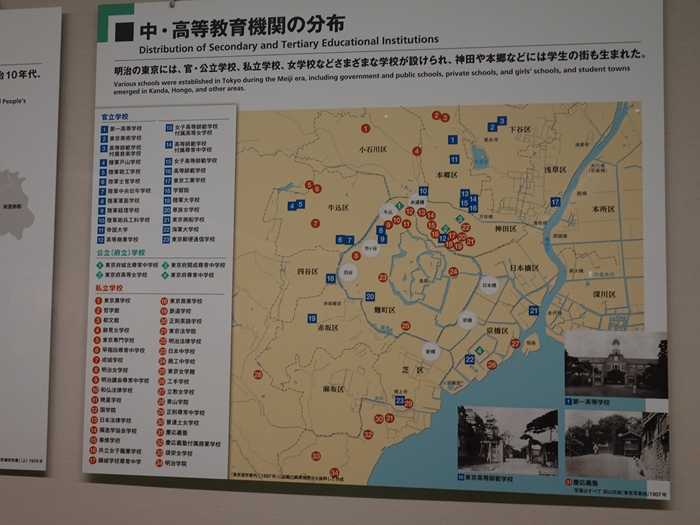
「 中・高等教育機関の分布
Distribution of Secondary and Tertiary Educational Institutions
明治の東京には、官・公立学校、私立学校、女学校などさまざまな学校が設けられ、
神田や本郷などには学生の街も生まれた。
神田や本郷などには学生の街も生まれた。
Various schools were established in Tokyo during the Meiji era, including government
and public schools, private schools, and girls' schools, and student towns emerged
in Kanda, Hongo, and other areas.」
and public schools, private schools, and girls' schools, and student towns emerged
in Kanda, Hongo, and other areas.」
官立学校
・第一高等学校
・東京美術学校
・高等師範学校
・陸軍戸山学校
・陸軍工学校
・陸軍士官学校
・陸軍中央幼年学校
・陸軍軍医学校
・陸軍経理学校
・陸軍砲工科学校
・帝国大学
・高等商業学校
・女子高等師範学校附属高等女学校
・高等師範学校附属尋常中学校
・女子高等師範学校
・高等師範学校
・東京工業学校
・学習院
・逓信大学校
・慈恵女学校
・東京商船学校
・海軍大学校
・東京郵便電信学校 公立(府立)学校
・東京府城北尋常中学校
・東京府高等女学校
・東京府開成尋常中学校
・東京府尋常中学校
・和仏法律学校
・錦華学校
・国学院
・日本法律学校
・獨逸学協会学校
・専修学校
・鉄道学校
・正則英語学校
・東京法学院
・明治法律学校
・東京女学館
・工手学校
・立教学校
・青山学院
・正則尋常中学校
・普連土女学校
・慶応義塾
私立学校
・東京農学校
・哲学館
・練女館
・明治女学校
・東京専門学校
・早稲田尋常中学校
・成城学校
・明治女学校
・明治義塾尋常中学校・和仏法律学校
・錦華学校
・国学院
・日本法律学校
・獨逸学協会学校
・専修学校
・共立女子職業学校
・錦城学校尋常中学
・東京商業学校・鉄道学校
・正則英語学校
・東京法学院
・明治法律学校
・日本中学校
・商工中学校・東京女学館
・工手学校
・立教学校
・青山学院
・正則尋常中学校
・普連土女学校
・慶応義塾
・慶応義塾附属商業学校
・錦華学校
・明治学院
写真キャプション
・第一高等学校
・東京高等師範学校
・慶応義塾
(写真はすべて『風俗画報』東京写真帖 1907年)
このパネルは、明治時代の東京が日本最大の「学都」へ発展していく様子を示している。
本郷には帝国大学(現在の東京大学)を中心に官立学校が集まった。
神田には法律学校や専門学校が数多く設立され、学生街として発展した。
早稲田には東京専門学校(現在の早稲田大学)、三田には慶応義塾、駿河台には明治法律学校
(現在の明治大学)など、現在も続く名門校の多くがこの時代に誕生。
(現在の明治大学)など、現在も続く名門校の多くがこの時代に誕生。
女子教育も進み、女子高等師範学校や東京女学館、共立女子職業学校など、女性のための
教育機関も増加した。
教育機関も増加した。
この地図を見ると、現在も大学が集中する本郷・神田・早稲田・三田・お茶の水一帯の教育都市
としての姿が、すでに明治時代に形成されていたことがよく分かるのであった。
としての姿が、すでに明治時代に形成されていたことがよく分かるのであった。
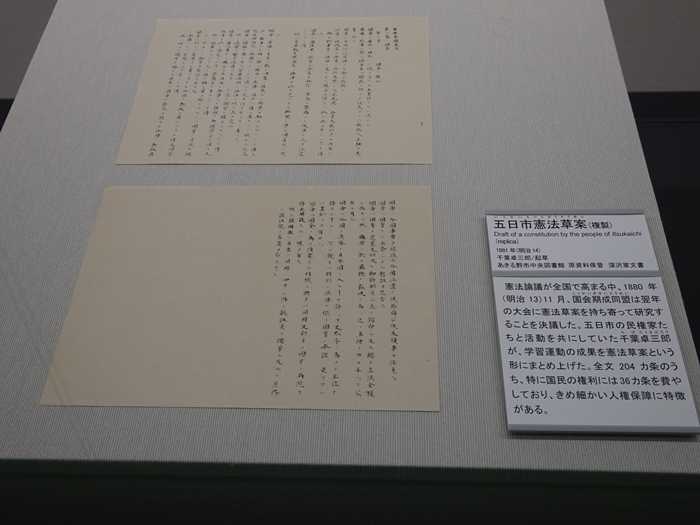
五日市憲法草案(複製)
Draft of a constitution by the people of Itsukaichi (replica)
1881年(明治14)
千葉卓三郎/起草
あきる野市中央図書館 原資料保管 深沢家文書
憲法論議が全国で高まる中、1880年(明治13)11月、国会期成同盟は翌年の大会に憲法草案を
持ち寄って研究することを決議した。五日市の民権家たちと活動を共にしていた千葉卓三郎が、
学習運動の成果を憲法草案という形にまとめ上げた。
全文204か条のうち、特に国民の権利には36か条を費やしており、きめ細かい人権保障に
特徴がある。」
持ち寄って研究することを決議した。五日市の民権家たちと活動を共にしていた千葉卓三郎が、
学習運動の成果を憲法草案という形にまとめ上げた。
全文204か条のうち、特に国民の権利には36か条を費やしており、きめ細かい人権保障に
特徴がある。」
この「 五日市憲法草案
」は、日本国憲法でも大日本帝国憲法でもない、民間の人々が自ら考えて
作成した憲法案。
作成した憲法案。
1881年(明治14)、自由民権運動が盛んになる中で、東京都西部の五日市(現在のあきる野市)
で活動していた千葉卓三郎が起草した。
で活動していた千葉卓三郎が起草した。
当時は「どのような憲法が日本にふさわしいか」を全国各地で議論しており、その成果として
数多くの私擬憲法(しぎけんぽう)が作られた。
数多くの私擬憲法(しぎけんぽう)が作られた。
五日市憲法草案は全204条から成り、そのうち36条を国民の権利の保障に充てていることが
大きな特徴。
大きな特徴。
言論・信教・財産など、人権を手厚く守ろうとする考え方が盛り込まれており、当時としては
非常に先進的な内容であった。
非常に先進的な内容であった。
この草案は採用されることはなかったが、自由民権運動が日本の立憲政治や憲法思想の形成に
大きな影響を与えたことを示す代表的な史料として高く評価されているのだ。
大きな影響を与えたことを示す代表的な史料として高く評価されているのだ。
「 学生の街
1887年(明治20)の「文官試験試補及見習規則」公布以後、試験による官吏の任用制度が整い、
家柄などによらず実力で立身出世する道が開かれた。地方の青年たちは、故郷を離れて学問する
「遊学」を立身出世の道と考え、学校が集中していた東京をその目的地に選んだ。
家柄などによらず実力で立身出世する道が開かれた。地方の青年たちは、故郷を離れて学問する
「遊学」を立身出世の道と考え、学校が集中していた東京をその目的地に選んだ。
東京には帝国大学をはじめとする官・公立学校、独自の教育理念を持つ私立専門学校、女子の
ための教育機関である女学校など、さまざまな学校があり、青雲の志を抱き上京する青年を
受け入れていた。
ための教育機関である女学校など、さまざまな学校があり、青雲の志を抱き上京する青年を
受け入れていた。
明治30年代になると、高等教育機関への入学資格を持つ中学校卒業者が急増した。
また、神田、本郷、早稲田、三田などに学生の街が出現し、一種独特な学生風俗が生み出された。 」
また、神田、本郷、早稲田、三田などに学生の街が出現し、一種独特な学生風俗が生み出された。 」
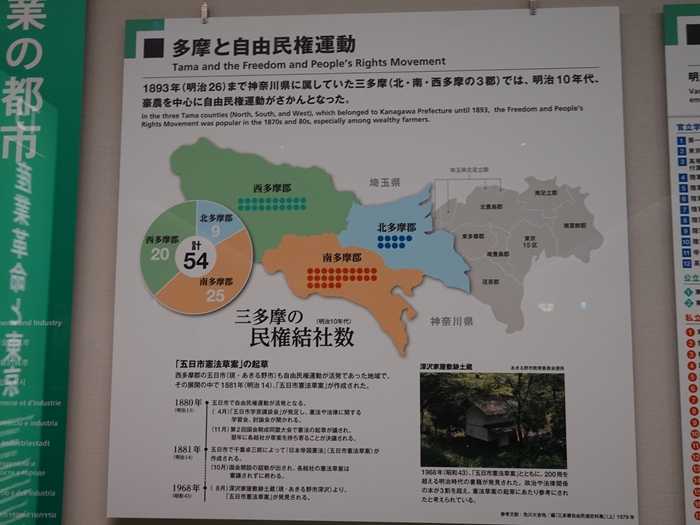
「 多摩と自由民権運動
Tama and the Freedom and People's Rights Movement
1893年(明治26)まで神奈川県に属していた三多摩(北・南・西多摩の3郡)では、
明治10年代、豪農を中心に自由民権運動がさかんとなった。
In the three Tama counties (North, South, and West), which belonged to明治10年代、豪農を中心に自由民権運動がさかんとなった。
Kanagawa Prefecture until 1893, the Freedom and People's Rights Movement was
popular in the 1870s and 80s, especially among wealthy farmers.」
「五日市憲法草案」の起草
西多摩郡の五日市(現・あきる野市)は自由民権運動が活発であった地域で、その展開の中で
1881年(明治14)、「五日市憲法草案」が作成された。
1881年(明治14)、「五日市憲法草案」が作成された。
1880年(明治13)
五日市で自由民権運動が活発となる。
(4月)五日市学芸講談会が発足し、憲法や法律に関する学習会・討論会が開かれる。
(11月)第2回国会期成同盟大会で憲法の起草が議論され、翌年に各結社が草案を
持ち寄ることが決議される。
持ち寄ることが決議される。
1881年(明治14)
五日市で千葉卓三郎によって『日本帝国憲法』(五日市憲法草案)が作成される。
(10月)国会開設の勅諭が出され、各結社の憲法草案は意義を失ったため終わる。
1968年(昭和43)
(8月)深沢家屋敷跡土蔵(現・あきる野市深沢)より、「五日市憲法草案」が発見される。
(8月)深沢家屋敷跡土蔵(現・あきる野市深沢)より、「五日市憲法草案」が発見される。
写真説明
深沢家屋敷跡土蔵
1968年(昭和43)、「五日市憲法草案」とともに、200冊を超える明治時代の書籍が
発見された。政治や法律関係の本が3割を超え、憲法草案の起草にあたり参考にされたと
考えられている。
発見された。政治や法律関係の本が3割を超え、憲法草案の起草にあたり参考にされたと
考えられている。
このパネルは、自由民権運動の中心地の一つが現在の東京都西部(旧・神奈川県三多摩)で
あったことを紹介している。
あったことを紹介している。
特に五日市では、民権家千葉卓三郎が1881年に「五日市憲法草案」を起草した。
この草案は204条からなる詳細な憲法案で、国民の権利を厚く保障していることが特徴。
後に実際の大日本帝国憲法(1889年公布)とは異なる内容となったが、日本における
民間の憲法構想として極めて貴重な歴史資料と評価されている。1968年に深沢家の土蔵から
発見されたことで、その存在が広く知られるようになった。
この草案は204条からなる詳細な憲法案で、国民の権利を厚く保障していることが特徴。
後に実際の大日本帝国憲法(1889年公布)とは異なる内容となったが、日本における
民間の憲法構想として極めて貴重な歴史資料と評価されている。1968年に深沢家の土蔵から
発見されたことで、その存在が広く知られるようになった。
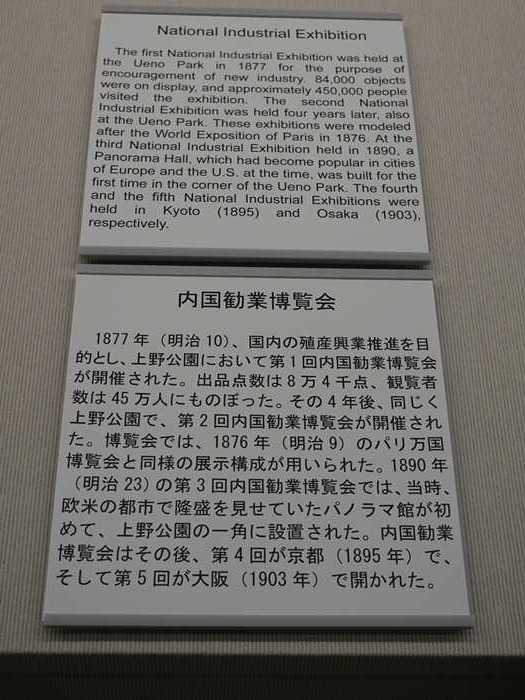
「 National Industrial Exhibition
The first National Industrial Exhibition was held at the Ueno Park in 1877 for the
purpose of encouragement of new industry. 84,000 objects were on display,
and approximately 450,000 people visited the exhibition. The second National Industrial Exhibition was held four years later, also at the Ueno Park. These exhibitions were
modeled after the World Exposition of Paris in 1876. At the third National Industrial
Exhibition held in 1890, a Panorama Hall, which had become popular in cities of
Europe and the U.S. at the time, was built for the first time in the corner of
the Ueno Park. The fourth and the fifth National Industrial Exhibitions were held
in Kyoto (1895) and Osaka (1903), respectively.
purpose of encouragement of new industry. 84,000 objects were on display,
and approximately 450,000 people visited the exhibition. The second National Industrial Exhibition was held four years later, also at the Ueno Park. These exhibitions were
modeled after the World Exposition of Paris in 1876. At the third National Industrial
Exhibition held in 1890, a Panorama Hall, which had become popular in cities of
Europe and the U.S. at the time, was built for the first time in the corner of
the Ueno Park. The fourth and the fifth National Industrial Exhibitions were held
in Kyoto (1895) and Osaka (1903), respectively.
内国勧業博覧会
1877年(明治10)、国内の殖産興業推進を目的とし、上野公園において第1回内国勧業博覧会が
開催された。出品点数は8万4千点、観覧者数は45万人にも上った。
開催された。出品点数は8万4千点、観覧者数は45万人にも上った。
その4年後、同じく上野公園で、第2回内国勧業博覧会が開催された。博覧会では、1876年
(明治9)のパリ万国博覧会と同様の展示構成が用いられた。
(明治9)のパリ万国博覧会と同様の展示構成が用いられた。
1890年(明治23)の第3回内国勧業博覧会では、当時、欧米の都市で隆盛を見せていた
パノラマ館が初めて、上野公園の一角に設置された。
パノラマ館が初めて、上野公園の一角に設置された。
内国勧業博覧会はその後、第4回が京都(1895年)で、そして第5回が大阪(1903年)で
開かれた。」
開かれた。」
内国勧業博覧会は、明治政府が「殖産興業(産業を育成し国力を高める政策)」を推進する
ために開催した、日本最大級の産業博覧会であった。
ために開催した、日本最大級の産業博覧会であった。
・第1回(1877年):東京・上野公園
・第2回(1881年):東京・上野公園
・第3回(1890年):東京・上野公園
・第4回(1895年):京都
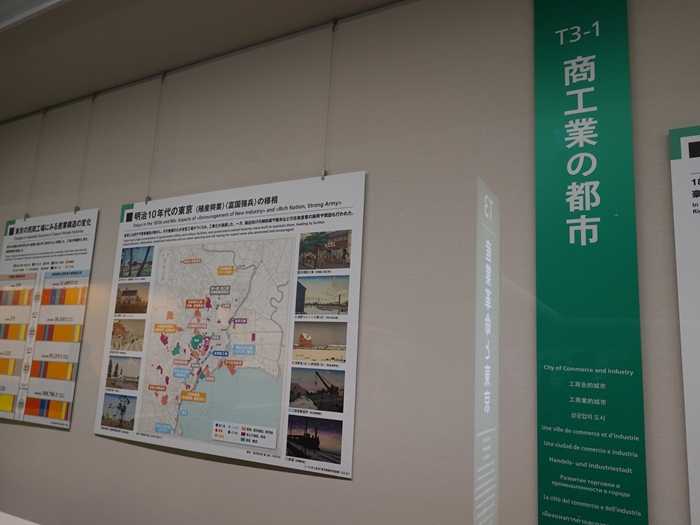
・第5回(1903年):大阪「 T3-1 商工業の都市 」
「 商工業の都市
東京の産業発展は、政府の政策である〈富国強兵〉や〈殖産興業〉と連動して実現した。
新産業や軍事部門を担う巨大な官営工場が設立され、「上からの近代化」が行われた。
しかし、明治初期の民間産業は、職人層の手仕事による日常品や洋服・帽子など新たな
雑貨品生産が主軸であった。
新産業や軍事部門を担う巨大な官営工場が設立され、「上からの近代化」が行われた。
しかし、明治初期の民間産業は、職人層の手仕事による日常品や洋服・帽子など新たな
雑貨品生産が主軸であった。
一方、東京では催し物を通じた産業振興も行われ、1877年(明治10)以降、3回にわたる
〈内国勧業博覧会〉が上野で開かれた。銀座などの繁華街には、常設の商品陳列所の
〈勧工場〉も設けられた。
〈内国勧業博覧会〉が上野で開かれた。銀座などの繁華街には、常設の商品陳列所の
〈勧工場〉も設けられた。
産業発展の様相は、戦争をきっかけに一変する。日清・日露戦争の二つの戦争を境に、東京の
産業も飛躍的に成長した。しかし同時に、工場の騒音や排煙など、さまざまな都市問題を
引き起こすことにもなった。 」
産業も飛躍的に成長した。しかし同時に、工場の騒音や排煙など、さまざまな都市問題を
引き起こすことにもなった。 」
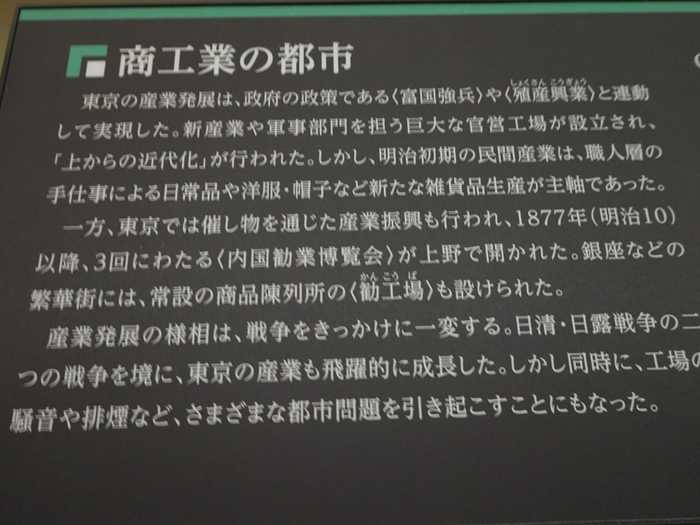
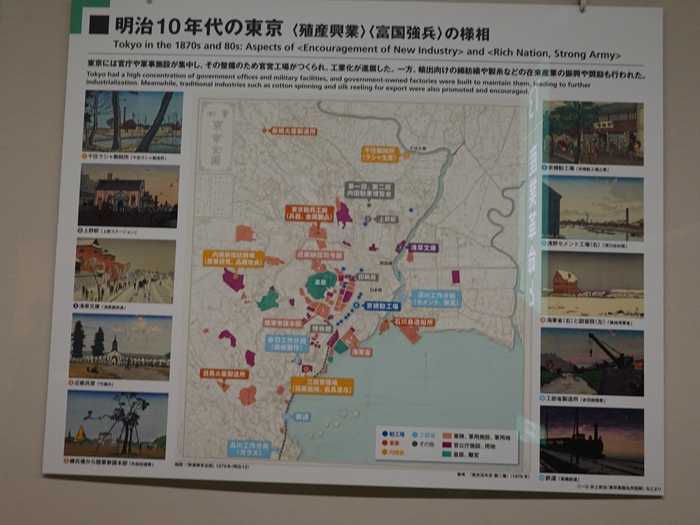
「 明治10年代の東京
〈殖産興業〉〈富国強兵〉の様相
Tokyo in the 1870s and 80s: Aspects of <Encouragement of New Industry> and
<Rich Nation, Strong Army>
<Rich Nation, Strong Army>
東京には官庁や軍事施設が集中し、その整備のため官営工場がつくられ、工業化が進展した。
一方、輸出向けの綿紡績や製糸などの在来産業の振興や奨励も行われた。
一方、輸出向けの綿紡績や製糸などの在来産業の振興や奨励も行われた。
Tokyo had a high concentration of government offices and military facilities, and
government-owned factories were built to maintain them, leading to further
industrialization. Meanwhile, traditional industries such as cotton spinning and
silk reeling for export were also promoted and encouraged.」
government-owned factories were built to maintain them, leading to further
industrialization. Meanwhile, traditional industries such as cotton spinning and
silk reeling for export were also promoted and encouraged.」
地図中の主な施設
・千住製絨所(ラシャ工場)
・第一回・第二回・第三回 内国勧業博覧会
・東京砲兵工廠(兵器・艦船用品)
・陸軍砲兵司令部
・皇居
・銀座
・浅草文庫
・深川工作分局(セメント・煉瓦)
・石川島造船所
・築地海軍兵器工場
・品川工作分局(ガラス)
・三田火薬製造所
左側の図版
① 千住ラシャ製絨所(千住ラシャ製絨所)
② 上野駅(上野ステーション)
③ 浅草文庫(浅草書籍館)
④ 開拓使仮学校(開拓使)
⑤ 榛名山から(陸軍参謀本部「写真帖」)
右側の図版
① 京都勧工場(『絵画東京名所』)
② 浅野セメント工場(右)(『深川沿革誌』)
③ 海軍港(右)と川崎造船(左)(『東京海岸』)
④ 工部省製鉄所(『市街鉄道線』)
⑤ 鉄道(『高輪築堤』) 『日本製品図説』1~3。
『日本製品図説』は、日本の産物や工芸品を海外へ紹介するために内務省が編集した製品図録。
1873年のウィーン万国博覧会を契機に、日本は積極的に万国博覧会へ参加するようなったが、
展示品だけでは外国人に内容が伝わりにくいという課題があった。そこで、この図説が
製品カタログ兼解説書として制作された。
展示品だけでは外国人に内容が伝わりにくいという課題があった。そこで、この図説が
製品カタログ兼解説書として制作された。
展示されている3冊は、
・浅草海苔
・雑種海草
・食塩
を扱っており、日本の特産品を図と文章で詳しく紹介している。
明治初期、日本が海外へ自国の産業や文化を発信しようとした様子を伝える貴重な資料。
明治初期、日本が海外へ自国の産業や文化を発信しようとした様子を伝える貴重な資料。
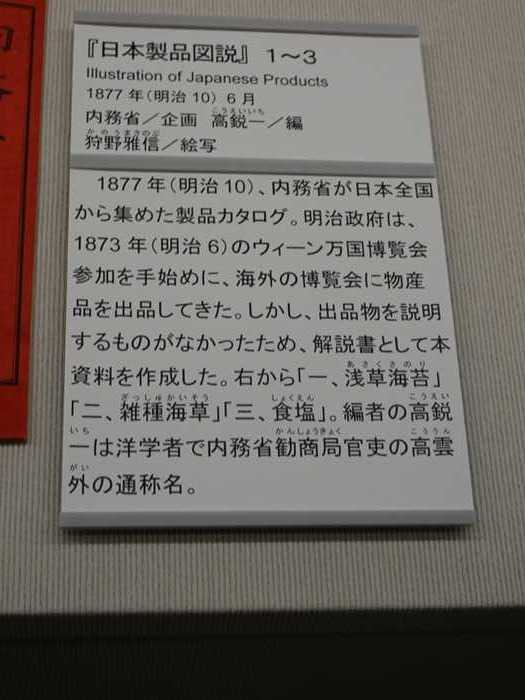
「 『日本製品図説』1~3
Illustration of Japanese Products
1877年(明治10)6月
内務省/企画
高鋭一/編
狩野雅信/絵写
1877年(明治10)、内務省が日本全国から集めた製品カタログ。明治政府は、1873年
(明治6)のウィーン万国博覧会参加を手始めに、海外の博覧会に物産品を出品してきた。
しかし、出品物を説明するものがなかったため、解説書として本資料を作成した。
(明治6)のウィーン万国博覧会参加を手始めに、海外の博覧会に物産品を出品してきた。
しかし、出品物を説明するものがなかったため、解説書として本資料を作成した。
右から「一、浅草海苔」「二、雑種海草」「三、食塩」。編者の高鋭一は洋学者で内務省
勧商局官吏の高雲外の通称名。」
勧商局官吏の高雲外の通称名。」
「 上野公園地 第二内国勧業博覧会一覧図 」
この「上野公園地 第二内国勧業博覧会一覧図」は、1881年(明治14)に開催された
第2回内国勧業博覧会の会場全景を描いた錦絵。
第2回内国勧業博覧会の会場全景を描いた錦絵。
第1回(1877年)が大成功を収めたことを受け、第2回はさらに規模を拡大して開催され、
来場者は第1回の約45万人を大きく上回り、約82万人に達した。博覧会は日本の近代産業や
工芸品を全国に紹介するとともに、海外の万国博覧会に匹敵する国家的イベント
として位置付けられていた。
来場者は第1回の約45万人を大きく上回り、約82万人に達した。博覧会は日本の近代産業や
工芸品を全国に紹介するとともに、海外の万国博覧会に匹敵する国家的イベント
として位置付けられていた。
また、会場中央奥に描かれたレンガ造りの美術館は、「日本近代建築の父」とも呼ばれる
イギリス人建築家ジョサイア・コンドルの設計による建物で、関東大震災で被災する
1923年まで上野公園の代表的な建築物として利用された。
イギリス人建築家ジョサイア・コンドルの設計による建物で、関東大震災で被災する
1923年まで上野公園の代表的な建築物として利用された。
「 上野公園地 第二内国勧業博覧会一覧図
Ueno Park: 2nd National Industrial Exhibition
1881年(明治14)
歌川周重/画 堤吉兵工/版
第二回内国勧業博覧会は1881年(明治14)、内務省・大蔵省の共催により3月1日から
6月30日まで上野公園で開催された。入場者数は第一回の倍近くに達し、明治天皇の行幸も
行われている。
中央奥に描かれた2階建てレンガ造りの美術館は、イギリス人建築家ジョサイア・コンドル6月30日まで上野公園で開催された。入場者数は第一回の倍近くに達し、明治天皇の行幸も
行われている。
(Conder, Josiah 1852–1920)の設計。この建物は1923年(大正12)の関東大震災まで
利用された。」
「 諸工職業競(しょこうしょくぎょうくらべ) テエフル椅子製造 」
「 諸工職業競(しょこうしょくぎょうくらべ) テエフル椅子製造
Competition of Various Professions: Table and Chair Manufacturing
1879年(明治12)
静斎年一/画 木曽直次良/版
「諸工職業競」は、明治以降の新しい職業を紹介したシリーズ絵。作者の静斎年一は月岡芳年の
門下で、歌川派の絵師。
本作は、机と椅子などの西洋家具の製造風景を描くが、職人は皆、手斧(ちょうな)や門下で、歌川派の絵師。
鋸(のこぎり)、鉋(かんな)などの在来の道具を使う。服装は和装のようだが、職人の中には
散切り頭の者も混在し、新旧の風俗が入り混じる。」
「 殖産興業と官営事業
首都東京は、政府の〈殖産興業〉政策の重要拠点であった。欧米から生産技術を導入し、
資本主義の発展をはかることが政策として展開し、東京には巨大な官営工場がつくられた。
工部省による工作分局が赤羽、品川、深川に設けられ、機械・セメント・煉瓦・ガラスなどを
製造した。これに加えて小銃やりょう莢などの軍需製品をつくるために、陸軍省所管の
関口製作所(のちの東京砲兵工廠)が小石川に設けられた。また、海軍省所管の石川島造船所
では軍艦を建造した。
資本主義の発展をはかることが政策として展開し、東京には巨大な官営工場がつくられた。
工部省による工作分局が赤羽、品川、深川に設けられ、機械・セメント・煉瓦・ガラスなどを
製造した。これに加えて小銃やりょう莢などの軍需製品をつくるために、陸軍省所管の
関口製作所(のちの東京砲兵工廠)が小石川に設けられた。また、海軍省所管の石川島造船所
では軍艦を建造した。
これとは対照に、内務省の勧農政策の展開のもとで駒場農学校、内藤新宿試験場、三田育種場が
開設された。そこでは欧米の農業技術を日本の農業へ移植し、農業・養蚕・牧畜の発展と
輸出を増大するねらいがあった。 」
開設された。そこでは欧米の農業技術を日本の農業へ移植し、農業・養蚕・牧畜の発展と
輸出を増大するねらいがあった。 」
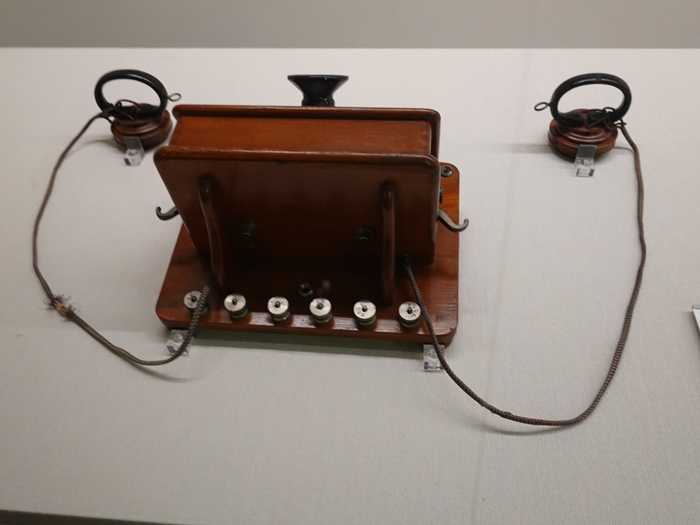
「 ガワーベル電話機 」 。
展示品の向きが反対では?
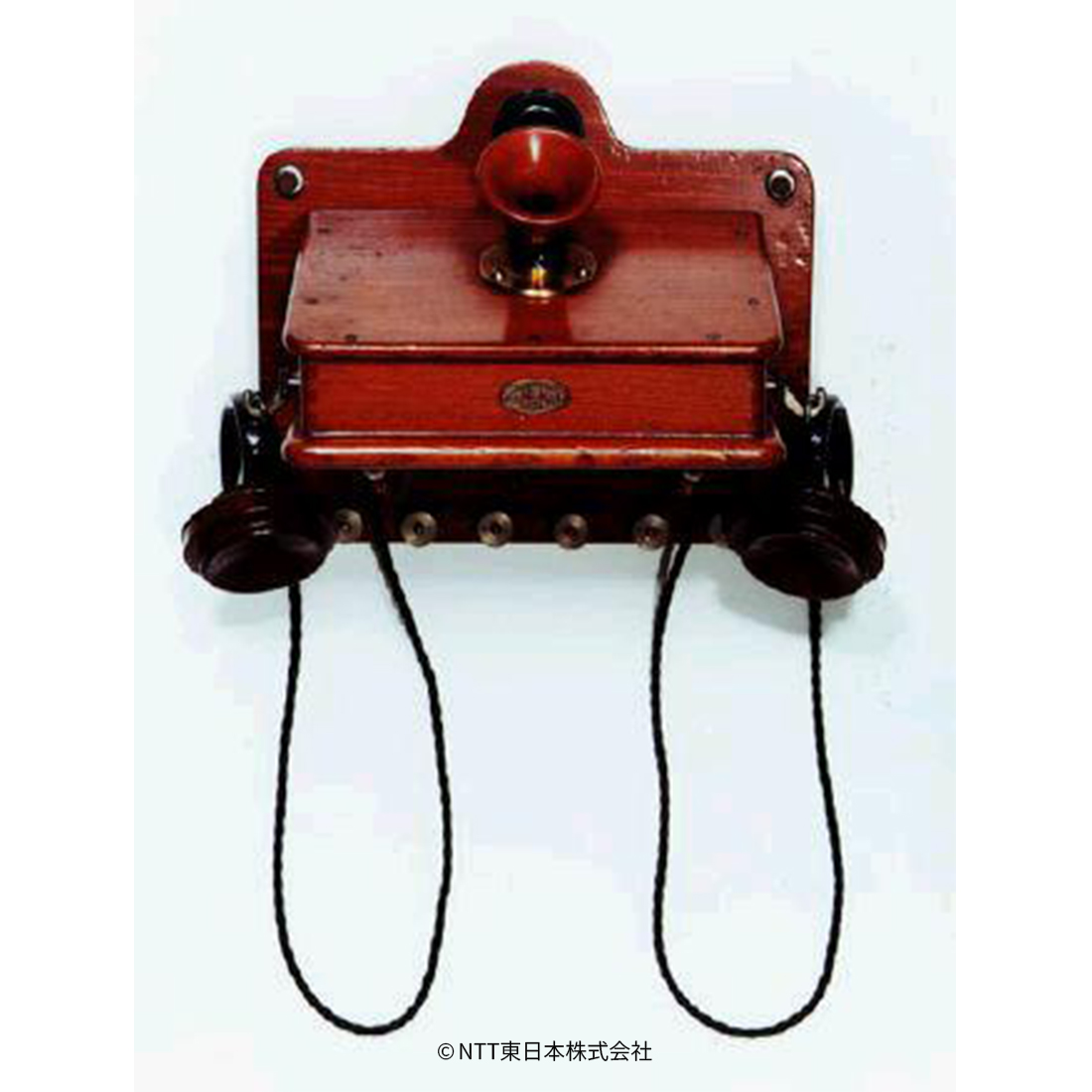
ネットから。
「 ガワーベル電話機
Gower-Bell telephone
明治中~後期
グラハム・ベルによる電話の発明から14年後の 明治23年(1890)、日本初の電話サービスが
東京―横浜間で開始した 。
東京―横浜間で開始した 。
ガワーベル電話機は開始当初に使用されたもので、送話機を開発したイギリス人のガワーと、
ベルの名から名付けられた。中央のボタンで電話局を呼び出して通話を行う仕組みだった。」
ベルの名から名付けられた。中央のボタンで電話局を呼び出して通話を行う仕組みだった。」
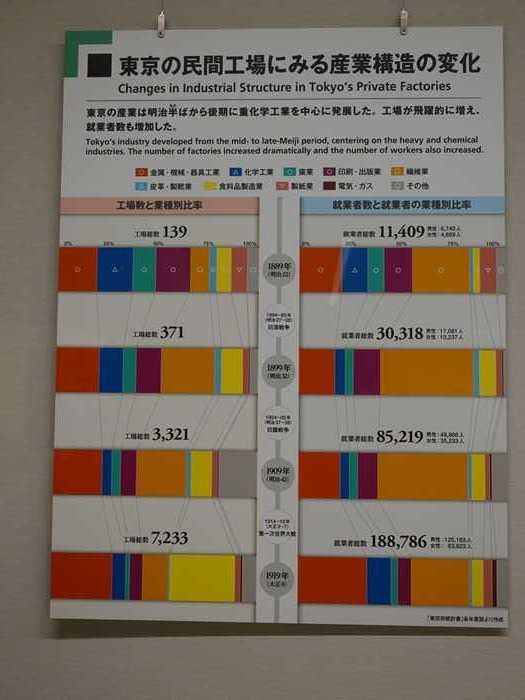
「 東京の民間工場にみる産業構造の変化
Changes in Industrial Structure in Tokyo's Private Factories
東京の産業は明治半ばから後期に重化学工業を中心に発展した。工場が飛躍的に増え、
就業者数も増加した。
就業者数も増加した。
Tokyo's industry developed from the mid- to late-Meiji period, centering on the heavy and chemical industries. The number of factories increased dramatically and the number of
workers also increased.
workers also increased.
凡例(業種)
・金属・機械・器具工業
・化学工業
・窯業
・印刷・出版業
・繊維業
・皮革・製靴業
・食料品製造業
・製紙業
・電気・ガス
・その他
工場数と業種別比率
・1889年(明治22)
工場総数:139
・1899年(明治32)
工場総数:371
・1909年(明治42)
工場総数:3,321
・1919年(大正8)
工場総数:7,233
就業者数と就業者の業種別比率
・1889年(明治22)
就業者総数:11,409人
・男性:6,740人
・女性:4,669人
・1899年(明治32)
就業者総数:30,318人
・男性:17,081人
・女性:13,237人
・1909年(明治42)
就業者総数:85,219人
・男性:49,986人
・女性:35,233人
1919年(大正8)
就業者総数:188,786人
・男性:125,163人
・女性:63,623人
年表(中央)
・1889年(明治22)
・1894~95年(明治27~28) 日清戦争
・1899年(明治32)
・1904~05年(明治37~38) 日露戦争
・1909年(明治42)
・1914~18年(大正3~7) 第一次世界大戦
・1919年(大正8) 」
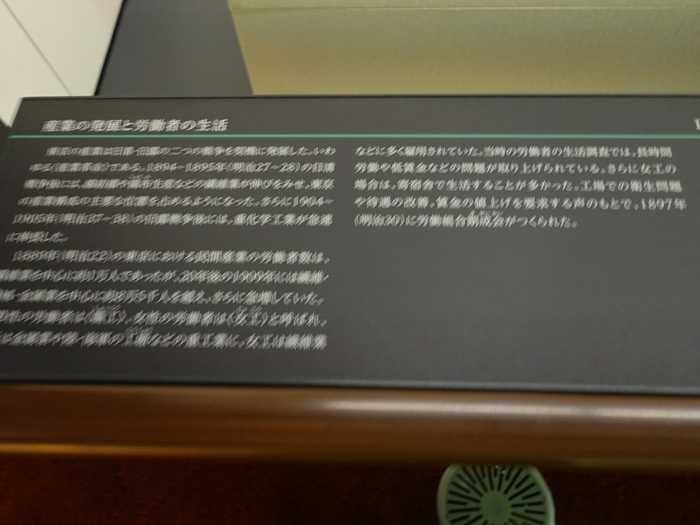
「 産業の発展と労働者の生活
東京の産業は日清・日露戦争の二つの戦争を契機に発展した。いわゆる「産業革命」である。
1894~1895年(明治27~28)の日清戦争後には、綿紡績や織布生産などの繊維業をが伸びをみせ
中心とした軽工業が伸びをみせ、東京・・・・の主要な位置を占めるようになった。
1889年(明治22)の東京における民間産業の労働者数は・・を中心に約1万人であったが、20年後の
1909年には繊維業・金属業を中心に約8万5千人を超え、さらに急増していた。
男性の労働者数は〈職工〉、女性の労働者数は〈女工〉と呼ばれ、・・は金属業や陸・海軍の
工廠などの重工業に、女工は繊維業などに多く雇用されていた。当時の労働者の生活調査では、
長時間労働や低賃金などの問題が取り上げられている。さらに女工の場合は、寄宿舎で生活する
ことが多かった。工場での衛生問題や待遇の改善、賃金の値上げを要求する声のもとで、
1897年(明治30)に労働組合期成会がつくられた。」
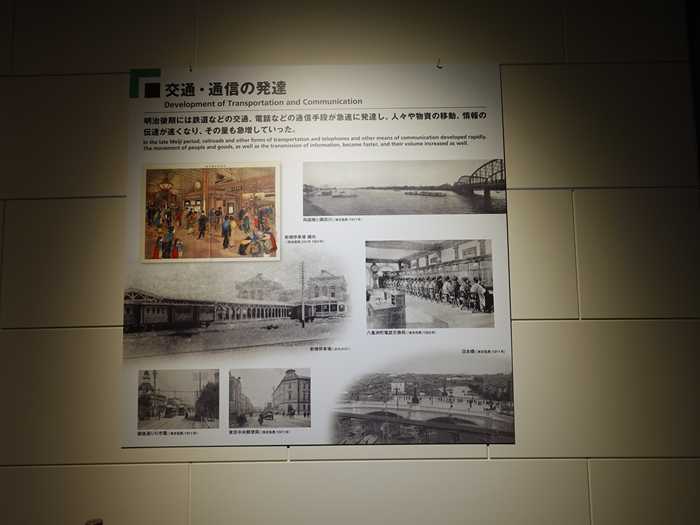
「 交通・通信の発達
Development of Transportation and Communication
明治後期には鉄道などの交通、電話などの通信手段が急速に発達し、人や物資の移動、
情報の伝達が速くなり、その量も急増していった。
In the late Meiji period, railroads and other forms of transportation and telephones and情報の伝達が速くなり、その量も急増していった。
other means of communication developed rapidly. The movement of people and goods,
as well as the transmission of information, became faster, and their volume increased
as well.」
写真・図版の説明
① 新橋停車場構内
(『風俗画報』241号 1901年)
② 両国橋と隅田川
(東京風景 1911年)
③ 八重洲川電話交換局
(東京百景 1902年)
④ 新橋停車場(しんばしていしゃじょう)
⑤ 銀座通りの市電
(東京風景 1911年)
⑥ 東京中央郵便局
(東京風景 1911年)
⑦ 日本橋
(東京風景 1911年)
「 石版印刷機」。
石版印刷は、水と油が混ざらない性質を利用した印刷技術。
従来の木版や銅版のように版へ深く彫刻する必要がなく、平らな版面に描いた絵や文字を
印刷できます。
印刷できます。
日本には幕末に欧米から導入され、明治前期には国産の印刷機も製造されるようになりました。
この技術により、教科書・地図・ポスター・錦絵・雑誌などが大量に印刷され、明治時代の
情報伝達や出版文化の発展に大きく貢献しました。
情報伝達や出版文化の発展に大きく貢献しました。
現在広く使われているオフセット印刷は、この石版印刷の原理を発展させたもので、
現代印刷技術の礎となっています。
現代印刷技術の礎となっています。
「 石版印刷機
Lithographic Printing Press
昭和初期
東京小西六本店/製造
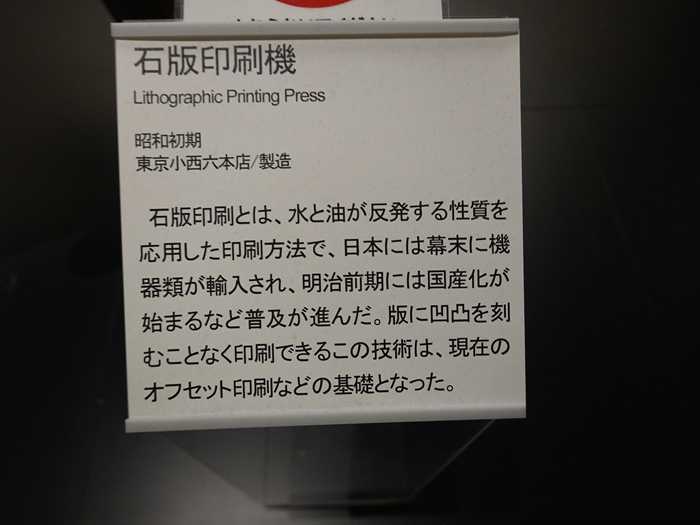
石版印刷とは、水と油が反発する性質を応用した印刷方法で、日本には幕末に機器類が輸入され、
明治前期には国産化が始まるなど普及が進んだ。版に凹凸を刻むことなく印刷できるこの技術は、
現在のオフセット印刷などの基礎となった。」
明治前期には国産化が始まるなど普及が進んだ。版に凹凸を刻むことなく印刷できるこの技術は、
現在のオフセット印刷などの基礎となった。」
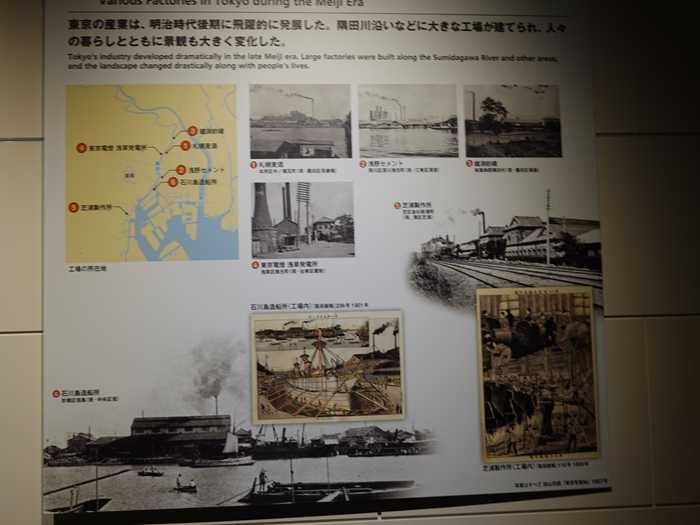
「 明治時代の東京の工場
Various Factories in Tokyo during the Meiji Era
東京の産業は、明治時代後期に飛躍的に発展した。隅田川沿いなどに大きな工場が建てられ、
人々の暮らしとともに景観も大きく変化した。
人々の暮らしとともに景観も大きく変化した。
Tokyo's industry developed dramatically in the late Meiji era. Large factories were built
along the Sumidagawa River and other areas, and the landscape changed drastically
along with people's lives.
along the Sumidagawa River and other areas, and the landscape changed drastically
along with people's lives.
工場の所在地
・札幌麦酒
・浅野セメント
・鐘淵紡績
・東京電燈 浅草発電所
・芝浦製作所
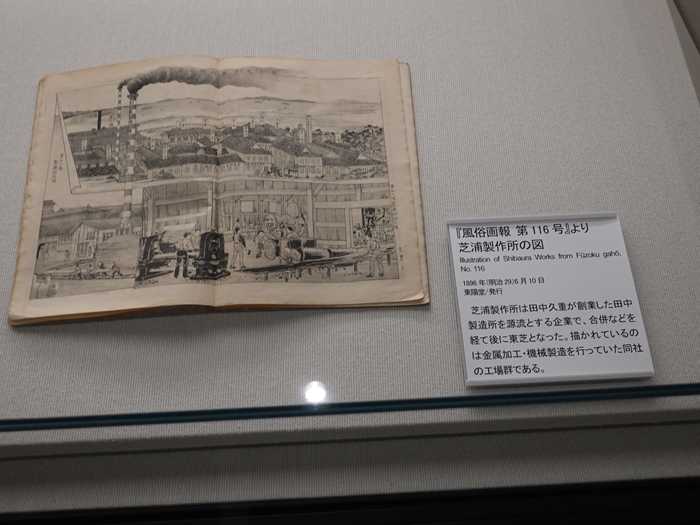
・石川島造船所」 「 『風俗画報 第116号』より
芝浦製作所の図
Illustration of Shibaura Works from Fūzoku gahō, No.116
1896年(明治29)6月10日
東陽堂/発行
芝浦製作所は田中久重が創業した田中製造所を源流とする企業で、合併などを経て後に東芝となった。描かれているのは金属加工・機械製造を行っていた同社の工場群である。」
この展示は、明治29年(1896)の雑誌『風俗画報』に掲載された芝浦製作所の挿絵。
田中久重(1799~1881)は「東洋のエジソン」とも呼ばれる発明家で、からくり人形や
万年時計などを製作した。
万年時計などを製作した。
1875年に創業した田中製造所が芝浦製作所の起源となり、その後、東京電気との合併を経て
東京芝浦電気(東芝)となります。
東京芝浦電気(東芝)となります。
挿絵には、高い煙突から煙を上げる工場群や機械を組み立てる工場内部が描かれており、
当時の日本の機械工業が急速に近代化していた様子が伝わる。
当時の日本の機械工業が急速に近代化していた様子が伝わる。
工場の正門付近には人力車や荷車、人々が行き交う様子も描かれ、芝浦製作所が当時の東京を
代表する近代工場であったことがうかがえる。
代表する近代工場であったことがうかがえる。
この一枚は、明治日本が手工業から機械工業へと発展していく時代の息吹を、工場の全景と
作業風景の両方から伝える貴重な資料である。
作業風景の両方から伝える貴重な資料である。
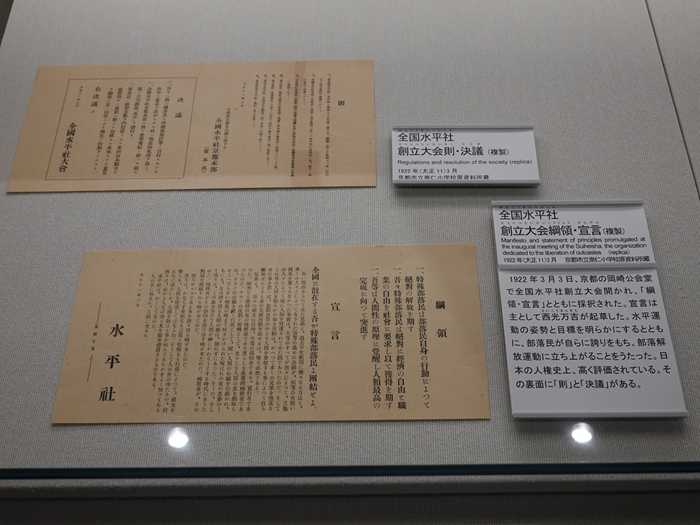
上段資料
「全国水平社 創立大会則・決議(複製)
Regulations and resolution of the society (replica)
1922年(大正11)3月
京都市立崇仁小学校原資料所蔵」
下段資料
「 全国水平社 創立大会綱領・宣言(複製)
Manifesto and statement of principles promulgated at the inaugural meeting of
the Suiheisha, the organization dedicated to the liberation of outcastes (replica)
the Suiheisha, the organization dedicated to the liberation of outcastes (replica)
1922年(大正11)3月
京都市立崇仁小学校原資料所蔵
1922年3月3日、京都の岡崎公会堂で全国水平社創立大会が開かれ、「綱領・宣言」とともに
採択された。宣言は主として西光万吉が起草した。水平運動の姿勢と目標を明らかにすると
ともに、部落民が自らに誇りをもち、部落解放運動に立ち上がることをうたった。
日本の人権史上、高く評価されている。その裏面に「則」と「決議」がある。」
採択された。宣言は主として西光万吉が起草した。水平運動の姿勢と目標を明らかにすると
ともに、部落民が自らに誇りをもち、部落解放運動に立ち上がることをうたった。
日本の人権史上、高く評価されている。その裏面に「則」と「決議」がある。」
この展示は、 日本の人権運動史における重要な資料
。
全国水平社は1922年(大正11)3月3日に京都で結成された、 日本初の全国的な被差別部落解放
運動の団体 。
運動の団体 。
「人の世に熱あれ、人間に光あれ」で知られる水平社宣言は、日本の人権宣言の先駆けとも
評価されている。
評価されている。
起草の中心となった西光万吉は、自らの力で差別をなくし、人間の尊厳を回復しようと
呼びかけた。展示されている資料は、創立大会で採択された綱領・宣言と、その裏面に記された
規則・決議の複製である。
呼びかけた。展示されている資料は、創立大会で採択された綱領・宣言と、その裏面に記された
規則・決議の複製である。
近代産業や都市化を紹介する展示の中で、この資料は、経済発展の一方で残されていた差別の
問題に立ち向かった人々の歩みを伝える、非常に重要な展示となっている。
問題に立ち向かった人々の歩みを伝える、非常に重要な展示となっている。
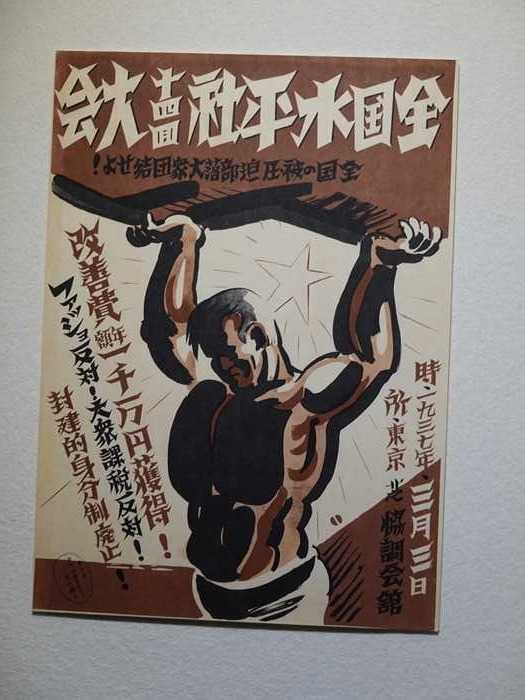
「全国水平社十四囬大会
全国の被圧迫部落大衆団結せよ!
改善費年額一千万円獲得!
ファッショ反対!大衆課税反対!
封建的身分制度廃止!
時 ・一九三七年 三月三日
所 ・東京芝協調会館」
1937年(昭和12年)に開催された全国水平社第14回大会の宣伝ポスター。
内容から読み取れる当時の主張は、
・部落差別・暴力・圧迫に反対すること
・「改善費一千万円」の獲得要求
・封建的身分制度の廃止
・差別行政に対する抗議
などで、 中央の人物が大きな梁(あるいは障害物)を頭上に掲げる力強い姿は、差別や圧迫を
打ち破ろうとする決意を象徴的に表現 している。
打ち破ろうとする決意を象徴的に表現 している。
「 部落解放運動のあゆみ
部落解放運動とは、被差別部落の住民に対する差別をなくし、基本的人権の確立を通して、
人間としての解放を求める運動である。差別のない社会を実現するためには、部落民自らが
立ち上がらなければならないとして、1922年(大正11)、京都の岡崎公会堂で全国水平社の
創立大会が開催された。
人間としての解放を求める運動である。差別のない社会を実現するためには、部落民自らが
立ち上がらなければならないとして、1922年(大正11)、京都の岡崎公会堂で全国水平社の
創立大会が開催された。
「人の世に熱あれ、人間に光あれ」という熱烈な呼びかけによる創立宣言は、日本国で最初の
人権宣言というべきものであった。
人権宣言というべきものであった。
以後、全国に広がった運動は、東京でも活発に繰り広げられ、東京水平社が結成された。
部落解放を求める人々の熱い思いは、戦後、部落解放委員会、さらに部落解放同盟へと
受け継がれていった。
部落解放を求める人々の熱い思いは、戦後、部落解放委員会、さらに部落解放同盟へと
受け継がれていった。
1965年(昭和40)、内閣総理大臣の諮問機関である「同和対策審議会」の答申は、同和問題の
解決を国の責務であるとともに国民的課題として位置づけ、その基本方針を示した。
解決を国の責務であるとともに国民的課題として位置づけ、その基本方針を示した。
政府、自治体、部落解放同盟をはじめ全国部落解放運動連合会、全日本同和会などの運動団体に
より、差別解消への努力は現在もなお続けられている。」
より、差別解消への努力は現在もなお続けられている。」
・・・もどる・・・
・・・つづく・・・
お気に入りの記事を「いいね!」で応援しよう

[JINさんの農園] カテゴリの最新記事
-
江戸東京博物館へ(その38) 2026.09.07
-
江戸東京博物館へ(その37) 2026.09.06
-
江戸東京博物館へ(その35) 2026.09.04


【毎日開催】
15記事にいいね!で1ポイント


© Rakuten Group, Inc.
