


PR

jinsan0716
『JINさんの陽蜂農遠日記』にアクセスありがとう ございます。 このブログは、 陽:太陽光発電、 蜂:趣味の養蜂、 農:菜園、花、スロー&アクティブシニアライフ、 遠:旅行、 を中心とした備忘録を兼ねた18年間にわたる毎日のブログ(雑記帳)です。 書き込んでいただける方は、写真下の『コメントを書く』から 気楽に、ご感想、ご意見ご質問等を書き込んでいただきたく。
Keyword Search
▼キーワード検索
御所見地区の寺社史…
New!
オジン0523さん
8月上旬の岡山大学構… New!
隠居人はせじぃさん
New!
隠居人はせじぃさん
【 グロリオーサ ・…
New!
Gママさん
エコハウスにようこそ ecologicianさん
noahnoah研究所 noahnoahnoahさん
8月上旬の岡山大学構…
New!
隠居人はせじぃさん【 グロリオーサ ・…
New!
Gママさんエコハウスにようこそ ecologicianさん
noahnoah研究所 noahnoahnoahさん
Comments
Calendar
2026.08.01


カテゴリ: JINさんの農園
この写真は、富士屋ホテル・ホテルミュージアム「建築(ARCHITECTURE)」コーナーの
展示の一部で、創業当時から明治時代にかけての富士屋ホテルの建物の変遷を紹介していた。
「 ARCHITECTURE
展示の一部で、創業当時から明治時代にかけての富士屋ホテルの建物の変遷を紹介していた。
建築
富士屋ホテル最大の魅力
個性豊かな建築群
富士屋ホテルで生まれる様々な物語の舞台は、時代時代のニーズに応える個性豊かな建築群です。
この舞台を守り続けるため、私たちは営繕部の仲間とともに様々な工夫を重ねてきました。
滞在するひとときが、日常の喧騒から離れ、箱根の自然と動植物の息吹を感じる特別な時間と
なるよう、いつの時代もこの姿でお客様をお迎えし、皆様の思い出に新たな1ページを
刻んでいきます。
なるよう、いつの時代もこの姿でお客様をお迎えし、皆様の思い出に新たな1ページを
刻んでいきます。
Fujiya Hotel's main attraction—buildings of rich character
Fujiya Hotel's buildings, each of which expresses great individuality in meeting
the needs of the times, are the setting of numerous Fujiya Hotel stories.
the needs of the times, are the setting of numerous Fujiya Hotel stories.
Together with colleagues at the Buildings and Facilities Maintenance Section,
we have devised numerous ways to continually preserve them.
we have devised numerous ways to continually preserve them.
We aim to welcome guests with these same buildings throughout the ages and
they create lasting memories at Fujiya Hotel. We hope their stays here are
special ones, during which they can escape the hustle and bustle of daily life and
feel the breath of Hakone's natural beauty, flora, and fauna.」
they create lasting memories at Fujiya Hotel. We hope their stays here are
special ones, during which they can escape the hustle and bustle of daily life and
feel the breath of Hakone's natural beauty, flora, and fauna.」
この展示は、富士屋ホテル最大の魅力は「時代ごとの要望に応えながら守り続けられてきた
個性豊かな建築群」であることを紹介していた。
個性豊かな建築群」であることを紹介していた。
営繕部(建物の維持管理を担当する部署)が長年にわたり工夫と修繕を重ねることで、
創業当時から受け継がれてきた建物を保存し続けています。そして、訪れる人々が箱根の
豊かな自然とともに特別な時間を過ごし、新しい思い出を刻めるよう、その歴史ある建築を
未来へ伝えていくという思いが込められていたのだ。
創業当時から受け継がれてきた建物を保存し続けています。そして、訪れる人々が箱根の
豊かな自然とともに特別な時間を過ごし、新しい思い出を刻めるよう、その歴史ある建築を
未来へ伝えていくという思いが込められていたのだ。
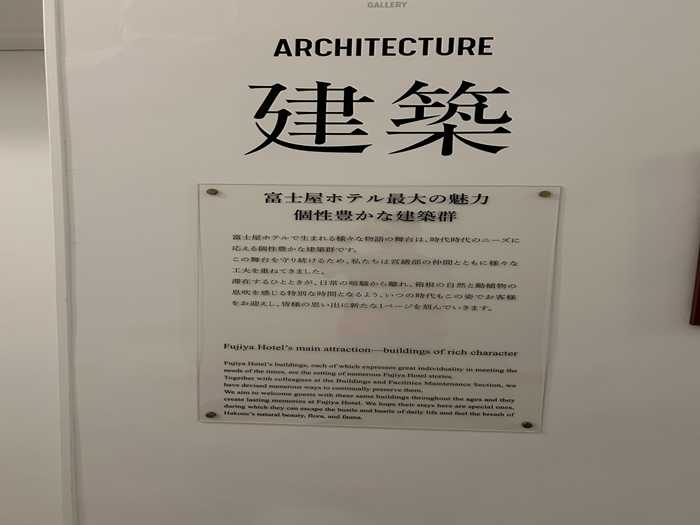
富士屋ホテル・ホテルミュージアム「建築(ARCHITECTURE)」コーナーの展示の一部で、
創業当時から明治時代にかけての富士屋ホテルの建物の変遷を紹介。
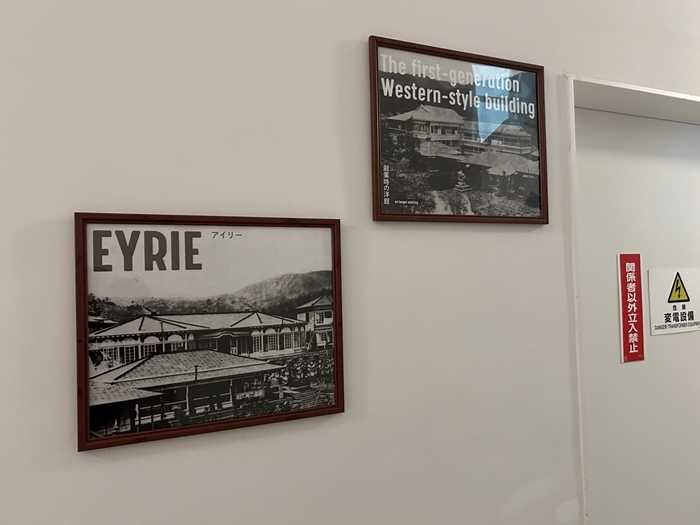
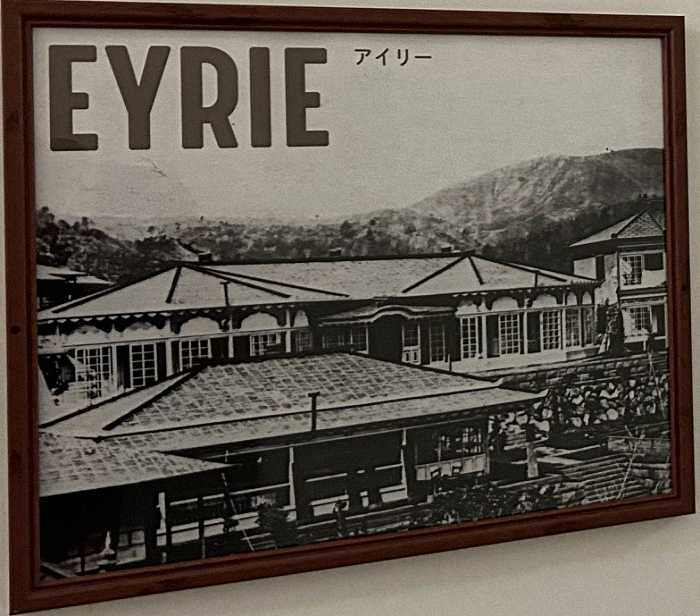
左:「 アイリー EYRIE 」
"Eyrie(アイリー)"とは英語でワシやタカなど猛禽類の巣高い場所の住まい
という意味があります。
この建物は富士屋ホテルにかつて存在した宿泊棟の名称で、
・明治時代に増築された客室棟
・明治時代に増築された客室棟
・箱根の山並みを見渡せる高台に建てられていたため
・「Eyrie(高みにある住まい)」という名前が付けられました。
写真を見ると、
・大きなガラス窓
・ベランダ
・木造平屋・二階建てを組み合わせた開放的な造り
で、当時としては非常にモダンなホテルだったことが分かります。
アイリーは、宮ノ下大火の後、最初に建てられた建物であり、現在の富士屋ホテル建築群の
記念すべきはじめの一歩であるといえます 。
現存する我が国最初期のリゾートホテル建築としてもとても貴重です。
記念すべきはじめの一歩であるといえます 。
現存する我が国最初期のリゾートホテル建築としてもとても貴重です。
正面左右に突出部をつくり中央に唐破風を設けるという富土屋ホテル建築の大きな特徴は、
このアイリーの時点ですでに確立されていました。
このアイリーの時点ですでに確立されていました。
右上:
「 The first-generation Western-style building
創業時の洋館
no longer existing(現存せず)」これは1878年(明治11年)、山口仙之助が開業した当時の富士屋ホテル最初の洋館を写したもの。
木造二階建ての洋風建築
外国人旅行者を迎えるために建てられた日本でも珍しい本格的ホテル
宮ノ下大火などにより現存していません。
富士屋ホテルの原点ともいえる建物。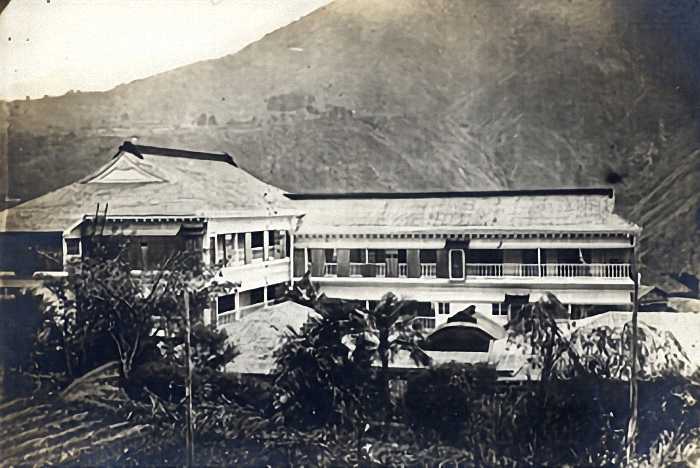
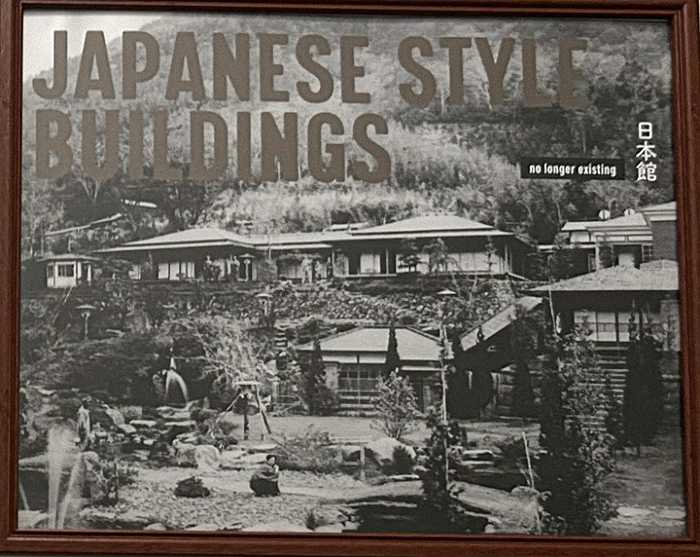
現在は現存しない建物群を紹介するパネル。
写真には、富士屋ホテルの発展の歴史を物語る2つの建物が紹介されていた。
・HERMITAGEは西洋風リゾートホテルとしての発展を象徴する建物。
・日本館は日本文化を体験できる和風宿泊施設として、外国人旅行者を魅了した建物。
いずれも現在は失われていますが、富士屋ホテルが西洋文化と日本文化を融合させた国際的な
リゾートホテルへ発展していった歴史を伝える貴重な記録です。
展示は、現存する建物だけでなく、時代とともに姿を消した建築にもホテルの歴史が
刻まれていることを来館者に伝えているのであった。
リゾートホテルへ発展していった歴史を伝える貴重な記録です。
展示は、現存する建物だけでなく、時代とともに姿を消した建築にもホテルの歴史が
刻まれていることを来館者に伝えているのであった。
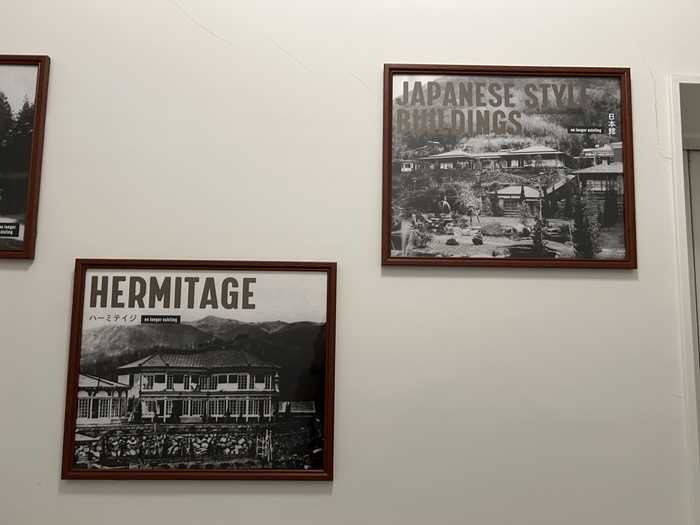
左:HERMITAGE
ハーミティジ
no longer existing(現存せず)
とあります。
「Hermitage」とは「Hermitage(ハーミテージ)」は英語で
・隠れ家
・静かな別荘
・隠棲の館 という意味。
富士屋ホテルでは、明治時代から大正時代にかけて建てられた洋館の宿泊棟の一つでした。
写真を見ると
・木造二階建て
・大きなガラス窓
・長いベランダ
・箱根の山並みを望む立地
となっており、避暑地ホテルらしい開放的な造りだったことが分かる。
現在は取り壊され、現存していません と
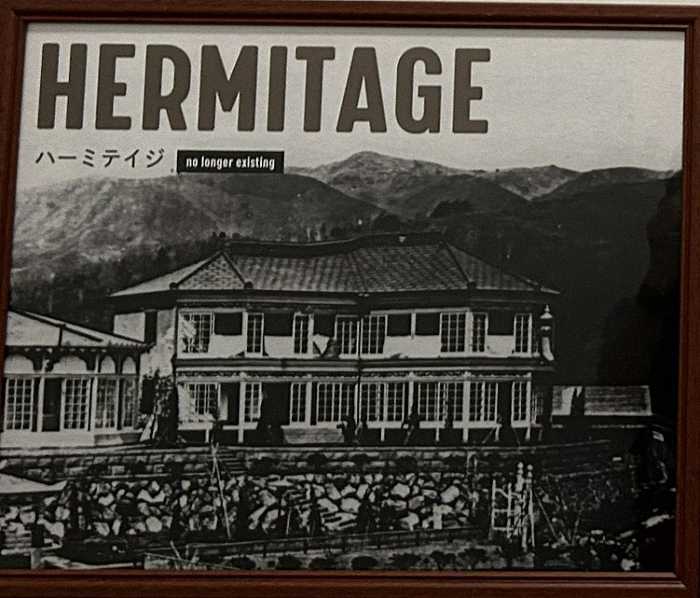
右上:JAPANESE STYLE BUILDINGS
no longer existing(現存せず)
こちらは外国人旅行者に「日本らしい宿泊体験」を提供するために造られた純和風の建物群。
写真を見ると
・平屋や二階建ての日本家屋
・庭園
・池
・飛び石
・松や植栽
など、日本旅館の趣を取り入れた造りになっている。
外国人が「日本建築に泊まってみたい」という希望に応えるための宿泊施設として人気を集めた。
こちらも現在は残っていません。
富士屋ホテルを代表する建築物の歴史を紹介。
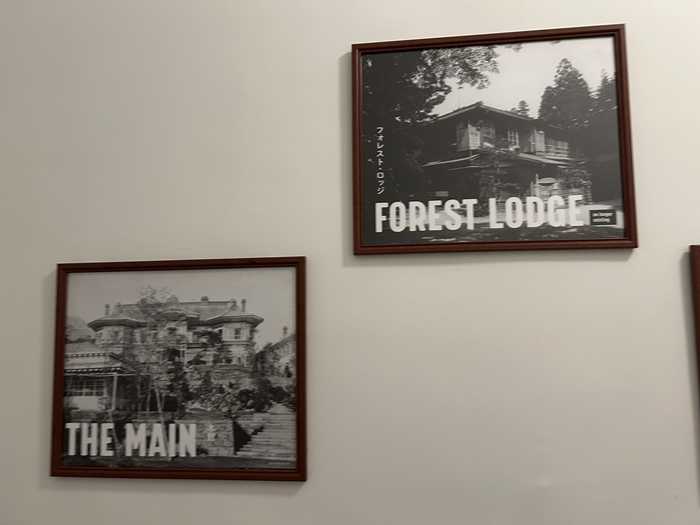
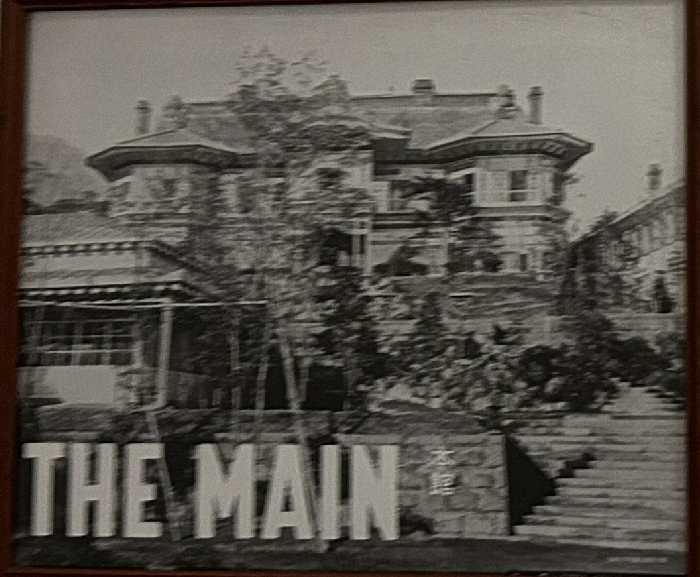
左:「THE MAIN(本館)」
この建物は現在も富士屋ホテルのシンボルとなっている本館です。
本館は
・1891年(明治24年)完成
・建築は 久留正道(くる まさみち) による設計
・和洋折衷建築の代表作
として知られています。
写真を見ると
・石積みの基壇
・左右対称の外観
・ベランダ
・洋館でありながら和風屋根を取り入れたデザイン
が確認できる。
現在の本館は国の登録有形文化財
であり、2020年の大規模保存修理を経て
創建当時の美しい姿を取り戻しました。
創建当時の美しい姿を取り戻しました。
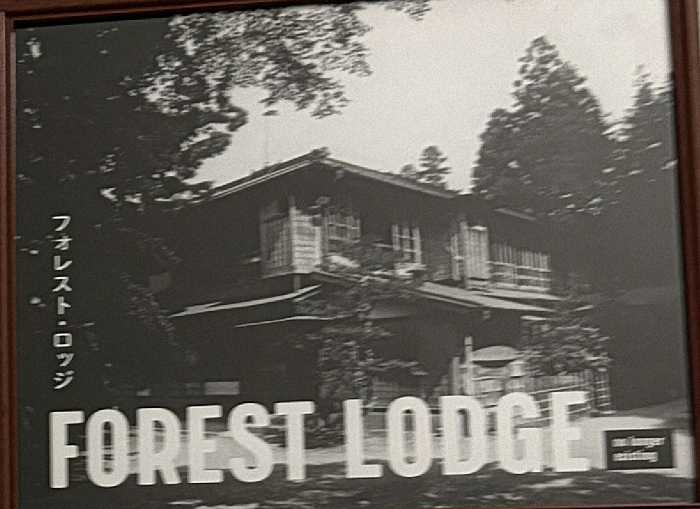
右上:「 FOREST LODGE(フォレスト・ロッジ)
」
現在のフォレスト・ウイングの前身となる宿泊棟。
展示写真は昭和初期の姿を写したものと思われます。
特徴は
・森林の中に建つ別荘風建築
・木造二階建て
・大きな窓
・山荘を思わせる落ち着いた外観
で、箱根の自然を楽しむ長期滞在客向けの客室として人気がありました。
「Forest Lodge」という名称どおり、森の中の山荘という雰囲気を大切にした建物。
この展示は、
富士屋ホテルが「洋風ホテル」でありながら、日本文化も大切にしてきたことを象徴しています。
・COMFY LODGE は洋館に日本建築の美しさを取り入れた宿泊棟。
・菊華荘 は本格的な日本建築と庭園文化を今に伝える建物。
つまり、富士屋ホテルは創業以来、西洋のホテル文化と日本の伝統建築を融合させた独自の
建築美を追求してきました。この二つの建物は、その象徴的な存在として展示されているのです。
建築美を追求してきました。この二つの建物は、その象徴的な存在として展示されているのです。
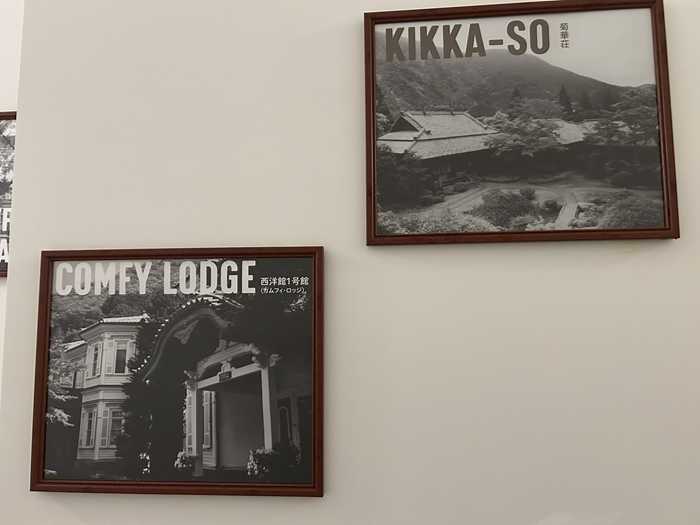
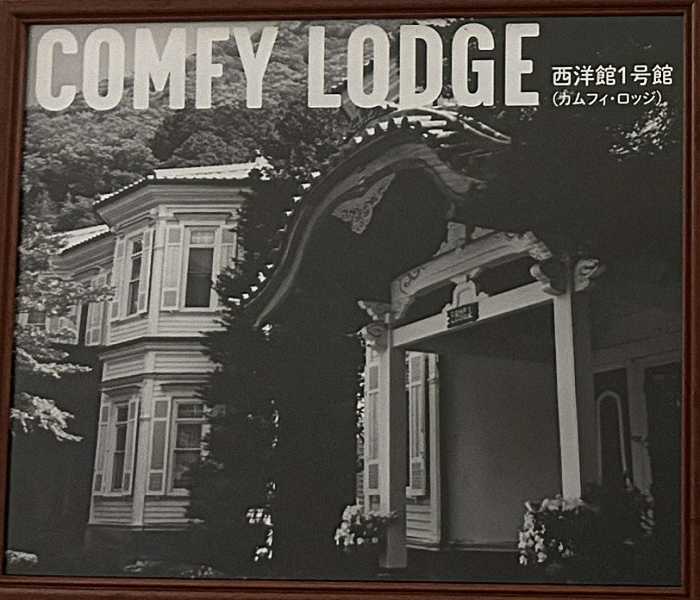
左: COMFY LODGE
西洋館1号館(カムフィ・ロッジ)
「 Comfy
」とは英語で 「快適な」、「居心地のよい」という意味
。
その名のとおり、宿泊客が自宅のようにくつろげることを目指した宿泊棟でした。
・白い下見板張りの外壁
・張り出した出窓
・唐破風(からはふ)の玄関屋根
・洋館に和風意匠を取り入れた入口
など、富士屋ホテルらしい和洋折衷建築であることがよく分かります。
この建物は現在も敷地内に残っており、現在は「菊華荘」へ向かうエリア付近に位置する
宿泊施設(コムフィロッジ・レストフルコテージ)へと受け継がれています。
宿泊施設(コムフィロッジ・レストフルコテージ)へと受け継がれています。
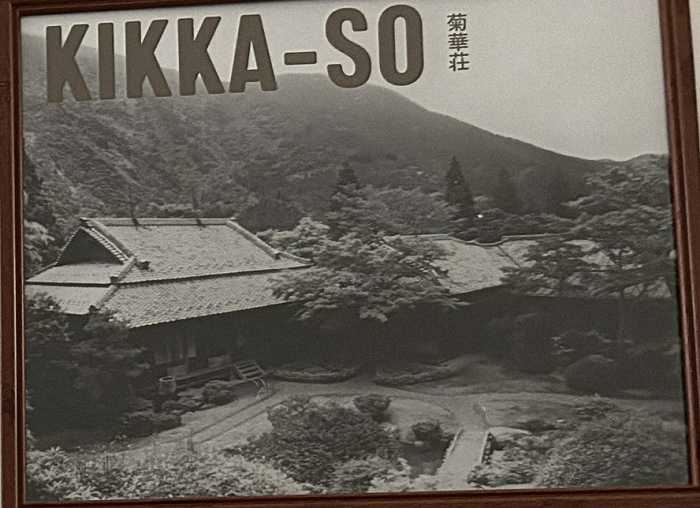
右上:KIKKA-SO
菊華荘
菊華荘とは、旧三井財閥・三井家の別邸として建てられた純和風建築です。
その後、富士屋ホテルが取得し、 現在は日本料理「菊華荘」
として利用されています。
ここでは、 ホテルの宿泊施設が時代とともに増築され、多様な滞在スタイルに対応してきた
歴史 を紹介していた。
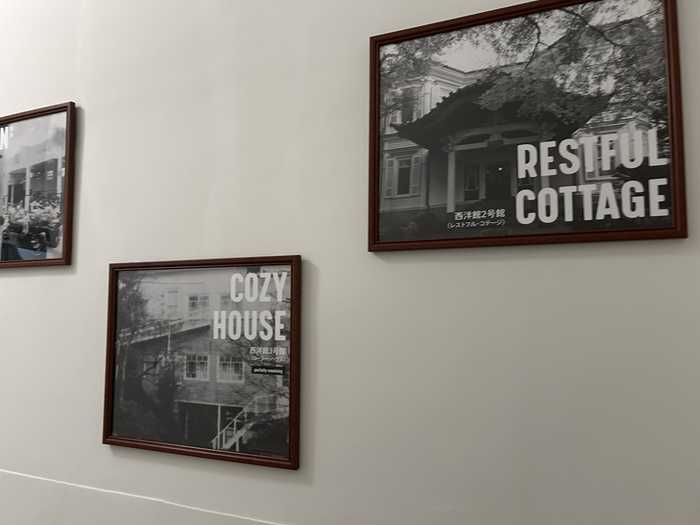
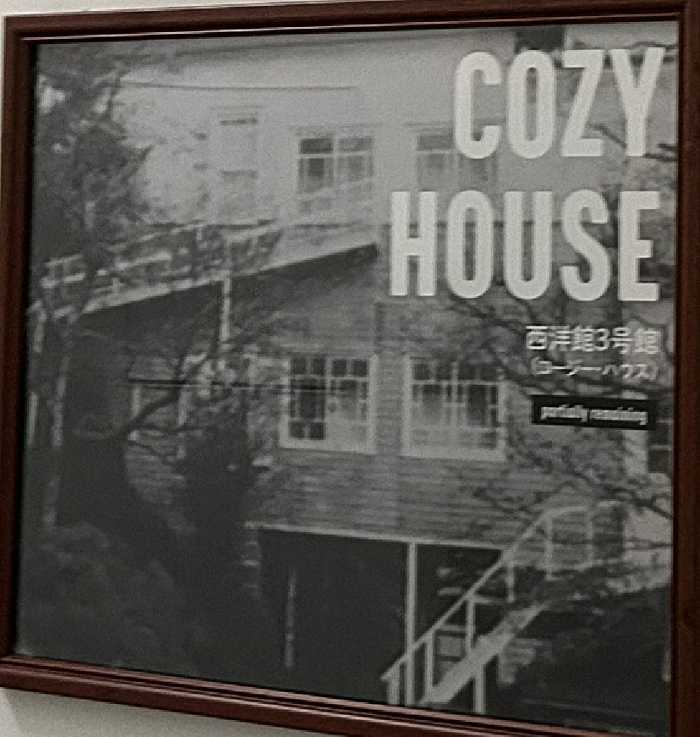
左:COZY HOUSE(コージー・ハウス)
パネルには COZY HOUSE西洋館3号館(コージーハウス) とあります。
さらに右下にはbuilding remainingとあり、この建物が現在も現存している建物であることを
示しています。
示しています。
「 Cozy
」とは英語の
・居心地がよい、
・居心地がよい、
・こぢんまりして暖かい
・家庭的な
という意味。
その名前どおり、家庭的で親しみやすい雰囲気を大切にした宿泊施設であったと。
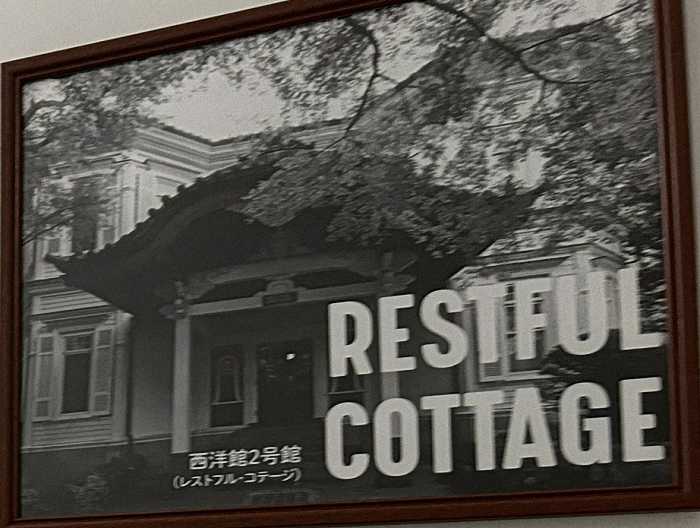
右:RESTFUL COTTAGE(レストフル・コテージ)
パネルには
RESTFUL COTTAGE
西洋館2号館(レストフル・コテージ)
と書かれています。
「 Restful
」とは
・安らぎのある
・安らぎのある
・静かな
・心休まる
という意味。
その名のとおり、静かな環境でゆったりと滞在できる宿泊棟として建てられました。
写真を見ると、
・富士屋ホテル伝統の白い下見板張り
・和風の唐破風(からはふ)の玄関
・洋館と日本建築を融合したデザイン
となっており、富士屋ホテルを代表する和洋折衷建築の一つです。
現在も宿泊棟として利用されており、クラシックホテルならではの趣を味わうことが
できるようだ。
できるようだ。
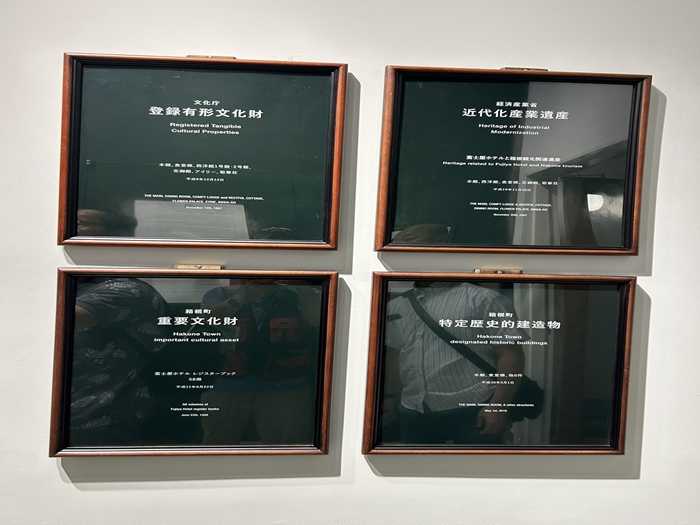
富士屋ホテル・ホテルミュージアムの締めくくりともいえる展示で、富士屋ホテルが長い
歴史の中で受けた数々の文化財・歴史的価値に関する認定を紹介していた。
(左上)
歴史の中で受けた数々の文化財・歴史的価値に関する認定を紹介していた。
(左上)
① 文化庁「登録有形文化財」
登録有形文化財
Registered Tangible Cultural Properties
登録日
平成9年(1997年)12月12日
登録対象
・本館
・食堂棟
・西洋館1号館・2号館
・花御殿
・アイリー(Eyrie)
・菊華荘
この制度は、歴史的・建築的価値を持つ建物を後世へ保存することを目的としています。
(右上)
② 経済産業省「近代化産業遺産」
近代化産業遺産
Heritage of Industrial Modernization
正式名称
富士屋ホテルと箱根観光関連遺産群
認定日
平成19年(2007年)11月30日
対象
・本館
・西洋館
・食堂棟
・花御殿
・菊華荘
これは富士屋ホテルだけではなく、
「日本の近代観光の発展を支えた歴史遺産」
として評価されたものです。
富士屋ホテルは、日本のリゾート観光や国際観光の発展に大きく貢献したホテルとして
認められています。
認められています。
(左下)
③ 箱根町「重要文化財」
箱根町重要文化財
指定物件
富士屋ホテル レジスターブック(宿帳)58冊
指定日
平成11年(1999年)6月22日
宿帳には、
・外国人旅行者
・皇族
・政治家
・文豪
・芸術家
など、宿泊した著名人の記録が残されています。
建物だけではなく、ホテルの歴史を伝える資料そのものにも高い文化的価値が認められています。
(右下)
(右下)
④ 箱根町「特定歴史的建造物」
特定歴史的建造物
指定日
平成30年(2018年)5月1日
対象
・本館
・食堂棟
・その他6棟
地域の歴史を代表する建築として保存・活用していくための制度です。
この四枚の認定証は、
富士屋ホテルが単なる老舗ホテルではなく、
・建築遺産
・観光遺産
・歴史資料
・地域文化財
という四つの異なる視点から高く評価されていることを示しているのだ。
つまり富士屋ホテルは、
「 泊まる文化財
」
とも呼べる存在であり、建物や資料、そしてホテルそのものが日本の近代化や観光史を語る貴
重な遺産となっているのであった。
重な遺産となっているのであった。
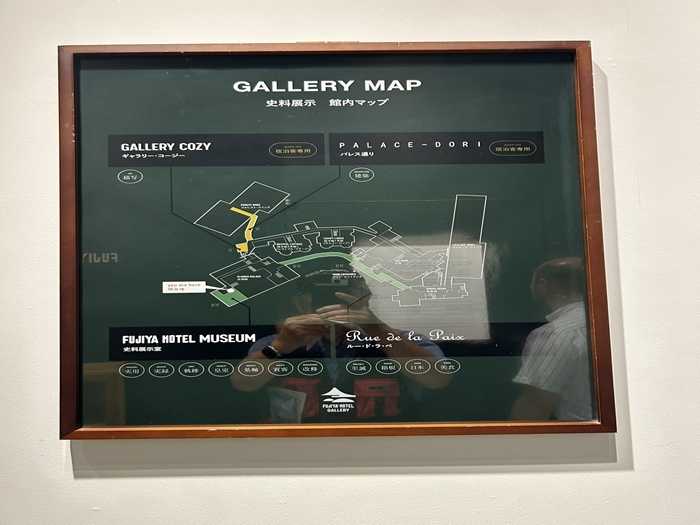
「 GALLERY MAP
資料展示 館内マップ
① GALLERY COZY(ギャラリー・コージー)
左側に表示されています。
このエリアでは主に
・ホテルの歴史
・創業者
・建築
・サービス
・花御殿
・歴代経営者
などを紹介する展示があった。
※「宿泊客専用」と表示されているため、この一帯はホテル宿泊者のみが自由に利用できるエリアでもあるようだ。」
② PALACE-DORI(パレス通り)
右側にある通路です。
こちらも
・宿泊客専用 となっていた。
花御殿(Flower Palace)を中心とした建物へ続く回廊になっていた。
中央の館内図
地図には現在の富士屋ホテルの主要施設が描かれていた。
主な建物は
・FLOWER PALACE(花御殿)
・THE MAIN(本館)
・DINING ROOM(食堂棟)
・COMFY LODGE
・RESTFUL COTTAGE
・FOREST WING
・CASCADE WING
など。
また
You are here(現在地)の表示があり、
現在見学している場所が、花御殿地下(B1階)付近のホテルミュージアム入口
であることが分かつのであった。
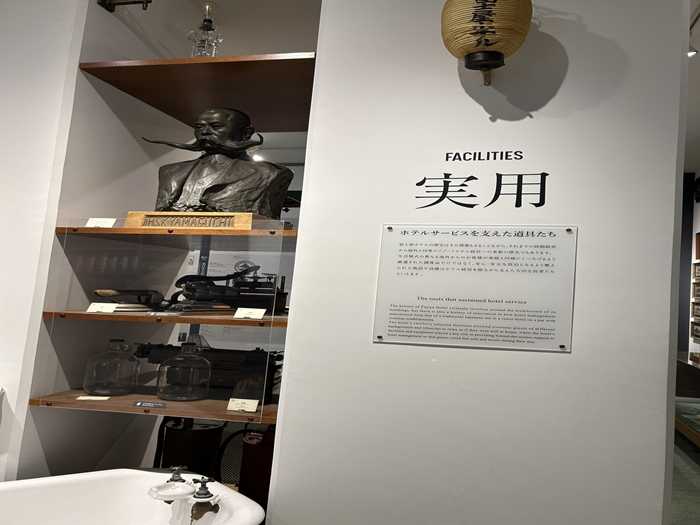
富士屋ホテル・ ホテルミュージアムの「実用(FACILITIES)」コーナーの入口 。
「 FACILITIES
実用
ホテルサービスを支えた道具たち
富士屋ホテルの歴史そのものはもちろんですが、それぞれの旅館経営から海外と同等の
リゾートホテル経営への革新の歴史でもあります。
リゾートホテル経営への革新の歴史でもあります。
生活様式の異なる海外からのお客様が家庭と同様にくつろげるよう、従来は見えない
施設設備だけではなく、安全で安全な宿泊となるよう整えられた施設や設備はホテル経営を
陰ながら支えた大切な役者ともいえます。
施設設備だけではなく、安全で安全な宿泊となるよう整えられた施設や設備はホテル経営を
陰ながら支えた大切な役者ともいえます。
The tools that sustained hotel service
The history of Fujiya Hotel certainly revolves around the architecture of its buildings,
but there is also a history of innovation in how hotel management transitioned from
that of a traditional Japanese inn to a resort hotel on a par with overseas establishments.
but there is also a history of innovation in how hotel management transitioned from
that of a traditional Japanese inn to a resort hotel on a par with overseas establishments.
The hotel's carefully selected furniture allowed overseas guests of different backgrounds
and lifestyles to relax as if they were still at home, while the hotel's facilities and
equipment played a key role in providing behind-the-scenes support to hotel
management so that guests could feel safe and secure during their stay.」
and lifestyles to relax as if they were still at home, while the hotel's facilities and
equipment played a key role in providing behind-the-scenes support to hotel
management so that guests could feel safe and secure during their stay.」
展示されていた史料
①不明
②山口仙之助の胸像
①不明
②山口仙之助の胸像
棚の中央に置かれているのは、富士屋ホテル創業者・山口仙之助の胸像です。
立派な口ひげが印象的で、これまでご覧になった展示にもたびたび登場した人物です。
仙之助は1878年(明治11年)、宮ノ下に日本初期の本格的な西洋式リゾートホテルである
富士屋ホテル を開業し、日本のホテル文化の礎を築きました。
富士屋ホテル を開業し、日本のホテル文化の礎を築きました。
③ 昔の事務機器
胸像の下には、
・ホッチキスのような器具
・活字印刷や事務処理に使われた機械
・金属製の事務用品
などが展示されていた。
ホテルの予約管理や帳簿、伝票作成などに使われた実用品であろう。
④ ガラス瓶
下段には大きなガラス瓶が並んでいます。
これらは
・消毒液
・薬品
・洗剤
・保存液
などを保管するための容器として使用されていたものであろう。
当時のホテルでは、衛生管理も重要な仕事。
⑤洗面台
少し写っている白い陶器は、昔の洗面台。
蛇口が二つ付いており、
・温水
・冷水
を別々に調節する、昔ながらのホテル設備を見ることができた。
⑥提灯
右上には
「富士屋ホテル」
と書かれた提灯が展示されていた。
ホテルで祭事や行事、案内などに使われたもので、和の伝統を感じさせる資料。
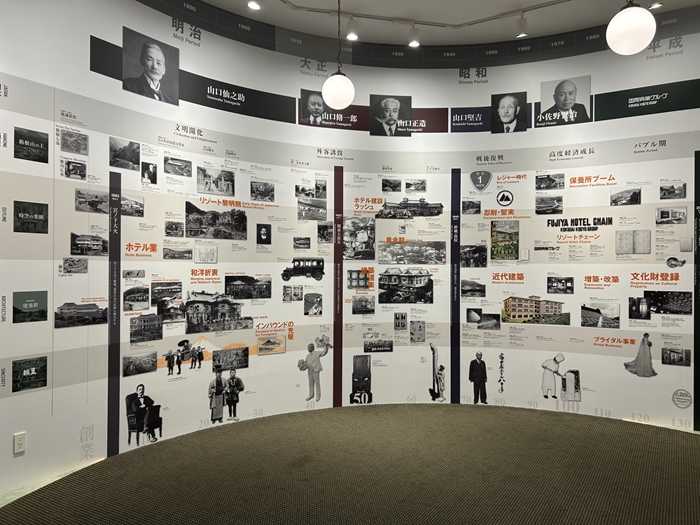
そして 「ホテルミュージアム」の総合年表展示 。
ホテル創業から現在まで約150年にわたる歴史を、歴代経営者と時代背景を交えながら
一望できる、ミュージアムの中心的な展示。
展示の構成
壁面は半円形になっており、上部には日本の時代区分が並んでいた。
・明治
・大正
・昭和
・平成
・令和
その下には、各時代に富士屋ホテルを支えた歴代の経営者や支配人の肖像写真が配置されていた。
読み取れる主な人物は、
・山口仙之助(創業者)
・山口正造
・山口正造(H.S.K. Yamaguchi)
・山口恒太郎
・小佐野賢治
など。
それぞれの時代にホテルを発展させた人物の功績が紹介されていた。
年表の内容
年表には、ホテルの歴史だけでなく、日本の近代化や観光の発展と重ね合わせながら、
多彩なテーマが紹介されていた。
多彩なテーマが紹介されていた。
主な内容は次のとおり。
・文明開化(西洋文化の導入)
・ホテル業(外国人向けホテルとしての発展)
・リゾート観光開発
・和洋折衷建築
・外国人外交
・ホテル建築ラッシュ
・戦後復興
・FUJIYA HOTEL CHAIN(富士屋ホテルチェーン)
・保養所ブーム
・近代建築
・増築・改修
・文化財登録
・耐震化・改修工事
富士屋ホテルの歩み
この年表から読み取れるホテルの歴史を簡単にまとめると、
・1878年(明治11年)
山口仙之助が宮ノ下に富士屋ホテルを創業。
・明治~大正
外国人旅行者の増加に合わせ、西洋館や本館などを次々に建設し、日本を代表する
クラシックホテルへ成長。
クラシックホテルへ成長。
・昭和初期
花御殿の完成やサービスの近代化により、国内外の著名人が訪れるホテルとなる。
・戦後
占領軍による接収を経て営業を再開し、日本の観光復興を支える存在となる。
・高度経済成長期
フォレスト・ウイングなどを新設し、ホテルチェーン事業も展開。
・平成以降
建物の保存と耐震改修を進めながら、登録有形文化財や近代化産業遺産に認定される。
・令和
歴史ある建物を守りつつ、現代の快適性を備えたクラシックホテルとして営業を続けているのだ。
富士屋ホテルだけの歴史を語るのではなく、日本の近代化や箱根観光の発展と重ね合わせて
紹介しているのであった。
富士屋ホテルだけの歴史を語るのではなく、日本の近代化や箱根観光の発展と重ね合わせて
紹介しているのであった。
創業者・山口仙之助から現代まで受け継がれてきた「おもてなし」の精神や建築へのこだわり、
そして時代ごとの挑戦が一枚の壁面に凝縮されていた。
そして時代ごとの挑戦が一枚の壁面に凝縮されていた。
ホテルミュージアムを一通り見学した後にこの展示を見ると、それまで個別に紹介されていた
「創業」「建築」「サービス」「文化財」「防災」などが一本の歴史としてつながり、
富士屋ホテル約150年の歩みを総括する展示なのであった。
「創業」「建築」「サービス」「文化財」「防災」などが一本の歴史としてつながり、
富士屋ホテル約150年の歩みを総括する展示なのであった。
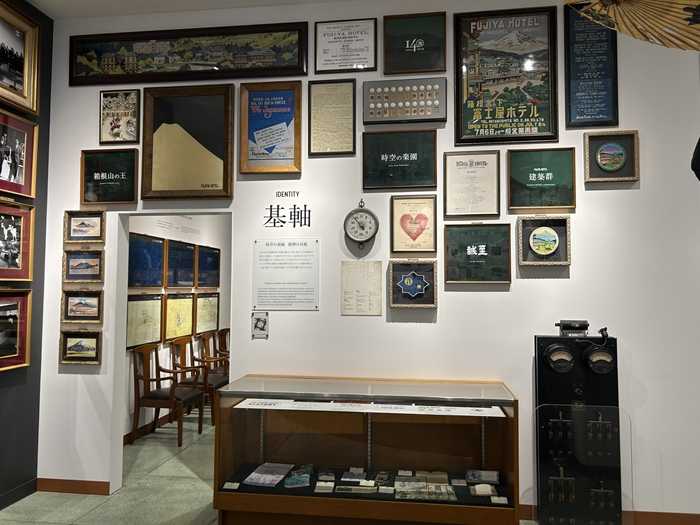
展示テーマ「基軸(IDENTITY)
「時空の楽園 精神の具現」
富士屋ホテルが単なる宿泊施設ではなく、
・「時代を超えて愛される空間」
・「おもてなしの精神を形にしたホテル」
であることを表現している。
壁一面に並ぶ歴史資料
壁面には富士屋ホテルを象徴する数多くの資料が飾られていた。
■ 創業当時のポスター
右上には
「 FUJIYA HOTEL MIYANOSHITA HAKONE
」
と書かれた大正から昭和初期頃の美しい観光ポスターがあった。
外国人旅行者向けに制作されたもので、当時の国際リゾートホテルとしての雰囲気が
伝わるのであった。
伝わるのであった。
■ 広告・パンフレット
左側には
・富士屋ホテルのパンフレット
・海外向け広告
・英文冊子
・宿泊案内
などが展示され、海外からの宿泊客を積極的に迎えていた歴史を物語っていた。
■ 「140 since 1878」
中央上部には
140 since 1878
というロゴが掲げられていまた。
これは2018年に創業140周年を迎えた際に制作された記念ロゴ と。
■ 富士山を描いたデザイン
左中央には、
富士山を大胆にデザインした作品を展示。
ホテル名の由来である「富士」を象徴するとともに、日本を代表する景観とホテルとの
結び付きを表していた。
結び付きを表していた。
■ キーワード展示
展示の中には富士屋ホテルを象徴する言葉も配置されていた。
例えば
・箱根山の王
・建築群
・時空の楽園
・誠至(せいし) など。
「誠至」は、誠を尽くしてお客様を迎えるという富士屋ホテルの精神を表している言葉。
展示ケース
下部のガラスケースには、
・宿泊券
・名刺
・封筒
・文房具
・ホテル関連資料
・古い印刷物
など、ホテルの日常業務で実際に使われていた資料が展示されていた。
これらはホテルの歴史を裏付ける貴重な実物資料。
右側の電話交換機
写真右端には古い電話交換機(交換台)が。
自動電話交換が普及する以前、ホテルでは交換手が宿泊客や各客室との電話を一本一本
接続していたのだ。
接続していたのだ。
富士屋ホテルの高品質なサービスを支えた設備の一つなのであろう。
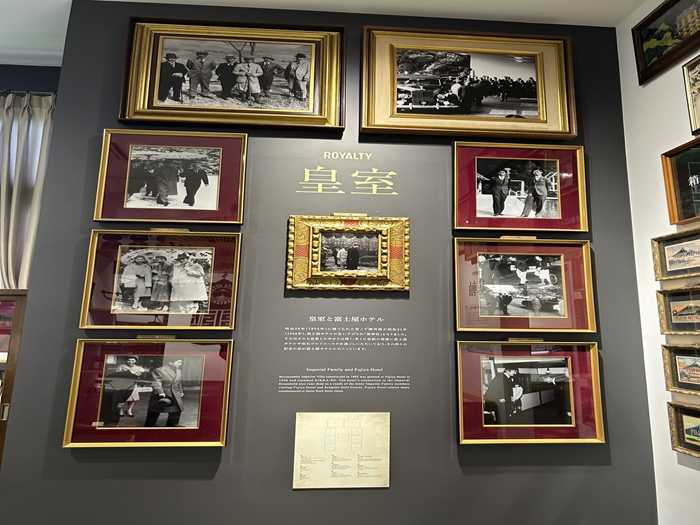
ROYALTY(皇室)
皇室と富士屋ホテル
明治28年(1895年)に建てられた宮ノ下御用邸は、昭和21年(1946年)に富士屋ホテルに払い下げられ、「菊華荘」となりました。そのほかにも皇室ゆかりは深く、多くの皇族の
皆様に富士屋ホテルや仙石ゴルフコースでお過ごしいただいており、その時々の記念の品が
富士屋ホテルに残っています。
Imperial Family and Fujiya Hotel
Miyanoshita Imperial Villa constructed in 1895 was granted to Fujiya Hotel in 1946
and renamed KIKKA-SO. The hotel's connection to the Imperial Household also
runs deep as a result of the many Imperial Family members visiting Fujiya Hotel and Sengokuhara Golf Course. Fujiya Hotel retains many commemorative items
from those times.
and renamed KIKKA-SO. The hotel's connection to the Imperial Household also
runs deep as a result of the many Imperial Family members visiting Fujiya Hotel and Sengokuhara Golf Course. Fujiya Hotel retains many commemorative items
from those times.
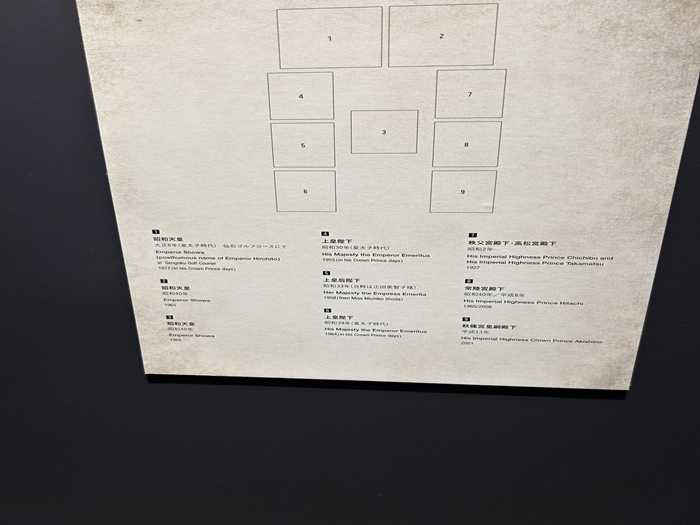
写真一覧(皇室ご来訪記録)
① 昭和天皇
大正6年(皇太子時代) 仙石ゴルフコースにて
Emperor Showa (posthumous name of Emperor Hirohito)
at Sengoku Golf Course
1917 (in his Crown Prince days)
② 昭和天皇
昭和40年
Emperor Showa
1965
③ 昭和天皇
昭和40年
Emperor Showa
1965
④ 上皇陛下
昭和30年(皇太子時代)
His Majesty the Emperor Emeritus
1955 (in his Crown Prince days)
⑤ 上皇后陛下
昭和33年(当時は正田美智子様)
Her Majesty the Empress Emerita
1958 (then Miss Michiko Shoda)
⑥ 上皇陛下
昭和39年(皇太子時代)
His Majesty the Emperor Emeritus
1964 (in his Crown Prince days)
⑦ 秩父宮殿下・高松宮殿下
昭和2年
His Imperial Highness Prince Chichibu
and
His Imperial Highness Prince Takamatsu
1927
⑧ 常陸宮殿下
昭和40年・平成8年
His Imperial Highness Prince Hitachi
1965 / 2006
⑨ 秋篠宮皇嗣殿下
平成13年
His Imperial Highness Crown Prince Akishino
2001
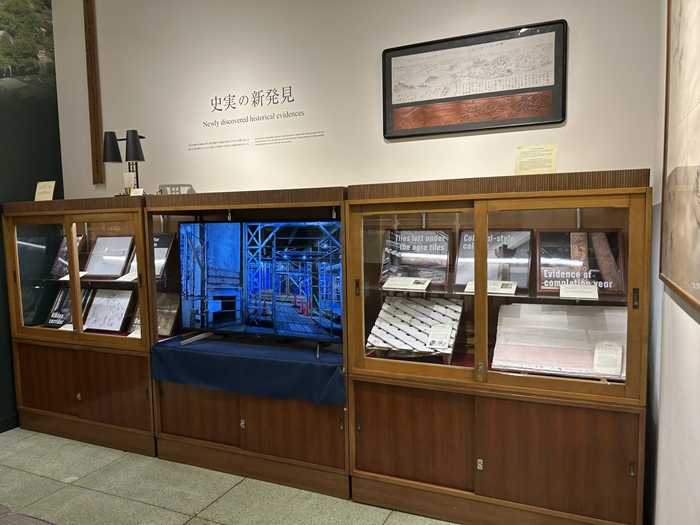
史実の新発見(Newly discovered historical evidences) 」
コーナー。
ホテルの保存・修復工事で発見された建築資料や遺構を紹介し、富士屋ホテルの歴史に
新たな光を当てた展示となっているとのこと
その下には、「保存修復工事によって新たに判明した事実や発見された資料を紹介する」という
趣旨の説明が添えられていたが詳細不明。
保存修復工事で見つかった貴重な発見
中央のモニターには、令和の大規模保存修復工事の様子が映し出されていた。
左側には、工事中に発見された図面や資料が展示
されていた。
展示パネルには英語で、
・Hidden corridor(隠し通路)
・建物の構造に関する資料
・修復時に判明した設計図 などが紹介されていた。
右側の展示ケース
右側には、建築材料や実際に取り外された部材が展示されていた。
展示パネルには次のようなテーマが。
・Tiles left under the ogre tiles
(鬼瓦の下から見つかった瓦)
・Colonial-style colors
(創建当時の洋館の塗装色)
・Evidence of completion year
(建築年代を裏付ける証拠)
展示ケースには、
・屋根瓦
・外壁や内装の塗装片
・建築部材
・漆喰や木材の断面
などが並び、実物を通して修復調査の成果を紹介していた。
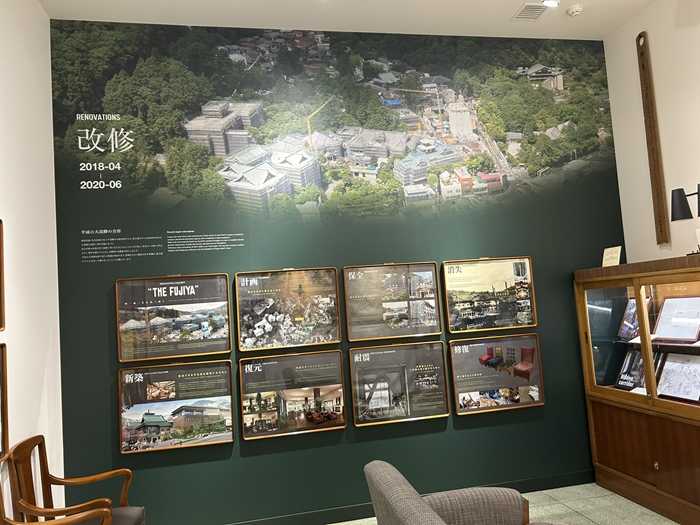
ホテルミュージアムの「 平成の大改修(2018~2020年) 」を紹介する展示コーナー。
2018年4月から2020年6月まで約2年2か月にわたって行われた、創業以来最大規模の
保存修復工事について、その目的や内容を分かりやすく紹介していたのであった。
RENOVATIONS(改修)
2018-04 ~ 2020-06
平成の大改修の全容
詳細不詳であるが、 文化財としての価値を守りながら、安全性や快適性を向上させるための
工事であったことが説明されているのでだあろう。
中央から下部にかけて、8枚のパネルで工事の内容が紹介されていた。
平成の大改修の全容
詳細不詳であるが、 文化財としての価値を守りながら、安全性や快適性を向上させるための
工事であったことが説明されているのでだあろう。
中央から下部にかけて、8枚のパネルで工事の内容が紹介されていた。
① 「THE FUJIYA」
改修全体のコンセプト。
「伝統を守りながら未来へつなぐ」という考え方のもと、創業以来の歴史的価値を維持しつつ、
現代のホテルとして必要な設備や機能を備えることを目指しました。
現代のホテルとして必要な設備や機能を備えることを目指しました。
② 「計画(PLANNING)」
改修工事の計画段階を紹介。
建物全体の調査や文化財としての保存方針を決定するまでの過程、建築史や構造の調査などが
解説されています。
解説されています。
③ 「保全(PRESERVATION)」
歴史ある建物をどのように保存したかを紹介するパネル。
老朽化した部分を補修しながらも、創建当時の意匠や建材をできる限り残す工夫が説明されていた。
④ 「消失(DISAPPEARANCE)」
過去に失われた建物や設備について紹介している。
火災や戦災ではなく、時代の変化に伴って姿を消した施設や建築物について、古写真を用いて
解説している。
解説している。
⑤ 「新築(NEW CONSTRUCTION)」
歴史的景観に調和する新しい建物や設備の整備について紹介。
写真には、新たに建設された施設や、伝統的なデザインを生かした外観が掲載されていた。
⑥ 「復元(RESTORATION)」
創建当時の姿へ復元した事例を紹介。
歴史資料や写真をもとに、失われていた内装や意匠を忠実に再現した様子が説明されていた。
⑦ 「耐震(EARTHQUAKE RESISTANCE)」
建物内部に施した耐震補強工事についての展示。
歴史的な外観を損なわないよう、壁や柱の内部に補強材を設けるなど、高い耐震性能を
確保する工法を紹介。
確保する工法を紹介。
⑧ 「修復(REPAIR)」
家具や調度品、内装の修復についての展示。
写真にはソファや椅子などが写っており、客室やロビーで使用されてきた家具を職人が丁寧に
修復した様子が紹介されていた。
修復した様子が紹介されていた。
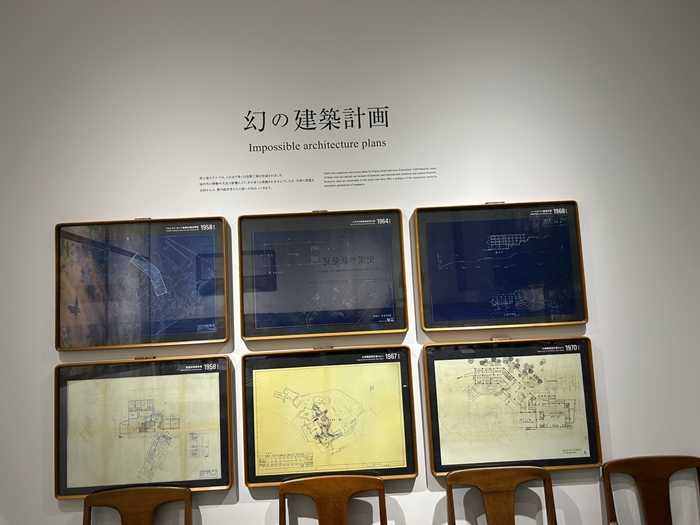
「幻の建築計画(Impossible architecture plans)」コーナー。
富士屋ホテルでは、これまで多くの改修工事が計画されました。
国内外の情勢や天災の影響により、その多くは実施されませんでしたが、当時の貴重な
史料からは、歴代経営者たちの想いが伝わって来ます。
展示されている設計図
上下2段、計6枚の設計図が年代順に展示されています。
1958年
(左上・左下)
フォレスト・ロッジ計画など、戦後の観光ブームを背景にした宿泊施設の拡張計画です。
1964年
(中央上)
東京オリンピック開催の年に合わせて検討された増築計画。
高度経済成長期に急増する宿泊需要を見据えた構想でした。
1967年
(中央下)
ホテル全体の配置計画。
建物や庭園、道路の位置関係まで詳しく描かれています。
1968年
(右上)
ホテル敷地をさらに山側へ拡張する構想。
建物を段状に配置する大規模な計画だったことが分かります。
1970年
(右下)
大阪万博前後の観光需要を見込んだ大規模開発案。
宿泊施設だけでなく、周辺施設も含めた総合的なリゾート計画となっています。
青焼き図面
上段の青い図面は、当時の建築設計で一般的だった青焼き(ブループリント)です。
コピー機が普及する以前、建築図面は感光紙を使って複製されていました。
そのため、このような青地に白線の図面になっています。
そのため、このような青地に白線の図面になっています。
下段の図面
下段には原図に近い設計図が展示されていた。
建物の間取りだけでなく、
・客室配置
・廊下
・庭園
・道路
・敷地全体
まで細かく描かれており、当時の建築計画の本格さがうかがえるのであった。
このコーナーの魅力は、「実現しなかった歴史」を知ることができる点。
現在の富士屋ホテルは、増改築を重ねながら歴史的景観を守り続けていますが、その裏には
数多くの構想や計画がありました。経済状況の変化や自然災害、社会情勢などによって実現
しなかった設計図も多く、それらは 富士屋ホテルが未来をどのように描いていたかを物語る
貴重な歴史資料 となっているのだ。
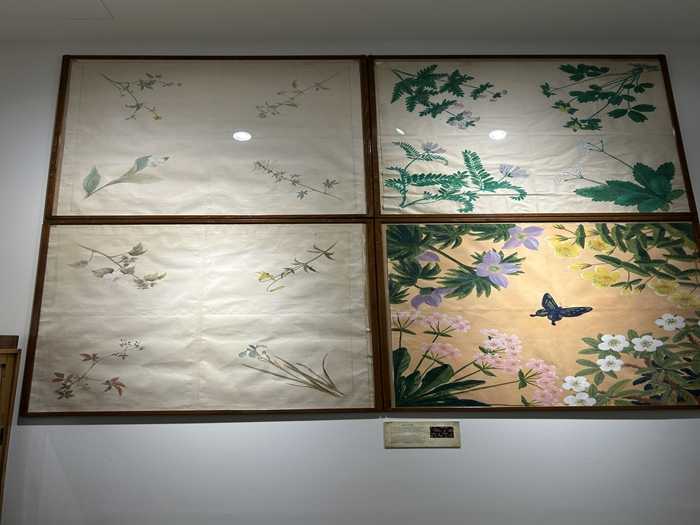
ホテルミュージアム「 FLOWER PALACE(花御殿) 」コーナーに展示されている、
日本画家による花の原画(下絵)と完成作品を比較展示したもの 。
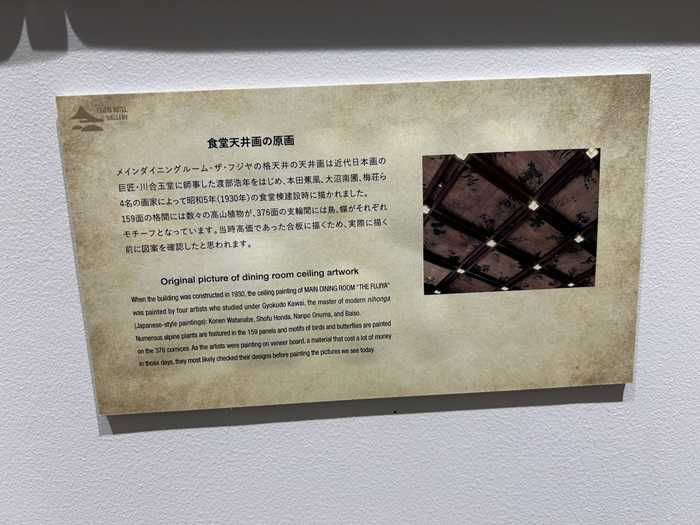
「 食堂天井画の原画
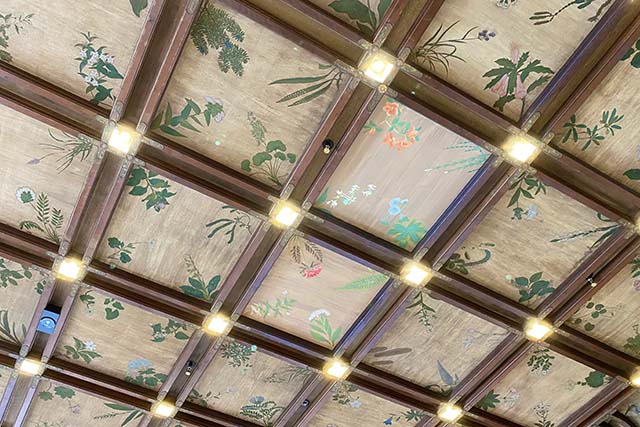
「 食堂天井画 」。
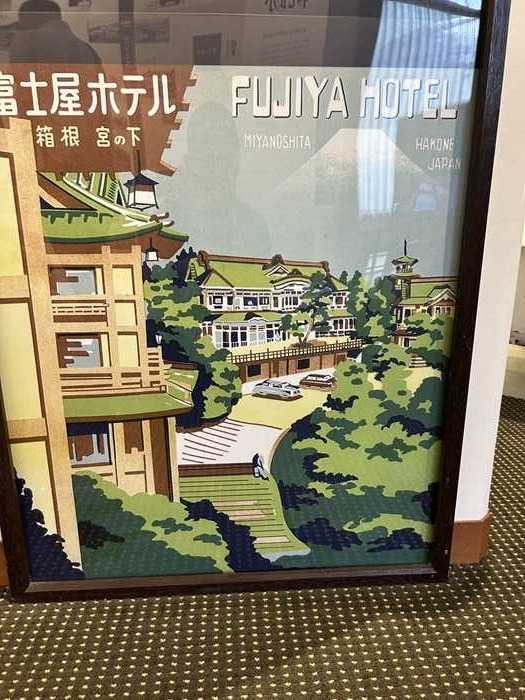
レトロ調イラストポスター 。
ホテルミュージアム内の「基軸(IDENTITY)」コーナーに展示されており、富士屋ホテルを
象徴する建物や風景を現代的なデザインで表現されていた。
「 HOTEL BROCHURE(ホテルパンフレット) 」の展示コーナー。
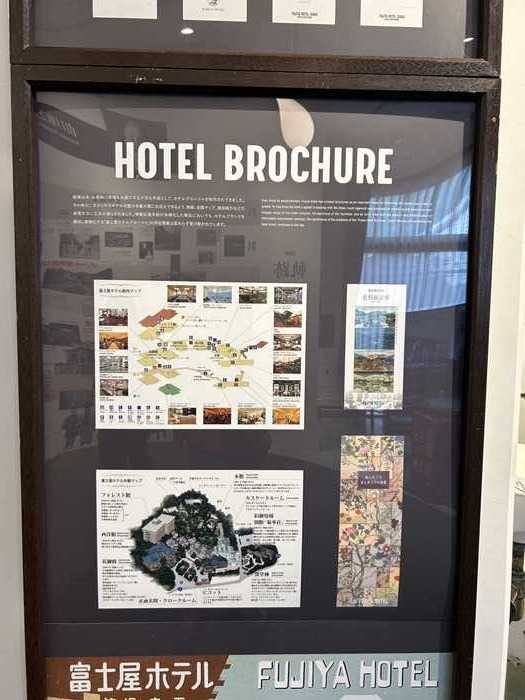
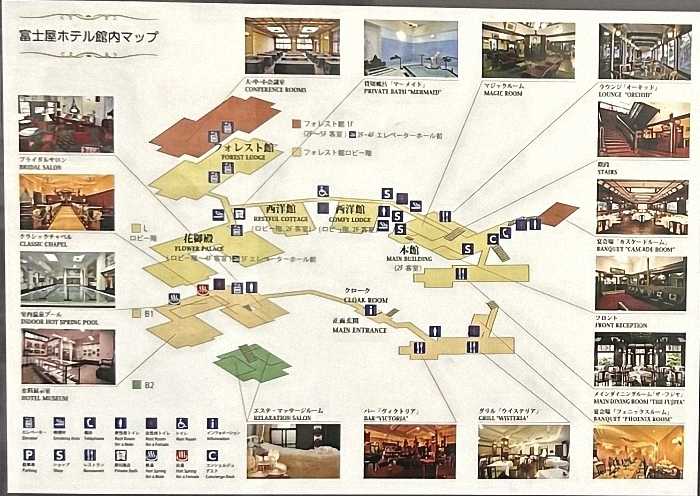
富士屋ホテル館内マップ 。
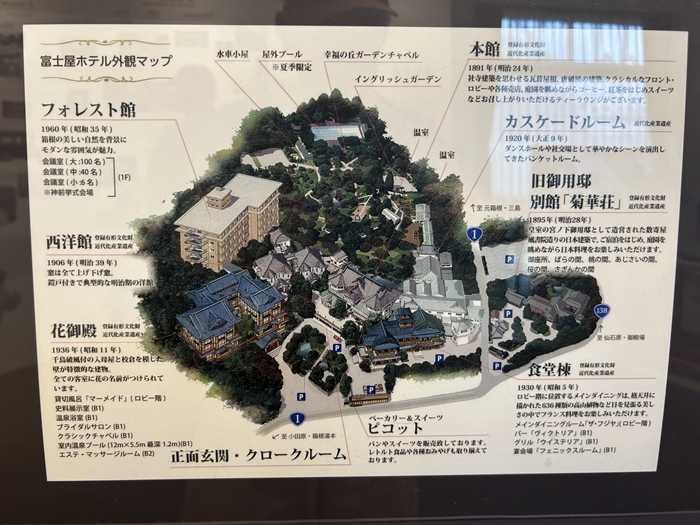
富士屋ホテル外観マップ 。
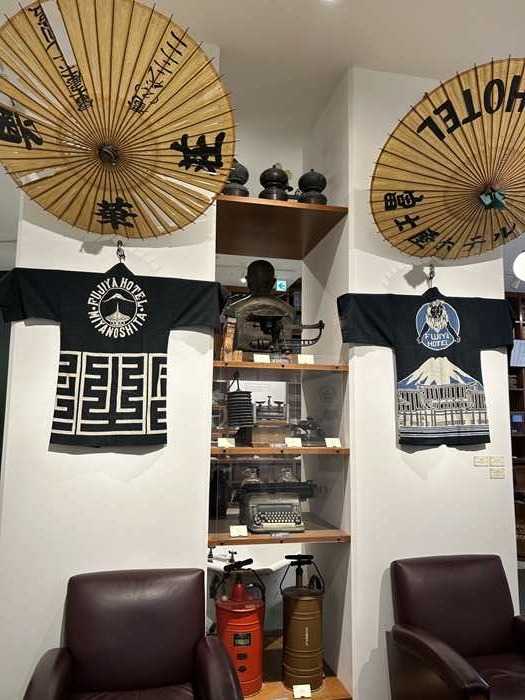
「実用・サービス用品」展示コーナー。
宿泊客には普段見えない、ホテルを支えてきた道具や制服、宣伝用品などが展示されていた。
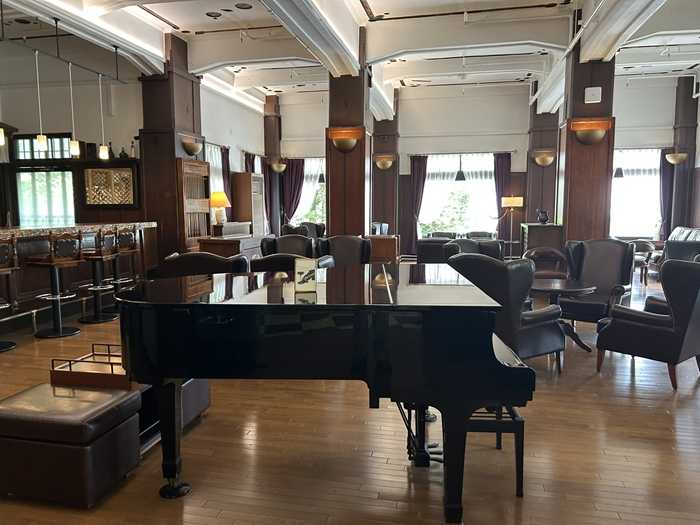
ラウンジ?と思われる空間。
・中央に黒いグランドピアノ
・左奥にバーカウンター
・ゆったりと配置された革張りのソファやテーブル
・高い天井と太い木製の柱
・大きな窓から自然光が差し込む落ち着いた雰囲気
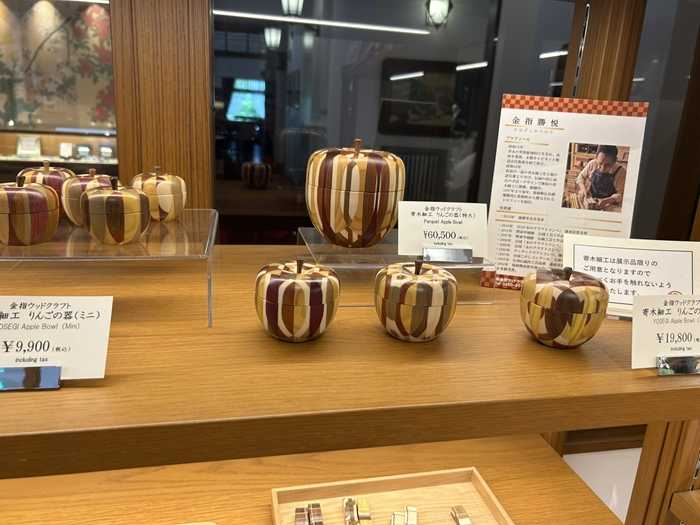
売店(ショップ)に展示・販売されている「 寄木細工(よせぎざいく) 」のリンゴ型小物入れ。
箱根を代表する伝統工芸品である寄木細工を、現代的なデザインで表現した人気商品。
・・・もどる・・・
・・・つづく・・・
数多くの構想や計画がありました。経済状況の変化や自然災害、社会情勢などによって実現
しなかった設計図も多く、それらは 富士屋ホテルが未来をどのように描いていたかを物語る
貴重な歴史資料 となっているのだ。
ホテルミュージアム「 FLOWER PALACE(花御殿) 」コーナーに展示されている、
日本画家による花の原画(下絵)と完成作品を比較展示したもの 。
・左上・左下
・花や草木だけが淡彩で描かれた 下絵(原画)
。
・構図や植物の配置、色彩の試作が分かります。
・余白を大きく残し、一つひとつの植物を丁寧に描いています。
・右上
・下絵をもとに色彩を加えた制作途中、または完成原画。
・緑の葉や淡紫色の花が鮮やかに描かれています。
・右下
・最も完成度の高い作品。
・金色を背景に、
・紫色の花
・桜色の花
・白い花
・黄色い花
・青い蝶
が描かれ、花御殿で実際に使われた装飾画を思わせる華やかな作品になっていた。
「 食堂天井画の原画
メインダイニングルーム・ザ・フジヤの格天井の天井画は、近代日本画の巨匠・川合玉堂に
師事した渡部浩年をはじめ、本田蕉風・大沼南園・梅荘ら4名の画家によって、
昭和5年(1930年)の食堂棟建設時に描かれました。
師事した渡部浩年をはじめ、本田蕉風・大沼南園・梅荘ら4名の画家によって、
昭和5年(1930年)の食堂棟建設時に描かれました。
159面の格間には数々の高山植物が、376面の支輪には鳥や蝶が、それぞれモチーフと
なっています。当時高価であった合板に描くため、実際に描く前に図案を確認したと思われます。
なっています。当時高価であった合板に描くため、実際に描く前に図案を確認したと思われます。
Original picture of dining room ceiling artwork
When the building was constructed in 1930, the ceiling painting of
MAIN DINING ROOM "THE FUJIYA" was painted by four artists who studied under
Gyokudo Kawai, the master of modern nihonga (Japanese-style paintings):
Konen Watanabe, Shofu Honda, Nanpo Onuma, and Baiso.
MAIN DINING ROOM "THE FUJIYA" was painted by four artists who studied under
Gyokudo Kawai, the master of modern nihonga (Japanese-style paintings):
Konen Watanabe, Shofu Honda, Nanpo Onuma, and Baiso.
Numerous alpine plants are featured in the 159 panels, and motifs of birds and
butterflies are painted on the 376 cornices. As the artists were painting on
veneer board, a material that cost a lot of money in those days, they most likely
checked their designs before painting the pictures we see today.
butterflies are painted on the 376 cornices. As the artists were painting on
veneer board, a material that cost a lot of money in those days, they most likely
checked their designs before painting the pictures we see today.
このパネルは、メインダイニングルーム「ザ・フジヤ」の格天井(ごうてんじょう)に描かれた
装飾画が、どのように制作されたかを紹介していた。
装飾画が、どのように制作されたかを紹介していた。
・制作年
:昭和5年(1930年)
・指導者:
日本画の大家・川合玉堂
・制作画家
:渡部浩年、本田蕉風、大沼南園、梅荘
・格間(天井板):159面に高山植物
・支輪(格天井を支える部材):376面に鳥や蝶
当時は天井板となる合板が非常に高価だったため、いきなり本番に描くのではなく、今回展示
されているような原画(下絵・図案)を制作して構図や彩色を確認してから、本番の天井板に
描かれたと考えられているとのこと。
されているような原画(下絵・図案)を制作して構図や彩色を確認してから、本番の天井板に
描かれたと考えられているとのこと。
「 食堂天井画 」。
レトロ調イラストポスター 。
ホテルミュージアム内の「基軸(IDENTITY)」コーナーに展示されており、富士屋ホテルを
象徴する建物や風景を現代的なデザインで表現されていた。
ポスター中央
には、富士屋ホテルの代表的な建物である 本館(THE MAIN)
が描かれていた。
その特徴である、
・唐破風(からはふ)の屋根
・白い外壁
・和洋折衷の建築様式
がデフォルメされながらも忠実に表現されていた。
手前には車寄せ(エントランス)があり、往年の高級ホテルらしくクラシックカーも描かれていた。
いただいたパンフレットにもこの絵が表紙となっていた。
いただいたパンフレットにもこの絵が表紙となっていた。
「 HOTEL BROCHURE(ホテルパンフレット) 」の展示コーナー。
創業以耒、お客様に情報をお届けする大切な手段として、ホテルプローシャが制作されてきました。
その時代に求められるホテルの魅力を最大限にお伝えでさきるよう、表紙、全館マツツ、
施設紹介などの表現方法に工夫が凝らされました。情報伝達手段が多様化した現在においても、
ホテルぶランドを熟成し象徴化する「富士屋ホテルプローシャ」の存在意義は変わらず受けがれて
います。
施設紹介などの表現方法に工夫が凝らされました。情報伝達手段が多様化した現在においても、
ホテルぶランドを熟成し象徴化する「富士屋ホテルプローシャ」の存在意義は変わらず受けがれて
います。
富士屋ホテル館内マップ 。
建物ごとに
・客室
・レストラン
・バー
・ラウンジ
・温泉
・売店
などが分かりやすく示され、宿泊客が館内を散策しやすいよう工夫されている。
写真入りで各施設を紹介している点も特徴。
富士屋ホテル外観マップ 。
ホテル本館を中心に、
・花御殿
・フォレスト・ウイング
・カスケード・ウイング
・菊華荘
・庭園
・レストラン
・温泉施設
などの位置関係が一目で分かるようになっていた。
「実用・サービス用品」展示コーナー。
宿泊客には普段見えない、ホテルを支えてきた道具や制服、宣伝用品などが展示されていた。
左右の大きな番傘
最も目を引くのが、左右に展示された富士屋ホテルの番傘。
左の番傘には「富士屋ホテル」の文字が大きく書かれていた。
右の番傘には「HOTEL」と「富士屋」の文字が見えた。
これらは宿泊客の送迎や雨天時の案内に実際に使用されたもので、ホテルの「顔」とも
いえる備品。
いえる備品。
法被(はっぴ)
番傘の下には2着の法被が展示されていた。
デザインには、
・富士山
・ホテル本館
・富士屋ホテルのロゴ
などが描かれており、開業記念行事やイベント、スタッフの制服として使われていたものか。
中央の展示ケース
・古いタイプライター
・古いタイプライター
・手動計算機・事務機器
・ホテルで使用された機械類
・金属製の器具
などがあり、フロントや事務所で実際に使われていた備品。
ラウンジ?と思われる空間。
・中央に黒いグランドピアノ
・左奥にバーカウンター
・ゆったりと配置された革張りのソファやテーブル
・高い天井と太い木製の柱
・大きな窓から自然光が差し込む落ち着いた雰囲気
売店(ショップ)に展示・販売されている「 寄木細工(よせぎざいく) 」のリンゴ型小物入れ。
箱根を代表する伝統工芸品である寄木細工を、現代的なデザインで表現した人気商品。
・・・もどる・・・
・・・つづく・・・
お気に入りの記事を「いいね!」で応援しよう

[JINさんの農園] カテゴリの最新記事
-
石垣山一夜城へ 2026.08.03
-
宮ノ下・富士屋ホテルへ(その3) 2026.08.02
-
宮ノ下・富士屋ホテルへ(その1) 2026.07.31


【毎日開催】
15記事にいいね!で1ポイント


© Rakuten Group, Inc.
