


PR
キーワードサーチ
▼キーワード検索
カレンダー
サイド自由欄
鉄道模型・鉄道グッズリンク
鉄道関連書籍リンク
時刻表最新号
JTB時刻表

JR時刻表

鉄道雑誌最新号
鉄道ファン

鉄道ジャーナル

鉄道ピクトリアル

鉄道ダイヤ情報

Rail Magazine
RM MODELS

j train

とれいん

鉄道模型趣味

N

旅と鉄道

楽天トラベルで旅に出よう

鉄道関連書籍リンク
時刻表最新号
JTB時刻表
JR時刻表
鉄道雑誌最新号
鉄道ファン
鉄道ジャーナル
鉄道ピクトリアル
鉄道ダイヤ情報
Rail Magazine
RM MODELS
j train
とれいん
鉄道模型趣味
N
旅と鉄道
楽天トラベルで旅に出よう
コメント新着
Dec 14, 2014

カテゴリ: 鉄道ミニエッセイ
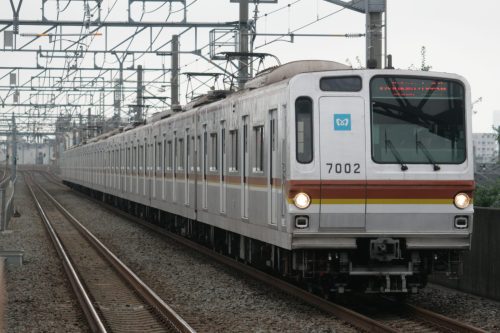
新造から40年を経た今なお、有楽町線・副都心線で現役を続けている。特に10両編成の7001・7002・7004・7005・7010・7018の各編成は40年前の有楽町線池袋~銀座一丁目間開業時から走り続けており、まさに有楽町線の「生き字引」とも言える存在である。そんな東京メトロ7000系の魅力について語りたい。
In 2014, Tokyo Metro 7000 Series marked its 40th anniversary since its debut, which still have been running on Yurakucho and Fukutoshin Lines. Especially 10-carriage sets, 7001F, 7002F, 7004F, 7005F, 7010F, and 7018F sets, includes carriages since its debuted, they can be called "the walking dictionary on Yurakucho Line". This time I would like to write the attraction of 7000 Series.
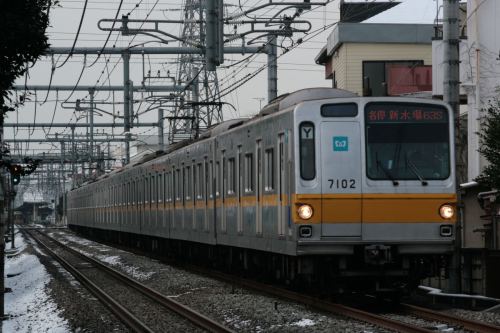
東京メトロ7000系は1974(昭和49)年に有楽町線用の車両として登場した。1968(昭和43)年に登場した千代田線用の6000系を基本にした設計で、車体は前面非常貫通扉上部の種別表示準備窓と車両番号の位置の違いを除いてほぼ同一。制御方式も6000系同様の自動可変界磁(AVF)サイリスタチョッパ制御を採用した。当初は5両編成で、ラインは黄色一色(2枚目の写真を参照)、側窓は上段下降下段上昇式のいわゆる「田」の字型のものでデビューした。以降、路線の延伸や増発に合わせて増備され、1989(平成元)年までに10両編成34本が製造された。
1993(平成5)年より、新造から20年が経過した7001F~7020Fを対象に、側窓の1段下降化・車椅子スペースの設置などの内装のリニューアルと一部編成のVVVF制御化改造、また全編成に行き先表示のLED化改造が実施された。
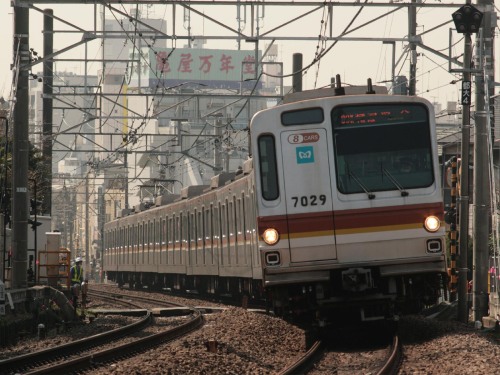
そんな7000系に大きな転機が訪れたのが、2008(平成20)年6月14日の副都心線開業である。これに伴い7000系は2度目のリニューアルが実施された。副都心線対応となる全編成に、外観では帯色のこげ茶色・白・ゴールドの3色への変更、行き先表示LEDの更新、内装ではドア上LED案内表示機の2段表示式への新設・交換、ドアチャイムの変更などが実施された。また副都心線でのワンマン運転に対応したATOとドア開閉スイッチ、ホーム監視モニター画面も設置され、併せて東急東横線・横浜高速鉄道みなとみらい線に乗り入れるため、運転台がT字型ワンハンドルマスコンに改造された。この時一部編成が副都心線各停列車用の8両編成に短縮され、これまで1両の廃車も出さなかった7000系に初めて廃車が発生した。10両編成の一部は副都心線開業後しばらくは黄色帯のままで残り、有楽町線専用編成となっていたが、2010(平成22)年までにリニューアルの施行、または廃車となり、姿を消した。2014(平成26)年現在は、10両編成6本と8両編成15本が在籍している。
7000 Series debuted in 1974, at the same time as Yurakucho Line's open (between Ikebukuro and Ginza-itchome), and based on antecedent 6000 Series for Chiyoda Line manufactured since 1968. It had almost the same body except the small window above the emergency exit and the place of the carriage number on the front and the same automatic valuable field (AVF) chopper control system. At first the sets were consisted of five carriages and yellow line (see also second photograph). It also used to have side windows whose upper half went down and lower half went up looking like a kanji "田". As the line extended and the timetable rearranged, 340 carriages,thirtyfour 10-carriage sets, had been manufactured until 1989.
First refurbishment of the early twenty sets had started in 1993. Their windows, seating colour, and control equipments were changed and the LED displays above the doors and the space for wheelchair were newly put. Moreover, the destination indicators of all sets had changed to the LED ones.
The open of Fukutoshin Line in 2008 had given 7000 Series a major turning point, which had given 7000 Series the second refurbishment; the line colour (brown, white, and gold one), outside LED, inside LED above the doors which indicating two rows, and the tone informing doors opening and closing had been newly installed or replaced from the old ones. In addition, automatic train operation (ATO) device, and door controller and platform monitor had newly put for the conductorless operation and, for the service on Tokyu Toyoko Line and Yokohama Minatomirai Railway Line, the driver's cab changed to T-shaped one which accelerating and braking are integrated. Some sets had been shortened to 8-carriage and some carriages had scrapped first time. Though some 10-carriage sets had remained the unrefurbished ones only for Yurakucho Line, they had also been scrapped or refurbished by 2010. In 2014 six 10-carriage sets and fifteen 8-carriage sets are existing.
そしてその結果、2008(平成20)年の副都心線延伸開業に合わせて一部編成の組み替えが実施されるまでの34年間、1両の廃車も発生しなかったのであろう。この廃車は副都心線開業に伴う車両整理・短編成化が理由であり、7000系そのものの老朽化を理由とするものではない。そして8両編成はデビュー当時から連結されていた7600形と7700形が編成から外されて廃車となってしまったものの、10両編成6本はデビュー当時からの車両が5両とも現役であるという点が特筆される。40年が経ってもなお、老朽化を理由とする本格的な廃車が始まっていないという点も魅力の一つとして挙げられるだろう。
長寿命の設計を大いに活用して、時代の変化に合わせて進化を遂げてきたところが7000系の大いなる魅力と言えるのではないだろうか。当初の計画どおり、新造から40年が経ってもなお活躍を続ける東京メトロ7000系を、今後も見守っていきたい。
From my point of view, one of the attractive point of 7000 Series is the long-life design, which is looked ahead to the use for over 40 years later. The body made from aluminum alloy makes it available to keep running over 40 years, which is about 10 - 20 years longer than carbon steel ones, and the refurbishments creates the nonstale interiror though it debuted 40 years ago.
As a result, the scrap of 7000 Series hadn't happened for 34 years and the replacement due to the deterioration doesn't come. Why some carriages were scrapped before Fukutoshin Line's open was the arrangement carriages on Yurakucho and Fukutoshin Lines, not getting old. In addition, 10-carriage ones still couples the five since their debut. It is also an attraction and notable point.
In conclusion, 7000 Series has been running for 40 years through changing its interior and equipments as time goes, which is the most attractive point. I still would like to see 7000 Series, which keeps good condition and running according to the first plan.
お気に入りの記事を「いいね!」で応援しよう

[鉄道ミニエッセイ] カテゴリの最新記事
-
683系「サンダーバード」に乗る Nov 23, 2021
-
"地下鉄のお嬢ちゃん"ステッカーの魅力 Sep 7, 2019
-
東急に「鉄道むすめ」がいない理由は「な… Aug 4, 2019


【毎日開催】
15記事にいいね!で1ポイント


© Rakuten Group, Inc.
