
I'm a longtime beauty editor with fair skin that's basically begging to be burned which means I never go a day with applying one of the best sunscreens to my face. I slather them on as part of my morning routine to help minimize the UV damage that may cause cancer, but I'm also trying to prevent premature aging (think wrinkles, fine lines, sun spots, uneven texture and tone, redness and loss of elasticity). Even though SPF lotion is important year-round, as we officially enter summer, investing in a quality product should be top of mind.
In this story


Dermatologists don’t just talk about the importance of regularly wearing sunscreen — they practice what they preach. “I wear a tinted mineral sunscreen every single day of the year,” says Dr. Claire Wolinsky , a board-certified dermatologist in New York City. She starts her a.m. routine with Skinceuticals C-E Ferulic (a powerful vitamin C antioxidant serum), followed by EltaMD Elements Tinted Mineral Sunscreen SPF 45 and then puts on her makeup.
I love getting info like this straight from the source, so I'm regularly asking doctors which products they use themselves. To find the very best facial sunscreens around, I polled Wolinsky and other top-rated dermatologists on the key ingredients to look for, as well as application tips and tricks. We've got something in the mix for every skin tone and skin type — dry skin, oily skin or combination skin — ranging from drugstore to high-end prices. We also cover different types of sunscreens like moisturizing sunscreens, physical sunscreens, reef-safe sunscreens and stick sunscreens to fit any and all of your needs. Below, we've rounded up the 10 best sunscreens for your face that dermatologists and experts recommend — and actually use themselves.
The best sunscreen for your face in 2026

SPF:40 | Broad-spectrum:Yes | Water resistance:No | Mineral or chemical:Hybrid | Active ingredients:Zinc oxide and octinoxate
EltaMD is known for making the kinds of dermatologist-formulated, high-quality sunscreens that many docs recommend. This hybrid version is especially excellent (and my own personal favorite). It offers broad-spectrum UV protection from a combination zinc oxide and titanium dioxide and is safe for all skin types, including dry, oily or sensitive.
The unscented formula is creamy, silky and lightweight — and, because it's a hybrid, won't leave a white cast.
- Good for (most) all skin types
- Zero white cast
- Absorbs quickly and easily
- Dermatologist recommended
- Expensive
- Small bottle
Other top sunscreens for your face we recommend in 2026
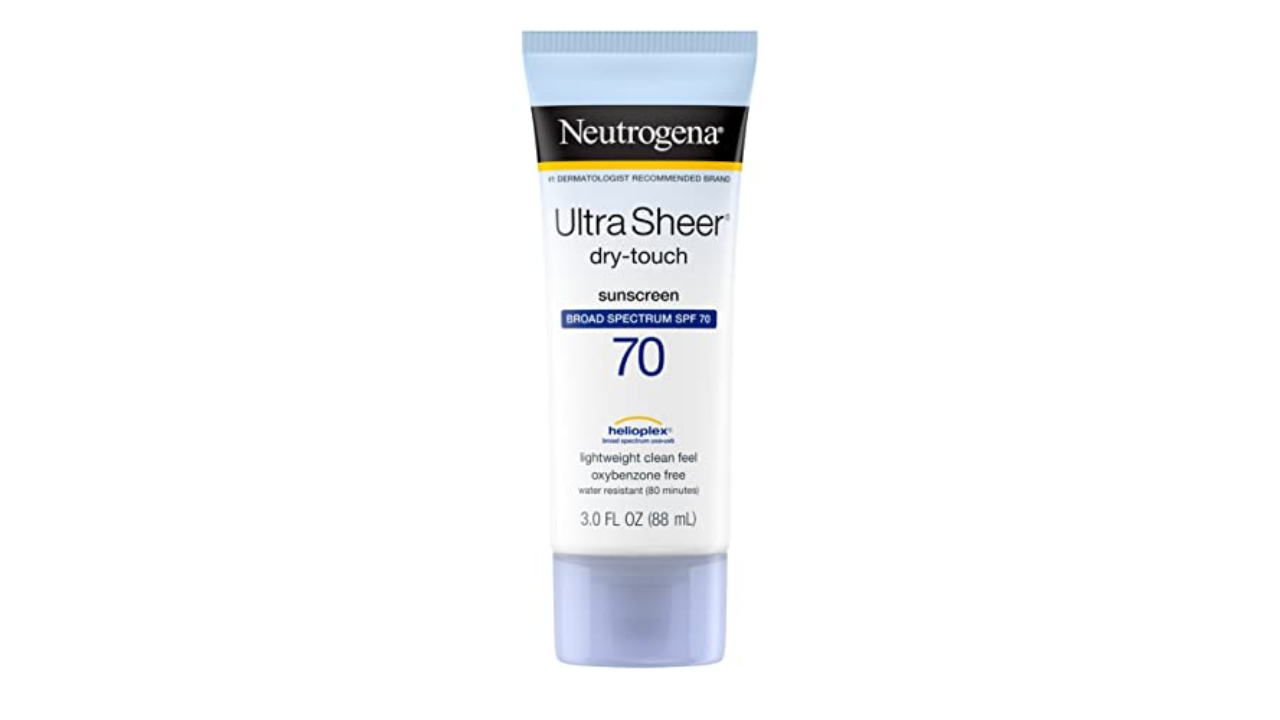
Neutrogena
SPF:70 | Broad-spectrum:Yes | Water resistance:Yes | Mineral or chemical:Chemical | Active ingredients:Avobenzone, homosalatate, octisalate and octocrylene
Most folks don't apply enough sunblock, so a high SPF can help add extra coverage. Derms love this lotion for its broad-spectrum protection and fast-absorbing finish. “This sunscreen has been clinically tested and shown to give better sunburn protection compared to sunscreens with lower SPFs,” Dr. Joshua Zeichner, a New York City–based dermatologist, tells Yahoo Life. Neutrogena’s Ultra Sheer Dry-Touch Sunscreen is lightweight, fast-absorbing and has a non-greasy, matte finish that's great for anyone with combination, oily or acne-prone skin. Dr. Zeichner particularly likes its high SPF. “In the real world, consumers do not apply as much sunscreen as they should, so the level of protection gets diluted,” he explains. “Starting with a higher SPF to begin with acts like an insurance policy to give you the best level of protection possible.”
- Broad spectrum
- Fast-absorbing
- Good for all skin types
- Can leave a white cast
EltaMD
SPF:44 | Broad-spectrum:Yes | Water resistance:Yes | Mineral or chemical:Mineral | Active ingredients:Zinc oxide and titanium dioxide
Dr. Claire Wolinsky prefers a tinted mineral sunscreen like this one because it provides broad-spectrum physical SPF coverage, hydration and works well under makeup. EltaMD is known for high-quality sunscreen that so many docs recommend. It offers broad-spectrum UV protection from zinc oxide and titanium dioxide and leaves a smooth finish, even on dry or sensitive skin.
The brand also recently released a new mineral sunscreen we're excited to try. Check out EltaMD UV Skin Recovery Broad Spectrum SPF 50 , which we featured on our list of the most-anticipated products of the month .
- Has a light tint so it won't leave a white cast
- Works well under makeup
- Good for sensitive skin
- Absorbs quickly
- Matte finish
- Expensive
- Tint may be too dark for ultra-fair skin
Eucerin
SPF:50 | Broad-spectrum:Yes | Water resistance:No | Mineral or chemical:Chemical | Active ingredients:Avobenzone, Homosalate, Octisalate, Octocrylene
Eucerin's Sunclear was formulated specifically for the needs of oily and acne-prone skin, it's actually designed to draw in oils while still leaving skin silky, soft, protected and even dewy (in fact this is the only complaint I've heard about this product — some reviewers don't love the "glow.")
Bonus points for the lightweight, almost fluffy texture which absorbs quickly. Plus, the chemical formula never leaves a white cast.
- Lightweight
- Oil-absorbing
- Hypoallergenic
- Fragrance Free
- Some users dislike the shiny finish
- Some reviewers say it stings their eyes
Isdin
SPF:50+ | Broad-spectrum:Yes | Mineral or chemical:Mineral | Active ingredients:Zinc oxide, vitamin E antioxidant
This mineral sunscreen is amped up with 11% zinc oxide for superior protection, and it's packed with enzymes that have been shown to help heal sun damage and protect against future issues. The name may be a mouthful, but board-certified dermatologist Gary Goldenberg swears by this one . He particularly recommends it for patients who have known sun damage. Isdin’s Eryfotona Actinica is lightweight, so it works for all skin types, won’t leave your skin feeling greasy and has UVA/UVB protection. It also has DNA repairsomes and vitamin E to help fight UVA-induced damage.
- Mineral sunscreen
- Helps protect against future sun damage
- Not greasy
- Expensive
- May leave a white cast on darker skin tones
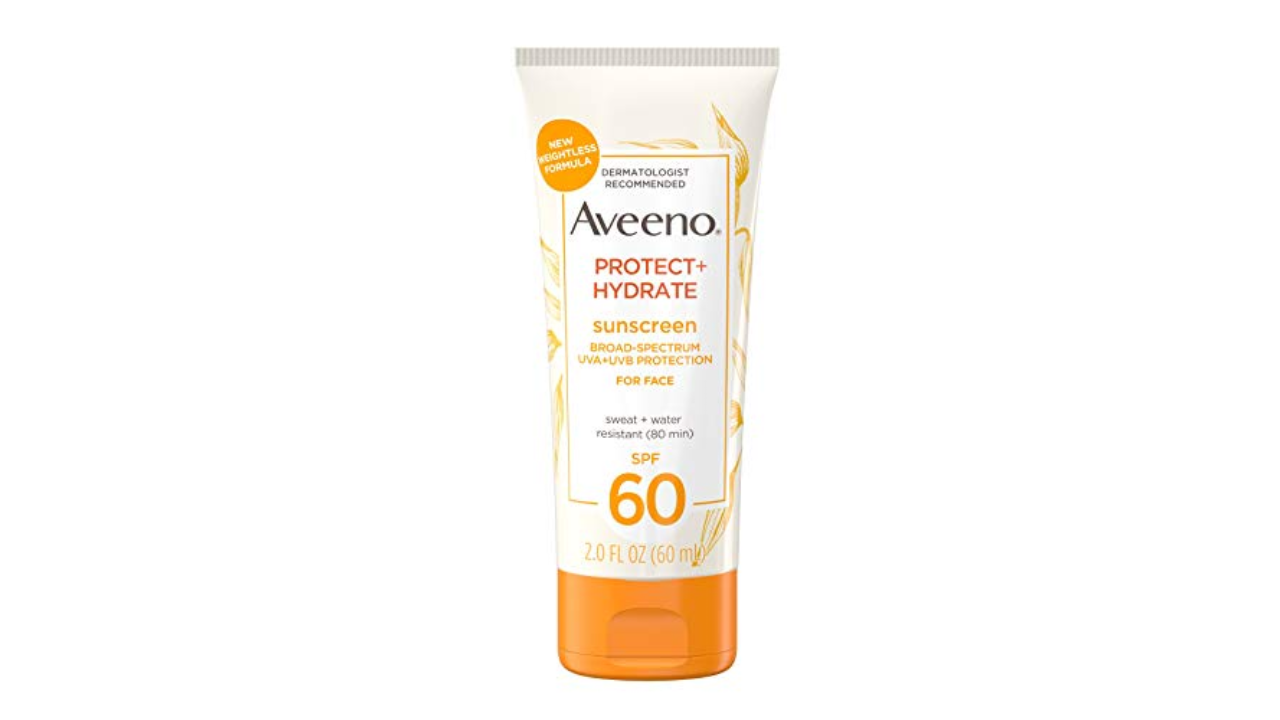
Aveeno
SPF:60 | Broad-spectrum:Yes | Water resistance:Yes | Mineral or chemical:Chemical | Active ingredients:Avobenzone, homosalate, octisalate, octocrylene
Broad-spectrum, SPF 60 protection aside, this oil-free sunscreen won't clog pores, and it contains oatmeal, a nourishing ingredient that helps repair and moisturize the skin's finicky outer layer. Dr. Zeichner likes Aveeno’s Protect + Hydrate sunscreen for a few reasons. “Besides offering broad-spectrum sun protection, it delivers a little oatmeal to repair and hydrate the outer skin layer,” he says. “We know that UV light can disrupt the outer skin layer, leading to dryness and irritation.” The sunscreen is fast-absorbing, oil-free and noncomedogenic, so it won't clog your pores. It’s also water-resistant for up to 80 minutes.
- Oil-free and noncomedogenic
- Water-resistant
- Some might not like the gritty texture from the oatmeal
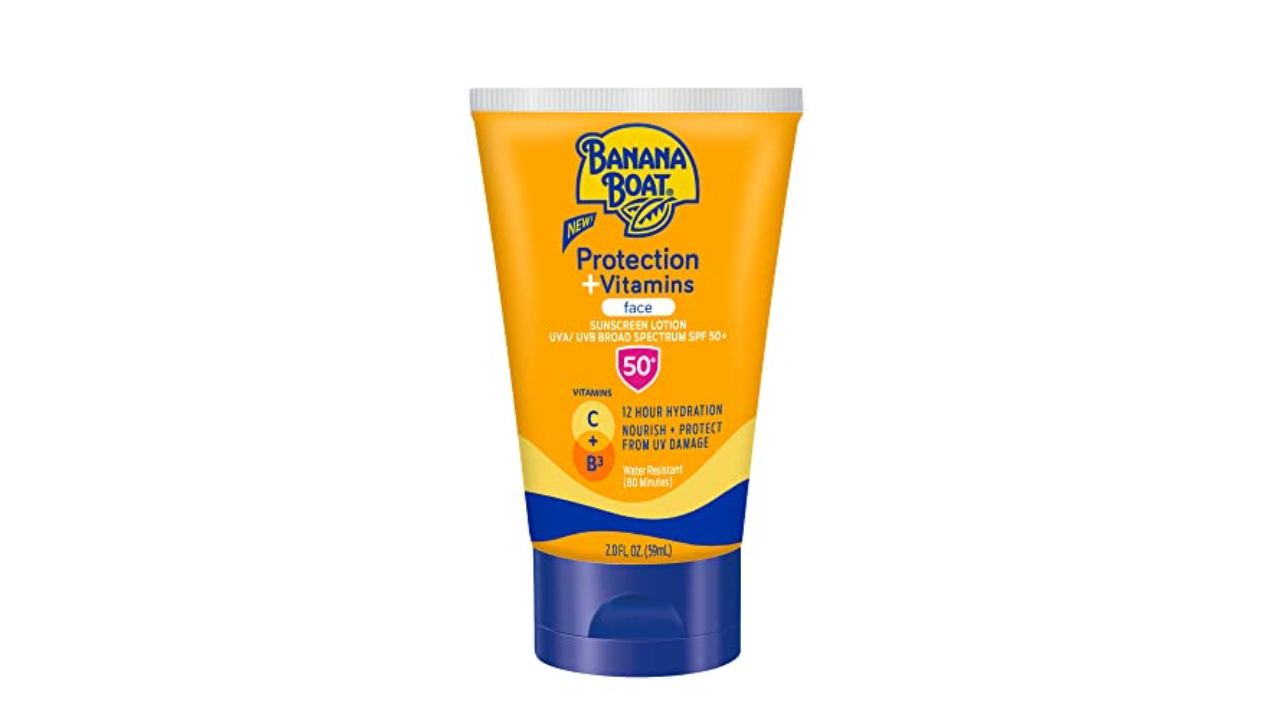
Banana Boat
SPF:50 | Broad-spectrum:Yes | Water resistance: Yes | Mineral or chemical:Chemical | Active ingredients:Avobenzone, homosalate, octisalate, octocrylene
This formula from Banana Boat is lightweight, non-greasy and leaves skin with a matte finish, while also providing 12 hours of hydration. An affordable solution, we're excited to try it. According to Dr. Jenny Liu , a board-certified dermatologist based in Minneapolis, MN, "it’s enriched with efficacious levels of Vitamins C and B3 that nourish and visibly brighten skin with intense 12-hour hydration that will keep skin looking fresh throughout the entire day.” Bonus: Banana Boat's sunscreen is reef-friendly, as it doesn't contain octinoxate and oxybenzone and it's fragrance-free for anyone sensitive to scents. This option is best for those with normal-to-dry skin.
- Reef-friendly
- Fragrance-free
- Hydrating
- Not for those with oily skin
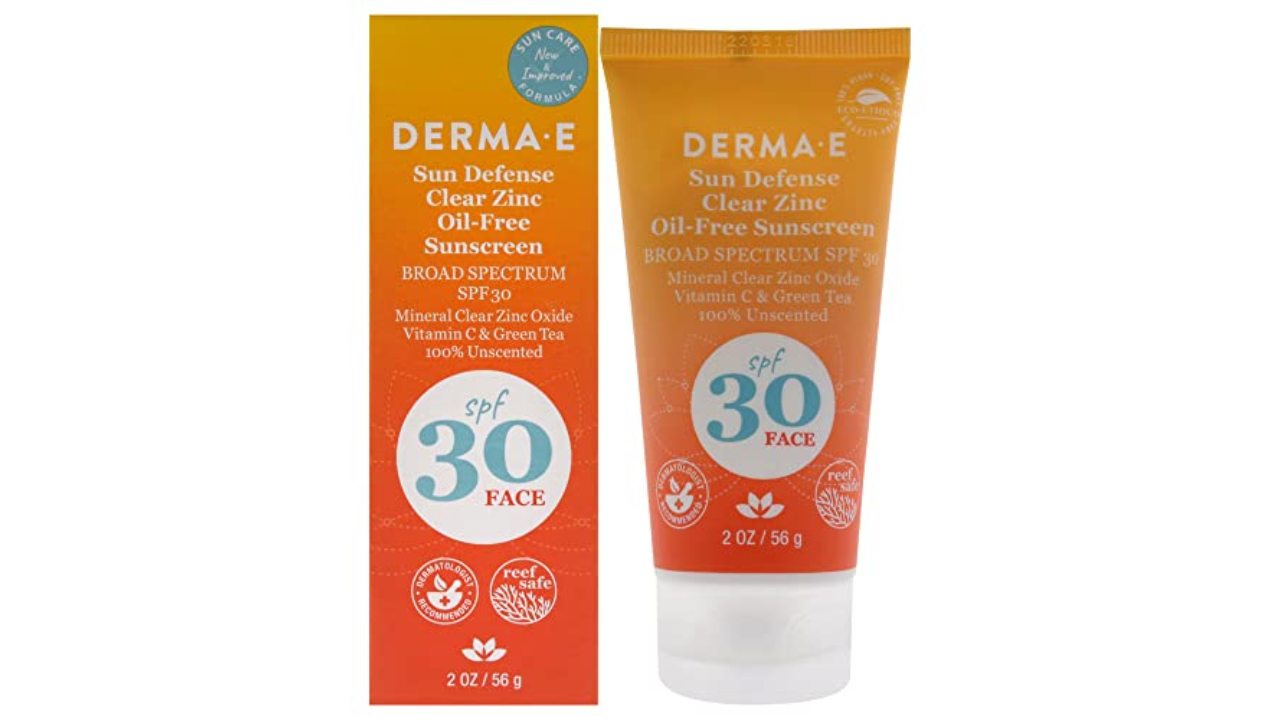
Derma-E
SPF:30 | Broad-spectrum:Yes | Mineral or chemical:Mineral | Active ingredients:Zinc oxide
This unscented formula is safe for sensitive skin — it's made with fast-absorbing zinc oxide and is packed with bonus ingredients like vitamin C and green tea to help quell irritation. Derma-E’s Sun Defense sunscreen is 100% unscented, which Dr. Bailey likes, and is ideal for those with sensitive skin. It’s also fortified with vitamin C and green tea to help skin recover after sun exposure and fight the signs of aging. The sunscreen’s zinc oxide provides broad-spectrum UVA/UVB sun protection, and it’s oil-free, so it won’t clog your pores.
- Fragrance-free
- Has vitamin C
- Good for all skin types, including sensitive
- Low SPF comparatively
- May leave a white cast
Shiseido
SPF:60 | Broad-spectrum:Yes | Water resistance:Yes | Mineral or chemical:Chemical | Active ingredients:Avobenzone, homosalate, octisalate, octocrylene
After testing dozens of sunscreens last year, Senior Beauty Editor Jennifer Romolini chose this pick from Shiseido as best "invisible" sunscreen. "It's got the most amazing texture and finish — and leaves your skin with an incredible, covetable, pearly glow," she says. "I also like that it's got high-potency protection (SPF 60+) and is water resistant too."
Romolini admits that the product is on the pricey side, but says this particular sun care, "feels like one of life's little luxuries — it's so worth it."
- Silky texture
- High SPF
- Formulated with skin-nourishing ingredients like licorice root
- Leaves face glowing
- Invisible finish
- Expensive
- Doesn't layer well under foundation
SPF:50 | Broad-spectrum:Yes | Water resistance:Yes | Mineral or chemical:Mineral | Active ingredients:Zinc oxide, titanium dioxide
Dr. Wolinsky finds this CeraVe sunscreen stick (one of our best sunscreen sticks of the year) to be a great option to apply underneath makeup since it has some hydrating ingredients like ceramides and hyaluronic acid. A broad-spectrum stick sunscreen is so handy for on-the-go application and it's a no-brainer for travel. This one from CeraVe works well with makeup, unlike sunscreen sticks that are thicker and less hydrating, explains the dermatologist.
- Works well under makeup
- Handy for travel
- Good for sensitive skin
- Could be thicker and less hydrating than a moisturizer
Factors to consider when choosing a sunscreen for your face
-
SPF:Sun protection factor (SPF) is a numerical measurement that details how well your skin will be protected from the sun’s rays.
-
Broad spectrum:This means how well you’re protected from both UVA and UVB rays. Sunscreens that aren’t broad-spectrum don’t cover all UVA rays.
-
Water resistance:If a sunscreen has water resistance, it won’t come off when you take a dip. Your skin will still be protected if you dunk your head underwater in the pool or go for a swim in the ocean.
-
Mineral sunscreen or chemical:Mineral sunscreens create a barrier on your skin that helps reflect the sun’s rays, while chemical sunscreens absorb the rays into your skin and reduce sun damage by changing their chemical structure. Mineral sunscreens are thicker and can also be called physical sunscreens.
-
Active ingredients:These are the ingredients that make up your skincare products. For sunscreens specifically, they're usually zinc oxide and titanium dioxide; chemical sunscreens can contain octinoxate and oxybenzone.
Sunscreen for face FAQs
How often should you apply sunscreen for your face?
Spoiler alert: All the time. Forget about whether it's sunny or not — UV rays will get to you no matter what, so it's important to add this step to your morning routine.
And they make it easy to remember: “I actually incorporate sunscreen into my daily grooming routine and apply it right after shaving,” Dr. Zeichner tells Yahoo Life. Even if you are diligent about applying sunblock every morning, don't forget to reapply throughout the day — especially if you are spending a lot of time in the sun. Every two hours is what dermatologists recommend during outdoor activity, and don't sleep on sun exposure when you're in a car or sitting at a desk by a window. While most UVB rays (which lead to sunburn) are blocked by a window, over 50% of UVA rays (contributors to premature skin aging), can penetrate glass, according to the Skin Cancer Foundation.
As far as the amount of sunscreen to apply, Dr. Wolinsky suggests two full finger lengths (of cream) for the entire face.
How do dermatologists shop for facial sunscreen?
You may already be familiar with the basics, but we asked Dr. Deanne Mraz , Assistant Clinical Professor of Dermatology at Yale New Haven Hospital, for a refresher. "The two most important things to look for are the terms broad spectrum (meaning it protects against UVA and UVB rays) and an SPF indicator of 30+ (if I am being picky, I’d nudge you to 50+). Additional things to consider are a water-resistance indicator, which is helpful if you’ll be outside for extended amounts of time, in the water and/or sweating, as well as the words oil-free and noncomedogenic if you are acne-prone."
"I always use mineral sunscreens with the active ingredients [of] either zinc oxide or titanium dioxide," says Dr. Kristina Collins , a board-certified dermatologist based in Austin, TX. "I also think mineral sunscreens protect the skin more effectively because they act as a true shield, stopping harmful UV rays from penetrating. Mineral sunscreens are safer for coral reefs and for the environment. For people with melasma, mineral sunscreen is much more effective at preventing recurrence than chemical sunscreens."
Other than that, a lot boils down to personal preference. “Whether it’s a lotion or gel, stick or spray, the best sunscreen is ultimately the one you are actually using on your skin,” Dr. Zeichner offers.
How much SPF should I use for face?
According to the Skin Cancer Foundation , we all need to be using at least SPF 30 and apply a quarter of a teaspoon (about the size of a nickel) spread evenly over your face. Some experts (and social media influencers) demonstrate this amount with the "two-finger rule," which is literally squeezing a line of sunscreen on both your middle and pointer fingers. If you've going to be out in the sun, dermatologists recommend reapplying this volume of protection every two hours and even more if you're swimming, or sweating a lot.
Meet our experts
-
Dr. Claire Wolinsky , board-certified dermatologist
-
Dr. Kristina Collins , a board-certified dermatologist
-
Dr. Joshua Zeichner, board-certified dermatologist
-
Dr. Jenny Liu , a board-certified dermatologist
-
Dr. Gary Goldenberg , board-certified dermatologist
-
Dr. Deanne Mraz , Assistant Clinical Professor of Dermatology at Yale New Haven Hospital
Update, March 19, 2026: We checked all product prices and availability. Our top pick for best facial sunscreen remains unchanged.
