


PR
キーワードサーチ
▼キーワード検索
カレンダー
サイド自由欄
鉄道模型・鉄道グッズリンク
鉄道関連書籍リンク
時刻表最新号
JTB時刻表

JR時刻表

鉄道雑誌最新号
鉄道ファン

鉄道ジャーナル

鉄道ピクトリアル

鉄道ダイヤ情報

Rail Magazine
RM MODELS

j train

とれいん

鉄道模型趣味

N

旅と鉄道

楽天トラベルで旅に出よう

鉄道関連書籍リンク
時刻表最新号
JTB時刻表
JR時刻表
鉄道雑誌最新号
鉄道ファン
鉄道ジャーナル
鉄道ピクトリアル
鉄道ダイヤ情報
Rail Magazine
RM MODELS
j train
とれいん
鉄道模型趣味
N
旅と鉄道
楽天トラベルで旅に出よう
コメント新着
Mar 21, 2025

テーマ: 鉄道(27272)
カテゴリ: 鉄道旅の記録
400系は2023(令和5)年にデビューしたOsaka Metroの最新型車両。これまでの大阪市営地下鉄・Osaka Metroの車両では、番号が5桁の中央線用の車両の場合、千の位が「4」であったが(例として、かつて同線を走っていた24系電車では「24601」など)、400系では「0」となっている(例として、「406-01」など)。これは400系が中央線専用車両と位置付けられており、他の路線への投入を想定していないためである。
車両デザインは、Osaka Metroの元チーフデザインオフィサー(2023年退任)で、JR東日本E235系電車(山手線、横須賀・総武快速線)やE001形電車「TRAIN SUITE 四季島」のデザインも担当した奥山清行さんが手掛けた。
2024(令和6)年には、鉄道友の会から既存の車両とは一線を画すデザイン性と多様な需要に応える設備を兼ね備えた車両であることが評価され、ローレル賞を受賞した。大阪市営地下鉄・Osaka Metroの車両がローレル賞を受賞するのは、1970(昭和45)年の堺筋線用の60系電車、1991(平成3)年の長堀鶴見緑地線用の70系電車に次いで3回目となる。
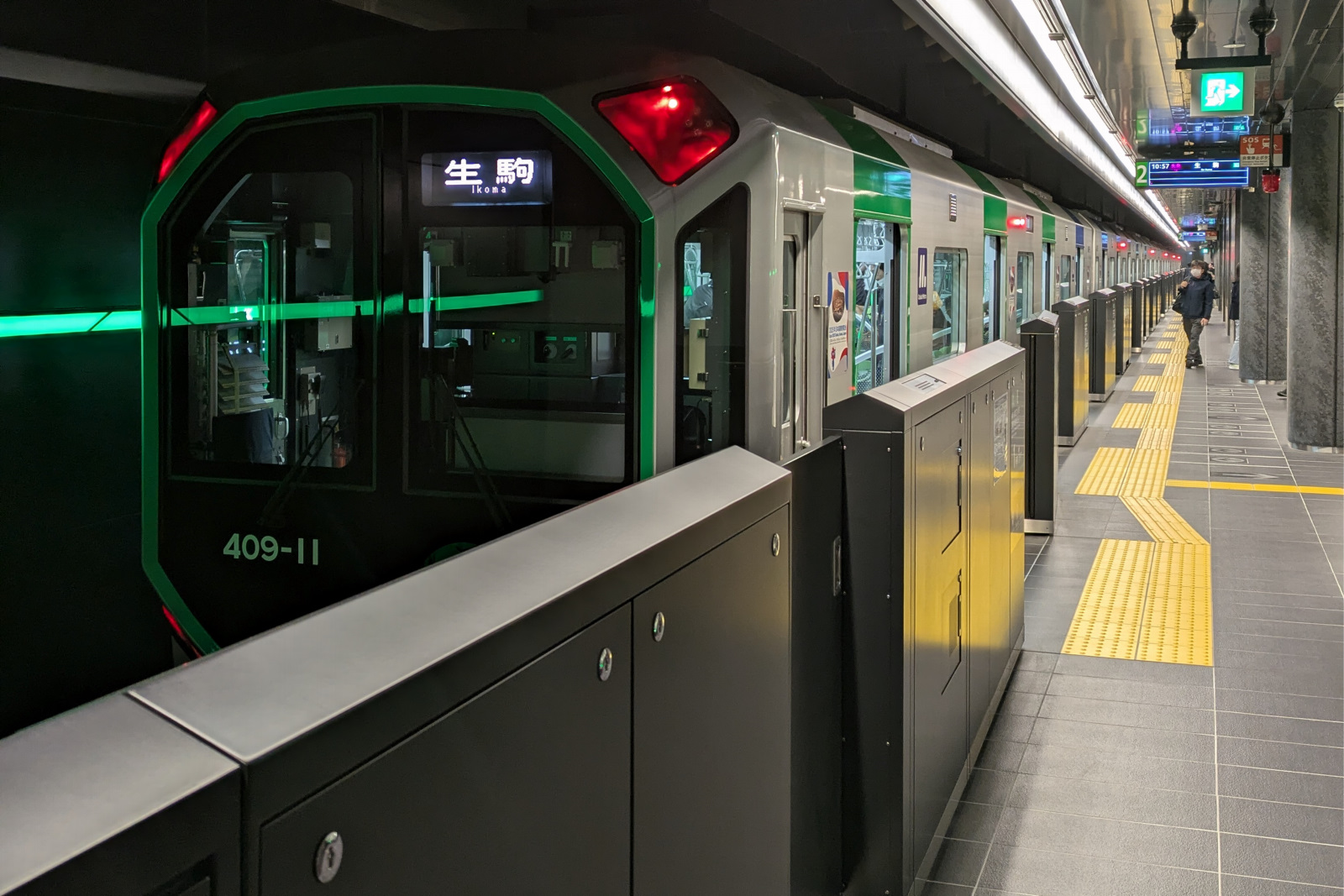
夢洲駅に停車中の400系 400 Series stopping at Yumeshima Station
発車時刻までの間、車内見学をすることにした。
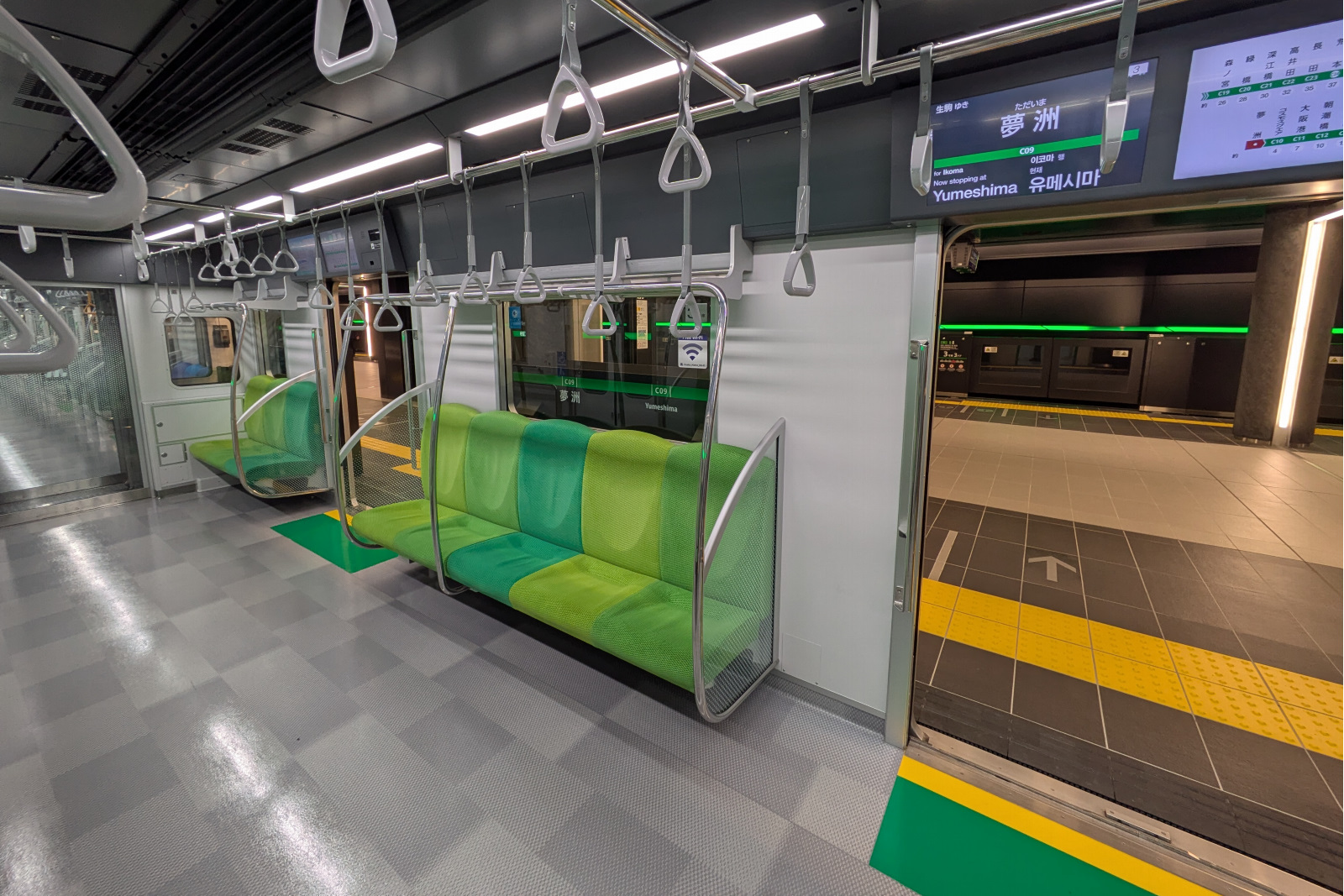
400系のロングシート A longitudinal seat in 400 Series
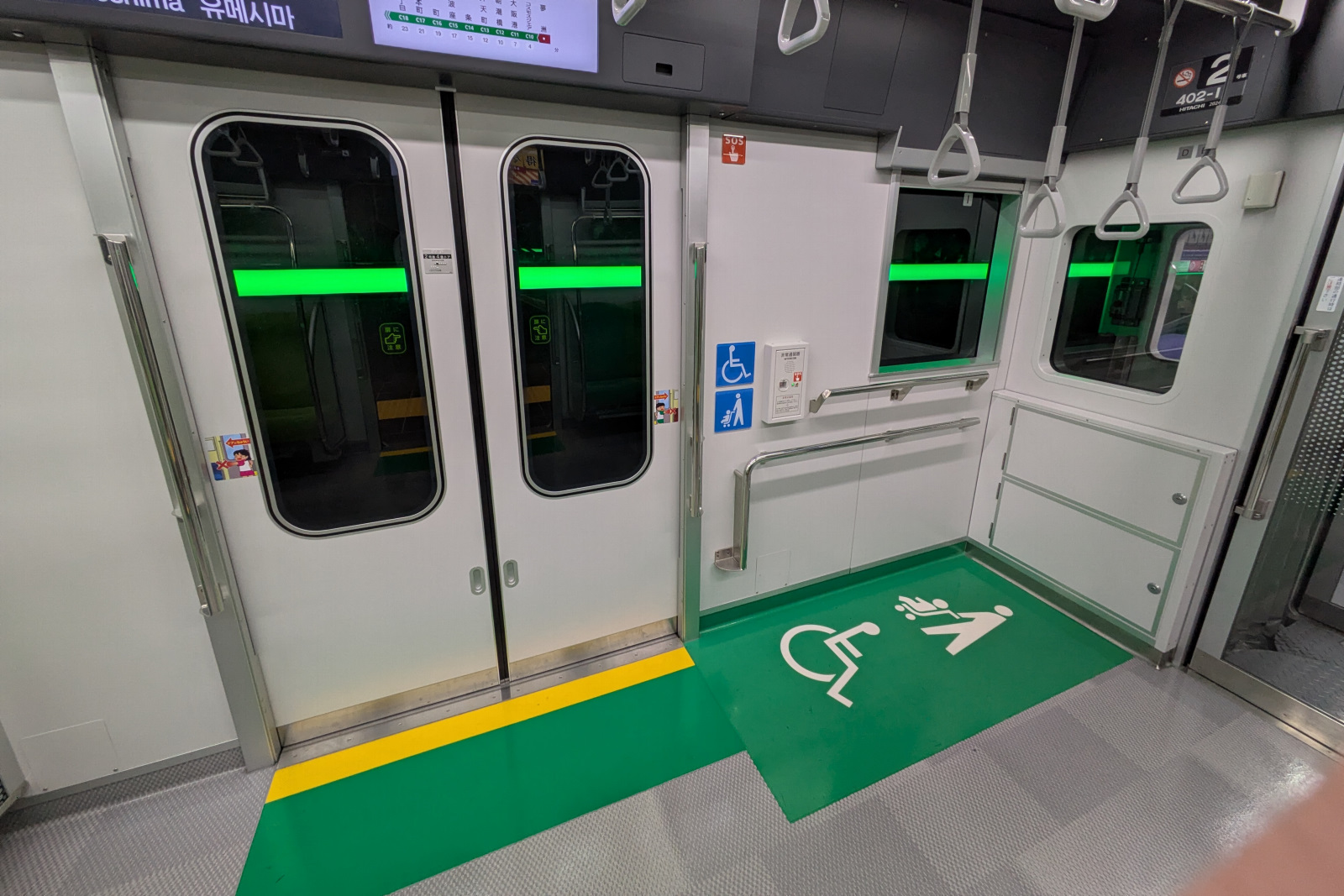
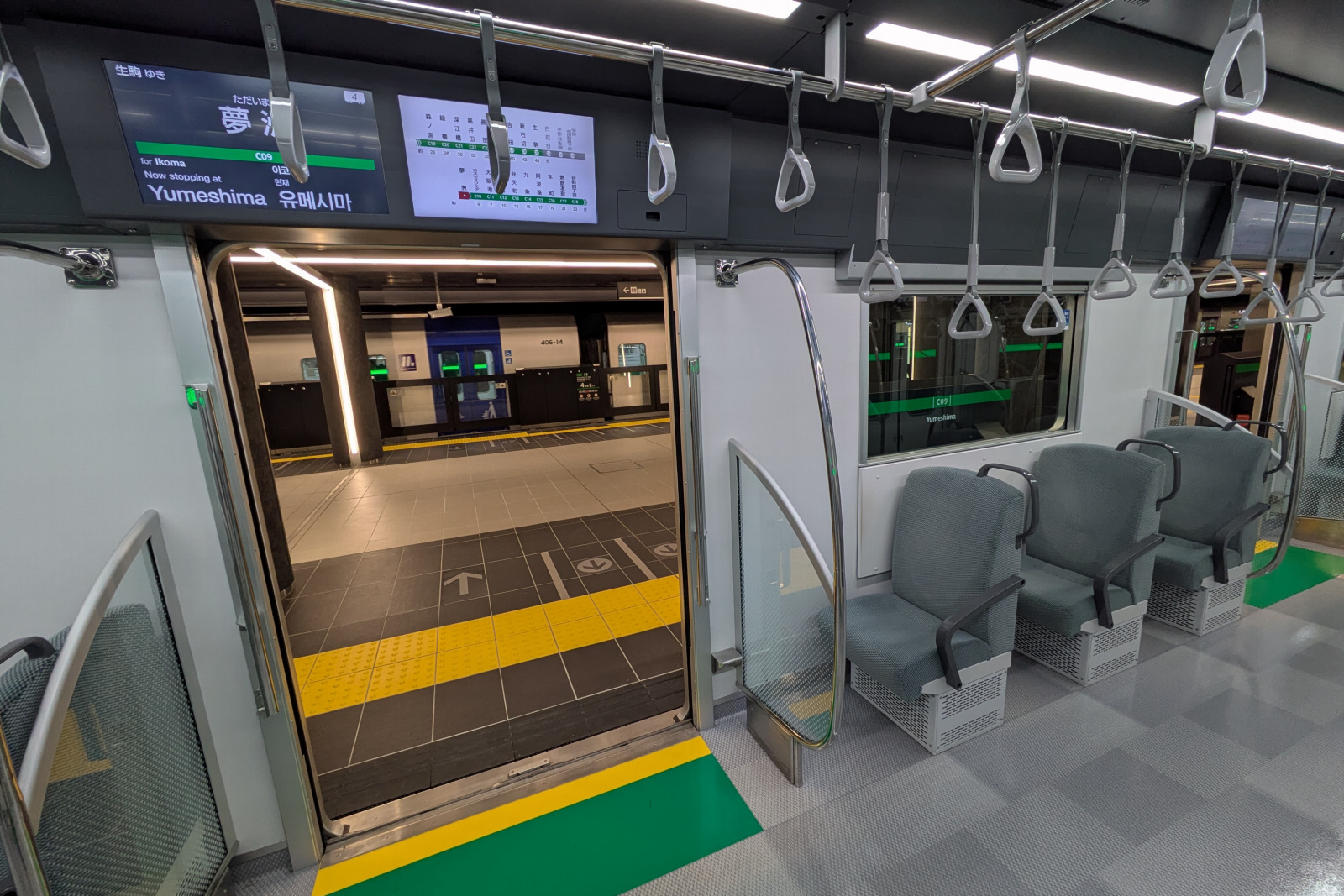
側扉と車いすスペース A passenger door and a wheelchair accessible space
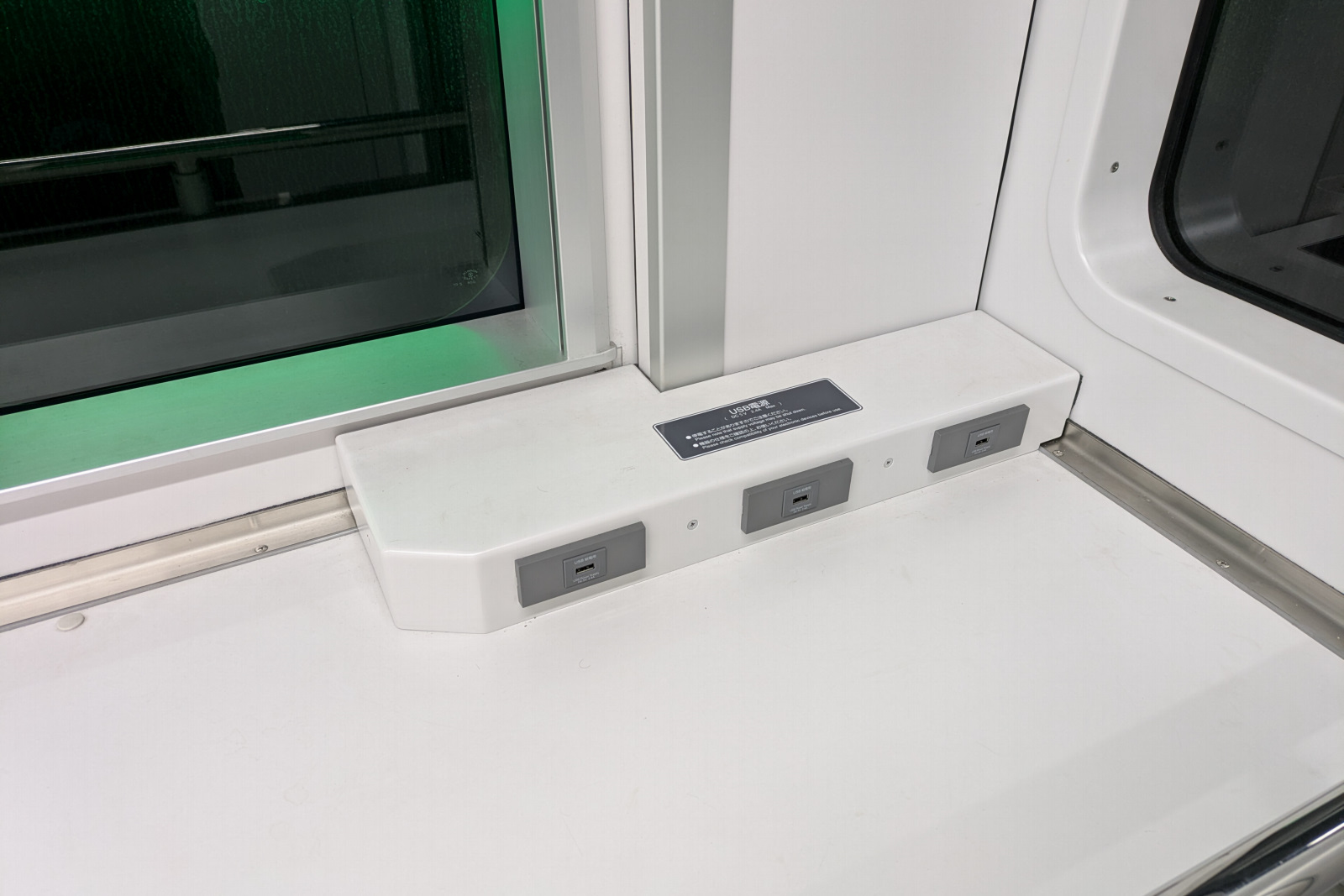
USB充電ポート USB type-A charging port
クロスシート車 transverse seats
4号車(408-00形)はOsaka Metro初採用の1+1配列のクロスシートが並ぶ。座席モケットは灰色。学研奈良登美ヶ丘方に向かって、通路を挟んで右側は学研奈良登美ヶ丘方向を、左側は夢洲方向を向いている。
発車時刻が近づき、僕は4号車(408-00形)にあるクロスシートに座る。夢洲駅開業に合わせて変更された発車メロディがホームに鳴り響き、扉が閉まる。
夢洲駅を発車した列車は長さ2138mの夢咲トンネルを通って咲洲にあるコスモスクエア駅へ。2025(令和7)年1月19日に開業した夢洲駅~コスモスクエア駅間は、駅間距離がOsaka Metroでは最も長い3.2kmを誇る。駅間距離が長い夢洲駅~大阪港駅間では、夢洲駅開業時より、最高速度が95km/hに向上している。
南港ポートタウン線との乗換駅であるコスモスクエア駅を発車すると、大阪港咲洲トンネルを通り、大阪港駅の手前で地上に出る。
大阪港駅はリニューアル工事中であり、ホームを覆う屋根やホームの壁は完成していた。ホームの夢洲方には、御堂筋線新大阪駅に続いて展望デッキが設置される予定で、こちらはまだ工事中だった。
大阪港駅からは最高速度70km/hで運転する。大阪港駅を発車すると、進行方向左側に安治川にかかる阪神高速5号湾岸線天保山大橋が見える。
大阪港駅から九条駅までの区間は高架線で、朝潮橋駅付近まではみなと通の真上を走る。朝潮橋駅の手前で進行方向左側にカーブを描き、そこから先は地上に中央大通が走り、中央線の線路よりもさらに上に阪神高速16号大阪港線がに並走する。中央線という路線愛称は、この中央大通の地下もしくは直上を主に走行することから名付けられた。
弁天町駅、九条駅周辺では、阪神高速16号大阪港線の上下線が離れ、中央線の線路の横に並走するような形になる。
阿波座駅の手前で再び地下に入る。千日前線との乗換駅である阿波座駅は、2025(令和7)年現在ではリニューアルの対象とはなっておらず、案内表示に市営地下鉄時代の面影が残っている。
次の本町駅は御堂筋線との乗換駅ということもあってか、多くの乗客が降車していった。万博開幕後は、新大阪・梅田方面から御堂筋線経由でやってきた人たちの乗り換えで賑わうことだろう。
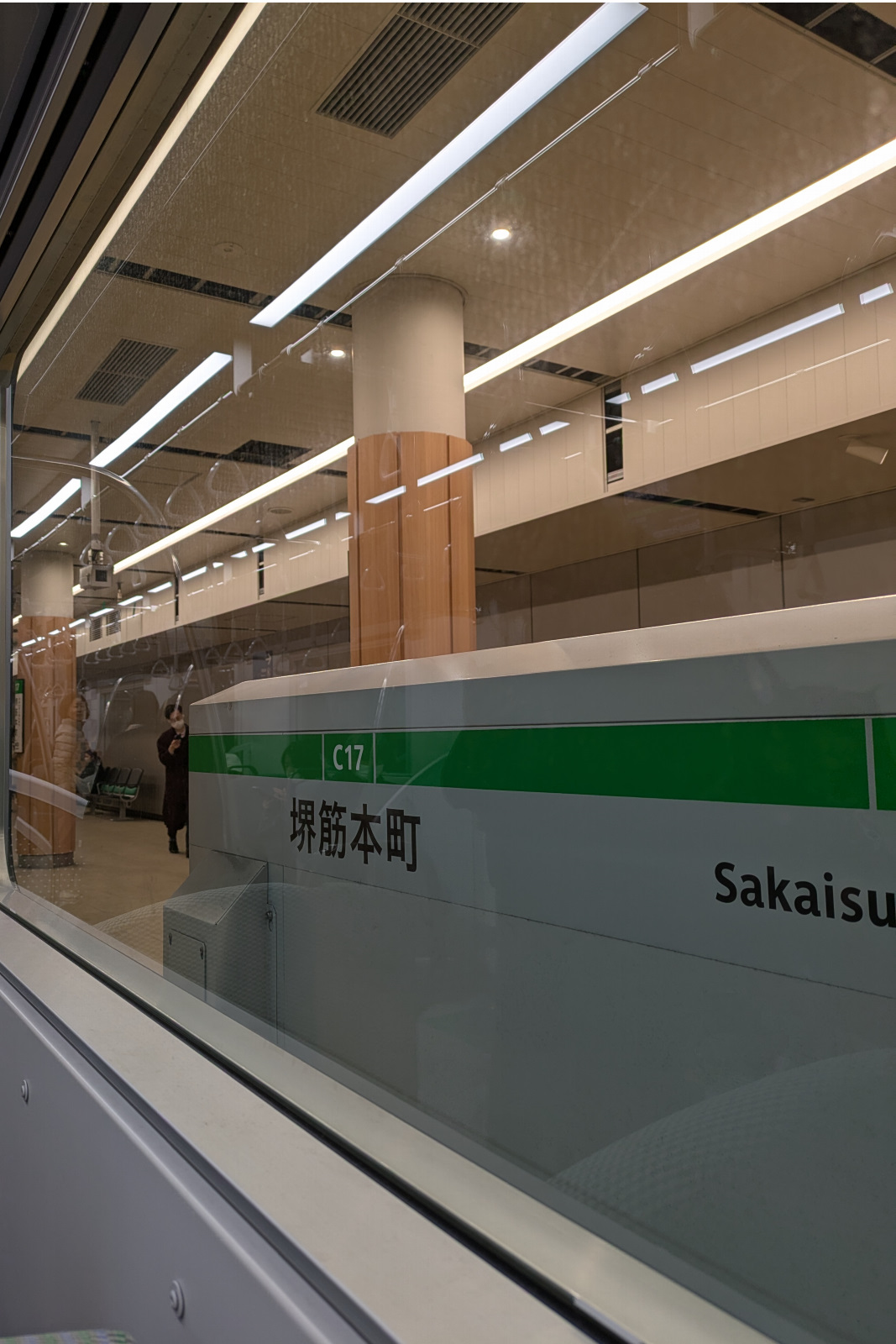
400系の車窓から見た堺筋本町駅 Sakaisuji-hommachi Station over the window
堺筋本町駅は島式ホームではあるものの、長田・生駒・学研奈良登美ヶ丘方面行きの1番線と夢洲方面行きの2番線が離れており、連絡通路で結ばれた2つの単式ホームのような格好になっている。これは本町駅~堺筋本町駅間の両方向の線路の間に船場センタービルの地下階が位置していることから、これを避ける形で線路のトンネルが掘られたためである。
谷町線との乗換駅である谷町四丁目駅も目下リニューアル工事中で、大阪城公園や大阪歴史博物館が近くにあることから、和をモチーフとした内装になる。完成予定は2025(令和7)年の夏頃を予定している。
長掘鶴見緑地線・JR西日本大阪環状線との乗換駅で、森之宮検車場への線路が分岐する森ノ宮駅では2番線に到着。向かいの1番線には別の400系(406-15F)が留置されていた。
森ノ宮駅からは大阪環状線の東側へ。続いては今里筋線との乗換駅である緑橋駅。
次の高井田駅からは大阪市を飛び出して隣の東大阪市に入る。JR西日本おおさか東線高井田中央駅が近接する高井田駅は、堺筋本町駅ほどではないが、長田・生駒・学研奈良登美ヶ丘方面行きホームと夢洲方面行きホームが離れている。
長田駅から先は近鉄けいはんな線に乗り入れる。けいはんな線はOsaka Metroの路線ではないため、エコチケットや大阪周遊パスでは乗車できない。しかし今回はけいはんな線にも乗車できるKANSAI MaaSワンデーパスを使っているため、けいはんな線にも初乗車。けいはんな線はATO運転の中央線とは違い、乗務員さんの手動操作によるワンマン運転を行っており、駅のホームにはホームドアではなくセンサー付きの固定ホーム柵が設置されている。
長田駅~荒本駅間は、荒本寄りが天井のない掘割構造になっている。荒本駅は一部掘割の地下駅
荒本駅~吉田駅間でトンネル・掘割を抜けて明かり区間になるが、線路の真上が阪神高速13号東大阪線で覆われている2段構造の高架の下段になる。構造は違うものの、同じく阪神高速道路が線路の上を並走する中央線の朝潮橋駅~九条駅間に似た雰囲気がある。
吉田駅も阪神高速道路の真下にあり、独特の雰囲気を醸し出している。
吉田駅~新石切駅間で、それまで線路の真上を走っていた阪神高速道路が今度は下になり、景色が開ける。車窓には緑豊かな生駒山や石切山が見える。
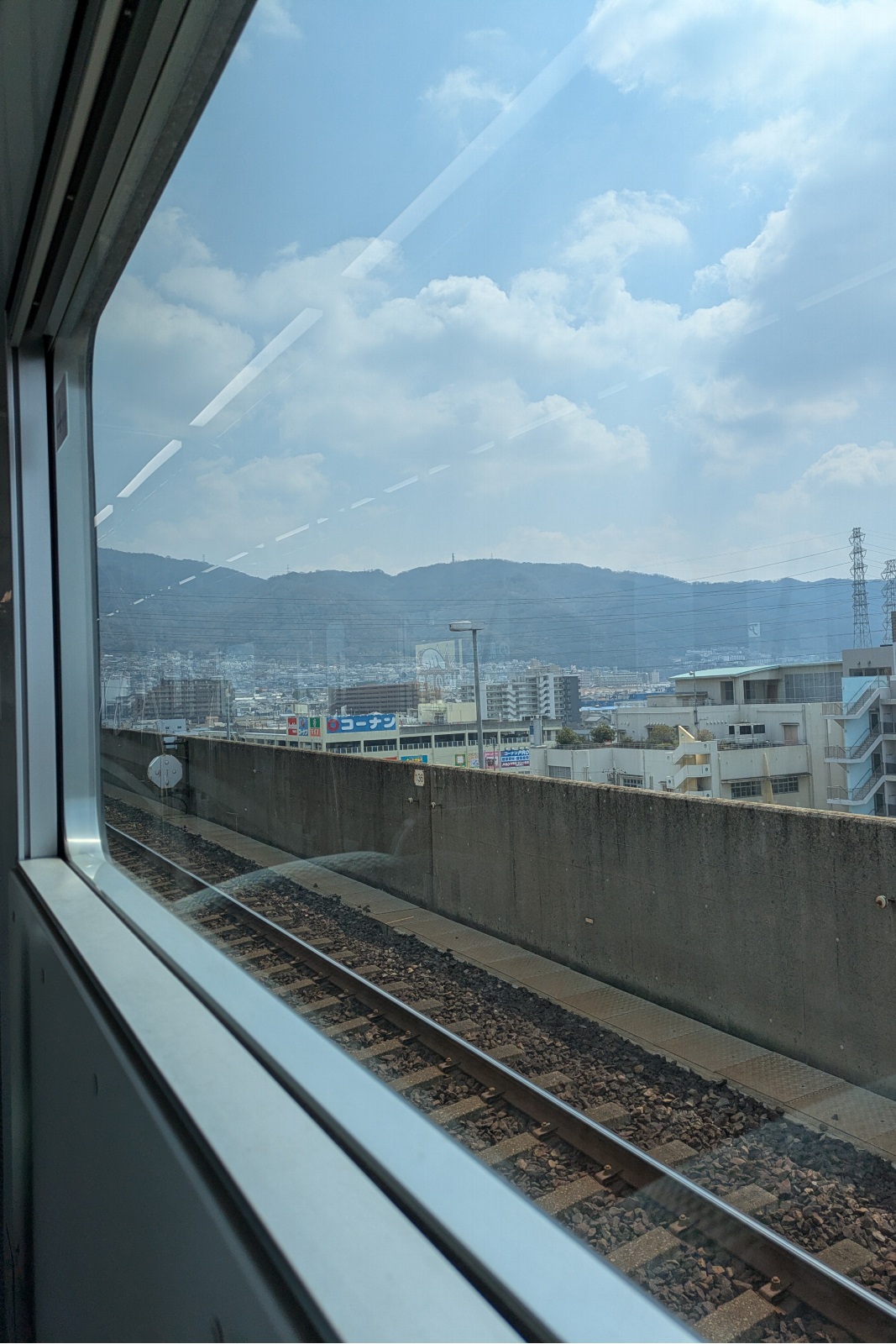
新石切駅付近の車窓から見える生駒山 Mt. Ikoma over the window near Shin-ishikiri Station
恩智川橋梁を渡ると間もなく新石切駅に停車。
新石切駅を発車すると下り勾配となり、生駒山の下を貫通する長さ4737mの生駒トンネルへ。走ること6分、長い長い生駒トンネルを抜けるとすぐに生駒駅に到着。
ここは奈良県生駒市。僕にとっては初めての奈良県への上陸である。
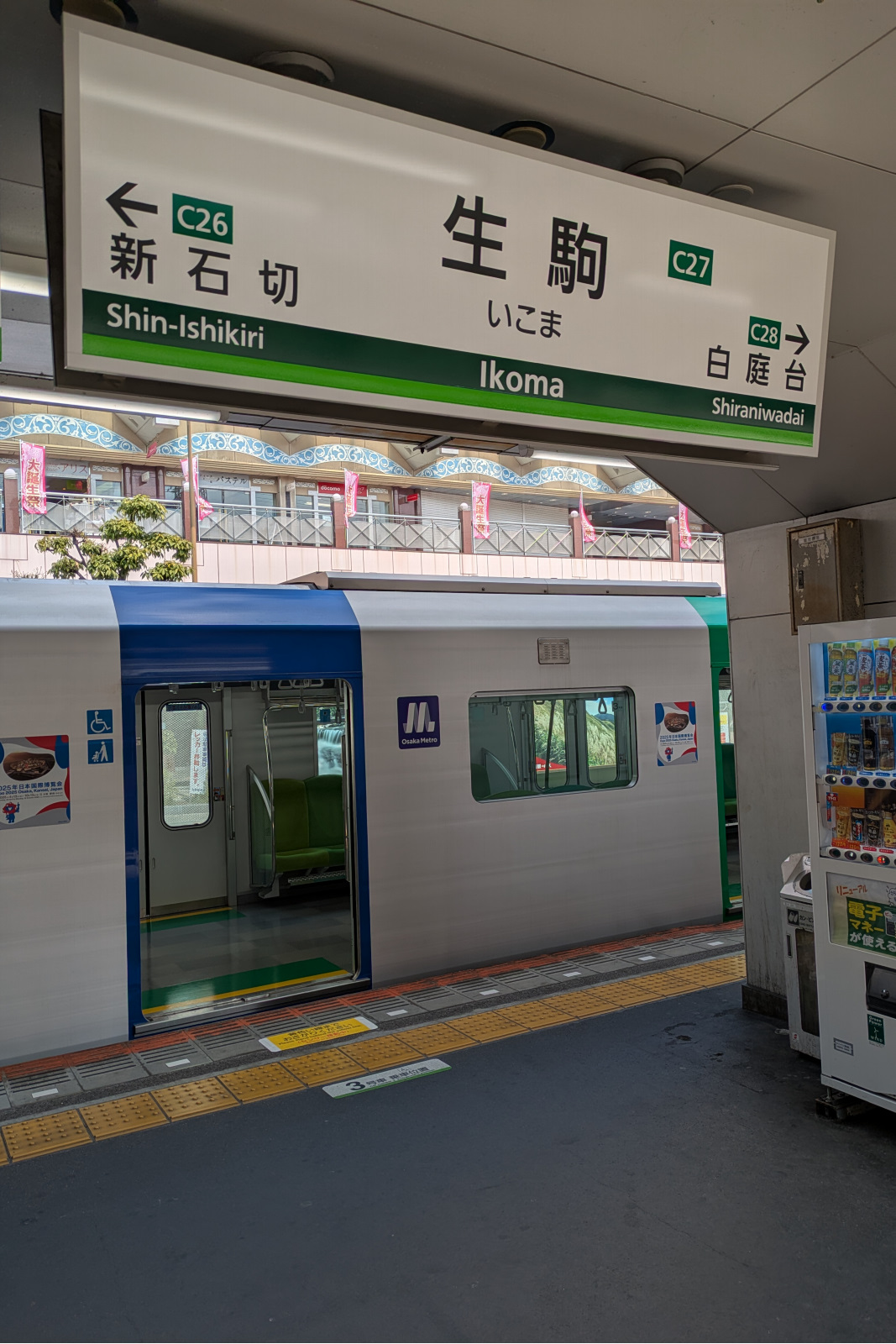
生駒駅に到着した400系と駅名標 400 Series stopping at Ikoma Station and a sign board
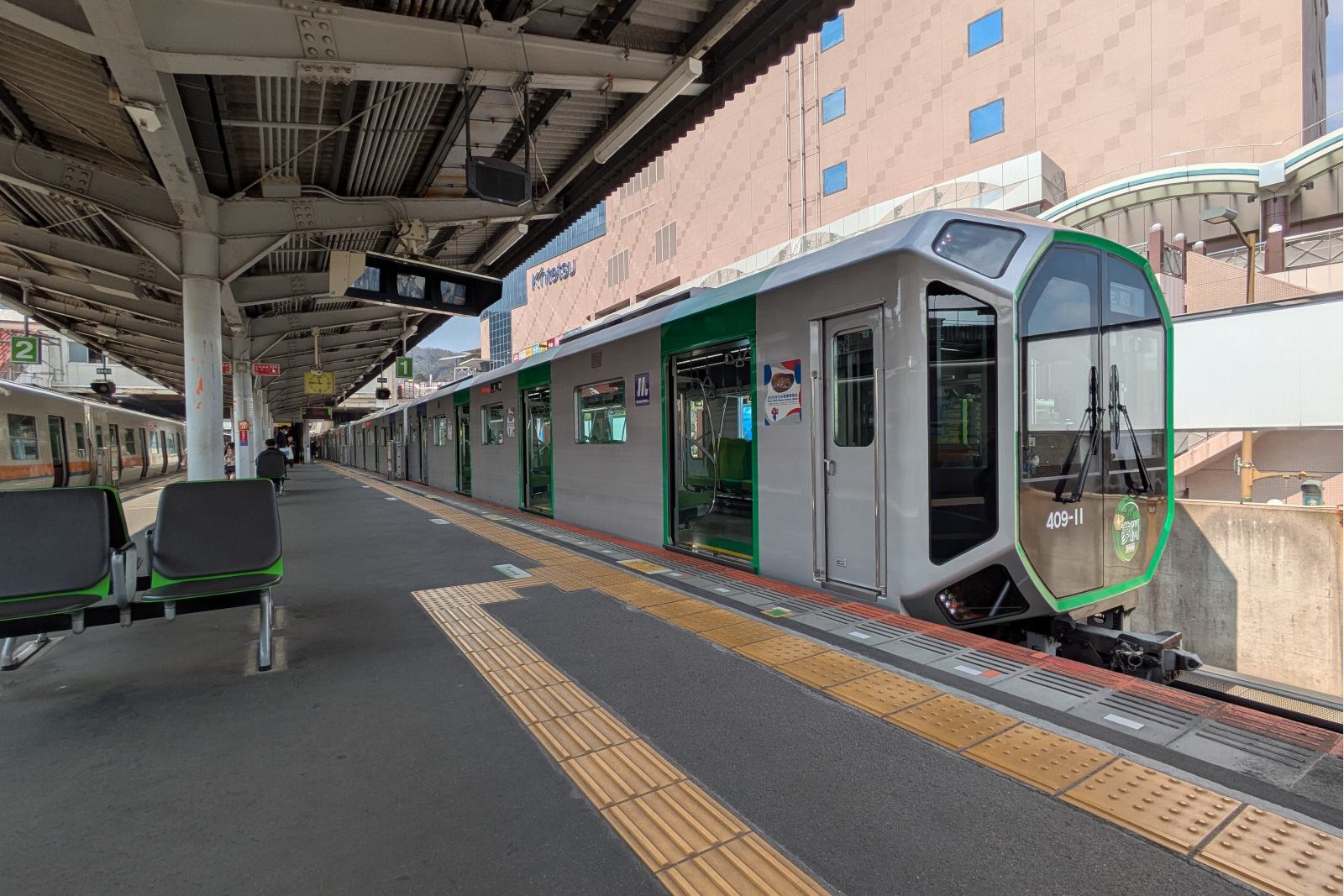
生駒駅に停車する400系 400 Series stopping at Ikoma Station
After watching Yumeshima Station, I started my travel on Osaka Metro 400 Series. I boarded a train for Ikoma operated by 406-11F set.
400 Series is the latest model on Osaka Metro Chuo Line, which debuted in 2023. It was designed by Ken Okuyama, former Osaka Metro's Chief Design Officer (2018 - 2023) and also known as the designer of JR East E235 Series on Yamanote and Yokosuka Lines and E001 Series "TRAIN SUITE SHIKISHIMA" cruise train.
Because of its unique design and accommodation reflecting passengers' voices, it was awarded the Laurel Prize in 2024 by Japan Railfan Club. It was the third time Osaka Metro (including the former Osaka Municipal Subway) carriage won the prize, following 60 Series on Sakaisuji Line in 1970 and 70 Series on Nagahori-tsurumiryokuchi Line in 1991.
The thousands place digit of conventional Osaka Metro carriages (21, 22, 23, 24, 25, 66, and 30000 Series) with a 5-figure number meant the line; for example, "1" is for Midosuji Line, "2" for Tanimachi Line, "3" for Yotsubashi Line, "4" for Chuo Line, "5" for Sennichimae Line, and "6" for Sakaisuji Line. However, the digit of 400 Series is "0" because it was manufactured and is in service only for Chuo Line.
I watched the interior of the train before its departure. The five among a 6-carriage set accommodate longitudinal seats. The ones between the side doors are for five passengers, and those at the end are for three. The regular seats are green-coloured, and the priority seats are blue-coloured. USB charging ports are at the end of both front carriages.
The fourth carriage from Yumeshima (408-00) equips transverse seats. Facing the direction of Nagata, Ikoma, and Gakken-nara-tomigaoka, the right-side seats face forward, and the left-side do backwards.
I sat on a forward-facing transverse seat.
The time to depart came, and a departure sign jingle, newly composed for the opening of Yumeshima Station, rang over the platform.
The train entered the Yumesaki Tunnel under Osaka Bay between Yumeshima and Sakishima, where Cosmosquare Station is.
At the same time as the opening of Yumeshima Station, the train's maximum speed improved up to 95 km/59 mi per hour between Yumeshima Station and Osaka Port Station.
The train ran into Osaka Port Sakishima Tunnel from Cosmosquare Station and pulled out of the tunnel before arriving at Osaka Port Station.
Osaka Port Station was under refurbishment construction. The roof over the platform and the wall looked completed, but a semi-open-air observation deck at the Yumeshima end didn't open.
After leaving Osaka Port Station, I could see Tempozan Ohashi Bridge over Ajigawa River on my left.
The train runs up to 70 km/ 43.5 mi per hour from Osaka Port Station. The railway spread above Minato-dori Street or Chuo-odori Street. The line nickname "Chuo Line" came from Chuo-odori Street because most parts spread above or under the street.
Hanshin Expressway Route 16 Osaka Port Line also runs above the railway between Asashiobashi Station and Awaza Station. The railway goes up to almost the same level as the expressway, and the eastbound and westbound lanes of the expressway are separated into right and left around Bentencho Station and Kujo Station.
The train went underground again from Awaza Station. I saw some old-design signs in the Osaka Municipal Subway period remain on the station.
Many passengers got off at Hommachi Station because of the transfer station to Midosuji Line toward Shin-osaka, Umeda, Namba, and Tennoji Areas.
Sakaisuji-hommachi Station was also under refurbishment with wooden-pattern columns and a warm atmosphere. The opposite-bound platform is separated to keep away from the underground structure of Semba Center Building.
Tanimachi-4chome Station was also under refurbishment. The refurbished atmosphere creates traditional Japan because Osaka Castle and Osaka Museum of History are nearby. The refurbishment will finish in Summer 2025.
The train approached track 2 at Morinomiya Station, where passengers can transfer to Nagahori-tsurumiryokuchi Line and JR West Osaka Loop Line. Another set (406-15F) was stopping at track 1.
The train went eastside of Osaka Loop Line. It was my first time to travel further than Midoribashi Station.
Fukaebashi, Takaida, and Nagata Stations remained the signs in the Municipal Subway period and don't have refurbishing plans.
Though Nagata is the end point of Chuo Line, the train kept travelling to Kintetsu Keihanna Line to Ikoma Station. Almost all Chuo Line trains go through Keihanna Line.
It was also my first time travelling on Keihanna Line because I had a QR-code ticket valid on both lines.
Between Nagata and Aramoto is a partially roofless area under Hanshin Expressway Higashi-osaka Line.
The train went up on a lower layer of a double-layered viaduct with the expressway between Aramoto and Yoshita. Yoshita Station is located under the expressway, which has a unique atmosphere.
The overhead expressway was separated right and left and went underground between Yoshita and Shin-ishikiri. I could see Mt. Ikoma over the train window. Crossing the Onchi River, the train arrived at Shin-ishikiri Station.
From Shin-ishikiri Station, the train ran into the 4,737 m/15,541.3 ft-long Ikoma Tunnel under Mt. Ikoma. It takes about 6 minutes from the start to the end.
Soon after pulling out of the tunnel, the train approached Ikoma terminal.
お気に入りの記事を「いいね!」で応援しよう

[鉄道旅の記録] カテゴリの最新記事
-
天浜線の旅 終点・掛川駅を目指す May 24, 2025
-
天浜線初乗車&転車台見学 May 23, 2025
-
豊橋鉄道渥美線で東急7200系に乗る May 22, 2025 コメント(2)


【毎日開催】
15記事にいいね!で1ポイント


© Rakuten Group, Inc.
