



PR

白山菊理姫
古代史から現代史まで真実を追究するサイト。 隠され封印され消された歴史や出来事を明らかにしてゆきます。
フリーページ
ハーバード経済日誌

ハーバード経済日誌(2)
ハーバード経済日誌(3)
ハーバード経済日誌(4)
ハーバード経済日誌(5)

ハーバード経済日誌(6)
古代飛騨王朝を探して
海外でのダイビングあれjこれ
海外でのダイビングあれこれ2
海外でのダイビングあれこれ3
驚異のガラパゴス(1)
驚異のガラパゴス(2)
驚異のガラパゴス(3)
歴史箱
山口博教授の講演録
古典SFの世界
富山サイエンス・フィクションの世界
ETとの交信は可能か
不思議な世界
不思議な世界2
不思議な世界3
不思議な世界4
不思議な世界5
不思議な世界6
不思議な世界7
不思議な世界8
フォト・ギャラリー
雑感
誰がケネディを殺したか
誰がケネディを殺したか2
誰がケネディを殺したか3
誰がケネディを殺したか4
カストロが愛した女スパイ1
カストロが愛した女スパイ2
カストロが愛した女スパイ3
カストロが愛した女スパイ4
カストロが愛した女スパイ5
カストロが愛した女スパイ6
カストロが愛した女スパイ7
カストロが愛した女スパイ8
カストロが愛した女スパイ9
カストロが愛した女スパイ10
カストロが愛した女スパイ11
出雲族と大和族の話(パート1)
出雲族と大和族の話(パート2)
サイド自由欄
設定されていません。
2007.12.22

テーマ: いい言葉(573)
カテゴリ: 文学・芸術
▼薔薇は薔薇3
スタインは大学に進み、心理学や発生学を学んだ後、1903年にパリに移住します。パリではパブロ・ピカソ、アンリ・マティスら若い画家と友人になり、彼らの絵を買い集める一方、若手の画家のための展示会を開くなど、彼らを援助しました。
このころからスタインは、小説や詩や戯曲を精力的に書くようになりました。その際、若手画家の絵(とくにセザンヌ)から多大なインスピレーションを受けており、作品も風変わりで、遊びが多く、前衛的でした。その代表的な例を挙げると、次のような表現があります。
Out of kindness comes redness and out of rudeness comes rapid same question, out of an eye comes research, out of selection comes painful cattle.
(親切から赤が生じ、無作法からは性急で同じ質問が生じ、一つの眼からは研究が生じ、選択からは痛ましい牛が生じる)
There is no there there.
(そこにはそこがない)
The change of color is likely and a difference a very little difference is prepared. Sugar is not a vegetable.
(色の変化はありそうで、違いがあり、非常にわずかな違いが用意されている。砂糖は野菜ではない)
ちょうどピカソの画風がキュービズムへと変化していく時期と一致しており、スタインの作品は文学界におけるキュービズムと考えられるようにもなりました。
しかし、こうしたスタインの革新的な試みは前衛的な芸術家からは歓迎されたものの、一般読者には受け入れられず、しばしば冷笑の対象となりました。昨日紹介した『聖なるエミリー』は1922年に発表された『Geography and Plays(地理と戯曲抄)』に収められた詩ですが、Rose is a rose is a rose is a roseもその後、たびたびパロディの格好の対象になります。
パロディ化の先陣を切ったのは、当時親交があり、スタインに事実上のパトロンにもなってもらっていたアーネスト・ヘミングウェイでした。彼は『誰がために鐘は鳴る(For Whom the Bell Tolls)』(1940年)の中で、次のような言葉を使って、スタインの薔薇のフレーズをからかっています。
a stone is a stein is a rock is a boulder is a pebble.
(石は陶器のジョッキーであり、岩であり、玉石であり、丸い小石である)
陶器のジョッキー(stein)はスタインのスペルと同じですね。
さらに同じ小説の中で、次の表現が出てきます。
a rose is a rose is an onion.
(薔薇は薔薇で玉ねぎである)
An onion is an onion is an onion.
(玉ねぎは玉ねぎで玉ねぎである)
a bitch is a bitch is a bitch is a bitch.
(あばずれはあばずれで、あばずれであり、あばずれだ)
これに対し、スタインも負けていはいません。自分の飼い犬の前で女性用のハンカチを振って、「さあ、ヘミングウェイ、かかってらっしゃい。猛犬になりなさい」と皆の前でふざけながら、ヘミングウェイをからかったそうです。
また長くなってしまいました。明日こそ、スタイン本人による薔薇のフレーズの解説を紹介します。
(続く)
薔薇は薔薇で、薔薇だそうですが、ではこれは・・・
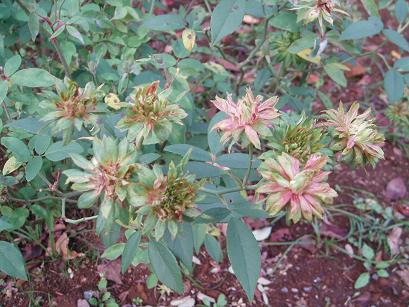
実はこれもグリーンローズという薔薇なんですね。
緑色の花が咲きます。といっても、実は花に見える部分は花弁の変化した包葉が集まったもので、開花後花色は紫がかった茶色に変化します。ロサ・キネンシス・パリダの枝変わりだとされているそうです。バラ科インディカ節。
スタインは大学に進み、心理学や発生学を学んだ後、1903年にパリに移住します。パリではパブロ・ピカソ、アンリ・マティスら若い画家と友人になり、彼らの絵を買い集める一方、若手の画家のための展示会を開くなど、彼らを援助しました。
このころからスタインは、小説や詩や戯曲を精力的に書くようになりました。その際、若手画家の絵(とくにセザンヌ)から多大なインスピレーションを受けており、作品も風変わりで、遊びが多く、前衛的でした。その代表的な例を挙げると、次のような表現があります。
Out of kindness comes redness and out of rudeness comes rapid same question, out of an eye comes research, out of selection comes painful cattle.
(親切から赤が生じ、無作法からは性急で同じ質問が生じ、一つの眼からは研究が生じ、選択からは痛ましい牛が生じる)
There is no there there.
(そこにはそこがない)
The change of color is likely and a difference a very little difference is prepared. Sugar is not a vegetable.
(色の変化はありそうで、違いがあり、非常にわずかな違いが用意されている。砂糖は野菜ではない)
ちょうどピカソの画風がキュービズムへと変化していく時期と一致しており、スタインの作品は文学界におけるキュービズムと考えられるようにもなりました。
しかし、こうしたスタインの革新的な試みは前衛的な芸術家からは歓迎されたものの、一般読者には受け入れられず、しばしば冷笑の対象となりました。昨日紹介した『聖なるエミリー』は1922年に発表された『Geography and Plays(地理と戯曲抄)』に収められた詩ですが、Rose is a rose is a rose is a roseもその後、たびたびパロディの格好の対象になります。
パロディ化の先陣を切ったのは、当時親交があり、スタインに事実上のパトロンにもなってもらっていたアーネスト・ヘミングウェイでした。彼は『誰がために鐘は鳴る(For Whom the Bell Tolls)』(1940年)の中で、次のような言葉を使って、スタインの薔薇のフレーズをからかっています。
a stone is a stein is a rock is a boulder is a pebble.
(石は陶器のジョッキーであり、岩であり、玉石であり、丸い小石である)
陶器のジョッキー(stein)はスタインのスペルと同じですね。
さらに同じ小説の中で、次の表現が出てきます。
a rose is a rose is an onion.
(薔薇は薔薇で玉ねぎである)
An onion is an onion is an onion.
(玉ねぎは玉ねぎで玉ねぎである)
a bitch is a bitch is a bitch is a bitch.
(あばずれはあばずれで、あばずれであり、あばずれだ)
これに対し、スタインも負けていはいません。自分の飼い犬の前で女性用のハンカチを振って、「さあ、ヘミングウェイ、かかってらっしゃい。猛犬になりなさい」と皆の前でふざけながら、ヘミングウェイをからかったそうです。
また長くなってしまいました。明日こそ、スタイン本人による薔薇のフレーズの解説を紹介します。
(続く)
薔薇は薔薇で、薔薇だそうですが、ではこれは・・・
実はこれもグリーンローズという薔薇なんですね。
緑色の花が咲きます。といっても、実は花に見える部分は花弁の変化した包葉が集まったもので、開花後花色は紫がかった茶色に変化します。ロサ・キネンシス・パリダの枝変わりだとされているそうです。バラ科インディカ節。
お気に入りの記事を「いいね!」で応援しよう

[文学・芸術] カテゴリの最新記事
-
17歳の作文の自己講評 2023.04.29
-
17歳の作文の後半 2023.04.28
-
目には見えない「冬の花」 2023.02.27


【毎日開催】
15記事にいいね!で1ポイント


キーワードサーチ
▼キーワード検索
コメント新着
ワールドカップ最終 …
 convientoさん
虹色のパレット カズ姫1さん
■■宇宙歴史自然研究… 第七十三世武内宿禰さん
氣のワーク研究所 朝日6844さん
窓辺でお茶を heliotrope8543さん
convientoさん虹色のパレット カズ姫1さん
■■宇宙歴史自然研究… 第七十三世武内宿禰さん
氣のワーク研究所 朝日6844さん
窓辺でお茶を heliotrope8543さん
カレンダー
© Rakuten Group, Inc.
