


PR
Calendar
Category
Hiekka aikaa
(731)Suomi
(322)Lappi
(53)Kuksa ククサ
(23)Luonto
(25)erämaa
(18)huomio
(162)muovimalli
(32)musiikki
(301)eläinpelastus
(79)veitset (knives)
(41)Olkoon voima kanssasi!
(35)剣の巻
(37)今は昔
(21)陽明学
(441)道家思想
(126)孫子兵法
(12)人鏡論
(13)海外通販/個人輸入
(26)日本独立計画
(49)隷属への道
(25)多目的道具
(206)現代甲冑考 - Modern Armors -
(80)実用物具考
(85)民間防具考
(177)民間防衛
(219)戦ふ日本刀
(97)實戦刀譚
(103)臨戦刀術
(94)古傳鍛刀術
(2)北欧
(118)西欧
(260)中欧
(35)彫金
(20)意匠
(58)『傭兵たちの挽歌』
(141)2011 jalkeen
(34)TORIAEZ
(11)Needle Felted Animals
(262)Weekly SAK
(597)Weekly SL
(485)Weekly EXP
(39)Keyword Search
▼キーワード検索
2026年06月
2026年05月
2026年04月
2026年03月
2026年02月
2026年05月
2026年04月
2026年03月
2026年02月
2026年01月
2025年12月
2025年11月
2025年10月
2025年09月
2025年12月
2025年11月
2025年10月
2025年09月


2019年01月02日

テーマ: 老荘思想(128)
カテゴリ: 道家思想

'China - Hua Shan'
Photo by Aaron Feen

Youtube - Amazing Places on Our Planet
Avatar" Mountain & Wulingyuan Scenic Area, Zhangjiajie,
China in 4K Ultra HD
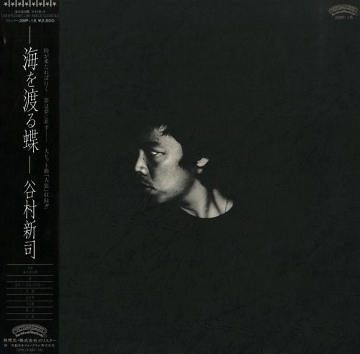
※ 群れから離れて掟を逃れて
~「天狼」 『海を渡る蝶』所収
道家思想篇 20 韓非子・解老篇 6 道(Tao)って何だ?
群れから離れて掟を逃れて〜
「德は內なり、得は外なり。
上德〔じょうとく〕は德ならずとは、其の神〔しん〕外〔そと〕に淫せざるを言う也。
神〔しん〕外〔そと〕を淫せずは則ち身を全〔まった〕からむ。
身の全〔まった〕きを德と謂〔い〕う。德とは身を得〔う〕ること也。
凡〔およ〕そ德は無為を以て集〔あつま〕り、
之を為し之を欲せば、則ち德〔とく〕は舍〔やど〕ること無く、
德〔とく〕舍〔やど〕ること無くば則ち全〔まった〕からざらむ。
之〔これ〕を用い之を思わば則ち固〔かた〕からず、固からずば則ち功〔こう〕無からむ。
功無きは則ち得〔とく〕に生〔しょう〕ず。
得〔え〕むとせば則ち德無く、得んとせずば則ち德有らむ。
故に曰〔いわ〕く、上德は德ならず、是〔ここ〕を以て德有りと。
虛〔きょ〕を為すを貴〔たっと〕ぶ所以〔ゆえん〕は、
其の意の制せらるる所無きを謂〔い〕う也。
夫〔か〕の術〔じゅつ〕無〔な〕き者、故〔ことさら〕に為す思う無きを以て虛を為す也。
夫〔か〕の故〔ことさら〕に為す無く思う無きを以て虛〔きょ〕を為す者は、
虛〔きょ〕とは、其の意の制せらるる無きを謂う也。
今〔いま〕虛を為すに制せらるるは是〔こ〕れ虛ならざる也。
虛なる者の為す無きは、為す無きを以て有常〔ゆうじょう〕と為さず、
為す無きを以て有常と為さずは則ち虛、虛ならば則ち德〔とく〕盛〔さかん〕ならむ。
德〔とく〕盛〔さかん〕ならむを上德〔じょうとく〕と謂う。
仁〔じん〕とは、其の中心〔ちゅうしん〕欣然〔きんぜん〕として人を愛するを謂う也。
其の人の福〔ふく〕有るを喜びて、人の禍〔わざわい〕有るを惡〔にく〕むや、
心の已〔や〕むこと能〔あた〕わざるを生ずる也、其の報〔むくい〕を求めるに非ざる也。
故に曰く、上仁〔じょうじん〕は、之を為〔な〕して而〔しか〕も以て為す無き也と。
義とは、君臣〔くんしん〕上下〔しょうか〕の事なり、
父子〔ふし〕の貴賤〔きせん〕の差なり、
知交〔ちこう〕朋友〔ほうゆう〕の接〔せつ〕なり、
親踈〔しんそ〕內外〔ないがい〕の分〔ぶん〕なり。
臣、君〔きみ〕に事〔つか〕えて宜〔よろ〕しき、
下〔しも〕、上〔かみ〕に懷〔なつ〕きて宜しき、
子〔こ〕、父に事〔つか〕えて宜しき、
賤〔せん〕、貴〔き〕を敬〔けい〕して宜しき、
知交〔ちこう〕朋友〔ほいゆう〕の相〔あい〕助〔たすく〕るや宜しき、
親しきは內にして踈〔うと〕きは外〔そと〕なるの宜しき、
義とは其の宜しきを謂う也。宜しくして之〔これ〕を為す。
故に曰く、上義〔じょうぎ〕は之を為して而〔しか〕るに以て為す有る也と。
禮(礼)〔れい〕とは情〔じょう〕の貌〔ぼう〕なる所以〔ゆえん〕なり、
群義〔ぐんぎ〕の文章なり、君臣〔くんしん〕父子〔ふし〕の交わりなり、
貴賤〔きせん〕賢不肖〔けんふしょう〕の別かるる所以〔ゆえん〕なり。
中心〔ちゅうしん〕懷〔おも〕うも諭〔さと〕られず、
故に疾〔と〕く趨〔はし〕り卑〔ひく〕く拜〔はい〕して之を明〔あきら〕かにす。
實心〔じっしん〕愛するも知られず、
故に言〔げん〕好〔よ〕くし辭〔じ〕を繁〔しげ〕くして以て之を信〔しん〕にす。
禮は外飾〔がいしょく〕もて內〔うち〕を諭〔さと〕す所以〔ゆえん〕なり。
故に曰く、禮は情貌を以てする也と。
凡そ人の外物〔がいぶつ〕の為〔ため〕に動くや、
其の身の為にする禮なるを知らざる也。
眾人(衆人)〔しゅうじん〕の禮を為すや、以て他人を尊ぶ也。
故に時に勸〔すす〕み時に衰〔おとろ〕う。
君子〔くんし〕の禮を為すは、以て其の身の為にす。
以て其の身の為にす、故に之を神〔しん〕にするを上禮〔じょうれい〕と為す。
上禮〔じょうれい〕は神にして眾人〔しゅうじん〕は貳〔じ〕にす、
故に相〔あい〕應〔おう〕ずること能わず。
相〔あい〕應〔おう〕ずること能わず、
故に曰く、上禮〔じょうれい〕は之〔これ〕を為して而〔しか〕も之に應ずるもの莫しと。
眾人(衆人)〔しゅうじん〕は貳〔じ〕にすと雖〔いえど〕も、
聖人は恭敬〔きょうけい〕を復〔ふ〕み、
手足〔しゅそく〕の禮を盡〔つく〕すや衰〔おとろ〕えざるなり。
故に曰く、臂〔ひじ〕を攘〔かか〕げて之〔これ〕に仍〔よ〕ると。」
( 『韓非子』解老 第二十)
Virtue is internal. Acquirement is external.
"Superior virtue is unvirtue" means that the mind does not indulge in external things.
If the mind does not indulge in external things, the personality will become perfect.
The personality that is perfect is called "acquirement".
In other words, acquirement is the acquirement of the personality.
In general, virtue begins with non-assertion, develops with non-wanting,
rests secure with non-thinking, and solidifies with non-using.
If it acts and wants, it becomes restless; if restless, it is not perfect.
If put into use and thought about, it does not solidify; if it does not solidify,
it cannot work successfully.
If it is not perfect and cannot work successfully, it will become self-assertive virtue.
If it becomes self-assertive virtue, it is non-virtue.
Contrary to this, if unvirtue, it has virtue. Hence the saying:
"Superior virtue is unvirtue. Therefore it has virtue."
The reason why men value non-assertion and nonthinking as emptiness is that by
remaining empty one's will is ruled by nothing.
Verily, tactless people purposely regard non-assertion and non-thinking as emptiness.
To be sure, those who purposely regard non-assertion and non-thinking as emptiness,
never forget emptiness in their minds.
They are thus ruled by the will to emptiness.
By "emptiness" is meant the status of the will not ruled by anything.
To be ruled by the pursuit of emptiness is ipso facto not emptiness.
When he who rests empty does not assert, he does not regard non-assertion as
having a constant way.
If he does not regard non-assertion as having a constant way, he is then empty.
If he is empty, his virtue flourishes.
The virtue that flourishes is called "superior virtue". Hence the saying:
"Superior virtue is non-assertion and without pretension."
By "benevolence" is meant the love of men in a pleasant mood in one's innermost heart.
It is to rejoice in the good luck of others and to lament on their bad luck.
It is born of the sense of sheer necessity, but not of the want of reward.
Hence the saying: "Superior benevolence acts but makes no pretensions."
"Righteousness" covers the manners of ruler and minister, superior and inferior,
the distinction between father and son, high and low, the contact between intimate
acquaintances, between friends, and the difference between the close and the
distant, the internal and the external.
The minister ought to serve the ruler aright;
the inferior ought to comfort the superior aright.
The son ought to serve the father aright; the low ought to respect the high aright.
Intimate acquaintances and good friends ought to help each other aright.
The close ought to be taken in while the distant ought to be kept off.
In short, "righteousness" implies whatever is done aright. Anything right ought to
be done aright. Hence the saying:
"Superior righteousness acts and makes pretensions."
"Propriety" refers to the mode in which one's feelings are expressed.
It is concerned with the cultural embellishments of all righteous acts, such as the
mutual relations of ruler and minister, father and son.
It is the way whereby high and low, worthy and unworthy, are differentiated.
For instance, when one pines after someone else but cannot make himself understood,
he runs fast towards the person and bows low in front of him so as to express his
attachment to that person.
Similarly, when one loves someone from one's innermost heart and cannot make
himself known, he uses pleasing words and beautiful phrases to convince the
person loved.
Thus, propriety is the outer embellishment whereby the inner heart is understood.
Hence "propriety" refers to the mode in which one's feelings are expressed.
In general, when a man responds to external things, he does not know that the
response reveals the propriety of his personality.
The masses of the people practise propriety only to show respect for others,
wherefore propriety is now cordial and again simple.
The superior man practises propriety on purpose to cultivate his personality.
Since it is practised on purpose to cultivate his personality, it is intrinsic in mind and
forms superior propriety.
Since superior propriety is intrinsic in mind and popular propriety changes from
time to time, they do not respond to each other.
Since they do not respond to each other, hence the saying:
"Superior propriety acts and no one responds to it."
Though the masses of the people change propriety from time to time, yet the saintly
man is always courteous and respectful, practising the rules of propriety which
bind him hand and foot.
In so doing he never slackens.
Hence the saying: "Superior virtue stretches its arm and enforces its rules."
( Han Feizi >Chapter XX. Commentaries on Lao Tzŭ's Teachings)
むかし、『仁義なき戦い』の原作者・飯干晃一氏が
愛娘の飯星景子さんを統一教会に誑〔たぶら〕かされて怒った。
テレビ朝日の 朝まで生テレビ 「激論!!少年凶悪犯罪」において、
自分の家族を殺されたら犯人に復讐するという旨の発言をした飯干氏に対し、
「そんな野蛮な!」と批判したのが福島瑞穂・現参議院議員である。
戦後の大人はたいてい口ばかり達者で肝心な時何もしないで逃げまくるが、
娘を奪還した飯干氏はさすがであった。
『仁義なき戦い』の作者は仁義ある人だったのである。
「仁とは、其の中心欣然〔きんぜん〕として人を愛するを謂う也。
其の人の福有るを喜びて、人の禍〔わざわい〕有るを惡〔にく〕むや、
心の已〔や〕むこと能わざるを生ずる也、其の報を求めるに非ざる也」。
世間的に言えば、
統一教会こと世界平和統一家庭連合は「右翼」で、社会党は「左翼」であるが、
まったく「右」を向いても「左」を見てもである。
愛国主義者になったつもりで「右」に傾倒すると、
直接・間接的に統一教会やカルト教団の走狗〔そうく〕に金を落とすことになるかもしれない。
くわばらくわばら。
年末年始一時移転企画
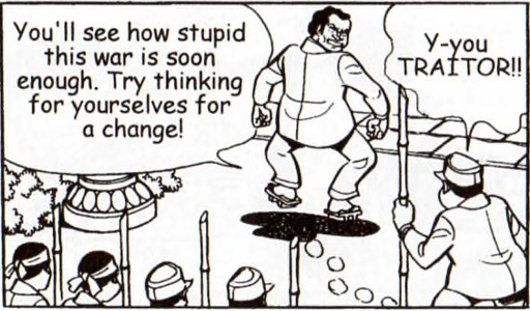
・考察「君は『はだしのゲン』の町内会長を助けるか?」
以下はややこしい話題の続きを書いていますので、
前回 同様読みたくない人はすっとばしてください。

Barefoot Gen Vol.1

・2019年正月のネタばらし
本稿を書き始めたのは 2018年12月01日 掲載分からなのでおよそ一ヶ月経ちました。
そこで久しぶりに、件〔くだん〕の某通販サイト・カスタマーレビューを見てみると、
相も変わらず「GHQが・・・・・・」「WGIPが・・・・・・」などと
つい最近知ったばかりであろう略称が連呼されており微笑ましいものです。
しかし、GHQ、WGIP の名前は出るのに、
肝心の 民間検閲支隊 の略称がレビューにまったく出てこないのは、
レビュー対象の書籍に載っていないか、
肝心の、情報元である書籍を読んでいないからでしょう。
その書籍を以下に挙げます。
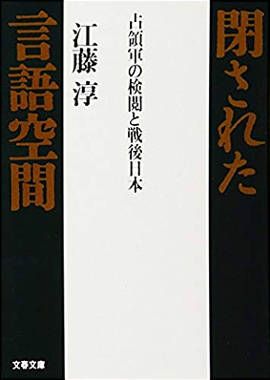
『閉された言語空間 占領軍の検閲と戦後日本』
江藤淳 著 文藝春秋 発行
https://books.rakuten.co.jp/rb/633309/
当方の手元にある上掲書は 文庫版 で「あとがき」まで入れると371ページあります。
さらに、同じく 江藤淳 氏の書籍を揃えたいなら、
文庫版の 『一九四六年憲法 その拘束』 を買えばよいでしょう。
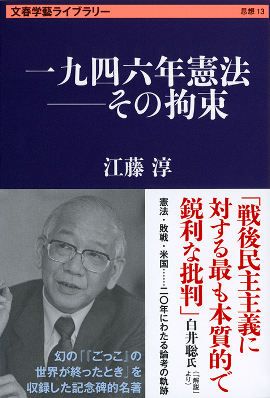
『一九四六年憲法ーその拘束』 (文春学藝ライブラリー)
江藤淳 著 文藝春秋 発行
https://books.rakuten.co.jp/rb/13187466/
当ブログで上掲書 『閉された言語空間 占領軍の検閲と戦後日本』 を取り上げたのは、
2011年11月26日 更新分、
東日本大震災、福島原発事故の影響が大きかった時期です。
その頃、当方の興味は以下の本にありました。
戦後の愚民政策を語りたいならこちらも読まねばお話になりません。
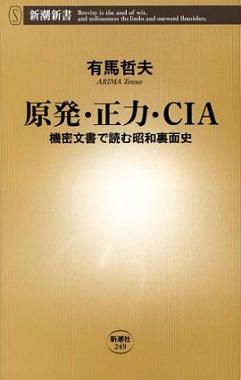
原発・正力・CIA 機密文書で読む昭和裏面史 (新潮新書)
有馬哲夫 著 新潮新書 発行
https://books.rakuten.co.jp/rb/5436318/
さて、これらの本を読んでいながら、
それがしが「日本は洗脳されたー!」だの「日本は素晴らしい国!」だのと
あたかも 悪霊 に取り憑かれたように叫んだりしないのは、
さすがに数十年の洗脳(?)期間を経てしまうと、
欧米の文化・思想は日本社会と切っても切れない関係になっているからであり、
是が非でも日本文化からアメリカ占領下以後の要素を取り除きたいのであれば、
まず個人単位から、 Mac も、 Windows も使わず、
Linus Benedict Torvalds はフィンランド人だけれど
Linux は IBM 、HPQ などアメリカ資本が絡んでいるからこれを使わず、
トロン も同名称がネズミー映画が元になったかもしれないからこれを使わず、
Youtube 、 Twitter を利用せず、
アメリカ由来のジーパンを履かず、米軍のフライトジャケットを着ず、
和服を着、草履・雪駄を履いて、アメリカ的な要素を黙って取り除いて行けばよい。
読売巨人軍を応援している やから共 は全員洗脳された愚民であるから進んでこれを罵り、
付け焼き刃レビュアーの感想文とそっくりな、昭和維新の歌でも歌っておれ。
『青年日本の歌(昭和維新の歌)』
作詞・作曲:三上卓
一.
汨羅の淵に波騒ぎ
巫山の雲は亂れ飛ぶ
混濁の世に我れ立てば
義憤に燃えて血潮湧く
二.
権門上に傲れども
國を憂ふる誠なし
財閥富を誇れども
社稷を思ふ心なし
三.
ああ人栄え國亡ぶ
盲たる民世に踴る
治亂興亡夢に似て
世は一局の碁なりけり
四.
昭和維新の春の空
正義に結ぶ丈夫が
胸裡百萬兵足りて
散るや萬朶の桜花
五.
古びし死骸乗り越えて
雲漂揺の身は一つ
國を憂ひて立つからは
丈夫の歌なからめや
六.
天の怒りか地の聲か
そもただならぬ響あり
民永劫の眠りより
醒めよ日本の朝ぼらけ
七.
見よ九天の雲は垂れ
四海の水は雄叫びて
革新の機到りぬと
吹くや日本の夕嵐
八.
ああうらぶれし天地の
迷ひの道を人はゆく
栄華を誇る塵の世に
誰が高樓の眺めぞや
九.
功名何ぞ夢の跡
消えざるものはただ誠
人生意気に感じては
成否を誰かあげつらふ
十.
やめよ離騒の一悲曲
悲歌慷慨の日は去りぬ
われらが剣今こそは
廓清の血に躍るかな
山本七平氏はこう書いている。
「日本にはヒットラーはいなかったが民衆はいた。
昭和十七年、私が軍隊に入って何より驚いたのは軍人の地方人(民間人)蔑視であった。
流行のナチスばりに似せようとした軍服の青年将校が音頭をとって歌わせる
「昭和維新の歌」には「盲目〔めしひ〕たる民、世に踊る」という一句があった。
そして彼らは、この盲目たる民を侮蔑し支配するには、
彼らの「他に勝たうとする邪念ほど強いものはない」のを利用することだと知っていた。
朝日新聞の「南京陥落大特集」の見開の提灯行列の漫画を見ればよい。
その光景と目の前で「ハイル・ヒットラー」と叫んで「伸手の礼」をした光景と
どれだけ違っていただろう。」
『小林秀雄の流儀』所収「小林秀雄の政治観」 より
上記引用文中の「他に勝とうとする」の「他」に
中国なり、韓国なり、はたまた国内の「左翼」なりを当てやり、
他に勝とうとする強い邪念 を扇いでやれば、
情報社会に生きる現代人とて「民衆」は自ら進んで踊り出すことが、
今回の珍騒動(?)ではっきりとわかった。
その事実を読み取れないとすれば、
戦前戦中の選民思想の再来を見逃してしまうことになるでしょう。

(つづく)
「エホン読みの原典知らず、エホン読みの原典知らずだー!」
お気に入りの記事を「いいね!」で応援しよう

Last updated
2019年01月11日 01時45分39秒
[道家思想] カテゴリの最新記事
-
道家思想篇 119 老子 顯質第八十一 (The… 2020年12月30日
-
道家思想篇 118 老子 獨立第八十 (Stand… 2020年12月23日
-
道家思想篇 117 老子 任契第七十九 (Adh… 2020年12月16日


【毎日開催】
15記事にいいね!で1ポイント


© Rakuten Group, Inc.
