Entries in Reading Comprehension (23)

Thursday
Mar 16 2017

Students Weak in Reading: What is an Inference?

As a tutor for nine years, I get this question a lot.  One of my students will always ask, “What is an inference?” 

If I gave the textbook definition, “a conclusion reached on the basis of evidence and reasoning,” the student would look at me as if I had two heads.

Students need to infer in every subject area: reading , math (word problems), science (experimental outcomes), and social studies.  It allows children and even adults to a find a deeper, hidden meaning in the stories we read.

Instead of giving the textbook definition, I go through these simple steps during a tutoring session.

1. Relate to the Student 

Question:If your best friend (Insert Name), comes to school with you one day and he is holding his stomach, sweaty, pale, and didn’t come to school with you the next day, what can you infer?

Answer:He is sick!

2. Relate to Life

Question: What necessary skill does a detective need to solve a crime?

Answer:He needs to infer!

3. Relate to Reading

An inference is an educated guess.  As a student, your job is to take all the clues in the passage just like a detective and come up with the best answer.

4. Practice

Now, it is time to start reading passages and practice inference questions.

I also remind students that inference questions can look different. Be on the lookout for other words such as conclude , imply , guess , assume , predict , suggest , and even analogous .

At Think Tutoring, our students learn and master inference skills starting in Pre-K and work on this comprehension skill until our students leave Think Tutoring in 12 th grade.  Think Tutoring is offering 15% off our reading programs for the month of March. 

Call 973-593-0050 for more information. Exclusions apply.

Wednesday
Apr 22 2015

Prepare for the NEW SAT

After many months of speculation, last month, the College Board announced the new format for the SAT test, the college entrance examination taken by thousands of high school students each year.  The new exam, ostensibly influenced by both the Common Core Standards and the ACT, consists of significant changes in format, scoring and content.

In general, however, the changes are designed to make the SAT more relevant by requiring tasks more reflective of what students need for high school and college.  “The heart of the revised SAT will be analyzing evidence,” according to David Coleman, the new President of the College Board and author of the Common Core Standards.*

Here are some quick but essential facts you should know about the new SAT:

Format & Length

Currently, the SAT consists of 10 individual test sections across three subject areas:   – Math, Reading and Writing.    Individual section durations range from 10 to 25 minutes, for a total of almost 4 hours of testing.

Similar to the ACT, the new SAT will now consist of four longer sections totaling three hours.  An optional essay section adds 50 minutes to the overall duration.

The two evidence-based reading and writing sections consist of:

  • Reading Test  (65 minutes, 52 questions)
  • Writing and Language Test (35 minutes and 44 questions)

The math sections consist of:

  • Calculator allowed section (55 minutes, 37 sections)
  • No-calculator allowed sections (25 minutes, 20 questions)

Scoring

There are two significant scoring changes:

  • Instead of the current three section test scored to 2400 (800 points per section), the new SAT will revert to its older 1600 maximum score (800 for math, 800 for Reading and Writing).  
  • Students will no longer be penalized for incorrect answers.   This change, also aligned with the ACT, will significantly reduce a lot of the strategy typically needed to score well on the SAT.

When Will the New Test be Available?

The College Board will transition to the new format in March of 2016.  This date - right in the middle of the school year – will add a wrinkle into the test plans for many college-bound juniors.  In a future blog post, we will discuss these issues and suggest options for your rising junior.

For more information about Think Tutoring’s premier SAT and ACT prep programs, contact us at 973-593-0050.

Monday
Mar 09 2015

Tips to Improve Your Child's Vocabulary

Developing and expanding a child's vocabulary is essential to improved reading comprehension.   As a parent, there are many things you can do at home to make learning new words a daily ritual that can be fun for everyone.

Use New Vocabulary at Home

As a parent, your kids look up to you, whether they want to admit it or not. If you start using bigger words in your natural conversation with them or look up new words online with (or without) them, they're more likely to see the value of expanding their vocabulary and will do it themselves. Making it a natural part of their daily lives will set the stage for a lifetime of vocabulary development.

Play Word Games

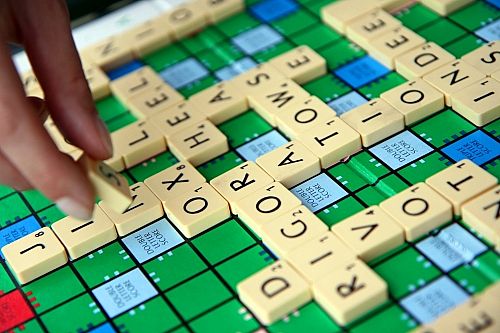
Crossword puzzles, word searches, Mad Libs, and board games like Wheel of Fortune, Jeopardy!, and Boggle can all help your children improve their vocabulary and provide family fun. If your son/daughter is a reader, get them a subscription to a kids' magazine like National Geographic or Highlights. The combination of great reading material and word games inside will help them improve their vocabulary.  Here's a list of the Parent's Choice picks if you needs some ideas for a magazine that might perk your child's interest.

There's an App for That

One of the best ways to reach kids in today's technologically dominated society is through the computer, a Smartphone, or a tablet. There are loads of apps available for download that your child can use to boost their vocabulary. Reading Rockets has several recommended apps complete with reviews and recommended ages as does TCEA who has put out a list for iPad specific ones. When in doubt, search Google for some recommended apps for your device or check in with the reading teacher at your son/daughter's school.

These are just a few tips you can use to build your son/daughter's vocabulary. By introducing fun ways to integrate new words into your child's daily life, you can regularly improve your child's vocabulary.  If your child needs for formal methods to improve vocabulary and reading comprehension, consider having him  work with a reading tutor or enroll him in a reading program .

Monday
Dec 22 2014

Why Reading and Writing Skills are Essential to Critical Thinking

A recent article by Stedman Graham in the Huffington Post paints a dire picture of America's students. When it comes to the ability to critically think out a problem and relate it to real life situations, our students are ranked 27 th out of 34 nations. Think of the consequences for society as we know it if our children can't think out and solve real-world problems. A staggering and sobering statistic, Graham feels that we can do better and we can .

How can we help our children improve their critical thinking ability? Is this a skill that can be taught or is it something we are born with? The truth is –

It can be taught.

How? Through the improvement of reading and writing skills.

When you read, your brain must make sense of what it's seeing. Whether it's doing that in a situation with distractions, with a limited vocabulary, or with a lack of interest, there are many factors that contribute to your child's reading comprehension . If your child can not understand what they read, how can they do anything with that information? They can't.

A child learning how to write effectively has another set of obstacles to overcome. The ability to concretely write and respond to texts, to structure responses in a way that makes sense, and to have the vocabulary to express one's self all contribute to writing ability. Whether for a common essay, SAT prep , or a report on the environmental effects of a new building, those skills serve an important purpose and play a significant role in critical thinking.

The brain can be trained to analyze, absorb, digest and respond to all sorts of information. By learning strategies and techniques to integrate reading and writing into a relevant, real world environment, your child can learn how to think critically. But it needs a skilled professional at the helm to lead the way, one with the time and attention to dedicate to every student. With class sizes going over 30 these days, it's difficult for teachers to address the needs of every student. That's where a reading tutor and a writing tutor come in.

By hiring a reading or writing tutor, you guarantee individualized attention for your child. Our trained educators can diagnose and customize a plan to improve your student's critical thinking skills by working on their reading and writing abilities. The end result – a confident child who is able to understand the world around them, form an opinion, and express their thoughts succinctly. In other words, your child has learned the art of critical thinking .

Tuesday
May 27 2014

Improving Reading Comprehension, Love to Read

Surprise (Not) - Fewer Teenagers Read For Pleasure

In a NY Times op-ed column, Frank Bruni laments a recent study by Common Sense Media that shows a dramatic decrease in the amount that teenagers read for pleasure.   Bruni goes on to ascertain the root causes, lining up the usual suspects  -- video games, television and the other electronic/digital competitors to reading a book.  He further cites other studies that link daily reading to intelligence, critical thinking and achievement.

Bruni also takes a more personal, wistful view, articulating what most dedicated readers of fiction feel -- that reading is not only a vehicle for learning, but a tool for personal fulfillment:

I am in Bruni's camp, and believe that most, if not all people are capable of enriching their lives through the magic of books -- fiction or non-fiction.    Keeping it simple,  there are two basic steps required to reach this apex:

  1. Develop good reading skills -- by improved comprehenson and expanded vocabulary
  2. Find the subject matter and form that has the greatest appeal

What's A Parent To Do?

If your child is a reluctant reader, here are some steps you can set a new path toward the love of reading:

  1. Visit your local library or book store.  They are both staffed with knowledgeable people with ability to match kids with books
  2. Set a good example -- If your child sees you that you read regularly, she may be more inclined to follow suit.
  3. Dedicate Reading Time-- Set a regular time in the home where everyone reads;  no electronics allowed!
  4. Find books that you yourself enjoy, and then share them with your child.   Find areas of discussion.

Improve Reading Comprehension

Does your child struggle with reading?  Your child may shy away from reading simply because he doesn't read well.   If your son or daughter has had persistent struggles,  schedule a reading assessment with a qualified reading tutor or learning center.   Think Tutoring offers comprehensive reading diagnostics that measure proficiency in phonics,  sight vocabulary, functional vocabulary, comprehension, oral fluency and speed.  To learn more, contact Think Tutoring at 973-593-0050.

Page 1 2 3 4 5 ... 5 Next 5 Entries »
This form does not yet contain any fields.

    Enter your email address:

    View Site in Mobile | Classic
    Share by: