Entries in Writing (6)

Thursday
Nov 02 2017

Writing Tips and Strategies for Middle School Students

At Think Tutoring, I get this comment every day. The student would say, “I don’t know where to start.”  She would be sitting at her desk, hand on her head, and tapping her pencil.  My response, “We need to create a graphic organizer.” 

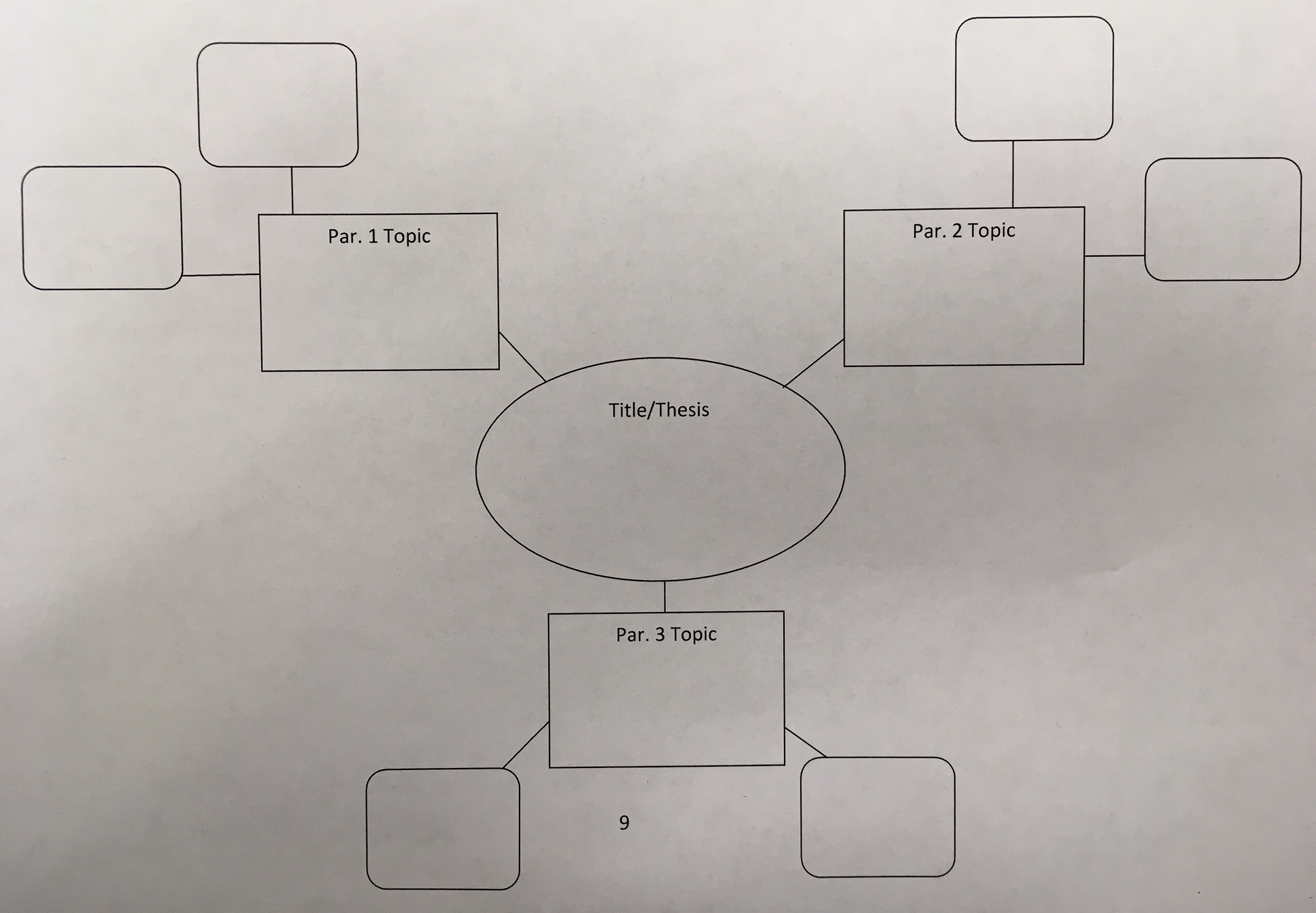
There are many graphic organizers available to students.   You can just GOOGLE it. My favorite is a web or cluster chart especially for middle school students.  This is the perfect graphic organizer to develop a well-written five paragraph essay.

Tips/Strategies to Help your Child Write :

  1. Graphic Organizers:   Types of graphic organizers include webs, cluster charts, cause and effect  charts, sensory charts, pro v. con, Venn diagrams, t-charts, and more. One of these is bound to help your child organize her thoughts.

  2. Outline:Outlines are rather boring for kids to do; however, parents know how to outline.  This is a very common strategy for teachers and parents.  You cannot go wrong with it.
  3. Make a Thesis:A thesis is the answer to your essay question.  I tell my students to make sure to add examples (paragraph topics) into your thesis statement.  You have now paved the way for a well-developed topic sentence and essay.
  4. Mind map:Can’t think of examples?  Use a mind map to write down everything that you know on a given topic.  This will help put the information down on paper for you to gather your ideas.

Think Tutoring provides these tips and strategies in both our language arts and study skills programs.  Call today for more information on how we can help your child’s writing and organization skills. We would love to help.
Wednesday
Jan 04 2017

Struggling Writers: Free Writing or Graphic Organizers?

Teachers, parents, and students all agree: our students are struggling with writing.  What is the root of this problem?  Many teachers believe in free writing: a prewriting technique in which a person writes continuously without regard for spelling, grammar, or topic. It produces raw, often unusable material, but helps students overcome blocks in their thoughts. Why spend so much time on a technique in which the material is unusable?  It is a waste of time especially since our students have other homework assignments to accomplish.

Think Tutoring offers a different approach: graphic organizers.  Think Tutoring’s language arts program gets to the heart of pre-writing with graphic organizers such as webbing, cause and effect charts, sensory charts, venn diagrams, and more.  These organizers can cut your student’s writing time in half.  It creates a clear and organized path for essay writing.

Here is one of the graphic organizers that Think Tutoring uses.  Give it a try at home.  It works!  To help your child even more with his/her writing , call Think Tutoring at 973-593-0050.

Language Arts

Monday
Dec 22 2014

Why Reading and Writing Skills are Essential to Critical Thinking

A recent article by Stedman Graham in the Huffington Post paints a dire picture of America's students. When it comes to the ability to critically think out a problem and relate it to real life situations, our students are ranked 27 th out of 34 nations. Think of the consequences for society as we know it if our children can't think out and solve real-world problems. A staggering and sobering statistic, Graham feels that we can do better and we can .

How can we help our children improve their critical thinking ability? Is this a skill that can be taught or is it something we are born with? The truth is –

It can be taught.

How? Through the improvement of reading and writing skills.

When you read, your brain must make sense of what it's seeing. Whether it's doing that in a situation with distractions, with a limited vocabulary, or with a lack of interest, there are many factors that contribute to your child's reading comprehension . If your child can not understand what they read, how can they do anything with that information? They can't.

A child learning how to write effectively has another set of obstacles to overcome. The ability to concretely write and respond to texts, to structure responses in a way that makes sense, and to have the vocabulary to express one's self all contribute to writing ability. Whether for a common essay, SAT prep , or a report on the environmental effects of a new building, those skills serve an important purpose and play a significant role in critical thinking.

The brain can be trained to analyze, absorb, digest and respond to all sorts of information. By learning strategies and techniques to integrate reading and writing into a relevant, real world environment, your child can learn how to think critically. But it needs a skilled professional at the helm to lead the way, one with the time and attention to dedicate to every student. With class sizes going over 30 these days, it's difficult for teachers to address the needs of every student. That's where a reading tutor and a writing tutor come in.

By hiring a reading or writing tutor, you guarantee individualized attention for your child. Our trained educators can diagnose and customize a plan to improve your student's critical thinking skills by working on their reading and writing abilities. The end result – a confident child who is able to understand the world around them, form an opinion, and express their thoughts succinctly. In other words, your child has learned the art of critical thinking .

Saturday
Jun 22 2013

SAT Prep in NJ This Summer?

Why Summer is the Best Time to Prep for the SAT or ACT

summer sat prep morris county nj Early in their junior year of high school, college-bound students take the PSAT and, for the first time, start thinking seriously about college.   Conventional wisdom, frequently espoused by high school guidance departments, suggests that students take the SAT or ACT for the first time in spring of their junior year. Although well-intended, such advice may not apply to all students, many of which might be better off preparing for the test over the summer, and taking it in the fall of their junior year.

Parents, particularly those entering the college selection for the first time, need to be mindful that a majority of students should do some level of preparation to perform well on these important tests.  Further, good preparation takes dedicated time, which, for many, there is little available during the school year.  After school activities, part-time jobs, sports teams and last but not least, homework, make for long and demanding days.   Many high school students simply don’t have the time or energy to add test prep to the mix.

Summer is a different story.  Free from school year demands, students can give test preparation an almost singular focus, allowing for more time to study, take practice tests, address weak areas,  learn new vocabulary, and read, read, read…with specific strategies needed to score well on either the SAT or ACT.    Keeping their minds fresh and active all summer long can also help students enter the new school year energized and primed for the final push for good grades in the first semester.

Myth: Students aren't ready to take the SAT before the spring of their Junior year.

While some believe that college entrance examinations shouldn’t be taken before the benefits of junior year academics are realized, in reality, much of the requisite learning has already taken place:

Math- By the end of sophomore year, most students have already completed Algebra I and Geometry, both of which are at the heart of the SAT and ACT Math sections.  The SAT typically has just a few Algebra II questions while the ACT usually has two or three of trigonometry, thus minimizing the impact of new concepts learned during junior year.  Further, for many, taking the SAT or ACT while Geometry is still fresh in their minds is a good strategy.

English/Writing– Very few high schools teach grammar at the high school level.  Further, very few high school English classes revisit the mechanics of expository and persuasive writing, skills needed for the essay.

Reading skillsdevelop over time, and while most students will experience incremental reading improvements over a school year, these probably won’t be sufficient to effect score increases on the SAT or ACT.

Ultimately, parents and students should decide on the ideal test date(s) based upon when the student can devote the most time for preparation and practice.   With so much at stake (admissions and merit-based financial aid), students need to seize the time when it’s available.For many students, this time is summer.

Make SAT or ACT prep part of your high school student's summer.  

Note: This article originally appeared in the Alternative Press.

Wednesday
Nov 09 2011

College Readiness: Cognitive and Behavioral Skills Required

What does it take to succeed at the college level? The answer is a complex one, involving preparedness on both the cognitive and the behavioral level.

Cognitive Skills

According to David Conley ( www.aypf.org/documents/Redefining CollegeReadiness.pdf ), certain skills are more important than an extensive body of knowledge in a given field. Specifically, he says your child’s high school education, ideally, has prepared him to analyze and interpret knowledge. Additionally, it has taught him how to problem-solve and to engage in critical thinking. And, it has taught him to write well. (Conley asserts writing is, in all likelihood, the one proficiency most identified with success in college.)

study skills

Our tutors at Think Tutoring know that writing skills improve when reading skills are enhanced. Author Annie Proulx confirms the correlation when she says, “You should write because you love the shape of stories and sentences and the creation of different words on a page. Writing comes from reading, and reading is the finest teacher of how to write.”  Because the two skills are so entwined, it’s easy to reinforce one while studying the other.

Parents Can Help Develop the Reading/Writing Connection

To extend the learning provided by our tutor s , you can encourage reading at home. But don’t let it be an isolated act. Before your child begins a reading assignment, fiction or non-fiction, ask her to be aware of the author’s style. You can give a few clues, such as “Notice what the author does to make the character stand out.” Or, “What did the writer do to make the material clear to you?”  The answers to these questions will make your child more aware of the components of good writing.

Then discuss specifics with your child. You’ll be developing the important skill of analysis (cited by Conley as a college-readiness skill). As you and your child identify, for example, the use of adjectives in character development or the use of examples in expository writing, you’ll be strengthening awareness of what good writing is by analyzing reading material.

Behavioral Skills

Conley also notes time management as one of the most vital behavioral skills related to success in college. Here’s an excellent method of organizing your child’s time…one that you can implement today so he’ll make it a habit by the time he’s walking the halls of higher learning in college.

  1. Devote one and a half hours for assignments due in the next few days.
  2. Devote one and a half hours for assignments due next week.
  3. Devote one half hour for assignments due next month.
  4. Devote fifteen minutes for assignments due before the semester ends.
  5. Devote left-over minutes for requirements you must getdone before the year ends.

Finally, refusing to procrastinate is a behavioral skill employed by the most successful college students. This reminder by Mark Twain will help encourage the don’t-postpone behavior: “If you have to swallow a frog, don’t stare at it too long!”

This form does not yet contain any fields.

    Enter your email address:

    View Site in Mobile | Classic
    Share by: