Entries in Vocabulary (11)

Thursday
Dec 01 2016

Building a Strong Vocabulary

Developing a strong vocabulary helps with communication, comprehension, and reading ability.   There are many different strategies parents can use to build their children’s vocabulary, even during common, everyday activities.

  • Converse with your child frequently.  Don’t be afraid to throw some “bigger,” more complicated words into your speech.
  • Encourage children to ask questions about words they don’t know.  Explain the words with proper pronunciation, definition, and even an example or two.
  • Have your children tell stories, and ask prompting questions to foster detailed explanations within the stories.
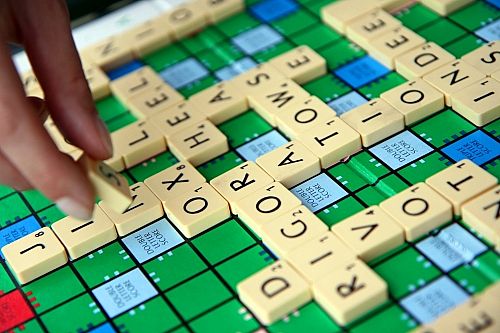
  • Play word games.  There are the traditional favorites like “Scrabble” and “Boggle,” but with the amount of educational technology we have at our fingertips, word game apps are a beneficial way to go too.
  • Read! Read! Read!   Read to your children, and have your children read to you.  The more children read and hear new words, the more likely they are to use those words in speech and writing.
  • Relate new words to ones your children already know.  This helps put words into groups and helps children make connections in the world around them.
  • Correct mistakes carefully.  If children mispronounce or misuse words, correct the children in a positive way.  It is easy for a child to feel embarrassed when making such a mistake, so it is helpful to praise your child for attempting to use expanded vocabulary.

At Think Tutoring, we use many different resources to improve children’s vocabulary .  We encourage students to hear, read, write, and speak newly learned words every day.  We always strive to reinforce an expanding vocabulary, and hope students take it with them into their daily lives.  

Monday
Mar 09 2015

Tips to Improve Your Child's Vocabulary

Developing and expanding a child's vocabulary is essential to improved reading comprehension.   As a parent, there are many things you can do at home to make learning new words a daily ritual that can be fun for everyone.

Use New Vocabulary at Home

As a parent, your kids look up to you, whether they want to admit it or not. If you start using bigger words in your natural conversation with them or look up new words online with (or without) them, they're more likely to see the value of expanding their vocabulary and will do it themselves. Making it a natural part of their daily lives will set the stage for a lifetime of vocabulary development.

Play Word Games

Crossword puzzles, word searches, Mad Libs, and board games like Wheel of Fortune, Jeopardy!, and Boggle can all help your children improve their vocabulary and provide family fun. If your son/daughter is a reader, get them a subscription to a kids' magazine like National Geographic or Highlights. The combination of great reading material and word games inside will help them improve their vocabulary.  Here's a list of the Parent's Choice picks if you needs some ideas for a magazine that might perk your child's interest.

There's an App for That

One of the best ways to reach kids in today's technologically dominated society is through the computer, a Smartphone, or a tablet. There are loads of apps available for download that your child can use to boost their vocabulary. Reading Rockets has several recommended apps complete with reviews and recommended ages as does TCEA who has put out a list for iPad specific ones. When in doubt, search Google for some recommended apps for your device or check in with the reading teacher at your son/daughter's school.

These are just a few tips you can use to build your son/daughter's vocabulary. By introducing fun ways to integrate new words into your child's daily life, you can regularly improve your child's vocabulary.  If your child needs for formal methods to improve vocabulary and reading comprehension, consider having him  work with a reading tutor or enroll him in a reading program .

Saturday
Jun 22 2013

SAT Prep in NJ This Summer?

Why Summer is the Best Time to Prep for the SAT or ACT

summer sat prep morris county nj Early in their junior year of high school, college-bound students take the PSAT and, for the first time, start thinking seriously about college.   Conventional wisdom, frequently espoused by high school guidance departments, suggests that students take the SAT or ACT for the first time in spring of their junior year. Although well-intended, such advice may not apply to all students, many of which might be better off preparing for the test over the summer, and taking it in the fall of their junior year.

Parents, particularly those entering the college selection for the first time, need to be mindful that a majority of students should do some level of preparation to perform well on these important tests.  Further, good preparation takes dedicated time, which, for many, there is little available during the school year.  After school activities, part-time jobs, sports teams and last but not least, homework, make for long and demanding days.   Many high school students simply don’t have the time or energy to add test prep to the mix.

Summer is a different story.  Free from school year demands, students can give test preparation an almost singular focus, allowing for more time to study, take practice tests, address weak areas,  learn new vocabulary, and read, read, read…with specific strategies needed to score well on either the SAT or ACT.    Keeping their minds fresh and active all summer long can also help students enter the new school year energized and primed for the final push for good grades in the first semester.

Myth: Students aren't ready to take the SAT before the spring of their Junior year.

While some believe that college entrance examinations shouldn’t be taken before the benefits of junior year academics are realized, in reality, much of the requisite learning has already taken place:

Math- By the end of sophomore year, most students have already completed Algebra I and Geometry, both of which are at the heart of the SAT and ACT Math sections.  The SAT typically has just a few Algebra II questions while the ACT usually has two or three of trigonometry, thus minimizing the impact of new concepts learned during junior year.  Further, for many, taking the SAT or ACT while Geometry is still fresh in their minds is a good strategy.

English/Writing– Very few high schools teach grammar at the high school level.  Further, very few high school English classes revisit the mechanics of expository and persuasive writing, skills needed for the essay.

Reading skillsdevelop over time, and while most students will experience incremental reading improvements over a school year, these probably won’t be sufficient to effect score increases on the SAT or ACT.

Ultimately, parents and students should decide on the ideal test date(s) based upon when the student can devote the most time for preparation and practice.   With so much at stake (admissions and merit-based financial aid), students need to seize the time when it’s available.For many students, this time is summer.

Make SAT or ACT prep part of your high school student's summer.  

Note: This article originally appeared in the Alternative Press.

Sunday
Nov 18 2012

Reading Tutor – Could Sherlock Holmes Have Been a Good One?

How Do You Get Your Child to Read for Comprehension?

reading tutor Most educators understand that good reading skills, particularly for emerging readers, require a mastery of phonics, sight words, and array of comprehension skills such as main idea, inferencing, cause and effect and compare and contrast.   On paper, it all sounds logical – if we can just get our kids to do all of these things – they will read well!  The devil is in the details, however.  Just how can we get kids to learn these skills – particularly because children learn in different ways?

One approach used by the reading tutors at Think Tutoring is to have students think of reading as a puzzle or a mystery – one in which they need to identify clues to solve the case.  As the noted American psychologist David Remelhart once said:

The problem facing a comprehender is analogous to the problem that a detective faces when trying to solve a crime. In both cases there is a set of clues.

Get Out Your Magnifying Glass

For each discrete skill our students learn, there is, in fact, a set of clues.  One activity we practice here is Vocabulary in Context.  Consider this passage, for example:

The word octopus means “eight-footed.”  Actually, the legs of the octopus are called arms.  They are a mass of muscle and can twist in any direction.  They are so (1)________   they seem to be made of  (2) ___________

(1)   A.   soft      B.   flexible   C.  long   D.  smart

(2)   A.   rubber  B.   glue        C. wood  D.  steel

While it would be tempting to fill in (1) with A. long , the smart detective knows not to act so quickly.  On closer inspection, the most important clues are “can twist in any direction and   “they seem to be made of, “which makes the choices of flexible and rubber the best answers.

Think Tutoring can help your child be the next Sam Spade of reading comprehension.  Find out more about our reading tutoring programs or call as 973-593-0050 for more information.

Look for additional installments of our Reading Detective series.

Tuesday
Oct 11 2011

SAT Prep: Start Early by Challenging Your Child to Read

In an interesting article in the Huffington Post, Meg Campbell, Founder and Executive Director of Codman Academy Charter Public School, recommends that students prepare for the SAT by reading the New Yorker magazine.   Although this advice need not be taken literally, her approach underscores a more fundamental challenge for the next generation of college students:  to become better readers.

As we’ve noted many times in this blog, too often students reach their junior year of high school, take the PSAT and/or SAT only to be disappointed and discouraged when reading scores fall below the national average of 500 points.   More so than the other sections of the test (math and writing), low reading scores are harder to fix in a relatively short period of time; good reading skills develop over time.

Ms. Campbell argues that while tutoring and coaching may have their place,  parents should encourage their children to take advantage of adult-level non-fiction reading sources that are similar in nature to passages found on the SAT.   As she notes about the New Yorker:

The writing has versatility and breadth. It's well-written, long, challenging non-fiction and that is precisely the kind of writing that builds background knowledge and vocabulary. Becoming a New Yorker reader builds advantage, as in having an advantaged education. It requires engagement of the mind for comprehension.

What’s a Parent To Do?

The key, of course, is to start early.  Getting a subscription to the New Yorker (or other adult-targeted publications) at the beginning of junior year may not be practical, or perhaps just too little, too late. 

You know your child best.  Consider his interests and find non-fiction reading materials that both challenge and interest him.  Browse your local newsstand, and thumb through the table of contents of magazines such as The Atlantic Monthly, Harpers, The New Yorker,  or even less intimidating publications such as Time and Newsweek.  Chances are that you will find something that can pique his interest.  

Sending links to on-line publications is even easier.  Is your family planning a trip to a national park such as Yellowstone, Acadia or Yosemite?  Give your children some background by reading up on the current challenges facing our National Park System in National Geographic .

The earlier you introduce your children to more challenging non-fiction, the better their comprehension and vocabulary will be for high school, SATs and the college years immediately beyond.

This form does not yet contain any fields.

    Enter your email address:

    View Site in Mobile | Classic
    Share by: