Entries from March 1, 2011 - March 31, 2011

Wednesday
Mar 23 2011

Inspire Your Child to Read, Learn & Dream

"You are not here merely to make a living. You are here in order to enable the world to live more amply, with greater vision, with a finer spirit of hope and achievement. You are here to enrich the world, and you impoverish yourself if you forget the errand."

President Woodrow Wilson directed this message to grown-ups. It could just as easily have been directed to the parents and teachers of middle-schoolers. According to a recent post by Jay Mathews( http://communitycollegespotlight.org/content/measuring-academic-drift_3674/ ), there are eight subtle ways to prepare middle-schoolers for college. And some of those ways parallel what the president was talking about.  Character does count, Mathews maintains. There are many ways to encourage it. And one of the best is being a good role model.

Mathews also advises adults to help children develop practical living skills. Being responsible for household chores aids in making children aware that the egocentrism of childhood lasts only so long. These chores redirect the me-me-me's into thoughtful gestures for others.

If your child likes to read, be sure there are some biographies on his or her reading list. And not just biographies of sports figures. Choose some do-gooders like Mother Teresa or St. Valentine or Nelson Mandela. For students who dislike or struggle with reading comprehension, discovering new voices that resonate with and inspire them can be the perfect antidote. 

You can choose character-building televisions programs, too. And, you can share quotations that reflect noble sentiments at least once a week at the dinner table.

Depending on the age of your children, a quote like this from Carl Sagan would be an excellent way to bridge science and morality: "The Earth is a very small stage in a vast cosmic arena. Think of the rivers of blood spilled by all those generals and emperors so that, in glory and triumph, they could become the momentary masters of a fraction of a dot. Think of the endless cruelties visited by the inhabitants of one corner of this pixel on the scarcely distinguishable inhabitants of some other corner, how frequent their misunderstandings, how eager they are to kill one another, how fervent their hatreds."

For younger children, take the words of Harriet Tubman and use them to introduce a history lesson: "Every great dream begins with a dreamer." And don't forget the modeling aspect of character development: share with them dreams of your own.

Thursday
Mar 17 2011

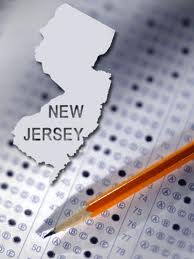
Get Your Child Ready for NJ ASK Testing

It's that time of year again when students throughout the state prepare for and take NJ ASK tests. Some background -- The Elementary School Proficiency Assessment (ESPA) was administered at grade 4 from 1997 through 2002 to provide an early indication of student progress toward achieving the knowledge and skills identified in the Core Curriculum Content Standards (CCCS).

In spring 2003, the department replaced the ESPA with the New Jersey Assessment of Skills and Knowledge (NJ ASK), a comprehensive, multi-grade assessment program. Along with other indicators of student progress, the results of the elementary-level assessments identify students who need additional instructional support in order to reach the CCCS.  Many school districts  also use these tests to place students into appropriate class levels.  For example, for students entering 6th grade, some students are ready for pre-algebra, while others still need to build up their bath math skills.

The merits of standardized testing such as NJ ASK have been widely debated by educators and politicians.  Many teachers resent that their normal teaching plans get scuttled by district-wide requirements to use class time to prep students for the test.  At the same time, in some districts,  teachers are evaluated by the test results of their classes.  And of course, principals and other administrators feel enormous pressure for their schools to perform  well - relative to state standards as well as other communities.

Like it or not, for most parents NJ ASK is one of the most important indicators on how their child is doing academically - and the results should be taken seriously. 

There are other, independent options for academic assessement.  At Think Tutoring, among other resources, we use McGraw-Hill's California Acheivement Test (CAT) within our comprehensive Diagnostic Assessments.  The CAT test is used to determine grade level equivalence in Math and Reading . We also break down the test to isolate specific skill strengths and  weakness, such as numeration, integers, fractions so that our individual tutoring plans address a student's major areas for improvement. In reading, the tests isolate information, organziation, generalization, inference and vocabulary skills.

Parents who are interested in seeing how their child performs on standardized prior to NJASK should contact us as 973-593-0050.

Friday
Mar 11 2011

Relaxation Exercises for Taking The SAT

Your son or daughter was worked hard on their SAT Prep the past 8-10 weeks, and tomorrow is the big day.  It's important that he/she approaches the test confident and relaxed.  Here are some 11th hour relaxation techniques that can really make a difference.

Exercise 1: This guided relaxation exercise is adapted from Davis, Eshelman, and McKay (1988). The exercise involves physical relaxation as well as positive self-talk. Use the strategy at home before a stressful event or in the classroom during those nervous minutes waiting to do a stressful activity. While the instructions refer specifically to test-taking situations, the exercise may be used before any activity that produces anxiety, like public speaking, interviews, or class presentations. 

  • Position yourself comfortably in a chair. Close your eyes and breathe deeply from the stomach. Notice that your muscles are beginning to feel smooth, a little heavy and comfortable.
  • Focus on your breathing, exhaling slowly. As you exhale, let go of all tension and negative thought.
  • Notice how relaxed you feel. You can feel this relaxed even in a stressful situation.
  • Your muscles are relaxed and you are breathing deeply. Imagine yourself in the classroom taking an exam. See yourself sitting there breathing as you are right now, feeling comfortable and thinking positive thoughts. You are very much in control. Each time you exhale, you feel more serene, calm and confident.
  • You have all the knowledge you need to pass this exam. You have studied using the best study techniques you know, and you are fully prepared. You will have no problem passing this exam.
  • See yourself reading each question, one at a time, slowly and carefully, moving through each item on the exam. You have the ability to do well on this exam.
  • Take a moment now to experience how calm and regular your breathing is and how confident you feel. After you have counted five breaths, open your eyes and feel relaxed and alert.

Exercise 2: This last-minute relaxation technique helps students focus and relax in the classroom before a stressful event. It even may be used during a stressful activity if anxiety levels increase and the student feels he/she is losing control. The exercise is simple and easy to remember. 

  • Close your eyes. Tense every muscle in your body, starting with the neck and moving down to the shoulders, arms, stomach, legs, and feet. Keep all muscles tensed as you move down the body. Inhale as each muscle is contracted, and hold your breath for a few seconds; then slowly exhale.
  • After all the muscles in your body are tense, hold them for a few seconds.
  • Starting with the toes, slowly relax every muscle in your body. Exhale as each muscle is relaxed.
  • Repeat the process as necessary.
Wednesday
Mar 02 2011

Improve Grades in School Through the "Cube of Learning"

In the mid-80's, when teamwork was the buzz word that didn't stop buzzing, Yale professor Robert Sternberg gained considerable attention with his view of high-performing teams. They should be made up, he insisted, of at least one person who is knowledgeable about the process, one who is analytical, and one who is creative.

Fast forward 30 years. Sternberg is now provost and psychology professor at Oklahoma State. And, he is still offering valuable insights into the learning process, which, he says, is more than analytical thinking. http://communitycollegespotlight.org/content/measuring-academic-drift_3674/

Sternberg is certainly not the first to realize that deep learning is not one-dimensional. The well-rounded student does well in areas that go beyond high SAT scores in math and English. She can talk knowledgeably in areas beyond the scope of her major and her minor studies.

Nearly a half-century ago, psychologist J.P. Guildford provided a broad view of intelligence via his "cube of intellect." He said there are 180 (the number was later reduced to 120) components of intelligence. And, in the 80's, Howard Gardner was also quoted often regarding his theory of multiple intelligences.

The question for parents and teachers, and perhaps even students themselves, is this.: How can we optimize the learning experience so it spills over to many disciplines and requires thought in several cognitive areas? How do we avoid the "drift"? (As noted in the article-reference above, more than a third of college students show no improvement in their reasoning or writing skills, even after four years of college.)

DEEP-LEARNING TIP

One thing you (teacher, parent, or student) can do to extend the learning is simple. Ask at least one question following an encounter with new learning. For example, How can this knowledge be applied to my present or future circumstances?

And convert the learning experience to a written comment. Journals are fine, but more challenging would be "translating" new knowledge into a limerick or haiku. Or even a rhyme.

Yes, it takes work to make learning stick. And to extend its boundaries. But, as every circus employee knows, work can be fun! Derive pleasure from making your learning experiences both broad and deep.

To further help your child learning, consider a program at KnowledgePoints, which  offers study skills and other subject tutoring programs (Math, Language Arts, Reading) to students of all grade levels at its center in Florham Park and serving the surrounding communities of Morristown, Parsippany, Livingston, Madison and East Hanover.  For more information, contact us at 973-593-0050.

This form does not yet contain any fields.

    Enter your email address:

    View Site in Mobile | Classic
    Share by: