2018年01月の記事
全8件 (8件中 1-8件目)
1
-
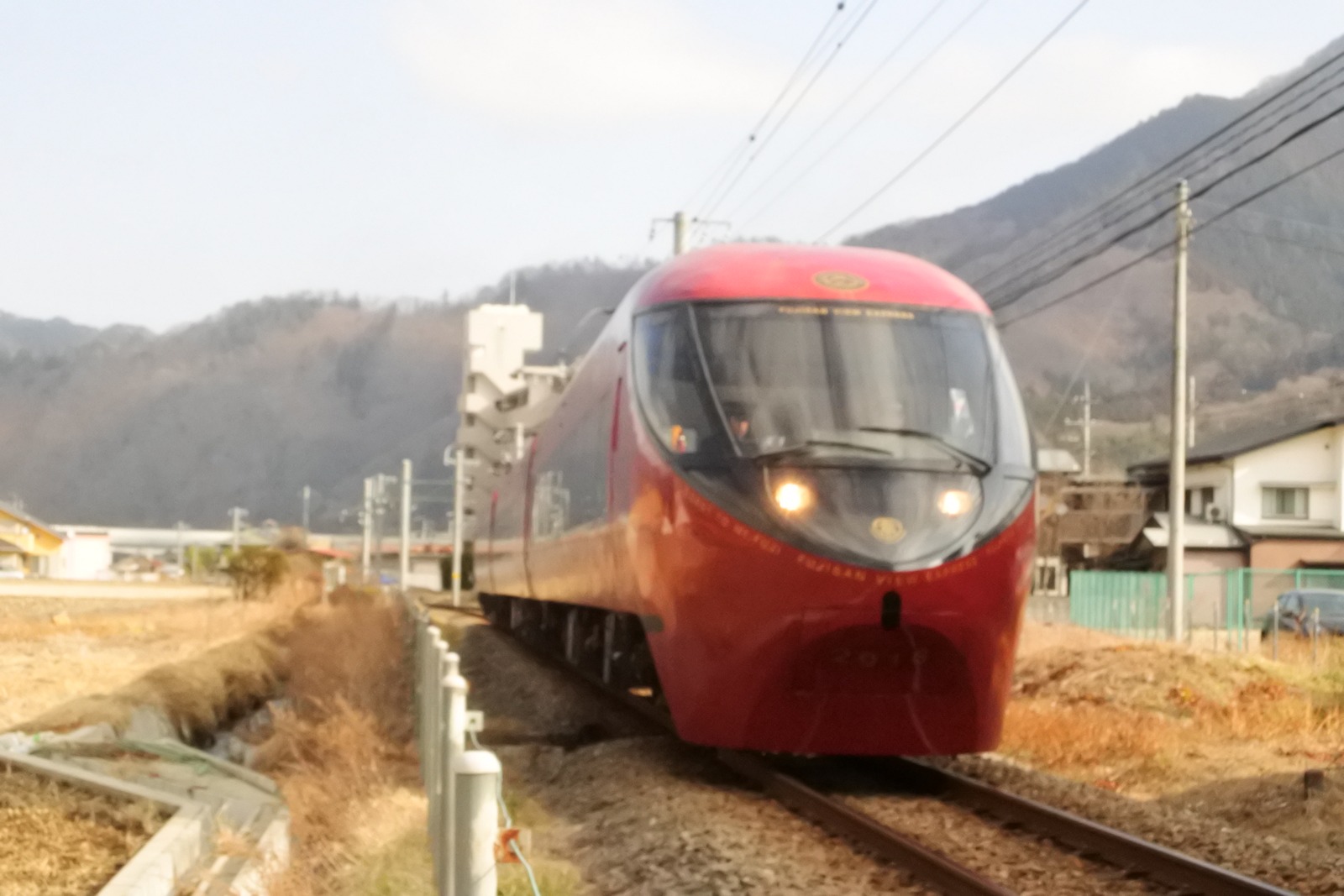
富士急行8500系「富士山ビュー特急」に乗る
河口湖駅から8500系電車(元JR東海371系)「富士山ビュー特急」に乗った。僕にとっては、山陽・九州新幹線「さくら」以来2年ぶりの“水戸岡トレイン”への乗車である。富士急行8500系「富士山ビュー特急」は2016(平成28)年より運行されている。1991(平成3)年から2012(平成24)年にかけて、新宿駅~沼津駅間(小田急小田原線・JR東海御殿場線経由)を特急「あさぎり」として運行していたJR東海371系電車を譲受・改造した車両。車内の改装を手掛けたのは、JR九州の800系新幹線や、同77系客車「ななつ星in九州」、キハ47系気動車「或る列車」など数多くの観光列車用車両のデザインを担当してきた水戸岡鋭治さん。富士急行では1000系電車(元京王初代5000系)「富士登山電車」や6000系電車(元国鉄・JR東日本205系)の改装や、富士山駅・下吉田駅のリニューアルを担当してきた。河口湖駅に停車中の8500系 駅前に展示されている富士山麓電気鉄道モ1形を入れて 8500 Series stopping at Kawaguchiko [Lake Kawaguchi] Station with Fuji Sanroku Electric Railway Mo 1 Series displayed in front of the station今回乗ったのは13:00河口湖駅発の「富士山ビュー特急8号」。富士山駅で列車の進行方向が変わることと1号車が「スイーツプラン」専用車両となっていたため、河口湖駅~富士山駅間では最後尾となる3号車の席に座った。車内は「富士登山電車」や「ななつ星in九州」といった”水戸岡トレイン”の多くに見られる木材を使用した温かみのあるデザインで、乗務員室と客室を仕切るガラス窓には組子が埋め込まれている。以前に乗車したN700系系「さくら」は、観光列車用ではない一般的な新幹線車両であるため、2018(平成30)年現在において広く”水戸岡トレイン”と呼ばれる、内装に木材もしくは木目調の模様を採り入れた観光列車用の車両への乗車は今回が初めてであることから、胸騒ぎが止まなかった。発車直前、文部省唱歌「ふじの山」の発車メロディが流れ、列車は定刻に発車した。河口湖駅から富士山駅までの区間は2駅と短いため、座席を後ろ向き(河口湖方向き)のままにした。車内チャイムに続いて、自動音声による車内放送が、日本語・英語・中国語の3言語で案内された。1つ目の停車駅、富士急ハイランド駅が近づくと、駅のすぐ目の前にある富士急ハイランドのアトラクション群も僕の目から見て左側(進行方向右側)に見えた。富士急ハイランドのアトラクション(特に「ええじゃないか」と「FUJIYAMA」がきれいに見えた)を最後尾の窓に見ながら、列車は富士山駅へと入線した。ここで1000系(元京王初代5000系)の河口湖行きの各停列車とすれ違う。列車は進行方向を変え、僕が乗っている3号車が先頭になる。ポイントを渡り、進行方向右側に大きくカーブして大月方面へと向かって北東へと進む。富士山駅~大月駅間では、途中都留文科大学前駅のみに停車する。富士山駅発車後に、車掌さんが最後尾車両の乗務員室から客室へ検札しにやってきた。僕もきっぷ(富士急特急フリーきっぷ 特急列車の自由席も含めて乗り降り自由のため特急券は不所持)を車掌さんに見せた。富士山駅と次に通過する月江寺駅との間には、富士急行線の列車と富士山の写真が撮れるスポットがあることで撮り鉄の間で知られるが、この日は前日に続いて曇っていたため、富士山の姿を拝むことができなかった。晴れていれば、進行方向右側に富士山が見える。富士山駅から2駅目の下吉田駅の構内には元国鉄・JR東日本14系客車や富士急行2000系(元国鉄・JR東日本165系「パノラマエクスプレスアルプス」)、元国鉄・JR東日本169系のカットモデル、そして富士急行の貨車が展示・保存されている。「富士山ビュー特急」は下吉田駅には停車しないが、次に富士急行線に乗る機会があれば、ぜひとも立ち寄ってみたい。葭池温泉前駅、寿駅を通過し、続く寿駅~三つ峠駅間には富士急行線で最もきつい40‰(角度で約2.29度)の勾配が待ち受けており、この急な下り坂を駆け降りる。ここにも富士山を進行方向右側に見えるビューポイントがあり、列車と富士山の写真を撮れるスポット(がんじゃ踏切)もあることで知られているが、先のとおりであった。富士山の姿を車窓からは見られなかったものの、列車はビューポイントで速度を落とした。そして、晴れていれば進行方向右側に富士山がきれいに見えるというアナウンスが流れた。続く三つ峠駅では8000系(元小田急20000形)「フジサン特急」との特急列車同士のすれ違いが行われた。小田急20000形も1991(平成3)年から2012(平成24)年にかけて特急「あさぎり」として小田急小田原線新宿駅~JR東海御殿場線沼津駅間を走っていた。「あさぎり」時代は御殿場線谷峨駅で両車両のすれ違いが見られた。「あさぎり」運用から引退後、共に富士急行に移籍し、再び同じ線路を走ることになった小田急20000形とJR東海371系は、“終生の友”のように思える。参考:谷峨駅ですれ違う小田急20000形とJR東海371系「あさぎり」 (Wikimedia Commonsより)列車は単線の線路を走り続け、東桂駅、十日市場駅を通過。ほどなくして次の停車駅である都留文科大学前駅へと入線した。都留文科大学前駅は、一見すると特急列車が停車する駅とは思えない単式ホーム(単線区間にあるホームが1つしかない駅のこと)の駅である。都留文科大学前駅を発車して最初の通過駅、谷村町駅で5000系の各停列車とすれ違う。5000系は1編成しか在籍していない、そして2018(平成30)年現在における富士急行唯一の自社発注の車両である点で、大変貴重な存在である。都留市駅、赤坂駅を通過し、禾生駅が近づいてくると前面に山梨リニア実験線(リニア中央新幹線)の高架線が見えてきた。禾生駅~田野倉駅間で山梨リニア実験線をアンダークロスする。残念ながらこの日は試験走行がなかったため、車窓からリニアの車両を見ることはできなかった。500km/hという超高速で駆け抜けるリニア中央新幹線とは対照的に、「富士山ビュー特急」はのんびりと走る。田野倉駅通過中に、あと4分で終点の大月駅に到着することを知らせる車内アナウンスが流れた。僕は棚に置いた荷物を下ろし、降車の準備を始めた。上大月駅を通過して程なく、列車は13:46に定刻で終点・大月駅に到着した。大月駅に到着した8500系共にJRから富士急行へ移籍し、界磁添加励磁制御を採用した6000系と並ぶ僕は以前からJR東海371系に乗りたいと思っていたが、乗れずに引退してしまった。もう乗れないのかと思っていたが、富士急行へ移籍したことから、乗れる機会はなくなっていない、しかも”水戸岡トレイン”にリニューアルされたのだから、より一層乗りたいという気持ちが増した。富士急行8500系の初乗車は、車窓から富士山を見ることはできなかったが、371系に乗りたい、”水戸岡トレイン”に乗りたいという長年の目標が実現した幸せなひと時だった。そして、乗車中の3言語での車内アナウンスは、富士山が世界的に知られる日本の観光地であることを感じさせられた。The most attractive train travel this time was "Fujisan View Express" operated by Fuji Kyuko 8500 Series from Kawaguchiko [Lake Kawaguchi] Station to Otsuki Station. It was third time to ride on a rail car designed by Eiji Mitooka (the last time was JR West N700 Series Shinkansen "Sakura" in 2016).Fuji Kyuko 8500 Series moved from JR Central and had been renamed from 371 Series. 371 Series used to be in service as "Asagiri" limited express between Shinjuku Station on Odakyu Odawara Line and Numazu Station on JR Central Gotemba Line from 1991 to 2012 and consist of seven cars including two double-deckers . When three of seven cars had moved to Fuji Kyuko, they had been refurbished to woodern interior and red-coloured exterior livery by Eiji Mitooka, who is also known as the desiner of Fuji Kyuko 1000 Series "Fuji Tozan Train" and the building of Mt. Fuji Station and Shimo-yoshida Station, and more other railcars, such as 800 Series Shinkansen and 77 Series "Seven Stars in Kyushu" of JR Kyushu.The train I got on departed at 1:00 PM. I chose a seating in the last car because the direction of the train would change at Mt. Fuji Station, the second station from Kawaguchiko [Lake Kawaguchi] Station, and the first car was only for "Sweets Plan" tourists.In its interior, timbers are used as window frame, luggage rack, and kumiko pattern stuffed on the window bordering driver's cab and passenger cabin, and its floor is woodtone looking like a parquet, which are characteristics of trains designed for tourists' attraction by Mitooka. The interior design made me excited because "Huis Ten Bosch" had been designed before the present concept with timbers and for tourists' attraction had established.Just before the departure time, a melody based on Japanese children's song "Fuji no Yama" rang to inform people that the train was ready to depart, then the train started to run. The announcement in three languages, Japanese, English, and Chinese were played.Before arriving at the first stop, Fujikyu Highland Station, I saw the rides in Fujikyu Highland amusement park on my left (on the right of train direction). Watching the amusement park, especially "EEJANAIKA, The 4th Dimention Coaster" and "FUJIYAMA, The King of Roller Coasters" roller coasters clearly be seen, from the rear window, the train arrive at Mt. Fuji Station. At almost the same time, an opposite direction local train 1000 Series (old Keio Corporation 5000 Series) also came there. The train changed its direction and the car I was seating became the first. The train pass the switches and took a right-hand curve to turn northeast. As the train departed from Mt. Fuji Station, a conductor came to the passenger cabin to check their tickets.The section between Mt. Fuji Station and Gekkoji Station is known as a famous photo spot to shoot the trains and Mt. Fuji among photographers, but, because of the cloudy weather, the mountain couldn't be seen from the train window on that day.Around Shimo-yoshida Station, the second passing station from Mt. Fuji Station, retired JR East 14 Series sleeping car, whose front shows "Fuji" (sleeping train between Tokyo Station and Oita Station) sign, Fujikyu 2000 Series, which used to be in service as "Panorama Express ALPS" special train on JR East lines and limited express trains on Fuji Kyuko Line, and 169 Series (around driver's cab only), which used to be in service as rapid service train on holidays toward Fuji Kyuko Line, are displayed. If I travel on Fuji Kyuko Line again, I would like to visit to see those trains.Passing Kotobuki Station fourth passing station from Mt. Fuji Station, the train went down the steepest slope whose grade of 1 kilometre/0.621371 miles in 40 metre/131.234 feet (ascent of 2.29 degree) . Between Kotobuki Station and Mitsutoge Station is also known as where Mt. Fuji could clearly be seen from the train window on the right and the famous photo spot if the weather is good. Though it was cloudy, the train slow down around the view spot of the mountain and a conductor announced that if in a good weather.At Mitsutoge Station, the train met 8000 Series "Fujisan Express", which used to belong to Odakyu Electric Railway as 20000 Series and be also in service as "Asagiri" limited express the same as 371 Series from 1991 and 2012. When the two in service as "Asagiri", they met Yaga Station on JR Central Gotemba Line. Because the two moved to the same line, 8000 Series and 8500 Series look like lifelong friends.Reference: Odakyu 20000 Series and JR Central 371 Series meeting at Yaga Station from Wikimedia CommonsPassing more two stations, Higashi-katsura, and Tokaichiba, the train arrived at Tsuru-bunka-daigaku-mae [Tsuru University] Station, which looks small station where limited express trains don't stop because it equips only one platform.At Yamuramachi Station, the first passing station from Tsuru-bunka-daigaku-mae [Tsuru University] Station, the train met a local train by 5000 Series, which exists only one set and the last original car.Closing Kasei Station, the fourth passing station from Tsuru-bunka-daigaku-mae [Tsuru University], I could see the overpassing railway of maglev. Because the test run of maglev wasn't held on that day, I couldn't see the maglev train under test running.As passing Tanokura Station, next to Kasei, a conductor announced that the train arrived at Otsuki terminal within four minutes. I carried my luggage from the rack to prepare for getting off. Soon after passing Kami-otsuki Station, the train came at Otsuki terminal on time at 13:46.I had really longed to travel with 371 Series for a long time, but couldn't before its retirement from JR Central. Moving to Fuji Kyuko, because it was refurbished by Mitooka, my desire got aroused. My first travel by 8500 Series made my long‐cherished dream come true.
Jan 21, 2018
コメント(0)
-
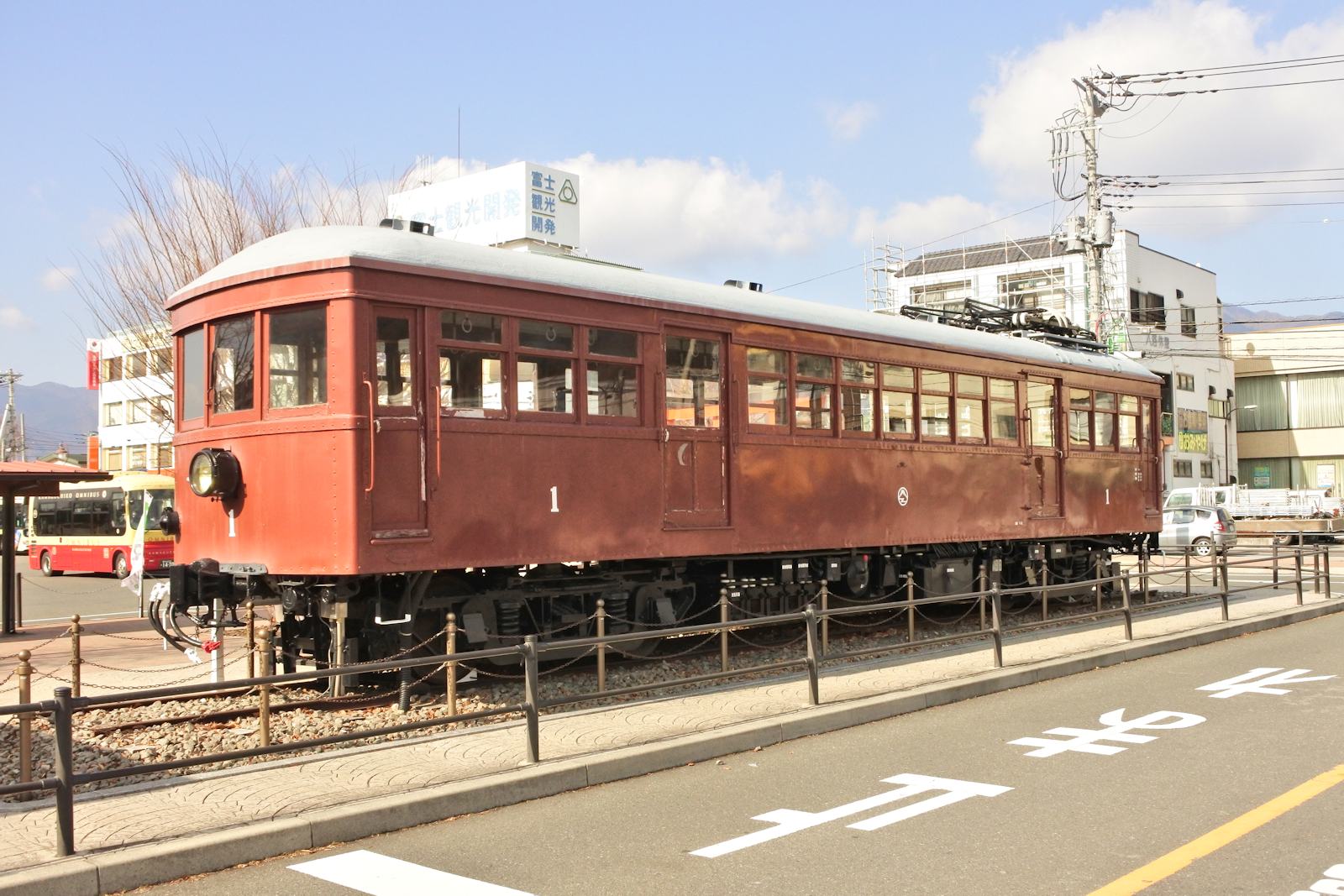
河口湖駅前の富士山麓電気鉄道モ1形を撮る
富士急行線の終着駅・河口湖駅へとやってきた。この駅の前には、富士急行の前身・富士山麓電気鉄道で活躍したモ1形車両1号車が展示されている。モ1形は、1929(昭和4)年の富士山麓電気鉄道線大月駅~富士吉田駅(現在の富士山駅)間開業に合わせて5両が製造された。車長15.24mの半鋼製車体(鉄と木材の両方を使って製造された車体)の車両で、40‰の急勾配対策として、発電ブレーキや砂まき装置を備えた。1号車は、この姿では1952(昭和27)年まで活躍した。新製した車体とモ1形の台車や床下機器類を再利用して、モ1形の改造車扱いでモハ500形が登場した。一方の車体は上田丸子電鉄(上田電鉄の前身)に譲渡され、別の車両で使われていた台車と床下機器を組み合わせてクハ250形251号車となり、のちに電動車化されて(モーターとパンタグラフが取り付けられて)モハ4250形4257号車となった。クハ251号車・モハ4257号車は1955(昭和30)年から1983(昭和58)年まで菅平鹿沢線(1960(昭和35)年に真田傍陽線に改称 1972(昭和47)年に廃線)と別所線で活躍した。引退後に古巣である富士急行に里帰りし、現在の河口湖駅前に静態保存されている。なお、富士山麓電気鉄道での現役時代は屋根にパンタグラフを2基搭載していたが、展示されている姿は上田丸子電鉄モハ4257号車時代に近い1基搭載となっている。I came to Kawaguchiko [Lake Kawaguchi] Station, the terminal of Fuji Kyuko Line.In front of the station, an old rail car, Mo 1, the first generation car of Fuji Sanroku Electric Railway (the predecessor of Fuji Kyuko) is displayed.Five cars of Mo 1 Series had been manufactured and debuted at the same time as the open of the section between Otsuki Station and Fuji-yoshida Station (present Mt. Fuji Station). It had 15.24-metre/50-foot long body made of both wood and steel and equipped generative brake and sander to accept the steep slope.In the original style, Mo 1 had been in service until 1952. Its bogies and machinery had been reused to newly-made Moha 500 (conversion of Mo 1 Series) Series. The body of 1 had been reused to Ueda Maruko Electric Railway (the predecessor of Ueda Electric Railway) and assembled into Kuha 251 together with bogies and machinery from the other car, which would have been converted Moha 4257 to equip motors.Kuha 251 or Moha 4257 had been in service on Sugadaira-shikazawa Line, which had been renamed to Sanada-soehi Line and closed in 1972, and Bessho Line from 1955 to 1983.After its retirement, Mo 1 had come back to Fuji Kyuko and started to display. The displayed car is similar to that after moving to Ueda Maruko Electric Railway lines, not the original style because of only one pantograph on its roof (in the original style two pantographs).
Jan 21, 2018
コメント(0)
-
「鉄道王」根津嘉一郎の実家を見る
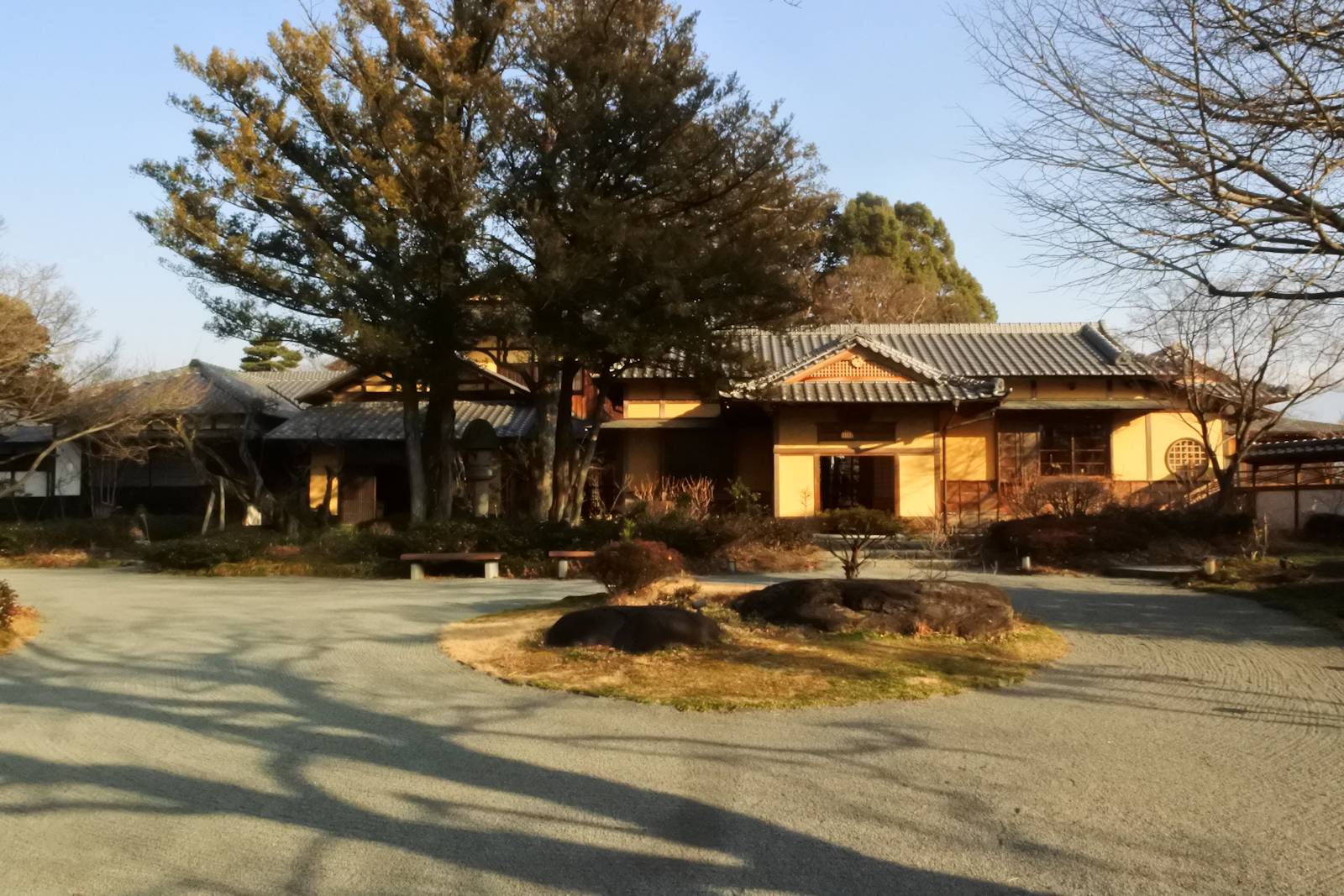
東武鉄道の初代社長を務めるなど、明治から昭和年間にかけて数多くの鉄道事業者の経営に携わったことから、「鉄道王」と呼ばれる根津嘉一郎さんの実家である根津記念館を見学してきた。根津嘉一郎(1860 - 1940)さんは”甲州財閥”と呼ばれる明治時代に活躍した山梨県出身の実業家の1人で、業績が振るわなかった東武鉄道の経営再建に成功し、日本国内有数の大手民鉄へと成長させた。根津は実業家として、東武鉄道のほか、高野登山鉄道(南海高野線の前身)、武蔵電気鉄道(東急東横線の原型)、東京地下鉄道(東京メトロの前身)、東京馬車鉄道・東京市街鉄道・東京鉄道(以上3社東京都電の前身)などの合わせて24社の鉄道会社や、富国徴兵保険(現在の富国生命保険)、館林製粉(現在の日清製粉グループ本社)、日清紡などの企業の経営に携わった。また、自らの事業で得た儲けを社会にに還元すべきという考えのもと、自らの事業で得た儲けを地元に還元すべきという考えのもと、教育会にも進出し、武蔵大学の創設や、山梨県の学校へのピアノやオルガンの寄贈(これらは「根津ピアノ」「根津オルガン」と呼ばれ、記念館内にも数台が収蔵されている(すべて写真撮影不可))、JR東日本中央本線(中央東線)山梨市駅近くの笛吹川に掛かる根津橋の寄贈などに私財を投じた。根津さんの実家は甲州平等村(ひらしなむら)、現在の山梨県山梨市にある。記念館は根津の実家を保存・活用した施設で、旧主屋、青山荘、土蔵、展示棟と庭などから成り、根津さんの実業家人生や山梨での暮らしぶりに触れることができる。根津家は「油屋(あぶらや)」という屋号で雑穀商や質屋業を経営していた、地元の豪商であった。根津家邸宅は根津さんの関与の元、甥の根津啓吉さんにより、1932(昭和7)年から1935(昭和10)年にかけて整備され、故郷での「迎賓館」、大地主根津家の「地主経営の場」、「居住空間」としての機能を併せ持っていたと言われている。2003(平成15)年に根津家から山梨市へと寄贈され、2008(平成20)年10月に現在の根津記念館として一般に公開された。最初に展示棟で根津さんの生涯・功績についての常設展示を見た。山梨の地に生まれ、地方政治家を経て企業経営者、教育者となるまでの人生を、パネル展示を見ながら知ることができる。続いてメイン展示となる旧主屋、土蔵と青山荘へ。旧主屋は2階建てで、1933(昭和8)年に建設された。国の登録有形文化財に指定されている。近代和風なたたずまいの中に、コンクリート布基礎、ボイラー設備、屋内消火栓、電気配線など、当時の先端的な技術が盛り込まれている。旧主屋の2階の一室には、根津さんが東武鉄道の社長時代に使用していた机と椅子が展示されている。旧主屋の奥には土蔵が立っており、主屋とつながっている。土蔵も見学可能で、根津家に関する資料を展示している(写真撮影は不可)。青山荘は残された図面をもとに忠実に復元されたもの。応接室や広間の和室、茶の湯をもてなす茶室などで構成されている。応接室はもともと、神奈川県大磯町にあった根津さんの別荘にあった一室を移築したものだそうだ。青山荘の和室と面した縁側の窓からは、晴れていれば富士山も見ることができる。展示棟の資料によると、根津は東京の邸宅があった青山(現在の根津美術館)の地にちなんで「青山(せいざん)」という雅号を名乗り、茶人としても活動していた。根津の茶の湯仲間には、「逸翁」こと同じ山梨県出身の”甲州財閥”の一員で阪急電鉄創業者の小林一三さんや、東京急行電鉄初代社長の五島慶太さんなどもいた。記念館を訪れて、僕は根津家の暮らしがうかがい知れたと共に、昭和初期にタイムスリップして、根津家のお客様としてもてなされたような気持ちにもなった。そして展示棟の資料を通して、根津さんが経営に携わった企業の数の多さに改めて驚きを覚えたと共に、ピアノやオルガン、根津橋の寄贈など、根津の郷土愛に感動した。I also visited Kaichiro Nezu Memorial Museum, which uses his parents' house in Hirashina Village, present Yamanashi City, Yamanashi Prefecture.Kaichiro Nezu (1860 - 1940) is one of well-known Japanese businessperson during late 19th century early 20th century and had managed many companies, such as Tobu Railway, Koya Tozan Railway (predecessor of Nankai Koya Line), Musashi Electric Railway (Origin of Tokyu Toyoko Line), Tokyo Horse-drawn Streetcar, Tokyo Inner City Railway, Tokyo Railway (predecessor of Bureau of Tokyo Metropolitan Transportation Tramways), Tokyo Underground Railway (predecessor of Tokyo Metro Ginza Line), and totally 24 railway companies, and Fukoku Mutual Life Insurance Company, Tatebayashi Flouring Mill (present Nisshin Seifun Group), and Nisshinbo, and more. He also had a spirit that the earn from his own business were use to to society, from which he established Musashi University, presented pianos or organs to primary schools in Yamanashi Prefecture (the instruments are called "Nezu Piano" or "Nezu Organ" and some of them are exhibited in the museum (photographing all of them isn't allowed)), and put in his money to build Nezu bridge over Fuefuki River and near Yamanashi-shi Station on JR East Chuo Main Line (Chuo East Line).His parents had been business tycoon and had run pawnshop and dealt in grain. The museum had been designed by consists of main building, Seizan-so, Tsuchikura storehouse, exhibition hall, and garden, and you can learn his life as a businessman and feel that in Yamanashi.These houses are designed by his nephew, Keikichi Nezu, and Nezu himself and it is said that they functioned as not only the living space, but also the guest palace and the office as a landowner. The houses and land had been donated to Yamanashi City in 2003 and the museum opened on October 11th, 2008.First, I saw exhibition hall, where the diagrams and photographs showing his life regularly exhibited.The main building are two-storied Japanese-style house built in 1933 and designated as a National Cultural Asset. It equips concrete basement, boiler, indoor fire hydrant, and electric outlets, and tatami-matted rooms, kitchen with furnaces and basement pantry, and more rooms are laid out. His desk and chair he used when he had been the president of Tobu Railway are exhibited in a room on first/second floor. Tsuchikura storehouse stands over and the main building, in which the documents depicting Nezu family are exhibited (photographing isn't allowed).Seizan-so, which connects to the main building , is faithfully restored based on its original design and guests had been entertained at parlor in the building. Over the building, a tea-ceremony room are standing. The parlor in Seizan-so had been reconstructed from that of his second home in Oiso, Kanagawa Prefecture. According to the explanation in exhibition hall, he called himself "Seizan" after where he lived in Tokyo, Aoyama, Minato-ku, Nezu Museum is located in the present, when he used to be in the ceremony, and many businesspersons, such as Ichizo Kobayashi, the founder of Hankyu Railway and also coming from Yamanashi Prefecture, and Keita Goto, the first president of Tokyu Corporation, had spent time with him.While seeing the museum, I felt as if I slipped back in time to early Showa period when the buildings constructed and invited and entertained by him, and through the exhibits in exhibition hall, I was surprised at the number of the companies he had managed and moved his love to his hometown; he donated pianos or organs to primary schools (the instruments are called "Nezu Piano" or "Nezu Organ" and some of them are exhibited in the museum (photographing all of them isn't allowed)) and Nezu bridge over Fuefuki River and near Yamanashi-shi Station on JR East Chuo Main Line (Chuo East Line).参考文献 Reference根津記念館 パンフレット山梨市 根津記念館English guide of Nezu Memorial Museum
Jan 20, 2018
コメント(0)
-

超高速で駆け抜ける山梨リニア実験線を撮る
富士急行線を撮った次は、山梨県立リニア見学センターで試験走行中の山梨リニア実験線(リニア中央新幹線)を撮影。富士急行線禾生駅から歩いて15分ほど。坂道を上った丘の上にリニア見学センターと山梨リニア実験線の線路が見える。実験線は2027年にはリニア中央新幹線の一部となる。リニア見学センターは「わくわくやまなし館」と「どきどきリニア館」の2棟から成り、「わくわくやまなし館」ではリニアグッズや山梨県のお土産品などを販売と、山梨県の観光情報を発信し、「どきどきリニア館」では過去の試験走行に使われた超電導リニアの車両(MLX-0形)が展示されているほか、超電導リニアが走る仕組みを学習することができる。どちらとも3階に試験走行する超電導リニアの車両(L0系)を見ることができる。試験走行が順調に進んでいる場合には、ほぼ10分ごとに車両がリニア見学センターの前を通過するという。僕は「どきどきリニア館」3階の見学ラウンジから、500km/hという超高速での試験走行を繰り返す山梨リニア実験線を撮影することにした。試験走行中の車両がどこにいるかは見学ラウンジにあるディスプレイで知ることができるほか、車両がリニア見学センターにリニア見学センター近づく10秒前になると、スタッフの方が知らせてくれる。僕もこれを合図にカメラを構えた。そして、撮れた作品がこれである。将来の品川方となる上野原市方から名古屋・大阪方となる笛吹市方へと向かう車両を捕える。リニア中央新幹線は2027(令和9)年に開業予定。開業すると、品川駅~名古屋駅が40分、品川駅~新大阪駅間が1時間3分でつながる予定である。開業が待ち遠しい。After photographing Fuji Kyuko Line trains, I went to Yamanashi Prefectural maglev observation and exhibition centre to see and photograph maglev train in test running.It takes about 15 minutes from Kasei Station on Fuji Kyuko Line and it is located on a hill. It consists of two buildings standing along the test railway of maglev, one of which sells maglev goods and souvenirs in Yamanashi Prefecture and shows the tourist attractions in Yamanashi Prefecture, and the other shows how maglev train run and float including a real maglev car (MLX-0).Both buildings have observation rooms to watch the maglev train, from one of which I tried to photograph a maglev train running at about 500km per hour. I set aperture value of my camera in little number and fast shutter speed because of shooting over the window and the train's fast speed. A staff told visitors the train would soon come before about ten seconds. When I heard this announcement, I was ready to photograph.My photograph (the upper) was shot the train running from Uenohara City (Tokyo direction in the future) toward Fuefuki City (Nagoya and Osaka). The maglev train starts its regular operation between Shinagawa Station and Nagoya Station in 2027 and it takes just 40 minutes to connects the two stations and 1 hour and 3 minutes to do between Shinagawa Station and Shin-osaka Station.
Jan 20, 2018
コメント(0)
-

初めての富士急行線撮影
6000系元国鉄・JR東日本205系電車。205系は1985(昭和60)年に国鉄初のオールステンレス製車体の車両として、当初は山手線用として登場した。オールステンレス製車体のほか、ボルスタレス台車や国鉄が独自開発した界磁添加励磁制御(旧来の直流直巻整流子モーターを使用しながら、補助電源装置からモーターの界磁(モーター内部のコイルのうち回転するコイル(電機子)の外周に固定されたもの)と主回路と呼ばれるメインの電気系統から別れた、モーターの界磁と並列につながれた界磁に流れる電流量を調節する誘導分路と呼ばれる回路との間を循環する、誘導分路においてはパンタグラフからモーターを介して線路へと流れる電流とは逆向きの電流を流し、その電流量を変えることで界磁の磁力を制御し、モーターの回転、すなわち電車の速度をコントロールする方式。201系で採用した電機子チョッパ制御よりも低コストで製造できること、減速時にモーターの回転によって発生した電気を架線に返す回生ブレーキが使用できるメリットがある)も初採用された。2011(平成23)年から2012(平成24)年にかけて3両編成4本が譲渡され、2012(平成24)年2月29日より営業運転を開始した。上の写真は1985(昭和60)年に製造された側窓が「田」の字型の下段上昇・上段下降式の量産先行車のヤテ2→ケヨ25編成の6001F。下は1985(昭和60)年に製造された量産車のヤテ11→ケヨ22編成の6501F。共に国鉄・JR東日本時代は山手線と京葉線で活躍した。(上)東桂駅にて、(下)都留文科大学前駅にて6000 Series moved from JR East and renamed from 205 Series. 205 Series had been in service in 1985. It was first Japan National Railway (JNR) car made by stainless steel and equipped bolsterless bogies and superimposed field excitation control system; classical series-wound motor and resistance unit are equipped, but a loop of current circulating around magnetic generator via circuit in parallel with field coils of motors and the field coils and flowing in a direction reverse to that from pantograph to railway in the parallel circuit and field coils to control the amperage of the coils, and has a merit to equip regenerative brake.Four 3-car sets are existed and all of those had been in service on Yamanote Line and Keiyo Line while they used to belonged to JR East.The cars in upper photograph is 6001F set (Yate 2, when in service on Yamanote Line, Keyo 25, when on Keiyo Line) equipping double hung window at Higashi-katsura Station, and that in lower ones is 6501F (Yate 11, when in service on Yamanote Line, Keyo 22, when on Keiyo Line) having sashless vertical sliding window from the platoform of Tsuru-bunka-daigaku-mae [Tsuru University] Station.参考:京葉線を走る205系ケヨ25編成 Keyo 25 set on Keiyo Line8500系元JR東海371系電車。1991(平成3)年に新宿駅~沼津駅間を小田急小田原線・JR東海御殿場線経由の特急「あさぎり」用車両として登場した。製造されたのはたった1編成のみの貴重な車両でもあった。JR東海時代は7両編成を組み、このうち3・4号車(沼津方から3・4両目)にあたるサロハ371は2階建て車両であった。国鉄・JR東日本205系から続く界磁添加励磁制御を採用。2012(平成24)年に「あさぎり」としての運行を終了し、それ以降は臨時列車・イベント列車として運行された。2014(平成26)年に臨時列車・イベント列車としても役目を終え、平床車両3両が富士急行に譲渡された。富士急行では水戸岡鋭治さんの手によるリニューアルを施され、「富士山ビュー特急」の列車名を与えられた。禾生駅~赤坂駅間にて8500 Series, moved from JR Central and used to be named 371 Series, started to be in service as "Fujisan View Express" in 2016. 371 Series debuted in 1991 and had been in service as "Asagiri" limited express between Shinjuku Station on Odakyu Odawara Line and Numazu Station on JR Central Gotemba Line until 2012. Only one 7-car set was manufactured and two double-deckers, Saroha 371, used to be coupled at third and forth car when the train ran toward Numazu. The cars introduced the same control system as Japan National Railway and JR East 205 Series. From 2012 to 2014, 371 Series had also been in service as special train for events. After moving of three regular-floor cars to Fuji Kyuko, the exterior and interior of those cars were refurbished by Eiji Mitooka, who is also famous the designer of JR Kyushu 800 Series Shinkansen or 77 Series passenger car "Seven Stars in Kyushu".The photograph was shot between Kasei Station and Akasaka Station.参考:小田急小田原線を走るJR東海371系 371 Series on Odakyu Odawara LineJR東日本189系1975(昭和50)年、上野駅~長野駅・直江津駅の特急「あさま」用に、EF63形電気機関車2両を連結しての信越本線横川駅~軽井沢駅間の碓氷峠越え対策(横軽対策)を施した特急型車両として登場。富士急行線へは中央本線(中央東線)からの新宿駅~河口湖駅間を運行する臨時快速列車「ホリデー快速富士山」として土休日に運行されている。上はJR最後の国鉄特急色を纏う編成となったM51編成。下はこの日(1月20日)に富士急行線でのラストランを迎えた「あずさ」色のM50編成。(上)三つ峠駅にて 大月行き列車車内最前部から、(下)谷村町駅にて 大月行き列車車内最前部からJR East 189 Series, debuted in 1975 as the car for "Asama" limited express between Ueno Stataion and Nagano Station or Naoetsu Station and at first dedicated to steep slope on Shinetsu Main Line between Yokokawa Station and Karuizawa Station coupled with two Class EF63 electric locomotives, also go through Fuji Kyuko Line as "Holiday Rapid Mt.Fuji" on Saturdays, Sundays, and Japanese national holidays. The one in upper photograph is M51 cream-and-red-coloured (livery of traditional JNR limited express train) set shot at Mitsutoge Station over the front window of the train toward Otsuki, and the one in lower is M50 white-and-blue-coloured (livery of "Azusa" limited express after the privatization of JNR) set, which operated on Fuji Kyuko Line last time on that day, shot at Yamuramachi Station over the front window of the train toward Otsuki.
Jan 20, 2018
コメント(0)
-

京王5000系に乗る
E353系撮影後は高尾山口駅へ向かい、京王高尾線・京王線へ。2017(平成29)年にデビューした京王5000系電車に初乗車した。2017(平成29)年11月3日に撮影した京王5000系電車 Keio 5000 Series photographed on November 3rd, 2017今回乗車したのは京王八王子駅から京王線新宿駅まで。車両は5734F。車内は白色の壁を基調としながらも、床はベージュ色と木目柄の入ったこげ茶色、荷棚通路寄りと側扉横の手すり部分は茶色、座席仕切り板は茶色がかった灰色の木目柄、側扉上のトレインビジョン周りは黄金色、荷棚上はトレインビジョン周りに近い黄色がかったクリーム色が使われている。座席は側扉間が2人がけのロング・クロス転換シートが3組並んだ6人がけ、車端部は3人がけのロングシートとなっている。背もたれ上部が赤みがかったこげ茶色、背もたれ下部から座面にかけて灰色の生地、ヘッドレストはやや薄めの黒色。座席のこげ茶色は高尾山の木々を、灰色は繊維の街・八王子の絹糸をイメージしたもの。トレインビジョンは17インチのものが2画面配置され、左側が京王電鉄のCMを放映する広告用、右側が次駅・乗り換え・所要時間・側扉開閉を知らせる案内用。案内用のトレインビジョンの表示は、京王線にも乗り入れる東京都交通局10-300形電車(10-491F以降の編成)やJR東日本E233系電車(埼京線用の7000番台車両)、東急4000系電車のものに似たアニメーション付き表示。クロスシートとなる座席指定列車運用時にも乗客が見やすいように、天井にも枕木方向に取り付けられている。空気清浄機はパナソニックの「ナノイー」の技術を導入している。実際に乗車してみた感想としては、落ち着きの中に上品さ、高級感を併せ持つ印象を与える色使いの車内空間、静かな加減速時のVVVF音や側扉の開閉音、各停列車で京王八王子駅から京王線新宿駅までの長時間(乗車時間約80分)乗っていても疲れにくい座席、「ナノイー」によって清浄された車内の空気。京王電鉄初の座席指定列車にふさわしい車両であると評価したい。After photographing E353 Series, I travelled with Keio 5000 Series, debuted in 2017, first time from Keio-Hachioji Station to Keio Line Shinjuku Station. The set I rode on was 5734F set.Riding on the train, its interior is based on white-coloured wall, its floor is beige and dark brown wood-grain, its aisle-side half of luggage rack and both side of passenger doors are brown, end plate of seating areas are brownish gray wood-grain, around LCD visions above the doors are gold, and above the luggage rack is cream matching the gold.Three seatings for two are laid out between two doors and the colours of seatings are brown (upper of backrest), coming from forest in Mt. Takao, and gray (lower of backrest and face)-coloured, from silken threads made in Hachioji. They also have black-coloured headrests.Two LCDs, one of which on the right shows information about stations, time, transfer lines, and suspension or delay of railway lines with animated letters and pictures like those of Bureau of Tokyo Metropolitan Transportation 10-300 Series (models after 10-491F set), JR East E233 Series (on Saikyo Line), and Tokyu Corporation 5050-4000 Series, and another does commercial movies of Keio Corporation, hang from ceiling to make passengers see easily when the seatings turned forward-facing transverse layout as the reserved-seat train from March, 2018, as well as those laid out above the doors.It also equips air purifiers using "nanoe" technology produced by Panasonic.I felt its interior looks soft but luxurious because of the colours and appreciate the interior and equipment, such as silent variable-frequency drive and doors, stress-free seatings 1-hour-and-20-minute travel as local train between Keio-Hachioji Station and Keio Line Shinjuku Station, and purified air, suitable for the first fast and reserved-seat train for Keio Corporation.密着!京王電鉄 新型5000系 新形式誕生の記録/試運転前面展望【大島車両検修場〜新宿〜高幡不動検車区】【Blu-ray】 [ (鉄道) ]※新製品 5月発売※ 京王5000系(座席指定列車) 基本6両編成セット(動力付き) 【グリーンマックス・30728】「鉄道模型 Nゲージ GREENMAX」
Jan 3, 2018
コメント(0)
-
2018年初撮影はE353系
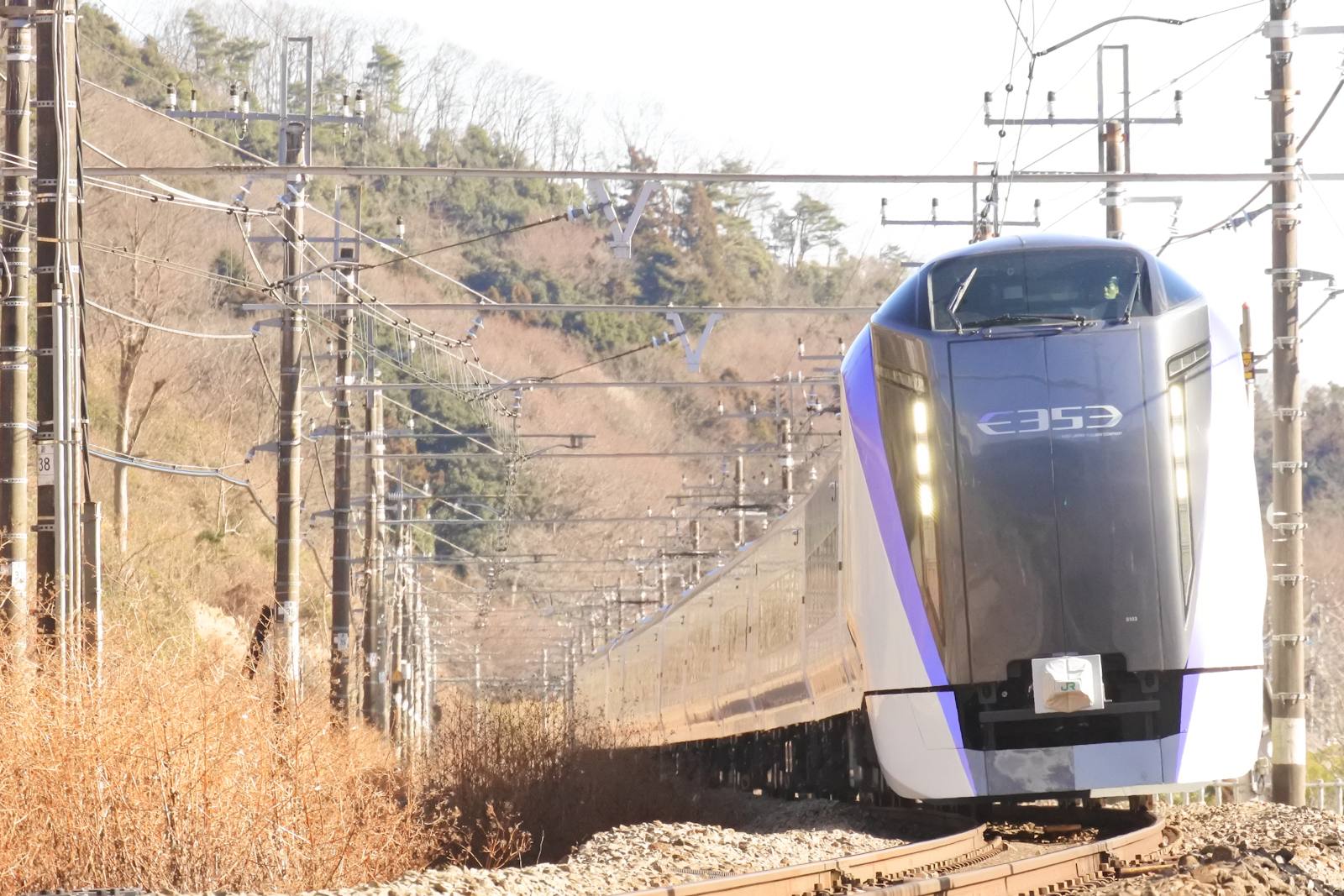
2018(平成30)年の撮り始めは、2017(平成29)年12月23日にデビューしたばかりのJR東日本E353系電車。撮影場所は中央東線高尾駅~相模湖駅間の新井踏切。空気バネ式車体傾斜機能付き台車を履くE353系らしく、カーブで車体を傾けている姿を撮ろうとこの場所を選んだ。E353系はカーブ通過時に、最大でわずか1.5°だが台車の空気バネの力により車体が線路の中心よりもカーブ内側に傾いている。写真でもカーブ上にいる先頭車両がカーブ内側(写真向かって左側)に傾いている。空気バネ式車体傾斜装置の導入は、JR東日本の車両ではE5系新幹線、E6系新幹線に次いで3例目、在来線の車両では初めての採用である。中央東線の「あずさ」「かいじ」系統においては2001(平成13)年に登場したE257系以来16年ぶりの新型車両であるE353系は今後、2018(平成30)年3月17日のダイヤ改正で「スーパーあずさ」の全列車を受け持つようになるほか、さらなる増備が予定され、今後2年以内をめどに「あずさ」「かいじ」の運用にも就き、中央東線で定期運行される特急列車の全列車を受け持つとみられている。The target of my first photographing in 2018 is E353 Series, debuted in December 23rd, 2017.Where I photographed was Arai crossing between Takao Station and Sagamiko Station on Chuo Main Line (Chuo East Line) to shoot when the train running on curve and tilting its body.E353 Series introduces pneumatic tilting to run at faster speed without worsening of passengers' comfort on curve. Among JR East railway cars except Shinkansen, it is first time to introduce pneumatic tiling.E353 is planning to operate on all trains of "Super Azusa" limited express on Chuo East Line from March 17th, 2018, and to be manufactured more sets for "Azusa" limited express and "Kaiji" limited express. Within two years, all regular limited express trains would be operated by E353 Series.
Jan 3, 2018
コメント(0)
-
2018年 新年のご挨拶
新年明けましておめでとうございます。2018(平成30)年もよろしくお願いします。さて、昨年2017(平成29)年12月13日、当ブログは開設から10周年を迎えることができた。2007(平成19)年12月13日に、花見友紀の2代目ブログとして開設。この日を選んだ理由は、2006(平成18)年に開設した初代ブログが、運営会社の倒産により同年12月13日に閉鎖(退会手続きを伴わない消滅)してしまい、そこからちょうど1年後となるこの日を、ブログ執筆活動再開の日に選んだ。この10年間での累計アクセス数は70万超。これもご覧になっている皆さんのおかげであると受け止め、これからも皆さんに見ていただける写真を撮影し、その写真に込めた思いを書き表していく決心でいる。2016(平成28)年12月13日から2017(平成29)年12月12日までは「一番その車両らしい姿」をテーマに写真を撮ってきたが、1年間だけではまだ撮り足りない、もっと写真の腕を上げる必要があると感じていることから、2018(平成30)年も同じテーマを継続していきたい。Happy New Year!! 2018.On December 13th, 2017, This blog marked its 10th anniversary.This blog opened as my second blog and I chose that day because bankruptcy of operating company of my first blog had made it closed on that day in 2006.This blog had been viewed by over 700 thousand persons. I really thank you for your viewing and have to struggle to get photographs in good configuration and write my feelings about those.Until the day of 10th anniversary, I set theme of my photograph "suitable operation and background for each car" but I would like to continue this theme in 2018 because I couldn't get so many photographs and want to improve my skill.
Jan 3, 2018
コメント(0)
全8件 (8件中 1-8件目)
1