


2014年09月の記事
全5件 (5件中 1-5件目)
1
-

桜木町駅からの東急東横線のきっぷ
今回は僕の宝物の1つ、桜木町駅からの東急東横線のきっぷを紹介。桜木町駅がなくなって10年以上の時が経ち、東横線が桜木町駅まで来ていた歴史を物語る証拠である。このきっぷを見ると、今でも桜木町駅があったあの頃を思い出す。当時の桜木町~渋谷の運賃は290円だった。日付は1996(平成8)年8月20日、消費税が3%の時代である。当時僕は小学校3年生だった。紙の磁気きっぷは時間が経つと券面の文字が薄くなってしまいやすいものの、18年の時を経てもなおはっきりと読み取ることができる。しかしなぜ下車駅の自動改札で回収されてしまうはずのきっぷをなぜ僕が持っているのか。そのからくりは、当時東急電鉄には290円区間と300円区間が存在したことにある。どちらの場合もこども運賃は端数切り上げとなるため150円となる。つまり桜木町駅発のきっぷの場合、渋谷駅では大人運賃のきっぷは、290円で行ける範囲が渋谷駅までのため回収されてしまうが、こども運賃のきっぷでは150円で300円区間まで有効だったため、当時東横線と改札口が別々だった田園都市線に乗り継いで300円区間の三軒茶屋駅まで乗車することができたことから、渋谷駅できっぷが回収されなかったのである。そのうえこの当時、すでに横浜高速鉄道みなとみらい線の建設工事が始まっており、みなとみらい線開業と同時に東横線の横浜~桜木町間が廃線になってしまうという噂を聞いていたため、渋谷駅で田園都市線に乗り換えなかったものの、改札から出たきっぷを回収してもらわずに持ち帰った。これ以外にも桜木町駅から300円区間のきっぷを持っているが、最も日付が古いものがこれだった。この日付のすぐ後に消費税の税率が5%に上がったものの、桜木町~渋谷間の運賃は値上げされなかった(初乗りは90円から110円に値上げされていた)。This time I would like to introduce one of my favourite things, an old ticket on Tokyu Toyoko Line from Sakuragicho.Having been passed over 10 years since the station's close, this ticket tells the history that Toyoko Line came to Sakuragicho before the open of Yokohama Minatomirai Railway Line in 2004 and reminds me the memories of that time.The fare was 290 yen. The date was August 20th, 1996 (8th year of Japanese Heisei Period), when the rate of consumption tax in Japan was 3%, and I was third grade of primary school student. Though the letters on the ticket is easy to gradually fade away, it keeps good condition to be clearly to read.Why I have the ticket, which might have been aspirated by the ticket gate, is the 150-yen ticket for children under 12 was available to 300-yen section. Because on that time both 290-yen section and 300-yen section existed on Tokyu, normal 290-yen tickets from Sakuragicho was collected at Shibuya, but children ticket users could transfer to Den-en-toshi Line, whose gate was separated from Toyoko Line on that time, to Ikejiri-ohashi or Sangen-jaya with it.On that time the construction of Yokohama Minatomirai Railway Line also had been started and I heard the rumour that Toyoko Line between Yokohama and Sakuragicho would have been closed as Yokohama Minatomirai Railway Line opened, so the ticket could be taken by me.I also have another more tickets for the same section, but one on the oldest date is in the photograph. Though the consumption tax rate was raised to 5% in 1997, the fare for the section was unchanged (the lowest rose to 110 yen from 90 yen).
Sep 27, 2014
コメント(0)
-

22F以外の江ノ電の車両たち
13日の江ノ電で、22F以外にも撮影した車両の写真を公開。I would like to show you the photographs of Enoshima Electric Railway (Enoden) trains except 22F set of 20 Series.1000形1001F。通勤型電車で初めてのブルーリボン賞受賞車両。2009(平成21)年にデビュー当時の塗装に戻された。1001F set of 1000 Series, which got the Blue Ribbon Prize first time among Enoden train and re-painted the one when it debuted in 2009.2000形2003F。この日22Fとコンビを組んでいた編成。2003F set of 2000 Series, which was coupled by 22F. 1000形1501F。江ノ電初のフルカラーLED式行き先表示搭載車両(前面のみ)。1501F set of 1000 Series, which installs full-colour LED destination display (only on front) first time among Enoden train.1000形1101F。江ノ電のゆるキャラ、えのんくんが描かれた「S.K.I.P.えのんくん号」。1101F set of 1000 Series, on which the mascot of Enoden, Enon-kun, was decorated.1000形1501F。腰越駅から路面区間へと顔を出した瞬間をとらえた。1501F set of 1000 Series, which was about to go into the street-running section.新500形501F。長谷~極楽寺間の歩道橋より、トンネルから顔を出した瞬間を。501F set of 500 Series, which went out of a tunnel.1000形1201F。江ノ電と台湾・平渓線との業務提携を記念したラッピング車両。石上駅を発車しようとしているところを。1201F set of 1000 Series, which was decorated by the illustration of Enoden and Pingxi Line in Taiwan, where Enoden affiliated, and was about to leave Ishigami Station.
Sep 13, 2014
コメント(0)
-
「夏は江ノ電、しませんか?」9月編
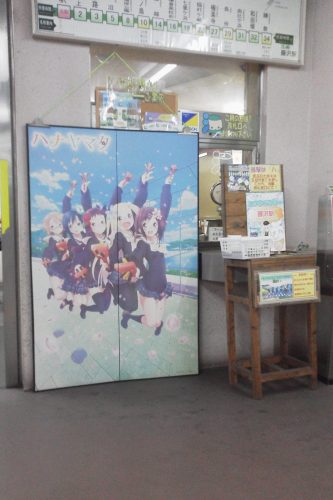
13日、再び江ノ電を旅してきた。前回8月の旅に続いて、鎌倉を舞台にしたよさこいアニメ「ハナヤマタ」とのタイアップイベントへの参加するためである。今回の目標は、「ハナヤマタ」スタンプラリーへの参加と、前回遭遇・撮影できなかった「ハナヤマタ」タイアップトレインの20形22Fを撮影すること。イベントも9月30日までと、アニメ本編と同様に終盤に入り、前回訪れた時よりも「ハナヤマタ」色が濃くなっていた。前回は鎌倉駅からのスタートだったが、今回は小田急電車の往復と江ノ電の1日乗車券がセットになった「江ノ島・鎌倉フリーパス」を使って、藤沢駅から江ノ電に乗ることにした。小田急電車を降り、藤沢駅南口とペデストリアンデッキで結ばれた小田急百貨店の2階にある江ノ電乗り場へ。改札口前でスタンプ台紙をもらい、改札を抜けてホームへ。藤沢駅は今回のイベントで最初のスタンプ設置駅でもあり、早速1個目のスタンプを押す。スタンプ台の隣には「ハナヤマタ」の大きなパネルが置かれていた。On 13th, September, I wen travelling with Enoshima Electric Railway (Enoden) again to retry to ride and photograph 22F set of 20 Series with "Hanayamata" anime front sign and interior advertisements, and to join the stamp collection event at five stations on Enoden. The event was being held and the train be in service by the last of this September like the broadcast of the anime show and seemed to get more exited than my last time in August.This time I started the travel from Fujisawa Station, opposite from last time from Kamakura, using Enoshima Kamakura Free Pass, allowing round trip of Odakyu Line to/from Fujisawa and unlimited travel on Enoden.Getting off an Odakyu Line train and walking over a pedestrian deck to Odakyu department store on whose first/second floor Enoden's platform is located. I got a stamp-collection paper in front of the gate. Before getting on the train I also affixed the first stamp. Next to the stamp stand a big poster was put.まずはすぐ後の列車に乗り、22Fとの遭遇に期待を膨らませながら鎌倉方面へ向かうことに。江ノ電は6本の列車が稼働していて、すれ違いが可能な鵠沼駅・江ノ島駅・峰ヶ原信号場・稲村ヶ崎駅・長谷駅では必ずすれ違いを行う。それらのすれ違い列車に22Fがいないかどうか注視していた。途中の鵠沼駅で一旦降り、ここで3本対向列車を見てみたものの、22Fは来なかったため、再び鎌倉方面へ向かう。次のすれ違いポイント、江ノ島駅で遭遇した対向列車も22Fではなかった。これまで乗ったものも含めて5本の列車を見たため、鎌倉高校前~七里ヶ浜間の峰ヶ原信号場ですれ違わなければ、22Fは稼働していないということを意味する。ラストチャンスに期待しながらら、江ノ島駅を後にした。そして、前回果たすことができなかった出会いの瞬間が遂にやってきた。峰ヶ原信号場で22Fと遭遇!!この日は2000形2003Fとコンビを組んでいた。峰ヶ原信号場を出て1つ目でスタンプ設置駅の七里ヶ浜駅で降り、スタンプを押して藤沢行き列車で江ノ島駅まで戻る。江ノ島駅の待合室にもスタンプ台とパネルが飾られていた。At first I started to travel while watching carefully weather 22F set was in service or not. Enoden operated by six operations and, as I wrote before, because of the single-tracked line, Enoden trains always wait the opposite direction ones at double-tracked stations, Kugenuma, Enoshima, Inamuragasaki, Hase, and and Minegahara Signal Station between Kamakura-koko-mae and Shichirigahama.I once got off the train at Kugenuma, the first double-track station from Fujisawa. Though waiting for three opposite direction trains, all of those weren't operated by 22F. Restarting the travel, the other train meeting at Enoshima wasn't neither. If I couldn't meet 22F at the next point, Minegahara, it meant 22F wasen't in service.The long-awaited moment had come; I met 22F, coupled 2003F set of 2000 Series, at Minegahara!!Getting off Shichirigahama, the next stop from Minegahara to collect a stamp and to change the train getting back to Enoshima to wait for 22F. At Enoshima the stamp stand and a big poster welcomed me like Fujisawa.待つこと10分ほどで2003Fと22Fのコンビが到着。いよいよ22Fに乗れる時が来た。Waiting for about ten minutes, 22F, combined with 2003F, came.ヘッドマークだけではなく、車内広告も「ハナヤマタ」のシーンが描かれたもので揃えられていた。関谷なるちゃんやハナ・N・フォンテーンスタンドちゃんなどよさこい部の面々に囲まれながら江ノ電の旅を続ける。車内放送は通常と同じ西村文江さんの声ものだったが、なるちゃん(上田麗奈さん)やハナちゃん(田中美海さん)の声が聞こえてきそうな雰囲気に思えた。鎌倉高校前駅から稲村ヶ崎駅にかけての海沿いを走る区間では、アニメ第5話の車窓からの海を見てはしゃぐハナちゃんの姿が頭の中に浮かんだ。次のスタンプ設置駅は長谷駅だが、このまま終点、鎌倉駅まで乗ることに。Not only its front sign, but interior of 22F decorated by "Hanayamata" posters. Enjoying the interior filled with the illustrations of the characters, I restarted travelling toward Kamakura.The announcement was the regular one by Fumie Nishimura, but I felt it was like the atmosphere the voices of the characters, such as Naru Sekiya, voiced by Reina Ueda, and, Hana N. Fountainstand, by Minami Tanaka, were heard. While the train ran the seaside area from Kamakura-koko-mae to Inamuragasaki, I remembered Hana getting excited at the sea looking out from the window of the train in the episode 5. I once travelled to Kamakura Terminal.鎌倉駅もスタンプ設置駅で、これで残りは1駅のみとなった。1本後の列車で長谷駅まで戻り、降りたホームに設置されたスタンプを押して、この日の目標を1つ達成した。すべてのスタンプを押した後は、もう1つの目標である22Fの姿をカメラに収める。後続の藤沢行き列車で極楽寺駅へ。前回300形305Fを撮影したのと同じ稲村ヶ崎駅との間にある道路と仕切りのない線路を走る22Fを撮影することに。Getting off the train, I collected fourth stamp at Kamakura, and backed to Hase by next train for the last one. I achieved one of my aim on that day.Next I went to between Gokurakuji and Inamuragasaki to achieve another aim, to photograph 22F.ややローアングルで、編成全体が直線的に収まり、かつ先頭車両のパンタグラフが架線柱と重ならない、僕自身でも最高の出来と言える構図で撮ることができた。これでこの日の目標は2つとも達成された。I appreciated my photograph because of the best composition that the whole carriage in the frame and the front pantograph not hiding the electric wire pole at a low angle. I could attain both of my aim. 稲村ヶ崎~七里ヶ浜のカーブを曲がる22Fも撮影。アニメ第5話に登場したカーブを曲がる300形に似た構図で。I also shot at a curve resembling a scene of 300 Series from the episode 5.これで僕の「夏は江ノ電、しませんか?」はすべての目標を達成した。Together with the travel in August, I completely finished my assignment.
Sep 13, 2014
コメント(0)
-
「ハナヤマタ」ファンを狙え!? 小田急グループの囲いこみ作戦
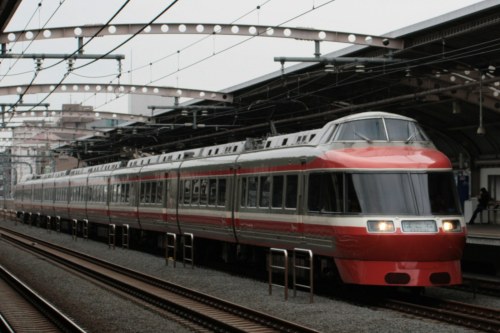
江ノ島電鉄とのタイアップイベントも好調の、鎌倉を舞台にしたよさこいアニメ「ハナヤマタ」。9月9日に放送された第10話は、よさこい部の面々が箱根で合宿をしに行くストーリー。面々が小田急7000形電車で箱根に向かうシーンや、早川橋梁(出山の鉄橋)を渡る箱根登山鉄道2000系電車のシーンも登場した。いずれも江ノ電と同じ小田急グループの路線である。よく考えてみると、面々が乗っていた列車は小田急ロマンスカーであり、鎌倉から箱根へ行く場合、江ノ電で鎌倉駅へ出て、そこからJR東日本横須賀線で大船駅、もしくは江ノ電で藤沢駅へ出てJR東日本東海道本線で小田原駅まで乗り、箱根登山鉄道鉄道線に乗り継ぐのが最も一般的であると言える。わざわざ小田急江ノ島線で町田駅まで出て、そこから箱根湯本行きの小田急ロマンスカーへと乗り継ぐという行き方は、ロマンスカーに乗りたい場合でない限りやらない、少し不自然な、というよりはあまり一般的ではないルートだと言える。ではなぜわざわざ遠回りしてまで小田急ロマンスカーに乗るルートになったのか?僕の目には、ここに小田急グループの影の作戦があるのではと伺える。メインの舞台となった鎌倉を走る江ノ電がヘッドマーク付き広告統一車両や記念きっぷの販売、スタンプラリーなどのタイアップイベントを積極的に実施していることから、同じ小田急グループの小田急電鉄と箱根登山鉄道も、両社の車両を描いてもらうことで、「ハナヤマタ」ファンに江ノ島・鎌倉エリアだけではなく、箱根へ行くときも小田急電車に乗ってほしいというメッセージが込められ、「花咲くいろは」での北越急行681系・683系電車「はくたか」が登場したシーンと似たような効果を狙っているのではと見て取れる。結果、小田急グループに属する鉄道3社の車両(江ノ電、小田急ロマンスカー、箱根登山鉄道)が「ハナヤマタ」に登場したこととなり、「ハナヤマタ」と小田急グループとの繋がりがより強固なものとなったと言える。果たして小田急グループは「ハナヤマタ」ファンを新たな利用客として囲いこむことができるのか? On episode 10 of "Hanayamata", a Japanese anime show featuring five girls in Kamakura performing yosakoi and tie-up campaign with Enoshima Electric Railway by 30th, September, going well, the five girls went travelling to Hakone for their training camp. While their travelling, Odakyu 7000 Series LSE and Hakone Tozan Railway 2000 Series crossing Hayakawa River, both of which are consisting of Odakyu Group, appeared.Their route, via Odakyu Romancecar from Kamakura, looked odd; it must be popular and the fastest to go via Tokaido Line, transferring at Fujisawa Station. They could travel via Odakyu Enoshima Line and transfer at Machida Station.From my point of view, a secret message to attract the fans to travel on Odakyu Group trains not only toward Kamakura, but also Hakone, of Odakyu Group to gather "Hanayamata" fans hid behind the scene. It resembles a "Hakutaka" limited express on "Hanasaku Iroha" anime. The appearance of the three carriages of Odakyu Group can give the viewers a strong image. I want to watch whether Odakyu Group can get more passengers toward Enoshima and Hakone.
Sep 9, 2014
コメント(0)
-

国鉄が民営化されていない「RAIL WARS!」の鉄道世界
「もしも国鉄が民営化されなかったら」という世界観の中で、国鉄公安室(鉄道警察隊の前身)で職場研修に励む、鉄道に青春をかけた高校生たちの活躍を描いた、2014(平成26)年7月より放送が始まったアニメ「RAIL WARS!」。原作は、かつてゲーム会社・タイトーで「電車でGO!」などの広報を担当していた異色の経歴を持つ、豊田巧先生による同名小説。9月6日現在、アニメの放送は第10話まで進行している。もちろんこのアニメも僕のこの夏の注目作品の1つで、毎週見ているのだが、今回はこの作品で描かれている鉄道世界について語りたい。作中における国鉄の鉄道網は、在来線は国鉄再建法が施行される1980(昭和55)年以前のものに、現実にはJR化後に開通した本四備讃線(瀬戸大橋線)、海峡線(津軽海峡線)、上野東京ラインなどを付け加えたもの。新幹線は2014(平成26)年現在のものに、北陸新幹線長野~金沢と北海道新幹線新青森~新函館北斗を付け加えたものとなっている。現実には国鉄再建法の下で、「特定地方交通線」に指定されて廃線または第三セクターに譲渡された路線が国鉄線として残されているだけでなく、在来線では上野東京ライン、新幹線では北陸新幹線長野~金沢と北海道新幹線新青森~新函館北斗といった、2014(平成26)年時点で未開業の路線や、国鉄時代に建設凍結となり事業が第三セクターに譲渡された久慈線と宮古線を繋ぐ鉄路(現在の三陸鉄道北リアス線)、阿仁合線と角館線を繋ぐ鉄路(現在の秋田内陸縦貫鉄道秋田内陸線)や、大洗鹿島線、ほくほく線、智頭線なども国鉄線として開通しているということが注目すべき点である。車両は、実在する(した)国鉄型車両がほとんどだが、実際には投入されなかった線区を走っていたり、架空のリニューアルが施されているものもある。例えば、京浜東北線に201系が走り、同車の内装が209系風にリニューアルされていたり、「踊り子」用の185系(A編成)が、現実のA7編成と同じデビュー当時の白地にグリーンの斜めストライプ塗装だが、サロ(グリーン車)がキハ183系のキロに似た外観と251系に似た内装を持つハイデッカー車に改造されていたりする。一方で山手線の車両がE231系だったり、寝台特急「はやぶさ」が存置され、E26系似の新型客車とEF510形とEF66形とを掛け合わせたようなスタイルの新型電気機関車に置き換えられていたりなど、実際にはJR化後に登場した車両や、まったくの架空の車両も登場する。これらの車両の音は、SUPER BELL"Zの野月貴弘さんの協力の下、リアルに再現されている。もう一つ、現実の国鉄時代にはあり得なかったことが起きている。駅ナカの店舗が充実しているというところである。駅ナカ店舗は、民営化後の多角経営を進める過程で増加したものであり、国鉄時代にはまったくなかった訳ではないが、そば屋やKIOSK程度しかなかった。国鉄は、日本国有鉄道法が定める鉄道・路線バス・船舶(連絡船)事業と付帯事業にしか参入することが認められていなかった。これは作中でも同様のことである。しかしこの付帯事業とは別に、国鉄が業務上もしくは財政上必要とされる国鉄が外部に委託する事業、駅や鉄道用地の有効活用、及び旅客線の利用促進に資する事業への投資について定義した、日本国有鉄道法第6条第1項がある。これを見るに作中では、この付帯事業と第6条第1項の条文解釈の見直しが実施され、作中の国鉄が国営のまま駅ナカビジネスに参入できるようになったのではないかと見られる。このほか、東京駅丸ノ内駅舎が復原後の姿になっていること、大宮駅にLUMINEが、秋葉原駅にatreがあること、駅の改札口が有人改札が主体でイオカードやSuicaが使えないこと、駅の発車案内がLEDで国鉄フォントを表示できること、万世橋の交通博物館が残っていることなどが目を引く。以上のことから、「RAIL WARS!」は現実の国鉄時代の雰囲気をそのまま描くのではなく、復原後の東京駅、駅ナカ店舗、JR化後に登場した車両などを共に描くことで、「現代と国鉄時代のよいところを織り混ぜた架空の鉄道世界」を創り上げていると言える。In the imaginary situation that if Japan National Railway weren't privatized, a Japanese anime "RAIL WARS!", based on the novel by Takumi Toyoda, who used to be a press officer on TAITO and had promoted famous games, such as "Densha de GO!", depicts on-the-job training of high school students as the JNR domestic police officer. It is one of the programme now I am watching. The broadcast has gone to episode 10 as at September 6th. This time I would like to write about the world of this anime, especialy about the railways.Looking at the railway network the fictional JNR holds, the normal lines are based on the real ones before the JNR reconstruction law coming into effect in 1980, to which some lines opened after the privatization, such as Seto-ohashi Line, Tsugaru-kaikyo Line, are added. However, that of Shinkansen is on the present one, to which Hokuriku Shinkansen between Nagano and Kanazawa, and Hokkaido Shinkansen between Shin-aomori and Shin-hakodate-hokuto, are added.As well as keeping holdind some lines abolished or passed on to mixed enterprises during reconstruction of the company in 1980s, it is notable point that the railways before entering the regular service, such as Ueno Tokyo Line, Hokuriku Shinkansen, and Hokkaido Shinkansen, and some suspended lines, such as those between Fudai and Taro connecting Kuji Line and Miyako Line, between connecting to Aniai Line and Kakunodate Line, and Oarai-kashima Line, Hokuhoku Line, and Chizu Line, are in service.The most of the rolling stocks appearing are really-existing (including retired) ones, however, some of them were refurbished, different from the real ones. For instance, 201 Series, whose interior is refurbished like that of 209 Series', runs on Keihin-tohoku Line, where it haven't been in service in the real world, and 185 Series for "Odoriko" express service couples two high-decked Green Cars looking like that of Kiha 183 Series'. On the other hand, E231 Series on Yamanote Line and completely-original carriages, like that for "Hayabusa" overnight express, finished its service in 2009, looking like E26 Series "Cassiopeia" hauled by an electric locomotive like the hybrid between Class EF510 and EF66. The sound of these trains are caught by cooperation with Takahiro Nozuki from SUPER BELL"Z, famous for the music arranging train conductor's announcement and mimicing train sound.In addition, the scene at which some people knowing JNR period feel unimaginable is also pictured; lots of shops like those in the present, so-called "Ekinaka", stands in the station building. These "Ekinaka" shops appear while expanding its business after the privatization, and in JNR period there was only soba stand and KIOSK, if it any. The business JNR could enter was provided for in The Japan National Railway Act, the railway, bus, ship businesses, and the incidental ones to these three. (This is the same as in the story) Aside from this, the act also does for the investment to the business with which JNR entrust to the other companies or to promote effective utilization of the station buildings or railway properties and the campaign to gather more passengers which is job-related or financially-needed on the first clause Article 6. It may be seen that the detail of the incident business and the realization of the letter of the businesses JNR could enter were reconsidered to enter the other ones.Together with reconstructed Tokyo Station, LUMINE department store standing as a part of Omiya Station, atre as a part of Akihabara Station, unautomated gate, LED information display able to indicate on JNR original font, and Transportation Museum in Manseibashi at the present mAAch ecute, "RAIL WARS!" creates an imaginary atmosphere if the strong point of JNR period and the present met, not just only copying the real JNR period.CD TVアニメ『RAIL WARS!』オリジナルサウンドトラック[ランティス]《09月予約※暫定》価格:3,456円(税込、送料別)
Sep 6, 2014
コメント(0)
全5件 (5件中 1-5件目)
1


-
-
- ポケモンGO
- サンバイザーピカチュウはがんばった…
- (2026-05-15 12:01:31)
-
-
-
- 競馬予想
- 名牝の仔たちを応援しよう(20260516…
- (2026-05-16 08:36:50)
-
-
-

- 『眠らない大陸クロノス』について語…
- 三ペン神(完)
- (2026-04-27 04:29:39)
-


