


2019年08月の記事
全5件 (5件中 1-5件目)
1
-
さようなら東京急行電鉄
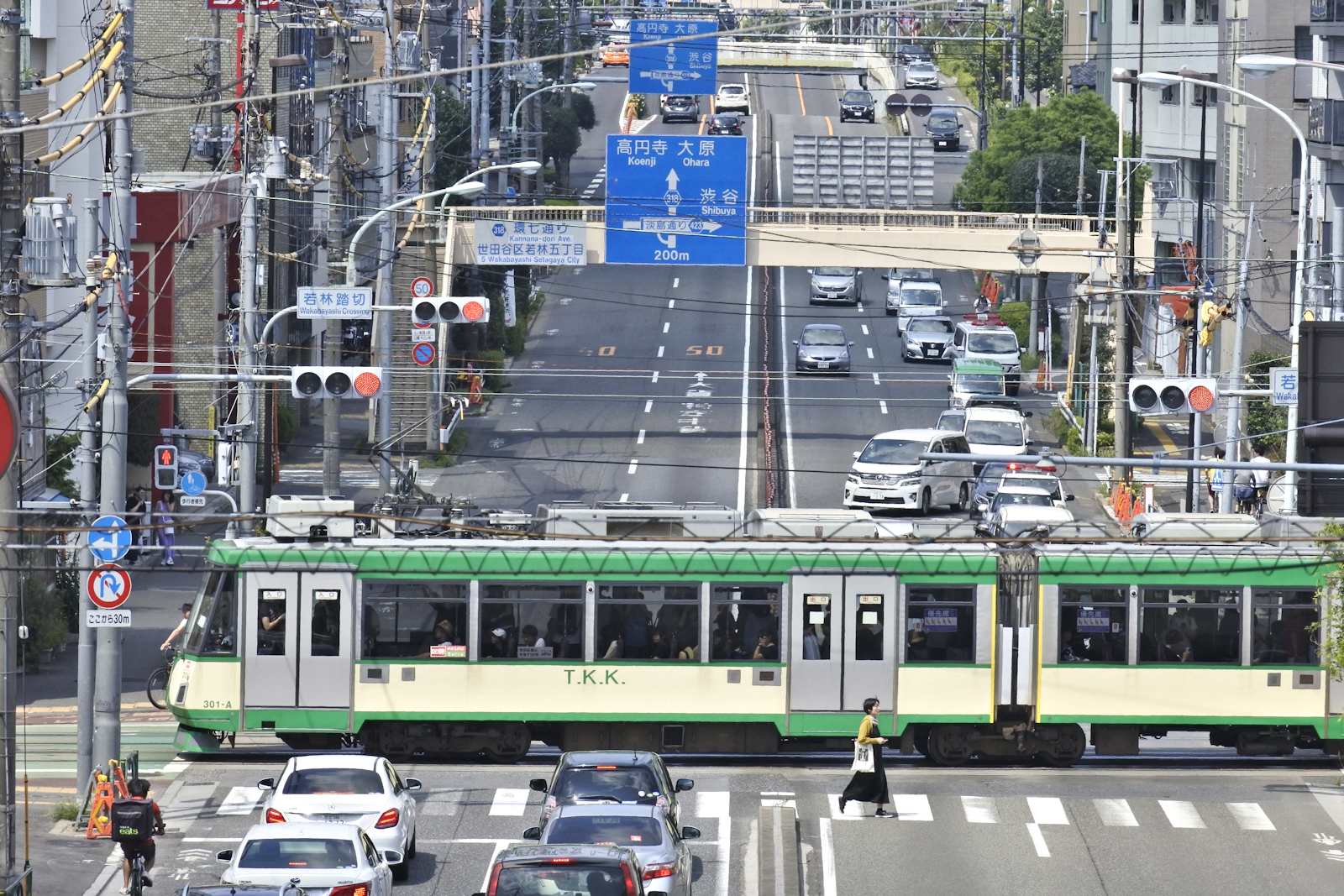
25日、東急各線へ「東京急行電鉄」時代最後の撮影に臨んだ。東京急行電鉄は母体である田園都市株式会社の会社設立101周年および直接の前身である目黒蒲田電鉄の会社設立(田園都市株式会社から鉄道部門の分社化)97周年を迎える9月2日付けで、「東急」に社名を変更し、鉄道事業は来る10月1日付けで新設子会社の「東急電鉄」へ分社化される。これによって前日の9月1日を以て1942(昭和17)年の東京横浜電鉄・小田急電鉄・京浜電気鉄道(現在の京浜急行電鉄)の合併時より続いた東京急行電鉄の社名がなくなる。今回は「今までの東京急行電鉄とこれからの東急・東急電鉄」をテーマに、東京急行電鉄の時代に作り上げられ、この先の東急電鉄の時代へと引き継いでいってほしい風景と車両を撮影した。世田谷線西太子堂駅~若林駅間 Setagaya Line between Nishi-taishido Station and Wakabayashi Stationかつて田園都市線開業前に渋谷駅~二子玉川園駅(現在の二子玉川駅)間を運行した路面電車の玉川線(玉電)で活躍したデハ200形電車の塗装を再現した300系電車301Fが世田谷線西太子堂駅~若林駅間の環七通りと交差する若林踏切を横切る。玉川線の支線・下高井戸線として開業し、玉川線廃線後も軌道法準拠の路面電車扱いである世田谷線で、唯一玉電時代の面影を残していると言える場所であろう。世田谷線宮の坂駅 Setagaya Line Miyanosaka Station宮の坂駅は世田谷線の現役の車両とかつて活躍した車両が出会う駅である。駅に隣接する世田谷区宮坂区民センターに保存されている、かつて玉川線(玉電)で活躍したデハ80形電車87号車(1970(昭和45)年に江ノ島電鉄(当時の社名は江ノ島鎌倉観光)に譲渡され、1990(平成2)年まで江ノ島電鉄線で活躍した)と現役の300系電車310F。田園都市線二子玉川駅~二子新地駅間 Den-en-toshi Line between Futako-tamagawa Station and Futako-shinchi Station二子橋梁(多摩川橋梁)を渡る田園都市線の2020系電車と二子玉川ライズを神奈川県側の土手から撮影。田園都市線は大半が東京急行電鉄時代に開業した区間であるが、二子玉川駅~溝の口駅間は玉川電気鉄道溝ノ口線として1927(昭和2)年に開業した。東京横浜電鉄の経営になった1943(昭和18)年にゲージ(レール幅)が1372mmから1067mmへ改められたうえで大井町線に編入された後、1966(昭和41)年より田園都市線の一部になった。田園都市線の歴史ある区間と田園都市線の新型車両、二子玉川の新しいシンボルとの組み合わせを収めた。田園都市線市が尾駅~藤が丘駅間 Den-en-toshi Line between Ichigao Station and Fujigaoka Station1960~1980年代(昭和40~50年代)にかけての東京急行電鉄の一大プロジェクトといえば、田園都市線を含む多摩田園都市である。多摩田園都市に建ち並ぶ住宅を背景に走る8500系電車による急行列車と6000系電車による大井町線から来た急行長津田行き列車を撮影。8500系電車と6000系電車を選んだ理由は、8500系は田園都市線を長年走り続けている車両であり、田園都市線と多摩田園都市の変貌を見届けてきた車両であるから。6000系の急行長津田行き列車は、田園都市線がもともと大井町駅~溝の口駅間の路線だった大井町線を長津田駅まで延伸させ、改称した路線であるため、大井町駅~長津田駅間の急行列車が田園都市線の原点に立ち返る列車であると解釈できるためである。やって来た編成は「これからの東急電鉄」で一役をを担うであろう長津田方から5両目のデハ6300形が「Q SEAT」車両の6102Fだった。東横線自由が丘駅~田園調布駅間 Toyoko Line between Jiyugaoka Station and Den-en-chofu Station東横線と目黒線が分岐・立体交差する地点を走る5050系電車。東京急行電鉄の母体である田園都市株式会社が宅地開発し、大田区と世田谷区にまたがる東京を代表する高級住宅街である田園調布エリアは、当初は「多摩川台住宅地」と呼ばれていた。開発が始まった大正年間から今日まで街路樹や東横線掘割の草など緑豊かな景色が広がる。東横線はもともと、東京横浜電鉄という目黒蒲田電鉄とは別の鉄道事業者の経営する路線であったが、両社はともに五島慶太さんが経営する系列企業同士であり、目黒駅~横浜駅間で両線を直通する列車が、1927(昭和2)年の東横線多摩川駅~渋谷駅間の開業まで運行された。そして1939(昭和14)年、目黒蒲田電鉄と東京横浜電鉄は合併し、2019(令和元)年9月1日までの東京急行電鉄の路線網が基礎が形作られた。東横線新丸子駅~多摩川駅間 Toyoko Line between Shin-maruko Station and Tamagawa Station武蔵小杉駅周辺に建つ高層マンションを背景に多摩川を渡る5050系電車。武蔵小杉はかつて電子部品などの工場が立ち並ぶ工業地帯だったが、1990年代以降工場の閉鎖が相次ぎ、高層マンションが次々と建設された。これが武蔵小杉を東横線・目黒線沿線の新たな住みたいまちとして人気を高めることとなった。池上線蓮沼駅~蒲田駅間・東急多摩川線矢口渡駅~蒲田駅間 Ikegami Line Hasunuma Station and Kamata Station and Tokyu Tamagawa Line between Yaguchino-watashi Station and Kamata Station東急プラザ蒲田の屋上から蒲田駅へとやって来る池上線・東急多摩川線両線の列車を眼下に見る。両線はもともと池上電気鉄道と目黒蒲田電鉄という別々の鉄道事業者の経営で、開業当時は蒲田駅の乗り場も別々の場所にあった。池上線の蒲田駅~池上駅間は、現存する東京急行電鉄の路線の中では1922(大正11)年10月の開業と最も古いものであり、東京急行電鉄の源流といえる目黒蒲田電鉄目蒲線目黒駅~丸子駅(現在の沼部駅)間の開業よりも5カ月ほど早い。両線はほぼ並行している競合路線同士であったが、両社は1934(昭和9)年に合併した。現存最古の池上線と源流の東急多摩川線はともに雪が谷検車区所属の1000系・1500系電車と7000系電車が活躍しているが、両線の線路が並ぶ姿に対立を乗り越えた歴史を感じる。池上線・東急多摩川線蒲田駅 Ikegami Line and Tokyu Tamagawa Line at Kamata Station民鉄の起点駅の象徴とも言える頭端式ホーム(いわゆる「櫛形ホーム」)だが、東急では2013(平成25)年3月に東横線渋谷駅の地下化・東京メトロ副都心線と線路がつながった後は、東急に残るものは池上線・東急多摩川線の蒲田駅と世田谷線の三軒茶屋駅・下高井戸駅の3駅となっている。池上線池上駅池上線池上駅の構内踏切とそこを通過する1500系電車。2019(令和元)年時点で東京都内に現存するものはここ池上駅だけである。しかし池上駅はリニューアル工事が進行中であり、完成すると5階建ての駅ビルを併設した橋上駅舎となり、構内踏切は廃止される。渋谷駅世界的に有名な渋谷駅前のスクランブル交差点から東急百貨店東横店(右)・渋谷ヒカリエ(左)・渋谷スクランブルスクエア(中)を1枚に入れて。昭和に建てられた東急百貨店、平成に建てられた渋谷ヒカリエ、そして令和に開業予定の渋谷スクランブルスクエア。渋谷にそびえる3つの元号を象徴する建造物を1枚の写真に入れて時代の移り変わりを表現。しかし東急百貨店東横店は2020(令和2)年3月に閉店、解体される予定であるため、この3棟の組み合わせが見られるのは残りわずかである。田園調布駅旧駅舎1923(大正12)年の目黒蒲田電鉄目蒲線開業時から田園調布のシンボルだった駅舎。1990(平成2)年に田園調布駅の地下化工事のために役目を終え、解体されたが、地下化後の2000(平成12)年に復元された。旧桜木町駅付近の廃線跡に造られた遊歩道 pedestrian street near late Sakuragicho Station2004(平成16)年に廃線となった東横線横浜駅~桜木町駅間の跡地に整備された遊歩道から、かつて列車が見た景色を眺める。かつての高架橋と架線柱の一部も残されている。最後に、東京急行電鉄時代から僕はいろいろと東急電車に乗り、撮影し、お世話になった。9月2日から始まる新しい東急・東急電鉄時代も変わらずに東急電車に親しんでいきたい。On 25th, I went photographing on Tokyu Lines, which probably be the last time in Tokyu Corporation period.The railway business of Tokyu Corporation is separating from the company on October 1st, 2019, to a newly-established branch company of Tokyu Corporation, Tokyu Railways. This time the theme of my photograph was "Tokyu Corporation in the past and Tokyu Railway in the future", mainly shooting scenery or carriages built in old Tokyu Corporation period headed for the coming new Tokyu Corporation and Tokyu Railways period.The first photograph was 300 Series 301 set on Setagaya Line which has the livery resembling late 200 Series, used to be in service on late Tamagawa Line, the tramway between Shibuya Station and Futako-tamagawa Station before the open of present Den-en-toshi Line, crossing Kannana-dori Avenue between Nishi-taishido Station and Wakabayashi Station. Setagaya Line is regarded as a tramway under Tramways Act because it opened as a branch line of late Tamagawa Line. The crossing is the only one place that reminds people of the days of late Tamagawa Line.The second is 300 Series 310F set on Setagaya Line at Miyanosaka Station and a preserved carriage Deha 80 Series 87, which used to be in service on late Tamagawa Line and Setagaya Line and moved to Enoshima Electric Railway (Enoden) Line until 1990, at Setagaya Miyanosaka Assembly Hall.The third is 2020 Series on Den-en-toshi Line crossing Tama River between Futako-tamagawa Station and Futako-shinchi Station with Futako-tamagawa RISE high-rise buildings from the opposite (in Kanagawa Prefecture) riverbank. Though most of Den-en-toshi Line opened in Tokyu Corporation period, the section between Futako-tamagawa Station and Mizonokuchi Station did as Tamagawa Electric Railway Mizonokuchi Line, the extension of late Tamagawa Line. It converted from 1.372-metre/4.5-foot-gauge to 1.067-metre/3.5-foot-gauge and became a part of Oimachi Line in 1943 and did Den-en-toshi Line in 1966.The fourth and fifth are 8500 Series and 6000 Series on Den-en-toshi Line between Ichigao Station and Fujigaoka Station against Tama Den-en Toshi, a huge residential area having been mainly developed by Tokyu Corporation. Why I chose these two carriages is that 8500 Series has been in service on Den-en-toshi Line for a long time and 6000 Series is it, as an express train between Oimachi Station on Oimachi Line and Nagatsuta Station, runs the original route of Den-en-toshi Line, opening as the extension and rename of Oimachi Line to Nagatsuta in 1966. The set in fifth photograph, 6102F set, couples "Q SEAT" carriage, equipping rotating seats configured both longitudinal and reserved forward-facing transverse, which would have an important role as a new-style of passengers' commuting.The sixth is 5050 Series on Toyoko Line near the junction of the line and Meguro Line between Jiyugaoka Station and Den-en-chofu Station. Den-en-chofu, named Tamagawa-dai at first, was developed as a high-quality residential area in the 1920s by Den-en-toshi Company, the parent company of Meguro-kamata Railway, the ancestor of Tokyu Corporation, and green trees are planted along the streets and grasses spread on the slope of the railway cutting.Toyoko Line was originally constructed by Tokyo Yokohama Railway, managed by Keita Goto, called the founder of Tokyu Corporation in later years, as well as Meguro Kamata Railway and merged by it, which would be the basement of the railway network of Tokyu Corporation in these days.The seventh is also 5050 Series on Toyoko Line crossing Tama River between Shin-maruko Station and Tamagawa Station against the high-rise flats. These flats have been almost continuously constructed since the 1990s on the blanks where electric factories used to be located, which made Musashi-kosugi become one of the towns where many people want to live.The eighth is two sets of 1000 Series on Ikegami Line (right) and Tokyu Tamagawa Line (left) near Kamata Station from the roof of a shopping building Tokyu Plaza Kamata.At first Ikegami Line and Tokyu Tamagawa Line are operated two different railway companies, Ikegami Electric Railway and Meguro Kamata Railway, and the platforms of these lines were located at different places. Ikegami Line between Kamata Station and Ikegami Station is the oldest railway among the existing ones of Tokyu Corporation, opened in October, 1922, five months earlier than Meguro Kamata Railway Mekama Line. The two lines spread almost in parallel and competed before the merge between the two companies.The ninth is a bay platform of Kamata Station on Ikegami Line and Tokyu Tamagawa Line. The Stations on Tokyu lines with a bay platform or bay platforms are Kamata, Sangen-jaya Station, and Shimo-takaido Station, the latter two of which are on Setagaya Line after the moving of Shibuya Station on Toyoko Line to the underground in 2013.The tenth and eleventh are a railway crossing between the two platforms in Ikegami Station, which is the only existing one in Tokyo Metropolitan Area. After refurbishment of Ikegami Line is being finished, the crossing is disappearing.The twelfth is the three buildings around Shibuya Station, Tokyu Department Store (right), Shibuya Hikarie (left), and Shibuya Scramble Square (middle), which passage of time from Showa (1926-1989), Heisei (1989 - 2019), and Reiwa (2019 -) periods. However, Tokyu Department Store is planning to close and being demolished in 2020.The thirteenth is the old station building of Den-en-chofu Station, which also functions the symbol of the town. The building was constructed in 1923, the same as the open of Mekama Line, but once demolished in 1990 because of the improvement of the station becoming an underground station. After finishing the improvement, the building was rebuilt in 2000.The fourteenth and fifteenth are the walkway built on the old site of a closed section of Toyoko Line near late Sakuragicho Station. From the walkway, I shot the scenery which used to be seen from the window of Toyoko Line trains. Some bridge columns and catenary poles remain.Finally, I would like to say that I keep going travelling and photographing to Tokyu Lines
Aug 25, 2019
コメント(0)
-

E235系トウ33編成「五等分の花嫁」ラッピング&車内広告貸切編成を撮る
JR東日本E235系電車トウ33編成「五等分の花嫁」ラッピング&車内広告貸切編成を撮影。これがこの日僕が一番撮りたかった車両である。「五等分の花嫁」は「週刊少年マガジン」(講談社)で2017(平成29)年から連載されている春場ねぎ先生が描く漫画。主人公の学業一辺倒で成績優秀だけれど貧乏な高校生、上杉風太郎君が全員揃って成績不振な五つ子の中野姉妹の家庭教師を任され、5人全員の成績向上・赤点回避と卒業を目指して奮闘する姿を、そして風太郎君と中野姉妹が次第に惹かれていく恋模様を描いている。そして、中野姉妹5人のうちの誰か1人が風太郎君の未来の花嫁に…。結婚式を目前に控えた風太郎青年が自らの高校生時代を振り返る形でストーリーが展開していく。単行本は2019(令和元)年8月時点で10巻まで刊行され、累計600万部を売り上げている。2019(平成31)年1月~3月にかけてテレビアニメも放送され、続編(第2期)の制作も発表された。8月3日~16日までの期間、山手線を走る東京総合車両センター(東トウ)所属のE235系のうち2編成に「五等分の花嫁」の車体ラッピングを施して運行された。トウ03編成は車体ラッピングをまとい、トウ33編成は車体ラッピングに加えて車内中吊り・戸袋・トレインチャンネル(側扉鴨居・荷棚横)の広告を「五等分の花嫁」のもので統一した。Next, I photographed E235 Series Tou 33 set having the livery of "The Quintessential Quintuplets", a comic work by Negi Haruba, which is the carriage that I would like to photograph best on that day."The Quintessential Quintuplets" has been serialised in Weekly Shōnen Magazine since 2017 and features a romance of an academically-gifted but poor high school student, Futaro Uesugi, and Nakano quintuples, all of whom are low-performing. His struggle to raise the achievement of the quintuplets and both he and the quintuplets become attracted to one another as his tutoring is pictured.The comic has been compiled in 10 volumes of the series of the books until August, 2019, and they have been printed totally over 6 million issues. The animated version is also created and had been broadcast between January and March, 2019 and the creation of the second series of that is announced.Between August 3rd and 16th, the two sets of E235 Series on Yamanote Line, Tou 03 set and Tou 33 set, had had the livery of the comic, and all of the interior advertisements, including LCDs above the doors and beside the luggage rack, of Tou 33 set were changed to that of the comic as well.有楽町駅に入線するトウ33編成 Tou 33 set coming to Yurakucho StationクハE234の側面ラッピング side of the first carriage (Kuha E234) in clockwise boundモハE234の側面ラッピング side of the second carriage (Muha E234) in clockwise bound車いすスペース wheelchair space荷棚横のトレインチャンネル LCDs beside the luggage rackドア鴨居のトレインチャンネル LCDs above the passenger doors中づり広告 hanging advertisements中づり広告 hanging advertisements
Aug 12, 2019
コメント(0)
-
E257系モト車の臨時「あずさ」を撮る
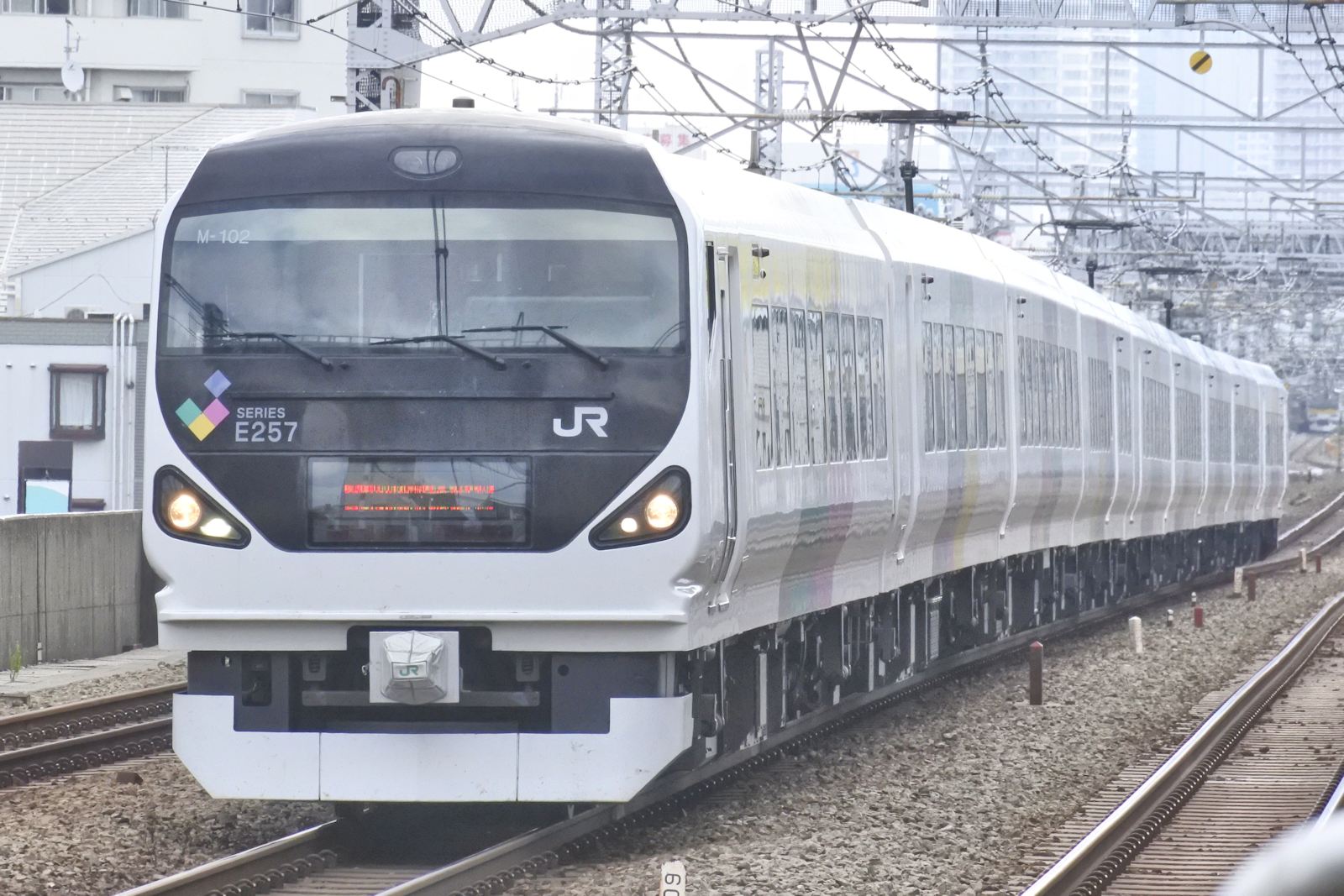
続いてはJR東日本E257系電車モトM-102編成による「あずさ」の臨時列車を撮影。2001(平成13)年から中央本線(中央東線)の特急列車「あずさ」「かいじ」として運行してきたE257系だが、2019(平成31)年3月のダイヤ改正で「あずさ」「かいじ」の定期列車がすべてE353系電車に置き換わり、E257系は臨時列車としてのみ「あずさ」「かいじ」の運用に就いている。そして同ダイヤ改正以降、E257系は東海道本線・伊東線・伊豆急行線の特急列車「踊り子」への転用に向けてリニューアルが進行中であり、中央本線を走る姿だけでなく、デビュー当初から続く白地に武田菱をイメージしたカラフルな模様を組み合わせた塗装も、まもなく見納めとなる。つい最近まで当たり前だった中央本線を走るE257系が、逆に珍しい車両となってしまった。しかしこの塗装のE257系は「あずさ」「かいじ」の運用がよく似合うと言いたい。Following E233 Series Tota T24 set, I also photographed E257 Series Moto M-102 set in special service as "Azusa" limited express.Since 2001, E257 Series has been in service as "Azusa" and "Kaiji" limited express trains on the east part of Chuo Main Line. Since March, 2019, because all regular operations of the two were replaced to E353 Series, only as the special trains on high season, E257 Series keep being in service since then.However, the refurbishment of E257 Series to reuse as "Odoriko" limited express on Tokaido Main Line, Ito Line, and Izu Kyuko Line is undergoing, which brings the service of the carriages with white-coloured body with colourful pattern of diamonds inspired by "Takeda-bishi", the emblem of Takeda clan, one of the most famous Japanese samurai, Shingen Takeda, and his family to an end by March, 2020.Though E257 Series retired from its regular operations, I would like to say that the carriages in this pattern look suitable for "Azusa" and "Kaiji" limited express trains.
Aug 12, 2019
コメント(0)
-
E233系トタT24編成再び
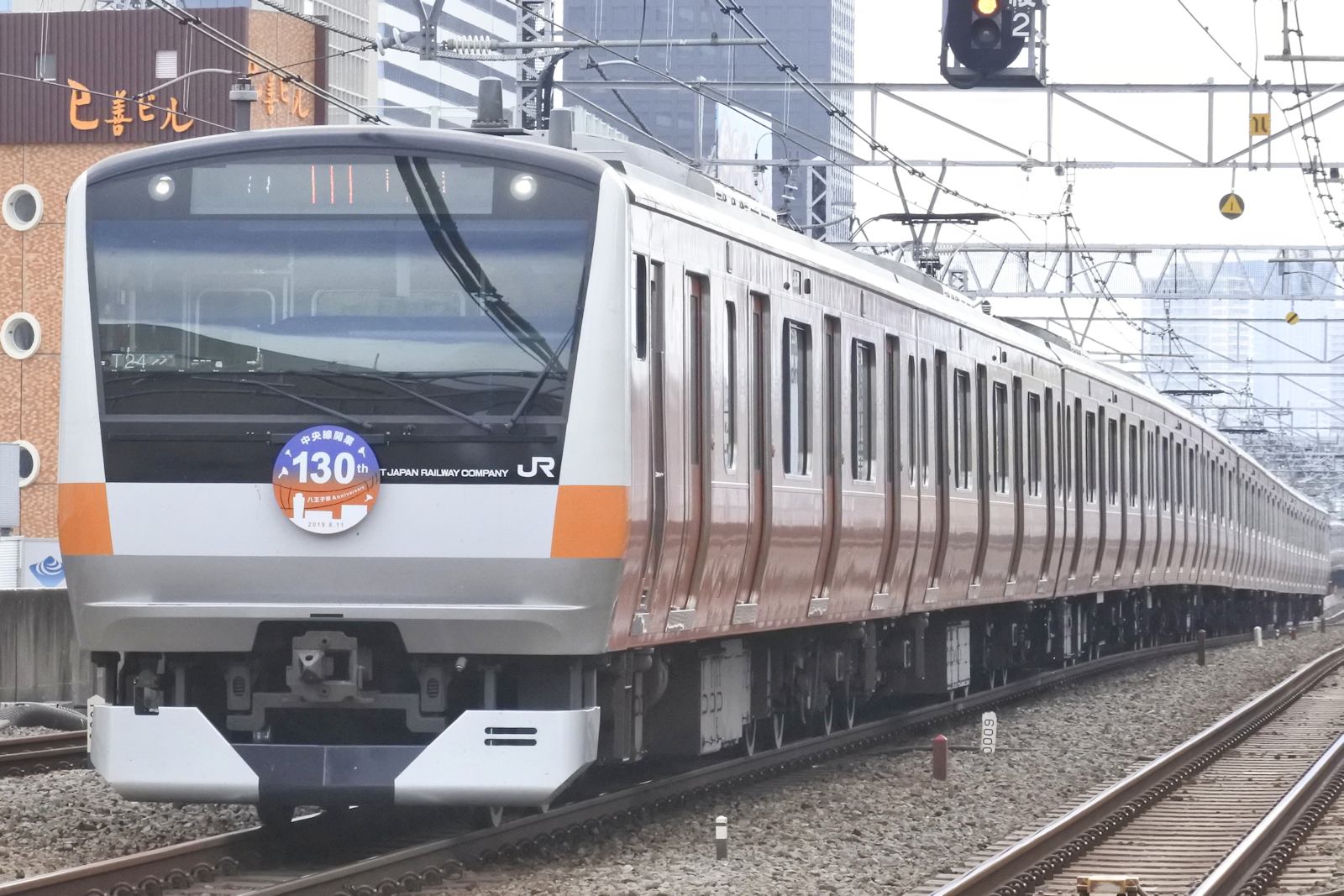
12日、JR東日本中央線快速を走るE233系電車トタT24編成「中央線開業130周年記念ラッピングトレイン」を再び撮影。今回は高円寺駅の中央・総武緩行線ホームから編成全体を入れる構図で撮影。前回の記事(2019(令和元)年7月6日)にも書いた通り、2019(平成31・令和元)年は1889(明治22)年の中央線快速の前身である甲武鉄道の開業から130周年を迎えるアニバーサリーイヤーである。前回は4月11日の新宿駅~立川駅間開業から130周年を迎えたことを記念したデザインのヘッドマークを付けていたが、今回は8月11日の立川駅~八王子駅間と八王子駅の開業130周年記念のヘッドマークを付けていた。中央線快速と八王子駅開業130周年記念ヘッドマーク Front sign for 130th anniversary of the opening of Chuo Line and Hachioji StationトタT24編成がラッピングトレインとして運行するのは8月31日まで。On 12th, I photographed JR East E233 Series Tota T24 set on Chuo Line rapid service having the orange-coloured livery for marking the 130th anniversary of the line again at Koenji Station.As I wrote before on July 6th, Chuo Line marked its 130th anniversary of the opening between Shinjuku Station and Tachikawa Station on April 11th and between Tachikawa Station and Hachioji Station on August 11the in 2019. At the last time, the sign for the opening of the former section was shown on the front of the set, but this time, the one for the latter section and Hachioji Station is done.The set with the livery is finishing its regular service on August 31st.
Aug 12, 2019
コメント(0)
-
東急に「鉄道むすめ」がいない理由は「なでしこ銘柄」だから?
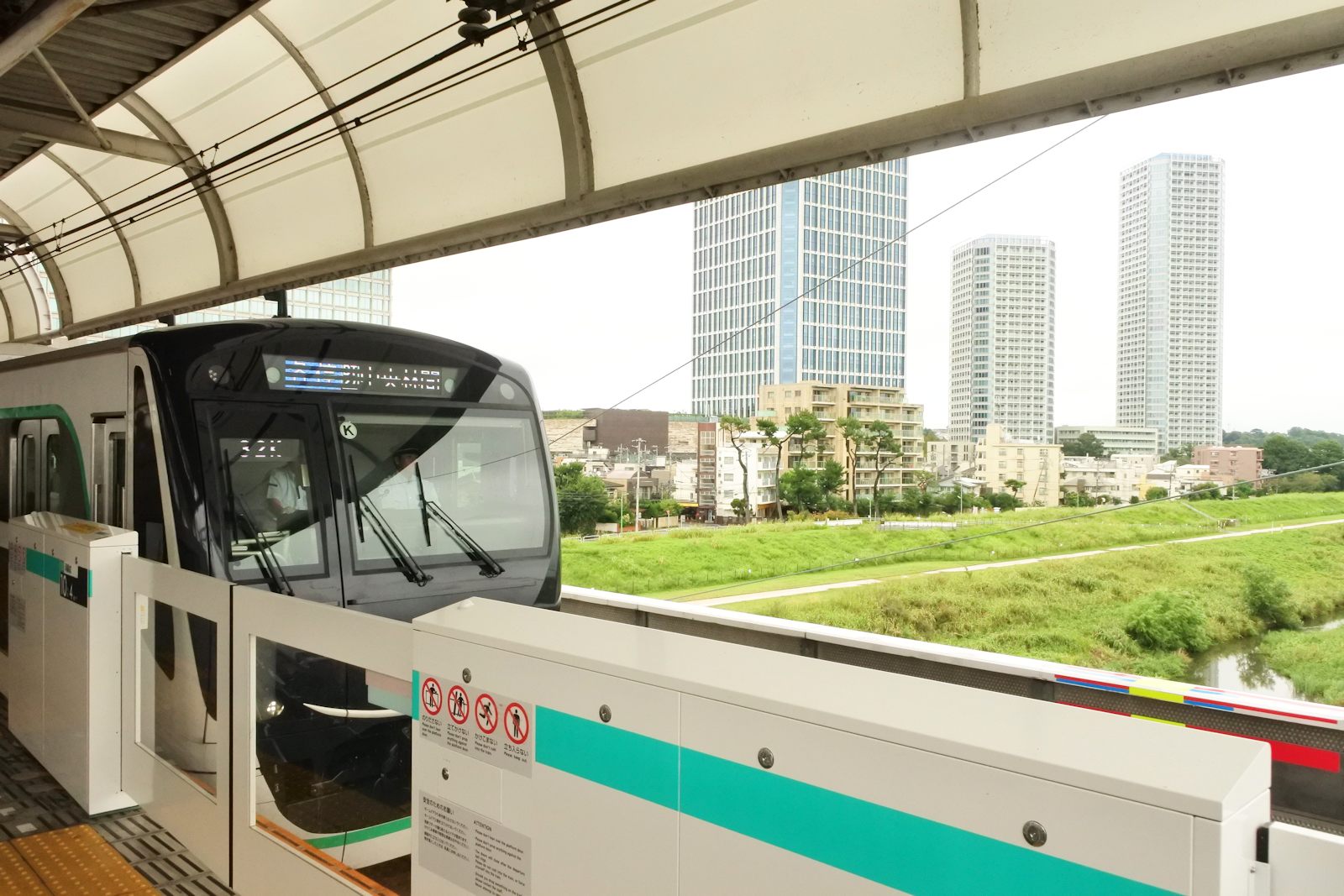
東京急行電鉄株式会社。日本の「資本主義経済の父」であり、2024(令和6)年より発行予定の新しい一万円札の肖像にも採用されることが決まっている渋沢栄一さんが現在の東京都大田区・世田谷区・目黒区での住宅の開発・販売を目的に設立した田園都市株式会社の鉄道部門を分社化した目黒蒲田電鉄に端を発し、現在の目黒線と東急多摩川線にあたる目蒲線目黒駅~丸子駅(現在の沼部駅)を1923(大正12)年に開通させ、営業を開始した。2019(令和元)年現在では、東横線・目黒線・東急多摩川線・大井町線・田園都市線・池上線・こどもの国線(線路等の施設は横浜高速鉄道所有)・世田谷線の8路線を営業している。来る2019(令和元)年9月2日には母体となった田園都市株式会社が設立101周年(東京急行電鉄の直接の前身である目黒蒲田電鉄の設立からは97周年)を迎え、社名を「東急株式会社」へと改め、鉄道事業を新設子会社の「東急電鉄株式会社」へと分社化する。田園都市株式会社という不動産会社を母体に誕生した経緯を持つことから、鉄道を主力事業とする大手民鉄各社とは性格が異なり、「土地開発の一部として鉄道を営業する」という理念を持っている。自社で開発した住宅地の住民以外にも乗客を恒久的に確保するために、沿線の宅地開発だけでなく、沿線に東京工業大学(大田区大岡山)、慶應義塾大学(横浜市日吉)、東京学芸大学(世田谷区下馬町 現在は小金井市に移転)、東京都立大学(目黒区八雲 現在の首都大学東京、八王子市に移転)など大学の校舎の誘致も積極的に進めた。戦後は神奈川県川崎市・横浜市・大和市、および東京都町田市にまたがる広大な住宅地、「多摩田園都市」を造成し、田園都市線を開通させるという、田園都市株式会社・目黒蒲田電鉄時代よりもさらに大規模な宅地開発に着手した。近年では渋谷ヒカリエや二子玉川ライズなどの商業ビル・オフィスビルの開発にも力を入れている。そんな東京急行電鉄は一方で、首都圏の大手民鉄では京浜急行電鉄と共に、トミーテックに「鉄道むすめ」のキャラクターを作ってもらっていない鉄道事業者でもある。東急グループの会社である伊豆急行や上田電鉄、元グループ会社の東急車輛製造(現在の総合車両製作所)は「鉄道むすめ」のキャラクターが存在するが、東京急行電鉄には存在しない。長年僕は東京急行電鉄が「鉄道むすめ」に参加しない理由を探っていたが、東京急行電鉄が女性の社会進出に積極的であり、「なでしこ銘柄」の1社であることがその理由の1つではないかとみられるのではないだろうか。「なでしこ銘柄」とは、経済産業省と東京証券取引所が共同で選定する、女性の活躍推進に優れた東証1部上場企業のこと。鉄道事業者としては、東京急行電鉄が唯一選定されており、2012(平成24)年より7年連続で選定された。東京急行電鉄は1988(昭和63)年より女性総合職の、2001(平成13)年より鉄道現業での女性正社員の採用を開始した。さらには2018(平成30)年版会社案内では、女性活躍推進法に基づく行動計画目標として、「女性管理職の登用について、2020(令和2)年度までに、2014(平成26)年度比較倍増」という目標を達成することを掲げている。「鉄道むすめ」のキャラクターを作ってもらった鉄道事業者でも、女性駅員・乗務員が1人もいない例が少なくないとも聞く。社外のキャラクターを頼って女性社員が活躍しているように見せかけるのではなく、自社努力で現実に女性社員が働く現場を提供することで、東京急行電鉄は「鉄道むすめ」への不参加の意思表示をしているのであろうとも見て取れる。2005(平成17)年のキャラクター展開のスタートから2010(平成22)年頃トミーテックのWebサイトで実施されていた「鉄道むすめキャラクター人気投票」に、「今後『鉄道むすめ』キャラクターが登場してほしい鉄道事業者」を書く欄があり、僕は何度もそこに「東京急行電鉄」と書き続けていた。長年スルッとKANSAI協議会加盟各社(PiTaPaが利用可能な事業者)が密かに不参加の意思を表明していたようだが、2013(平成25)年の京阪電気鉄道に始まり、泉北高速鉄道、大阪高速鉄道、水間鉄道の各社が相次いで取材に協力、キャラクターが制作されている。このことから、「最後の牙城」と言える事業者は、関東民鉄の雄、東京急行電鉄なのかもしれない。Tokyu Corporation was established as Meguro Kamata Railway, which was separated from Den-en-toshi Company, a residential developer in Den-en-chofu in Ota-ku and Setagaya-ku, Senzoku in Meguro-ku, Ookayama in Ota-ku, Tokyo, established by Eiichi Shibuysawa, who is appearing on the redesigned JPY 10,000 bill, to build and manage the railway (present Meguro Line and Tokyu Tamagawa Line) between Meguro Station and Maruko Station (present Numabe Station). The company has been built and managed eight railway lines, Toyoko Line, Meguro Line, Tokyu Tamagawa Line, Oimachi Line, Den-en-toshi Line, Ikegami Line, Kodomonokuni Line (its infrastructure and carriages are owned by Yokohama Minatomirai Railway), and Setagaya Line. Tokyu Corporation is spinning off its railway business into a newly-established separate company, Tokyu Railways, on September 2nd, 2019, the day marking 97th anniversary of the establishment and 101 anniversary of that of the ancestor of the company.Because of the unique history, start as the residential developer, Tokyu Corporation has a different management philosophy from the other major railway companies in Japan that the company manages the railway as a part of the infrastructures in the city. Not only residential development, but the company had invited campuses of Tokyo Institute of Technology (Ookayama, Ota-ku, Tokyo), Keio University (Hiyoshi, Yokohama City, Kanagawa Prefecture), Tokyo Gakugei University (Shimouma, Setagaya-ku, Tokyo, moved to Koganei City, Tokyo in the present), Tokyo Metropolitan University (Yakumo, Meguro-ku, Tokyo, moved to Hachioji City, Tokyo in the present) to gather more passengers not only citizens living in the self-developed residential areas. After World War Two, the company has developed a larger residential development in Kawasaki City, Yokohama City, and Yamato City in Kanagawa Prefecture and Machida City in Tokyo Metropolitan Area and had built Den-en-toshi Line. In recent years, the company also pours its efforts for constructing office and shopping buildings such as Shibuya Hikarie and Futako-tamagawa Rise.However, Tokyu Corporation hasn't collaborated with Tomytec to create a "Tetsudou-musume" character together with Keikyu Corporation among the major railway companies in Kanto Area.As searching why Tokyu Corporation hasn't collaborated with Tomytec, I found that Tokyu Corporation has been awarded as a "Nadeshiko Brand", one of the companies with a positive attitude toward providing the good workplace environment for female employees, by Ministry of Economy, Trade, and Industry and Tokyo Stock Exchange. Among the railway companies, only Tokyu Corporation has been listed for seven years since 2012. Since 1988, Tokyu Corporation has recruited women workers and they have been on railway business since 2001. According to the brochure of company prospectus, Tokyu Corporation achieves a plan for doubling the headcount of women manager by 2020 compared with that in 2014. Because I heard that several railway companies collaborated with Tomytec employ or recruit no women railway staffs, I see that "Nadeshiko Brand" may be one of the reasons that a "Tetsudou-musume" character on Tokyu Corporation has yet to be unrealised to show its attitude not to rely on an external character.Between 2005 and 2010, I had filled in the name of Tokyu Corporation many times in the brank for the railway companies to collaborated with Tomytec on online questionnaires.For many years, it had been said that the railway companies in Kansai Area that Surutto KANSAI stored fare card and PiTaPa smartcard are available hadn't collaborated with Tomytec, but since 2013, Keihan Electric Railway, Semboku Rapid Railway, Osaka Monorail, and Mizuma Railwayhas collaborated and "Tetsudou-musume" characters are created. Because of that, Tokyu Corporation must be the last stronghold for Tomytec creating "Tetsudou-musume" characters.
Aug 4, 2019
コメント(0)
全5件 (5件中 1-5件目)
1


-
-
- 気になる売れ筋おもちゃ・ホビー・ゲ…
- おそろいぬいぐるみ
- (2026-05-13 20:32:44)
-
-
-

- がんばれ!地方競馬♪
- 5/16高知・佐賀の1点勝負
- (2026-05-15 22:42:24)
-
-
-

- フィギュア好き集まれ~
- chihiroイラスト『銀髪ちゃん』1/6完…
- (2026-05-16 09:07:27)
-


