


2019年09月の記事
全17件 (17件中 1-17件目)
1
-
21年ぶりの北海道 E5系新幹線「はやぶさ」初乗車
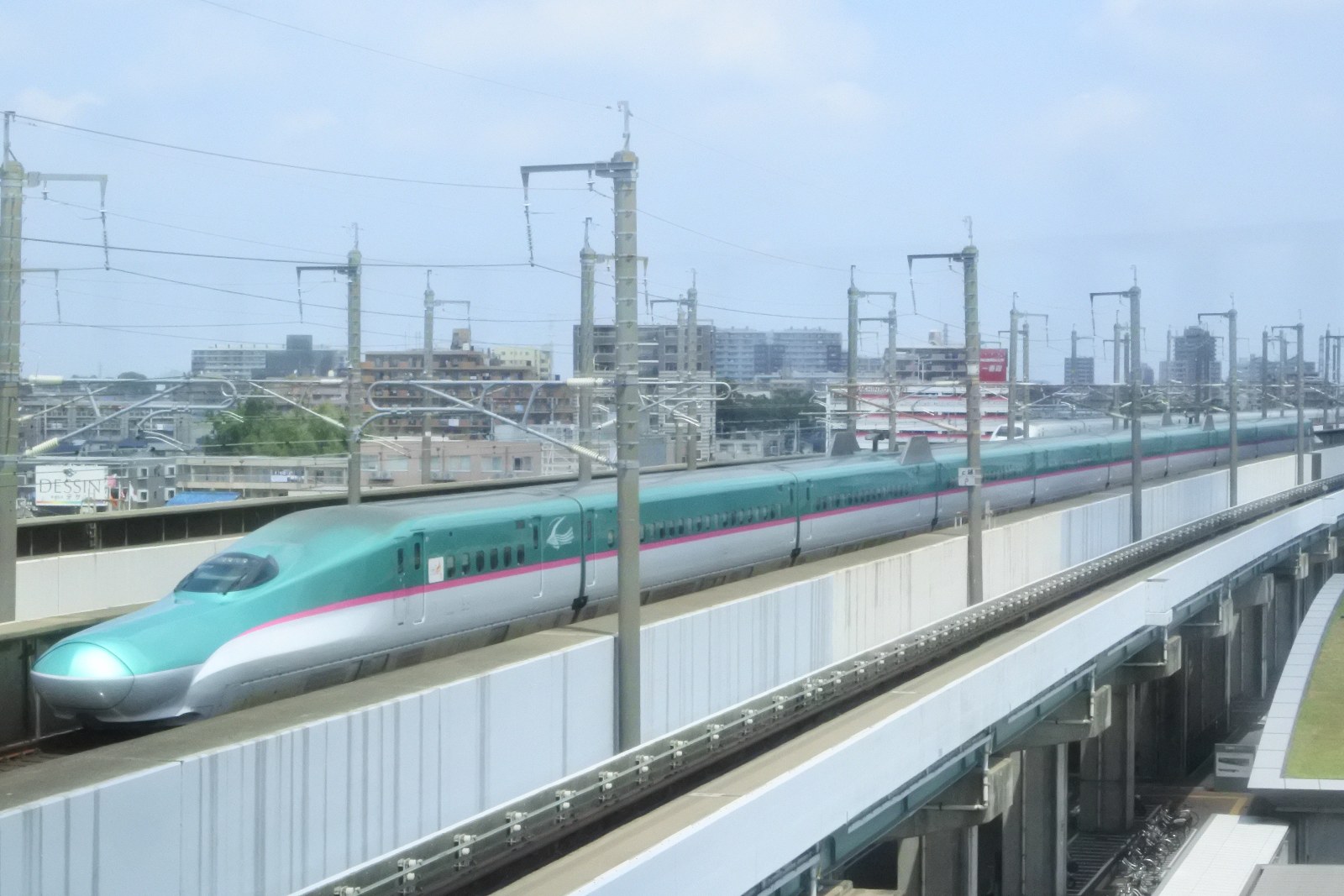
北海道旅行もこれが最後の列車となる。新函館北斗駅からJR北海道北海道新幹線・JR東日本東北新幹線「はやぶさ」に初めて乗車した。大宮駅付近を走るE5系新幹線 鉄道博物館にて 2019(令和元)年6月19日撮影 E5 Series Shinkansen running near Omiya Station photographed in June 19th, 2019僕が乗ったのは17:25に新函館北斗駅を発車する「はやぶさ38号」。この「はやぶさ38号」は東京行きの「はやぶさ」としては最速の列車で、途中新青森駅・盛岡駅・仙台駅・大宮駅にしか停車しない。車両はJR東日本E5系新幹線電車U27編成。E5系に乗るのも、今回が初めてである。新函館北斗駅に入線するE5系新幹線 E5 Series Shinkansen arriving at Shin-hakodate-hokuto Station列車は定時で新函館北斗駅を発車。函館新幹線総合車両所を進行方向左側に見ながら、列車は260km/hまで加速していく。10分ほど走って木古内駅を通過。青函トンネル前後の木古内駅~新中小国信号場間は、北海道新幹線開業後は貨物線となった海峡線と線路を共用する三線区間であるため、新幹線列車の風で貨物列車のコンテナが飛ばされないようにするために、新幹線列車の最高速度が160km/hに抑えられている。17:42、列車は青函トンネルに突入した。全長53.85km、海底部分23.3kmの海底トンネルである青函トンネルは1988(昭和63)年に開通した。鉄道トンネルとしては日本一の長さを誇り、世界でも第2位の長さである。新幹線が開業以前は、特急「はつかり」「スーパー白鳥」や寝台特急「北斗星」「カシオペア」「トワイライトエクスプレス」、急行「はまなす」などの列車が本州から青函トンネルを潜り抜けて北海道へとつないでいた。「はつかり」「スーパー白鳥」は青函トンネル内で140km/h運転を行っていた。17:50、旧吉岡海底駅を通過。旧吉岡海底駅はかつて日本一標高が低い駅であった。ここから海底部分へと入る。列車は津軽海峡の海底よりも約100m深い地点を走る。旧吉岡海底駅~旧竜飛海底駅間の最深部(水深240m 北海道側坑口から約26.5km地点)にはトンネル内に青色と緑色の蛍光灯が灯り、車内からでもそこが判ったが、残念ながら新幹線開業と同時に撤去されてしまった。17:59、旧竜飛海底駅を通過。ここから本州側の地下区間となる。旧吉岡海底駅・旧竜飛海底駅は新幹線開通を前に廃止されてしまったが、緊急時の避難設備としては機能し続けている。18:04、青函トンネルを抜け、列車は青森県の地上に顔を出した。車窓は夕焼けどころか既に夜になっていた。青函トンネルを抜けてから3分ほど走って奥津軽いまべつ駅を通過。列車はその後新中小国信号場を通過して海峡線との共用区間が終わると、列車は再び260km/hへと加速していく。新青森駅が近づくと、照明で看板が彩られた青森市の街並みが見えた。新函館北斗駅を発車してから1時間弱で、列車は左にカーブを描きながら、北海道新幹線の終点、新青森駅に入線した。新青森駅からJR東日本東北新幹線に入る。東北新幹線も新青森駅~八戸駅間は初乗車である。新青森駅~盛岡駅間も最高速度が260km/hであるが、将来的には320km/hでの運転にも対応できるように改良工事が施される予定である。19:12、列車は盛岡駅に到着した。多くの「はやぶさ」が盛岡駅で新青森・新函館北斗方に秋田駅から来た「こまち」を連結して東京方面へと向かうのだが、この38号は東京駅まで「はやぶさ」単独での運行である。盛岡駅を発車すると、列車はいよいよE5系本来の性能を発揮し始める。ここから「はやぶさ」の最大の見せ場と言える日本最速の最高速度320km/hで運行する。19:52、仙台駅に到着。仙台駅では2016(平成28)年より地元出身の歌手・さとう宗幸さんが作曲・歌唱した「青葉城恋唄」が発車メロディとして流れている。列車は宇都宮駅の手前で320km/h走行を終え、275km/hへと減速する。高架橋の横に埼玉新都市交通ニューシャトル伊奈線の走行路が見えたら、大宮駅はもうすぐである。21:00、大宮駅に到着した。今回の僕の乗車はここ大宮駅まで。E5系はデビュー以来ぜひとも乗りたい新幹線車両だったが、東北・北海道方面へ旅することがなく、乗れないでいた。今回の北海道旅行では、行きか帰りのどちらかで北海道新幹線「はやぶさ」に乗るという目標を立てていたため、乗れて良かった。北海道新幹線では青函トンネルを、東北新幹線では320km/hというスピードも体感してみたかった。夕方~夜間を運行する列車だったが、320km/h走行は駅と街の灯りや通過待ちをしている列車があっという間に流れていく感覚だった。そして、フルアクティブサスペンションと車体傾斜装置のおかげで、高速で走っていても揺れをほとんど感じなかった。It was my last travel for me in Hokkaido, "Hayabusa" on JR Hokkaido Hokkaido Shinkansen and JR East Tohoku Shinkansen. I reserved "Hayabusa 38" from Shin-hakodate-hokuto Station at 17:25 operated by JR East E5 Series Shinkansen U27 set. It was also first time for met to ride on E5 Series Shinkansen.The train departed from Shin-hakodate-hokuto Station on time. In a few minutes, I saw a railyard of Hokkaido Shinkansen on the left.About 10 minutes later, the train passed at Kikonai Station, which started the dual-gauge track section shared with Kaikyo Line. Shinkansen trains regulate their speed at up to 160-kilometre/100-mile per hour on the dual-gauge track section not to blow the containers away when a Shinkansen train meets an opposite-bound freight train.About 5:42 PM, the train went into the Seikan Tunnel, which is the longest railway tunnel, 53.85-kilometre/33.5-mile-long and the second-longest in the world, is opened in 1988. Before Hokkaido Shinkansen opened, "Hatsukari", "Super Hakucho" limited express trains, "Hokutosei", "Cassiopeia", "Twilight Express" sleeper trains, and "Hamanasu" express trains used to connect between Honshu and Hokkaido via the tunnel. "Hatsukari", "Super Hakucho" limited express trains had run at 140-kilometre/87.0-mile per hour in the tunnel.About 5:50, the train passed at late Yoshioka-kaitei Station, which was the deepest station in Japan. The train started to go into the deepest section about 100 metres/328.1 feet under the bottom of Tsugaru Strait. At the deepest point about 26.5 kilometres/16.5 miles from the Hokkaido portal, the blue- and green-coloured lights brightened, which were got rid of as Shinkansen opened.About 5:49, the train passed at late Tappi Kaitei Station. The two stations in the tunnel keep functioning as the emergency exit after their close.At 6:04 PM, the train went out of the tunnel and the view from the window got dark. About three minutes later, the train passed at Okutsugaru-imabetsu Station and accelerated again from the end of the dual-gauge track section.As the train coming near Shin-aomori Station, I saw illuminated signs in Aomori City. Passing through an S-shaped curve, the train arrived at Shin-aomori Station, the border between JR Hokkaido Hokkaido Shinkansen and JR East Tohoku Shinkansen.It was first time for me to travel on Tohoku Shinkansen between Shin-aomori Station and Hachinohe Station. Though the maximum speed between Shin-aomori Station and Morioka Station is 260-kilometre/161.56-mile per hour, the plan for the upgrade for the train's speed-up running at 320-kilometre/198.84-mile per hour.At 7:12 PM, the train arrived at Morioka Station. Some "Hayabusa" run coupled with "Komachi" coming from Akita Station from Morioka Station, but this "Hayabusa 38" is in service alone. The train started to run at up to 320-kilometre/198.84-mile per hour from Morioka.At 7:52 PM, the train arrived at Sendai Station, where Muneyuki Sato's "Aoba-jo Koiuta" performed as the departure announcement since 2016.When before passing Utsunomiya Station, the train started to slow down. I saw the track of Saitama New Urban Transit New Shuttle Ina Line, which was the sign of arriving at Omiya, where I got off.At 9:00 PM, the train arrived at Omiya on time.It was a pleasurable journey. I would have liked to travel on Hokkaido Shinkansen once when I had been to Hokkaido or had come back from. I could see the longest tunnel in Japan and feel a sense of the fastest speed of Shinkansen that the illumination moved very fast. Because of the anti-vibration pneumatic actuator and body tilting, I also felt little vibration while travelling.
Sep 19, 2019
コメント(0)
-

21年ぶりの北海道 札沼線の「日本一早い最終列車」
北海道旅行も最終日の6日目、19日を迎えた。この日はJR北海道札沼線の日本一早い最終列車に乗る。旭川駅から特急「ライラック」と北海道中央バスを乗り継いで新十津川駅へ。僕が新十津川駅へ着いたとほぼ同時に、列車の警笛が聞こえ、列車がホームに到着した。新十津川駅駅舎 Station building of Shin-totsugawa Station新十津川駅に入線したキハ40系気動車 Kiha 40 Series arriving at Shin-totsukawa Station車窓から見た新十津川駅の駅名標 a station name board from a train window駅舎は新十津川行きの列車に乗ってきた人びとや僕も含めたこれから列車に乗ろうとする人びとが、無料配布の到達証明書を貰ったり、記念入場券を買ったりしていた。10:00、列車は定時で発車した。車内はほとんどの座席が埋まるほどだった。新十津川駅~浦臼駅間は1日に上下線1本ずつしか列車が運行されていない。同区間に列車がいる貴重な光景を写真に撮ろうとこの区間の駅で降りていく鉄道ファンもいた。新十津川駅から2駅目の南下徳富駅、3駅目の於札内駅、4駅目の鶴沼駅は、駅舎のない単式ホームだけがポツンと立つ駅である。中でも南下徳富駅は待合室すらない、まさしくホームだけの駅である。車内から撮影した南下徳富駅 Minami-shimotoppu Station from the train window於札内駅は当時の国鉄北海道総局が仮乗降場として開業させた。仮乗降場とは、国鉄時代の一般駅(旅客と貨物の両方を扱う駅)・旅客駅が、親切には国鉄本社の許可が必要だったのに対して、当時の鉄道管理局が独自の判断で、駅間が長い区間の途中に設けられた簡易な乗り場のことである。沿線はほとんどが森林もしくは農村地帯で、住宅が目立った場所は浦臼駅の周辺のみだった。石狩月形駅で初めて乗ってくるお客さんが2人以上現れた。石狩月形駅は、すれ違い可能な相対式ホームを持つが、この列車はすれ違いをしないで発車した。札沼線は新十津川駅~北海道医療大学駅間が非電化で、北海道医療大学駅~札幌駅(正確には桑園駅まで 桑園駅~札幌駅間は函館本線への直通運転扱い)間が50Hz交流電化である。非電化と電化境界である北海道医療大学駅の手前で線路脇に架線柱が現れ始める。これまで列車が走ってきた非電化区間は2020(令和2)年5月7日付けで廃線となる。北海道医療大学駅には721系電車の普通列車が発車を待っていた。11:23、列車は終着・石狩当別駅に定時に到着した。石狩当別駅に到着したキハ40系 Kiha 40 Series stopping at Ishikari-tobetsu Station日本一早い最終列車であることから気になった札沼線の列車だが、2020(令和2)年にその列車が走る新十津川駅~北海道医療大学駅間が廃線になってしまうと知ったことから、乗るなら今しかないと予定に入れた。たった一度だけの乗車となってしまいそうだが、廃線になる前に乗れて良い思い出になった。On 19th, the last day in Hokkaido, I travelled by the earliest last train in Japan on Sassho Line.From Asahikawa Station, I went to Shin-totsukawa Station, the departing station of the earliest last train, by "Lilac" limited express on Hakodate Main Line and Hokkaido Chuo Bus. As I came to Shin-totsukawa Station, I heard the train coming there and honking.At the ticket counter, Railfans made a line to get a free souvenir attestation or to buy a platform ticket while the train stopping.At 10:00 AM, the train departed from Shin-totsukawa Station on time.Between Shin-totsukawa Station and Urausu Station, only one round-trip train operates per day. Some photographers got off at the stations in this section to shoot the train running or stopping at a station. Among the stations in this section, Osatsunai Station and Tsurunuma Station have only a platform and a waiting room, and Minami-shimotoppu Station equips no waiting room (in the fourth photograph). Osatsunai Station had opened as a temporary simple stop, which had been built on the independent judgment of Japan National Railway Local Management Office.The train ran in the agricultural area or the forests on most of the travelling. The residences stand only around Urausu Station.At Ishikari-tsukigata Station, over two people got on the train.Before arriving at Hokkaido-iryodaigaku [Health Sciences University of Hokkaido] Station, the catenary poles appeared beside the railway. Sassho Line divides the unelectrified section between Shin-totsukawa Station and Hokkaido-iryodaigaku [Health Sciences University of Hokkaido] Station and the electriifed section between Hokkaido-iryodaigaku [Health Sciences University of Hokkaido] Station and Sapporo Station. The unelectrified section is closing in May, 2020. I saw 721 Series stopping at Hokkaido-iryodaigaku [Health Sciences University of Hokkaido] Station.At 11:23 AM, the train arrived at Ishikari-tobetsu terminal on time.I woluld like to travel on the train before I know the close of the unelectrified section of Sassho Line. Though this is my first but last time, the travel was memorable for me.
Sep 19, 2019
コメント(0)
-
21年ぶりの北海道 予定外の「ノースレインボーエクスプレス」
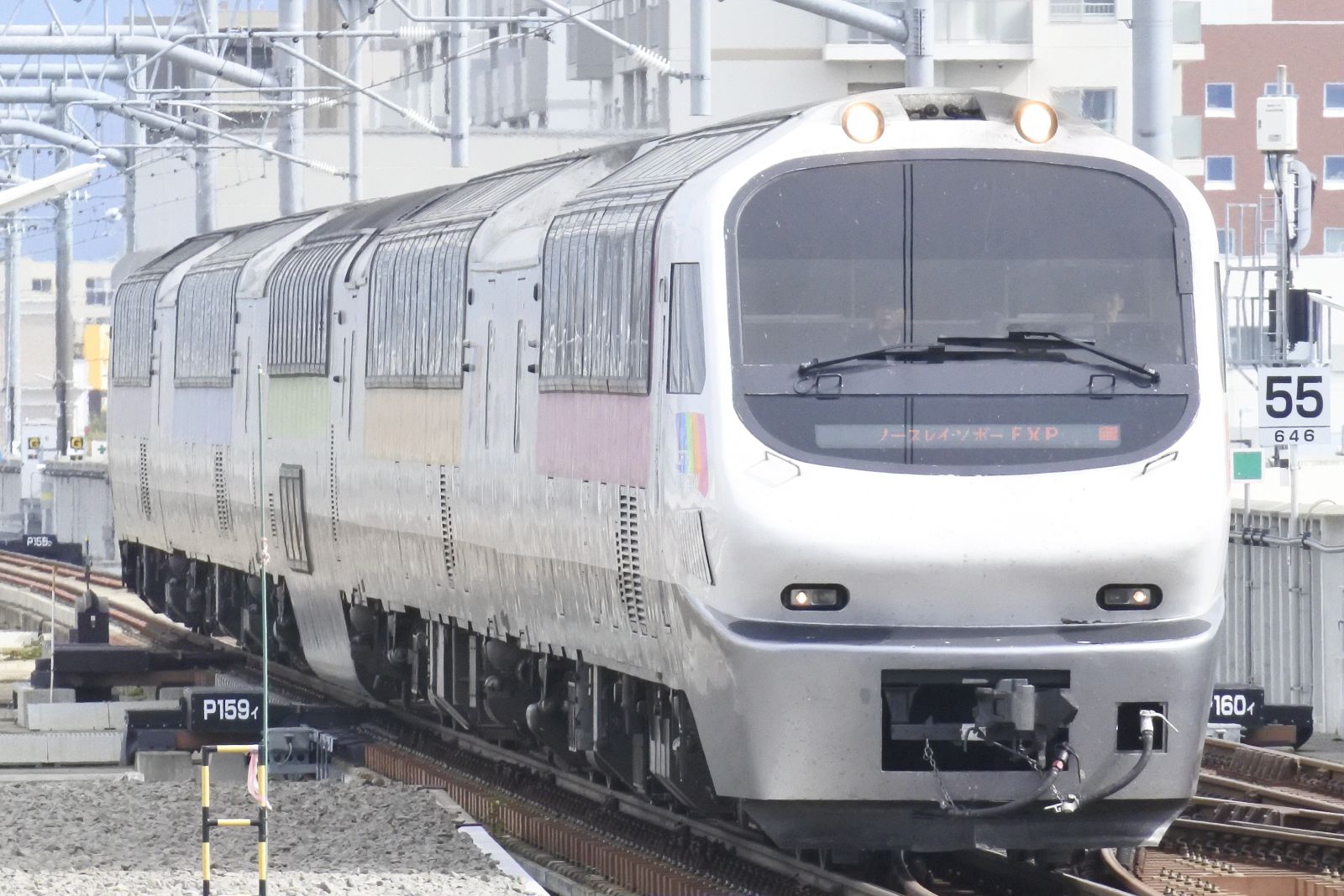
富良野線撮影後、旭川駅で驚きの車両と遭遇した。キハ183系気動車「ノースレインボーエクスプレス」である。「ノースレインボーエクスプレス」はキハ183系の5200番台に区分されるジョイフルトレインであり、1992(平成4)年にデビューした。函館本線函館方から順にキハ183-5202、キハ182-5251、キサハ182-5201、キハ182-5201、キハ183-5201の5両編成を組み、キサハ182-5201はダブルデッカー(2階建て)構造で、それ以外の4両は床が高いハイデッカー構造である。近年では札幌駅~富良野駅間を函館本線・根室本線経由で運行する特急列車「フラノラベンダーエクスプレス」などの臨時列車として運行されることが多い車両だが、この日は普段はキハ261系で運行される稚内駅~旭川駅を走る特急列車「サロベツ」の代走として稼働していた。2019(令和元)年9月に「クリスタルエクスプレス トマム & サホロ」が引退すると、JR北海道のジョイフルトレインはこの「ノースレインボーエクスプレス」1編成のみの在籍となるが、2020(令和2)年秋にキハ261系気動車の多目的仕様車(5000番台)が5両編成2本が製造されることが決まっており、「ノースレインボーエクスプレス」もデビューから27年が経過しているため、引退が危ぶまれる車両と言えるだろう。僕としても、この日に「ノースレインボーエクスプレス」が稼働しているという話は聞いておらず、「フラノラベンダーエクスプレス」の運転日でもなかったうえに、8月24日以降は引退間近のキハ183系5100番台「クリスタルエクスプレス トマム & サホロ」での運行であることがJR北海道のプレスリリースからも発表されていたため、「ノースレインボーエクスプレス」に出会えるとは思っていなかった。前述のとおり、引退する日も近いとも言われているだけに、撮れて良かった。After photographing Furano Line train, I met Kiha 183-5200 Series "North Rainbow Express" at Asahikawa Station."North Rainbow Express" debuted in 1992 and was designed as carriages making passengers amused by the view from the tall windows. The set consists of 5 carriages; two cabbed regular-class (Kiha 183-5101 and 183-5202), two middle regular-class (Kiha 182-5201 and 182-5251), and a double-decker regular-class carriages (Kisaha 182-5201). The four single-decker carriages equip the high-level deck. Recently, the set is in service as "Furano Lavender Express" limited express between Sapporo Station and Furano Station via Hakodate Main Line and Nemuro Main Line on Saturdays, Sundays, and holidays, but on that day it was in service as "Sarobetsu" limited express on Soya Main Line between Asahikawa Station and Wakkanai Station instead of Kiha 261 Series.After the retirement of Kiha 183-5100 Series "Crystal Express Tomamu & Sahoro", "North Rainbow Express" is only one existing specially-designed carriages for tourists' attraction. However, the set can be retiring within a couple of years because Kiha 261 Series with multi-use equipment is being manufactured in 2020.I knew that "Furano Lavender Express" was out of service and didn't hear that "North Rainbow Express" set was in service on that day. It was pleasurable surprise to photograph "North Rainbow Express" set by coincidence.
Sep 18, 2019
コメント(0)
-

21年ぶりの北海道 富良野線を旅する
北海道旅行5日目の18日は、JR北海道富良野線を旅した。富良野線は旭川駅~富良野駅間54.8kmの路線。1899(明治32)年に北海道官設鉄道の十勝線として開業した。JR北海道の路線としては、営業キロが留萌本線(50.1km)に次いで2番目に短い路線であるが、テレビドラマ「北の国から」の舞台として知られる富良野市や毎年7月にラベンダーを咲かせることで知られるファーム富田がある中富良野町、ケンとメリーの木や白金の青い池がある美瑛町などの富良野・美瑛地区の観光地をつなぐ路線であり、「富良野・美瑛ノロッコ号」などの観光列車も走る北海道のローカル線では人気の高い路線の1つである。僕が最初に乗った列車は、7:40旭川駅発の富良野行き普通列車。車両は旭川運転所(旭アサ)所属のキハ40系気動車の2両編成。富良野・美瑛地区への観光客を運ぶイメージがある富良野線の列車だが、平日の朝の普通列車は、地元の高校生たちの通学列車であった。車内を見渡すと、彼らがボックスシートに座って教科書・参考書を片手に持ったり、太ももの上に広げたりして勉強している姿や友達同士でおしゃべりしている姿が見えた。旭川駅を発車して最初に停車する神楽岡駅では、早くも列車を降りていく学生さんの姿がホームに見えた。西神楽駅付近までは、旭川駅周辺地区のベッドタウンとしての色合いが強く、住宅が立ち並ぶ。ここから、車窓からみえる景色は田園風景へと変わる。主要駅の1つである美瑛駅では、高校生たちも含めて多くの乗客が降りていった。美瑛駅発車後から上富良野駅手前にかけては森の中を走る。木々の葉は緑色から少しずつ葉が赤く染まり始めてきていた。上富良野駅から終点の富良野駅にかけては、再び畑が広がる農村地帯を走る。進行方向左側には遠くに十勝岳連峰が聳える。列車は、普通列車でありながら、同区間では中富良野駅にしか停車せず、西中駅、鹿討駅、学田駅は通過した。9:01、列車は定時で富良野駅に到着した。富良野駅に停車中、根室本線を走るDF200形ディーゼル機関車が牽引する貨物列車とのツーショットも見られた。9:51、先ほど乗ったキハ40系2両編成の折り返しの旭川行き普通列車に乗車。千代ヶ岡駅で降り、西聖和方でオーバークロスする道路から、十勝岳連峰を背景に富走る富良野線の列車を撮影。車両は富良野線の主力車両である旭川運転所(旭アサ)所属のキハ150形気動車のライトパープル(ラベンダー色)帯車。千代ヶ岡駅~西聖和駅間にて between Chiyogaoka Station and Nishi-seiwa StationOn 18th, the fifth day in Hokkaido, I travelled on JR Hokkaido Furano Line, which connects Asahikawa Station and Furano Station and the second shortest line (54.8 kilometres/34.05 miles) among those of JR Hokkaido. The Furano Line train attracts tourists because famous spots in Furano and Biei Area, such as TV drama locations of "From the Northern Country", Farm Tomita lavender fields, Ken and Mary Tree, and Blue Pond, spread along the railway.I started to travel by train at 7:40 AM. Furano Line train was very crowded on the weekday morning, mainly by secondary or high school students, who were studying or chatting with their friends.At Kaguraoka Station, adjacent to Asahikawa, I saw some students got off. I saw many houses from the train window until Nishi-kagura Station, which functions as a commuter town around Asahikawa Station. The train went into the agricultural area.At Biei Station, one of the important stations, many passengers including students got off.The train went into the forests from Biei Station. The leaves of the trees started to turn into red.The train ran in agricultural area again between Kami-furano Station and Furano Station. I saw Tokachi Mountains from the left window. The train passed Nishinaka, Shikauchi, and Gakuden Station.At 9:01 AM, the train arrived at Furano Terminal on time. While the train waiting for departing, a freight train hauled by Class DF200 diesel locomotive on Nemuro Main Line came to the neighbour track.I rode on the same train backing to Asahikawa and got off at Chiyogaoka Station to photograph a train from a roadway crossing over the railway. I shot that of Kiha 150 Series in the livery with lavender-coloured adhesive strip against the Tokachi Mountains.
Sep 18, 2019
コメント(0)
-

21年ぶりの北海道 三笠鉄道村と幌内線廃線跡を歩く
北海道旅行4日目の17日は三笠鉄道村と幌内線廃線跡を訪れた。札幌駅からJR北海道函館本線の特急列車「カムイ」に乗車して岩見沢駅へ、そこから美園市民センター行き(23系統)の北海道中央バスに乗り換えて三笠市民会館バス停へ。バス停から7分ほど歩き、幾春別川を渡るとすぐに三笠鉄道村の構成施設の1つであるクロフォード公園がある。幌内太駅(三笠駅)の復元旧駅舎 reconstructed building of Mikasa Stationクロフォード公園全体像 Image of Crawford Park三笠鉄道村は、 三笠市にある1987(昭和62)年に廃線になったJR北海道幌内線の三笠駅跡のクロフォード公園と幌内駅跡の三笠鉄道記念館の2箇所の施設で構成されている。クロフォード公園に展示されている車両で、僕が一番見たかったものはキハ82系気動車である。キハ82系気動車 Exhibited Kiha 82 Seriesキハ82系は日本初の特急型気動車であったキハ81系気動車の改良型として登場した車両で、1961(昭和36)年に大阪駅~青森駅(東海道本線・北陸本線(現在のIRいしかわ鉄道線・あいの風とやま鉄道線・えちごトキめき鉄道日本海ひすいラインを含む)・羽越本線・奥羽本線経由)および大阪駅~上野駅間駅(東海道本線・北陸本線(現在のIRいしかわ鉄道線・あいの風とやま鉄道線・えちごトキめき鉄道日本海ひすいラインを含む)・信越本線・上越線・高崎線経由経由)を運行した特急「白鳥」としてデビューした。北海道では1965(昭和40)年に初めて投入され、函館駅~旭川駅間の特急「おおぞら」(歴史的には現在の「スーパーおおぞら」の、運行系統としては現在の「スーパー北斗」「カムイ」の前身)としてデビューした。その後も函館駅~札幌駅間の「北斗」(現在の「スーパー北斗」の前身)や「北海」(函館本線山線経由)など道内を走る各特急列車に投入され、定期列車としては1986(昭和61)年 まで、臨時列車としては1992(平成4)年 まで北海道で活躍中した。キハ82系は、僕が物心付いた頃には既に全国で引退してしまったため、写真と展示車両でしかその姿を見たことがない。展示車両の中で僕が見たことがあるものは、小樽交通記念館(現在の小樽市総合博物館)に展示されているキハ82 1号車・キシ80 34号車・キシ80 12号車とリニア・鉄道館に展示されているキハ82 73号車である。僕が初めて見たキハ82系は、前回1998(平成10)年に北海道を旅した時に訪れた小樽交通記念館の展示車両である。3両のうちキハ82 1号車・キシ80 34号車は2両連結で展示されていた。キハ82 1号車の前面には、かつて函館駅~札幌駅間を函館本線(山線)経由で結んだ特急列車「北海」のヘッドマークが取り付けられ、両車とも車内にも入ることができた。キシ80 12号車は外観のみの見学だった。次いで見たのが、リニア・鉄道館に展示されているものである。リニア・鉄道館では、館内奥の収蔵車両エリアに展示されているため、車両全体の姿を見ることが難しかった。クロフォード公園に展示されている車両は、車内に入ることはできないが、屋外展示であることに加えて、6両編成を組んでいることが注目すべき点である。編成全体を様々な角度から見ることができるうえに、1両もしくは2両だけの展示では想像しにくかった現役時代の姿がより鮮明に頭の中に浮かんだ。しかもグリーン車であるキロ80形や食堂車であるキシ80形も連結されているため、リアリティーのある編成であると言えるだろう。キハ82系気動車 Exhibited Kiha 82 Seriesそしてクロフォード公園に展示されているもう1編成がDD51形ディーゼル機関車とホキ2200形ホッパ車、ホキ700形ホッパ車、ヨ8000形車掌車の4両である。ホキ2200形は小麦などの穀物輸送用、ホキ700形はバラスト散布用の貨車だった。三笠駅のホームに横付けされている。DD51形ディーゼル機関車と貨車 freight train lead by Class DD51 diesel locomotive続いては、三笠市営バスに乗って三笠鉄道記念館へ。三笠鉄道記念館全体像 Image of Mikasa Railway Museumこの日記念館は休館日だったことから、屋外展示されている車両たちを見るだけにした。DD15形ディーゼル機関車(ラッセル車) Class DD15 diesel locomotive with wedge snowplowキ700形ジョルダン車 Ki 700 Series non-motorised Jordan spreaderキ100形ラッセル車 Ki 100 Series non-motorised wedge snowplow carriageDD14形ディーゼル機関車(ロータリー車) Class DD14 diesel locomotive with rotary snowplowラッセル車やロータリー車、ジョルダン車などの雪かき用車両が展示されていることは、北海道ならではと言えるだろう。ソ80形操重車とチキ6000形長物車 So 80 Series breakdown crane and Chiki 6000 Series FlatcarDD16形ディーゼル機関車とスエ32形客車・スエ30形客車 Sue 32 Series and Sue 30 passenger carriages lead by Class DD16 diesel locomotiveDD51形ディーゼル機関車とオハフ33形客車・スハフ44形客車・スユニ50形客車(郵便荷物車) Ohafu 33 and Suhafu 44 passenger carriages and Suyuni 50 travelling post office with luggage space lead by Class DD51 diesel locomotiveキハ22系気動車 Kiha 22 Seriesキハ56系気動車 Kiha 56 Series展示車両の多くが気動車とディーゼル機関車で占められている。この点も非電化区間が多い北海道ならでは。中でもその姿をぜひとも見たかった車両が、キハ56系気動車である。キハ56系は、国鉄時代の急行型気動車の代表格と言えるキハ58系気動車の兄弟車の1つで、北海道の気候に適応する耐寒・耐雪仕様である。1961(昭和36)年、札幌駅~釧路駅間を函館本線・根室本線経由で結んだ急行列車「狩勝」としてデビュー。以降北海道内の多くの急行列車として活躍し、2002(平成14)年にすべての車両が引退した。帰りはバスには乗らずに幌内線の幌内支線だった幌内駅~三笠駅間2.7kmの距離の廃線跡を、並行する道路から廃線跡を見ながら歩いた。幌内線は岩見沢駅~幾春別駅間の本線と三笠駅~幌内駅間の幌内支線から成る路線。1882(明治15)年に北海道最初の鉄道路線である官営幌内鉄道の一部として開通した。当時はのちの手宮線手宮駅~南小樽駅間(1985(昭和60)年廃線)と函館本線南小樽駅~岩見沢駅間と合わせて一つの路線だった。1905(明治38)年に国有化され、1909(明治42)年に岩見沢駅~幾春別駅間と幌内太駅(のちの三笠駅)~幌内駅間が幌内線と名付けられた。幌内炭鉱などからの採掘された石炭を輸送する貨物列車も走っていた。1984(昭和59)年に国鉄再建法に基づく第2次特定地方交通線に指定され、1987(昭和62)年に役目を終えた。2010(平成22)年、幌内支線の跡地に三笠トロッコ鉄道が開通し、再び線路のある姿が見られるようになった。この日は記念館の休館日でもあったことから、トロッコ列車も営業休止であった。前回1998(平成10)年の旅では小樽交通記念館を、今回は三笠鉄道村を訪れたことから、北海道最初の鉄道の起点駅と終着駅両方があった場所に位置する記念公園・博物館を訪れることができた。三笠鉄道記念館の休館日だったことが残念だが、北海道でも活躍したキハ82系や耐寒・耐雪仕様のキハ56系やキハ22系、ラッセル車やロータリー車といった北海道ならではの車両が見られたことが良い思い出になった。記念館とトロッコ列車に乗るという、次に北海道へ行くときの楽しみもできた。On 17th, the fourth day in Hokkaido, I visited Mikasa Railway Village, which consists of Crawford Park, where old Mikasa Station had been located, and Mikasa Railway Museum, where Horonai Station had been.From Iwamizawa Station on JR Hokkaido Hakodate Main Line, I travelled by bus toward Mikasa Civic Hall. From Mikasa Civic Hall Bus Stop, it takes about seven minutes on foot to Crawford Park, which is seen over Ikushumbetsu River.At first, I watched a 6-carriage set of Kiha 82 Series (in third photograph), which had been one of the most popular diesel trains in Japan National Railway period and been in service in Hokkaido between 1965 and 1992.Because Kiha 82 Series had retired before I could remember, I have seen the carriages only in magazines and in the museum. It was third time for me to see Kiha 80 Series, following at Otaru Transportation Museum (present Otaru City General Museum) and SCMAGLEV and Railway Park.Those at Otaru Transportation Museum, all of which were open-air exhibits, were a cabbed regular-class carriage and two dining carriages, one of which was coupled with the cabbed carriage and the other one was alone. I also watched the interior of the two coupled carriages.That in SCMAGLEV and Railway Park is exhibited behind the main exhibits, which made it difficult for people to see the whole carriage.Those at Crawford Park consist of a 6-carriage set with two cabbed regular-class carriages, two middle regular-class carriages, a "Green Car" second-class carriage, and a dining carriage, which makes easier for me to imagine how the set looked like in service than the exhibit of only one or two carriages. From my point of view, the set is left with a sense of reality because a second-class carriage and a dining carriage are coupled. I viewed and photographed the set from various angles.Two hopper wagons, Hoki 700 open hopper carrying ballasts and Hoki 2200 covered hopper carrying wheat or feedstuff, hauled by Class DD51 diesel locomotive are exhibited beside the platform (in fourth photograph).Next, I went to the museum by bus.Though the museum was closed on that day, I could see the open-air exhibits.Several types of snowplows are exhibited because of the snowy weather in winter. Most of the exhibited carriages are diesel carriages or diesel locomotives because most of the railways in Hokkaido are unelectrified including Horonai Line. Among them, I would like to watch Kiha 56 Series, which is a derivative of Kiha 58 Series with cold- and snow-resistant specifications. The carriages debuted as "Karikachi" between Sapporo Station and Kushiro Station and had been in service as express trains until 2002.On the way back, I walked along with the old land of Horonai Line, which had been closed in 1987. Horonai Line consisted of mainline between Iwamizawa Station and a branch line between Mikasa Station and Horonai Station. At first, the line opened as a part of Governmental Horonai Railway, as well as Temiya Line, which spread between Temiya Station and Minami-otaru Station and had been closed in 1985, and a part of Hakodate Main Line between Minami-otaru Station and Iwamizawa Station. The lines had been named Horonai Line in 1909. The freight trains carrying coals from Horonai Coal Mine on the lines.In 2010, the railway between the museum and Crawford Park had been reconstructed and trams or open-air coaches hauled by a steam locomotive for tourists started to run. However, those were out of service because of the close of the museum.Together with Otaru Transportation Museum, where I had visited 21 years before, I could visit both ends of the first railway in Hokkaido. It was impressive for me to watch the trains having created a history of railways in Hokkaido, such as Kiha 82 Series, Kiha 56 Series, Kiha 22 Series, and snowplow trains. Next time I visited, I would like to see the museum and ride on the open-air train.
Sep 17, 2019
コメント(0)
-
21年ぶりの北海道 キハ201系「ニセコライナー」を撮る
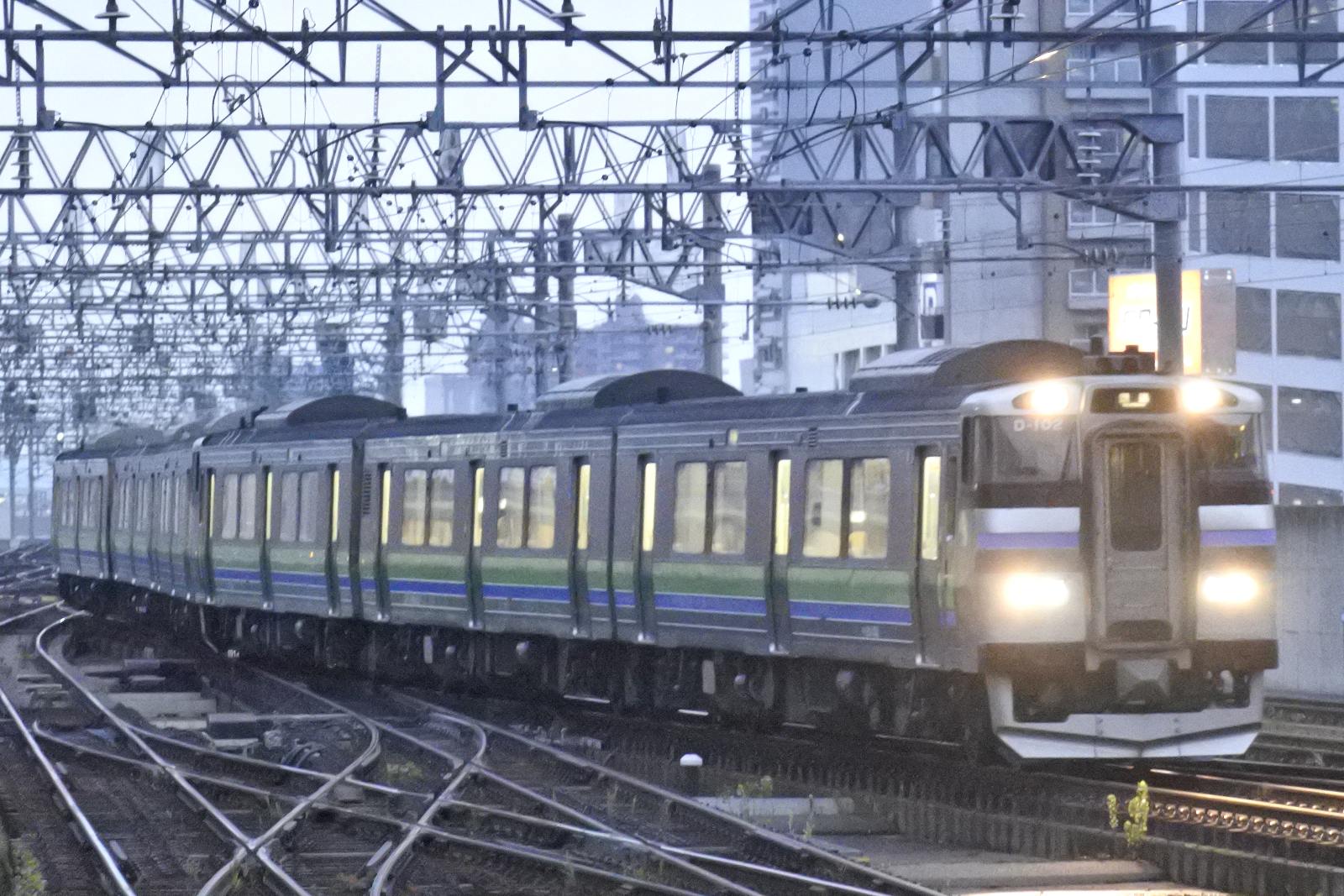
この日最後の撮影は、JR北海道函館本線を走るキハ201系気動車の快速列車「ニセコライナー」。キハ201系は1997(平成9)年にデビューした通勤型気動車。731系電車と並行して開発され、同車と同等の車体・性能を持ち、お互いに連結・協調運転が可能な車両として登場した。また、非電化区間でも電車並みの運行時分で走れるようにするため、空気バネ式の車体傾斜装置を搭載している。函館本線は、小樽駅を境に札幌・旭川方が交流電化区間、余市・倶知安方が非電化区間であるが、キハ201系は主に快速「ニセコライナー」などのこれらをまたいで運行される列車として運行されている。また函館本線電化区間のみの運用も存在する。かつては札沼線の札幌駅~北海道医療大学駅間でも、2012(平成24)年以前の非電化時代に普通列車として運行されていた。キハ201系は3両編成4本しか在籍せず、運行本数も少ないが、気動車でありながら通勤型電車並みの高い加減速性能と731系との協調運転を活かし、一定数の利用客がいる函館本線山線の非電化区間と札幌都市圏を直通する列車として通勤輸送の一助を担っている、JR北海道にはなくてはならない車両であると言えるだろう。また車体傾斜装置を搭載している通勤型車両も珍しく、僕の視点からも大変興味深い車両である。My last shooting on that day was Kiha 201 Series "Niseko Liner" rapid train.Kiha 201 Series debuted in 1997 and designed at the same time as 731 Series. The carriages have the almost same body and specification as 731 Series and can couple with each other. Besides, the carriages equip the active pneumatic tilting on curves to run on the unelectrified section at an as fast speed as the electric carriages.Kiha 201 Series is mainly in service as rapid or local train on Hakodate Main Line going through the electrified section and unelectrified section farther than Otaru Station. The sets used to be in Sassho Line between Sapporo Station and Hokkaido-iryodaigaku [Health Sciences University of Hokkaido] Station before the electrification in 2012.Though no more than four 3-carriage sets exist, Kiha 201 Series plays an important role in connecting Sapporo Urban Area and the unelectrified section, where the train carries a certain number of passengers, with its specification. From my point of view, Kiha 201 Series is a very interesting carriage because of its tilting, which is rare to be equipped to a commuter train, acceleration performance, and availableness to couple with 731 Series.
Sep 16, 2019
コメント(0)
-

21年ぶりの北海道 新札幌駅で千歳線撮影
札幌市電の昼の撮影を終えた後、僕はJR北海道千歳線新札幌駅でも列車を撮影した。After travelling with Sapporo City Tram, I went photographing the trains on Chitose Lien at Shin-sapporo Station. 735系電車 735 Series2010(平成22)年に登場したJR北海道で初めてのアルミ合金製車体を採用した車両。アルミ合金製車体が極寒・降雪地である北海道に適応するかどうか試験することを目的に製造された試作車であり、サウA-101編成・102編成の2本が在籍する。2010(平成22)年から2012(平成24)年にかけての2年間で試験が行われ、アルミ合金製車体は北海道の気候でも問題ないことが証明されたが、その後は量産されることなく、実績のあるステンレス製車体の733系電車の製造へと移行した。車体は731系電車のものを基本に設計されたが、車体側面に帯がないことが731系や733系との外観での違いである。721系・731系・733系との連結にも対応している。735 Series was manufactured in 2010 as the experimental train for verification whether the aluminum-alloy-bodied carriage could resist cold weather and snow. Though the resistance had been shown through the test run between 2010 and 2012, no more than two sets of 735 Series exist and stainless-steel-bodied 733 Series has been manufactured since 2012.The design of the body of 735 Series is based on that of 731 Series, but the adhesive strip doesn't run through the length of the body side. 735 Series accept coupling with 721 Series, 731 Series, and 733 Series.721系電車 721 Series1988(昭和63)年にデビューしたJR北海道が会社発足後初めて導入した近郊形電車。国鉄時代から活躍していた711系電車が急行形電車のような2扉で客の乗降に時間がかかり、加速性能も劣っていたため、輸送力改善を目的に3扉・高加速性能の車両として設計された。仕様のを重ねながら2003(平成15)年までの長きにわたって製造された。主に函館本線の普通・快速列車や千歳線・札沼線の普通列車用の3両編成と快速「エアポート」用で、「uSEAT」車両がある6両編成とに大別される。写真は1988(昭和63)年に721系の最初の編成として製造されたサウF-1編成。2020(令和2)年以降の廃車が予定されている。721 Series debuted in 1988 as the first self-developed carriage.The local and rapid trains in Sapporo Urban Area on the weekday morning almost always delayed because of 711 Series, an old-style carriage having been in service before the privatisation of Japan National Railway with only two passenger doors and low acceleration performance. 721 Series is designed for better service to shorten the delay, including three passenger doors on each side and enhancement of acceleration performance. 721 Series had been manufactured repeating minor changes of interior design or machinery until 2003. 3-carriage sets are mainly in service as rapid or local train on Hakodate Main Line, Chitose Line, and Sassho Line, and 6-carriage sets are in service as "Airport" rapid train for New Chitose Airport.The set in the second photograph is Sau F-1, the first-made carriages in 1988, which is going to retire within a couple of years.キハ261系気動車「スーパー北斗」 Kiha 261 Series "Super Hokuto"2000(平成12)年に札幌駅~稚内駅間の特急列車「スーパー宗谷」としてデビュー。以降「スーパーとかち」「スーパー北斗」などの道内の特急列車に順次投入された。JR北海道の車両ではキハ201系気動車に次いで空気バネによる車体傾斜装置を導入したものの、2014(平成26)年に使用を停止した。「スーパー北斗」としては2016(平成28)年の北海道新幹線開業に合わせた増発時から運行されており、2019(平成31)年よりキハ281系気動車に代わって「スーパー北斗」の主力車両となった。キハ281系と同じ7両編成を組むが、グリーン車や車椅子スペースを持つ車両の位置が異なるため、両形式は入る運用が区別されている。Kiha 261 Series debuted in 2000 as "Super Soya" limited express between Sapporo Station and Wakkanai Station. In later years, the sets are in service as more limited express trains such as "Super Tokachi" between Sapporo Station and Obihiro Station, and "Super Hokuto" between Hakodate Station and Sapporo Station.Kiha 261 Series equip bogies with active pneumatic tilting, following Kiha 201 Series, but the carriages have stopped tilting since 2014.The sets have been in "Super Hokuto" service since 2016 and became the majority of the service instead of Kiha 281 Series in 2019. The sets in "Super Hokuto" service consist of seven carriages, but the timetables are fixed because of the difference of the carriage with Green Car seatings or wheelchair space.785系電車「すずらん」 785 Series "Suzuran"1990(平成2)年に札幌駅~旭川駅間の特急列車「スーパーホワイトアロー」としてデビュー。2007(平成19)年に同列車と「ライラック」を統合して誕生した「スーパーカムイ」としても札幌駅~旭川駅間で活躍した。JR旅客各社で初めてのVVVF制御を採用した車両。「スーパーホワイトアロー」「スーパーカムイ」時代は最高速度は130km/hで運行していた。「すずらん」としては2007(平成19)年から運行されている。2017(平成29)年をもって「スーパーカムイ」としての札幌駅~旭川駅間での運行を終了し、同年以降は「すずらん」としてのみ運行されている。785 Series debuted in 1990 as "Super White Arrow" limited express between Sapporo Station and Asahikawa Station and continuously used to be in service as "Super Kamui" limited express on the same section from 2007.785 Series is the first carriage equipping variable frequency drive device among those on six JR companies. When the sets in "Super White Arrow" or "Super Kamui" service, they run at a maximum speed of 130-kilometre/80.78-mile per hour.The sets have been in "Suzuran" service between Sapporo Station and Muroran Station since 2007. After renaming of "Super Kamui" to "Kamui" in 2017, the sets are only in "Suzuran" service.キハ261系気動車「スーパーとかち」 Kiha 261 Series "Super Tokachi"「スーパー宗谷」に次いでキハ261系が投入された列車が「スーパーとかち」であり、2007(平成21)年より同列車で運行されている。基本編成は4両だが、この日は中間車1両を増結した5両編成を組んでいた。In 2007, Kiha 261 Series started its service as "Super Tokachi" limited express, following "Super Soya". 4-carriage sets are usually in service, but I could shoot a 5-carriage set (in the fifth photograph).733系電車3000番台 快速「エアポート」 733-3000 Series "Airport" rapid2012(平成24)年に札幌都市圏(函館本線小樽駅~岩見沢駅間、千歳線、札沼線札幌駅~北海道医療大学駅間)の普通・快速列車用として登場した0番台に続いて、2014(平成26)年に快速「エアポート」用として登場したのが3000番台車両である。0番台と同様にロングシートを基本とするが、4号車(新千歳空港方から4両目)に回転クロスシートの指定席「uSEAT」車両であるサハ733形3200番台を連結する。733-3000 Series is 6-carriage set of 733 Series and debuted in 2014 as "Airport" rapid train, following 3-carriage 733-0 Series. The 6-carriage sets also mainly equip longitudinal seatings, but couple specialised reserved transverse seatings "uSEAT" carriage at fourth carriage when going toward New Chitose Airport.721系電車5000番台 快速「エアポート」 721-5000 Series "Airport" rapid1992(平成4)年の千歳線南千歳駅~新千歳空港駅間の支線の開業に伴う快速「エアポート」用として6両編成の721系が製造された。当初は全席普通車自由席だったが、2000(平成12)年より指定席「uSEAT」を4号車(新千歳空港方から4両目)のサハ721形3200・4200・5200番台およびサウF-1009 編成のクハ721-1009号車に備えている。写真のサウF-5103・5203編成は1994(平成6)年に製造された3両編成の先頭車両だった車両と2003(平成15)年に製造された中間車4両から成る編成。6-carriage 721 Series sets started its service as the open of New Chitose Airport Station as "Airport" rapid train. The sets have been coupling "uSEAT" carriage at fourth carriage when going toward New Chitose Airport since 2000.The set in seventh photograph is Sau F-5103 and 5203 set consisting of two cabbed carriages manufactured in 1994, both of which are originally done as those of a 3-carriage set, and four middle carriages in 2003.キハ283系気動車「北斗」 Kiha 283 Series "Hokuto"1997(平成9)年に札幌駅~釧路駅間の特急列車「スーパーおおぞら」としてデビュー。1998(平成10)年より「スーパー北斗」、2000(平成12)年より「スーパーとかち」としても運行されていたが、2013(平成25)年に「スーパー北斗」「スーパーとかち」としての運行を終了した。キハ281系気動車をさらに発展させた振り子式特急型気動車として製造され、制御付き自然振り子の傾斜角度をキハ281系の5°から6°へと向上し、カーブで2本の車軸の角度を線路のR(曲がり具合)に合わせて変化させることができる自操舵台車を履く。「スーパー北斗」の定期列車としてのキハ283系の運行は終了したが、臨時の「北斗」として運行されることがある。Kiha 283 Series debuted in 1997 as "Super Ozora" limited express between Sapporo Station and Kushiro Station, and had been in service as "Super Hokuto" and "Super Tokachi" as well from 1998 to 2013.The carriages are designed to introduce technologies to run on curves more smoothly than Kiha 281 Series. The carriages can tilt itself at up to six degrees angle, one degree higher than that of Kiha 281 Series, and equip steering axles.Though the carriages had ended their service as "Super Hokuto", some sets are sometimes still in irregular service as "Hokuto".
Sep 16, 2019
コメント(0)
-

21年ぶりの北海道 札幌市電初乗車
JR北海道キハ183系気動車「クリスタルエクスプレス トマム & サホロ」と函館本線の列車を撮影した後は、札幌市内へと戻り、札幌市電に乗った。21年前は市電には乗らなかったため、この日が初乗車であった。札幌市電は、1927(昭和2)年に営業開始。最盛期には路線総延長25km、9系統の電車が走っていたが、1974(昭和49)年には西4丁目電停~すすきの電停間のみが残った。2015(平成27)年に都心線が開業し、1973(昭和48)年の西4丁目線廃線以来42年ぶりに環状運転を再開した。現存区間は大通公園に西4丁目電停から西15丁目電停、電車事業所前電停、山鼻9条電停、すすきの電停を経由して再び西4丁目電停へと至る8.9kmの環状線。西4丁目電停~西15丁目電停間は南1条通、西15丁目電停~電車事業所前電停間は西15丁目通福住桑園線、電車事業所前電停~幌南小学校前電停間は北海道道453号白石藻岩線、幌南小学校前電停~資生館小学校前電停間は西7丁目通、資生館小学校前電停~すすきの電停間は月寒通、すすきの電停~西4丁目電停間は札幌駅前通の上に線路(併用軌道)が敷かれている。路線名は西4丁目電停~西15丁目電停間が一条線、西15丁目電停~中央図書館前電停間が山鼻西線、中央図書館前電停~すすきの電停間が山鼻線、すすきの電停~西4丁目電停間が都心線である。2020(令和2)年には、電車の運行を一般財団法人札幌市交通事業振興公社へと移管させる上下分離経営を導入予定である。札幌駅で函館本線の列車を降りた僕は、西4丁目電停へと地下道を歩いて移動。そこから内回り電車に乗って電車事業所前電停へ。電車事業所前電停の目の前には、その名のとおり「電車事業所」と呼ばれる札幌市電の車庫が立地している。ただし、電車事業所前電停からは車庫へと直接線路がつながっていないため、車庫へ入る電車は一つ先の電停である中央図書館前電停から入庫する。電車事業所では、平日に2回、土休日に4回、一般の人向けに交通局の職員さんが解説する見学ツアーを開催している。札幌市交通局電車事業所 Sapporo City Tram shed and Basement Office僕は11:00の回に参加した。この日車庫には、現役車両の中では最古参である210形電車212号車や、かつては付随車1両を連結して走っていたことから「親子電車」や「M・Tc」の愛称で呼ばれていた車両で、唯一1960年代当時から変わらないカラーリングを纏うM100形電車101号車の姿があった。210形電車212号車 210 Series 212M100形電車101号車 M100 Series 101そして、旅客車両とともに、雪が降ると大活躍するササラ電車の姿もあった。雪11形ササラ電車 Yuki 11 snow sweeperササラ電車には全部と後部に400本ずつ、合わせて800本の竹のブラシが備わっている。今なお竹のブラシが重用されている理由は、線路の溝に溜まった雪や氷を掻き出すため。線路の溝に雪や氷が溜まると、電車がこれらに乗り上がり、最悪の場合脱線してしまう。なお、2015(平成27)年に開業した都心線すすきの電停~西4丁目電停間は歩道寄りに線路(併用軌道)が敷かれているため、歩道や電停にいる人に雪がかからないようにするために、ササラ電車を走らせないという。その代わりにロードヒーターを埋め込むことで、雪を溶かしている。解説の職員さんによると、札幌市交通局にはラッセル班と呼ばれるササラ電車専属の職員さんたちがいるという。ラッセル班の方々は毎年10月に取り付け用と交換用合わせて1600本の竹のブラシを作り、11月から翌年3月にかけてササラ電車に乗務するという。ササラ電車を乗りこなすまでには、およそ3年の時間が必要とのこと。電車事業所見学が終わると、僕は車庫の近くにある札幌市中央図書館での企画展示「サッポロLRTパネル展」を見てきた。2019(令和元)年11月に札幌市での開催が予定されているLRT都市サミットの関連イベントで、札幌市電がこれまで歩んできた歴史や、昔の市電の写真、世界各地の路面電車・ライトレールを紹介しているパネルが展示されていた。図書館を出ると、ちょうど最新型車両のA1200形電車「ポラリス」A1201号車が電車事業所前方から来た。藻岩山を背景に走るA1200形電車A1201号車 電車事業所前電停~中央図書館前電停間 A1200 Series A1201 between Densha Jigyosho Mae [Sapporo City Tram Yard and Basement Office] Stop and Chuo Toshokan Mae [Sapporo City Central Library] Stop against Mt. MoiwaA1200形電車は2013(平成25)年にデビューした札幌市電初の超低床車両。アルナ車両製のリトルダンサーUaタイプの1種であり、富山地方鉄道T100形電車や阪堺電気軌道1001形電車の同型車である。車体のデザインは、JR東日本E3系新幹線電車やE231系電車のデザインでも知られる榮久庵憲司さんが担当した。札幌市電で連接車が走るのは、1976(昭和51)年にA820形電車およびA830形電車(後の名鉄モ870形電車)が運行を終了して以来37年ぶりのことである。中央図書館前電停からそのA1201号車の内回り電車に乗車。西4丁目電停で降り、一周の乗車を達成した。A1200形電車A1201号車 西4丁目電停~西8丁目電停間 A1200 Series A1201 between Nishi 4 Chome Stop and Nishi 8 Chome夜にも市電撮影に出かけた。8500形電車8502号車 狸小路電停~すすきの電停間札幌最大の繁華街であるすすきののシンボル、ニッカウヰスキーの看板と電車を入れた1枚を撮影。電車とニッカウヰスキーの看板の組み合わせも、2015(平成27)年の都心線開業により、42年ぶりに再び見られるようになった。After photographing "Crystal Express Tomamu & Sahoro" and JR Hokkaido Hakodate Line trains, I came back to Sapporo City and travelled on Sapporo City Tram, which was first time for me to travel. Sapporo City Tram is an 8.9-kilometre/5.5-mile-long loop line via Nishi 4 chome Stop, Nishi 15 chome Stop, Densha-jigyosho-mae [Sapporo City Tram Yard and Basement Office] Stop, Yamahana 9 jo Stop, and Susukino Stop. The tramway runs on Minami 1 jo Dori Street between Nishi 4 chome Stop and Nishi 15 chome Stop, Nishi 15 chome Dori Fukuzumi Soen Street between Nishi 15 chome Stop and Densha Jigyosho Mae [Sapporo City Tram Yard and Basement Office] Stop, Hokkaido Prefectural Road No. 453 Shiroishi Moiwa Street between Densha Jigyosho Mae [Sapporo City Tram Yard and Basement Office] Stop and Konan Shogakko Mae [Konan Primary School] Stop, Nishi 7 chome dori street between Konan Shogakko Mae [Konan Primary School] Stop and Shiseikan Shogakko Mae [Shiseikan Primary School] Stop, Tsukisamu Street between Shiseikan Shogakko Mae [Shiseikan Primary School] Stop and Susukino Stop, and Sapporo Ekimae Avenue between Susukino Stop and Nishi 4 Chome Stop. The name of the lines are Ichijo Line between Nishi 4 Chome Stop and Nishi 15 Chome Stop, Yamahana West Line between Nishi 15 Chome Stop and Chuo Toshokan Mae [Sapporo City Central Library] Stop, Yamahana Line between Chuo Toshokan Mae [Sapporo City Central Library] Stop and Susukino Stop, and Toshin Line between Susukino Stop and Nishi 4 Chome Stop.From 2020, the tram operation business is going to be separated from Sapporo City Transportation Bureau and transfer to Sapporo Transportation Service Promotion Corporation.Getting off a Hakodate Main Line train at Sapporo Station, I went to Nishi 4 Chome Stop via a pedestrian tunnel. From there, I travelled with a counterclockwise-bound tram to Densha-jigyosho-mae [Sapporo City Tram Yard and Basement Office] Stop.I joined a guided tour of the yard. I saw many carriages, such as 210 Series 212 (in the second photograph), the oldest tram having been in service since 1958, M100 Series 101 (in the third photograph), which used to be in service coupling with a trailer and whose body colour hasn't been changed since the 1960s, and snow sweepers (in the fourth photograph) were staying.Yuki 11 Series equips 400 bamboo brushes on back and front, which are handmade by dedicated staff trained to drive the snow scrapers. It is important to scrape snow or ice in the groove to prevent the derailment.According to the guidance, the snow scraper staffs make 1600 brushes including the spares and the snow scraper drivers have to practice for about three years.After the tour, I went watching an exhibition of the tram held at Sapporo City Central Library, which is a relative event to Light Rail Transit Summit in Sapporo.Going out of the library, I saw A1200 Series, the latest model of the tram, "Sirius" A1201 came from Densha Jigyosho Mae [Sapporo City Tram Yard and Basement Office] Stop and photographed it against Mt. Moiwa (in the fifth photograph).A1200 Series debuted in 2013 and the first low-floor tram in Sapporo. It is one kind of Alna Sharyo's "Little Dancer Ua", which is the same type as Toyama Chiho Railway T100 Series and Hankai Tramway, etc.. Its body is designed by Kenji Ekuan, who is also known for JR East E3 Series Shinkansen and E231 Series. It has passed 37 years since the end of the last service of articulated carriages on Sapporo City Tram, A820 Series and A830 Series (later Meitetsu Mo870 Series).From Chuo Toshokan Mae [Sapporo City Central Library] Stop, I rode on A1201 to Nishi 4 Chome Stop to achieve travelling on the whole line.I also went photographing on that night.My best shot on the night is 8500 Series 8502 against the sign of Nikka Whisky, one of the famous symbols of Sapporo City (in seventh photograph). This scene had revived in 2015 as well as Toshin Line.
Sep 16, 2019
コメント(0)
-

21年ぶりの北海道 函館本線を走る車両たち
JR北海道函館本線大麻駅では、「クリスタルエクスプレス トマム & サホロ」以外にも同線を走る列車を撮影した。I photographed trains on JR Hokkaido Hakodate Main Line as well as "Crystal Express Tomamu & Sahoro" at Oasa Station.789系電車0番台「ライラック」 789 Series "Lilac"2002(平成14)年、八戸駅~函館駅間を結ぶ特急列車「スーパー白鳥」としてデビュー。2010(平成22)年、JR東日本東北新幹線八戸駅~新青森駅間延伸に伴って新青森駅~函館駅に運行区間を変更し、2016(平成28)年の北海道新幹線開業まで同列車で活躍した。2017(平成29)年、1年の空白期間を経て、1000番台車両で運行される特急「カムイ」と同じ札幌駅~旭川駅間で運行される特急「ライラック」として営業運転に復帰した。前面貫通扉部分はキハ281系気動車・キハ283系気動車などと同様の展望スペースだったが、2010(平成22)年に発生した1000番台車「スーパーカムイ」の踏切事故の影響を受けて安全対策として立入禁止となった。789 Series debuted in 2002 as "Super Hakucho" limited express between Hachinohe Station and Hakodate Station, whose service had been shortened between Shin-aomori Station and Hakodate Station in 2010, via Seikan Tunnel until 2016. After one year blank, it moved as "Lilac" limited express between Sapporo Station and Asahikawa Station.Passengers had been able to enjoy the front view under the high-level driver's cab like those of Kiha 281 Series and Kiha 283 Series, etc. However, passengers can't allow because of their safety after a crash of "Super Kamui" limited express.731系電車 731 Series1996(平成8)年に札幌都市圏路線(函館本線小樽駅~岩見沢駅間、千歳線全線 札沼線は当時非電化)の輸送力増強を目的に登場。JR北海道の車両では初めてのロングシートを備える通勤型電車である。駅のホームとの段差を低くするために、直径810mmの車輪を採用している。同時期に設計・製造されたキハ201系気動車は兄弟車であり、同車との連結による電車と気動車の協調運転に対応していることが最大の特徴である。同じ札幌都市圏で活躍する721系・733系・735系との電車同士の異車種連結にも対応している。731 Series debuted in 1996 and designed for the better service for commuting passengers in Sapporo Urban Area, such as Hakodate Main Line between Otaru Station and Iwamizawa Station and Chitose Line. The sets equip longitudinal seatings and wheels 81 centimetre/31.9 inches in diameter to make its floor lower and a vertical gap between the train and the platform smaller.The set is acceptable to couple with not only other electric multiple units, 721 Series, 733 Series, and 735 Series, but also Kiha 201 Series diesel multiple units.733系電車 733 Series2012(平成24)年の札沼線札幌駅~北海道医療大学駅間の電化に備えて登場した731系の後継車。札幌都市圏では普通列車用の0番台と快速「エアポート」用の3000番台が活躍している。731系との違いは、外観では川崎重工業のefACE構体で造られていることから側面のビードプレス加工がない点、行き先表示機がLED式になっている点、内装ではトイレが車椅子対応にするために広くなった点などである。721系・731系・735系との連結に対応しているが、731系とは違い、キハ201系との協調運転には対応していない。写真は0番台で、731系と連結して運行している姿。733 Series debuted in 2012 to prepare for electrification of Sassho Line between Sapporo Station and Hokkaido-iryodaigaku [Health Sciences University of Hokkaido] Station. In Sapporo Urban Area, two kinds of 733 Series, 733-0 for the local train and 733-3000 for "Airport" rapid train.The body manufactured by efACE method with beadless bodyside, LED destination indicator, and the larger wheelchair-accessible restrooms are different from 731 Series. The set doesn't accept to couple with Kiha 201 Series. The set in the third photograph is 733-0 Series coupling with 731 Series.789系電車1000番台「カムイ」 789-1000 Series "Kamui"2007(平成19)年、新千歳空港駅・札幌駅~旭川駅間を結ぶ特急列車「スーパーカムイ」としてデビュー。当時「スーパー白鳥」用だった0番台をベースとしながらも、塗装のほか、前面貫通扉と展望スペースの廃止、グリーン席がない代わりにJR北海道独自の「uシート」車両を連結している点などの違いがある。札幌駅~旭川駅間を結ぶ789系による特急列車は2017(平成29)年以降、0番台で運行される列車が「ライラック」、1000番台で運行される列車が「カムイ」として区別されている。789-1000 Series debuted in 2007 as "Super Kamui" limited express.The design of the set was based on 789-0 Series, but the set doesn't equip the front door and observation space, and couples "uSEAT" reserved-seating carriage instead of Green Car.Since 2017, the two types of limited express trains between Sapporo Station and Asahikawa Station has been operating; those by 789-0 Series are called "Lilac" and the others by 789-1000 Series are "Kamui".
Sep 16, 2019
コメント(0)
-

21年ぶりの北海道 最初で最後の「クリスタルエクスプレス トマム&サホロ」
北海道旅行3日目の16日は、JR北海道キハ183系気動車「クリスタルエクスプレス トマム & サホロ」を撮影。「クリスタルエクスプレス トマム & サホロ」はキハ183系の5100番台に区分されるジョイフルトレインであり、1989(平成元)年にデビューした。函館本線函館方を基準に、キハ183-5101・キサロハ182-5101・キハ182-5101・キハ183-5102の4両編成を組む。キハ183-5101・5102の2両は、先頭部分を小田急7000形電車やJR東日本165系電車「パノラマエクスプレスアルプス」、同485系電車「NO. DO. KA.」のものと同様の乗務員室を2階に上げた展望座席を備える(こちらも2010(平成22)年に発生した「スーパーカムイ」の踏切事故後の安全対策として、座席を撤去したうえで立入禁止となった)。キサロハ182-5101は1階にグリーン個室、2階に普通席を備えるダブルデッカー車両、キハ182-5101は客席の床が高く、屋根にも天窓を設けた眺望に優れたハイデッカー車両である。同車は2019(令和元)年9月で引退することが決まっており、僕にとっては今回が最初で最後の同車を撮影するチャンスとなった。この日同車は、臨時特急列車「フラノラベンダーエクスプレス」として札幌駅~富良野駅間を函館本線・根室本線経由で運行していた。撮影場所は、函館本線大麻駅。ここの札幌方は進行方向右へカーブしているため、編成全体を撮影しやすい。僕の「クリスタルエクスプレス トマム & サホロ」への思い入れは、21年前に初めて北海道へ行った時に、現地で、より具体的には新千歳空港駅のホームで初めて見た車両が「クリスタルエクスプレス トマム & サホロ」だったことから、引退を知る以前から今回ぜひとも撮りたかった。同車は僕が撮影した直後の9月29日にラストランを迎え、30年間の活躍に幕を降ろした。改めて「クリスタルエクスプレス トマム & サホロ」を引退直前にもう一度見ることが、そして撮影することができて本当に良かった。On 16th, the third day in Hokkaido, I photographed JR Hokkaido Kiha 183-5100 Series "Crystal Express TOMAMU & SAHORO"."Crystal Express TOMAMU & SAHORO" debuted in 1989 and was designed as a carriages making passengers amused by the view from the wide or tall windows. The set consisted of four carriages; two cabbed carriages equipping observation seatings with high-level driver's cab (Kiha 183-5101 and 5102), which looked like those of Odakyu 7000 Series, JR East 165 Series "Panorama Express ALPS", and JR East 485 Series "NO. DO. KA.", and had been cleared the front observation seatings because of passengers' safety after a crash of "Super Kamui" limited express, a double-decker doing regular-class seatings on the upper level and compartment seatings on the lower (Kisaroha 182-5101), and a high-decker carriage doing regular-class seatings and skylight windows (Kiha 182-5101).JR Hokkaido announced that the set was going to retire in September, 2019. So it was last chance for me to shoot the set. On that day, the set was in service as "Furano Lavender Express" between Sapporo Station and Furano Station via Hakodate Main Line and Nemuro Main Line. I waited for the set at the end of the platform of Oasa Station, where photographers can shoot the whole set on a curve.In retrospect, I saw the set at New Chitose Airport Station when arriving at the airport from Tokyo last time. Since then, I have longed for photographing it.Finally, I was excited to photograph the set before its retirement.
Sep 16, 2019
コメント(0)
-
21年ぶりの北海道 札幌市地下鉄を撮る
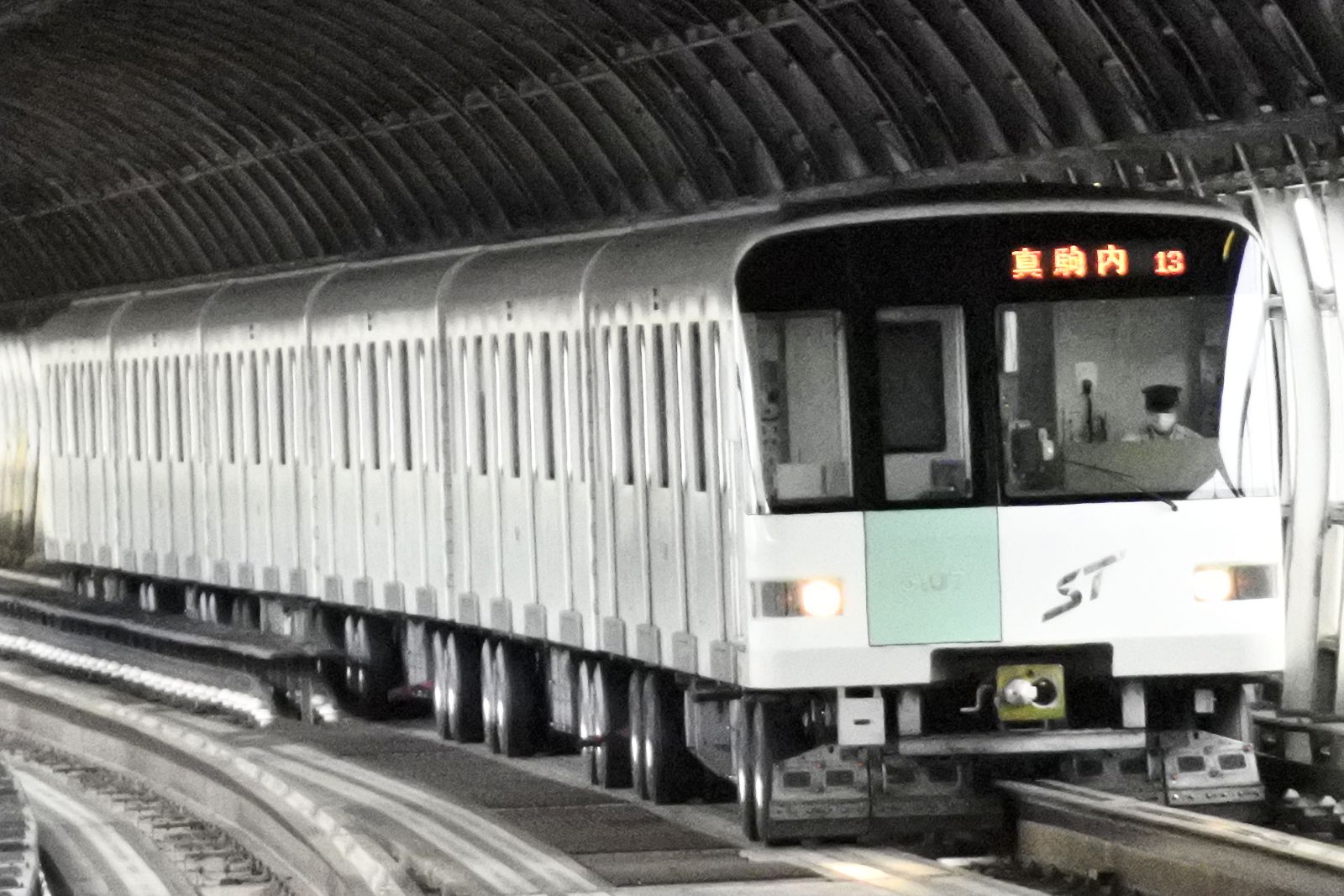
札幌駅到着後は、札幌市地下鉄3線を撮影・乗車した。札幌市地下鉄は、開業順に南北線(1971(昭和46)年開業)、東西線(1976(昭和51)年開業)、東豊線(1988(昭和63)年開業)の3路線があり、いずれの路線もゴムタイヤ式地下鉄(英語では「ラバータイヤ・メトロ」という)であり、車両が走行路の真ん中にある案内軌条に導かれる中央案内軌条式であることが最大の特徴(中央案内軌条式は日本では札幌市地下鉄3路線とAGTの1つであるである山万ユーカリが丘線のみ)。南北線は第三軌条集電、東西線と東豊線は架線集電である。前回1998(平成10)年は、南北線のさっぽろ駅~大通駅間しか乗れなかったことから、今回は3路線をしっかりと楽しんできた。南北線5000形電車1995(平成7)年に南北線の混雑緩和と旧型車両の取り換えを目的に登場した。それまで13.5m級2扉の2000形電車と3000形電車が走っていた南北線に投入された18m級4扉車両。車長が長くなったため、8両編成から6両編成へと短縮されたが、1編成あたりの扉の数が増えたため、乗降時間の短縮に大きく貢献した。札幌市地下鉄の車両で初めてVVVF制御を採用した車両でもある。2012(平成24)年より、南北線の全列車が5000形で運行されている。南北線の平岸駅~真駒内駅間は地上区間であり、同区間は雪対策として路面全体がスノーシェルターで覆われている。同区間の駅のホームからは比較的撮影しやすい。ちなみに、僕が1998(平成10)年に札幌駅~大通駅間で乗車した車両は5000形だった。澄川駅にて photographed at Sumikawa Station真駒内駅にて recorded at Makomanai Station周辺に1972(昭和47)年に開催された札幌オリンピックの会場だった施設(真駒内セキスイハイムアイスアリーナなど)が集中して立地する真駒内駅など札幌市地下鉄の一部の駅では、列車が駅に近づくと、トワ・エ・モワが歌った同年開催の札幌オリンピックのテーマ曲である「虹と雪のバラード」の接近メロディが流れる。原曲でいうところの♪「生まれかわるサッポロの地に きみの名を書く オリンピックと」♪の部分のメロディが、列車接近放送の後に続けて流れる。案内軌条が上下に出たり引っ込んだりするポイント切り替えにも注目。東西線8000形電車1998(平成10)年に東西線琴似駅~宮の沢駅間延伸を前に登場した。先に登場した南北線の5000形をベースとしたデザインであるが、先頭形状が丸みを帯びていることと、東西線の規格に合わせて架線集電と3扉となっている点が違いである。2008(平成20)年より、東西線の全列車が8000形で運行されている。新さっぽろ駅にて photographed at Shin-sapporo Station東豊線9000形電車2015(平成27)年に登場した東豊線の最新型車両。「爽やかでシンプルなデザイン」と「親しみがもてる外観」「快適さと温もりをイメージした室内」を持つ車両として、札幌市立大学デザイン学部の学生と交通局の若手職員の意見を基にデザインされた。2016(平成28)年より東豊線の全列車が9000形で運行されている。東豊線の美園駅~月寒中央駅間の一部はNATM工法で掘られた複線トンネルであり、月寒中央駅では福住行きの列車の編成全体を遠くに見ることができる。以上2枚 月寒中央駅にて photographed at Tsukisamu-chuo StationArriving at Sapporo Station, I started to enjoy travelling on and photographing three Sapporo Municipal Subway Lines; Namboku Line, Tozai Line, and Toho Line. All of them are rubber-tyred metro lead by the central guide rail.5000 Series on Namboku Line5000 Series debuted in 1995. It is designed to realise passengers' smooth getting-on and -off as an 18-metre/59.06-foot-long and 4-doored carriage, instead of the previous models. 2000 Series and 3000 Series, both of which were 13.5-metre/44.3-foot-long and 2-doored carriages. Since 2012, 5000 Series is in all services on Namboku Line.It is easy to shoot photographs at the end of the platform on the sheltered section between Minami-hiragishi Station and Makomanai Station.The carriage that I travelled with on last time had been 5000 Series.At Makomanai Station, around which the stadiums where winter Olympic Games in 1972 had been held are located, and some stations, the theme song for the Games "Ballad of Rainbow and Snow" is played before the train coming. You can see guide rail sliding up and down for track switching.8000 Series on Tozai Line8000 Series debuted in 1998 to prepare for an extension between Kotoni Station and Miyanosawa Station. Its design is based on that of 5000 series', but the number of the passenger doors and its roundish front are different. Since 2008, 8000 Series is in all services on Tozai Line.9000 Series on Toho Line9000 Series on Toho Line debuted in 2015. It was designed under the concept of "fresh and simple design", "friendly-looking Exterior", and "comfortable interior", accepting the opinions by Sapporo City University students in designing and freshmen in the Transportation Bureau.The tunnel between Misono Station and Tsukisamu-chuo Station is partially dug by New Austrian Tunnelling Method (NATM) and you can see the whole of the train coming from Sakaemachi far away from the platform (in third and fourth photograph).
Sep 15, 2019
コメント(0)
-
21年ぶりの北海道 「スーパー北斗」で札幌へ
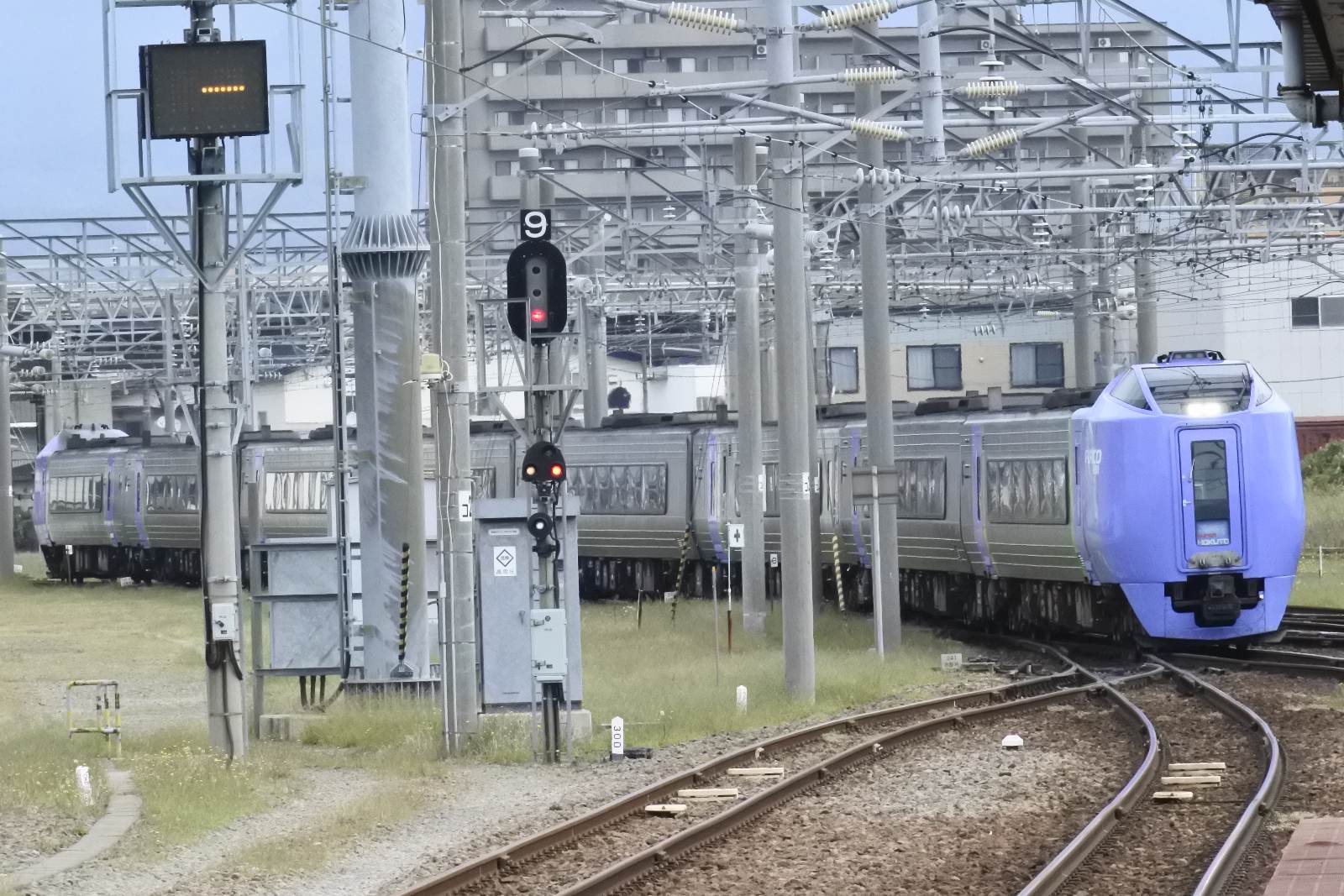
北海道旅行2日目の15日は、函館駅から札幌駅まで特急「スーパー北斗」に乗車した。キハ281系気動車の「スーパー北斗」には21年前の1998(平成10)年にも乗り、その時の乗車区間は洞爺駅~函館駅間だった。今回は函館駅~札幌駅間の函館本線・室蘭本線・千歳線の「海線」全区間に乗車した。8:30、けたたましいくらいの警笛を鳴らしてキハ281系の「スーパー北斗5号」が函館駅の7番線に入線した。僕が座った座席は、大沼や内浦湾(噴火湾)が見える海側(進行方向右側)の窓側。前回1998(平成10)年に乗った時は、先頭車両(キハ281形)の貫通路がオープンスペースであり、貫通扉から全面展望を楽しめたが、2010(平成22)年に函館本線で発生した789系電車による特急「スーパーカムイ」とダンプトラックが衝突する踏切事故をきっかけに、似た構造を持つキハ281系気動車やキハ283系気動車の貫通路はロープが張られ、立ち入り禁止となってしまった。8:55、列車は定時で発車した。函館駅を出発した列車は、五稜郭駅・新函館北斗駅・大沼公園駅・森駅・八雲駅・長万部駅・洞爺駅・伊達紋別駅・東室蘭駅・登別駅・苫小牧駅・南千歳駅・ 新札幌駅・ 札幌駅に停車。札幌駅には12:41に到着、乗車時間は3時間46分である。函館駅を発車した列車はまず、すぐ次の五稜郭駅に停車した。道南いさりび鉄道線との乗換駅であるが、かつて同線はJR北海道江差線の一部で、特急「はつかり」や「スーパー白鳥」が本州から青函トンネルを抜けて函館駅まで乗り入れ、札幌行きの「スーパー北斗」と接続していた。しかし2016(平成28)年の北海道新幹線新青森駅~新函館北斗駅間の開業で、本州からの列車との乗換駅の役目を新函館北斗駅に譲った。列車は七飯駅で運転停車した。七飯駅~森駅間の函館本線は、「8字区間」と呼ばれる、新函館北斗駅・大沼公園駅経由の本線と七飯駅~大沼駅間ノンストップの通称「藤城線」と大沼駅~森駅間を鹿部駅・渡島砂原駅経由で結ぶ通称「砂原線」の2つの支線からなる二股に分かれた単線区間である。「スーパー北斗」の全列車は同区間を本線経由で走る。2016(平成28)年以前は七飯駅~大沼駅間は藤城線経由だったが、本線にある渡島大野駅が新函館北斗駅に改称・北海道新幹線との乗換駅となったことから、本線経由に改められた。新函館北斗駅の手前で北海道新幹線の高架線が進行方向左側へと接近してきた。新函館北斗駅は前述のとおり、函館駅や五稜郭駅に代わって、本州から来た北海道新幹線の列車と函館駅・札幌駅方面へ向かう列車との乗換駅という役目を担っている。新函館北斗駅を発車すると、車窓には緑が多くなり始めた。大沼駅で七飯駅で分かれた藤城線と合流し、通過後すぐに砂原線と分かれる。ここ大沼駅から森駅までの区間、「スーパー北斗」が走る本線は蝦夷駒ヶ岳の西側を、砂原線は東側を走る。大沼公園駅を発車すると、進行方向右側に大沼が見えた。列車は大沼から離れると、そこから振り子式車両であるキハ281系の本来の姿を見せ始める。蝦夷駒ヶ岳の麓へ入ると線路はカーブが増え、列車はエンジン音を響かせながらぐんぐんと加速していき、カーブでは車体を傾けながら蝦夷駒ヶ岳の麓を高速で駆け抜けていく。大沼公園駅から2駅目の駒ヶ岳駅は、駅名の通り目の前に蝦夷駒ヶ岳が聳える。森駅の手前で、大沼駅で分かれた砂原線と合流し、車窓には内浦湾(噴火湾)が見えた。森駅から再び複線となり、列車は内浦湾を進行方向右側に見ながら、ほぼ海岸に沿って走る。長万部駅からは室蘭本線に入る。ここからは内浦湾沿いと山間部を行ったり来たりしながら走る。山岳トンネルの数も増え、長くなっていく。長万部駅から2駅目の小幌駅は、周辺に何もない山間部にある小さな駅で、普通列車でも停まらないものが存在感するなどたどり着くことが難しい「日本一の秘境駅」として鉄道ファンの間で知られている。洞爺駅、伊達紋別駅に停まった後、列車は内浦湾から離れ、室蘭に立ち並ぶ工場群が進行方向右側に見えると、まもなく東室蘭駅に到着した。東室蘭駅を発車すると、「この先列車は、エゾシカなどが出没する区間を走ります。急ブレーキをかけることがありますので、ご注意ください。」という、北海道ならではの自動放送が流れた。車窓には内浦湾に代わって太平洋が見え始める。列車はほぼ太平洋に沿って走り、登別駅、苫小牧駅に停車。苫小牧駅を発車後、JR貨物の苫小牧貨物駅を通過すると、沼ノ端駅を通過。ここから列車は海沿いを離れて千歳線に入る。千歳線は沼ノ端駅~植苗駅間で上下線の線路が離れ、札幌方面の下り線は室蘭本線の線路と並行する。植苗駅の手前で再び千歳線の上下線が合流し、新千歳空港駅方面への支線と石勝線との乗換駅である南千歳駅までの区間は緑が多い。南千歳駅の次の千歳駅を通過すると札幌都市圏に入り、緑が残る箇所もある ものの住宅や広い駐車場を備えた店舗の数が増えてきた。住宅の種類も、一戸建てだけでなくマンションなどの集合住宅の姿も目立ち始める。列車の速度もそれまでほど速いものではなくなった。新札幌駅を発車すると、函館本線の線路と合流し、白石駅、苗穂駅を通過、豊平川橋梁を渡るとまもなく終着(JR北海道では終点ではなく終着という)、札幌駅に到着した。On September 15th, the second day in Hokkaido, I travelled on "Super Hokuto" limited express between Hakodate Station and Sapporo Station. The last time travelling in Hokkaido, I had done between Toya Station and Hakodate Station.Kiha 281 Series "Super Hokuto" honked in a loud sound and came to track 7 of Hakodate Station around 8:30 (in the first photograph).I sat on a right window side one from which I could see Lake Onuma and Uchiura Bay (Volcano Bay). The last time I watched the view from the front door, but passengers couldn't allow going there because of their safety after a crash of "Super Kamui" limited express by 789 Series, which has a similar design, into a dump truck on Hakodate Main Line in 2010 (in the second photograph).At 8:55, The train departed on time.The train stopped at Goryokaku, Shin-hakodate-hokuto, Onuma-koen [Onuma Park], Mori, Yakumo, Oshamambe, Toya, Date-mombetsu, Higashi-muroran, Noboribetsu, Tomakomai, Minami-chitose, and Shin-sapporo stations before arriving Sapporo terminal. It takes 3 hours and 46 minutes.Goryokaku Station, the adjacent to Hakodate, is the junction with South Hokkaido Railway Donan Isaribi Tetsudo Line toward Kikonai Station, which used to be a part of JR Hokkaido Esashi Line and where "Hatsukari" or "Super Hakucho" limited express trains used to be in service from Honshu, such as Morioka Station or Shin-aomori Station, before opening Hokkaido Shinkansen.The train stopped at Nanae Station to wait for railway switching. Between Nanae Station and Mori Station is an 8-shaped section, consisting of two single-track routes; mainline via Shin-hakodate-hokuto Station and Onuma-koen [Onuma Park] Station, Fujishiro Branch Line, shortcut between Nanae Station and Onuma Station, and Sawara Branch Line via Shikabe Station and Oshima-sawara Station, running along the east foot of Mt. Komagatake. All of "Super Hokuto" run on the mainline because of the shorter length since 2016. Before opening Shinkansen, the trains had done via Fujishiro Line.Arriving at Shin-hakodate-hokuto Station, the railway of Hokkaido Shinkansen comes closer to the left. The station functions as the entrance of Hokkaido from Honshu instead of Hakodate Station or Goryokaku Station.Departing from Shin-hakodate-hokuto Station, the train went into a forest. At Onuma Station, Fujishiro Branch Line merges into and Sawara Branch Line separates from mainline.Leaving Onuma-koen [Onuma Park] Station, Lake Onuma appeared on the right (in the third photograph).Gradually getting away from the lake, the train started to get faster and faster continuously tilting itself on curves along the west foot of Mt. Komagatake. When the train passing Komagatake Station, I could see Mt. Komagatake over the window (in the fourth photograph).Near Mori Station, Sawara Branch Line merges into and Uchiura Bay (Volcano Bay) appears on the right. The train ran almost along the bay to Higashi-muroran Station (in the fifth photograph). From Mori Station, the double-track section started again.Switching to Muroran Main Line from Oshamambe Station, the train started to come and go between bayside and mountainous areas. On the way, the train passed Koboro Station, which is located between the two tunnels and known as the station in hidden scenic spots and difficult to come among Japanese railfans (in the sixth photograph).After stopping at Toya Station and Date-mombetsu Station, the train got away from the bay and the factories in Muroran City appear on the right. Then, the train arrived at Higashi-muroran Station.As leaving Higashi-muroran Station, the conductor announced that passengers should be beware of a sudden stop to prevent the crash with Yezo sika deer.On the right, the Pacific Ocean appeared instead of Uchiura Bay. The train kept running along the coast to Tomakomai Station.Leaving Tomakomai Station and passing Tomakomai Freight Station, the train passed Numanohata Station, which is the junction of Muroran Main Line and Chitose Line. The train switched to Chitose Line. though the railway between Numanohata Station and Uenae Station is a double-track, each of those is separated; that of Sapporo-bound spread in parallel with the double track of Muroran Main Line and that of Tomakomai-bound does away from the three.The two tracks meet again near Uenae Station and then train ran in a forest to Minami-chitose Station, where a branch line to New Chitose Airport Station and Sekisho Line toward Shin-yubari, Tomamu, and Obihiro meet.From Chitose Station, the adjacent station of Minami-chitose, the train went into Sapporo urban area, where flats and stores with large parking as well as detached houses are located. The train gradually got slow down.From Shin-sapporo Station, the tracks of Hakodate Main Line get closer and the two lines cross Toyohira River. A few minutes later, the train arrived at Sapporo Terminal.
Sep 15, 2019
コメント(0)
-
21年ぶりの北海道 函館の夜景を眺める
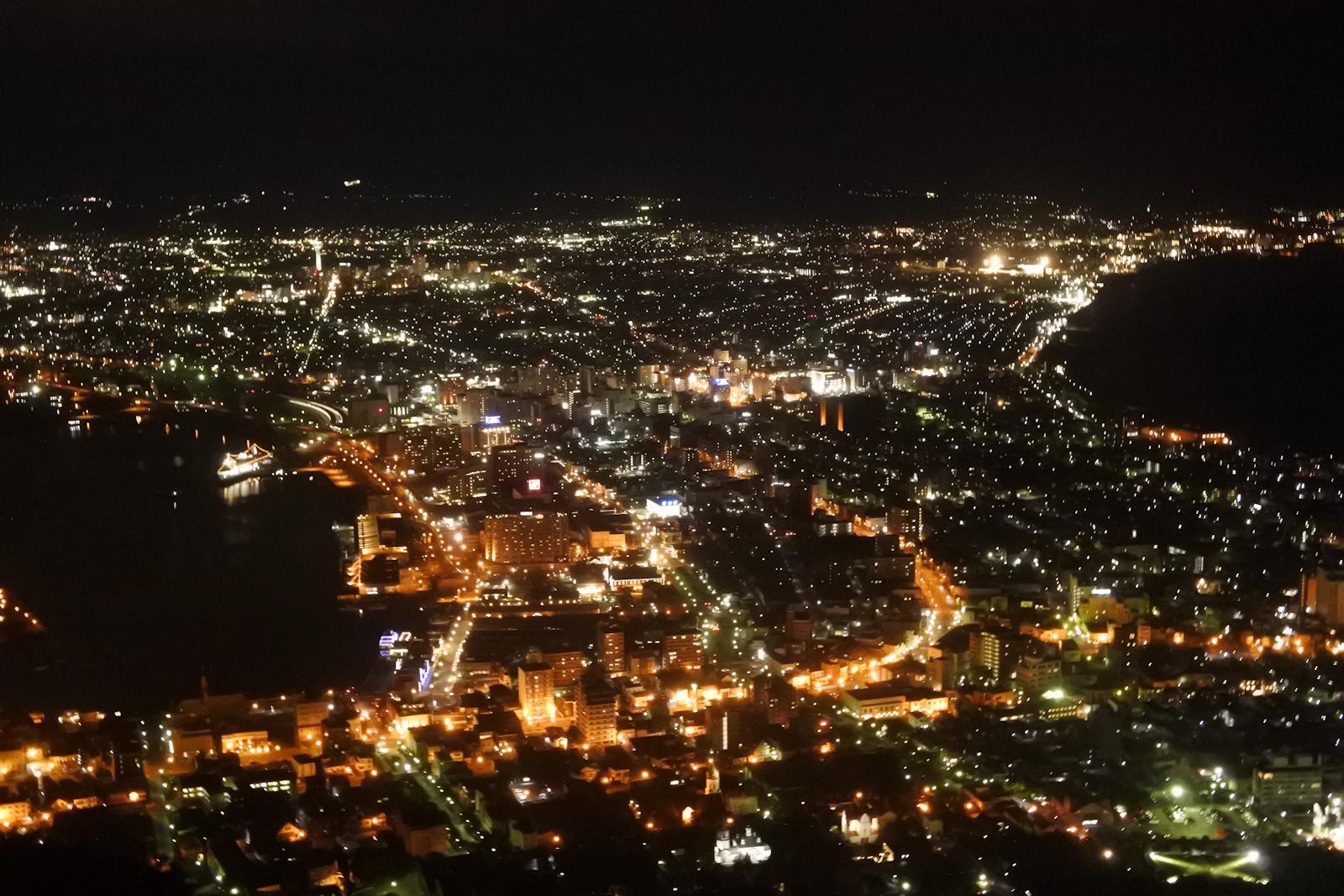
函館の夜を迎えた。せっかく函館へ来たのだから、中国・香港のヴィクトリア・ピーク、イタリア・ナポリのポジリポの丘のものと共に世界三大夜景の1つに数えられる、函館山の山頂展望台から臨む夜景を見ないわけにはいかない。函館市電の十字街電停から南部坂を上がって函館山ロープウェイの山麓駅へ。3分ほど乗車して山頂駅へ。山頂駅の外に出ると、美しい夜景が広がる展望台へ。まずは定番の函館の街並み全体を入れた写真を1枚撮影。これだけではもの足りず、せっかくだから、僕らしい夜景写真を撮ろうと思い、函館市電を入れた1枚を撮影。海峡通の魚市場通電停~十字街電停を走る電車を捉えた。函館山の夜景は21年前にも見たのだが、やはりその美しさは前回と変わっていなかった。展望台から函館市電本線が走る海峡通が見えたことから、市電を入れた夜景の写真を一度撮ってみようと思った。On the night of the first day, I went seeing the night view from the top of Mt. Hakodate, which is listed on the three best night views as well as Victoria Peak in Hong Kong, China and Posillipo Hill in Naples, Italy, and the best attraction in Hakodate.Going up Nambu-zaka Slope from Jujigai Stop on Hakodate City Tram and travelling with Mt. Hakodate Ropeway (aerial tramway), I came to the observation deck, from which you could see the beautiful night view.The first photograph is the night view of whole Hakodate City, looking in ordinary composition and resembling those on magazines or websites for tourists.The second is that featuring a tram running on Strait Avenue between Uoichiba-dori [Hakodate Fish Market Street] Stop and Jujigai Stop.I felt the beauty of the view is unchangeable.
Sep 14, 2019
コメント(0)
-

21年ぶりの北海道 「ラブライブ!サンシャイン!!」の舞台を巡る in 函館
函館市電撮影・乗車の合間を縫って、アニメ「ラブライブ!サンシャイン!!」の舞台を巡った。函館市は、静岡県沼津市・伊豆の国市と並んで「ラブライブ!サンシャイン!!」の舞台となった街である。主人公の高海千歌ちゃんたちのライバルである鹿角聖良ちゃん・理亞ちゃん姉妹が函館市在住で、千歌ちゃんたちも函館を訪れるエピソードがある。もちろん今回も、4月に伊豆箱根鉄道駿豆線と沼津市を訪れた時と同様に、千歌ちゃんのラバーストラップが旅のお供である。最初は、八幡坂を上がって旧函館区公会堂方面に少し歩いたところにある古民家カフェの茶房 菊泉。ここはラブライバーならぜひとも訪れたいお店である。なぜなら聖良ちゃん・理亞ちゃん姉妹の実家として描かれているお店だからである。茶房 菊泉は1921(大正10)年に建てられた酒問屋の別宅だった古民家を改装して、2005(平成17)年に開業した。内装はほとんど手を加えておらず、別邸時代の面影を残している。古めかしい調度品や囲炉裏が目を引く。座敷席の和室が主体だが、縁側と入口から見て一番奥の部屋はフローリングにテーブル席が並ぶ。奥の部屋は、アニメに描かれた理亞ちゃんの自室が再現されており、「理亞ちゃんの部屋」としてラブライバーに人気の高い席である。茶房 菊泉はこれまでに多くのテレビ番組に取材されたことがあり、店内には多くの芸能人のサインが展示されていた。僕は縁側のテーブル席に座り、函館の景色を見ながらのランチタイムとすることにした。僕が注文したのは、このお店の人気料理の1つである、イカ墨を使ったブラックオムライス。卵にかけられているソースだけでなく、卵の中のご飯までイカ墨で黒く染められている。次に向かったのは、函館国際ホテルが見えるともえ大橋。函館国際ホテルは、函館を訪れるエピソードで千歌ちゃんたちが泊まったホテルである。ただし2018(平成30)年に建て替え・リニューアルされたため、アニメに描かれたものとは別物になってしまった。3箇所目は函館市電に乗って函館アリーナへ。函館アリーナは聖良ちゃん・理亞ちゃん姉妹がステージに立ち、千歌ちゃんたちも招待された「ラブライブ!」北海道大会の会場として描かれた。こちらも実物とアニメで描かれた姿とはだいぶ違うものである。4箇所目は再び八幡坂へ。今度は夜景の八幡坂である。函館市電30形電車「箱舘ハイカラ號」の撮影は摩周丸を入れて撮るために「見下ろし型」だったが、アニメの夜景のシーンでも描かれた「見上げ型」で撮影。As well as travelling with and photographing Hakodate City Tram, I visited some places which are pictured in "LoveLive! Sunshine!!" anime. Hakodate City is also set in the anime, as well as Numazu City and Izunokuni City, Shizuoka Prefecture, and appeared as the city where the rivals of the main character, Chika Takami, Sarah Kazuno and Leah Kazuno sisters, and Chika and her school idol members were invited.I brought a Chika rubber charm which I did when travelling to Numazu in April, 2019.The first place I visited was a Japanese-style cafe Sabo Kikuizumi (in the first and second photographs), pictured as the house of Kazuno sisters. Originally, Kikuizumi is built in 1921 as the second house of alcohol warehouse and is refurbished to a cafe in 2005. The furniture, commodities, and irori fireplace (in the third photograph) are remaining.The cafe mainly consists of tatami-matted rooms with zataku tables, but one room further than the entrance, which is refurbished to resemble Leah's room in the anime (in the fourth photograph), and glassed-in veranda are wooden-floored.I chose a table in the veranda, where you can see the view of Hakodate Bay, and a dish of black rice seasoned with squid ink wrapped by egg omelette (in the fifth, sixth, seventh, and eighth photographs), which is one of the most popular dishes in the cafe.The ninth photograph is Hakodate Kokusai Hotel, pictured as where Chika and her friends stayed in episodes set in Hakodate, from Tomoe Ohashi Bridge along Hakodate Bay. However, the present building is different from that in the anime because of the hotel's rebuilt in 2018 after the anime broadcast.The tenth is Hakodate Arena, which is pictured as the stage of "LoveLive!" Hokkaido preliminary on which Kazuno sisters performed and to which Chika and her friends were invited. The real arena doesn't look like that in the anime.The eleventh is Hachimanzaka in the night time from the bottom.
Sep 14, 2019
コメント(0)
-

21年ぶりの北海道 函館市電を巡る
9月14日から19日にかけて、北海道へ撮影旅行してきた。僕が北海道を旅したのは、実に1998(平成10)年以来21年ぶりのことである。初日の9月14日は、函館市電を巡る旅。函館市電は、湯の川電停~松風町電停間の湯の川線、松風町電停~函館駅前電停間の大森線、函館駅前電停~函館どつく前電停間の本線、十字街電停~谷地頭電停間の宝来・谷地頭線の4路線があり、運行系統としては湯の川電停~谷地頭電停間を走る2系統と、湯の川電停~函館どつく前電停間を走る5系統の2種類がある。前回も乗った路線である。まず向かった場所は、海が見える坂として知られる八幡坂。ここからは坂から見下ろす構図で本線の十字街電停~末広町電停を走る5系統の電車を入れて撮影することができる。ここでは土休日にしか走らない30形電車「箱舘ハイカラ號」を、今は青函連絡船記念館(メモリアルシップ)として函館駅前(かつての船着場)に保存・停泊されているかつての青函連絡船、 摩周丸と撮る。続いては十字街電停で撮影。谷地頭電停からやってきた710形電車719号車が十字街交差点を右にカーブして宝来・谷地頭線から本線へと合流するポイントを通過する。函館市電最新型の9600形電車9601号車。路面電車らしさを出そうと手前の横断歩道と複雑に入り組んだ架線を吊るすワイヤーを入れた。車内中間部の乗車側扉周辺だけ床が低い8100形電車8101号車。1両しか在籍していない大変貴重な車両。函館どつく前電停から来た主力車両の1つである8000形電車8008号車を操車塔を入れて撮影。操車塔は、路面電車の線路のポイントと信号の切り替えを遠隔操作するための建物であり、十字街にあるものは1939(昭和14)年から1995(平成7)年までの間、信号の操作を担っていた。本来の場所は現在ある場所の交差点を挟んで向かい側であり、同年の道路改良工事に伴って、現在の場所に移設され、保存されている。先ほど八幡坂から撮影した30形「箱館ハイカラ號」も函館どつく前電停から折り返してきた。操車塔と共にレトロ感を演出するモードで撮影した。十字街交差点の操車塔が稼働を始める前の1937(昭和12)年に39号車は雪かき用のササラ電車へと改造されてしまったため、39号車と十字街の操車塔の組み合わせは見られるようになるのは、1993(平成5)年の「箱館ハイカラ號」として復元されてからである。そして、この日の最大のお楽しみ、「箱館ハイカラ號」への乗車である。乗車区間は函館駅前電停から函館どつく前電停へ、さらに折り返して終点である湯の川電停まで。「箱館ハイカラ號」は湯の川方面と函館どつく前・谷地頭方面3本ずつの運行だが、函館どつく前電停から湯の川電停までの全線を走る電車は1本のみの運行である。30形の車内には「私の履歴書」なるものが掲げられていた。30形39号車は、1910(明治43)年に千葉県の成宗電気軌道の車両として製造され、1918(大正7)年に函館にやってきた。1936(昭和11)年まで旅客車として活躍した後、翌1937(昭和12)年に雪かき用のササラ電車、雪2号車に改造された。1988(昭和63)年に、雪2号車を39号車だった頃の姿に復元させてほしいという声が、第二次世界大戦中に出兵した男性運転士に代わって路面電車に乗務した当時の女性運転士から高まり、1992(平成4)年に函館市の市制70周年記念事業の1つとして旅客車時代の姿に復元された。復元にあたっては、車体外板は普通鋼製で内装のみに木材を使って当時の雰囲気を再現した半鋼製車体を改めて造り、台車もササラ電車時代に取り換えられたものであり、かつての旅客車時代の姿をそのままは再現できなかった。乗車中、木材を使った内装や吊り掛け式の走行音といった明治・大正年間の古めかしい香りを楽しみながら、のんびりと函館の街を車窓から見た。100年以上昔の明治時代に新造された路面電車が、姿を変えながら今なお現役で走り続けていることに驚いた。From September 14th to 19th, I travelled in Hokkaido to enjoy photographing the trains. The last time when I had travelled there was 21 years ago.On the first day, September 14th, I did in Hakodate City to photograph mainly tram.The two routes of tram in Hakodate City are in services; one of them is route 2 between Yunokawa Stop and Yachigashira Stop, and the other is route 5 between Yunokawa Stop and Hakodate Dock-mae Stop, on both of which I had also done on the last time.The first photograph is 30 Series 39 "Hakodate Haikara Go", which is in service only on Saturdays, Sundays, and holidays in Japan, shot from the top of the Hachiman-zaka Hill, looking down the tram between Jujigai Stop and Suehirocho Stop against the bay and Mashumaru, one of the late Japan National Railway's Seikan Train Ferry between a ferry dock directly-connected to Aomori Station and that to Hakodate Station, moored at Hakodate Station dock as a museum and commemorative monument of the Ferry.From the second to sixth are photographed at Jujigai Stop. The second is 710 Series 719 coming from Yachigashira Stop when running on the switch from Horai-yachigashira Line to Main Line. The third is 9600 Series 9601, the latest model and low-floor carriage of the tram. The fourth is 8100 Series 8101, partially-low-floor carriage and only one exists. The fifth is 8000 Series 8008, one of the major carriages, against the switch tower, a mushroom-shaped structure which had functioned to control tram signal at the switch. The tower had been originally located on the opposite side of the intersection from the present location and had been worked between 1939 and 1995. It moved the present location because of the preservation and the improvement of the street. The sixth is 30 Series 39 coming back from Hakodate Dock-mae Stop in retro feel colour. Before the switch tower starting to work, 39 had been converted to snow sweeper carriage with sasara rotating bamboo brushes, and the combination of the carriage and tower can be seen after the reconversion to the passenger tram in 1993.I also travelled on 39 "Hakodate Haikara Go" twice from Hakodate Station Stop Hakodate Dock-mae Stop and returning to Yunokawa Stop."Hakodate Haikara Go" operates three times on each bound a day. However, The tram from the start to the end, between Hakodate Dock-mae Stop and Yunokawa Stop, did only once.The history of 39 is shown in the tram. 39 had been manufactured as the tram in Narita City, Chiba Prefectrure, and moved to Hakodate City in 1918. The tram once retired and converted to a snow sweeper in 1937. In 1992, it had reconverted to a passenger carriage again equipping steel exterior and wooden interior and inherited the same wheels as the snow sweeper.While travelling, I watched the view from window feeling an atmosphere of the tram in early 20th Century, such as the wooden interior and listening to nose-suspension drive sound. I was surprised at that 39 keeps running over 100 years since its debut in Seisou Electric Tramway.
Sep 14, 2019
コメント(0)
-

「東急グループのあゆみ」
9月2日に東京急行電鉄から社名を変更した東急が、これまで歩んできた歴史とこれからの展望の概略を紹介する動画「東急グループのあゆみ」をYouTubeに公開した。1918(大正7)年の田園都市株式会社設立から101年、1922(大正11)年の目黒蒲田電鉄分社化から97年、街を、鉄道を、文化を作り育ててきた東急グループの歴史と、新しくなった東急・東急電鉄の「美しい時代へ」という思いをおよそ6分にまとめた。On 2nd, Tokyu Corporation uploaded a video featuring the company's history on YouTube.This video features the history that Tokyu Corporation has been developed the cities, railways, and cultures since the establishment of Den-en-toshi Company in 1918, and creating "Beautiful and Glorious Moment" in the future.
Sep 8, 2019
コメント(0)
-
"地下鉄のお嬢ちゃん"ステッカーの魅力
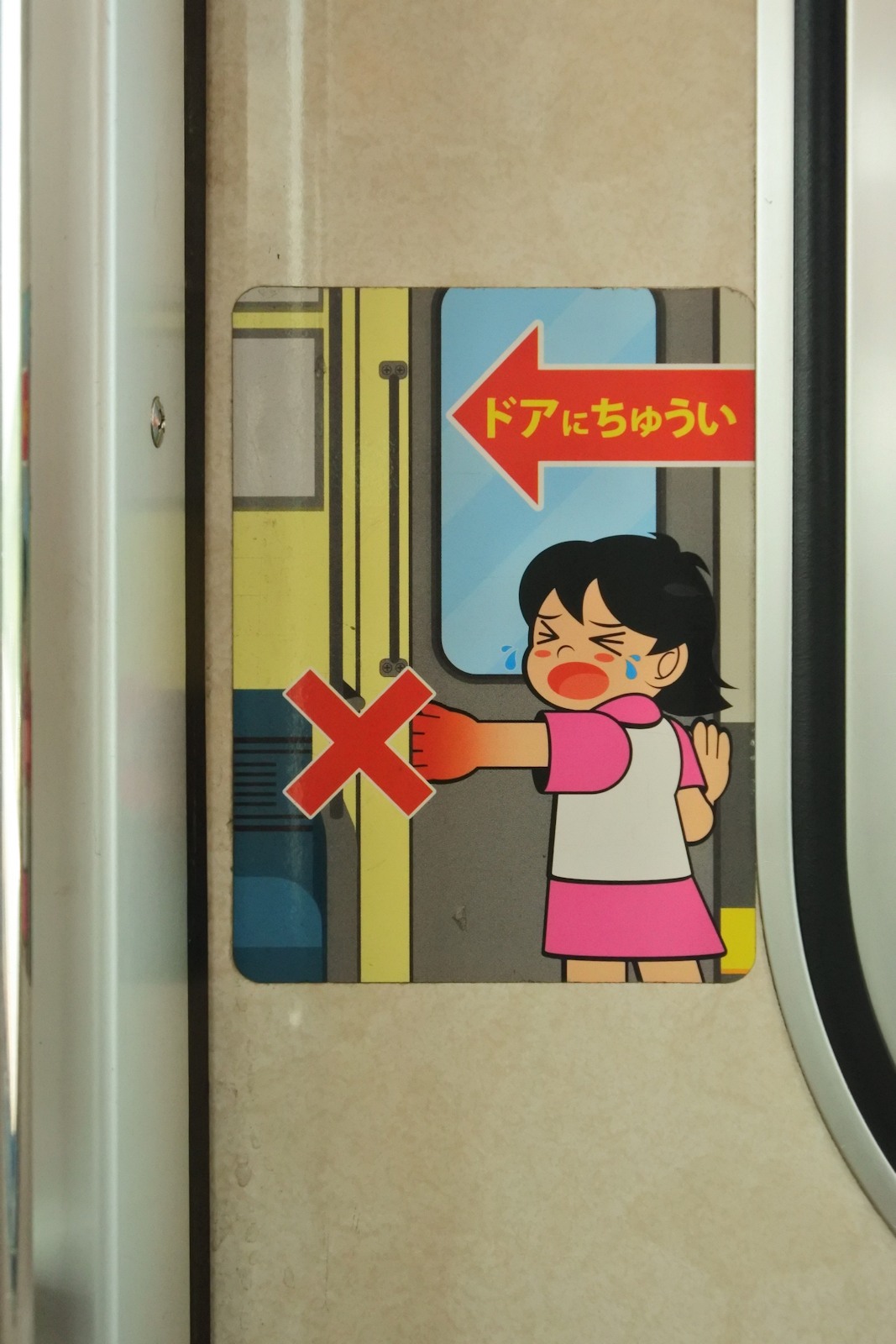
2011(平成23)年より大阪市交通局(現在の大阪市高速電気軌道(Osaka Metro))の車両の側扉戸尻に貼り付けている"地下鉄のお嬢ちゃん"の引き込まれ注意ステッカー。鉄道事業者の個性を出す要素の1つと言える引き込まれ注意ステッカーの中で、僕が最も気に入っているものである。その理由はただかわいらしい絵柄だからだけではない。引き込まれ事故の被害者の多くを占める9歳以下の子供に伝わりやすいように数多くの工夫を凝らしたデザインと言えるからである。ステッカーは戸袋に近い戸尻のガラス底辺のR付近に貼り付けることで、乗車している子供たちの視界に自然に入ってくるように配慮されている。注意書きも「ドアにちゅうい」と全文ひらがな・カタカナのみを使って表記されている。絵柄は、引き込まれの被害に遭いやすい子供たちと同年代(おおむね幼稚園児か小学校低学年)程度の女の子のキャラクターを主役として描くことで共感を呼びやすくし、彼女の手を引き込まれ、ケガを負って泣いている姿を見ることで、引き込まれ事故の恐ろしさを彼らに、特に言葉や文字の理解力が未熟な子供たちにも、絵だけを見ても解ってもらえるようなものと言える。引き込まれた手が赤く腫れ上がっていることで、より痛みが伝わりやすくなる効果があるのであろう。改善すべき点を1つ挙げると、ステッカーの大きさの制約から難しいかもしれないが、側扉に「触らない」ように注意書きすることで、より丁寧に伝えられるのではないだろうか。しかし、それを補うように、お嬢ちゃんの引き込まれている左手だけでなく、引き込まれていない右手も側扉に触っているように描かれている。これによって、側扉に触っていると危ないということが、文字で説明しなくても絵を見て解るように工夫しているのかもしれない。そして、“地下鉄のお嬢ちゃん”のステッカーは本来のターゲットである子供だけでなく、大人をも魅了する可能性を秘めていると言えるだろう。誰が言ったか知らないが、「日本人は子供に弱い」とよく言われる。“地下鉄のお嬢ちゃん”のステッカーはその心理を巧みに利用しているとも言える。幼い子供は、その場にいるだけで可愛がりたい、見守っていたいと思えてくる存在だろう。ましてやケガをして泣いている子供を見捨てられるわけがないだろう。“地下鉄のお嬢ちゃん”を見ることで、彼女を助けてあげたい、慰めてあげたいという弱き者に対する優しさを覚えたり、それについて考えさせてくれる効果もあるのではないだろうか。“地下鉄のお嬢ちゃん”のステッカーは本来のターゲットである子供たちに引き込まれ事故の危険さを理解してもらえやすいだけでなく、大人の保護欲を掻き立てるイラストであると言ってよいだろう。その結果、多くの人に伝わりやすく、親しみを持ってもらえるような、引き込まれ注意ステッカーのあるべきデザインを示していると言える。僕もこれまでに、数多くの鉄道事業者の引き込まれ注意ステッカーを見てきたが、その多くが手のみが描かれたものであり、子供心ながらに何を伝えたいものなのか解らなかった。僕が子供だった頃、人差し指を戸袋方向に向けた手の絵柄の西武鉄道や京王電鉄のものを見ても、人差し指を向いている方向へ側扉が開くということは理解できたが、側扉に手をついていると開く時に扉と一緒に手も戸袋に吸い込まれるから危ないということまでは想像できなかった。それから時が流れて、僕もいつの間にか“地下鉄のお嬢ちゃん”くらいの歳の娘がいてもおかしくない年齢になってしまった。お嬢ちゃんを見ていると、なんだか娘を見守る父親のような気持ちにさせられる。そして、もしも僕に娘がいて、列車の乗り方を教える時には、その娘に側扉に手をつくと危ないということを教えるために、“地下鉄のお嬢ちゃん”のステッカーを見せるだろう。“地下鉄のお嬢ちゃん”は、子供たちにとっては友達のような存在であり、大人にとっては娘のような存在のキャラクターなのかもしれない。最後に改めて、自ら体を張って引き込まれ事故の恐ろしさを伝えようとする“地下鉄のお嬢ちゃん”と、“地下鉄のお嬢ちゃん”を描いてくれた当時の大阪市交通局の皆さんに、深い感謝の気持ちを表したい。I want to write about a mind-the-doors sign on the passenger doors of Osaka Metro carriages, in which "Osaka Subway Girl" whose left hand caught into the door pocket appears, has been shown since 2011.In my opinion, the design of the sign shows one of the ways to express railway companies' identity. Among them, Osaka Metro's one is the best design because it has many ideas to make passengers, especially children under nine years old, understand how horrible holding the doors is, the cute design.The sign is placed at the height of Children's, almost the same as the bottom of the windows on the doors, and Japanese text is written in only hiragana and katakana to be easy to read them. If they can't understand the words, they can do through the picture. A girl similar in age to them, especially primary-school-age or younger who account for much of the victims of the accident, makes them achieve a sense of affinity and draw their sympathy to beware of and avoid injury to hand or finger as the doors open. The inflammation of her hand makes them do how her hand hurt.I want to say that the sign needs the massage for passengers not to touch or hold on to the doors directly. However, her right hand also touches on the door to cover the lack of message.From my perspective, the sign can also be well-designed to attract not only the children but adults, which feed off the psychology of ordinary Japanese people going easy on little children.Some people say that little children make adults feel caring for them if they aren't their sons or daughters. If he or she is crying and getting injured, most adults can't ignore him or her.The sign also shows how the mind-the-doors sign should be to make it understandable and beloved by many people. An injured girl evokes passengers to learn their kindness to help or comfort her.I have seen many varieties of mind-the-doors signs of railway companies in Japan since I was little. However, I used to feel that it was difficult to understand what the signs said only the fingers pointing to the door pocket say.About 30 years later, it is no wonder that I have a child or children in the almost same age as "Osaka Subway Girl". Watching "Osaka Subway Girl" in the sign, I feel as if I were her father. If I had children and taught them the behaviour on the train, I would show them this well-designed sticker to avoid their injury."Osaka Subway Girl" maybe like a friend for the children and as a daughter for adults.Finally, I want to thank an illustrator for the well-designed sign.
Sep 7, 2019
コメント(0)
全17件 (17件中 1-17件目)
1


-
-
- 鉄道
- 【乗車記録0178】787系かいおう(直…
- (2026-05-16 09:41:50)
-
-
-

- GUNの世界
- S&W SHORTY.40 HW 2000年版 / ウェス…
- (2026-05-16 07:38:22)
-
-
-
- 動物園&水族館大好き!
- 神戸どうぶつ王国 サーバル舎ができ…
- (2026-05-16 00:00:08)
-


