


2019年12月の記事
全9件 (9件中 1-9件目)
1
-
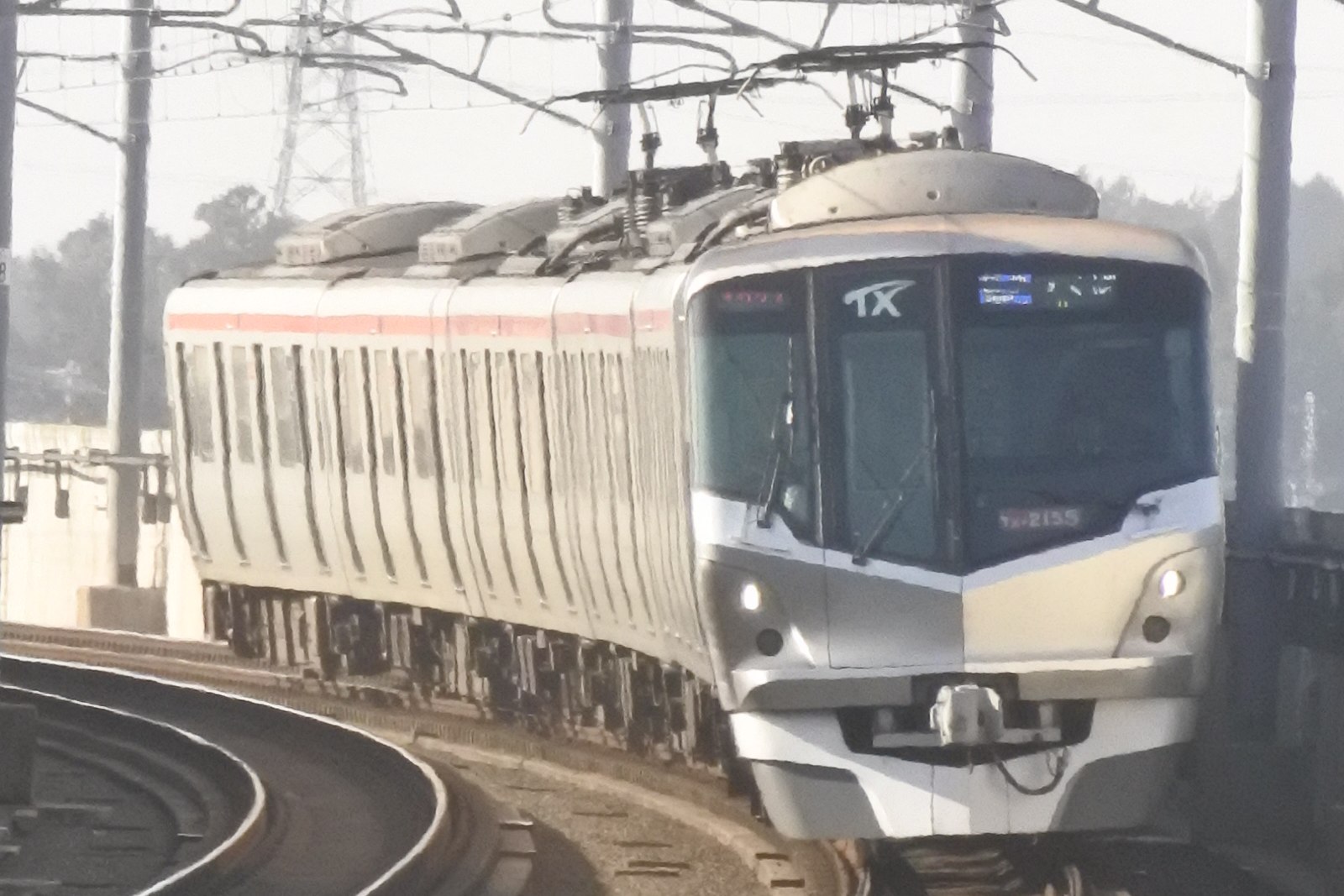
つくばエクスプレス線で撮り納め
2019(令和元)年最後の撮影は首都圏新都市鉄道つくばエクスプレス線。年末年始限定販売の「TX!1日乗り放題きっぷ」を使って、開業直後の2005(平成17)年以来14年ぶりに撮影に臨んだ。みらい平駅付近を走るTX-2000系電車2161F TX-2000 Series 2161F set near Miraidaira Station高架・地下区間が多いつくばエクスプレス線で、みらい平駅の近くにあるみらい平さくら公園は沿線から列車の姿を見ることができる数少ないポイントの1つ。研究学園駅付近を走るTX-2000系電車2155F TX-2000 Series 2155F set near Kenkyu-gakuen Station研究学園駅を通過するTX-2000系電車2158Fの秋葉原行き快速列車 TX-2000 Series 2158F set near Kenkyu-gakuen Station研究学園駅で筑波研究学園都市を背景に約130km/hという高速で駆け抜ける列車を撮影。手前の研究学園駅のホームドアと乗降確認モニター(ITV)はワンマン運転と万全の安全対策というつくばエクスプレス線の個性を出す要素としてあえて入れた。128km/hを指し示す速度計 八潮駅~三郷中央駅間にて speed mater at 128-kilometre/79.5-mile per hour列車全体を収めた写真以外にも、つくばエクスプレス線の特徴を捉えた瞬間を撮った。同線の快速列車は、最高130km/hで走る日本一速い通勤電車である。120km/h以上での走行が見られるのは八潮駅~つくば駅間であるが北千住駅~八潮駅間の地下トンネル内でも最高100km/hで走行する。最高速度に針が近づこうとしている速度計をガラス越しに捉えた。直流電化区間を走っていることを示す運転台の表示 electric supply indicator on the driver's cab in DC-electrified section直流電化区間を走っていることを示す運転台の表示 electric supply indicator on the driver's cab in AC-electrified sectionデッドセクション通過中の路線図式停車駅案内 A route map above the doors on a dead (non-voltage) sectionもう1つのつくばエクスプレス線の特徴と言えば、守谷駅~みらい平駅間には架線に流れる電気が直流から交流へと切り替わるデッドセクションがある。このデッドセクションを境に、秋葉原寄りが直流電化、つくば寄りが交流電化(50Hz)である。編成の直流から交流への架線電源切り替えは自動的に行われる。デッドセクション通過中は、車内の蛍光灯は点いているが、停車駅を表すライトが消灯されることで、デッドセクションを通過していることが判る。On December 31st, I went photographing trains on Metropolitan Intercity Railway Tsukuba Express Line with an unlimited travel one-day ticket.Shooting Tsukuba Express Line train from the railway side is difficult because most of the line consists of elevated or underground sections. Miraidaira Sakura Park near Miraidaira Station is one of the photo spots where the photographers can shoot the trains from the railway side (in the first photograph).From the platform of Kenkyu-gakuen Station, I shot a train against Tsukuba Science City (in the third one). The gates and monitors on the platform are in the photograph as the symbols of the cutting-edge solutions, safety and conductorless operation.I also captured not only the train running, but also the symbolic moments on the travelling; speed mater almost approaching 130-kilometre/80.78-mile per hour and electric supply indicators and route map above the doors on a dead (non-voltage) section between Moriya Station and Miraidaira Station.
Dec 31, 2019
コメント(2)
-
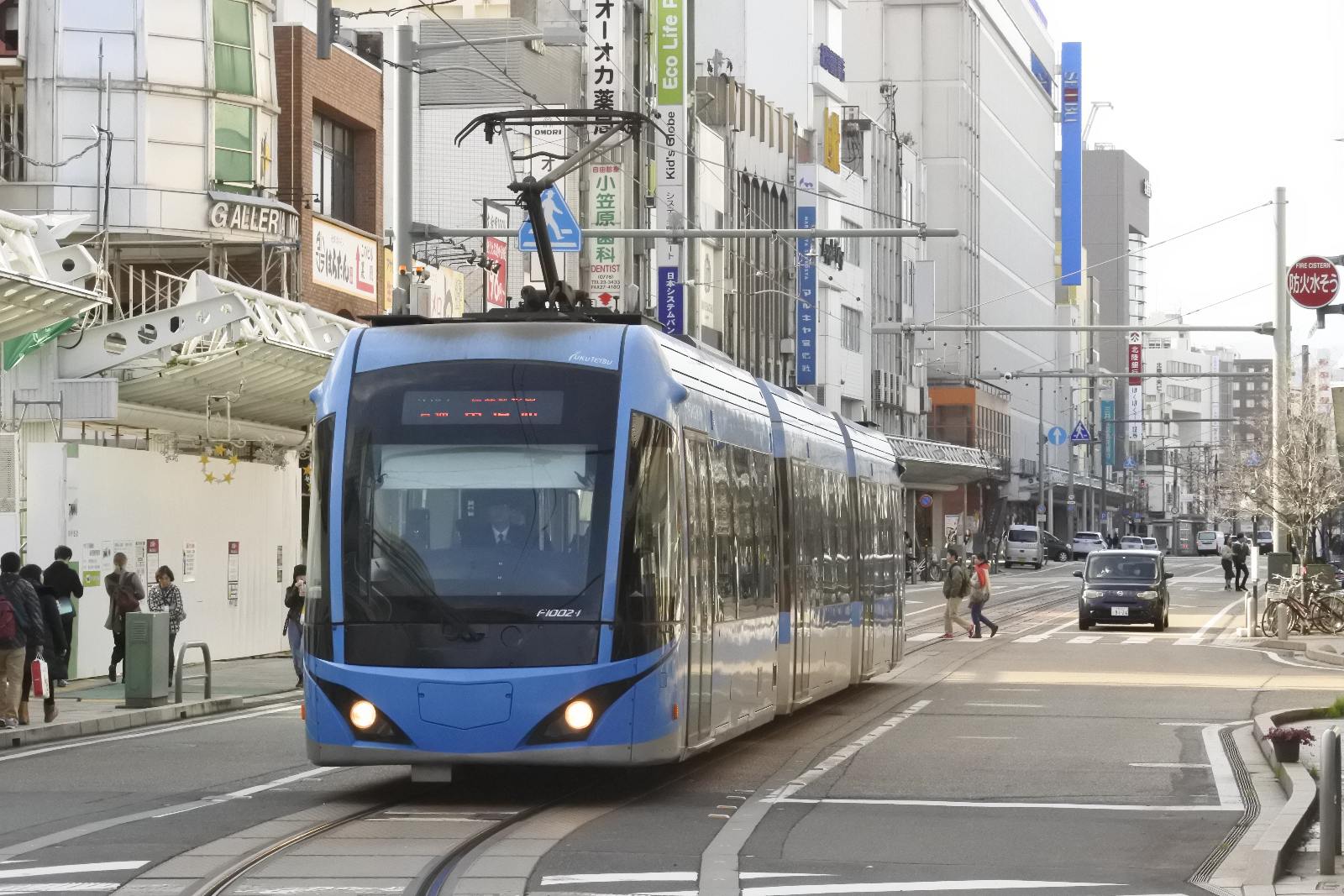
福井鉄道F1000形を撮る
この日はもう1つ、福井県で撮りたかった車両を撮影。福井鉄道福武線福井駅電停へと入線するF1000形電車「FUKURAM」である。北陸地方の路面電車として実績がある万葉線MLRV1000形電車、富山ライトレールTLR0600形電車、富山地方鉄道9000形電車と同じカナダ・ボンバルディア製の「インチェントロ」を基に設計されたが、これら3車種とは3車体連接車であることが大きな違いである。また、福井鉄道の車両として初めてローレル賞を受賞した。福井駅前も、前回僕が旅した11年前とはだいぶ様変わりしていた。福武線のF1000形のデビューだけでなく、福井駅西口に福武線の福井駅電停の移設とバスロータリーの整備に加えて、高さ91.6mの福井県内で一番高いビル「ハピリン」が2016(平成28)年に完成など、2023(令和5)年春に予定されているJR西日本北陸新幹線金沢駅~敦賀駅間の延伸開業に向けて大きな変化が見られた。ハピリン2階から撮影 From first/second floor of HAPPIRINGI could shoot Fukui Railway F1000 Series "FUKURAM", one more carriage I would like to do in Fukui, at Fukui Station.F1000 Series has the design based on Bombardier's Incentro. Though it has the same body as those having been in service in Hokuriku Area, Manyosen MLRV1000 Series, Toyama Light Rail TLR0600 Series, and Toyama Chiho Railway 9000 Series, it consists of a three-carriage set. It had got Laurel Prize in 2014. The scenery of Fukui station plaza has changed; not only F1000 Series, but also the refurbishment of some tram stops, relocation of the tram stop, and open of the tallest skyscraper in Fukui Prefecture, "HAPPIRING". The redevelopment plan is to prepare for the extension of Hokuriku Shinkansen.
Dec 15, 2019
コメント(2)
-
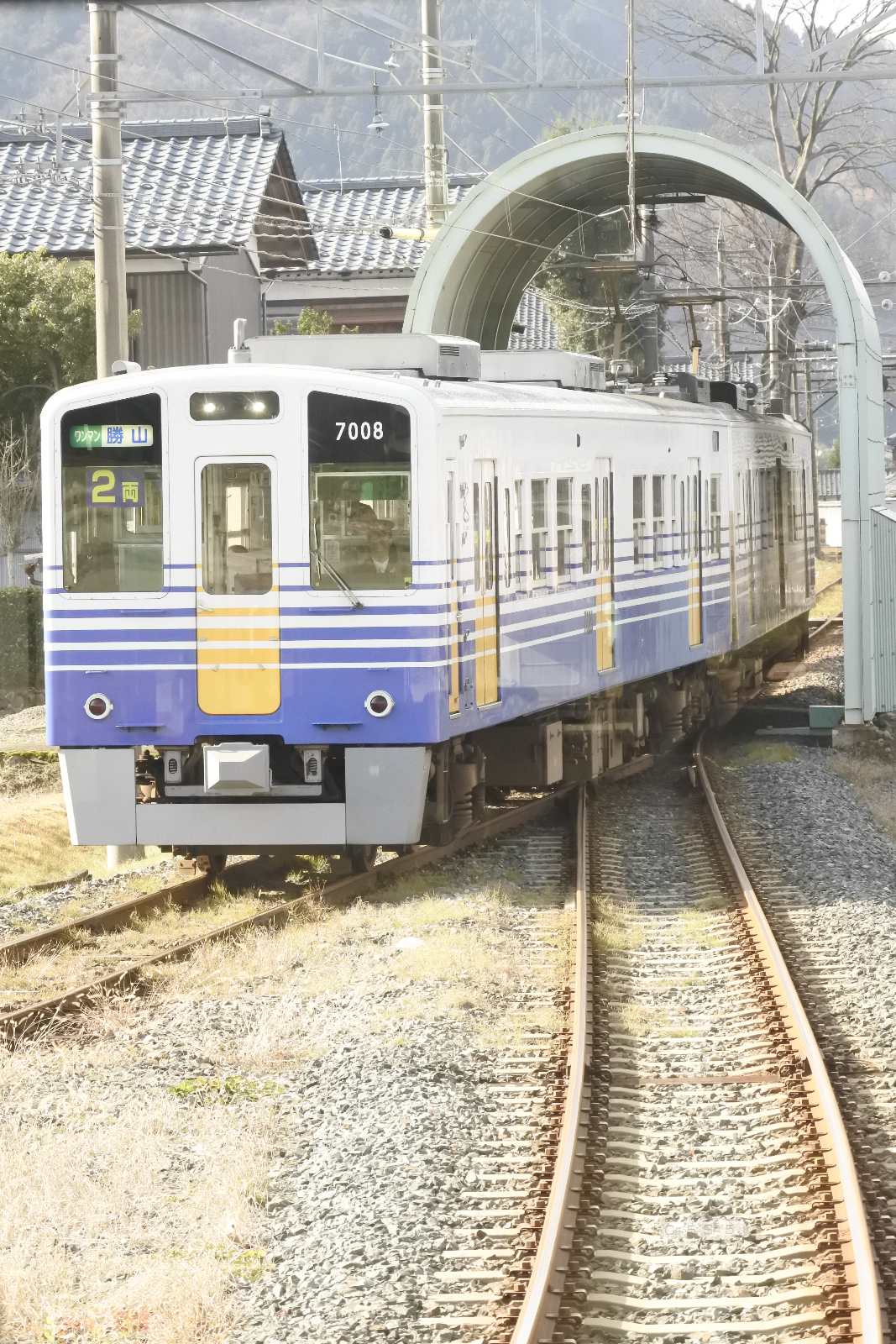
元「飯田線のスター」MC7000形を撮る
最終日の15日、まずはえちぜん鉄道MC7000形電車を初撮影。JR東海119系電車を譲受、前面デザインの変更やVVVF制御への改造などのリニューアルを施して2013(平成25)年にデビューした。119系は国鉄時代の1983(昭和58)年にデビューし、2012(平成24)年まで飯田線で活躍した。飯田線の駅間距離が短く、山岳地帯・人口希薄地帯が多い路線条件に合うように、短い2両もしくは3両編成で走れるモーター車1両に走行機器を集約した1M方式の車両として製造された。辰野駅~豊橋駅間を約6時間かけて走っていた。この写真は越前竹原駅手前の雪からポイントを守るスノーシェルターから顔を出した勝山行き列車を、福井行き列車の前面ガラス越しに撮影したもの。僕にとってはJR東海時代には一度も乗ったことも撮影したこともない車両であり、えちぜん鉄道に移籍して初めて撮影した。主力車両であるMC6001形・6101形電車とたった1両しか存在しないMC5001形電車といった単車(1両でも運行できる車両)が多い中で、このMC7000形電車は2両固定編成を組み、かつ同社初のVVVF制御の車両という点で、撮影したい車両の1つだった。また、数少ないJR東海から移籍してきた旅客車両ということも撮りたい理由だった(2019(令和元)年時点で現役のものはMC7000形電車のほか、ひたちなか海浜鉄道キハ11形気動車(元キハ11形気動車)と富士急行8500系電車(元371系電車)のみ)。On December 15th, the third day of my travel, I could shoot a photograph of Echizen Railway MC7000 Series, which has been in service since 2013 and came from JR Central.Originally, MC7000 Series had been called 119 Series and been in service on Iida Line between Tatsuno Station in Nagano Prefecture and Toyohashi Station in Aichi Prefecture in Japan National Railway and JR Central period. It used to have the suitable specification for Iida Line with two or three carriages, high-performance acceleration and brake on the steep grades or short-distance sections between the two stations. Some trains used to run from the start to the terminal taking about six hours.This photograph was when the train on a switch covered by a snow shelter near Echizen-takehara Station on Katsuyama-eiheiji Line.Though I hadn't shot 119 Series in service, I had longed for shooting MC7000 Series because of the first ones equipping variable frequency drive, the only one type of two-carriage set among the single ones, and one of the passenger carriages moved from JR Central. The passenger carriages from JR Central are rare (Hitachinaka Seaside Railway Kiha 11 Series (ex-Kiha 11 Series) and Fuji Kyuko 8500 Series (ex-371 Series) besides MC7000 Series).
Dec 15, 2019
コメント(0)
-
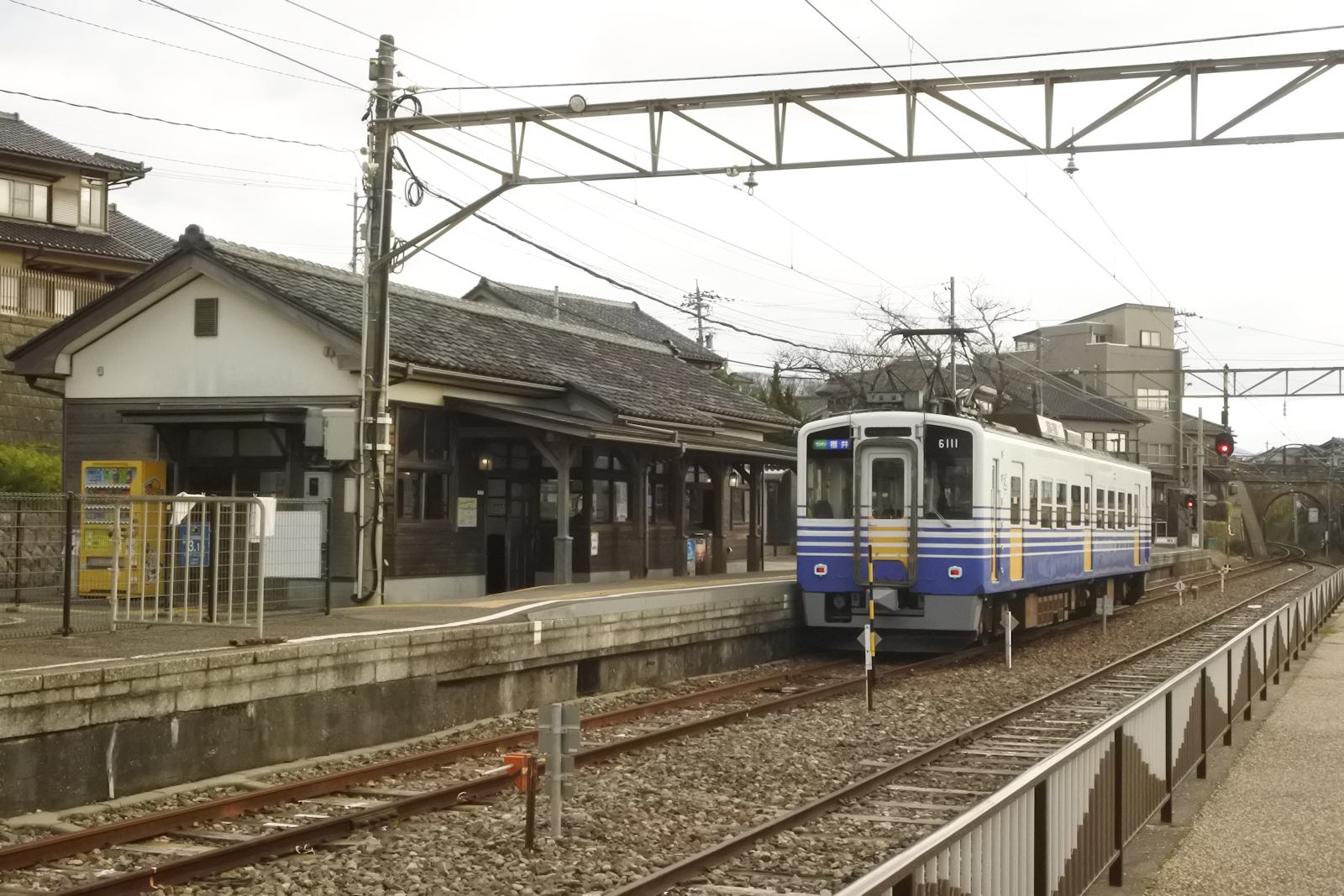
9年ぶりの三国港駅にて
冬の北陸・福井県の旅、2日目はえちぜん鉄道三国芦原線三国港駅へ。三国芦原線の列車に乗りたかったのもそうだが、三国港駅を見たかったためである。前回2008(平成20)年に福井県を旅した後、2010(平成22)年に駅舎が1913(大正2)年に国鉄三国線の駅として開業した当時の姿を再現したものにリニューアルされた。さらには2014(平成26)年に放送されたアニメ「グラスリップ」の作中に描かれたことで、再び三国港駅を訪れてみたいと思い続けていた。三国港駅の駅舎と眼鏡橋だけではなく、停車中の車両が「グラスリップ」の作中に描かれることが多かったMC6101形電車であったことも、同作の世界観を演出するかのような写真が撮れた。この時、列車の発車時刻が迫っていたため、あまり長い時間駅を見ることはできなかったが、三国港駅のリニューアルされた姿を見るという目標が達成できた。三国港駅のホームに立った僕は、2013(平成25)年に、「グラスリップ」と同じP.A.WORKSが制作した「花咲くいろは」に描かれたのと鉄道七尾線西岸駅を訪れた時に似た感動を覚えた。On the second day of travel in Hokuriku, mainly Fukui Prefecture, I visited Mikuni-minato Station on Echizen Railway Mikuni-awara Line.Though I had done there on the last travel in 2008, I would like to do again because of the refurbishment of the station building and appearance on "GLASSLIP" anime.I could shoot the photographs looking like a scene of the work because of the station, Megane Bridge crossing over the railway, and MC6101 Series, the carriage appeared on the work several times.Because I didn't have enough time until the train departure, I couldn't watch the station building. I felt a similar sense when I visited Nishigishi Station on Noto Railway Nanao Line which appeared on "Hanasaku Iroha" anime created by the same studio.
Dec 14, 2019
コメント(0)
-
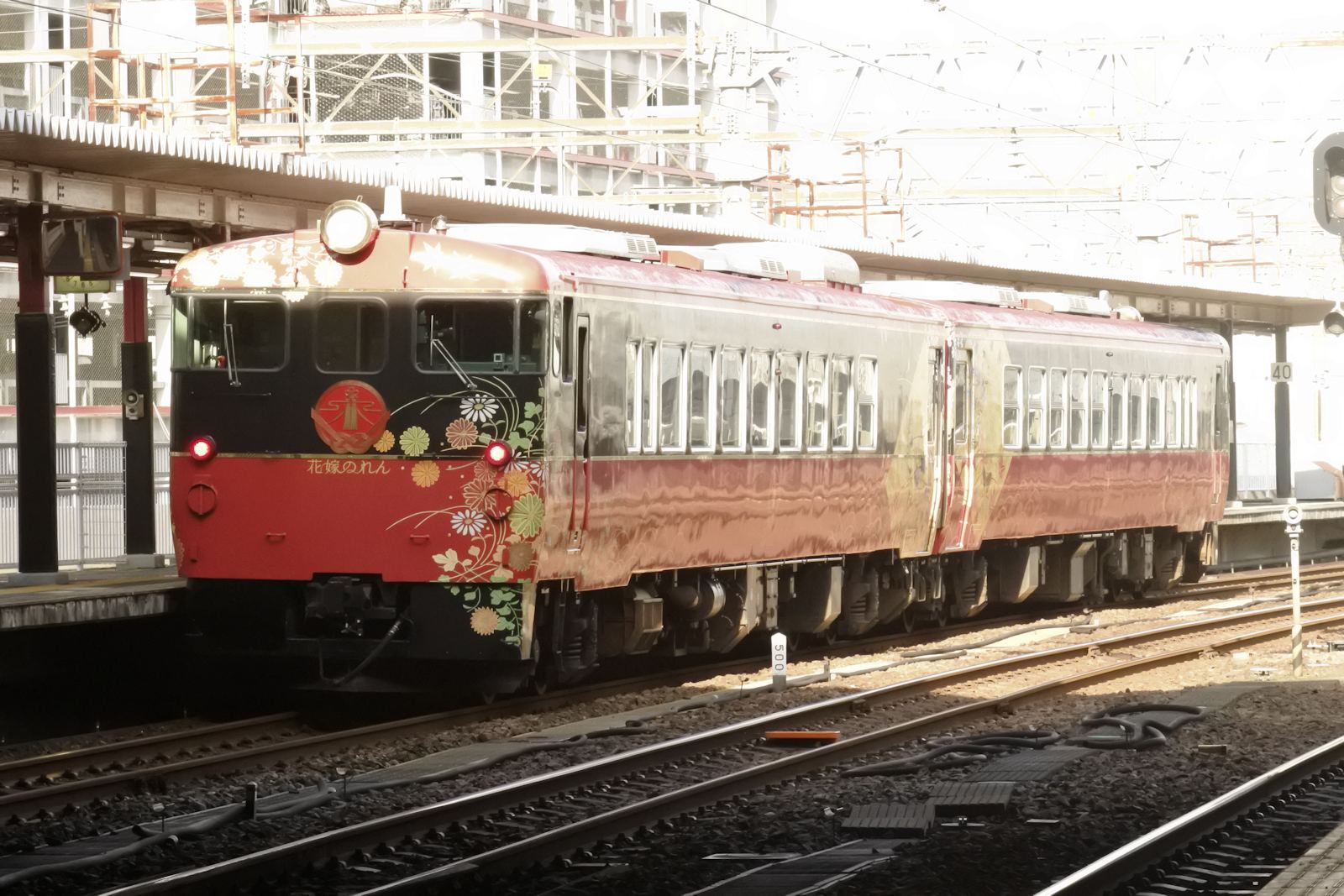
キハ48系「花嫁のれん」初撮影
JR東日本・JR西日本北陸新幹線を降りた金沢駅では、JR西日本七尾線の列車が発着する4番のりばに停車中のキハ48系気動車「花嫁のれん」を撮影。「花嫁のれん」は、北陸新幹線長野駅~金沢駅間開業のおよそ半年後、2015(平成27)年10月に七尾線の観光特急列車としてデビューした。直流電化の七尾線と交流電化のIRいしかわ鉄道線を運行するため、そして将来の非電化路線(具体的にはのと鉄道七尾線)での運行にも対応するため、電化方式に左右されない気動車で運行されている。主に金曜日・土曜日・日曜日と祝日に運行されている。車両は「和と美のおもてなし」をテーマにデザインされ、近鉄50000系電車「しまかぜ」などのデザインを監修した山内陸平さん、同車の全体デザインを担当した井上昭二さんらがデザインを担当した。内外装は輪島塗りや加賀友禅、金箔といった石川県の伝統工芸をイメージした色使いを取り入れ、車両全体で「北陸の和と美」を感じられるものに仕上がっている。外観は輪島塗を想像させる紅色と黒色に、加賀友禅の着物の絵柄をあしらったものとなっている。車内では石川県七尾市出身のパティシエ・辻口博啓さんが監修したスイーツや、和倉温泉の温泉旅館・加賀屋の総料理長が監修した和軽食弁当、石川県の地酒などがもてなされる。今回は「花嫁のれん」には乗車しなかったが、その姿を初めて撮影することができて良かった。次に石川県を旅することがあったら、ぜひとも「花嫁のれん」に乗車してみたいものである。At Kanazawa Station, I photographed Kiha 48 Series "Hanayome Noren", which is in service mainly on Fridays, Saturdays, Sundays, and holidays, on JR West Nanao Line stopping at track 4. Because of the difference of the electrification on Nanao Line (1,500V DC) and IR Ishikawa Railway Line (20,000V AC), a diesel carriage set refurbished from the commuting use for is in "Hanayome Noren" service.The exterior and interior design of the carriage has the theme of "Japanese service with the tradition and the beauty" and designed by Rikuhei Yamauchi and Shoji Inoue, who are known as the designers of Kintetsu 50000 Series "Shimakaze". The colours and patterns of traditional productions in Ishikawa Prefecture, such as Wajima-nuri lacquerware, Kaga-yuzen kimono, and gold leaf, are featured as the exterior and interior colour.While travelling, passengers can enjoy eating confections produced by Hironobu Tsujiguchi, one of the most famous Japanese confectioners from Nanao City, Ishikawa Prefecture, boxed lunch by the kitchen chef from "Kagaya" inn at Wakura Hot Spring, or drinking local sake.I didn't travel on the train this time, but I would like to do within several years.
Dec 13, 2019
コメント(2)
-
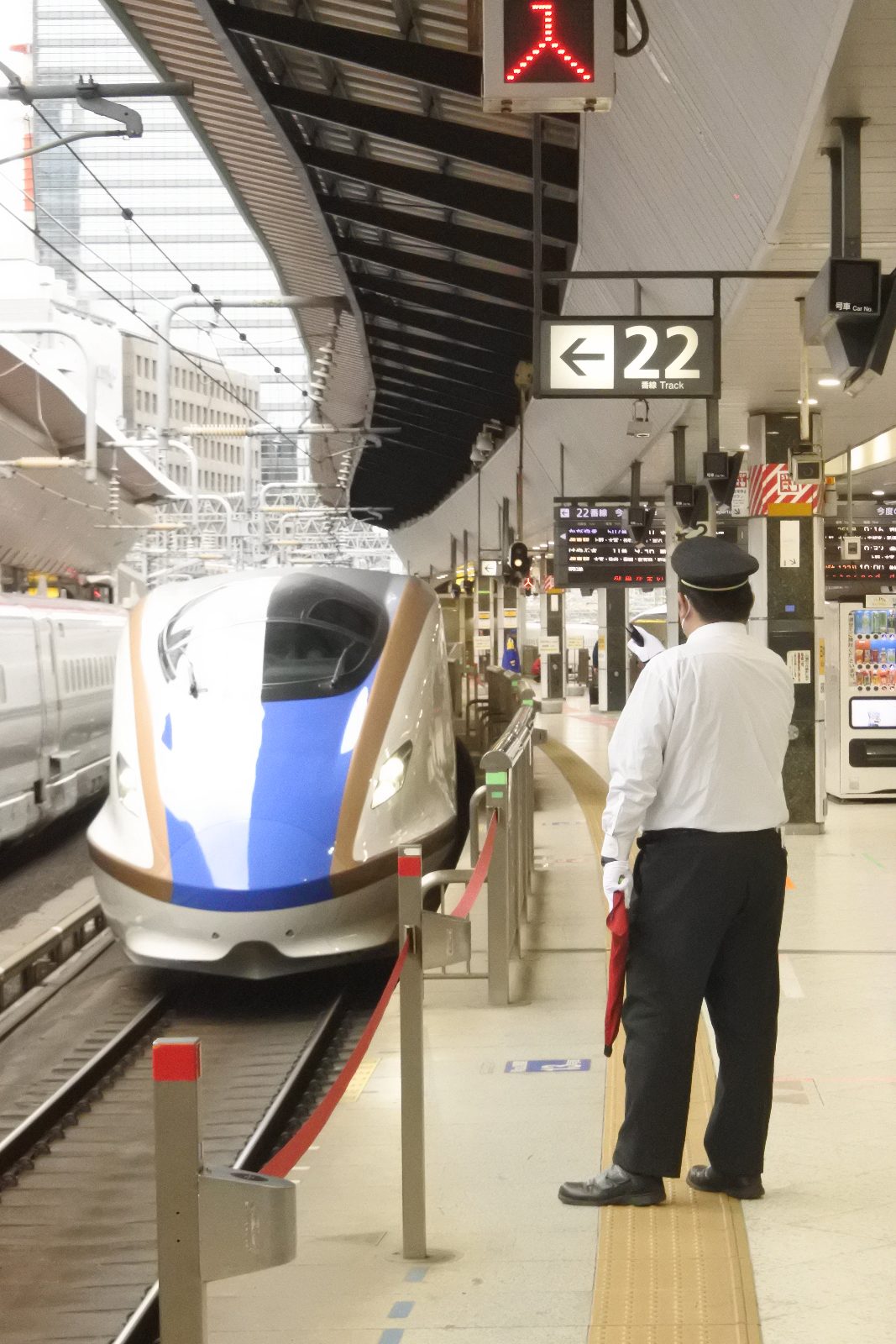
至高のグランクラスで北陸新幹線応援旅
僕の誕生日であり、このブログの開設記念日でもある12月13日、北陸新幹線「かがやき」のグランクラス席の旅へ出かけた。北陸新幹線は2019(令和元)年10月の台風第19号で長野新幹線車両センター(幹ナシ)が水没し、同車両基地に停泊されていたE7系電車8編成とW7系電車2編成が廃車となり、メンテナンス機材も一時使用不能に陥る被害を受けた。それ以降、車両不足による列車本数を減らしての運行が続いている。今回の旅は台風被害よりも前に予定を立てていたものだが、これらの被害の発生を受けて、北陸新幹線を応援する意味合いも込められた。今回僕が乗った列車は9:20東京駅発の「かがやき507号」。列車は途中上野駅・大宮駅・長野駅・富山駅に停車。終点・金沢駅には11:54に到着。車両はJR東日本E7系新幹線電車F16編成。車内清掃が終わると側扉が開き、車内へと足を踏み入れる。デッキ部分は、日本の美しい四季を表現した飾り柱が、客室は輪島塗の漆器を想像させるつや消しの赤茶色の化粧板が目を惹く。E7系のグランクラス車の内装のデザインコンセプトは「人と空間の和」。「伝統を感じる空間と先進の機能を持つシートがお互いを高めあうことで、居心地の良い、ゆとりある空間を感じていただけるように演出している」のだという。座席は電動リクライニングシート。三方を囲まれたバックシェルシートであり、後方を気にしないで背もたれをリクライニングさせることができる。座席間隔も1300mmとしっかりと確保されており、レッグレストをめいっぱい上げても前の座席に足がぶつからない。当然ながら僕もめいっぱい座席をリクライニングさせた。9:20、列車は定刻で東京駅を発車。左側に山手線の線路を走るE235系電車を見下ろしながら、金沢駅までの旅が始まった。上野駅発車後から、アテンダントさんによる車内おもてなしサービスが始まる。最初にブランケットが配布され、続いて軽食と飲み物が届いた。2019(令和元)年12月~2020(令和2)年3月までの軽食は、ベニズワイガニ・カスゴダイ(チダイ)・⼩肌(コノシロ)・いくら・数の子・エビと石川県産棚⽥⽶コシヒカリを使用したばら寿司。飲み物は紅茶をオーダーした。軽食と紅茶が届けられた頃、列車は大宮駅を発車した。ここから200km/h超のスピードで走り始める。とは言っても、大宮駅~高崎駅間は最高240km/h、高崎駅~金沢駅間は最高260km/hでの運転である。東海道・山陽新幹線「のぞみ」のN700系や東北新幹線「はやぶさ」のE5系・H5系、秋田新幹線「こまち」のE6系のような300km/h以上での運転はせず、近年の新幹線としては控えめなスピードである。そのため、E7系の先頭部分のデザインは、前述の4車種の300km/h以上での走行時のトンネル出口から出る微気圧派(いわゆる「トンネルドン」)を軽減する複雑で幾何学的なものに対して、「ワンモーションライン」と呼ばれるすっきりとした流線形である。熊谷駅~本庄早稲田駅間では進行方向左側の車窓に秩父の山々が遠くに見えた。本庄早稲田駅を通過すると、利根川橋梁を渡り、群馬県へ入る。高崎駅から上越新幹線と別れ、北陸新幹線の線路へと入る。高崎駅~安中榛名駅間の上越新幹線との分岐点には「38番分岐器」と呼ばれる160km/hで通過できるポイントがある。北陸新幹線で一番の“秘境駅”と呼ばれる安中榛名駅を通過し、次の軽井沢駅までは碓氷峠越えの30パーミルという急勾配区間である。新幹線の開業前、1997(平成9)年に廃線になった信越本線の碓氷峠越えの区間、横川駅~軽井沢駅間には、66.7パーミルという国鉄・JRで最もきつい勾配だった。同区間を通過した列車は、EF63形電気機関車2両を補助機関車として横川方に連結して、軽井沢・長野方面行き列車は後ろから押し上げてもらい、高崎・上野方面行きの列車は前に立ってブレーキとなり、速度超過を防いだ。同区間では急勾配を上り下りすることから貨物列車は25km/h、旅客列車では38km/hに制限された。勾配が30パーミルに緩和されたこともあり、在来線時代に通過に多大な苦労を要した碓氷峠を、列車は210km/hというスピードで駆け上っていく。軽井沢駅の手前で碓氷峠トンネルを抜けて長野県へ入る。軽井沢の高原から浅間山の麓を抜けて、佐久盆地(佐久平)・上田盆地(塩田平)へ。上田駅付近から、車窓に先の台風第19号で氾濫した千曲川が見えた。新幹線の線路はここから飯山駅付近までほぼ千曲川沿いに通っている。再び千曲川を渡り、しなの鉄道しなの鉄道線・JR東日本信越本線篠ノ井駅が進行方向左側に見えると、信越本線の線路と並行し始める。しばらく走ると列車は長野駅に到着した。長野駅でこれまで乗務していたJR東日本の乗務員さんは、JR西日本の乗務員さんと交代する。北陸新幹線の会社境界駅は2駅先の上越妙高駅だが、「かがやき」が同駅を通過することから、乗務員さんの交代は金沢方面行きのすべての列車が長野駅で行われている。長野駅を発車すると、北陸新幹線の線路はしばらくしなの鉄道北しなの線と並行する。途中、車窓右側には長野総合車両センター(長ナノ)が見え、かつて中央本線(中央東線)の特急「あずさ」として運行していたE257系電車1編成が留置されている姿が見えた。おそらく特急「踊り子」仕様へのリニューアル待ちの編成であろう。その後、北しなの線の線路と別れると車窓左側にE7系・W7系合わせて10編成120両が水没した長野新幹線車両センターが見えた。廃車となった120両はまだ車両基地内に残っており、僕は120両を弔うために窓越しに手を合わせた。長野盆地(善光寺平)を抜けて飯山駅を通過するとすぐに、列車は北陸新幹線で最長のトンネルである飯山トンネルに入る。飯山トンネルを抜けるとそこは新潟県であり、間もなく上越妙高駅を通過。ここからJR西日本が管轄する区間に入る。糸魚川駅を通過した後は姫川橋梁を渡り、数本のトンネルを抜けて境川橋梁を渡ると富山県に入る。富山盆地に入ると、進行方向左側の車窓には山頂に雪をかぶった立山連峰の姿が見えた。黒部川橋梁を渡り、黒部宇奈月温泉駅を通過。さらに片貝川・早月川・常願寺川を渡ると、富山駅に到着した。新幹線開通を前後して行われている富山駅の改良工事は、2019(平成31)年にあいの風とやま鉄道線ホームの全面高架化が完了し、2020(令和2)年にはいよいよ大詰めと言える、駅の南側を走る富山地方鉄道市内線と北側を走る富山ライトレール富山港線、2つの路面電車路線の線路がつながる予定である。窓の外には富山市の街並みが見える。2006(平成18)年の富山ライトレール富山港線の開業以降、富山市は路面電車を積極的に活用した街づくりを進めており、富山地方鉄道富山市内軌道線の環状線(3系統)が2009(平成21)年に開業し、新幹線が開業したのと同じ2015(平成27)年には富山駅高架下への乗り入れを実現させるなど、利便性向上に努めている。そのため僕の目には、路面電車の改良と新幹線の開通に伴う再開発により、富山市は北陸地方の三大都市(富山市・金沢市・福井市)の中で最も機能的な街のように見える。富山駅~金沢駅間は今回初めて乗車する区間である。神通川橋梁を渡り、列車はなおも富山平野を走り抜ける。庄川橋梁を渡ると間もなく新高岡駅を通過。小矢部川橋梁を通過すると新倶利伽羅トンネルに入る。そこを抜けると石川県に入り、金沢駅は間もなくである。東京駅~金沢駅間2時間34分の贅沢グランクラス車という贅沢空間の旅は、とても素晴らしいものだった。座席は大変素晴らしい座り心地で、軽食のばら寿司も美味しかった。前回の北陸新幹線への乗車はすでに夕方から夜にかけてだったため、車窓からの景色についてほとんど見えず、何も書けなかったが、北関東の山間部から信越の高原地帯を抜けて日本海沿岸へと至る風景をじっくりと見ることもできた。From December 13th to 15th, I went travelling in Fukui Prefecture by Hokuriku Shinkansen.In October, the typhoon Hagibis, hitting in Japan mainly Tokai, Kanto, Tohoku Areas, and Nagano Prefecture, had caused the submergence of the eight sets of E7 Series and the two of W7 Series Shinkansen staying at Nagano railyard in the rainwater. Because of the lack of carriages, the trains of Hokuriku Shinkansen is in service with fewer operations than the regular one since the typhoon passed.Though I planned this travel before the typhoon had come, I also went to support the Shinkansen.This time I travelled on a Gran Class (first-class) seating "Kagayaki 507" at 9:20 AM, which stopped at Ueno, Omiya, Nagano, and Toyama Stations during its travel between Tokyo Station and Kanazawa Station and operated by E7 Series F16 set. It took two hours and thirty-four minutes from the start to the end.Getting on the train, the red-coloured decorative board in the cabin and those with pictures of symbols of each season in the end sections attracted me. The interior design of E7 Series' Gran Class cabin has the theme of "harmony of passengers and atmosphere" to create passengers' comfort using traditional colours and seatings with advanced functions. The carriage represents three fixed-back shell seatings in a 1+2 layout with a seat pitch of 1.3-metre/4.27-foot. I fully reclined my seat during my travel.Between Tokyo Station and Ueno Station, I could see E235 Series on Yamanote Line below the window.Around the train's departure from Ueno Station, the attendant service started; blanket distribution and boxed meal and drink service. That day's service was sushi rice topped with fish or seafood, such as shucked snow crab, small-sized seabream, konoshiro gizzard shad, and salmon row. I chose a cup of tea.When my meal and drink came, the train departed from Omiya Station. The train started to run at over 200 kilometres/124.23 miles per hour. However, the maximum speed of the train is 240 kilometers/149.13 miles per hour (between Omiya Station and Takasaki Station) or 260 kilometers/161.56 miles per hour (between Takasaki Station and Kanazawa Station) unlike N700 Series "Nozomi" on Tokaido Sanyo Shinkansen, E5 Series and H5 Series "Hayabusa" on Tohoku Hokkaido Shinkansen, or E6 Series "Komachi" on Akita Shinkansen. Because of its maximum speed, E7 Series has a simple streamline shape called "One-motion Line" looking unlike that of the four Shinkansen carriages.Between Kumagaya Station and Honjo-waseda Station, I could see Chichibu Mountains from the left window. After passing Honjo-waseda Station, the train crossed over Tone River, which borders between Saitama Prefecture and Gumma Prefecture.Passing at Takasaki Station, the track of Hokuriku Shinkansen separates from that of Joetsu Shinkansen, where the train can be available to run at 160 kilometres/99.4 miles per hour.Between Annaka-haruna Station and Karuizawa Station, the train went up the steep incline of 30 per mil over Usui Pass, which straddles the border between Gumma Prefecture and Nagano Prefecture. Before Shinkansen's opening in 1997, Shinetsu Main Line train had done the steeper one of 66.7 per mil, which had been the steepest among those of JR Lines. On this section, Class EF63 electric locomotives, which had equipped many safety solutions for passing the steep grade to prevent rollback and runaway, had been in service as bank engines. The Shinkansen train ran at about 210 kilometres/130.49 miles per hour.Going out of the Usui Pass Tunnel, the train passed Karuizawa Station in a few minutes. From there, the train went into Nagano Prefecture, where the railway spreads over the bottom of Mt. Asama, Saku Basin (Saku-daira), Ueda Basin (Shioda-daira), and Nagano Basin (Zenkoji-daira). Crossing Chikuma River twice, the train arrived at Nagano Station, where the train crew from JR East took their place with the others from JR West. Though the operator border of JR East and JR West on Hokuriku Shinkansen is Joetsu-myoko Station, the second station from Nagano, the crew always take place at Nagano because all "Kagayaki" services don't stop there.Departing from Nagano Station, I could see E257 Series at Nagano Railyard on my right and the other E7 Series at Nagano Shinkansen Railyard, some of which were probably the submerged ones, on my left.Soon after passing Iiyama Station, the train went into Iiyama Tunnel, the longest one on Hokuriku Shinkansen on the border between Nagano Prefecture and Niigata Prefecture. In a few minutes after going out of the tunnel, the train passed at Joetsu-myoko Station and went into JR West section.Crossing Sakai River and going out of some tunnels between Itoigawa Station and Kurobe-unazuki-onsen [Kurobe and Unazuki Hot Spring] Station, I could see Mt. Tateyama on my left. The railway crossed many rivers in Toyama Prefecture; Kurobe River between Itoigawa Station and Kurobe-unazuki-onsen [Kurobe and Unazuki Hot Spring] Station, Katakai River, Hayatsuki River, and Joganji River between Kurobe-unazuki-onsen [Kurobe and Unazuki Hot Spring] Station and Toyama Station, Jinzu River and Sho River between Toyama Station and Shin-takaoka Station, and Oyabe River between Shin-takaoka Station and Kanazawa Station.Watching the scenery of Toyama City, it looked the smartest among the three big cities in Hokuriku Area (Toyama, Kanazawa, and Fukui) because of the improvement of the newly-planned structures including the two tramways. On March, 2020, the two, Toyama Chiho Railway Inner City Line in the south and Toyama Light Rail Toyamako Line in the north, are being connected.After crossing at Oyabe River, the last river in Toyama Prefecture, the train went into Shin-kurikara Tunnel on the border between Toyama Prefecture and Ishikawa Prefecture. The train decelerated to arrive at Kanazawa terminal.The comfortableness of Gran Class seating, the taste of the meal, and the scenery made this travel fantastic.
Dec 13, 2019
コメント(2)
-
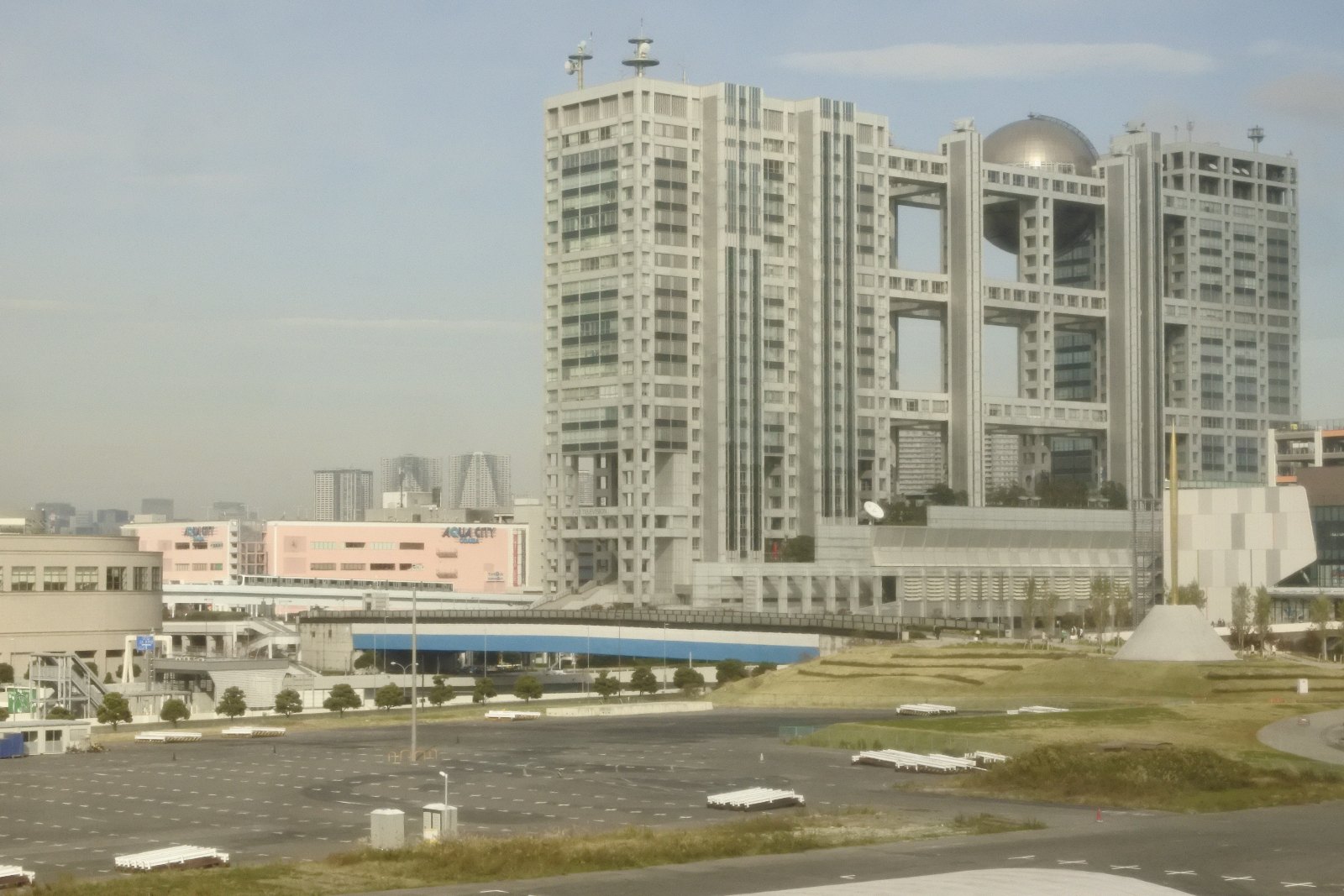
ゆりかもめ東京臨海新交通臨海線をお台場の景色と共に
久しぶりにゆりかもめ東京臨海新交通臨海線を撮影。僕の東京臨海新交通臨海線の撮影は2006(平成18)年に有明駅~豊洲駅間が開業した時以来、13年ぶりである。今回は東京臨海新交通臨海線の列車(東京臨海新交通臨海線は鉄道事業法に基づく鉄道線区間と軌道法に基づく軌道線区間が混在しており、軌道線区間では正式には「列車」とは呼ばないが、ここでは便宜上鉄道事業法の「列車」に準ずるものとして軌道線区間であっても「列車」とする)をお台場・有明エリアの風景と共に撮影した。東京国際クルーズターミナル駅からお台場海浜公園駅~台場駅間を走る列車(7300系電車)とフジテレビ本社ビル・アクアシティお台場 7300 Series against Fuji Television Headquarters and AQUA CITY ODAIBA from Tokyo International Cruise Terminal Station東京国際クルーズターミナル駅へ入線する列車(7300系電車)とレインボーブリッジ 7300 Series against Rainbow Bridge from Tokyo International Cruise Terminal Station青海駅~東京ビッグサイト駅間のお台場エリアと有明エリアとの境界である有明西運河を渡る列車を夢の大橋から狙う 7300 Series between Aomi Station and Tokyo Bigsight Station from Yume-no-ohashi Bridge2014(平成26)年にデビューした7300系電車は、当然今回が初撮影である。ゆりかもめの車両とお台場・有明エリアの風景の組み合わせは、開業から20年以上が経った今でも、近未来的な雰囲気が漂う。I also went photographing to Yurikamome Line. It was the first time to go since the extension from Ariake Station to Toyosu Station in 2006. This time, I tried to shoot the trains against the scenery in Odaiba or Ariake Area.It was also the first time to shoot 7300 Series because the carriages debuted in 2014. The Yurikamome carriages running in Odaiba and Ariake Area looks neo-futuristic though it has passed over 20 years since the line open.
Dec 1, 2019
コメント(0)
-
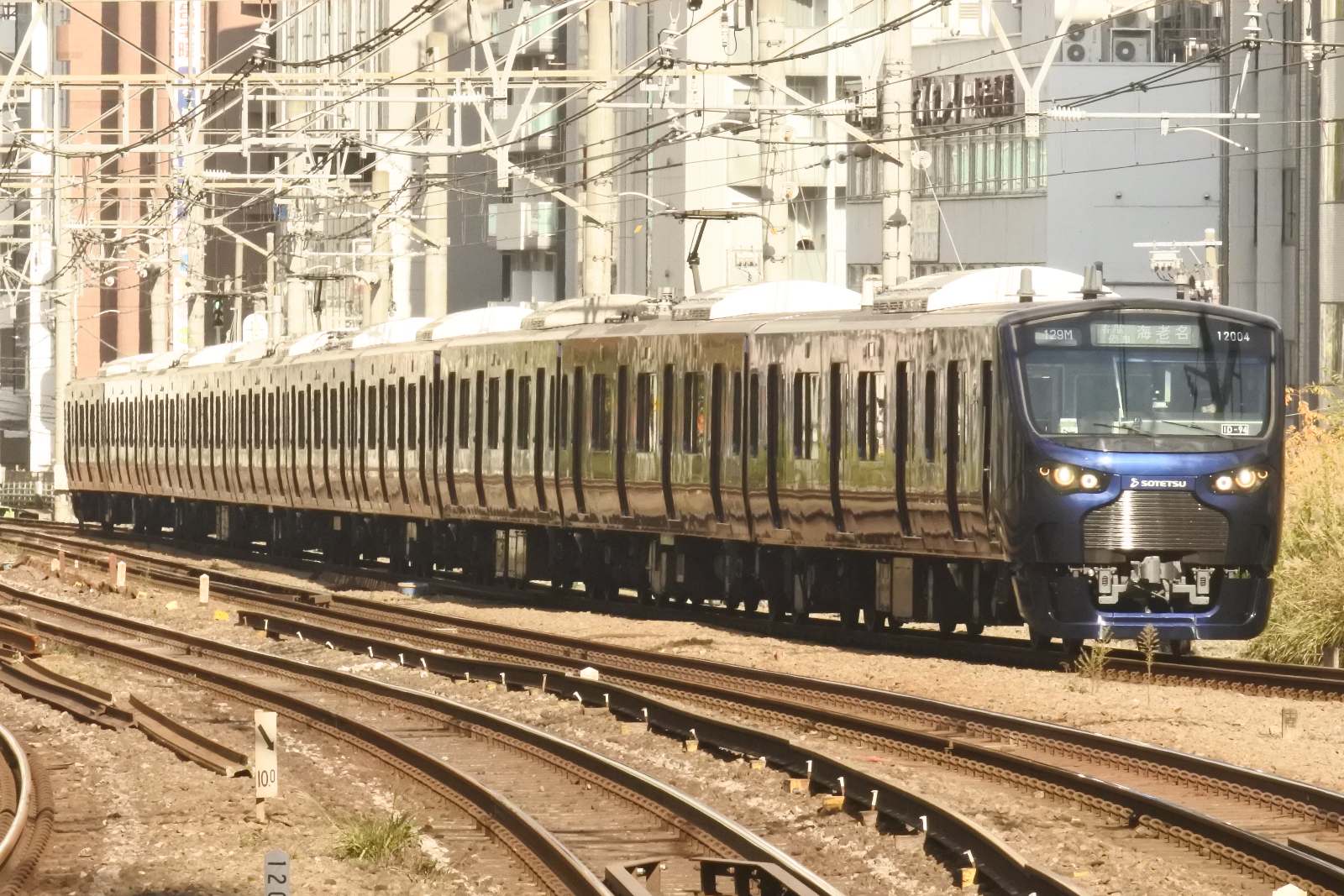
埼京線を走る相鉄12000系を撮る
恵比寿駅に入線する相鉄12000系電車 Sotetsu 12000 Series arriving at Ebisu Station on JR East Saikyo Line新宿駅を発車する相鉄12000系電車 Sotetsu 12000 Series departing from Shinjuku Station on JR East Saikyo Line1日、山手線新線を見た次は、前日の11月30日に一部区間(西谷駅~羽沢横浜国大駅間)が開業した相鉄新横浜線を経由して、JR東日本山手貨物線(埼京線)へと乗り入れた相鉄12000系電車を撮影。相鉄本線海老名駅~JR東日本山手貨物線新宿駅間の運行系統の愛称は「相鉄・JR直通線」で、相鉄の車両は2019(平成31)年4月にデビューしたばかりの12000系電車が、JR東日本の車両は埼京線列車と同じE233系電車(川越車両センター(宮ハエ)所属)が運用に就く。朝ラッシュ時間帯の一部列車は相鉄・JR直通線から埼京線へと乗り入れ、赤羽駅や武蔵浦和駅、大宮駅、指扇駅、川越駅まで運行している。相鉄新横浜線は鉄道建設・運輸施設整備支援機構が建設している「神奈川東部方面線」(西谷駅~東急東横線・目黒線日吉駅間)の一部であり、同機構が第三種鉄道事業者として施設を保有し、相模鉄道が第二種鉄道事業者として列車の運行を担当している。関東の大手民鉄で唯一東京都内に自社路線を持たない相模鉄道にとって、都内への直通運転は、さらなる利便性向上のための長年の悲願である。今回が僕にとって、相鉄・JR直通線の列車はもちろん、相鉄12000系を撮ることも初めてだった。12000系のみではあるが、相鉄の車両が東京都内でも見られるようになったことに新しい路線の開業でなく時代の変化を感じた。After watching the new tracks of Yamanote Line, I went photographing Sagami Railway (Sotetsu) 12000 Series on JR East Saikyo Line.On November 30th, a part of Sotetsu Shin-yokohama Line (between Nishiya Station and Hazawa Yokohama-kokudai [Yokohama National University] Station) opened and the new train between Shinjuku Station, Akabane Station, Musashi-urawa Station, Omiya Station, Sashiogi Station, or Kawagoe Station on JR East Saikyo Line and Ebina Station on Sotetsu Main Line via Shonan-shinjuku Line and Sotetsu Shin-yokohama Line started to be in service, which is a dream come true for Sotetsu because the company doesn't own the railway lines in Tokyo. Sotetsu 12000 Series and JR East E233 Series are in regular service on those lines.It was the first time for me to shoot not only a Sotetsu Shin-yokohama Line train but also Sotetsu 12000 Series. I felt the new generation to see Sotetsu carriage in Tokyo Metropolitan Area.
Dec 1, 2019
コメント(0)
-

高輪ゲートウェイ駅と山手線新線をより間近に見る
12月1日、先日線路の移設工事が行われたJR東日本山手線の田町駅~品川駅間を再び乗車した。11月16日当日、線路切り替え完了後の1番列車に乗ったのだが、この時は時刻が夕方でもう空が暗くなっていたことから、日を改めて明るい時間帯にもう一度見に行った。山手線・京浜東北線の新線は旧線よりも140m東側、東海道本線(列車線)の上り線に近寄って敷設された。その田町駅~品川駅間に建設中で2020(令和2)年3月開業予定の高輪ゲートウェイ駅は、11月30日に開業した国立競技場や、西武4000系電車4109F「西武 旅するレストラン 52席の至福」などのデザイナーとして知られる隈研吾さんがデザインを担当した。高輪ゲートウェイ駅の開業準備作業への安全対策のためなのか、同駅開業後の新ダイヤを想定した時間調整のためなのかは判らないが、新線へと移ってからは田町駅~品川駅間は最高速度65km/hの徐行運転が行われている。田町駅~品川駅間の前面展望 a YouTube video of front view列車の前面から高輪ゲートウェイ駅を見る watching Takanawa Gateway Station from the front window of Yamanote Line train高輪ゲートウェイ駅を通過中 京浜東北線北行き列車と山手線外回り列車の姿も見える while the train passing Takanawa Gateway Stationこの日には田町駅付近の新線を走る内回り列車も立体交差する東京都道409号日比谷芝浦線の札の辻橋から撮影した。列車の奥には山手線内回り・外回り両線と京浜東北線北行き線の旧線が見えた。新線を走り田町駅へと向かう内回り列車 A counterclockwise-bound train running on the relocated railwayOn December 1st, I went seeing the relocated railway of Yamanote Line between Tamachi Station and Shinagawa Station again.Though I went watching the relocated railway and the under-construction Takanawa Gateway Station once on November 16th, the day of the relocation, it was too dark to see them from the train window. I retried to see them in the daytime on that day.The relocated railways are built on about 140-metre/459.31-foot east of the old one in parallel with Tokyo-bound one of Tokaido Main Line. Takanawa Gateway Station is designed by Kengo Kuma, who is known as the designer of rebuilt National Olympic Stadium and Seibu 4000 Series 4109 set "Fifty-two Seats of Happiness".The train ran at 65-kilometre/40.39-mile per hour since the relocation probably because of the safety for staffs at the station or the time adjustment after the station opening.I also photographed a counterclockwise-bound train on the new track from a roadway bridge near Tamachi Station. Over the train, I could see the old ones of Yamanote Line (both clockwise and counterclockwise bound) and Keihin-tohoku Line (northbound).
Dec 1, 2019
コメント(0)
全9件 (9件中 1-9件目)
1


-
-

- がんばれ!地方競馬♪
- 5/16高知・佐賀の1点勝負
- (2026-05-15 22:42:24)
-
-
-
- 模型やってる人、おいで!
- アオシマ 米国海軍爆撃機 ヘルダイ…
- (2026-05-16 05:25:41)
-
-
-
- 寺社仏閣巡りましょ♪
- 日本三大八幡宮のひとつ
- (2026-05-14 07:19:21)
-


