



2022年04月30日

カテゴリ: 語学・資格・学び直し
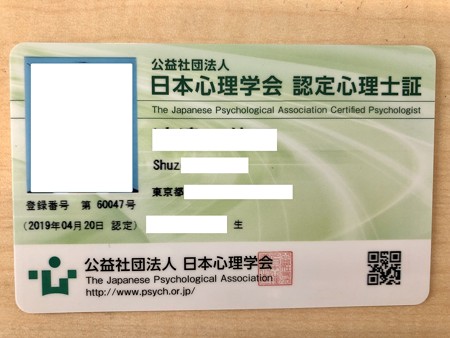
先日「宅建士」の登録のための書類を揃えるのが面倒だということを書きましたが、そういえば、私、もうひとつあまり知られていない「認定心理士」なるものに登録します。資格といえるようなものでなく、「大学で心理学を履行した」という証明のようなものなのですが、そのための書類を揃えるのがまた大変だったことを思い出しました。
心理学系の資格でもっとも権威があるのはおそらく「臨床心理士」と「公認心理師」でしょう。
学校や病院、公的機関のカウンセラーなどの募集は、「臨床心理士」の資格を要件とするものが多いです。取得するためには、心理学系の大学院を修了する必要があります。
「公認心理師」は比較的近年できた国家資格で、こちらはさらに大学でも心理学を履修する必要があります。
法律や会計関連の資格のように試験そのものが難しいというよりは、福祉系の資格などと同様、大学または大学院を修了しなければならない、という意味で、社会人になってから取得するにはハードルが高いものです。
実は、私も心理学科を卒業していますが、私が在籍していた当時、このような資格は存在していませんでした。社会人になってだいぶ経ってから、資格の存在を知って、仕事をしながら取得できないかと調べたことがありますが、社会人が入学できる大学院はあっても、授業が平日昼だったり、通信制の大学院といいながらも実習などで相当数の通学が要求されたりで、普通に働いている社会人が取得するのはあまり現実的ではないと思いました。
一方で、カウンセラーという仕事は、特定の資格がなければできないというものではありません。そのため、「〇〇心理士」とか「〇〇カウンセラー」と称する、(「ナンチャッテ」とまではいいませんが)よくわからない民間資格が山のようにあって、非常にまぎらわしいのが実情です。
認定心理士も、世間から見れば、ある意味、そうした「ナンチャッテ」資格の一つですが、少し異なるのは、主宰しているのが本家の日本心理学会だということです。
前述のとおり、この呼称は特定の技能等を証明するものでなく「大学で心理学を学び、心理学の最低知識と技能を有する」ことを証明する基礎資格という位置づけです。
日本心理学会がこのような呼称資格を設けた背景には、学会の傘下の団体が資格を乱発したことがあると言われています。とはいえ、この呼称もまた、まぎらわしいという意味では、それに輪をかけている感は否めないです。
なお、取得にあたって、試験はなく、書類審査だけで済みます。費用は審査料1万、認定料3万の計4万円と結構かかりますが、これはまあ、日本心理学会へのお布施のようなものでしょう。
私の場合、登録したきっかけは、これが心理学の世界と再びつながりを持つ何かのきっかけにならないかと思ったからなんですが、もうひとつ、当時申請の書式等が変更になり、その期限が迫っていたということもありました。
詳しくは覚えていないのですが、2019年の春に申し込み要項が変更となり、新要項では、私のような卒業して日時の経過している者が書類を揃えるのが著しく困難でした。それで、旧要項で受け付けてもらえるギリギリのタイミングで、滑り込みで申請したのでした。
申請に必要な書類というのは、たとえば、
・心理学関係科目修得単位表
・基礎科目c領域実験実習リスト(詳細は割愛)
・基礎科目a,b,cのシラバスのコピー( 〃 )
・成績証明書または単位取得証明書
というようなものがありました。
最近卒業した方にとっては、集めるのになんの困難もない書類だと思いますが、私のようなケースでは、そもそも40年近く前のシラバスなどが残っているはずもなく、といって現役で心理学に関わる仕事をしているわけでもなく、それでも履修内容できるだけ詳しく記入して提出せよということだったので、かなり大変な思いをしました。
そんなわけで、試験に合格したわけでも何でもないのですが、認定証をいただいた時にはそれなりの達成感と充足感があったものです。
ちなみに、この認定証、登録料が高価なだけあって、パウチをしただけの「通訳案内士証」などよりよほどしっかりと作られています。紛失して困るものでもないので、話のネタ用に、財布に入れて持ち歩こうかと思います。笑
************************
The other day, I wrote about how tedious it was to gather the documents for registering as a Real Estate Transaction Specialist (Takken-shi). That reminded me that I’m also registering for another, less well-known credential called “Certified Psychologist” (Nintei Shinrishi). It’s not really a qualification in the strict sense—it’s more like a certificate proving that you completed psychology courses at university—but gathering the required documents for that was also quite a hassle.
The most prestigious credentials in the field of psychology in Japan are probably the Clinical Psychologist and the Licensed Psychologist. Job postings for counselors at schools, hospitals, or public institutions often require a Clinical Psychologist certification. To obtain it, you need to complete a graduate program in psychology. The Licensed Psychologist is a relatively new national certification, and similarly requires university-level coursework in psychology.
I actually graduated from a psychology program myself, but when I was in school, these qualifications didn’t exist. Years later, as a working adult, I learned about them and looked into whether I could earn them while working. While there are graduate programs open to adults, classes are often during weekdays, or even in distance programs you’re required to attend numerous practical sessions. So realistically, it’s difficult for a regular working adult to obtain these certifications.
At the same time, being a counselor doesn’t legally require any specific credential. As a result, there are countless “psychologist” or “counselor” titles offered by private organizations—somewhat confusing and often regarded as quasi-certifications.
The Certified Psychologist falls into that category in the eyes of the public, but it’s a bit different because it’s issued by the Japanese Psychological Association (JPA) itself. This title doesn’t certify special skills; rather, it proves that someone has studied psychology at the university level and possesses basic knowledge and skills in the field. For people whose major wasn’t psychology, it serves as a verification that they have completed a reasonable amount of coursework.
The JPA reportedly established this certification partly because organizations under its umbrella had been issuing too many confusing private credentials. Even so, the “Certified Psychologist” designation can still be somewhat misleading.
No exam is required for certification; it’s purely a document review. The total cost is around ¥40,000 (¥10,000 for the review fee and ¥30,000 for the certification fee), which is, in a sense, a donation to the JPA.
I decided to register partly because I hoped it would reconnect me with the world of psychology. Another reason was that the application forms were about to change, and the deadline was approaching. In spring 2019, the new requirements made it extremely difficult for someone like me—who had graduated many years ago—to gather the necessary documents. So I applied just in time under the old rules.
The required documents included things like:
Transcript of psychology-related courses
List of practical experiments for basic courses in domain C (details omitted)
Syllabi for basic courses A, B, and C (details omitted)
Official transcript or certificate of completed credits
For recent graduates, collecting these would be straightforward. But in my case, nearly 40 years had passed, the old syllabi were gone, and I wasn’t actively working in psychology. Still, I was required to provide as much detail as possible about my coursework. This involved calling my old department, digging through family archives, and looking up past publications by my former professors. At one point, I almost gave up out of sheer frustration.
On the other hand, revisiting forgotten psychology terms and concepts and talking with my former university staff was also stimulating. So, even though I didn’t pass any exam, receiving the certification gave me a genuine sense of accomplishment and satisfaction.
Incidentally, the certificate itself is quite well-made, far more substantial than, say, a laminated Tour Guide License. I don’t really need to carry it for practical purposes, but I might slip it into my wallet for conversation’s sake.
心理学系の資格でもっとも権威があるのはおそらく「臨床心理士」と「公認心理師」でしょう。
学校や病院、公的機関のカウンセラーなどの募集は、「臨床心理士」の資格を要件とするものが多いです。取得するためには、心理学系の大学院を修了する必要があります。
「公認心理師」は比較的近年できた国家資格で、こちらはさらに大学でも心理学を履修する必要があります。
法律や会計関連の資格のように試験そのものが難しいというよりは、福祉系の資格などと同様、大学または大学院を修了しなければならない、という意味で、社会人になってから取得するにはハードルが高いものです。
実は、私も心理学科を卒業していますが、私が在籍していた当時、このような資格は存在していませんでした。社会人になってだいぶ経ってから、資格の存在を知って、仕事をしながら取得できないかと調べたことがありますが、社会人が入学できる大学院はあっても、授業が平日昼だったり、通信制の大学院といいながらも実習などで相当数の通学が要求されたりで、普通に働いている社会人が取得するのはあまり現実的ではないと思いました。
一方で、カウンセラーという仕事は、特定の資格がなければできないというものではありません。そのため、「〇〇心理士」とか「〇〇カウンセラー」と称する、(「ナンチャッテ」とまではいいませんが)よくわからない民間資格が山のようにあって、非常にまぎらわしいのが実情です。
認定心理士も、世間から見れば、ある意味、そうした「ナンチャッテ」資格の一つですが、少し異なるのは、主宰しているのが本家の日本心理学会だということです。
前述のとおり、この呼称は特定の技能等を証明するものでなく「大学で心理学を学び、心理学の最低知識と技能を有する」ことを証明する基礎資格という位置づけです。
日本心理学会がこのような呼称資格を設けた背景には、学会の傘下の団体が資格を乱発したことがあると言われています。とはいえ、この呼称もまた、まぎらわしいという意味では、それに輪をかけている感は否めないです。
なお、取得にあたって、試験はなく、書類審査だけで済みます。費用は審査料1万、認定料3万の計4万円と結構かかりますが、これはまあ、日本心理学会へのお布施のようなものでしょう。
私の場合、登録したきっかけは、これが心理学の世界と再びつながりを持つ何かのきっかけにならないかと思ったからなんですが、もうひとつ、当時申請の書式等が変更になり、その期限が迫っていたということもありました。
詳しくは覚えていないのですが、2019年の春に申し込み要項が変更となり、新要項では、私のような卒業して日時の経過している者が書類を揃えるのが著しく困難でした。それで、旧要項で受け付けてもらえるギリギリのタイミングで、滑り込みで申請したのでした。
申請に必要な書類というのは、たとえば、
・心理学関係科目修得単位表
・基礎科目c領域実験実習リスト(詳細は割愛)
・基礎科目a,b,cのシラバスのコピー( 〃 )
・成績証明書または単位取得証明書
というようなものがありました。
最近卒業した方にとっては、集めるのになんの困難もない書類だと思いますが、私のようなケースでは、そもそも40年近く前のシラバスなどが残っているはずもなく、といって現役で心理学に関わる仕事をしているわけでもなく、それでも履修内容できるだけ詳しく記入して提出せよということだったので、かなり大変な思いをしました。
そんなわけで、試験に合格したわけでも何でもないのですが、認定証をいただいた時にはそれなりの達成感と充足感があったものです。
ちなみに、この認定証、登録料が高価なだけあって、パウチをしただけの「通訳案内士証」などよりよほどしっかりと作られています。紛失して困るものでもないので、話のネタ用に、財布に入れて持ち歩こうかと思います。笑
************************
The other day, I wrote about how tedious it was to gather the documents for registering as a Real Estate Transaction Specialist (Takken-shi). That reminded me that I’m also registering for another, less well-known credential called “Certified Psychologist” (Nintei Shinrishi). It’s not really a qualification in the strict sense—it’s more like a certificate proving that you completed psychology courses at university—but gathering the required documents for that was also quite a hassle.
The most prestigious credentials in the field of psychology in Japan are probably the Clinical Psychologist and the Licensed Psychologist. Job postings for counselors at schools, hospitals, or public institutions often require a Clinical Psychologist certification. To obtain it, you need to complete a graduate program in psychology. The Licensed Psychologist is a relatively new national certification, and similarly requires university-level coursework in psychology.
I actually graduated from a psychology program myself, but when I was in school, these qualifications didn’t exist. Years later, as a working adult, I learned about them and looked into whether I could earn them while working. While there are graduate programs open to adults, classes are often during weekdays, or even in distance programs you’re required to attend numerous practical sessions. So realistically, it’s difficult for a regular working adult to obtain these certifications.
At the same time, being a counselor doesn’t legally require any specific credential. As a result, there are countless “psychologist” or “counselor” titles offered by private organizations—somewhat confusing and often regarded as quasi-certifications.
The Certified Psychologist falls into that category in the eyes of the public, but it’s a bit different because it’s issued by the Japanese Psychological Association (JPA) itself. This title doesn’t certify special skills; rather, it proves that someone has studied psychology at the university level and possesses basic knowledge and skills in the field. For people whose major wasn’t psychology, it serves as a verification that they have completed a reasonable amount of coursework.
The JPA reportedly established this certification partly because organizations under its umbrella had been issuing too many confusing private credentials. Even so, the “Certified Psychologist” designation can still be somewhat misleading.
No exam is required for certification; it’s purely a document review. The total cost is around ¥40,000 (¥10,000 for the review fee and ¥30,000 for the certification fee), which is, in a sense, a donation to the JPA.
I decided to register partly because I hoped it would reconnect me with the world of psychology. Another reason was that the application forms were about to change, and the deadline was approaching. In spring 2019, the new requirements made it extremely difficult for someone like me—who had graduated many years ago—to gather the necessary documents. So I applied just in time under the old rules.
The required documents included things like:
Transcript of psychology-related courses
List of practical experiments for basic courses in domain C (details omitted)
Syllabi for basic courses A, B, and C (details omitted)
Official transcript or certificate of completed credits
For recent graduates, collecting these would be straightforward. But in my case, nearly 40 years had passed, the old syllabi were gone, and I wasn’t actively working in psychology. Still, I was required to provide as much detail as possible about my coursework. This involved calling my old department, digging through family archives, and looking up past publications by my former professors. At one point, I almost gave up out of sheer frustration.
On the other hand, revisiting forgotten psychology terms and concepts and talking with my former university staff was also stimulating. So, even though I didn’t pass any exam, receiving the certification gave me a genuine sense of accomplishment and satisfaction.
Incidentally, the certificate itself is quite well-made, far more substantial than, say, a laminated Tour Guide License. I don’t really need to carry it for practical purposes, but I might slip it into my wallet for conversation’s sake.
お気に入りの記事を「いいね!」で応援しよう

[語学・資格・学び直し] カテゴリの最新記事
-
時制の一致や「三単現のs」のミスはどの… 2025年12月23日
-
ChatGPTが英語学習に有能だと再認識してい… 2025年12月22日
-
ChatGPTが嘘情報ばかり返してくる件〜その… 2025年08月26日


【毎日開催】
15記事にいいね!で1ポイント


PR
Comments
shuz1127
@ Re[1]:モーリス・ユトリロ展@SOMPO美術館~その1 Maurice Utrillo Exhibition at the SOMPO Museum — Part 1(11/10)
Henryさん おお、西山美術館に行かれたの…
Henry@ Re:モーリス・ユトリロ展@SOMPO美術館~その1 Maurice Utrillo Exhibition at the SOMPO Museum — Part 1(11/10)
西山美術館、メルカリで無料招待券をお安…
shuz1127
@ Re[1]:ほどよく均整の取れたベリーA~マスカットベリーA2023(白百合醸造) Well-Balanced Berry A – Muscat Bailey A 2023 (Shirayuri Winery)(10/10)
noir-funさんへ 熊本ワインファーム、例…
noir-fun
@ Re:ほどよく均整の取れたベリーA~マスカットベリーA2023(白百合醸造) Well-Balanced Berry A – Muscat Bailey A 2023 (Shirayuri Winery)(10/10)
機会があれば是非、熊本ワインファームの…
shuz@ Re[1]:悪くはないのだけど…エラスリス MAX・カベルネソーヴィニヨン2020 “Not bad, but not quite…” — Errazuriz MAX Cabernet Sauvignon 2020(09/24)
noir-funさん ご無沙汰していますが、お…
Category
カテゴリ未分類
(11)お知らせ・リンク集
(29)ワイン新着情報
(544)ワインコラム
(344)ワインコラム2(話飲徒然草拾遺集)
(75)ワインコラム3(RWGコラム拾遺集)
(28)都内近郊散策
(307)こんな店に行った
(347)B級グルメ・カフェ
(248)健康
(225)エッセイ
(80)ひとりごと・備忘録
(552)カミサン推薦ネタ
(28)語学・資格・学び直し
(97)山歩き・ハイキング
(124)アクアリウム・ガーデニング
(340)育児・教育
(88)PCネット時計カメラ
(140)音楽・オーディオ
(75)リフォーム引越し
(50)こんなワイン買った
(131)ボルドー
(102)ブルゴーニュ・ジュブレシャンベルタン
(90)ブルゴーニュ・モレサンドニ
(40)ブルゴーニュ・シャンボールミュジニー
(45)ブルゴーニュ・ヴォーヌロマネ・ヴジョ
(56)ブルゴーニュ・NSG
(58)ブルゴーニュ・その他コートドニュイ
(64)ブルゴーニュ・コルトン・ポマール・ヴォルネイ
(30)ブルゴーニュ・ボーヌ周辺
(56)ブル・ピュリニー・シャサーニュ・ムルソー
(21)ブルゴーニュ・その他コートドボーヌ
(27)ブルゴーニュ・裾モノイッキ飲み!
(221)ブルゴーニュ・その他地域
(37)ボジョレー再発見プロジェクト
(32)シャンパーニュ
(195)ロワール・アルザス・ローヌ
(55)その他フランス
(17)イタリア
(83)スペイン・ポルトガル
(38)ニュージーランド・オーストラリア
(49)USA
(42)安泡道場(シャンパーニュ以外)
(37)その他地域・甘口など
(44)日本ワイン
(71)ワイン会・有料試飲
(173) 【onsen】天城にある…
 ささだあきらさん
カトリーヌ・リス …
mache2007さん
NZのPG
yonemuさん
月一会 実南
ミユウミリウさん
DD51-1193 工9792レ… musigny0209さん
ラグジュアリーカー…
zzz.santaさん
ジャッキー・トルシ…
hirozeauxさん
ワイン&ジョギング … Char@diaryさん
道草日記 旅・釣… 道草.さん
鴨がワインしょって… うまいーちさん
ささだあきらさんカトリーヌ・リス …
mache2007さんNZのPG
yonemuさん月一会 実南
ミユウミリウさんDD51-1193 工9792レ… musigny0209さん
ラグジュアリーカー…
zzz.santaさんジャッキー・トルシ…
hirozeauxさんワイン&ジョギング … Char@diaryさん
道草日記 旅・釣… 道草.さん
鴨がワインしょって… うまいーちさん
Keyword Search
▼キーワード検索
Calendar
© Rakuten Group, Inc.
