


2024年02月16日

テーマ: お勧め メンズ 腕時計(897)
カテゴリ: PCネット時計カメラ
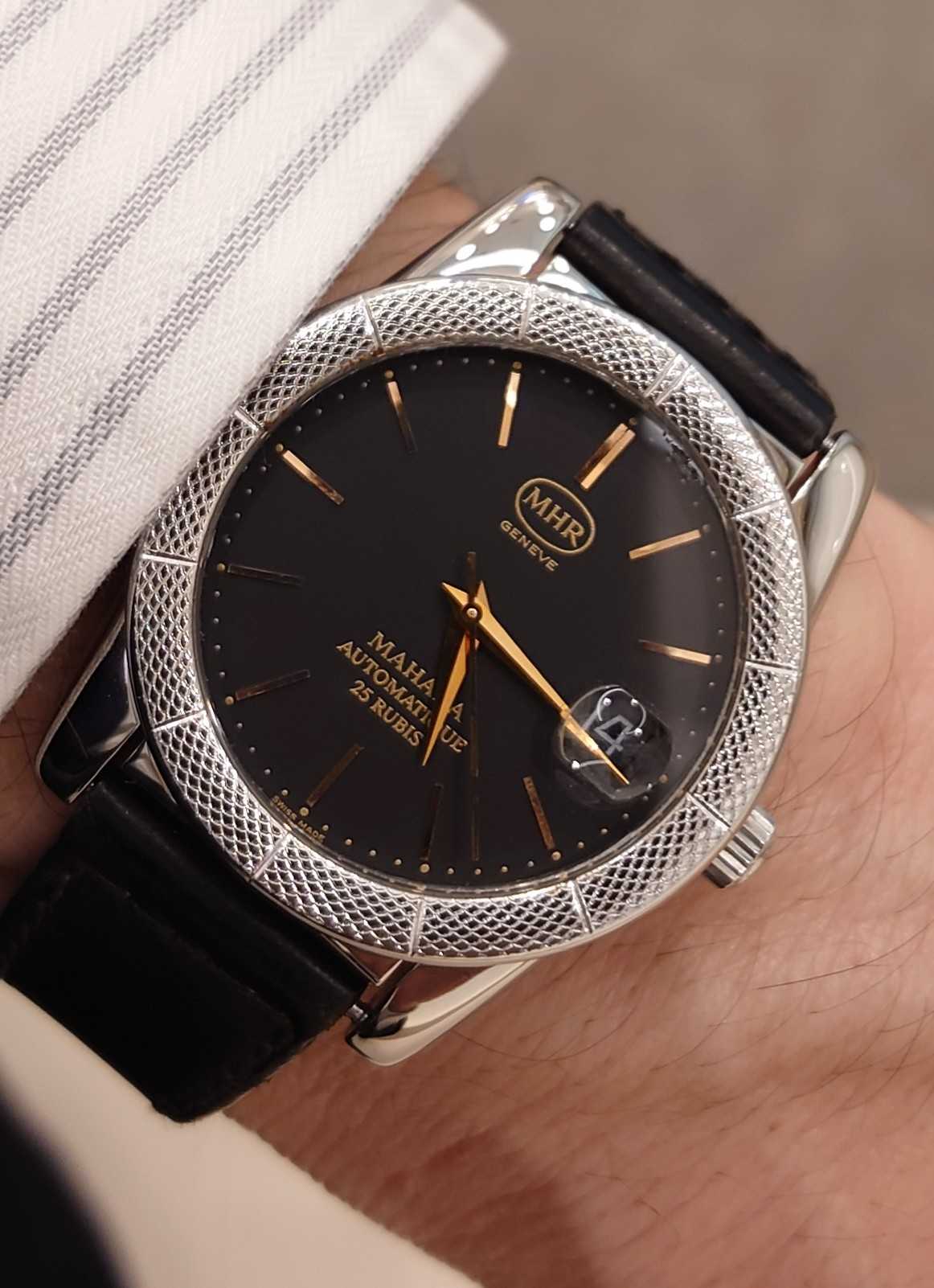
何度か当ブログにも登場しているこの時計は90年代に一時人気を博した「マハラ」というメーカーのものだ。ベゼルにあしらった模様から「ギョウシェ」と呼ばれているモデルである。
自動巻きで、ムーブメントは、デザイナー時計やブランド時計などによく使われる「ETA」社製。販売時の価格は20万前半だったと記憶している。今にして思えば、結構強気な価格だったと思う。この時計自体は、90年代前半に、渋谷の「宝石広場」で中古で11万で購入したものだ。2000年台に入ってから、一度リューズが壊れて、銀座のモノショップで修理してもらった。その時点ですでにマハラ社はフランクミュラーに買収されて無くなっており、早晩部品の供給が困難になるだろうと警告された。
マハラの時計で特徴的なのは、厚みのあるバックルタイプの革バンドだが、メーカーが雲散霧消してしまい、まずはこの革バンドから早々に品薄になったらしい。
バンドの替えがきかないと聞いてしまっては、あまり積極的にこの時計を使用する気になれず、長いこと机の引き出しにしまいっぱなしにしていた。しかし、考えてみれば、メーカーが無くなったとはいえ、ムーブメント自体は汎用的な「ETA」のものだ。時計修理の専門店であれば、オーバーホールできるではなかろうかと思い、2年前、日ごろから修理をお願いしていた Tamtimeさん に問い合わせてみた。結果は問題なくオーバーホールできるとのことだった。値段も3万とオメガなどに比べればずっと安かったので(というかオメガのクロノグラフ7万円って高過ぎだと思う)、20年ぶりにOHに出した。
ところがこの時計、戻ってきたものをあらためて使用してみると、パワーリザーブが非常に弱いことに気づいた。自動巻きなので、装着している間は当然動いているのだが、腕から外すと、1日ちょっと放置しただけで止まってしまう。そうなると、他の時計とのローテーションが非常に煩雑になり、使い勝手が非常に悪い。ひょっとしたらOH時の整備不良だったのかもしれない。そんなわけで、せっかくオーバーホールまでしたのに、結局またすぐに使わなくなってしまった。
This wristwatch, which has appeared on my blog several times before, is from a brand called Mahara that enjoyed a brief wave of popularity in the 1990s. The model is nicknamed “Guilloché” after the pattern engraved on its bezel.
It’s an automatic, powered by a movement from ETA, a company often used in designer and brand-name watches. If I remember correctly, the retail price was in the low 200,000 yen range—a rather ambitious price tag in hindsight. I personally picked it up secondhand at Houseki Hiroba in Shibuya for 110,000 yen sometime in the early ’90s. In the 2000s, the crown broke, and I had it repaired at a shop in Ginza. By that time, Mahara had already been acquired by Franck Muller and ceased to exist, and I was warned that sourcing replacement parts would soon become difficult.
Knowing that I wouldn’t be able to replace the strap, I lost motivation to wear the watch and left it tucked away in a desk drawer for many years. Still, the movement itself is just a standard ETA, which any good watch repair shop should be able to overhaul. So two years ago, I reached out to Tamtime
, where I usually send my watches for service. As it turned out, there was no issue at all—they could overhaul it for around 30,000 yen, much cheaper than an Omega (and honestly, 70,000 yen for an Omega chronograph service feels overpriced to me). So, after a 20-year hiatus, I finally had it overhauled.
But when I started wearing it again, I noticed the power reserve was extremely weak. Being an automatic, it runs fine while on the wrist, but the moment I set it aside, it stops after just about a day. That makes it very inconvenient to rotate with my other watches. Perhaps the overhaul wasn’t done properly—but in any case, despite having spent money on servicing, I soon stopped wearing it again.
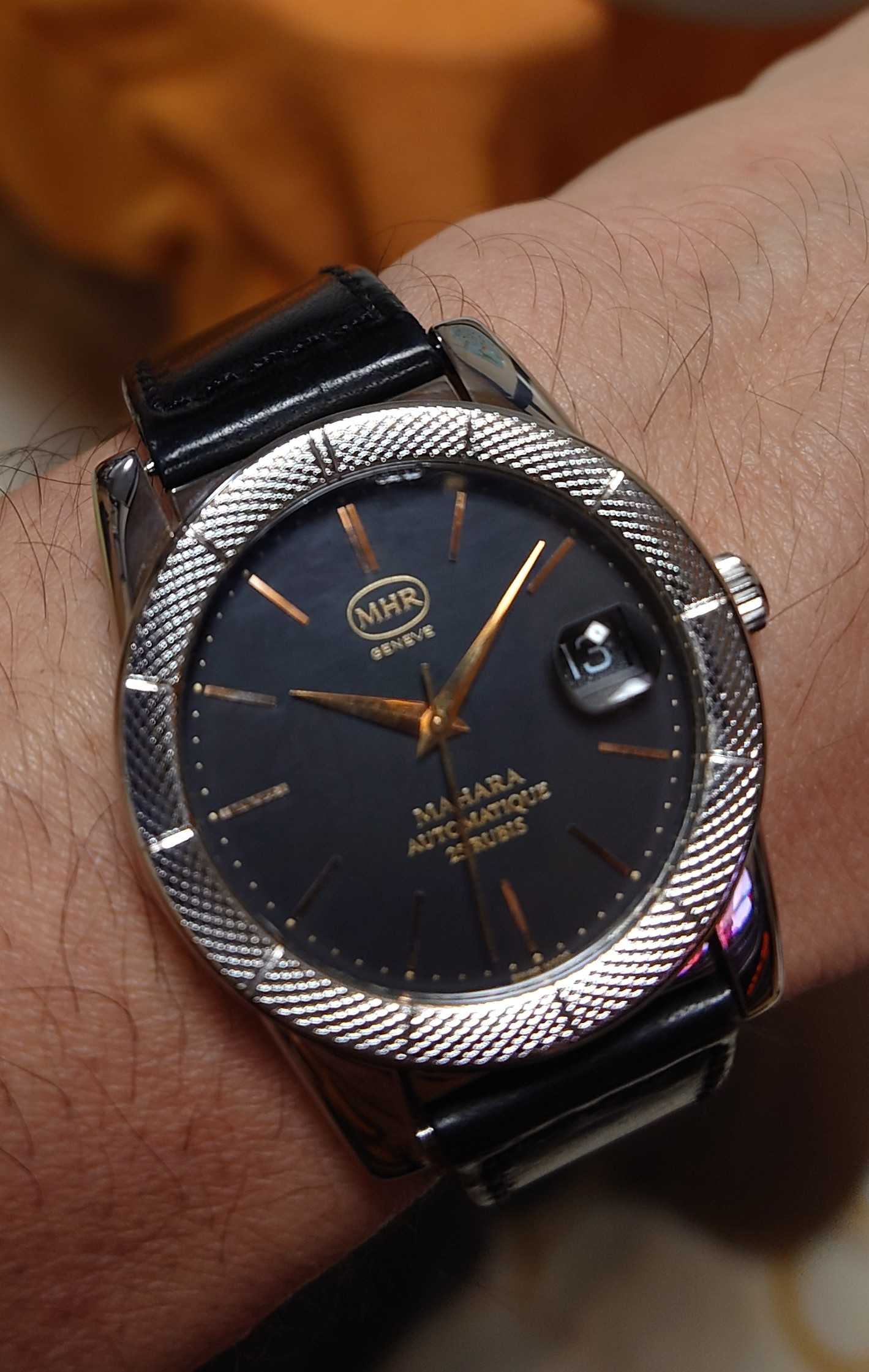
そのようななロートル腕時計を、なぜ今になって再び持ち出してきたのかと言えば、私自身もまた、還暦を迎え、ロートルになってきたからだ。
ビジネスマンとして働く時間もあまり残されていないと悟ったとき、もはや出し惜しみせず、慣れ親しんだ靴を履きつぶすように、壊れて動かなくなるまで使い倒したほうがよいのではないかと思ったのだ。現実的には、革ベルトが何年もしないうちにボロボロになってしまうだろうし、その前にやや不安定なムーブメントの方が逝ってしまうかもしれない。
ちなみにマハラの時計は、文字盤こそ異なれど、同時期のものがちょくちょく市場には出てくる。大したプレミアムはついていないようなので、今更買取店やオークションに出しても、値段はいくらにもならないだろうという、現実的な打算もある。
まあそんなわけで、私がリタイアするのが先か、それともこの時計が逝ってしまうのが先か、いずれにしてもあまり先は長くなさそうなので、今後は、カシオの「プロトレック」とともに、メインの一本として、主にビジネス用途に最後の奉公をしてもらおうと思っている。
So why have I decided to bring out this old, worn-out watch again now? The answer is simple: I, too, have reached the age of sixty, and have myself become something of a veteran.
When you realize that your years as a businessman are numbered, it seems better not to hold back anymore—better to wear down the things you’ve lived with, like a pair of familiar shoes, until they finally give out. In practice, the leather strap will probably deteriorate within a few years, or perhaps the already unstable movement will fail before then.
Incidentally, Mahara watches from the same era, though with different dials, still pop up on the market from time to time. But they don’t seem to command much of a premium, so realistically speaking, selling it to a dealer or at auction wouldn’t fetch much anyway.
And so, whether I retire first or this watch gives up the ghost before me, it’s clear neither of us has all that much time left. For that reason, I’ve decided to let it serve one final duty as one of my main business watches—alongside my Casio Pro Trek—until the end.
お気に入りの記事を「いいね!」で応援しよう

[PCネット時計カメラ] カテゴリの最新記事
-
Canon EOS R8 Mark IIを予約! 2026年09月23日
-
オメガ・スピードマスター・ブロードアロ… 2026年04月14日
-
自宅のネット環境改善(その2)~メッシ… 2026年04月08日


【毎日開催】
15記事にいいね!で1ポイント


PR
Comments
Category
カテゴリ未分類
(3)お知らせ・リンク集
(30)ワイン新着情報
(560)ワインコラム
(345)ワインコラム2(話飲徒然草拾遺集)
(75)ワインコラム3(RWGコラム拾遺集)
(28)都内近郊散策
(311)こんな店に行った
(364)B級グルメ・カフェ
(252)健康
(232)エッセイ
(98)ひとりごと・備忘録
(527)カミサン推薦ネタ
(28)語学・資格・学び直し
(104)山歩き・ハイキング
(123)アクアリウム・ガーデニング
(341)育児・教育
(90)PCネット時計カメラ
(141)音楽・オーディオ
(77)リフォーム引越し
(50)こんなワイン買った
(131)ボルドー
(102)ブルゴーニュ・ジュブレシャンベルタン
(90)ブルゴーニュ・モレサンドニ
(40)ブルゴーニュ・シャンボールミュジニー
(45)ブルゴーニュ・ヴォーヌロマネ・ヴジョ
(56)ブルゴーニュ・NSG
(58)ブルゴーニュ・その他コートドニュイ
(64)ブルゴーニュ・コルトン・ポマール・ヴォルネイ
(30)ブルゴーニュ・ボーヌ周辺
(56)ブル・ピュリニー・シャサーニュ・ムルソー
(21)ブルゴーニュ・その他コートドボーヌ
(28)ブルゴーニュ・裾モノイッキ飲み!
(221)ブルゴーニュ・その他地域
(38)ボジョレー再発見プロジェクト
(32)シャンパーニュ
(195)ロワール・アルザス・ローヌ
(56)その他フランス
(17)イタリア
(85)スペイン・ポルトガル
(38)ニュージーランド・オーストラリア
(52)USA
(43)安泡道場(シャンパーニュ以外)
(37)その他地域・甘口など
(49)日本ワイン
(71)ワイン会・有料試飲
(173)旅行・出張
(10) タカヒコ Yoichi Ro…
 New!
mache2007さん
New!
mache2007さん
【movie】うーん、救…
New!
ささだあきらさん
ピノタージュ
yonemuさん
敬老の日
ミユウミリウさん
ワイン&ジョギング … Char@diaryさん
道草日記 旅・釣… 道草.さん
鴨がワインしょって… うまいーちさん
Wine Lover margaux1966さん
香味日記 hirozeauxさん
ワインと絵画がある… busuka-sanさん
New!
mache2007さん【movie】うーん、救…
New!
ささだあきらさんピノタージュ
yonemuさん敬老の日
ミユウミリウさんワイン&ジョギング … Char@diaryさん
道草日記 旅・釣… 道草.さん
鴨がワインしょって… うまいーちさん
Wine Lover margaux1966さん
香味日記 hirozeauxさん
ワインと絵画がある… busuka-sanさん
Keyword Search
▼キーワード検索
Calendar
© Rakuten Group, Inc.
